Wisdom, Faithfulness, and the Heart
This Sunday School lesson is intended for upper elementary students. All lessons on this website are protected by copyright, but you can use them for free in small groups or Sunday School classes. You may share a link to this page, but please do not copy these pages and put them on other websites.
The Big Idea
Jesus teaches that we must be wise with the things God gives us and remember that while people look at the outside, God always knows the true state of our hearts.
Lesson Objectives
- Students will learn that being faithful in small tasks prepares them for greater responsibilities in the Kingdom of God.
- Students will understand that money is a tool to be used for God’s glory rather than something to be loved or worshipped.
- Students will recognize that God sees our hearts and cares more about our inner thoughts than our outward appearance.
- Students will learn that God’s word and his laws are perfect and will never change or disappear.
Class Setting Notes
- Recommended for upper elementary Sunday School.
- Lesson length: 45 to 60 minutes. Can be shortened or extended based on activities selected.
Opening Activity: The Manager Game
- Divide the class into small groups and give each group a bag containing several small items like paperclips, rubber bands, or buttons.
- Tell the students they are managers and must organize these items neatly and count them correctly.
- After a few minutes, check how each group handled their small supplies.
- Reward the groups that were careful and honest with a larger, more exciting item for the class to use.
This activity helps introduce the idea that being careful with small things shows that a person can be trusted with much bigger things.
Bible Reading
Ask the class to read Luke 16:1-18 aloud together or have one person read it.
- Very Easy: Easy-to-Read Version: Luke 16:1-18 (ERV)
- Very Easy: New International Reader’s Version: Luke 16:1-18 (NIRV)
- Easy: Good News Translation: Luke 16:1-18 (GNT)
- Medium: New Living Translation: Luke 16:1-18 (NLT)
- Hard: New International Version: Luke 16:1-18 (NIV)
- Very Hard: English Standard Version: Luke 16:1-18 (ESV)
Additional Reading: Choosing the Right Bible Translation
Suggested prompts:
As the class reads aloud, consider asking some of these prompts:
- Notice how the manager makes a plan to take care of his future after he loses his job.
- Think about why the master praises the manager for being clever, even though he was not honest.
- Watch what happens when Jesus tells us we cannot serve two masters at the same time.
- Notice how the Pharisees react to Jesus because they loved money more than they loved him.
- Pay attention to what Jesus says about the word of God being stronger than Heaven and earth.
Teacher Background Notes
- A manager in the time of Jesus was a servant trusted to run the business and property of his master.
- The Pharisees were religious leaders who followed many strict rules but often did so just to be seen by other people.
- In this passage, Jesus is not saying it is good to be dishonest, but he is showing that we should use the things of this world wisely to prepare for eternity.
- The Law of Moses and the prophets refers to the Old Testament, which shows us the holiness of God and our need for a Savior.
- Biblical stewardship is the belief that everything we own actually belongs to God and should be used to bring him glory.
Theological Insights
- God is the true owner of all things, and he has called us to be faithful managers of his gifts.
- The heart is the center of a person, and God knows our true thoughts and feelings even when we try to look good to others.
- Salvation is a gift of grace, but those who follow Jesus will want to obey his commands and honor his word.
- The word of God is eternal and unchanging, providing a solid foundation for our lives.
- We must choose to serve God alone, as anything we love more than him becomes an idol in our hearts.
Discussion Questions
Understanding the Text
- Why did the rich man tell the manager he could not keep his job?
- What did the manager do to make sure he would have friends after his job was gone?
- What does Jesus say about someone who is dishonest in very small matters?
- Why did the Pharisees make fun of Jesus after hearing his teaching?
- What did Jesus say about the Law and the word of God?
Personal Reflection and Application
- What are some small things God has given you to take care of this week?
- Why is it hard to be honest when we think no one is watching us?
- How can we tell if we are starting to love money or things more than we love God?
- How does it feel to know that God sees your heart and still offers you his mercy?
Suggested Activities
The Two Masters Skit
- Have two students act as masters giving opposite orders to a third student who acts as the servant.
- One master tells the servant to follow God, while the other master represents money and tells the servant to be selfish.
- Discuss how the servant feels confused and why it is impossible to please both masters.
This activity illustrates the lesson that our hearts must choose to be loyal to God alone.
The Forever Word Banner
- Have the students work together to draw a large banner featuring the words of Luke 16:17.
- Ask them to draw pictures of things that pass away, like grass or money, around the edges of the banner.
- Contrast those drawings with the bright and strong letters representing the word of God.
This activity emphasizes the lasting nature of the truth God has given us in the Bible.
True Wealth Treasure Map
- Give students a piece of paper and have them draw a map to a treasure.
- Instead of gold, have them draw or write things that are true riches, such as the Bible, family, or the grace of Christ.
- Let them decorate the map with symbols of their faith.
This activity helps students visualize the difference between worldly money and the eternal blessings God gives to his people.
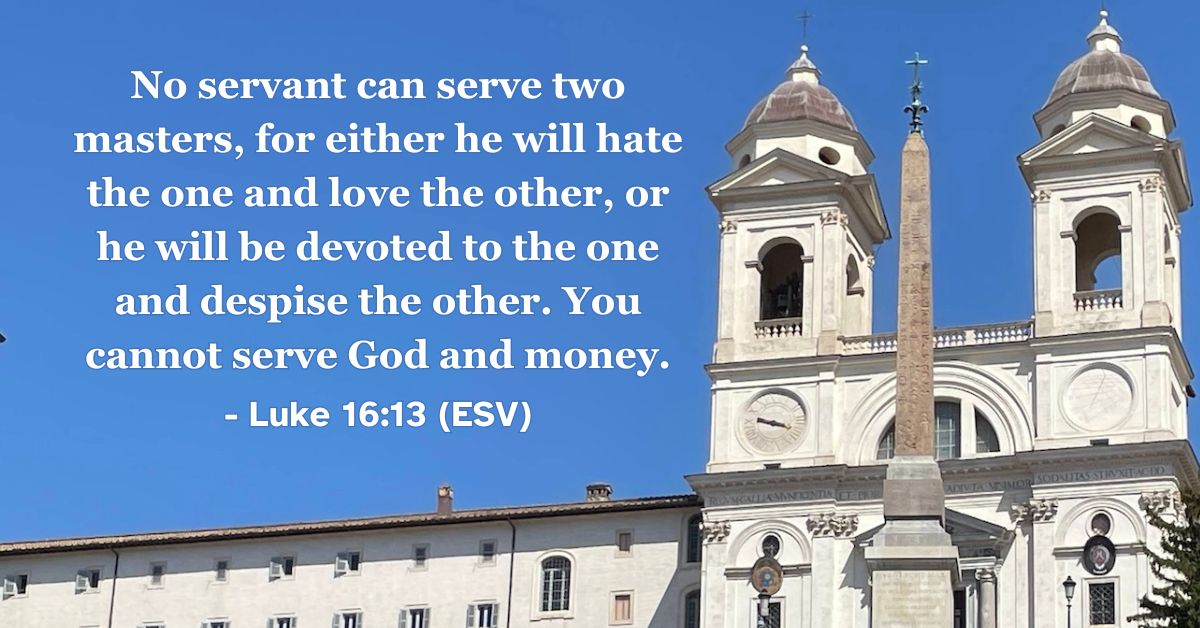
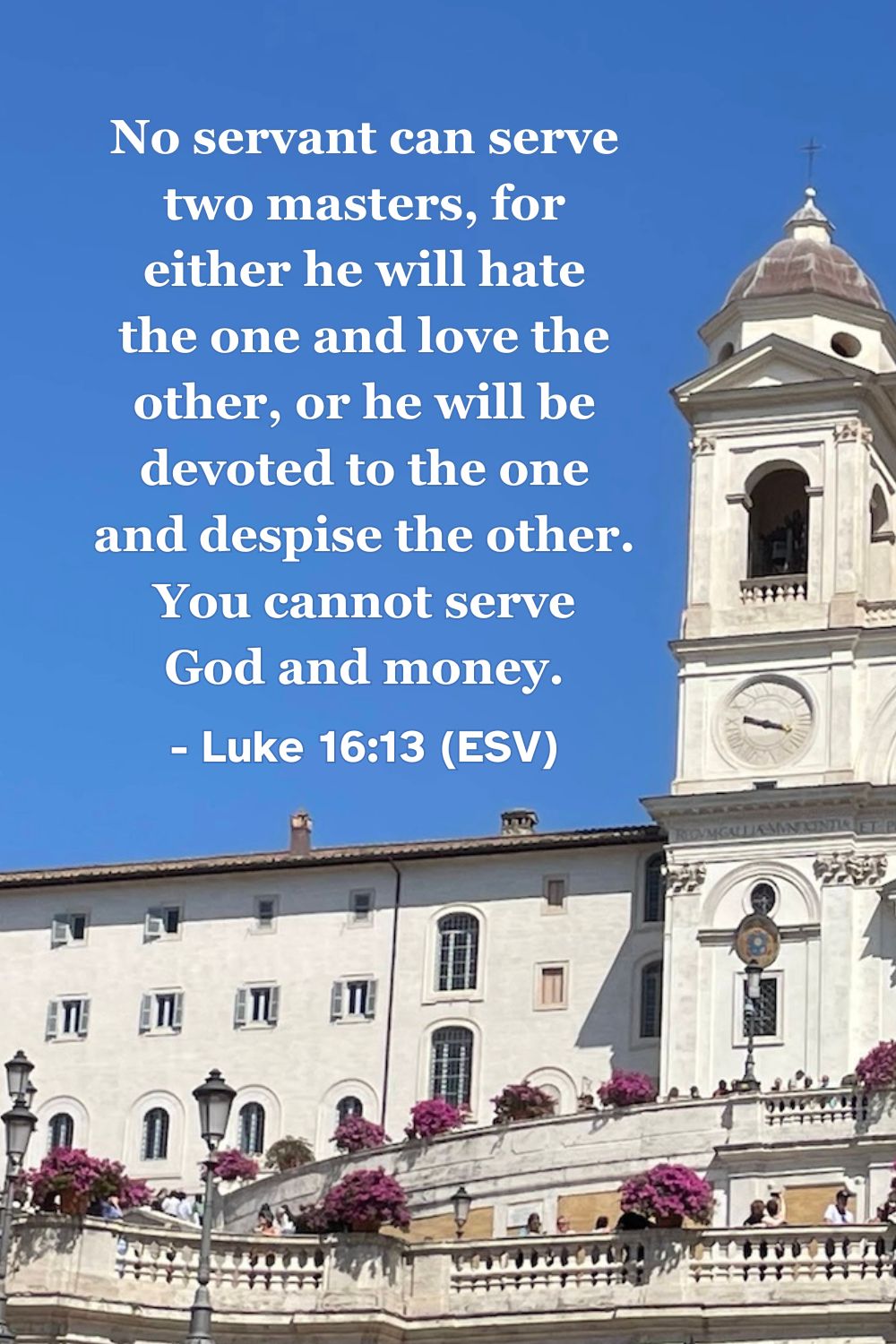
Memory Verse
Closing Prayer
Father,
Thank you for teaching us to be faithful with the things you give us. Help us to love you most of all and to keep our hearts honest in your sight.
In Jesus’ name we pray. Amen.
The ESL Version
I also create materials for adult English Language Learners (ELLs) and ESL students. You can find my ELL Bible Studies based on Luke 16:1-18 here:
Subscribe
If you enjoyed this post and wish to receive more Christian content, consider subscribing to my newsletters!
Related Resources
Visit the Joyful Moments in Christ homepage for all posts, or scroll through other blog posts related to Sunday School:

Something went wrong. Please refresh the page and/or try again.
English Standard Version (ESV): Unless otherwise noted, scripture quotations are from the ESV® Bible (The Holy Bible, English Standard Version®), © 2001 by Crossway, a publishing ministry of Good News Publishers. Used by permission. All rights reserved. The ESV text may not be quoted in any publication made available to the public by a Creative Commons license. The ESV may not be translated in whole or in part into any other language.