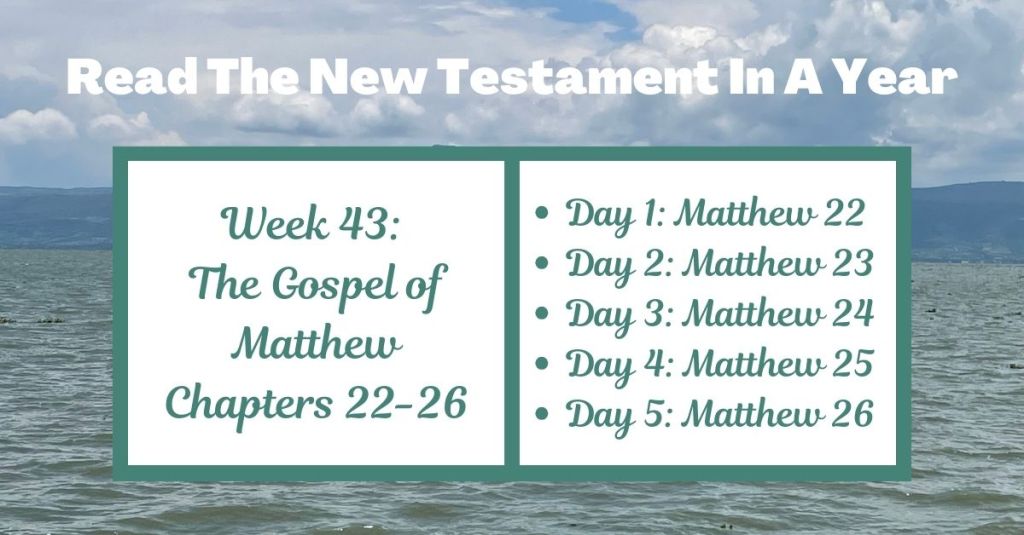
Week 43: Exploring Matthew 22-26
In week 43 of our exploration of the New Testament in a year, we will delve into Matthew 22-26, where Jesus’ teachings become increasingly urgent and profound as He approaches the cross. In these chapters, we will encounter Jesus’ call to love God wholeheartedly and to extend that love to others, a commandment He identifies as the foundation of all the law. As He faces opposition from religious leaders, Jesus condemns hypocrisy and warns of the spiritual pitfalls of pride and legalism. He also prophesies about future trials and encourages His followers to remain vigilant and faithful.
Throughout this week, we will reflect on Jesus’ parables, which teach the importance of readiness, stewardship, and compassion. In His final days, Jesus prepares His disciples for the sacrifices ahead, models ultimate humility and surrender in Gethsemane, and willingly embraces His path to the cross. These passages invite us to examine our own readiness, strengthen our love for others, and seek a life of faithful devotion.
Matthew 22

In Matthew 22, Jesus faces challenging questions from the Pharisees and Sadducees about taxes, the resurrection, and the greatest commandment. He emphasizes love for God and others as central to the law. Jesus also shares the parable of the wedding banquet, teaching about the Kingdom’s inclusivity and the importance of responding to God’s invitation.
Matthew 23
Whoever exalts himself will be humbled, and whoever humbles himself will be exalted.
Matthew 23:12 (ESV)
In Matthew 23, Jesus delivers a series of woes against the religious leaders, condemning their hypocrisy, pride, and legalism. He rebukes them for placing burdens on others while failing to practice justice, mercy, and faithfulness. Jesus mourns over Jerusalem, expressing sorrow over its rejection of God’s messengers.
Matthew 24

In Matthew 24, Jesus prophesies about the destruction of the temple, the end times, and His second coming. He warns of wars, natural disasters, persecution, and false prophets. Jesus encourages His followers to stay vigilant and be prepared for His return, urging readiness and faithfulness.
Matthew 25

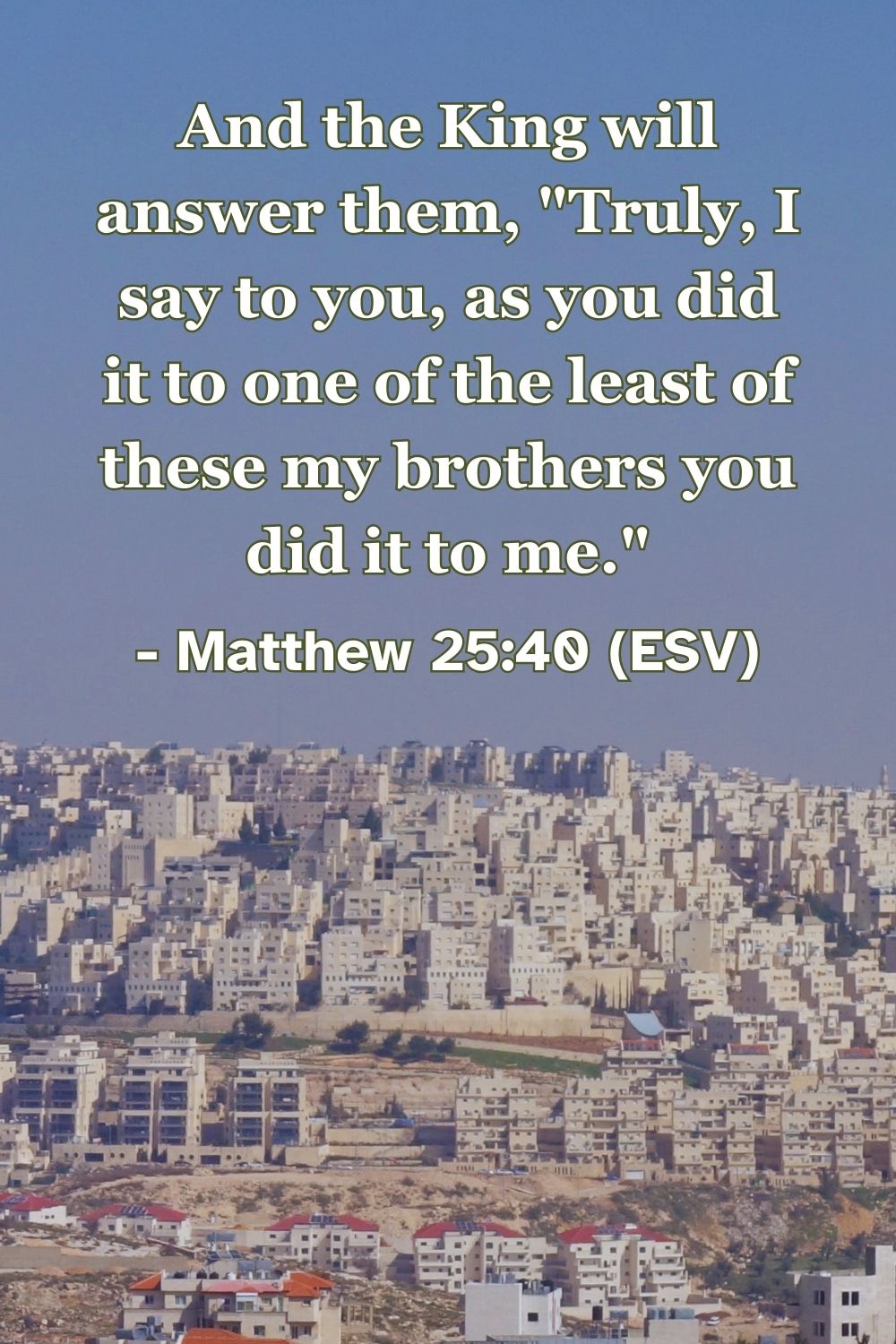
In Matthew 25, Jesus shares parables about the Kingdom: the ten virgins, the talents, and the sheep and goats. These parables emphasize the importance of being prepared, using our gifts for God, and demonstrating compassion. Jesus explains that caring for others is equivalent to serving Him.
Matthew 26
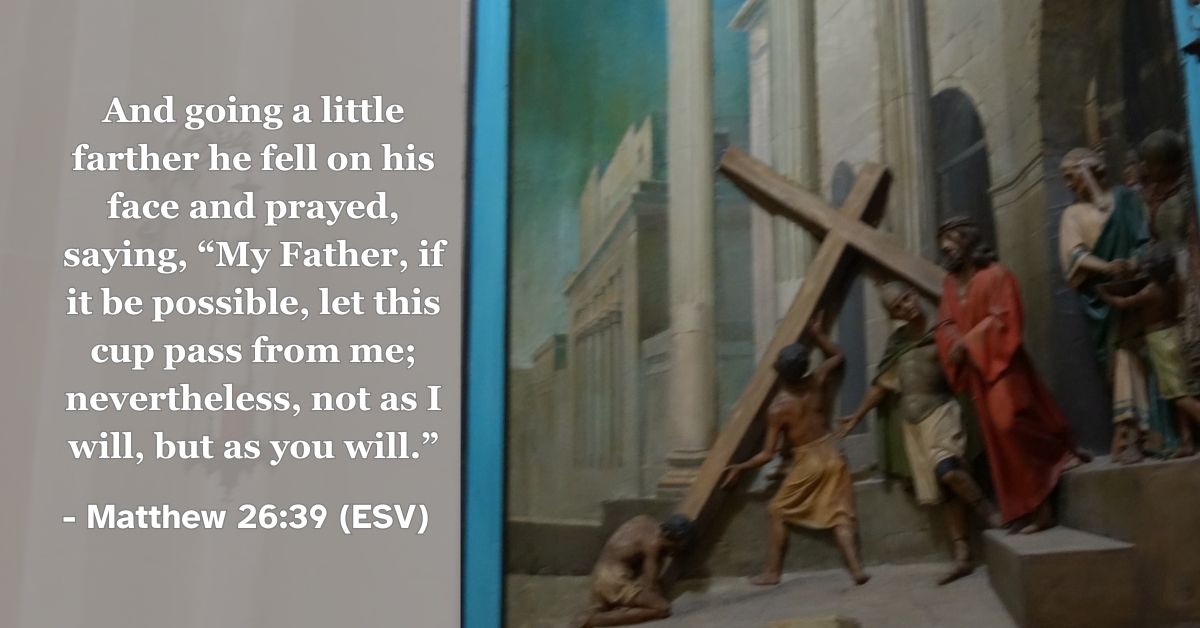
Matthew 26 recounts key events leading to Jesus’ crucifixion: the plot against Him, His anointing at Bethany, the Last Supper, His prayers in Gethsemane, and His arrest. Jesus is betrayed by Judas and denied by Peter, illustrating human weakness and the fulfillment of prophecy.
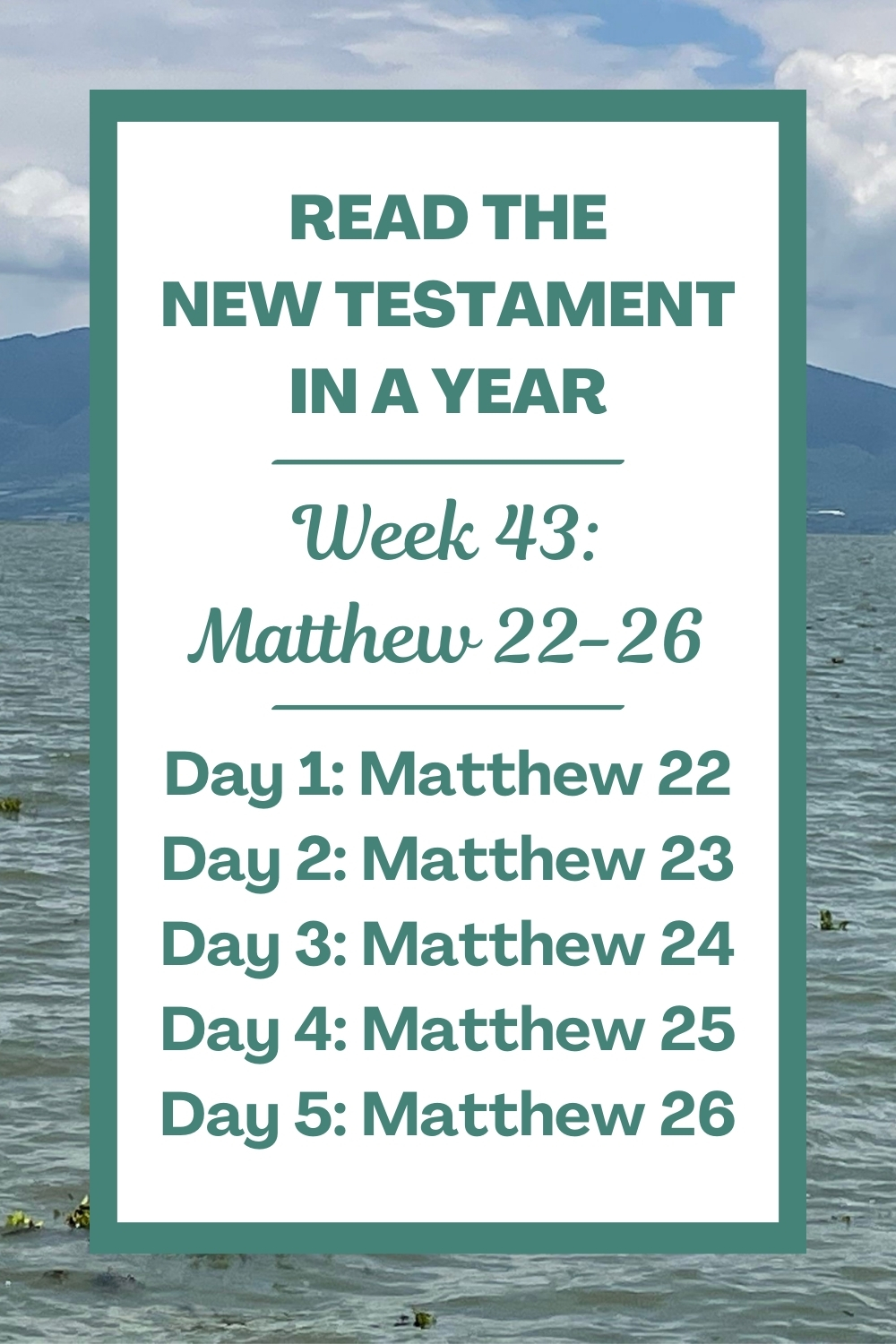
Week 43: New Testament Reading Assignment
Each week, we will read 5 chapters of the New Testament. Some people may prefer to read during the weekdays, while others might enjoy doing most of their reading on the weekends. Choose the method that works best for you!
- Day 1: Matthew 22
- Day 2: Matthew 23
- Day 3: Matthew 24
- Day 4: Matthew 25
- Day 5: Matthew 26
Printable Resource:
Week 43: Reflection Questions for Matthew 22-26
Consider the following reflection questions:
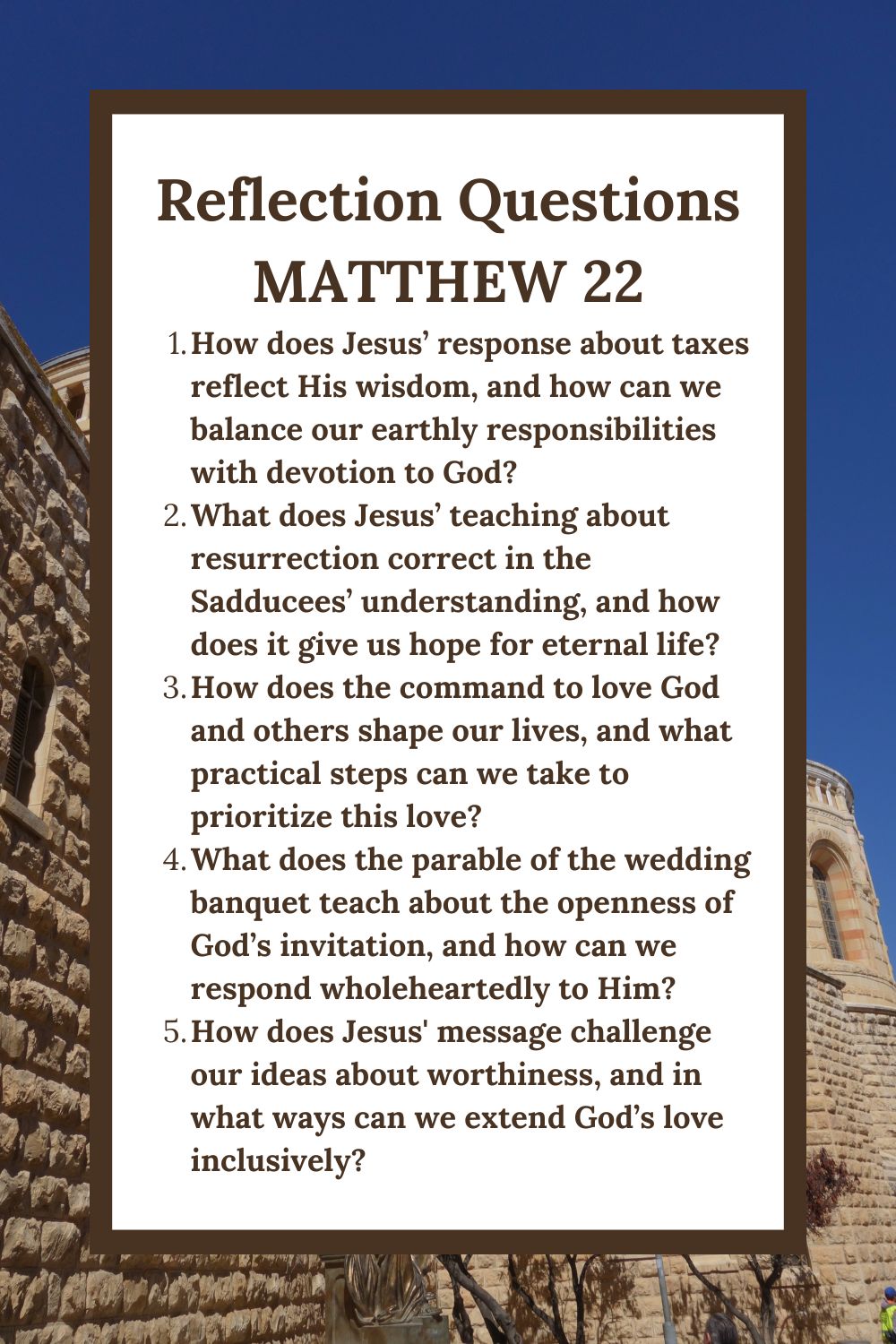
Matthew 22: Love and the Kingdom’s Invitation
- How does Jesus’ response about taxes reflect His wisdom, and how can we balance our earthly responsibilities with devotion to God?
- What does Jesus’ teaching about resurrection correct in the Sadducees’ understanding, and how does it give us hope for eternal life?
- How does the command to love God and others shape our lives, and what practical steps can we take to prioritize this love?
- What does the parable of the wedding banquet teach about the openness of God’s invitation, and how can we respond wholeheartedly to Him?
- How does Jesus’ message challenge our ideas about worthiness, and in what ways can we extend God’s love inclusively?
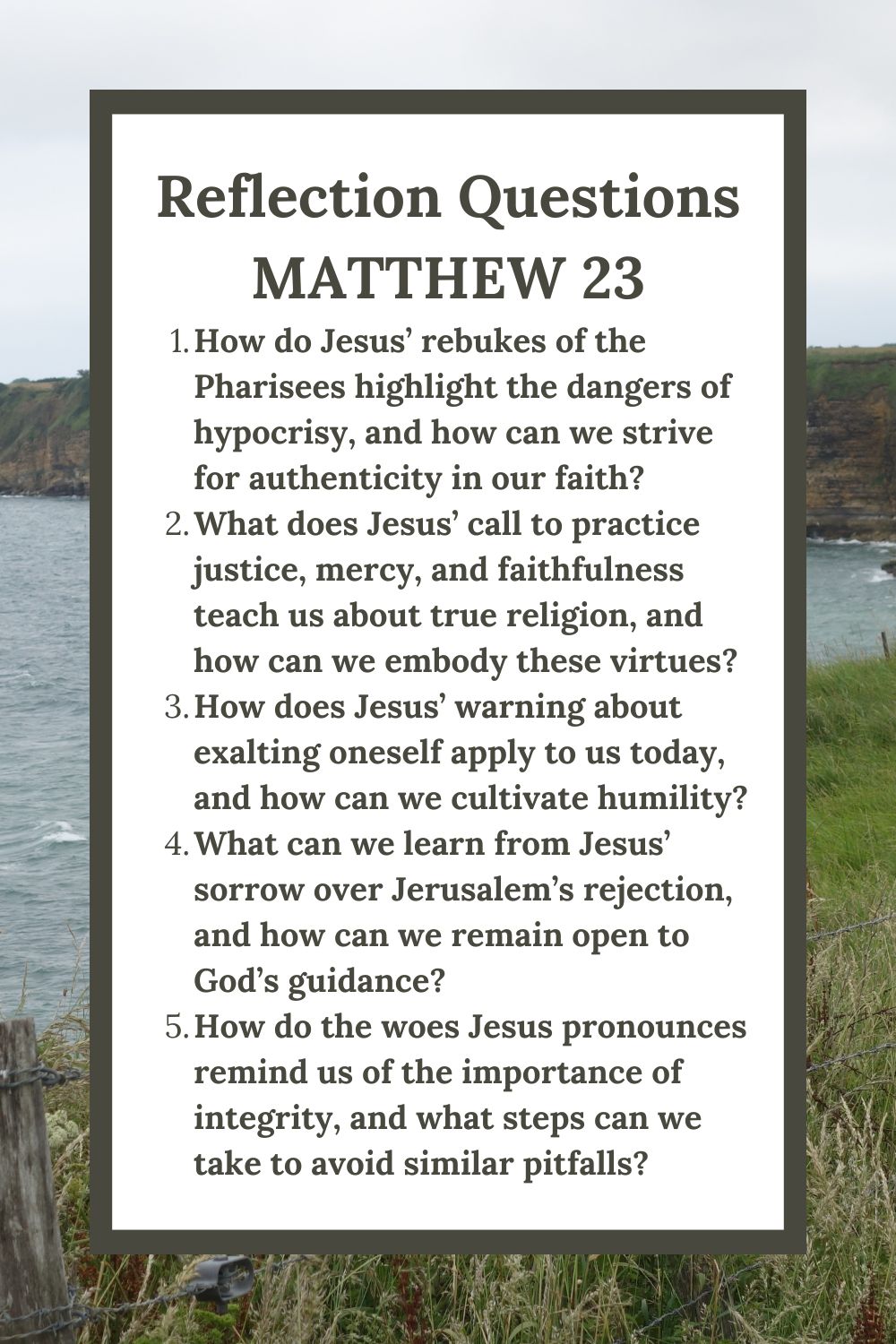
Matthew 23: Warnings Against Hypocrisy and Pride
- How do Jesus’ rebukes of the Pharisees highlight the dangers of hypocrisy, and how can we strive for authenticity in our faith?
- What does Jesus’ call to practice justice, mercy, and faithfulness teach us about true religion, and how can we embody these virtues?
- How does Jesus’ warning about exalting oneself apply to us today, and how can we cultivate humility?
- What can we learn from Jesus’ sorrow over Jerusalem’s rejection, and how can we remain open to God’s guidance?
- How do the woes Jesus pronounces remind us of the importance of integrity, and what steps can we take to avoid similar pitfalls?
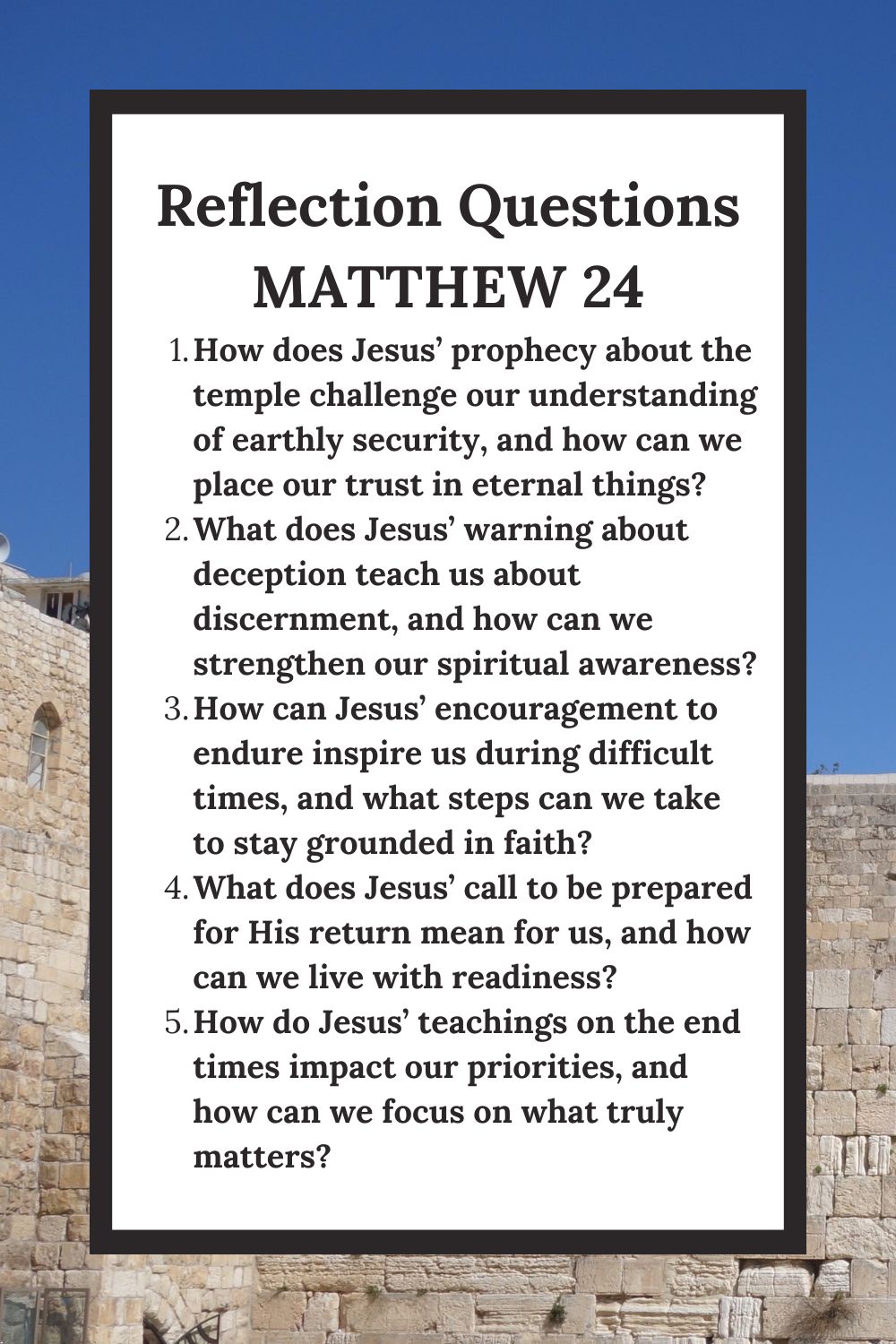
Matthew 24: Prophecy, Vigilance, and Readiness
- How does Jesus’ prophecy about the temple challenge our understanding of earthly security, and how can we place our trust in eternal things?
- What does Jesus’ warning about deception teach us about discernment, and how can we strengthen our spiritual awareness?
- How can Jesus’ encouragement to endure inspire us during difficult times, and what steps can we take to stay grounded in faith?
- What does Jesus’ call to be prepared for His return mean for us, and how can we live with readiness?
- How do Jesus’ teachings on the end times impact our priorities, and how can we focus on what truly matters?
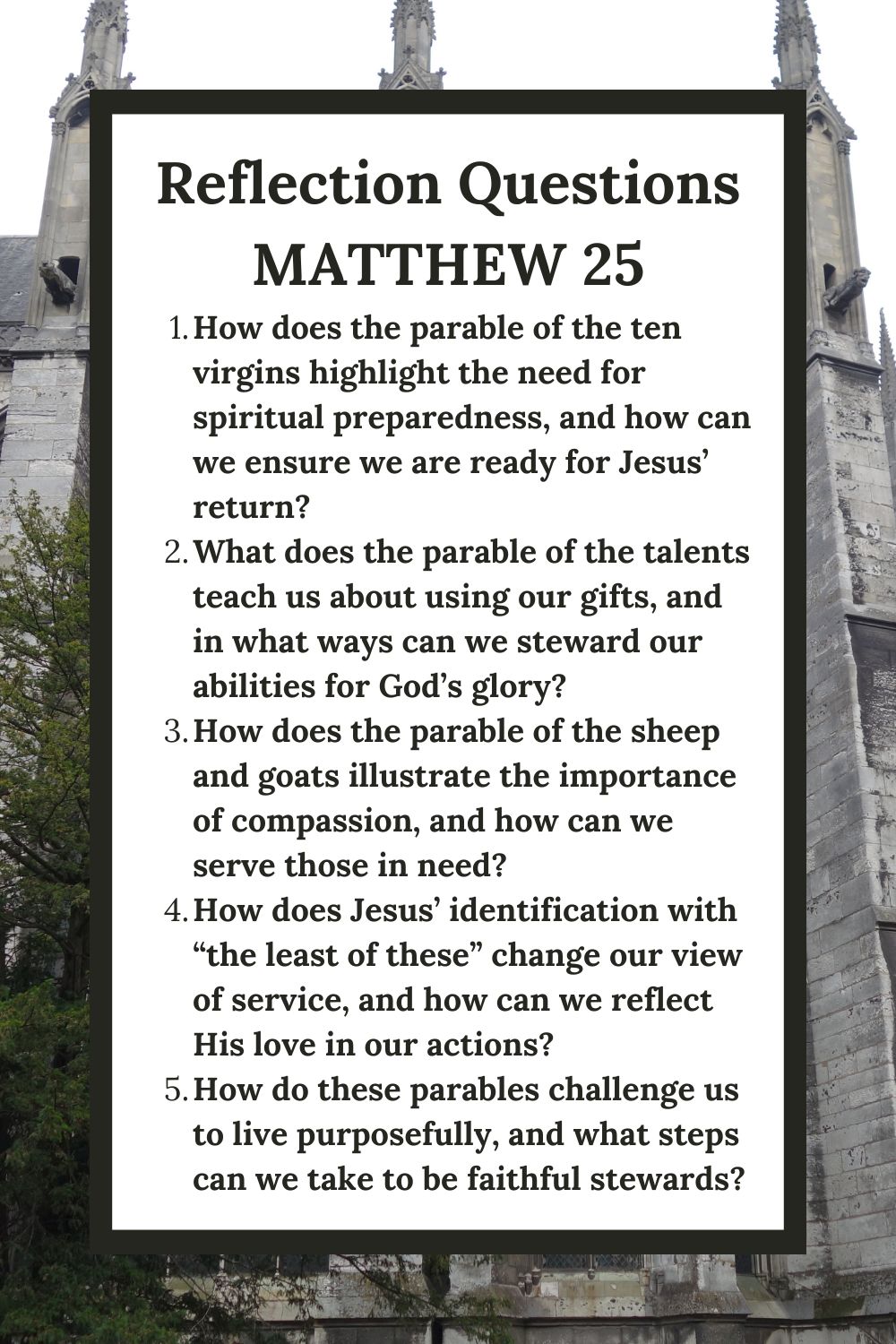
Matthew 25: Readiness, Stewardship, and Compassion
- How does the parable of the ten virgins highlight the need for spiritual preparedness, and how can we ensure we are ready for Jesus’ return?
- What does the parable of the talents teach us about using our gifts, and in what ways can we steward our abilities for God’s glory?
- How does the parable of the sheep and goats illustrate the importance of compassion, and how can we serve those in need?
- How does Jesus’ identification with “the least of these” change our view of service, and how can we reflect His love in our actions?
- How do these parables challenge us to live purposefully, and what steps can we take to be faithful stewards?
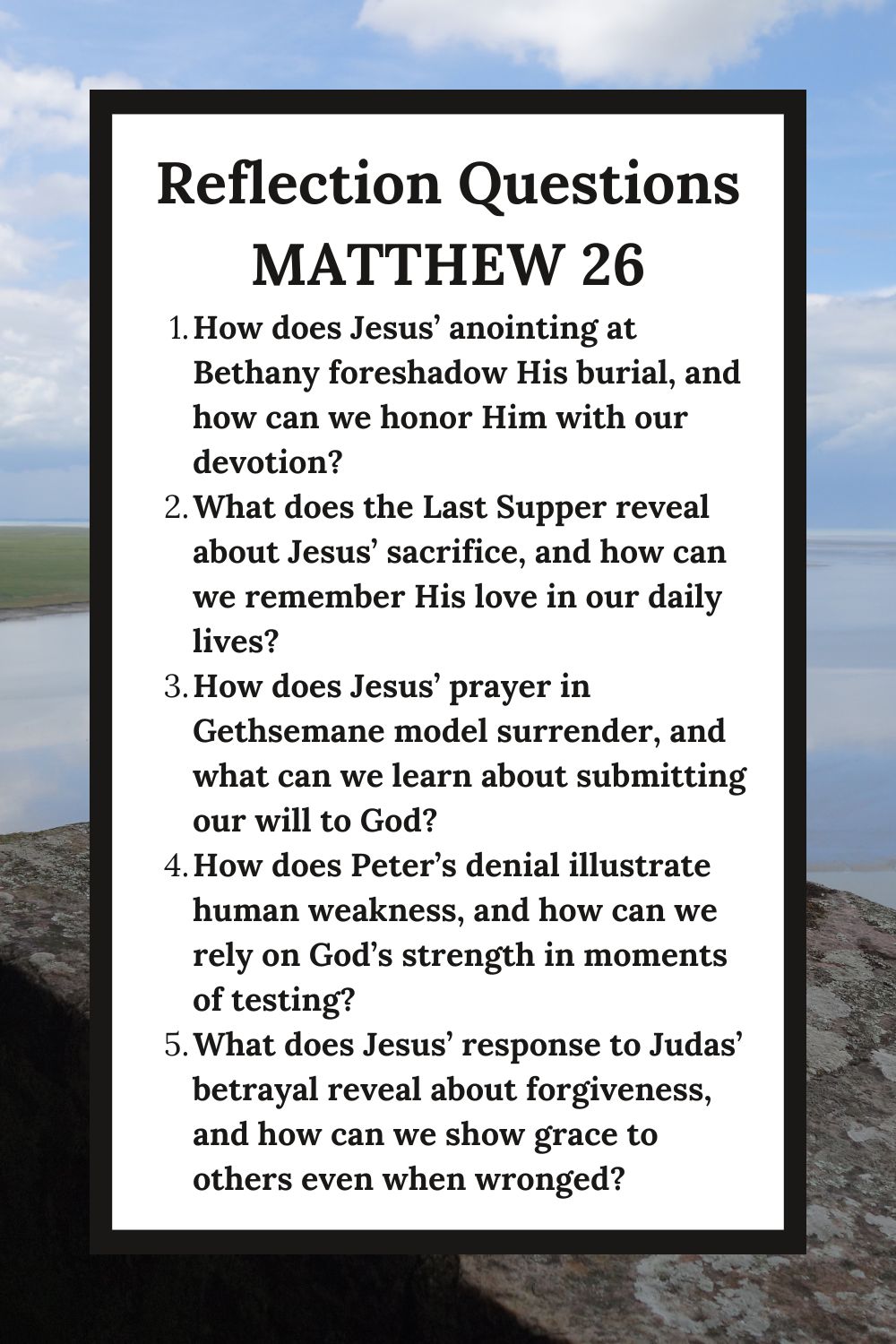
Matthew 26: Betrayal, Surrender, and Sacrifice
- How does Jesus’ anointing at Bethany foreshadow His burial, and how can we honor Him with our devotion?
- What does the Last Supper reveal about Jesus’ sacrifice, and how can we remember His love in our daily lives?
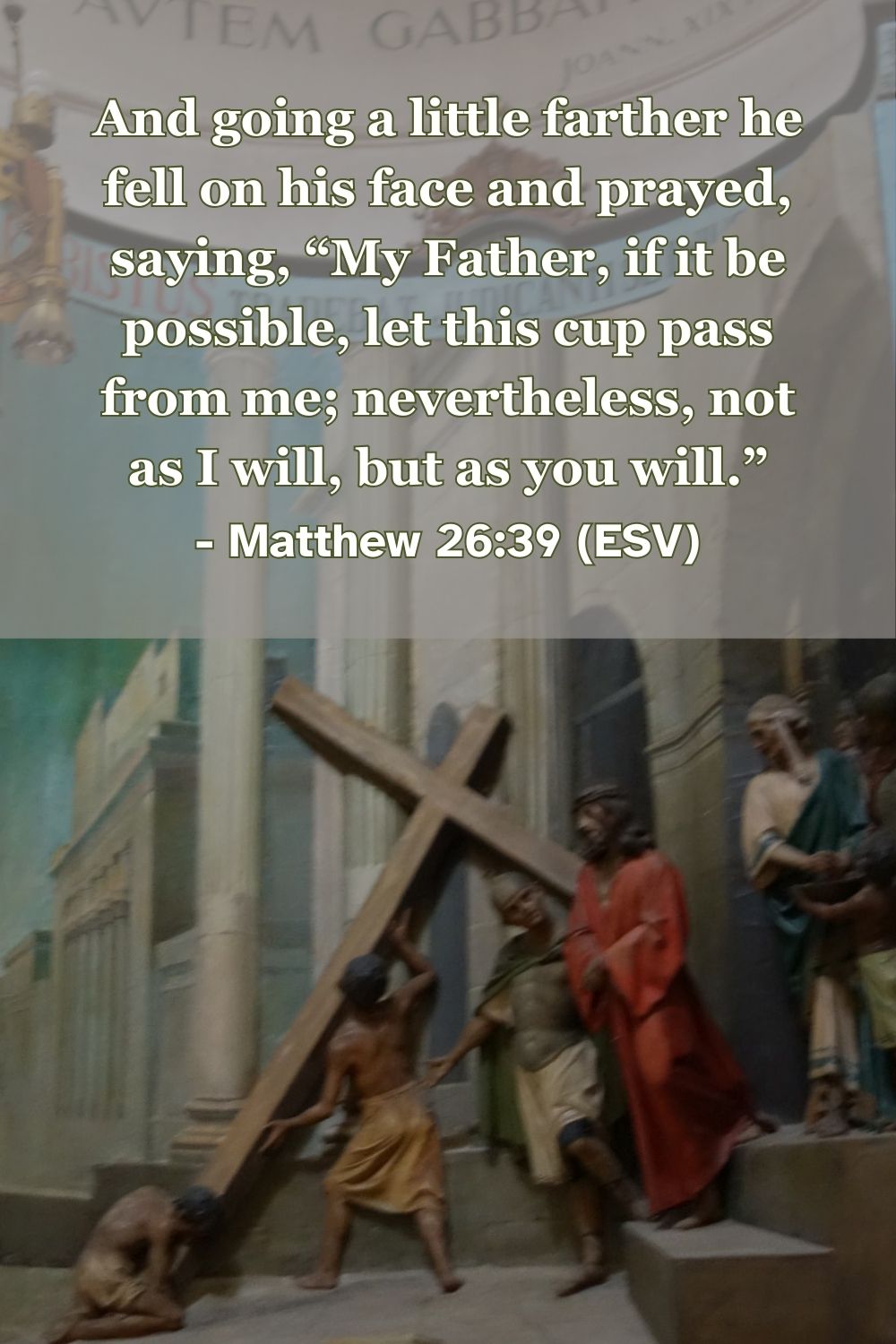
- How does Jesus’ prayer in Gethsemane model surrender, and what can we learn about submitting our will to God?
- How does Peter’s denial illustrate human weakness, and how can we rely on God’s strength in moments of testing?
- What does Jesus’ response to Judas’ betrayal reveal about forgiveness, and how can we show grace to others even when wronged?
Reflective Prayer
Choose a few verses or topics from these chapters and pray over them. Consider using the ACTS method — Adoration, Confession, Thankfulness, Supplication:
- Adoration: Praise God. What specific characteristics of God do these readings bring to mind?
- Confession: Tell God that you are sorry for specific sins. What specific sins do these readings bring to mind?
- Thankfulness: Show gratitude towards God. What in these readings inspires gratitude?
- Supplication: Make requests for yourself and for others. What in these readings inspires a prayer?
If helpful, you can use a prayer journal template.



Other Reading Plans
Online Resources
Subscribe
If you enjoyed this post and wish to receive more Christian content, feel free to subscribe to my newsletters!
Related Resources
Visit the Joyful Moments in Christ homepage for all posts, or scroll through other blog posts related to reading the New Testament in a year:





English Standard Version (ESV): Unless otherwise noted, scripture quotations are from the ESV® Bible (The Holy Bible, English Standard Version®), © 2001 by Crossway, a publishing ministry of Good News Publishers. Used by permission. All rights reserved. The ESV text may not be quoted in any publication made available to the public by a Creative Commons license. The ESV may not be translated in whole or in part into any other language.



 Joyful Moments in Christ