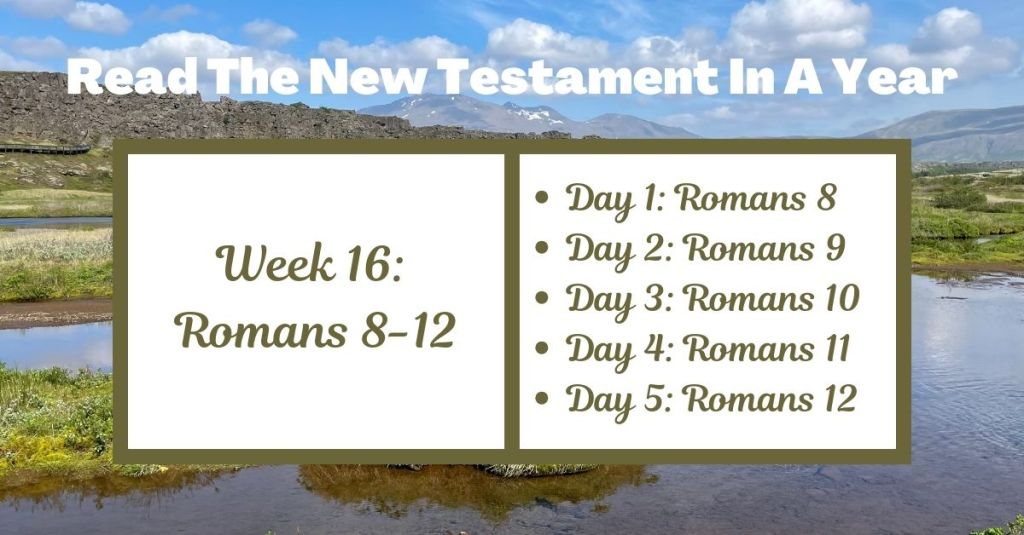
Week 16: Exploring Romans 8-12
In week 16 of our quest to read the New Testament in a year, we will explore Romans 8-12. In these Bible passages, Paul addresses key themes of Christian identity, faith, and practical living. He explores the transformative power of the Spirit, the dynamics between Israel and the Gentiles, and provides guidance on how believers should live out their faith. These chapters outline both theological insights and practical instructions for the Christian life.
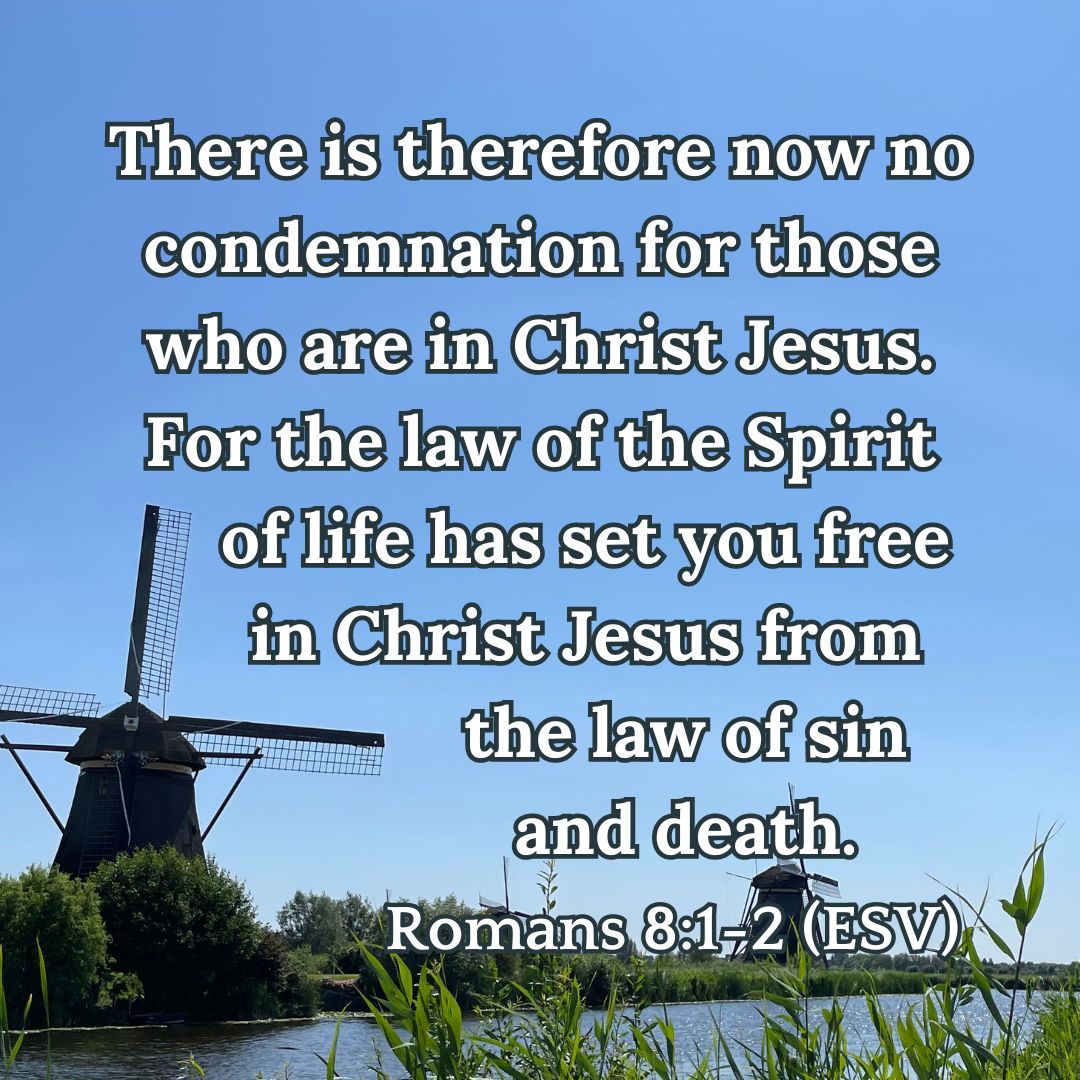
Romans 8
In Romans 8, Paul declares that believers are free from condemnation through Christ and empowered by the Spirit, who assures them of their adoption as God’s children and future glory. He emphasizes that nothing can separate them from the love of God.
Romans 9
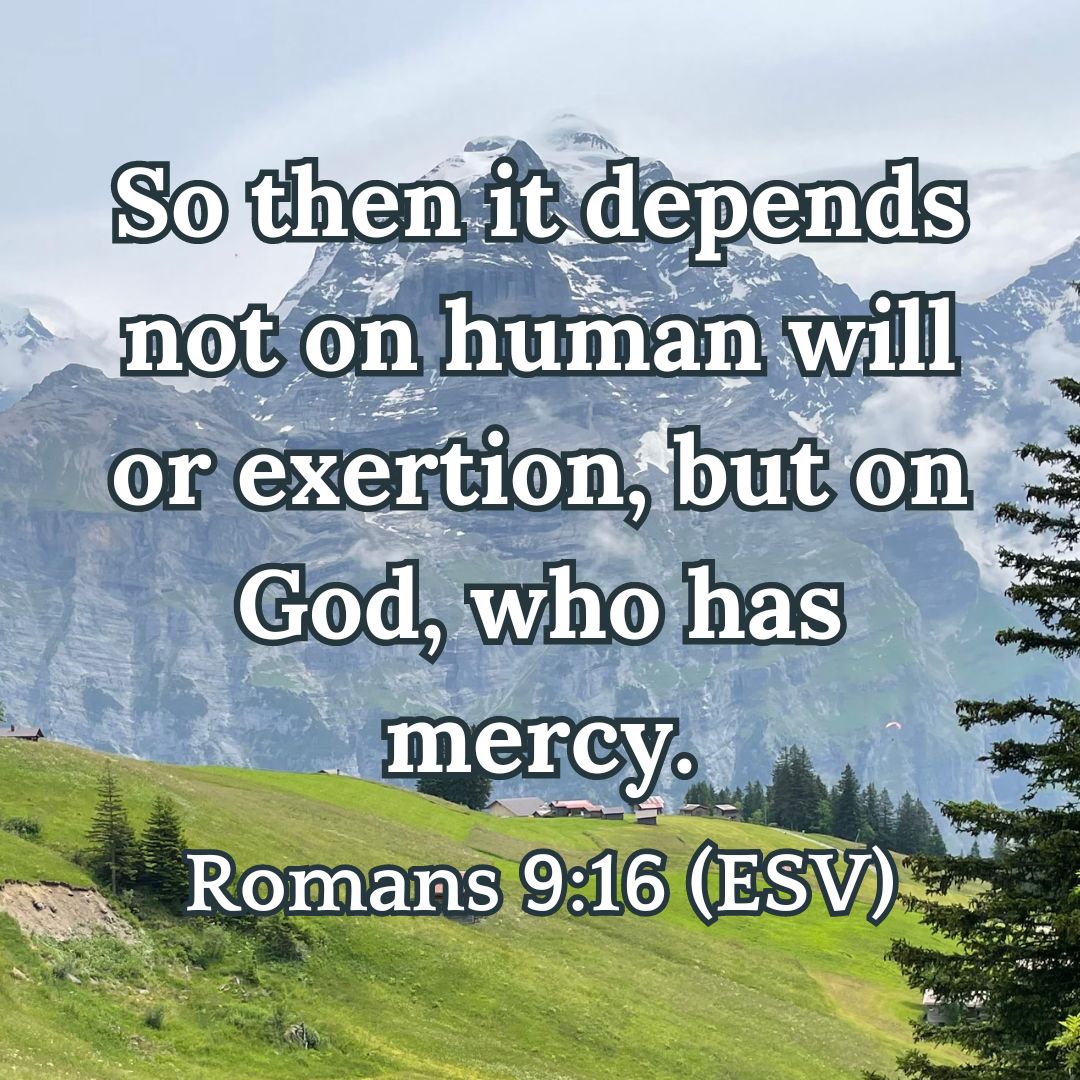
In Romans 9, Paul grieves over Israel’s rejection of the gospel and explains that God’s promises are fulfilled through God’s sovereign choice, not by human effort. He illustrates this with examples from the Old Testament, showing that righteousness comes through faith.
Romans 10
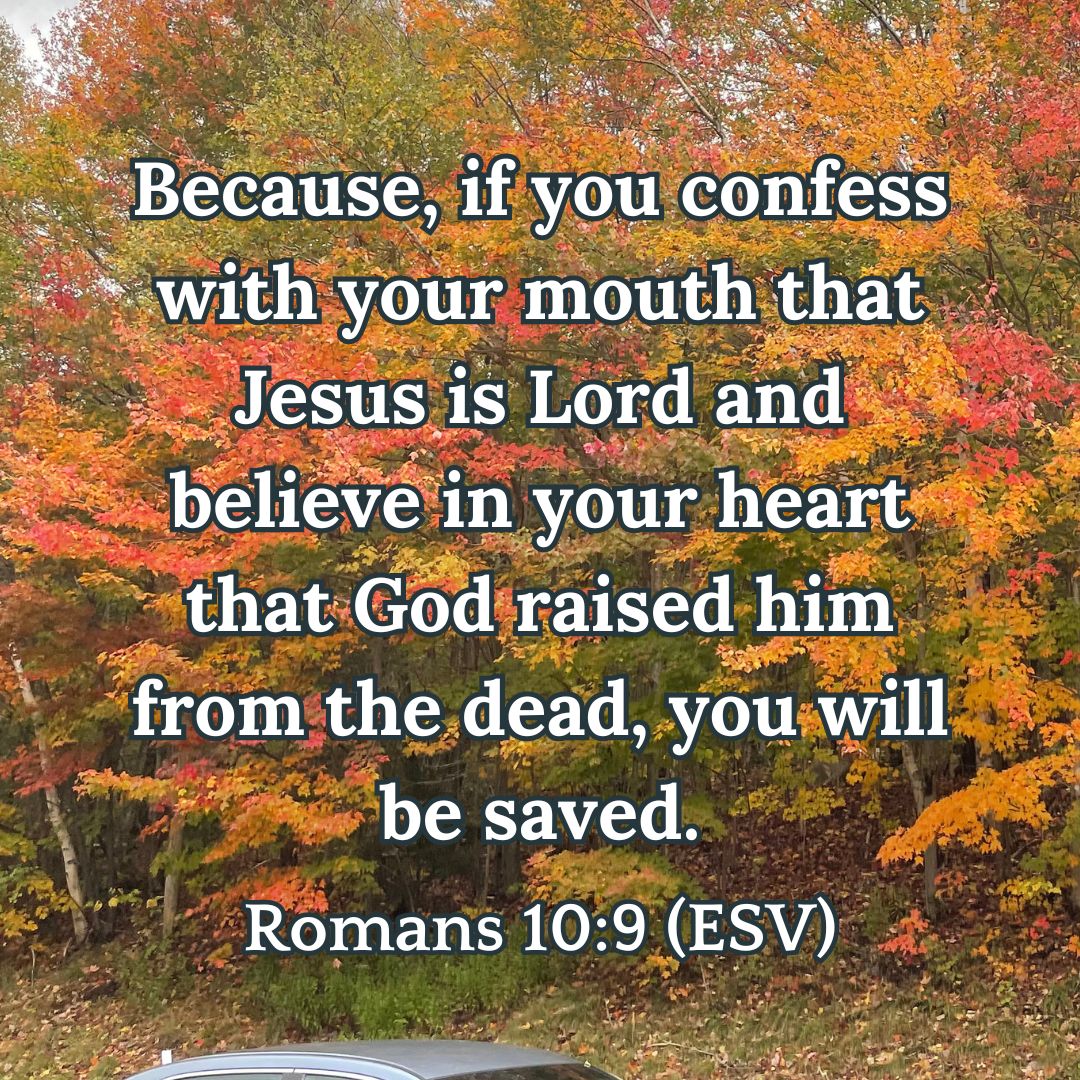
In Romans 10, Paul underscores the necessity of faith in Christ for salvation and the importance of preaching the gospel. He emphasizes that the message of Christ is available to everyone and that faith comes through hearing this message.
Romans 11
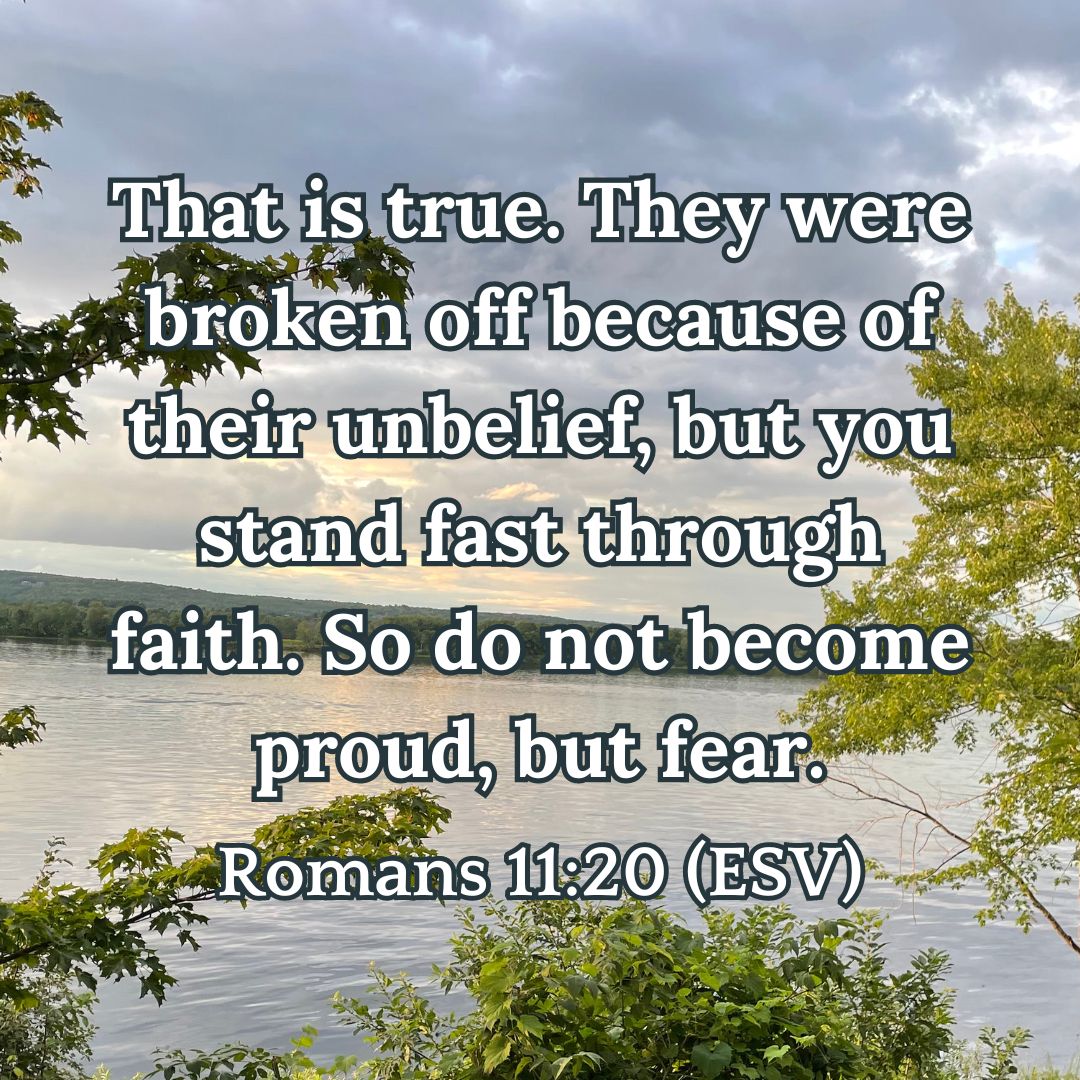
In Romans 11, Paul explains that God has not entirely rejected Israel but has preserved a remnant and included the Gentiles in His plan. He warns against arrogance and concludes with a doxology praising God’s wisdom and knowledge.
Romans 12
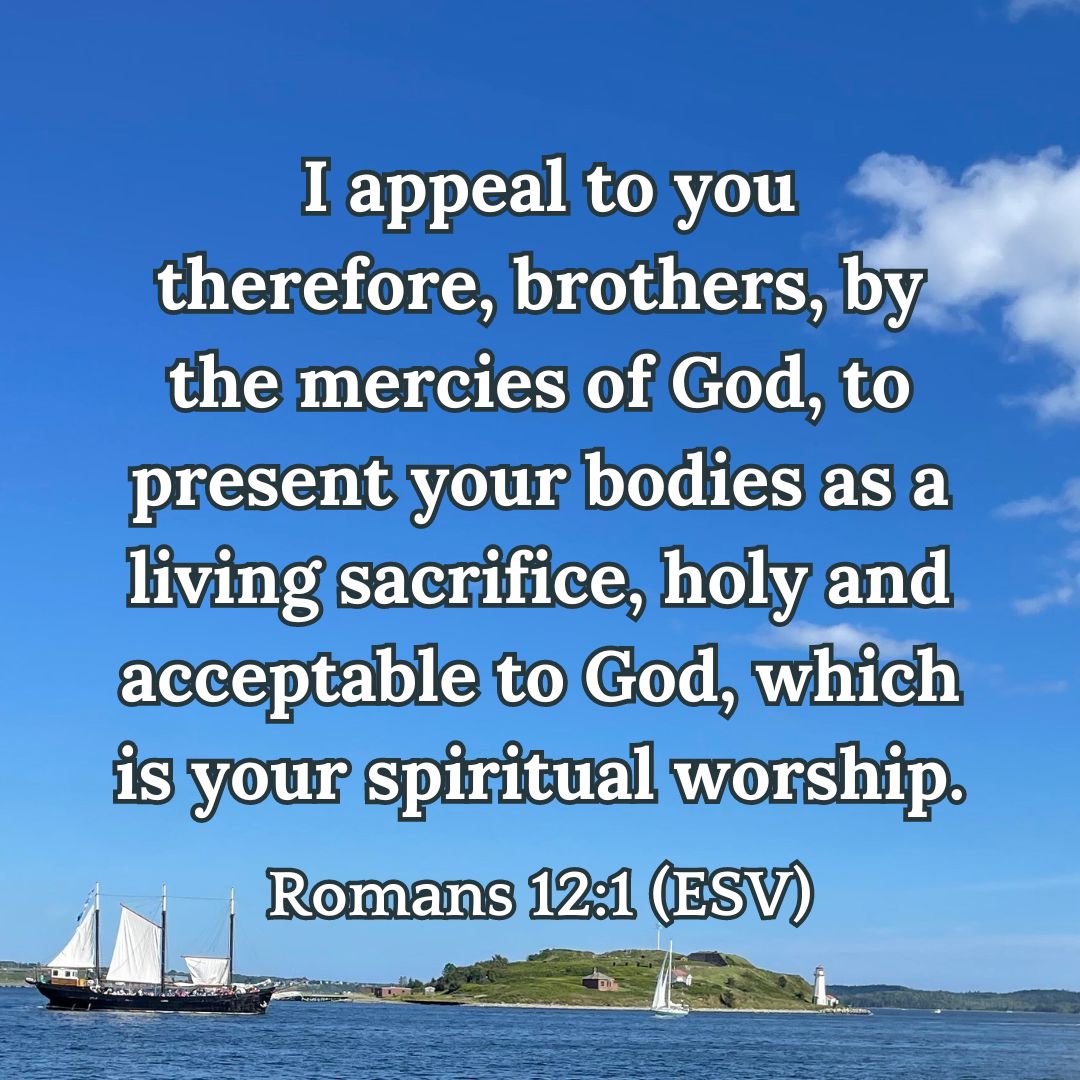
In Romans 12, Paul urges believers to offer their lives as living sacrifices, live in humility, and use their spiritual gifts for the good of the community. He provides practical advice on loving others, living in harmony, and overcoming evil with good.
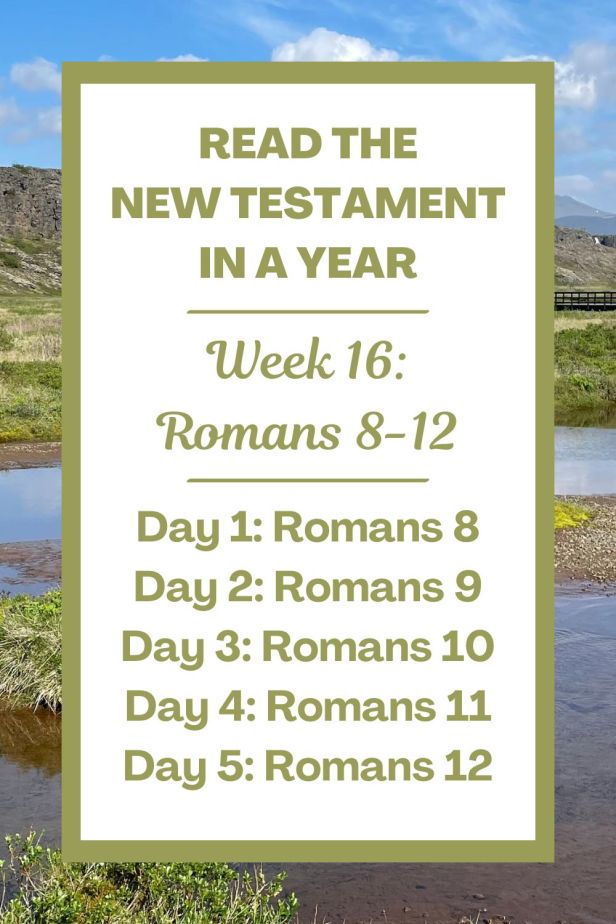
Week 16: New Testament Reading Assignment
Each week, we will read 5 chapters of the New Testament. Some people may prefer to read during the weekdays, while others might enjoy doing most of their reading on the weekends. Choose the method that works best for you!
Printable Resource:
Week 16: Reflection Questions for Romans 8-12
Consider the following reflection questions:
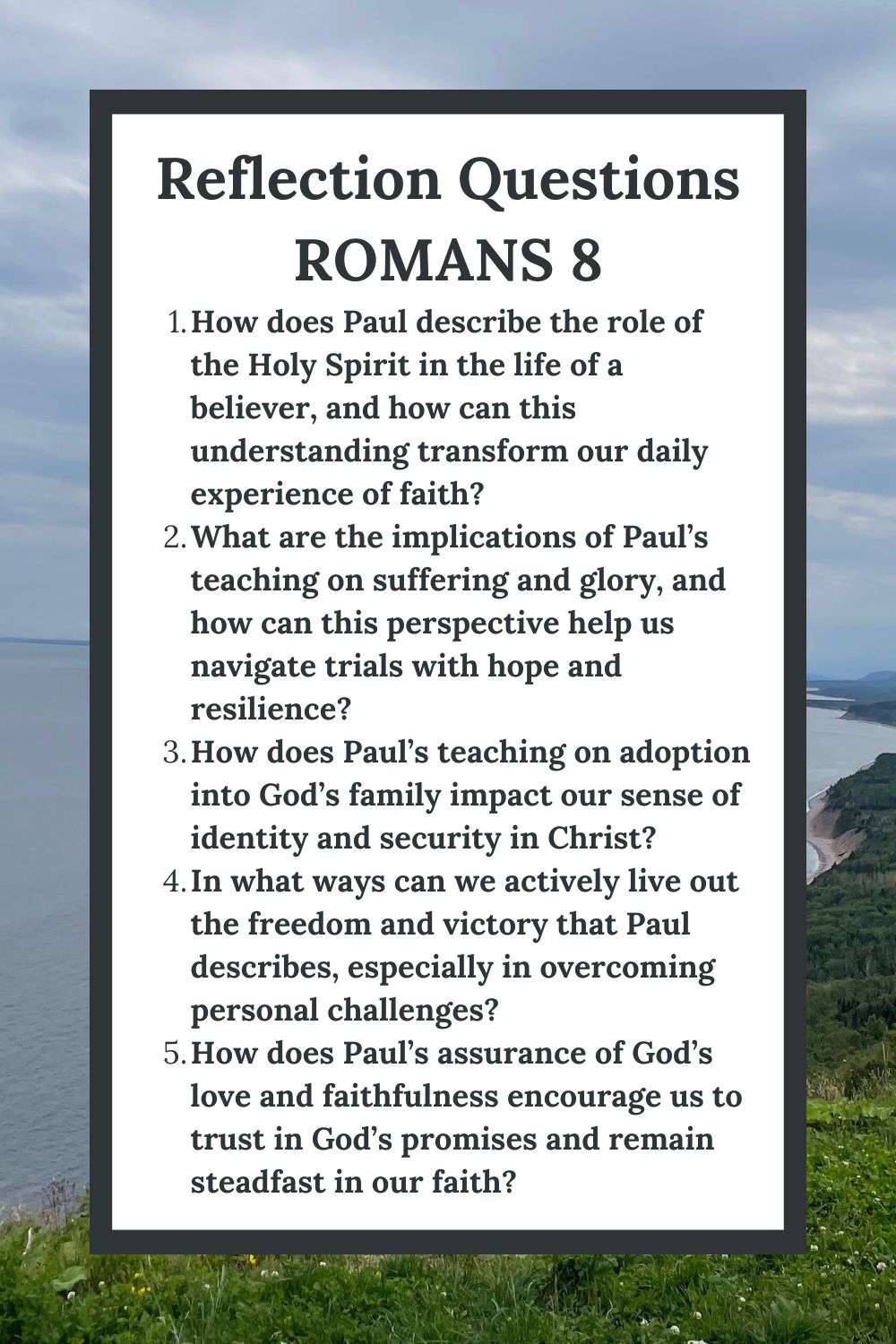
Romans 8: Life in the Spirit
- How does Paul describe the role of the Holy Spirit in the life of a believer, and how can this understanding transform our daily experience of faith?
- What are the implications of Paul’s teaching on suffering and glory, and how can this perspective help us navigate trials with hope and resilience?
- How does Paul’s teaching on adoption into God’s family impact our sense of identity and security in Christ?
- In what ways can we actively live out the freedom and victory that Paul describes, especially in overcoming personal challenges?
- How does Paul’s assurance of God’s love and faithfulness encourage us to trust in God’s promises and remain steadfast in our faith?
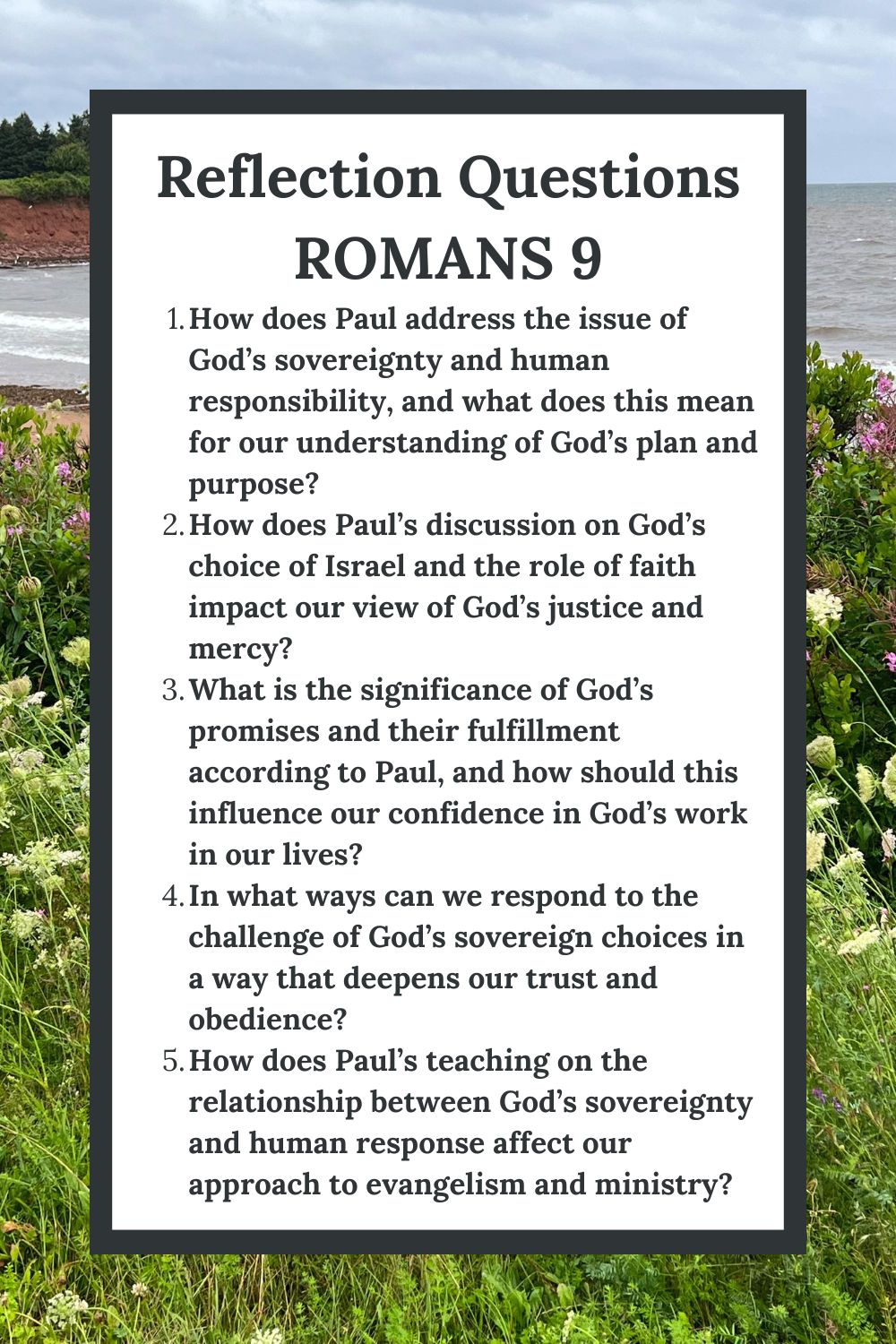
Romans 9: God’s Sovereign Choice
- How does Paul address the issue of God’s sovereignty and human responsibility, and what does this mean for our understanding of God’s plan and purpose?
- How does Paul’s discussion on God’s choice of Israel and the role of faith impact our view of God’s justice and mercy?
- What is the significance of God’s promises and their fulfillment according to Paul, and how should this influence our confidence in God’s work in our lives?
- In what ways can we respond to the challenge of God’s sovereign choices in a way that deepens our trust and obedience?
- How does Paul’s teaching on the relationship between God’s sovereignty and human response affect our approach to evangelism and ministry?
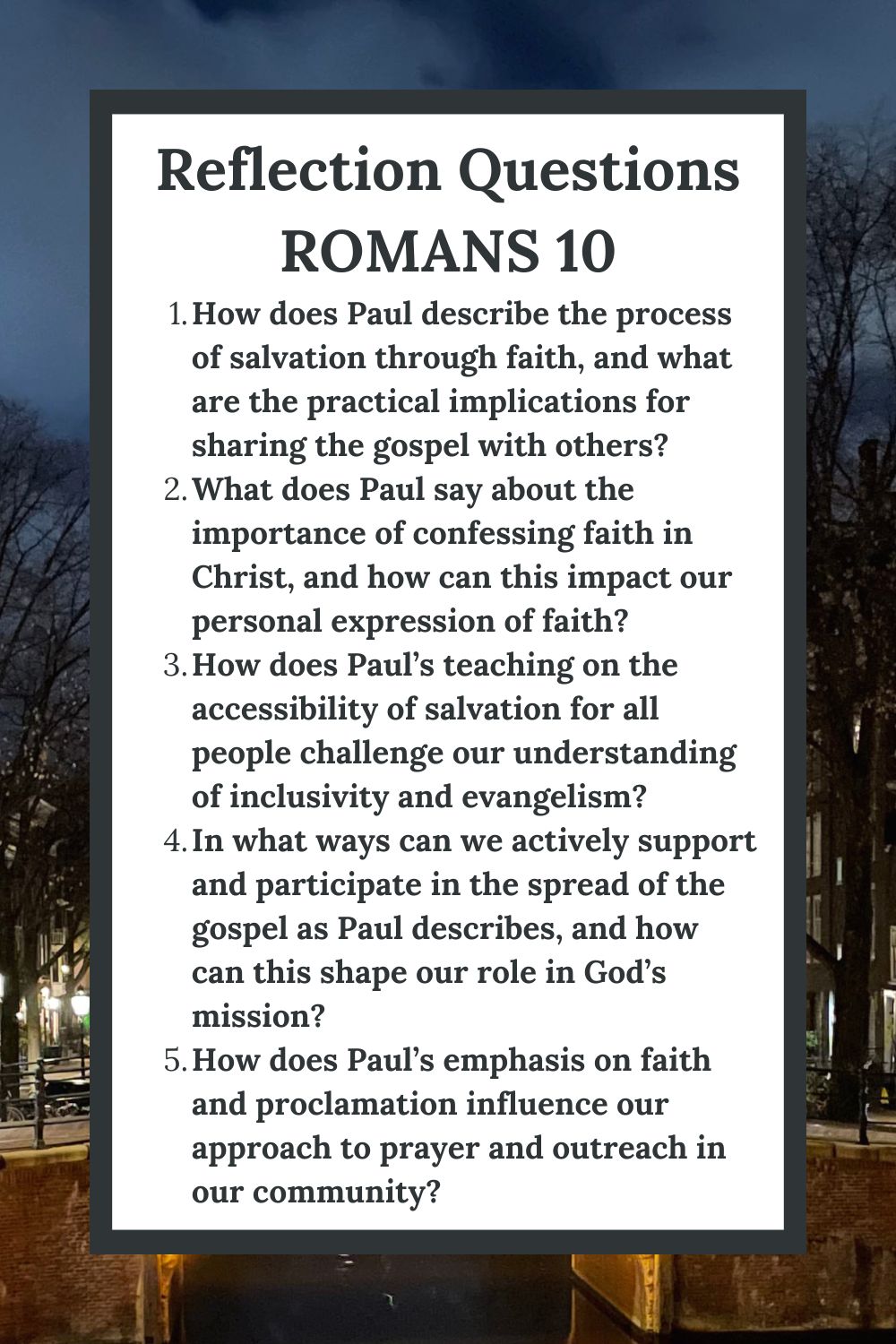
Romans 10: The Word of Faith
- How does Paul describe the process of salvation through faith, and what are the practical implications for sharing the gospel with others?
- What does Paul say about the importance of confessing faith in Christ, and how can this impact our personal expression of faith?
- How does Paul’s teaching on the accessibility of salvation for all people challenge our understanding of inclusivity and evangelism?
- In what ways can we actively support and participate in the spread of the gospel as Paul describes, and how can this shape our role in God’s mission?
- How does Paul’s emphasis on faith and proclamation influence our approach to prayer and outreach in our community?
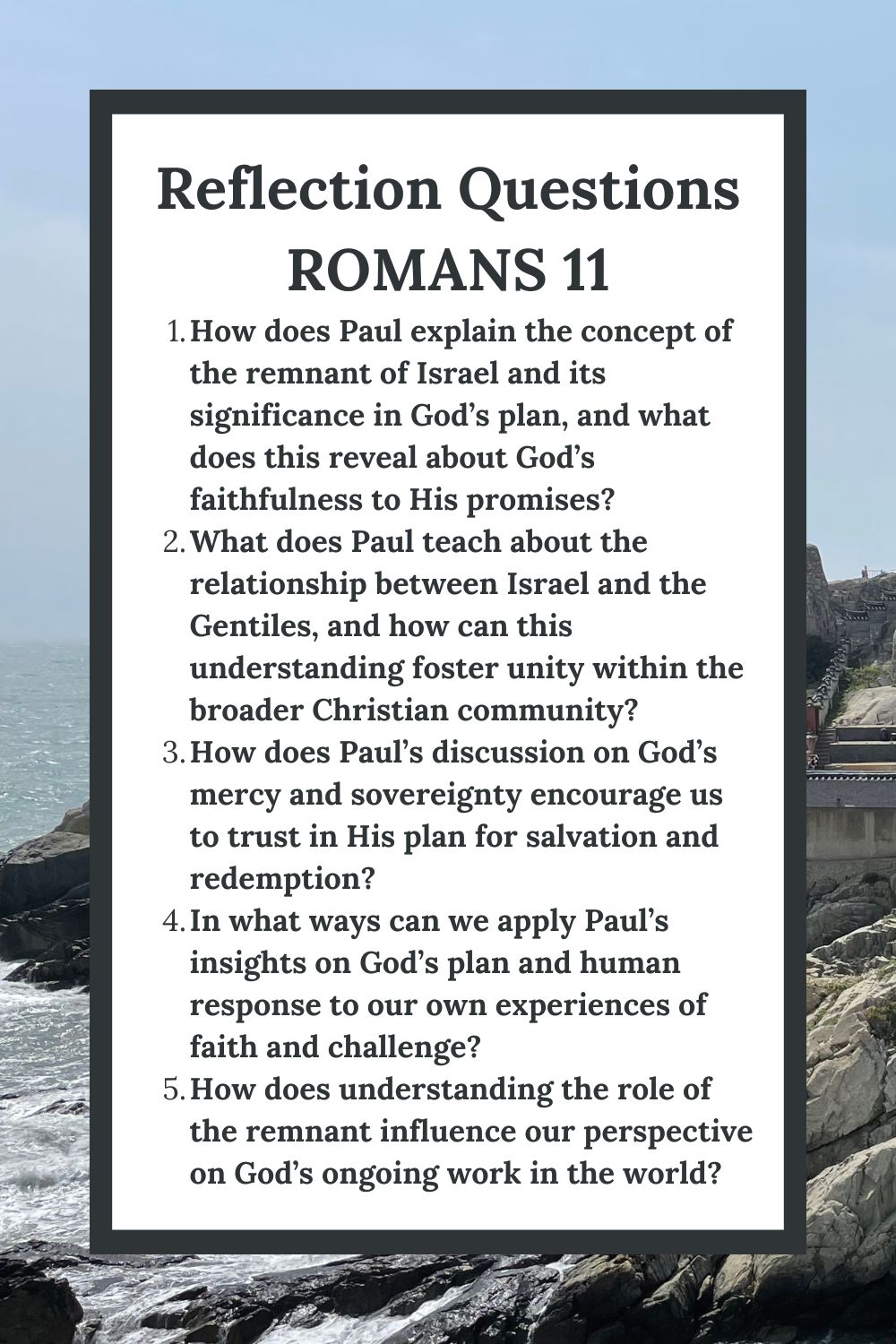
Romans 11: The Remnant of Israel
- How does Paul explain the concept of the remnant of Israel and its significance in God’s plan, and what does this reveal about God’s faithfulness to His promises?
- What does Paul teach about the relationship between Israel and the Gentiles, and how can this understanding foster unity within the broader Christian community?
- How does Paul’s discussion on God’s mercy and sovereignty encourage us to trust in His plan for salvation and redemption?
- In what ways can we apply Paul’s insights on God’s plan and human response to our own experiences of faith and challenge?
- How does understanding the role of the remnant influence our perspective on God’s ongoing work in the world?
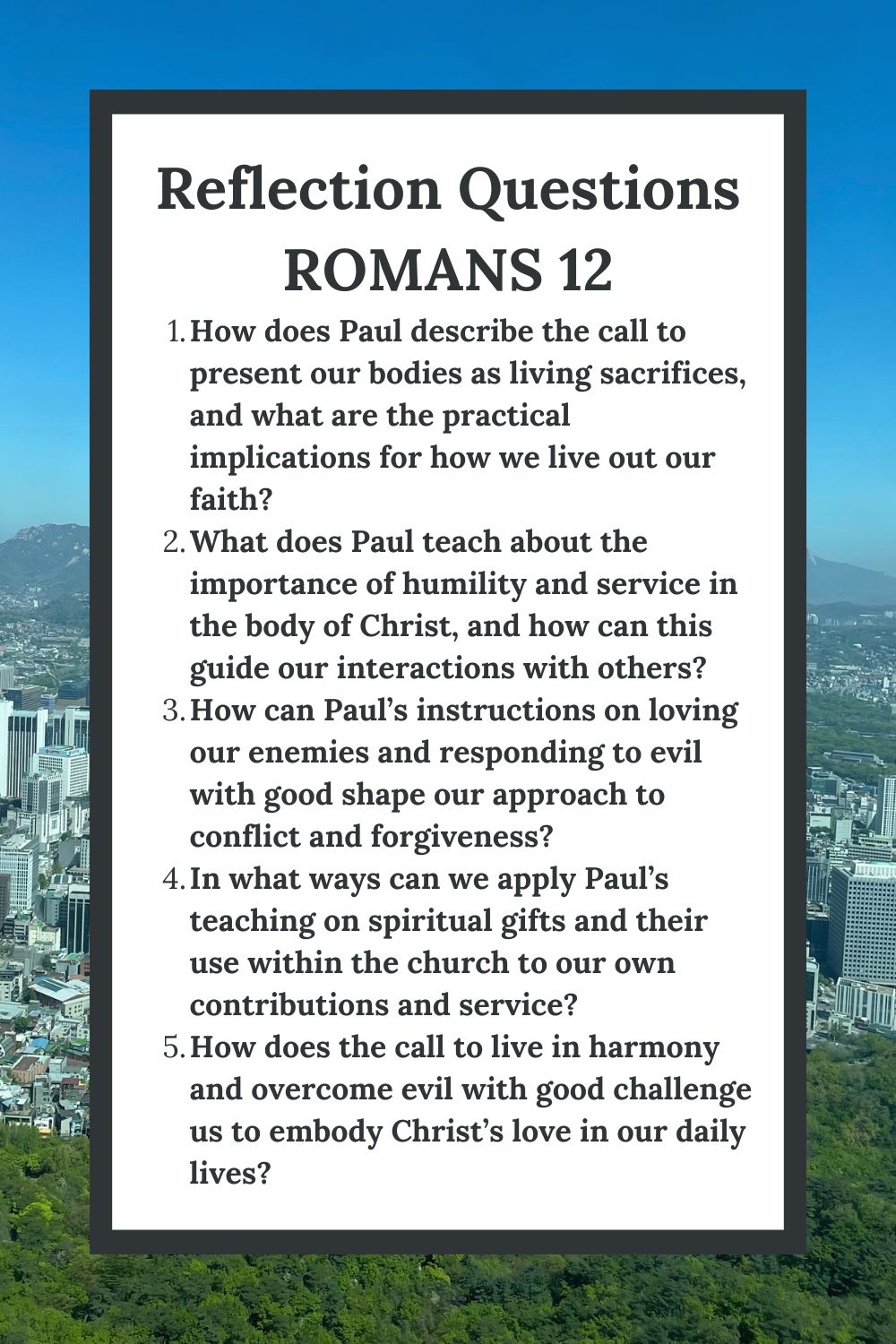
Romans 12: Living Sacrifices
- How does Paul describe the call to present our bodies as living sacrifices, and what are the practical implications for how we live out our faith?
- What does Paul teach about the importance of humility and service in the body of Christ, and how can this guide our interactions with others?
- How can Paul’s instructions on loving our enemies and responding to evil with good shape our approach to conflict and forgiveness?
- In what ways can we apply Paul’s teaching on spiritual gifts and their use within the church to our own contributions and service?
- How does the call to live in harmony and overcome evil with good challenge us to embody Christ’s love in our daily lives?
Reflective Prayer
Choose a few verses or topics from these chapters and pray over them. Consider using the ACTS method — Adoration, Confession, Thankfulness, Supplication:
- Adoration: Praise God. What specific characteristics of God do these readings bring to mind?
- Confession: Tell God that you are sorry for specific sins. What specific sins do these readings bring to mind?
- Thankfulness: Show gratitude towards God. What in these readings inspires gratitude?
- Supplication: Make requests for yourself and for others. What in these readings inspires a prayer?
If helpful, you can use a prayer journal template.
Other Reading Plans
Online Resources
Subscribe
If you enjoyed this post and wish to receive more Christian content, feel free to subscribe to my newsletters!
Related Resources
Visit the Joyful Moments in Christ homepage for all posts, or scroll through other blog posts related to reading the New Testament in a year:




English Standard Version (ESV): Unless otherwise noted, scripture quotations are from the ESV® Bible (The Holy Bible, English Standard Version®), © 2001 by Crossway, a publishing ministry of Good News Publishers. Used by permission. All rights reserved. The ESV text may not be quoted in any publication made available to the public by a Creative Commons license. The ESV may not be translated in whole or in part into any other language.


 Joyful Moments in Christ