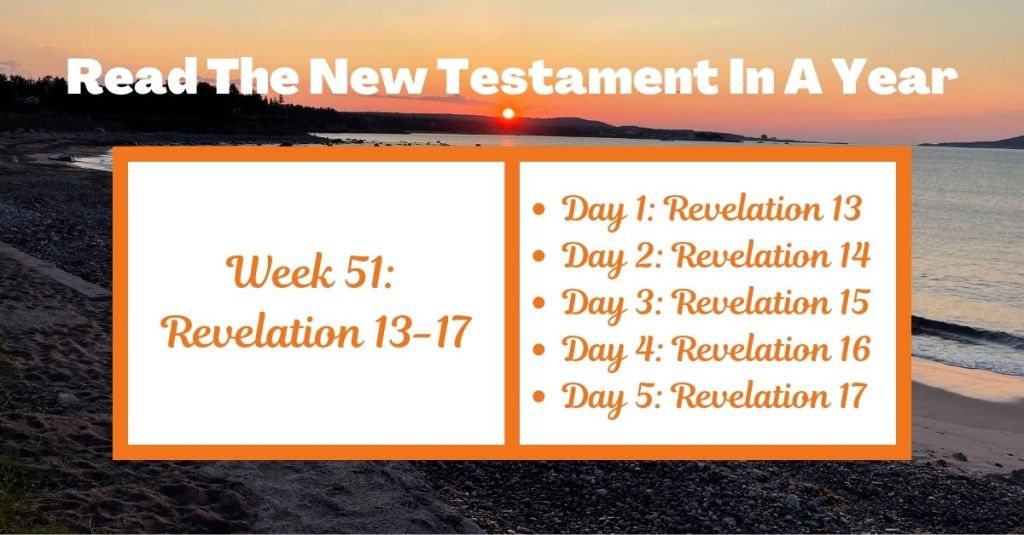
Week 51: Exploring Revelation 13-17
In week 51 of our journey to read the New Testament in a year, we will dive deeper into the dramatic and symbolic visions of Revelation, covering chapters 13-17. These chapters present a powerful portrayal of the opposition believers face and the ultimate victory that awaits those who endure. In Revelation 13, we’ll encounter the two beasts representing earthly powers that deceive and persecute. Chapter 14 provides hope, showing the Lamb with the faithful, while angels proclaim judgment. In chapters 15 and 16, we witness the final judgments as God’s justice is poured out through seven bowls. Revelation 17 then introduces the fall of “Babylon,” symbolizing a corrupt system destined for defeat. As we reflect on these passages, we will explore the themes of endurance, faith, and God’s ultimate triumph, holding fast to the hope that Christ’s victory brings.
Revelation 13
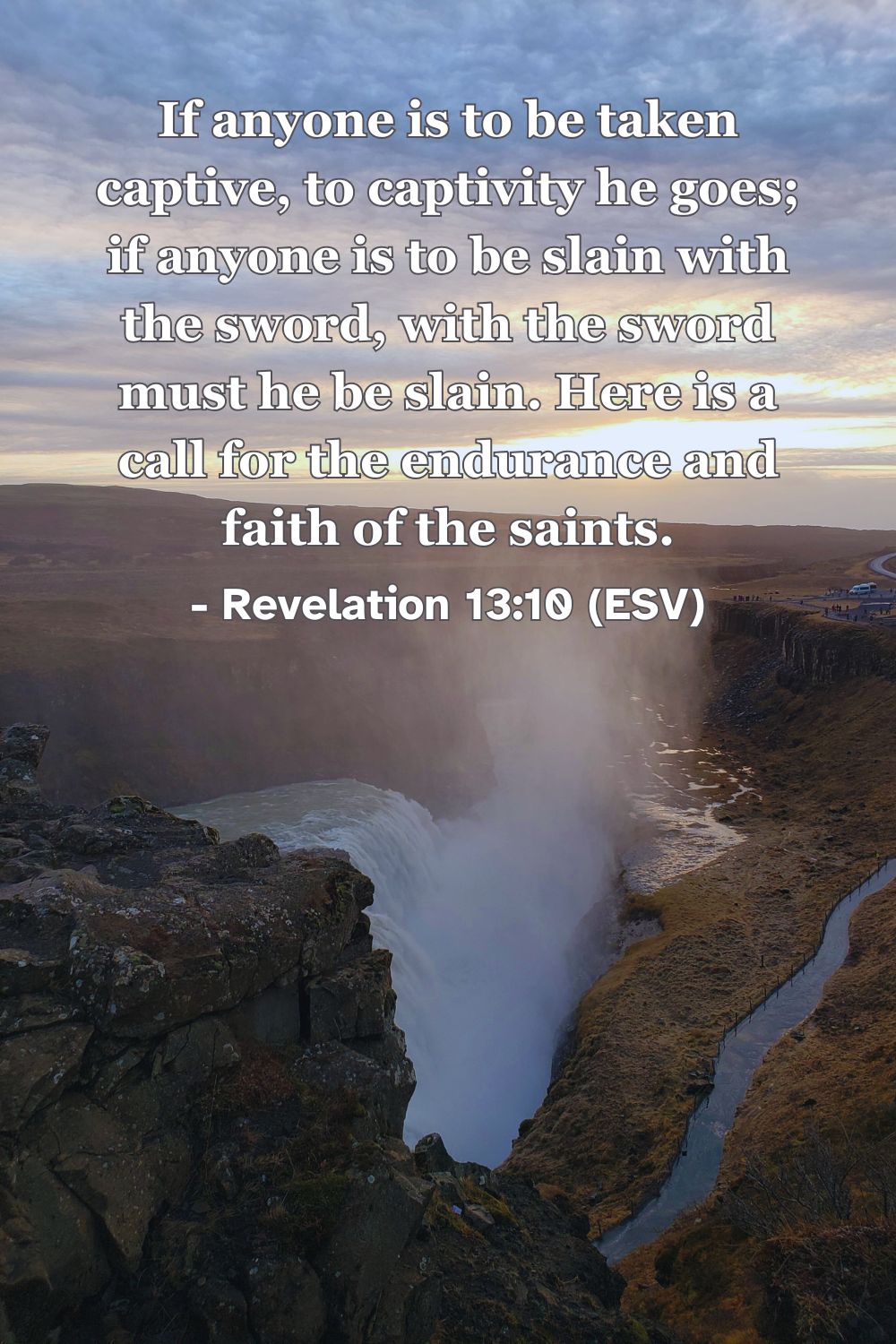
Revelation 13 introduces two beasts: one from the sea and one from the earth. The first beast symbolizes oppressive political powers, while the second beast enforces worship of the first. Together, they deceive and persecute believers, requiring the “mark of the beast” to buy or sell, presenting a powerful image of opposition to God’s people.
Revelation 14
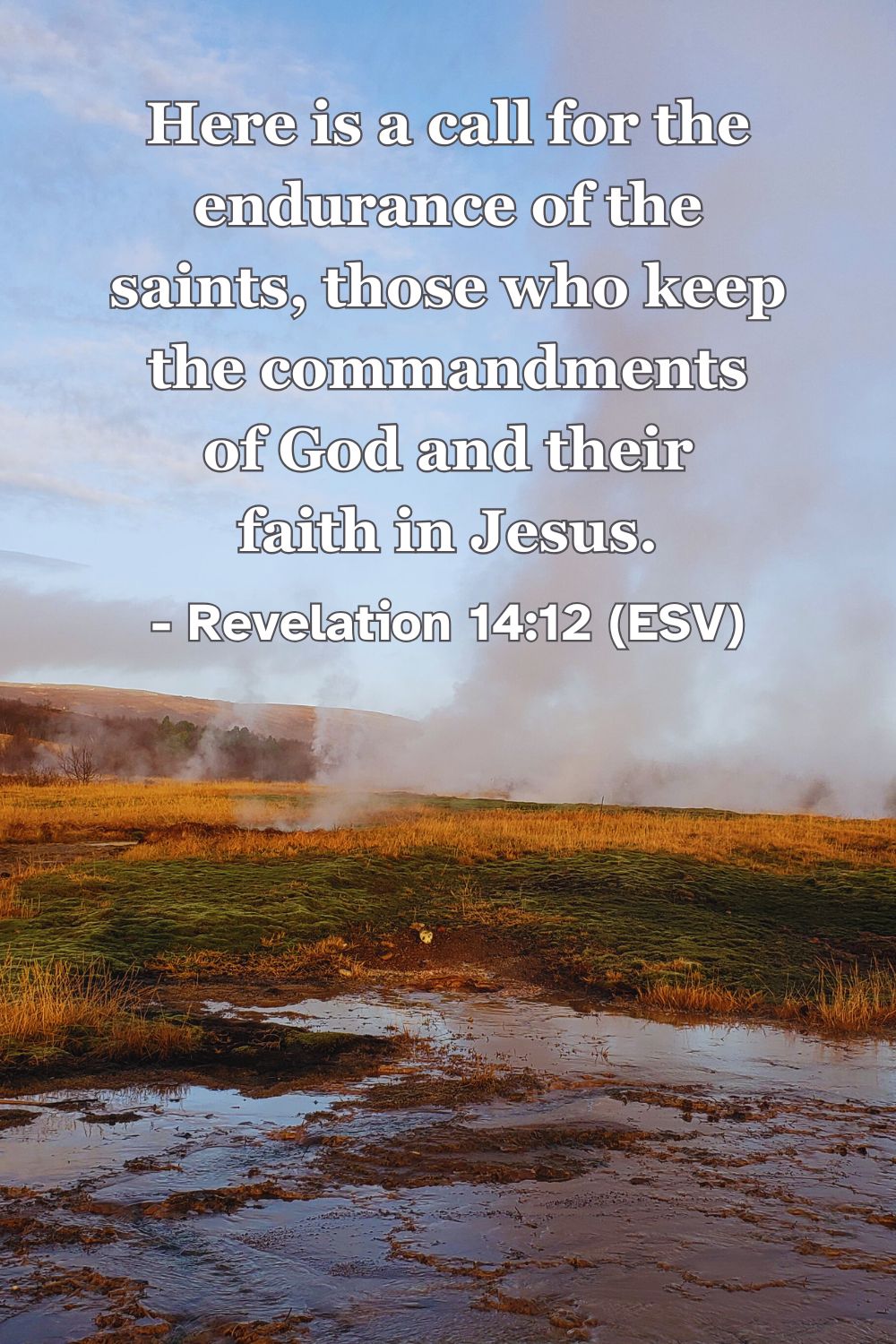
In Revelation 14, John sees the Lamb standing with 144,000 faithful believers. Three angels deliver messages of judgment, urging repentance and condemning worshipers of the beast. This chapter concludes with a vision of the harvest, symbolizing the gathering of both the faithful and those destined for judgment.
Revelation 15
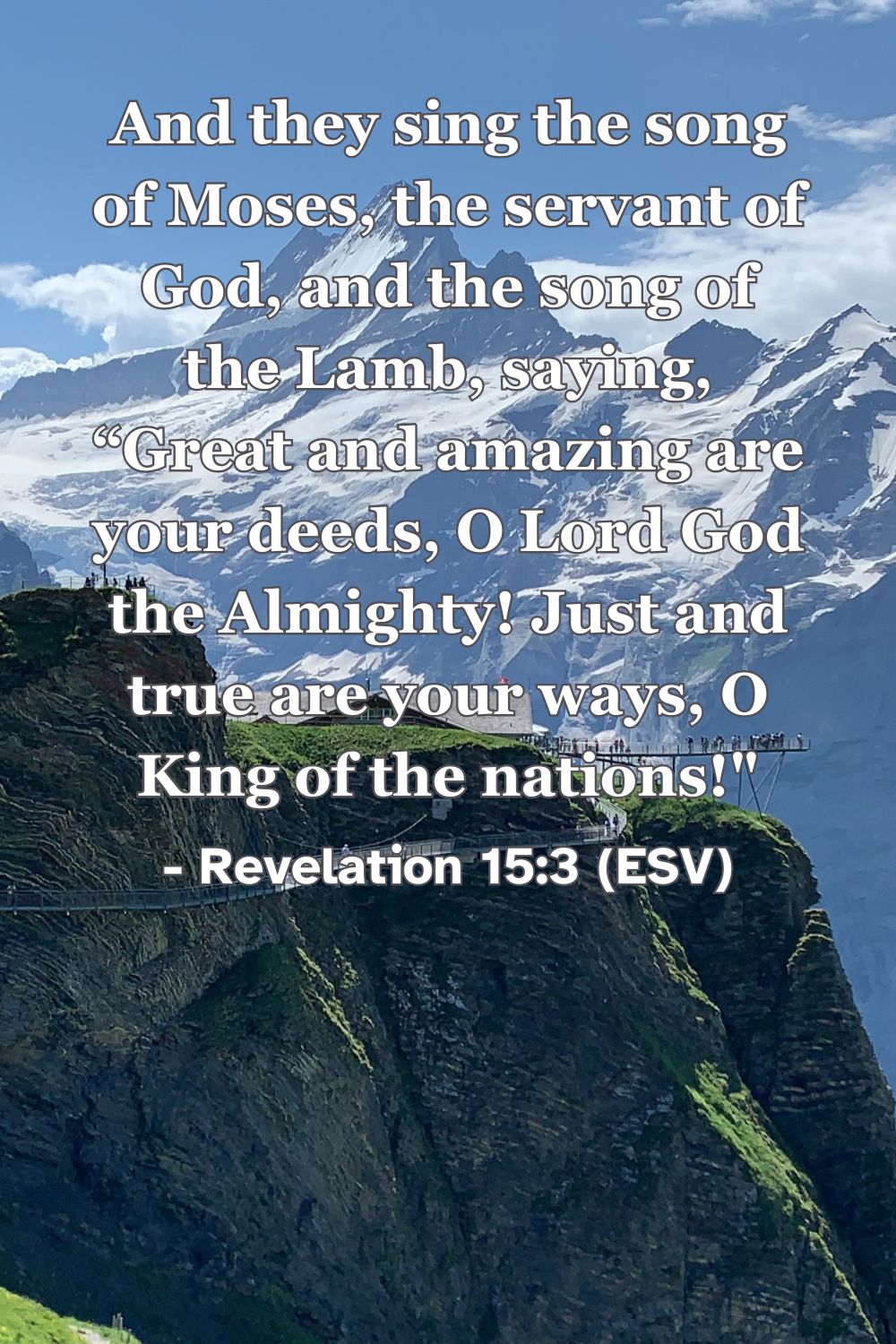
Revelation 15 describes a scene of worship in heaven as seven angels prepare to pour out the final judgments. Believers who have triumphed over the beast sing the song of Moses and the Lamb, praising God’s righteous deeds and His justice.
Revelation 16
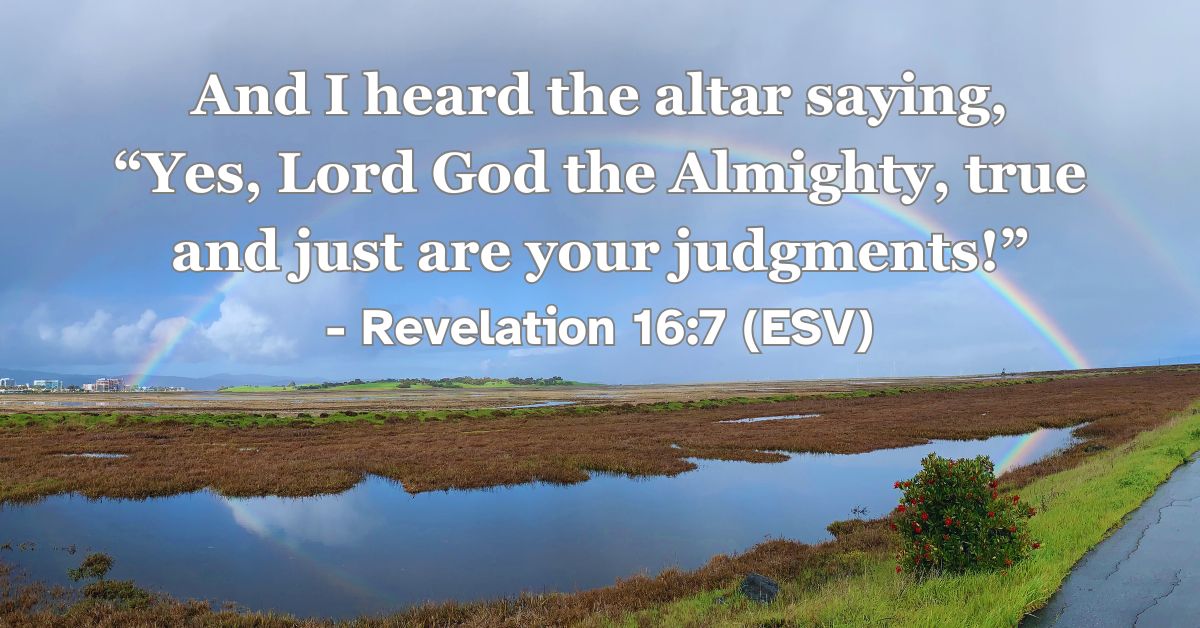
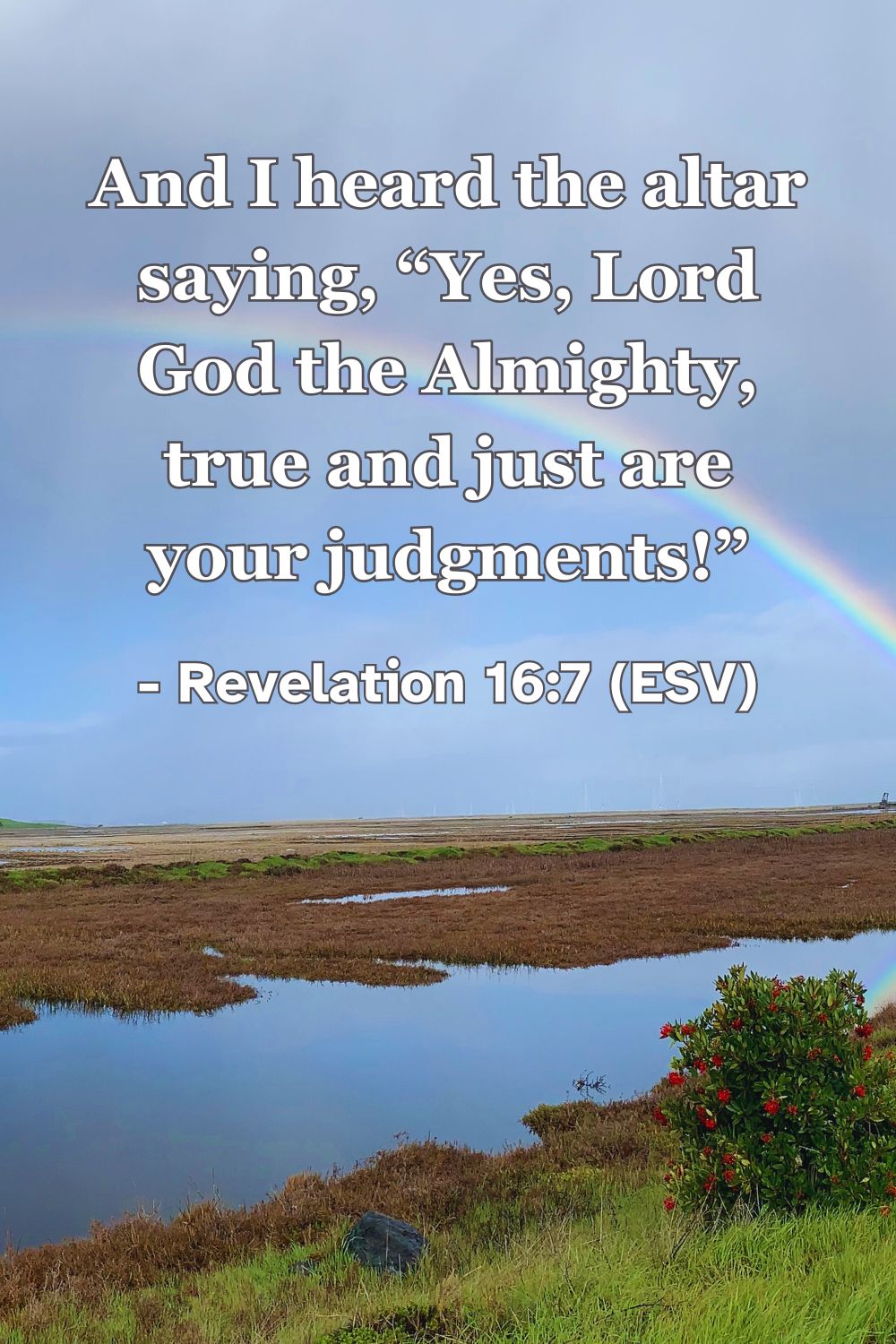
In Revelation 16, the seven bowls of God’s wrath are poured out, bringing plagues and catastrophic events upon the earth. These judgments reveal the stubbornness of humanity as people refuse to repent. Despite the suffering, God’s sovereignty and justice are highlighted as final judgment approaches.
Revelation 17
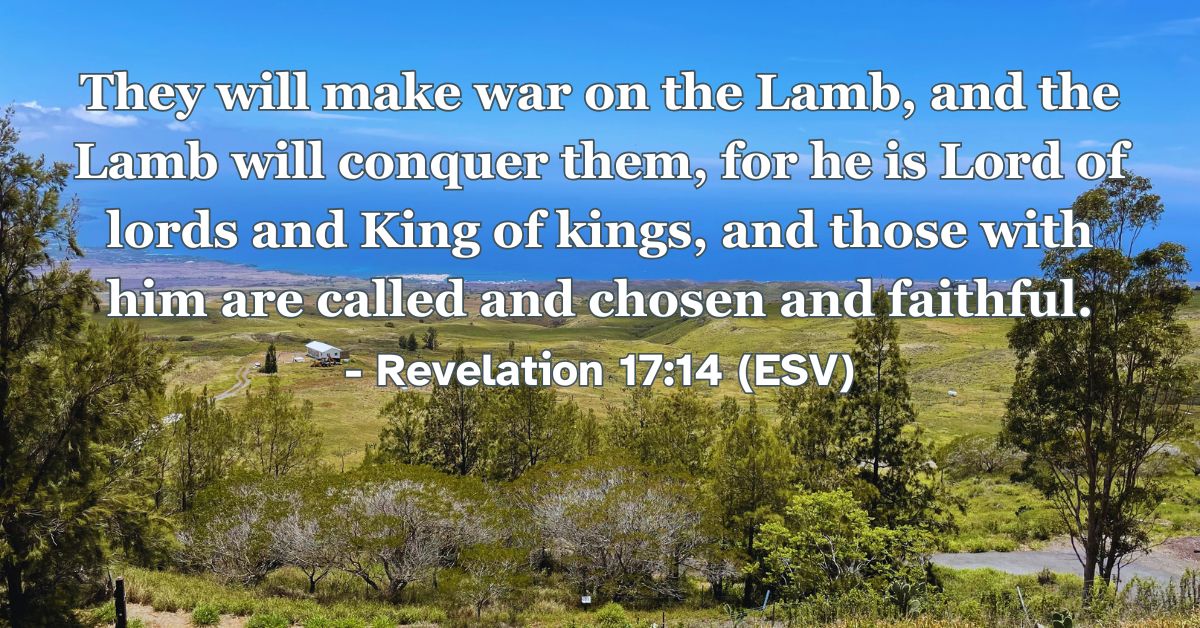
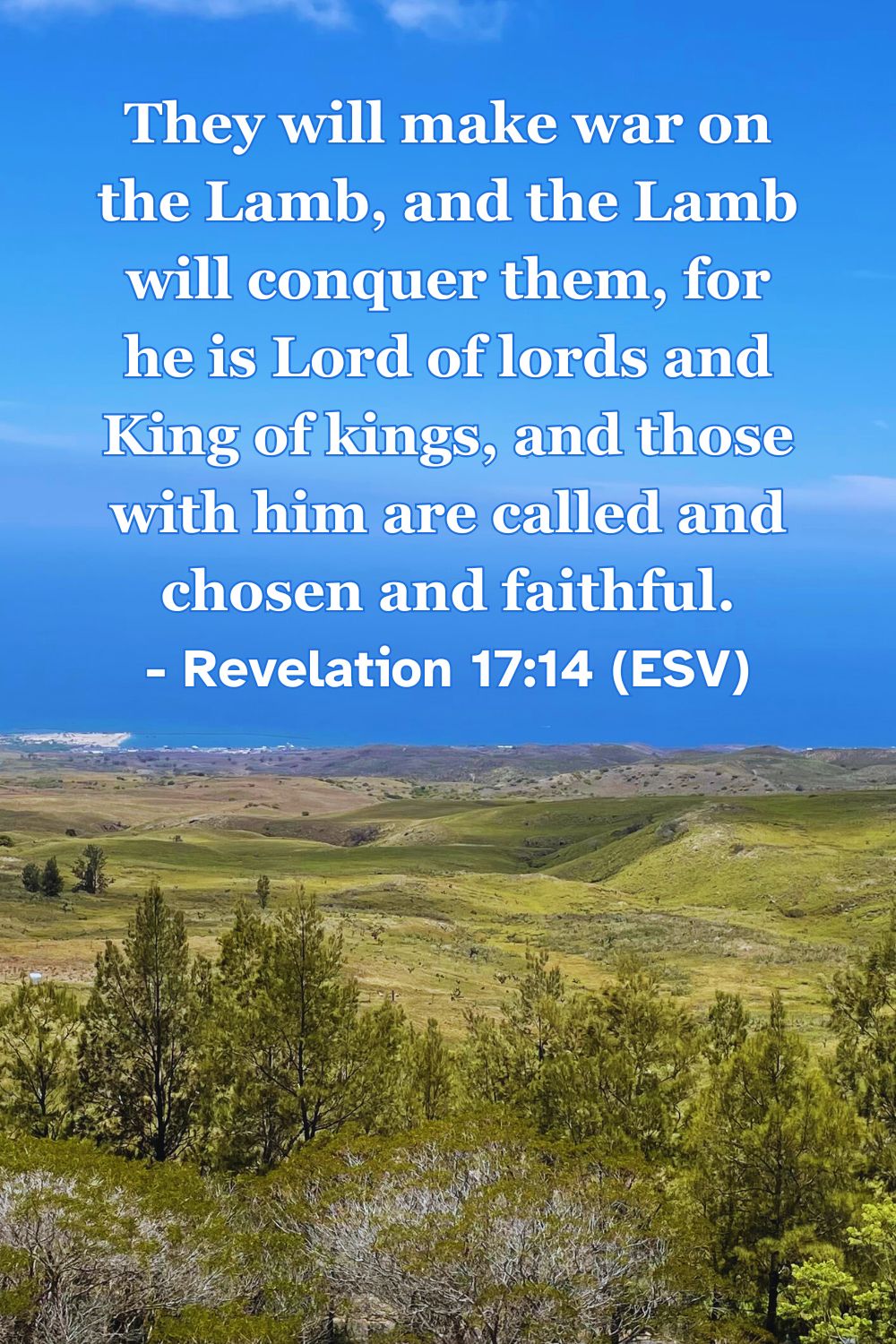
In Revelation 17, John is shown a vision of a woman, symbolizing “Babylon the Great,” riding a beast. This imagery represents a powerful, corrupt system in opposition to God. The woman’s downfall is foretold as God’s justice will prevail over this system of sin and deception, emphasizing the ultimate victory of righteousness.
Week 51: New Testament Reading Assignment
Each week, we will read 5 chapters of the New Testament. Some people may prefer to read during the weekdays, while others might enjoy doing most of their reading on the weekends. Choose the method that works best for you!
- Day 1: Revelation 13
- Day 2: Revelation 14
- Day 3: Revelation 15
- Day 4: Revelation 16
- Day 5: Revelation 17
Printable Resource:
Week 51: Reflection Questions for Revelation 13-17
Consider the following reflection questions:
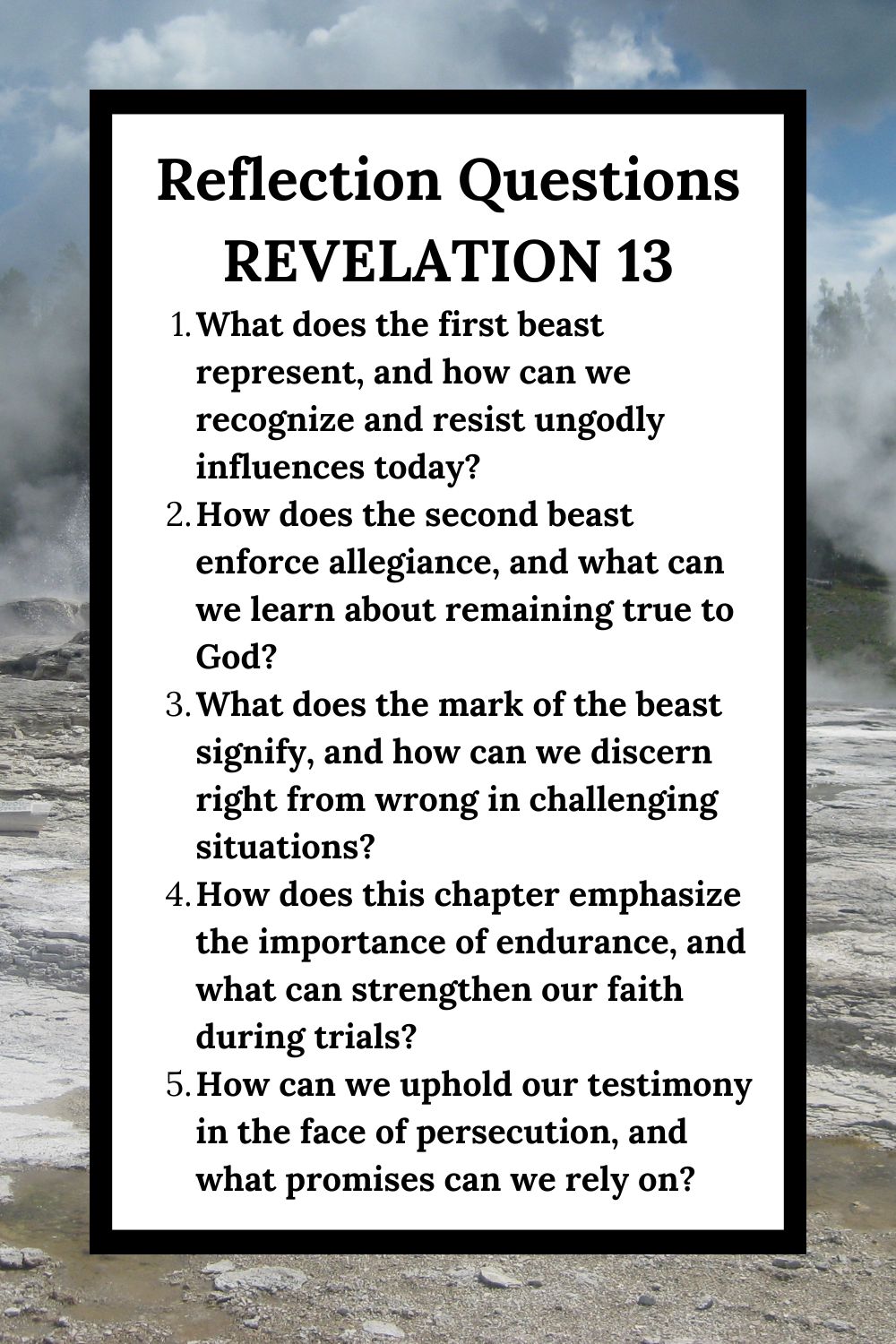
Revelation 13: The Beasts and Endurance of the Saints
- What does the first beast represent, and how can we recognize and resist ungodly influences today?
- How does the second beast enforce allegiance, and what can we learn about remaining true to God?
- What does the mark of the beast signify, and how can we discern right from wrong in challenging situations?
- How does this chapter emphasize the importance of endurance, and what can strengthen our faith during trials?
- How can we uphold our testimony in the face of persecution, and what promises can we rely on?
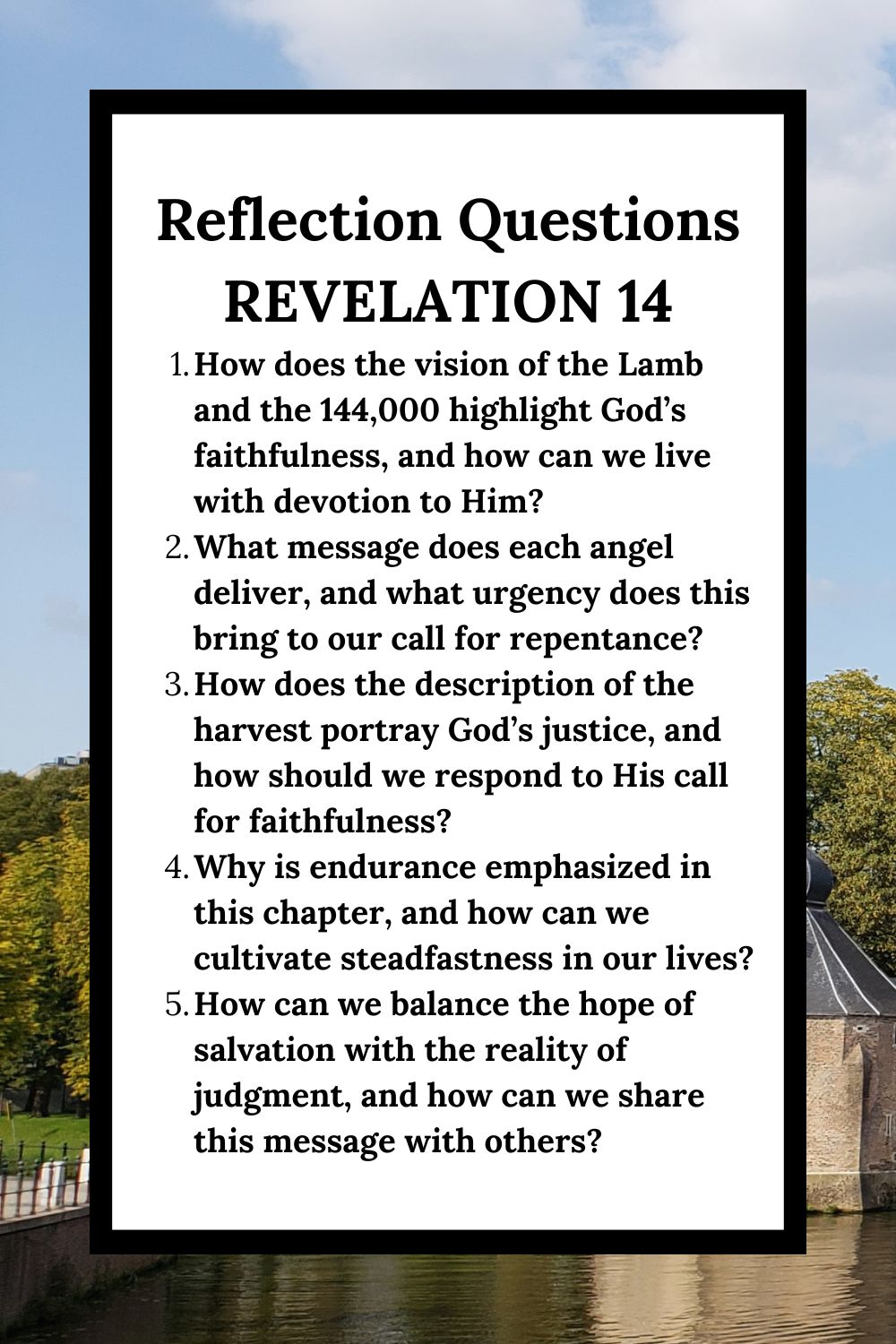
Revelation 14: Judgment and Harvest
- How does the vision of the Lamb and the 144,000 highlight God’s faithfulness, and how can we live with devotion to Him?
- What message does each angel deliver, and what urgency does this bring to our call for repentance?
- How does the description of the harvest portray God’s justice, and how should we respond to His call for faithfulness?
- Why is endurance emphasized in this chapter, and how can we cultivate steadfastness in our lives?
- How can we balance the hope of salvation with the reality of judgment, and how can we share this message with others?
Revelation 15: Worship and Final Judgments
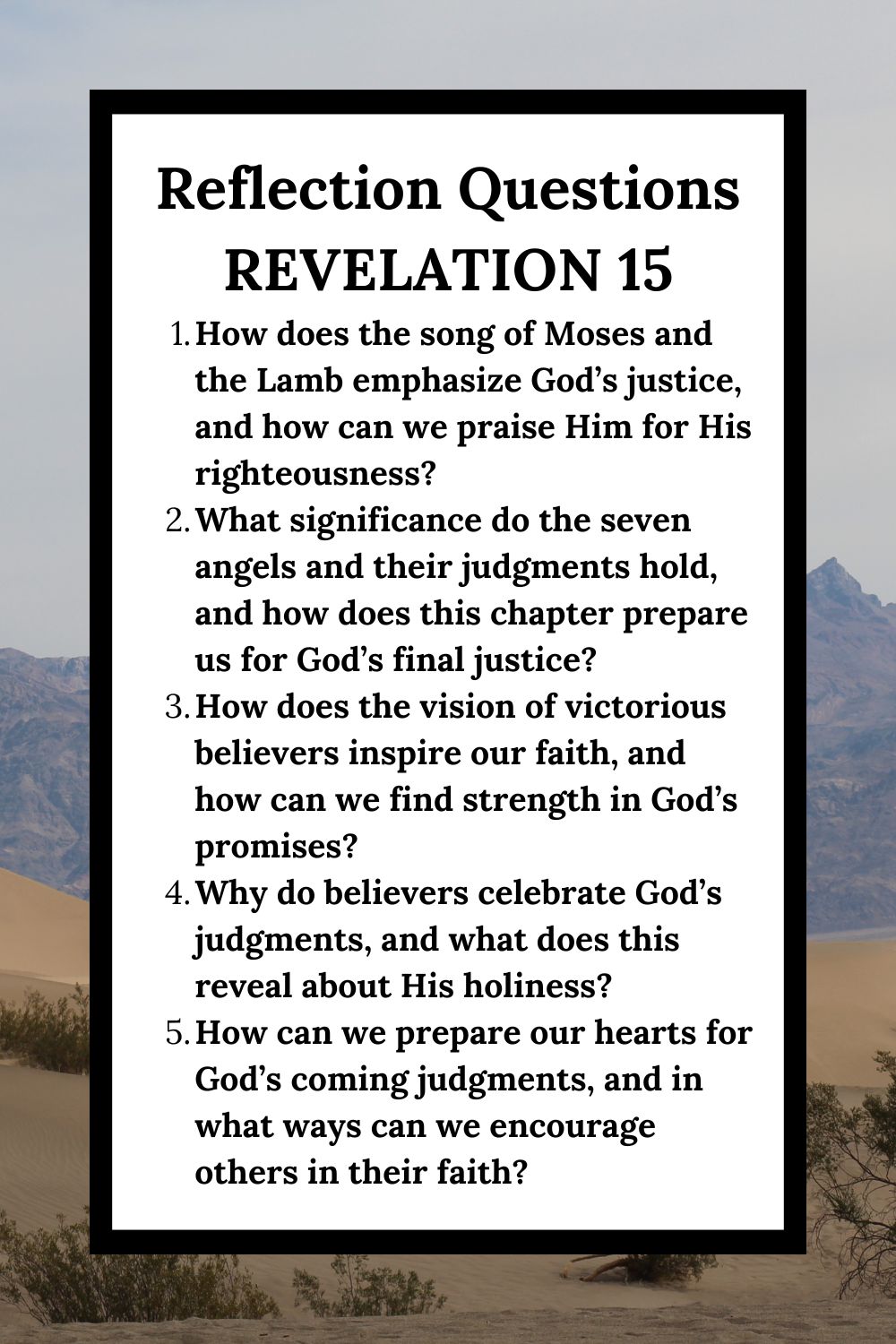
- How does the song of Moses and the Lamb emphasize God’s justice, and how can we praise Him for His righteousness?
- What significance do the seven angels and their judgments hold, and how does this chapter prepare us for God’s final justice?
- How does the vision of victorious believers inspire our faith, and how can we find strength in God’s promises?
- Why do believers celebrate God’s judgments, and what does this reveal about His holiness?
- How can we prepare our hearts for God’s coming judgments, and in what ways can we encourage others in their faith?
Revelation 16: The Seven Bowls of God’s Wrath
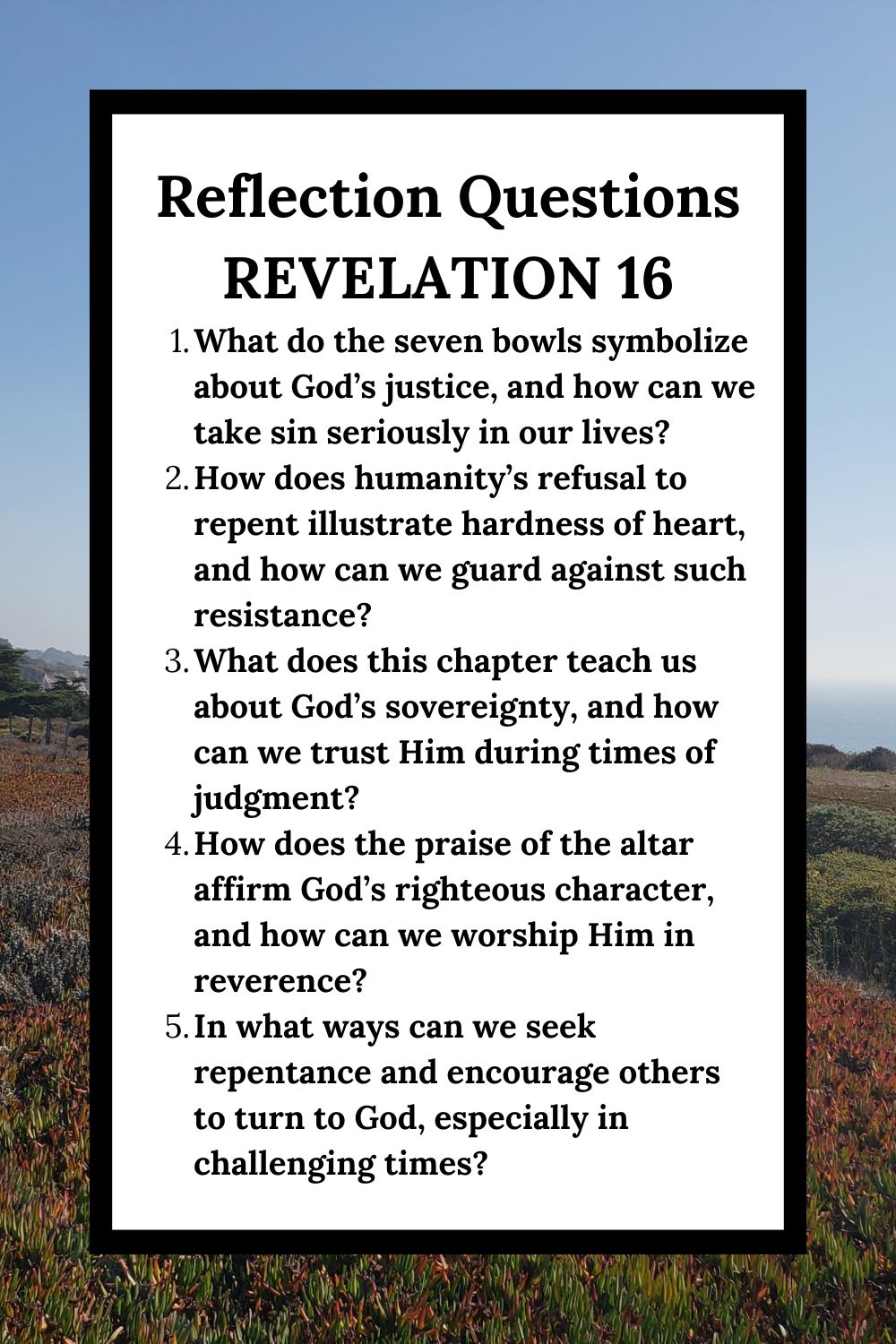
- What do the seven bowls symbolize about God’s justice, and how can we take sin seriously in our lives?
- How does humanity’s refusal to repent illustrate hardness of heart, and how can we guard against such resistance?
- What does this chapter teach us about God’s sovereignty, and how can we trust Him during times of judgment?
- How does the praise of the altar affirm God’s righteous character, and how can we worship Him in reverence?
- In what ways can we seek repentance and encourage others to turn to God, especially in challenging times?
Revelation 17: The Woman and the Beast – Babylon’s Downfall
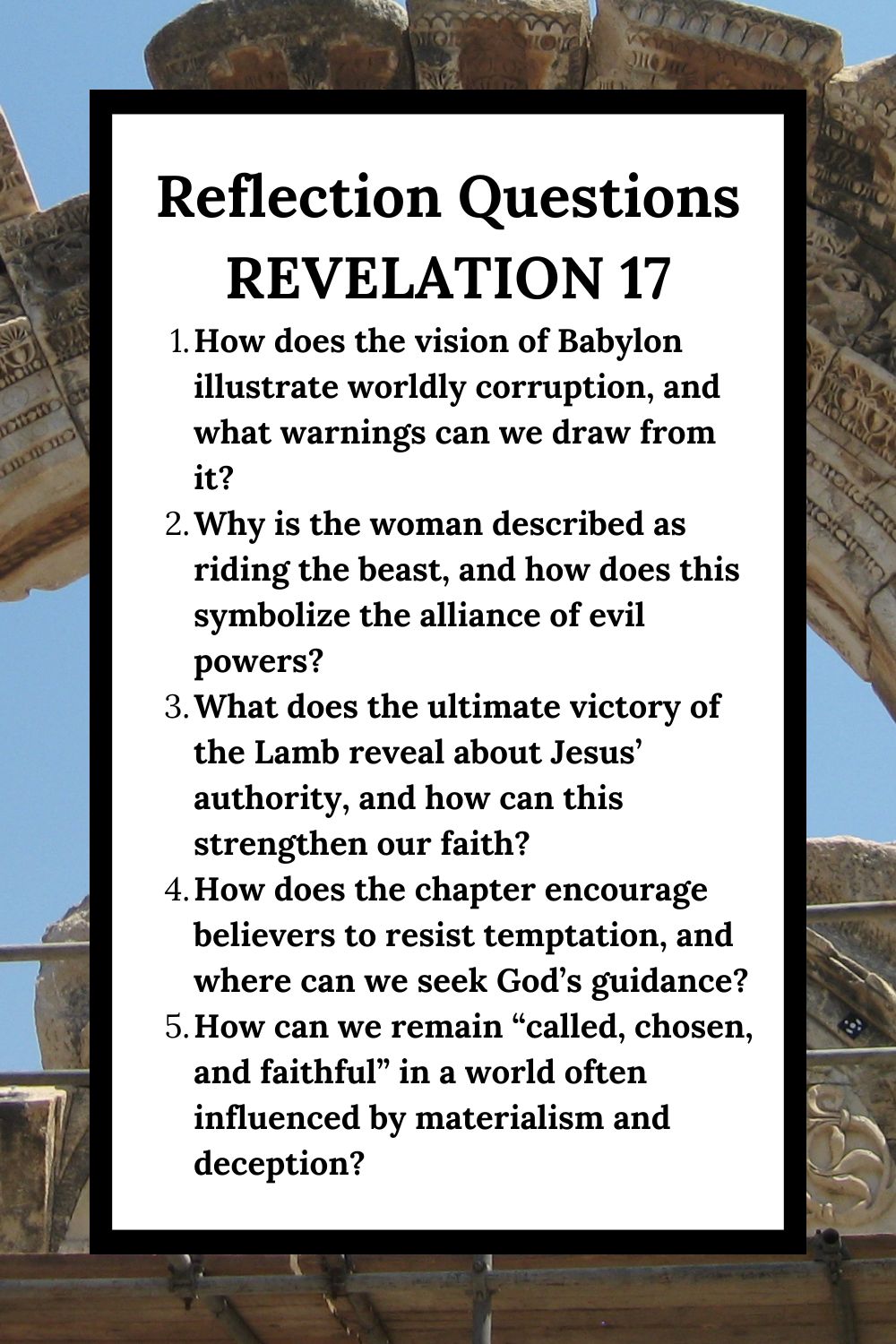
- How does the vision of Babylon illustrate worldly corruption, and what warnings can we draw from it?
- Why is the woman described as riding the beast, and how does this symbolize the alliance of evil powers?
- What does the ultimate victory of the Lamb reveal about Jesus’ authority, and how can this strengthen our faith?
- How does the chapter encourage believers to resist temptation, and where can we seek God’s guidance?
- How can we remain “called, chosen, and faithful” in a world often influenced by materialism and deception?
Reflective Prayer
Choose a few verses or topics from these chapters and pray over them. Consider using the ACTS method: Adoration, Confession, Thankfulness, Supplication:
- Adoration: Praise God. What specific characteristics of God do these readings bring to mind?
- Confession: Tell God that you are sorry for specific sins. What specific sins do these readings bring to mind?
- Thankfulness: Show gratitude towards God. What in these readings inspires gratitude?
- Supplication: Make requests for yourself and for others. What in these readings inspires a prayer?
If helpful, you can use a prayer journal template.
Other Reading Plans
Online Resources
Subscribe
If you enjoyed this post and wish to receive more Christian content, feel free to subscribe to my newsletters!
Related Resources
Visit the Joyful Moments in Christ homepage for all posts, or scroll through other blog posts related to reading the New Testament in a year:




English Standard Version (ESV): Unless otherwise noted, scripture quotations are from the ESV® Bible (The Holy Bible, English Standard Version®), © 2001 by Crossway, a publishing ministry of Good News Publishers. Used by permission. All rights reserved. The ESV text may not be quoted in any publication made available to the public by a Creative Commons license. The ESV may not be translated in whole or in part into any other language.

 Joyful Moments in Christ