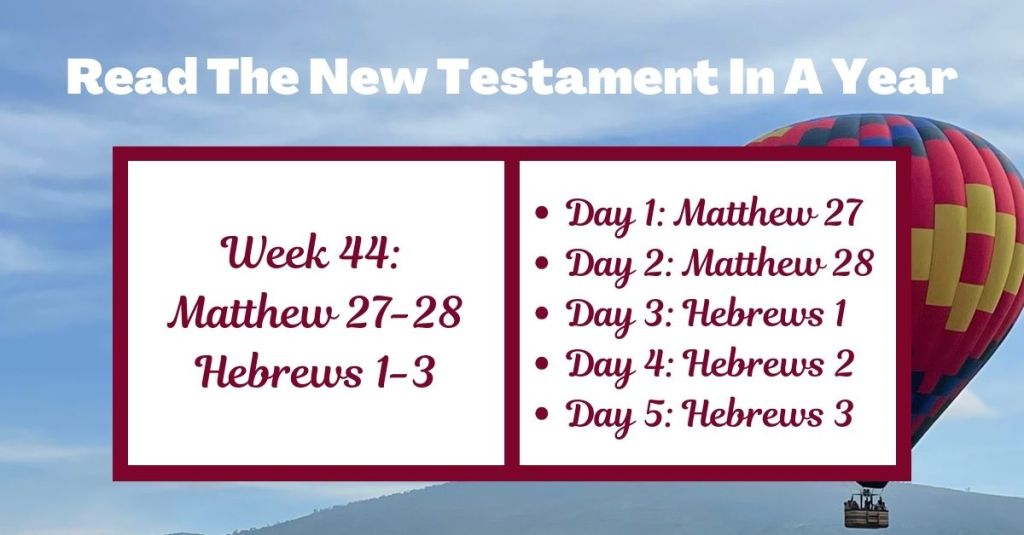
Week 44: Exploring Matthew 27-28 and Hebrews 1-3
In week 44 of our quest to read the New Testament in a year, we will witness the culmination of Jesus’ earthly ministry in Matthew 27-28 and begin exploring the profound theological insights of Hebrews 1-3. This week’s readings bring us to the intense moments of Jesus’ trial, crucifixion, and glorious resurrection, marking the fulfillment of His mission to save humanity.
As we transition to Hebrews, we’ll uncover the rich portrayal of Jesus as the divine Son and “radiance of God’s glory.” Hebrews 1-3 invites us to understand His supremacy over all creation and His unique role in salvation. We are reminded of Jesus’ humanity and His empathy for our struggles, which allow Him to be our merciful High Priest. These passages encourage us to stay faithful, avoid the danger of a hardened heart, and find rest in trusting Him fully.
Matthew 27

In Matthew 27, Jesus is tried, mocked, and sentenced to be crucified. The chapter describes His suffering, crucifixion, death, and burial, marking the culmination of His mission to save humanity. The veil of the temple is torn, signifying the new access to God through Jesus’ sacrifice.
Matthew 28
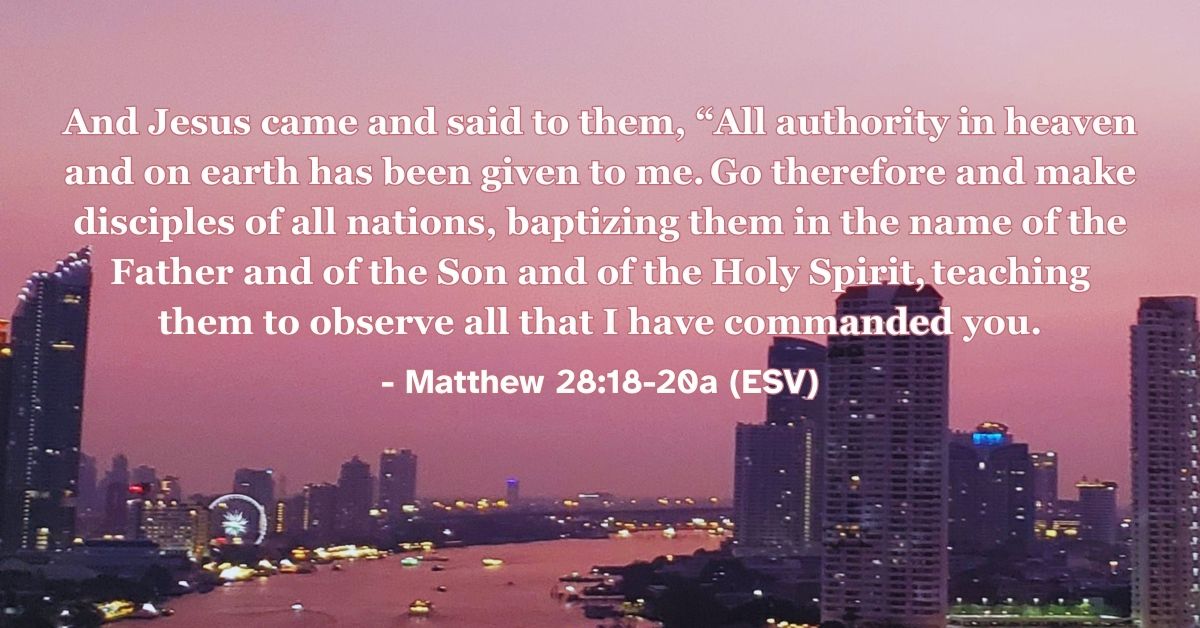
Matthew 28 concludes with the resurrection of Jesus, His appearance to the women at the tomb, and the Great Commission. Jesus assures His disciples of His authority and sends them to make disciples of all nations, promising to be with them always.
Hebrews 1
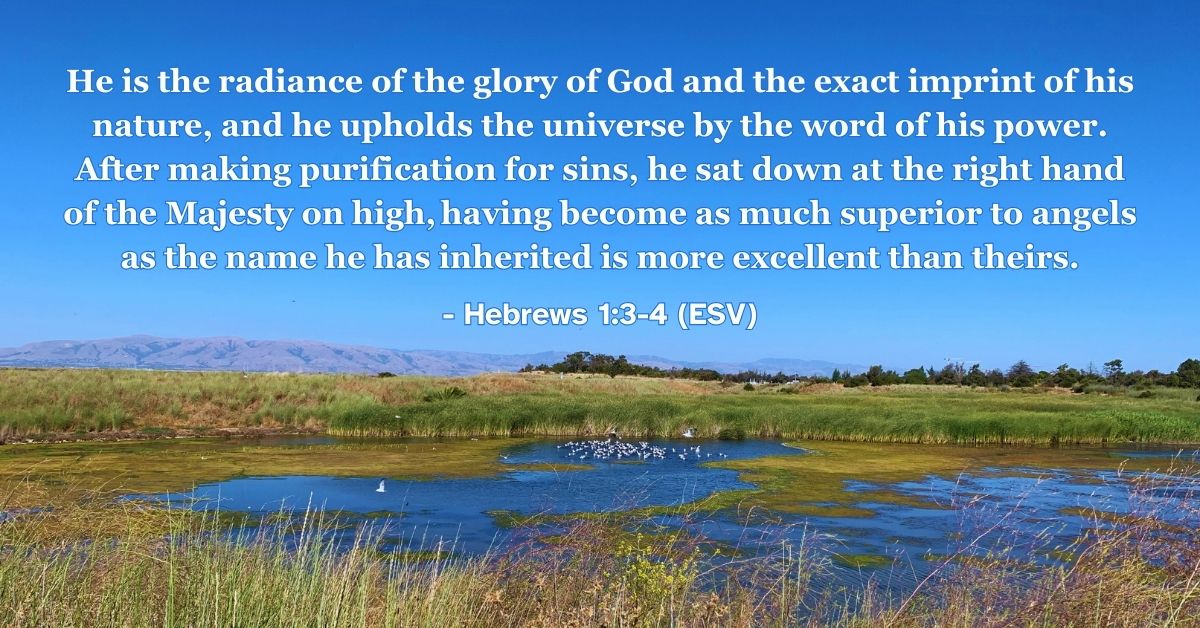
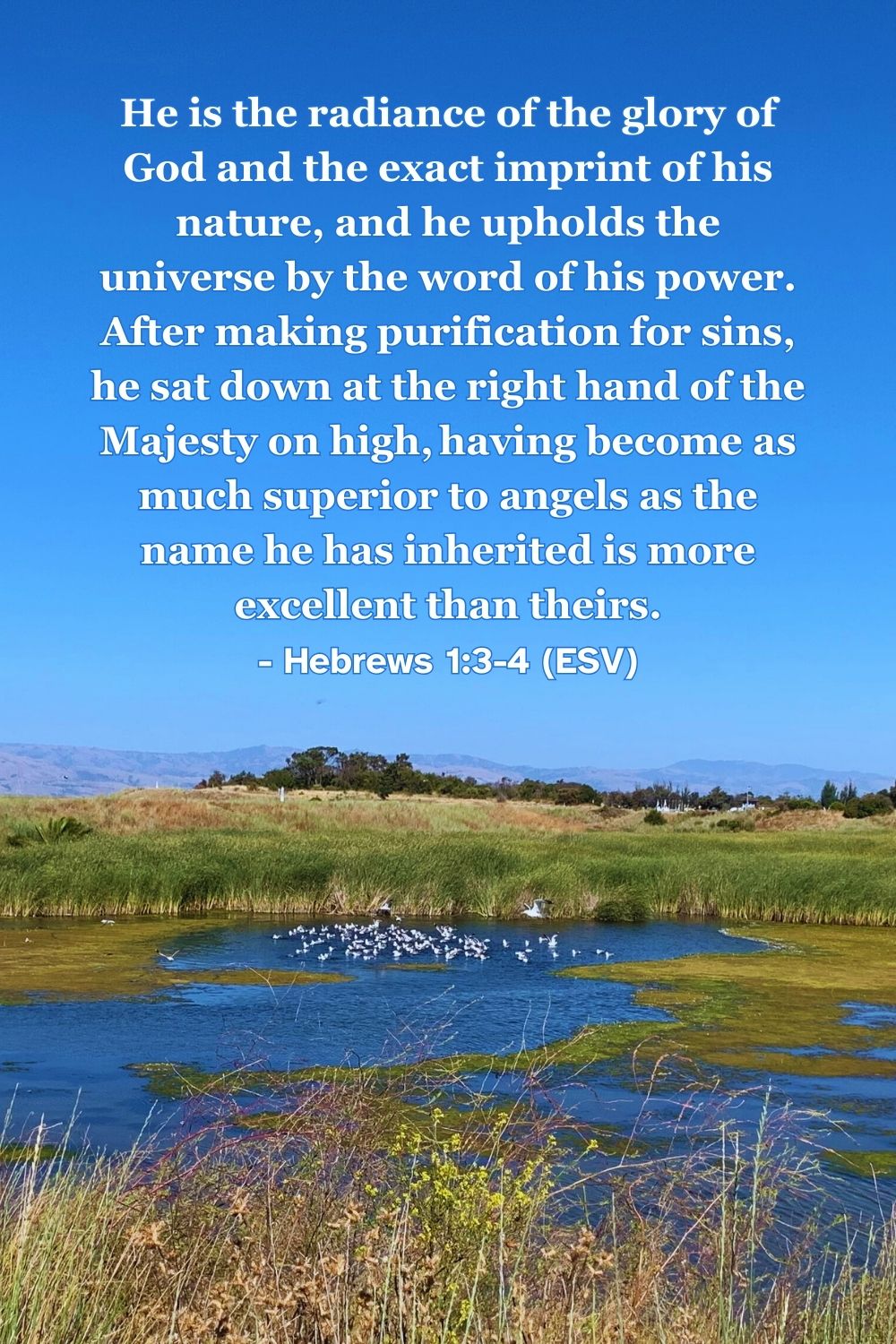
In Hebrews 1, the author emphasizes Jesus’ divine nature, superior to angels and any created beings. Jesus is described as the exact representation of God’s being and the radiance of His glory, appointed heir of all things. Through Jesus, God has spoken to humanity in these last days, revealing His ultimate plan for salvation and authority over creation.
Hebrews 2
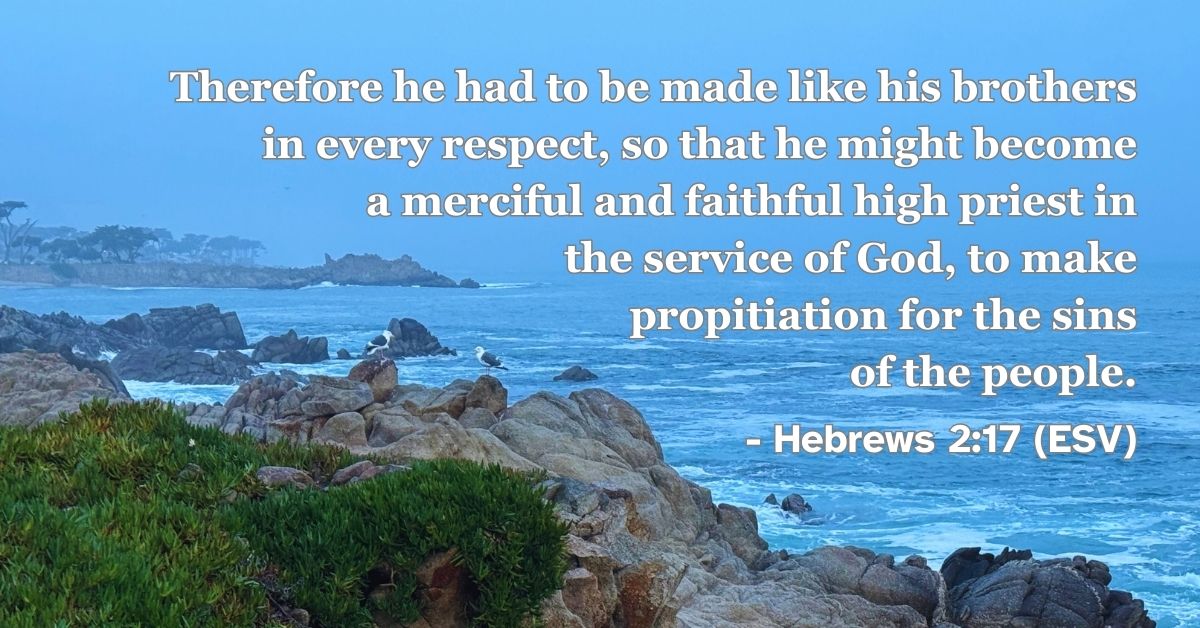
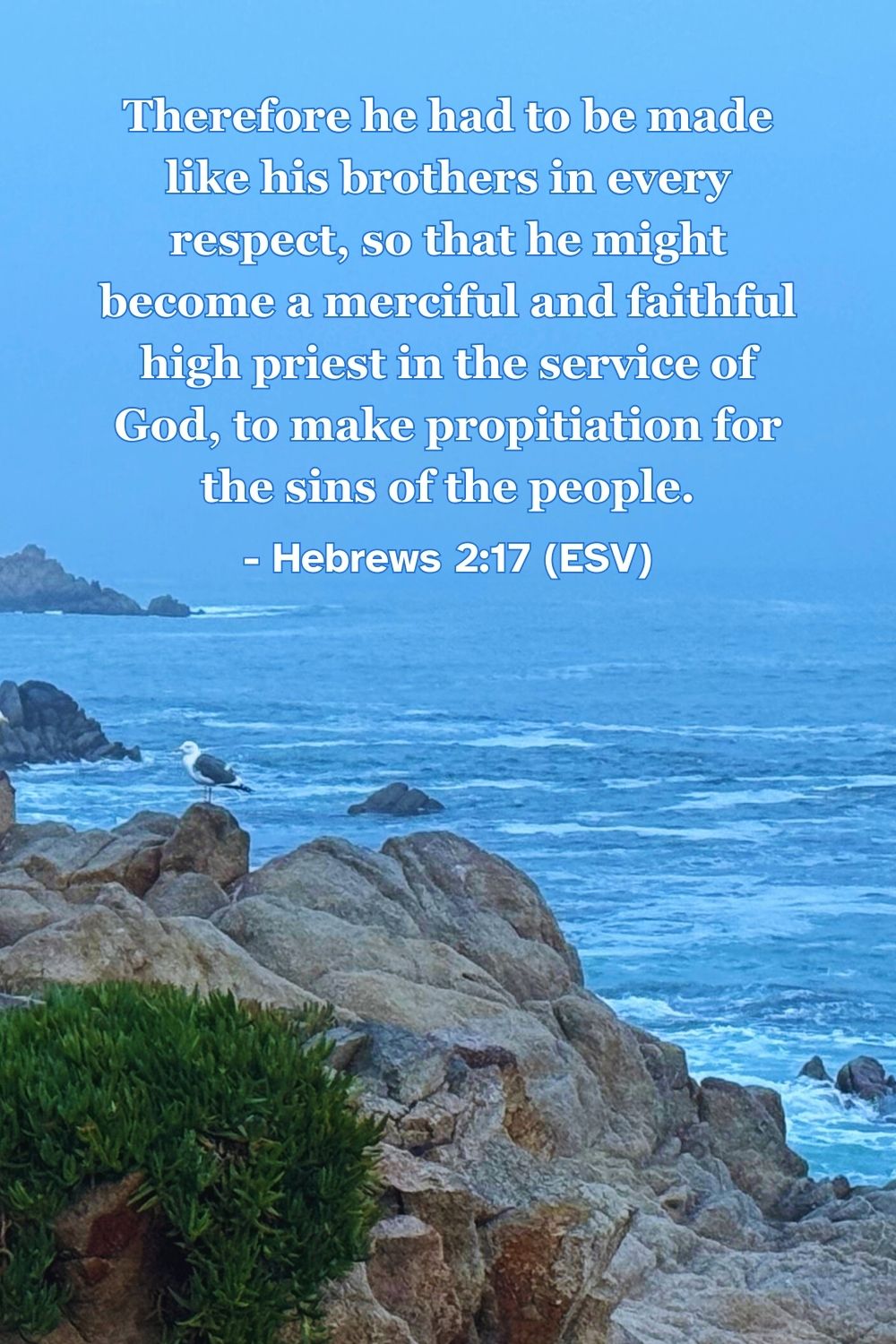
Hebrews 2 emphasizes the humanity of Jesus and the necessity of His incarnation to achieve salvation for all. By becoming human, Jesus was able to suffer and die, making Him the perfect sacrifice for sin. The chapter also underscores the importance of paying careful attention to God’s message, warning against drifting away.
Hebrews 3
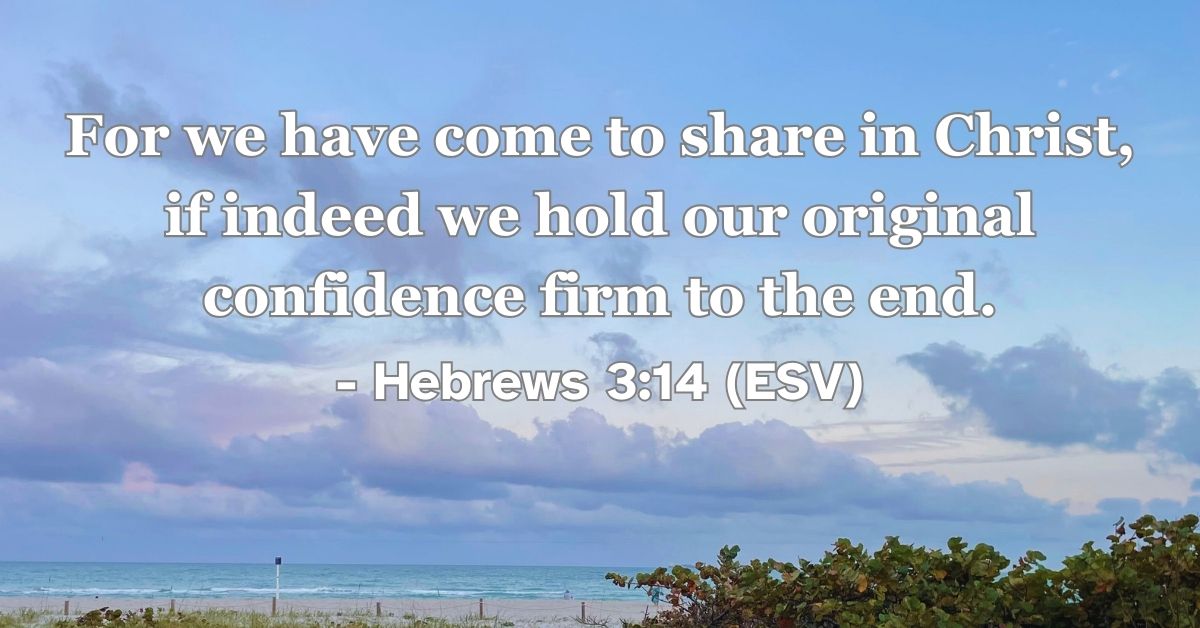
In Hebrews 3, the author compares Jesus to Moses, affirming Jesus’ higher honor as God’s Son over God’s house. The chapter encourages believers to hold firmly to their confidence and avoid the unbelief that kept the Israelites from entering God’s rest. A warning is given against hardening hearts, urging mutual encouragement to remain faithful.
Week 44: New Testament Reading Assignment
Each week, we will read 5 chapters of the New Testament. Some people may prefer to read during the weekdays, while others might enjoy doing most of their reading on the weekends. Choose the method that works best for you!
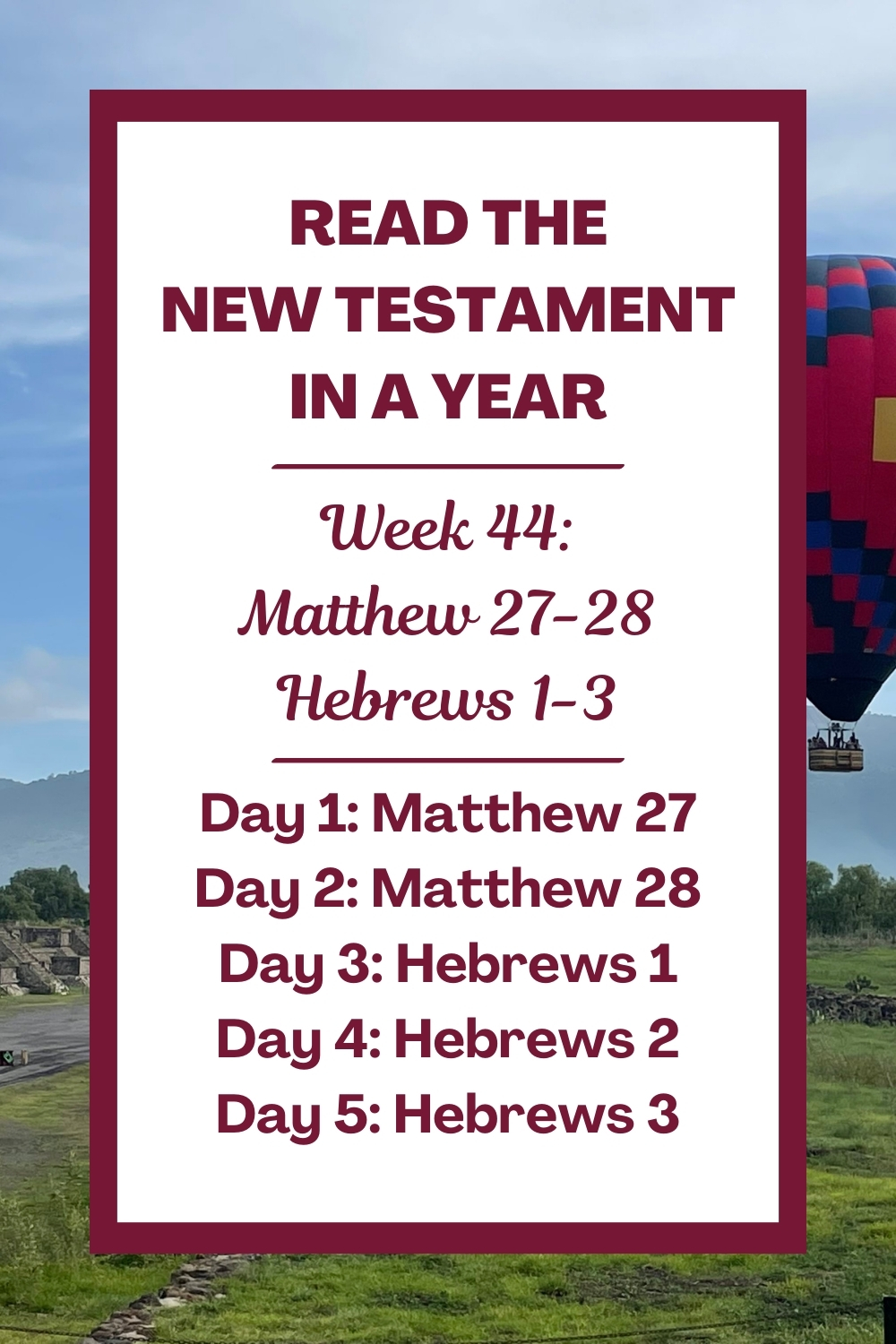
- Day 1: Matthew 27
- Day 2: Matthew 28
- Day 3: Hebrews 1
- Day 4: Hebrews 2
- Day 5: Hebrews 3
Printable Resource:
Week 44: Reflection Questions for Matthew 27-28 and Hebrews 1-3
Consider the following reflection questions:
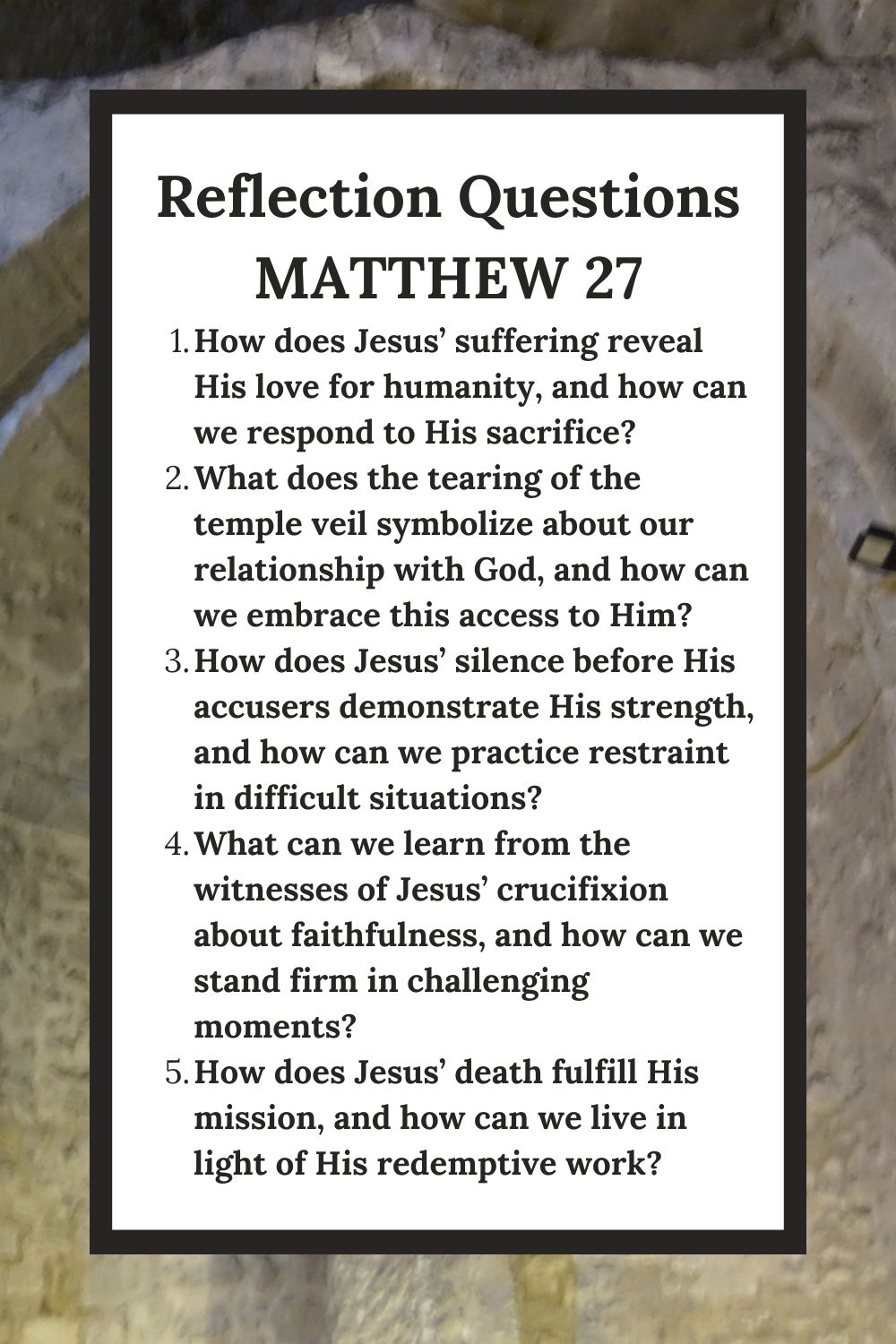
Matthew 27: Sacrifice, Suffering, and Redemption
- How does Jesus’ suffering reveal His love for humanity, and how can we respond to His sacrifice?
- What does the tearing of the temple veil symbolize about our relationship with God, and how can we embrace this access to Him?
- How does Jesus’ silence before His accusers demonstrate His strength, and how can we practice restraint in difficult situations?
- What can we learn from the witnesses of Jesus’ crucifixion about faithfulness, and how can we stand firm in challenging moments?
- How does Jesus’ death fulfill His mission, and how can we live in light of His redemptive work?
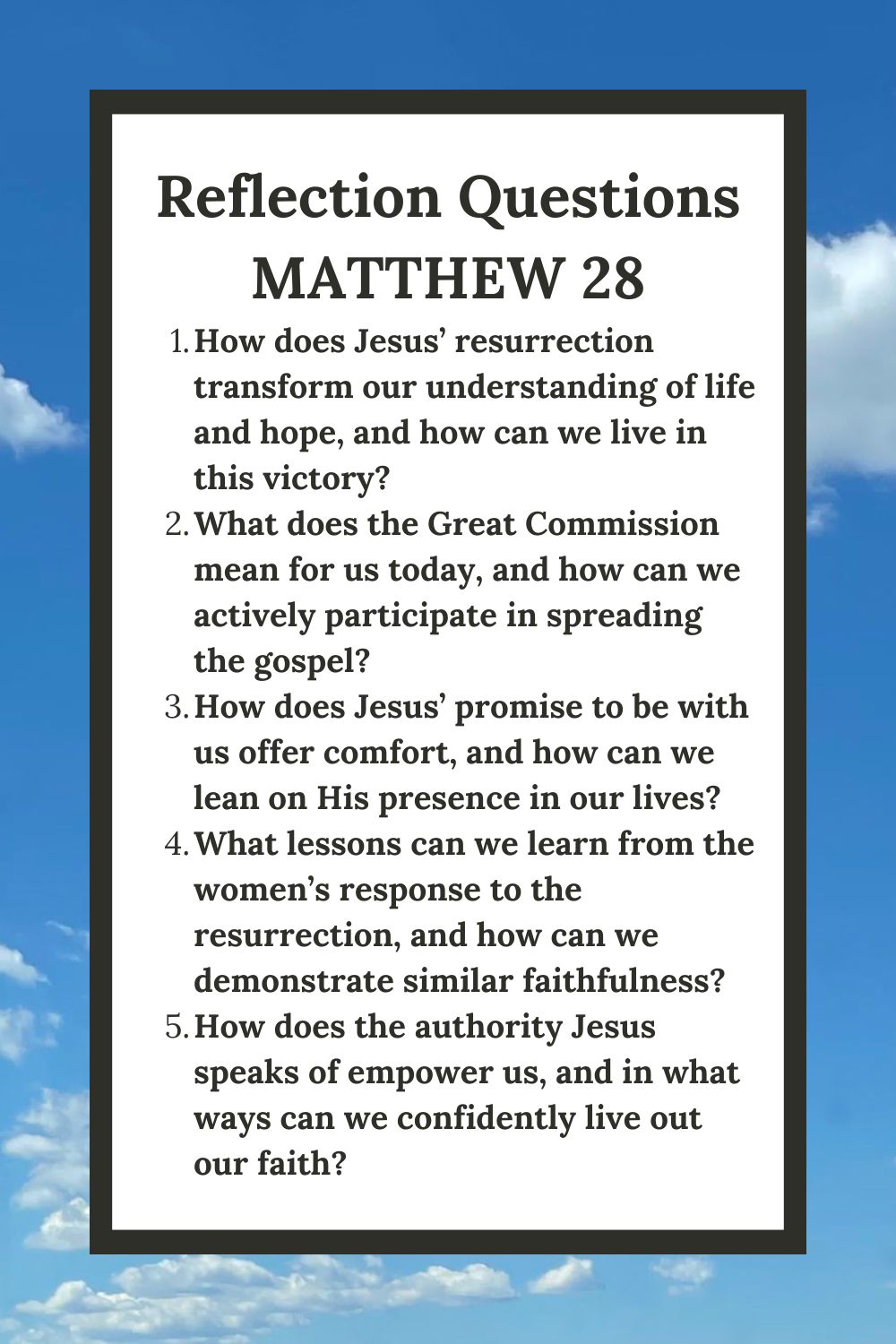
Matthew 28: Resurrection and Mission
- How does Jesus’ resurrection transform our understanding of life and hope, and how can we live in this victory?
- What does the Great Commission mean for us today, and how can we actively participate in spreading the gospel?
- How does Jesus’ promise to be with us offer comfort, and how can we lean on His presence in our lives?
- What lessons can we learn from the women’s response to the resurrection, and how can we demonstrate similar faithfulness?
- How does the authority Jesus speaks of empower us, and in what ways can we confidently live out our faith?
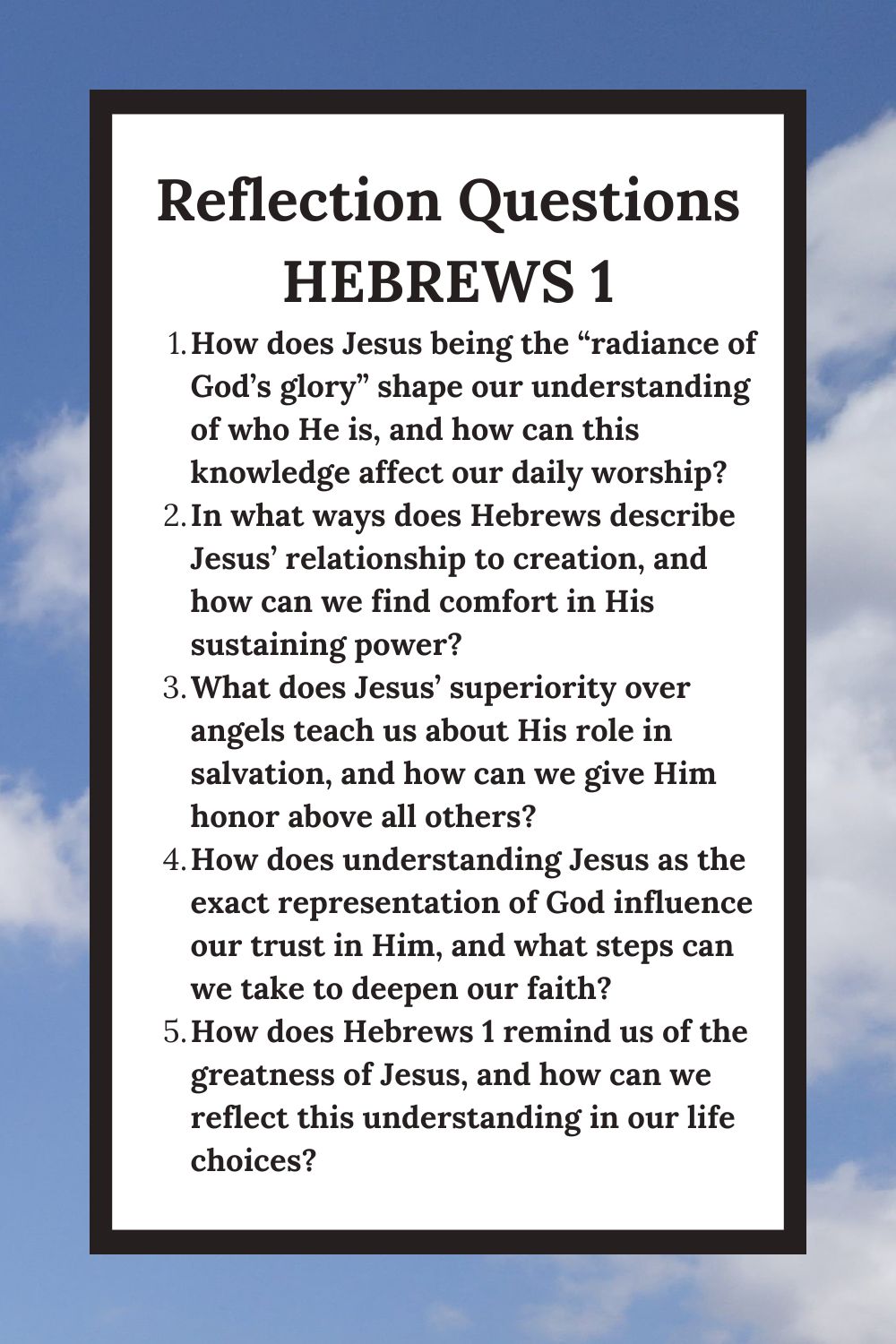
Hebrews 1: Jesus’ Supremacy and Divine Nature
- How does Jesus being the “radiance of God’s glory” shape our understanding of who He is, and how can this knowledge affect our daily worship?
- In what ways does Hebrews describe Jesus’ relationship to creation, and how can we find comfort in His sustaining power?
- What does Jesus’ superiority over angels teach us about His role in salvation, and how can we give Him honor above all others?
- How does understanding Jesus as the exact representation of God influence our trust in Him, and what steps can we take to deepen our faith?
- How does Hebrews 1 remind us of the greatness of Jesus, and how can we reflect this understanding in our life choices?
Hebrews 2: Salvation Through Jesus’ Humanity
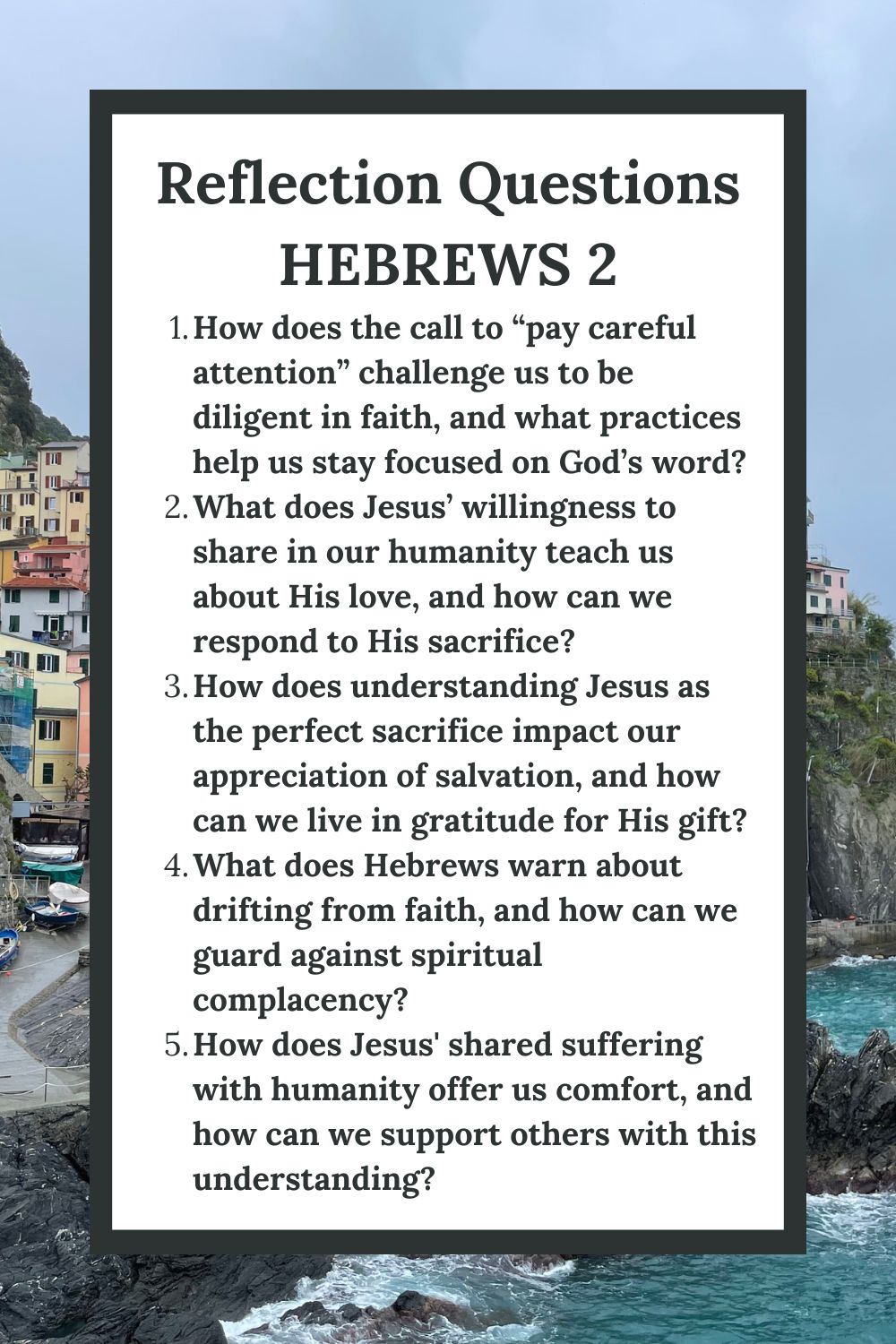
- How does the call to “pay careful attention” challenge us to be diligent in faith, and what practices help us stay focused on God’s word?
- What does Jesus’ willingness to share in our humanity teach us about His love, and how can we respond to His sacrifice?
- How does understanding Jesus as the perfect sacrifice impact our appreciation of salvation, and how can we live in gratitude for His gift?
- What does Hebrews warn about drifting from faith, and how can we guard against spiritual complacency?
- How does Jesus’ shared suffering with humanity offer us comfort, and how can we support others with this understanding?
Hebrews 3: Faithfulness and Avoiding Unbelief
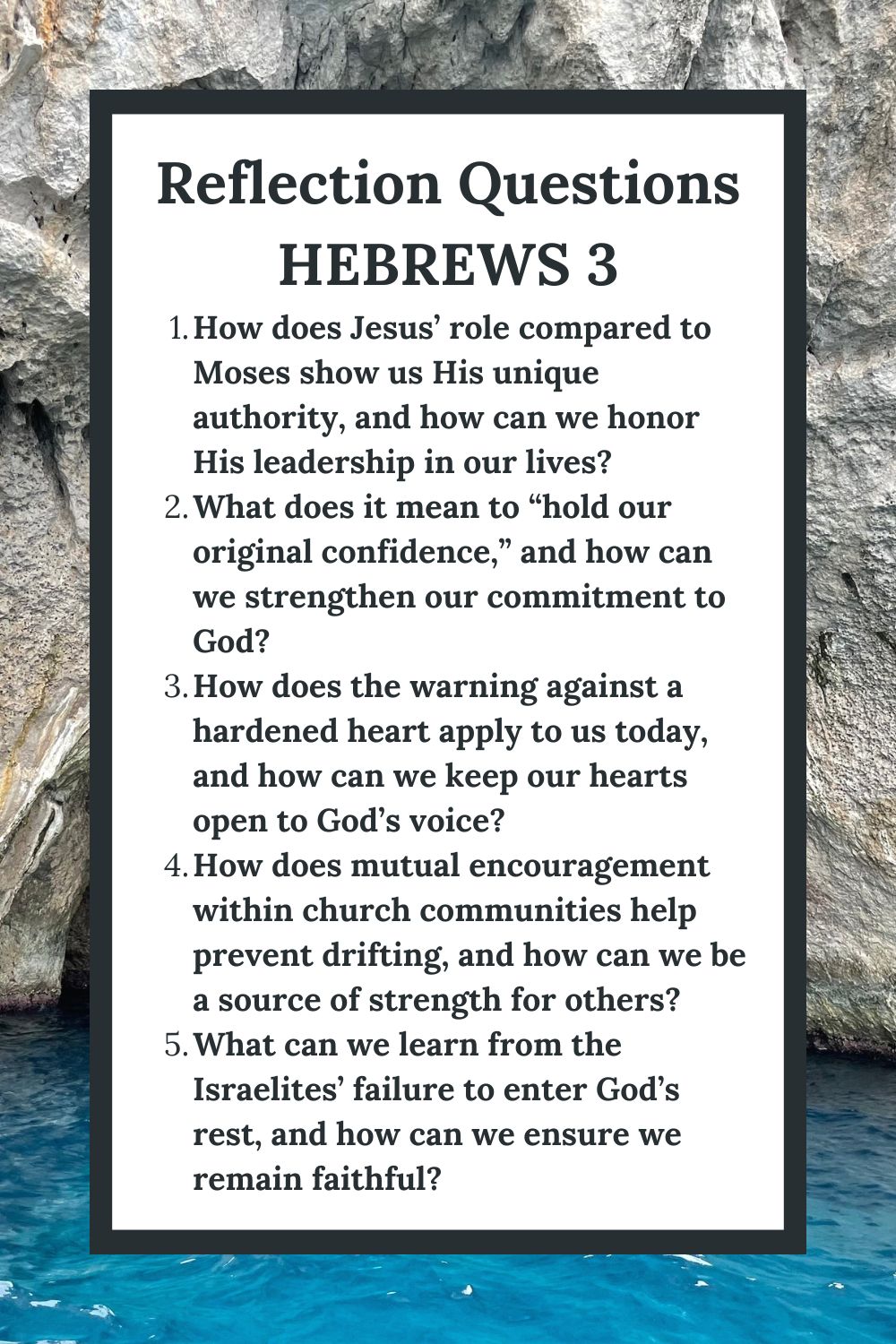
- How does Jesus’ role compared to Moses show us His unique authority, and how can we honor His leadership in our lives?
- What does it mean to “hold our original confidence,” and how can we strengthen our commitment to God?
- How does the warning against a hardened heart apply to us today, and how can we keep our hearts open to God’s voice?
- How does mutual encouragement within faith communities help prevent drifting, and how can we be a source of strength for others?
- What can we learn from the Israelites’ failure to enter God’s rest, and how can we ensure we remain faithful?
Reflective Prayer
Choose a few verses or topics from these chapters and pray over them. Consider using the ACTS method — Adoration, Confession, Thankfulness, Supplication:
- Adoration: Praise God. What specific characteristics of God do these readings bring to mind?
- Confession: Tell God that you are sorry for specific sins. What specific sins do these readings bring to mind?
- Thankfulness: Show gratitude towards God. What in these readings inspires gratitude?
- Supplication: Make requests for yourself and for others. What in these readings inspires a prayer?
If helpful, you can use a prayer journal template.


Other Reading Plans
Online Resources
Subscribe
If you enjoyed this post and wish to receive more Christian content, feel free to subscribe to my newsletters!
Related Resources
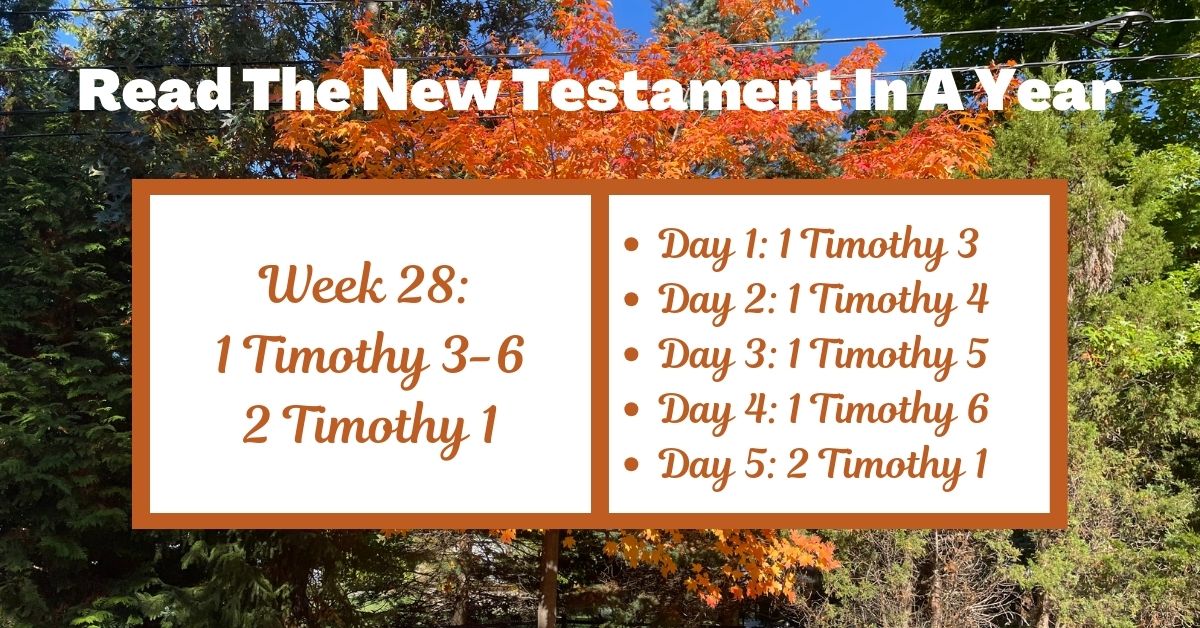
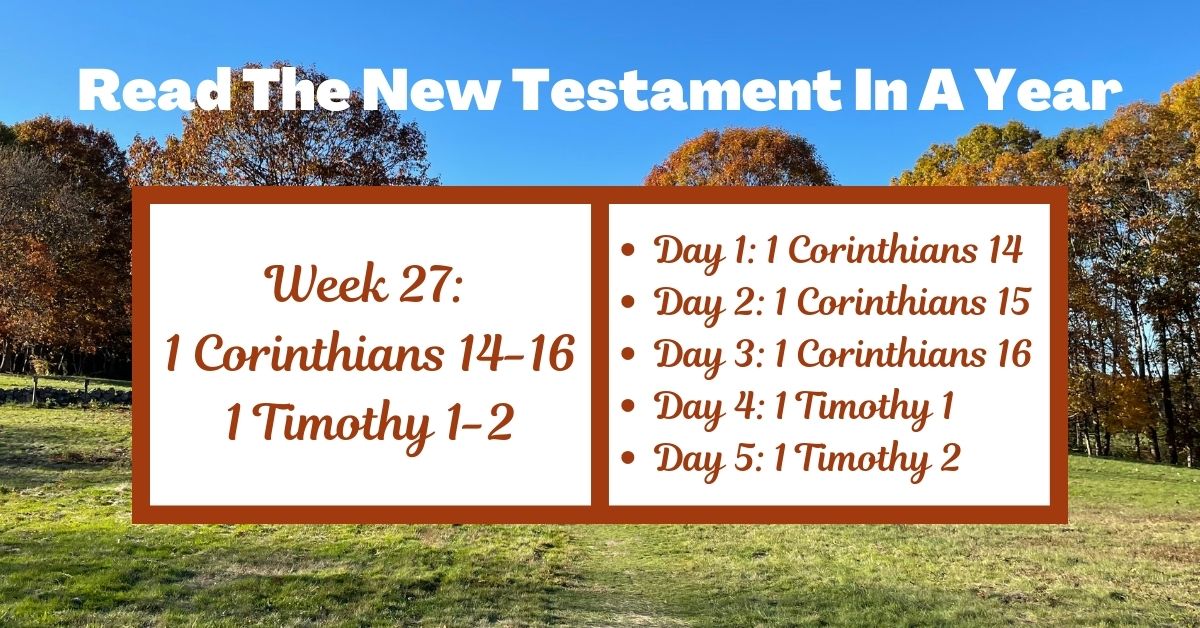
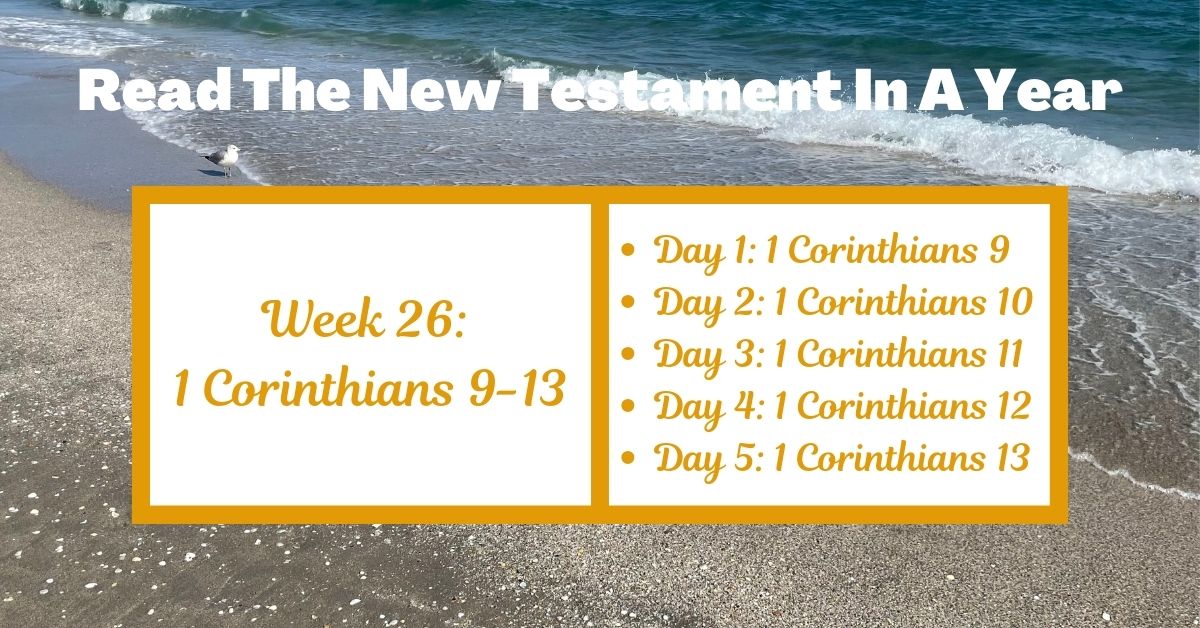
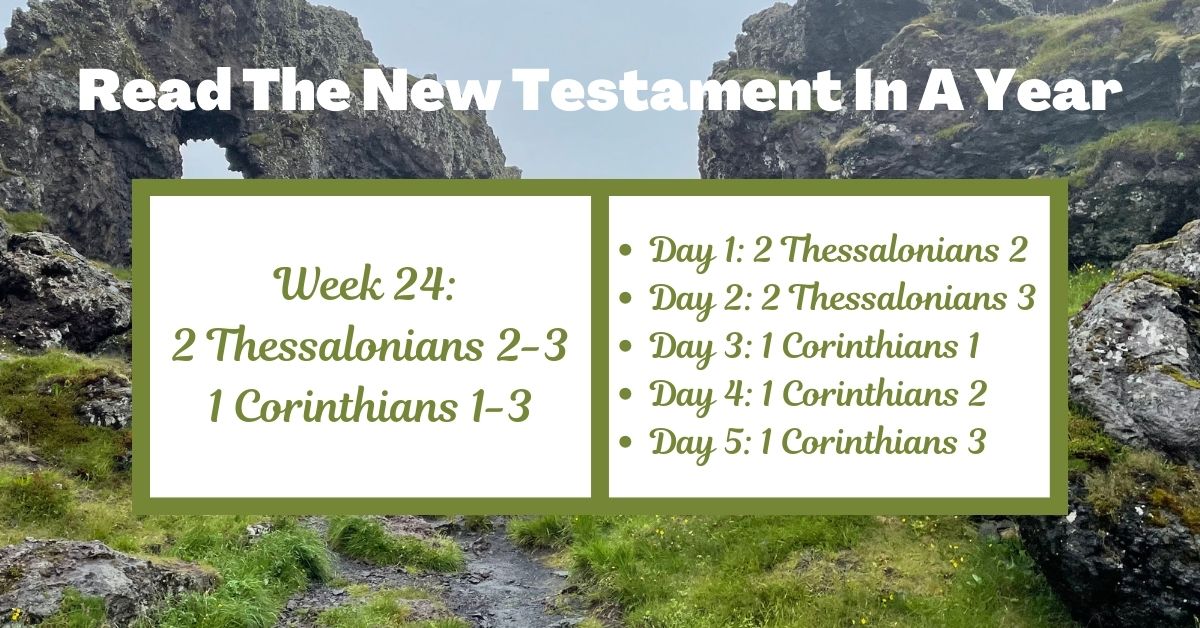
Visit the Joyful Moments in Christ homepage for all posts, or scroll through other blog posts related to reading the New Testament in a year:




English Standard Version (ESV): Unless otherwise noted, scripture quotations are from the ESV® Bible (The Holy Bible, English Standard Version®), © 2001 by Crossway, a publishing ministry of Good News Publishers. Used by permission. All rights reserved. The ESV text may not be quoted in any publication made available to the public by a Creative Commons license. The ESV may not be translated in whole or in part into any other language.


 Joyful Moments in Christ