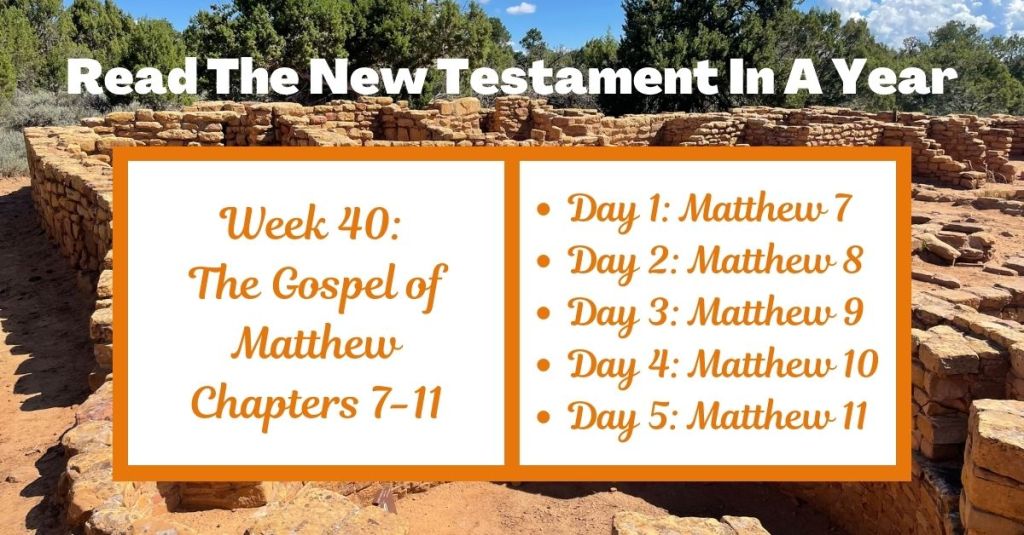
Week 40: Exploring Matthew 7-11
In week 40 of our journey to read the New Testament in a year, we will explore the profound teachings and powerful acts of Jesus as recorded in Matthew 7-11. These chapters reveal the conclusion of the Sermon on the Mount, where Jesus provides guidance on judgment, prayer, and authentic discipleship. Following this, we will witness His authority over sickness, nature, and spiritual forces, emphasizing both His compassion and sovereignty. Jesus also calls and commissions His disciples, preparing them for the challenges they will encounter as they spread His message. This week concludes with a compelling invitation to find rest in Jesus, offering hope and peace to those who carry burdens. As we reflect on these passages, we are encouraged to strengthen our faith, trust in God’s provision, and embrace the peace that Jesus promises.
Matthew 7
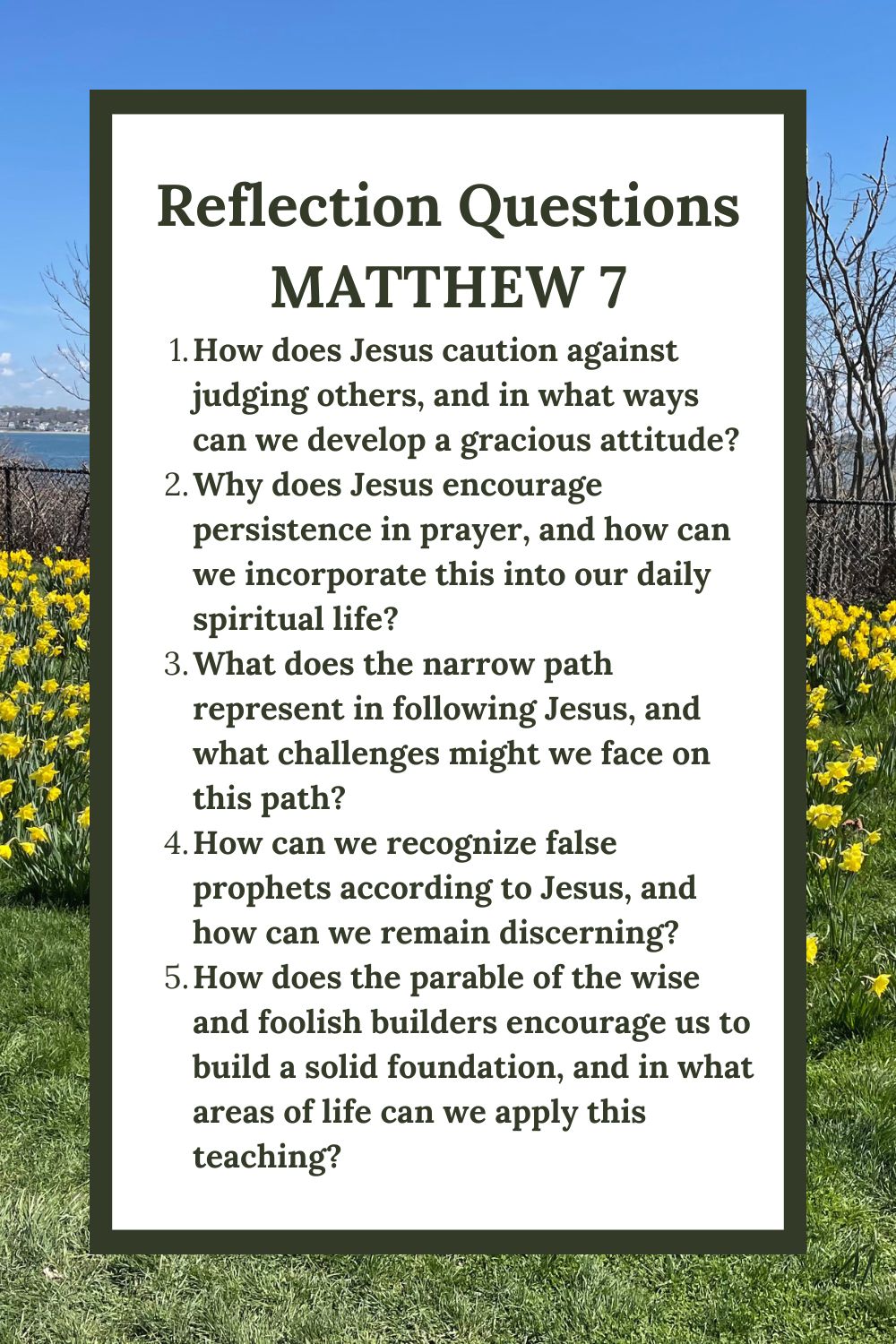
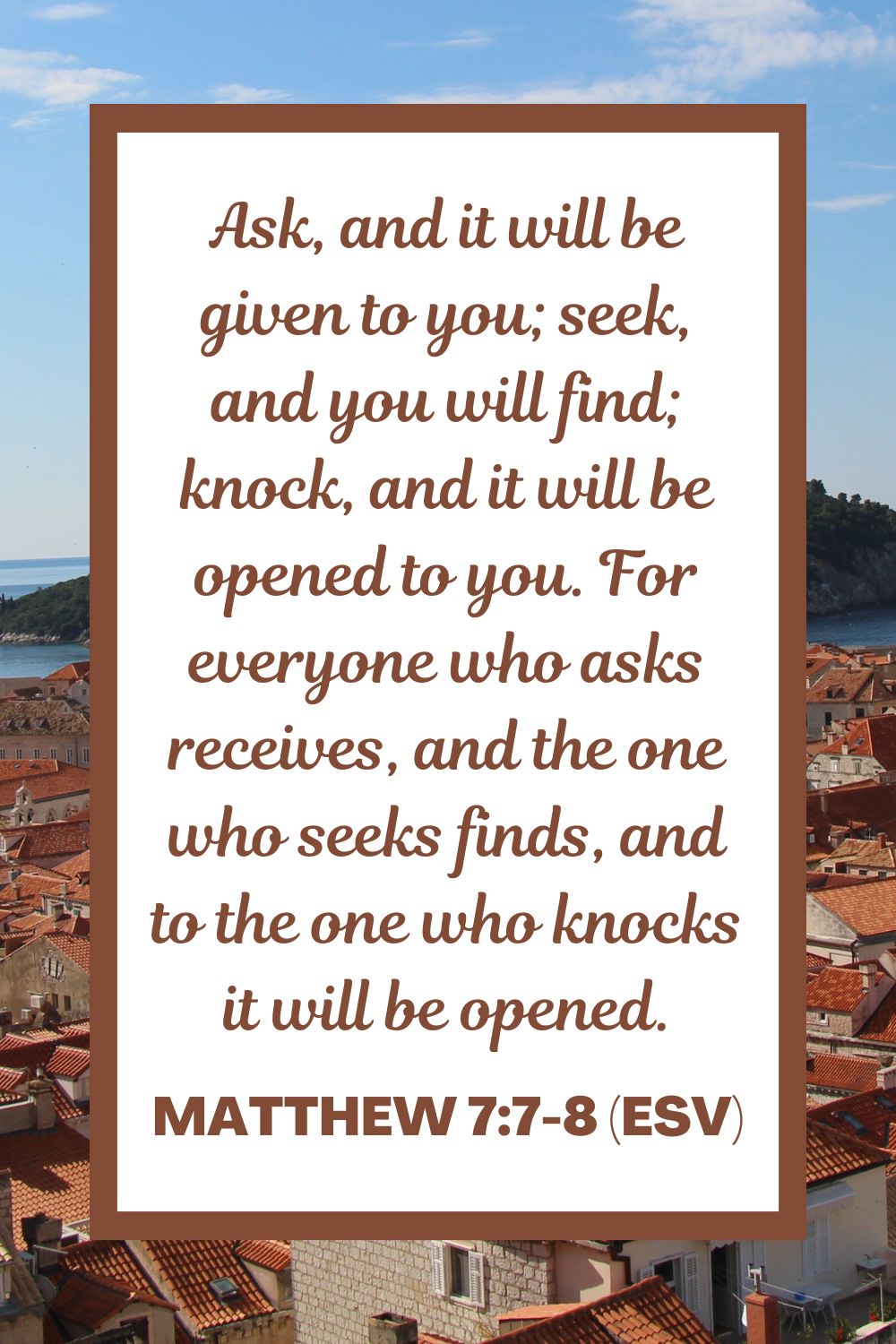
Matthew 7 concludes the Sermon on the Mount, with Jesus warning against judgmental attitudes and hypocrisy. He encourages persistence in prayer and describes the narrow path of righteousness. He also warns against false prophets and emphasizes that true discipleship is reflected by actions. Jesus ends with the parable of the wise and foolish builders.
Matthew 8
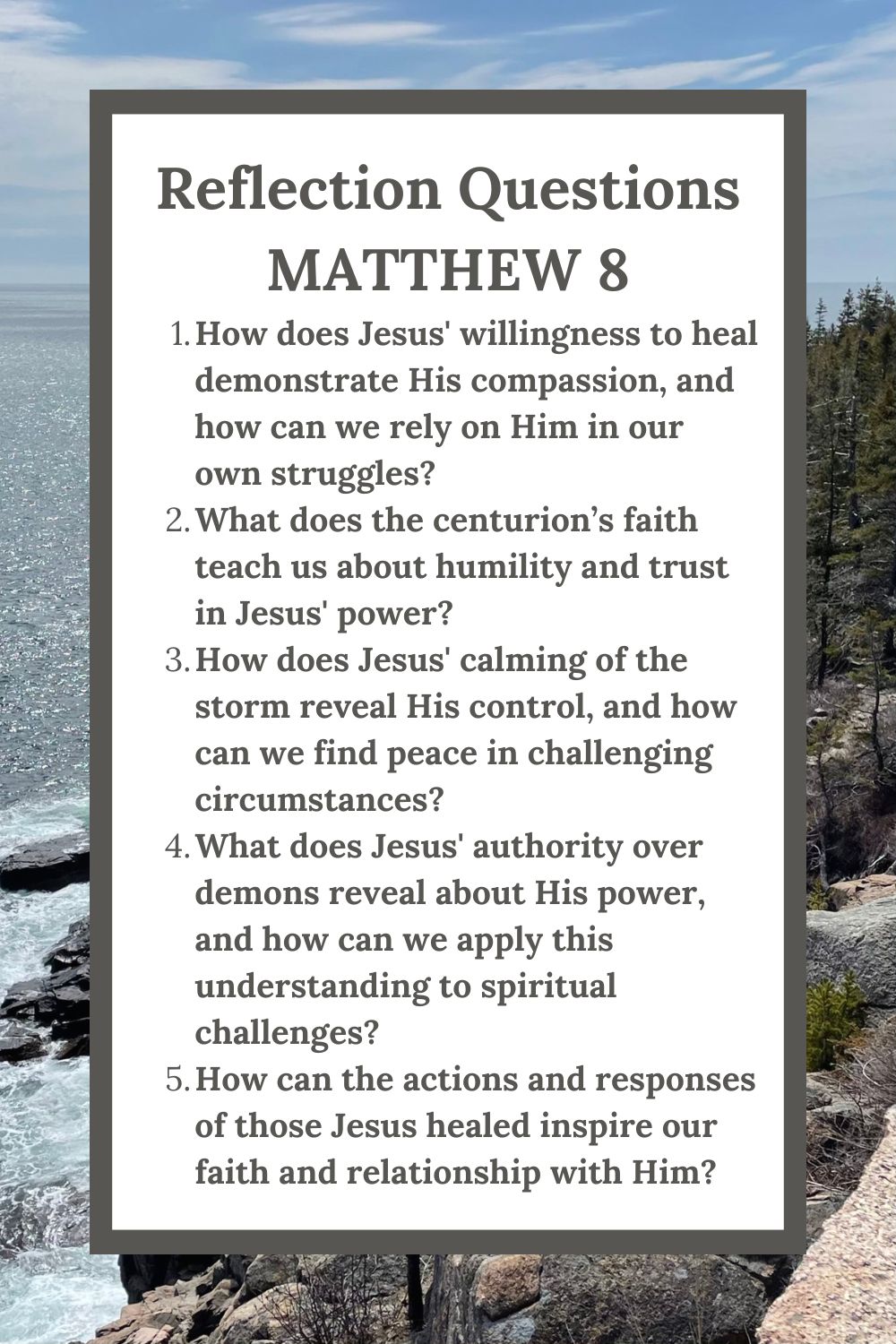
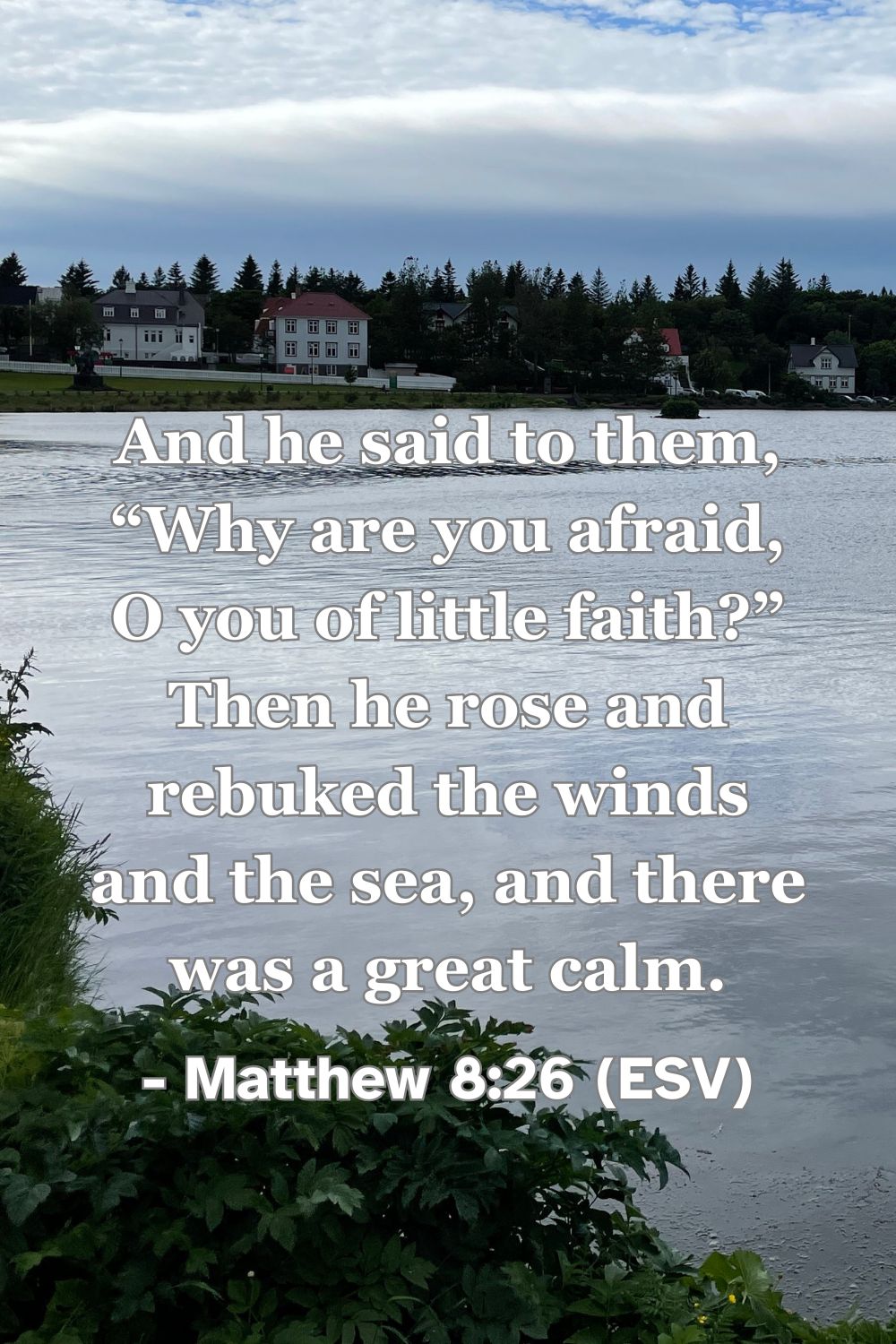
Matthew 8 highlights Jesus’ authority over illness, nature, and the spiritual realm. Jesus heals a leper, a centurion’s servant, and Peter’s mother-in-law, showing compassion and power. He calms a storm, revealing His control over nature, and casts out demons, underscoring His authority over spiritual forces.
Matthew 9
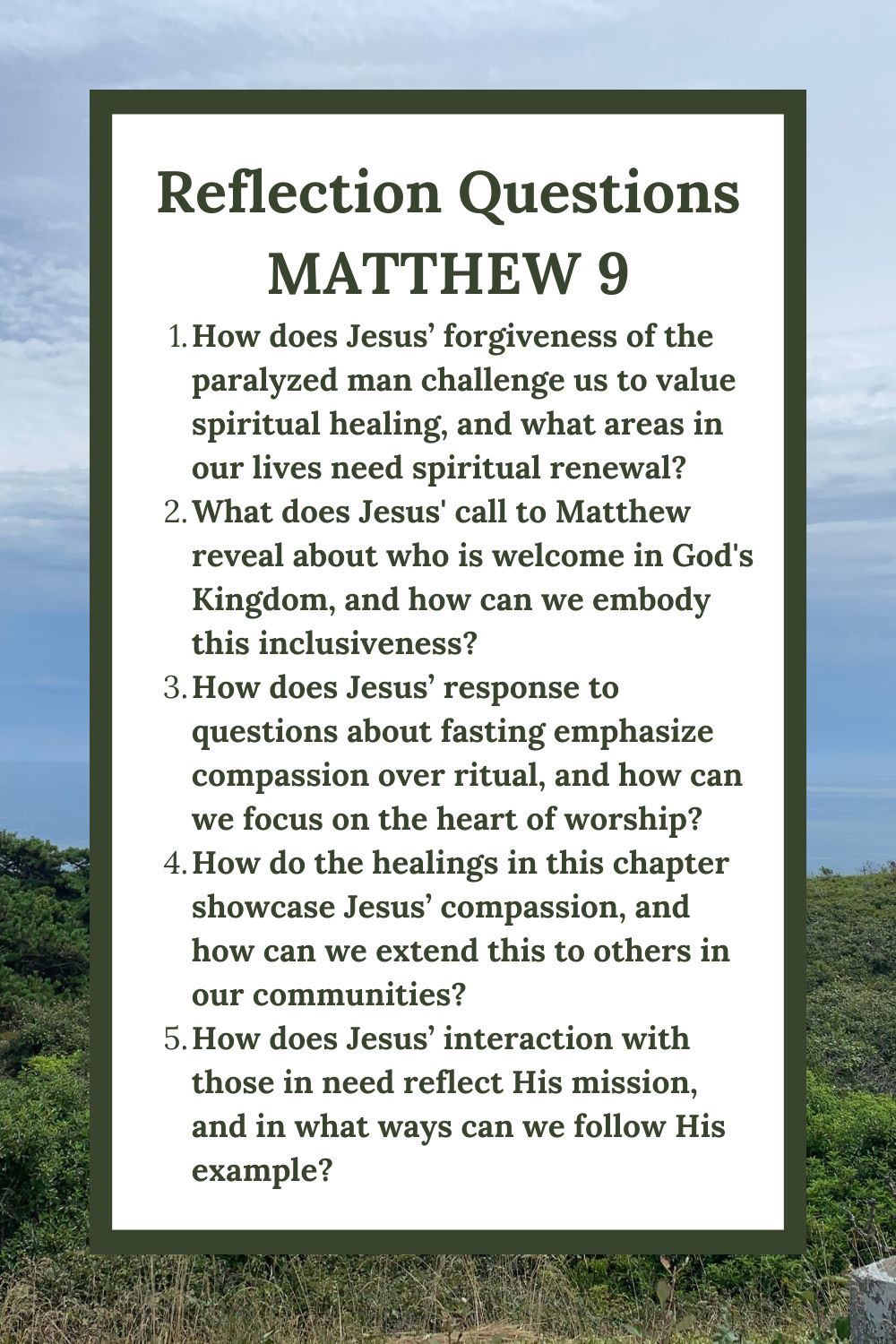
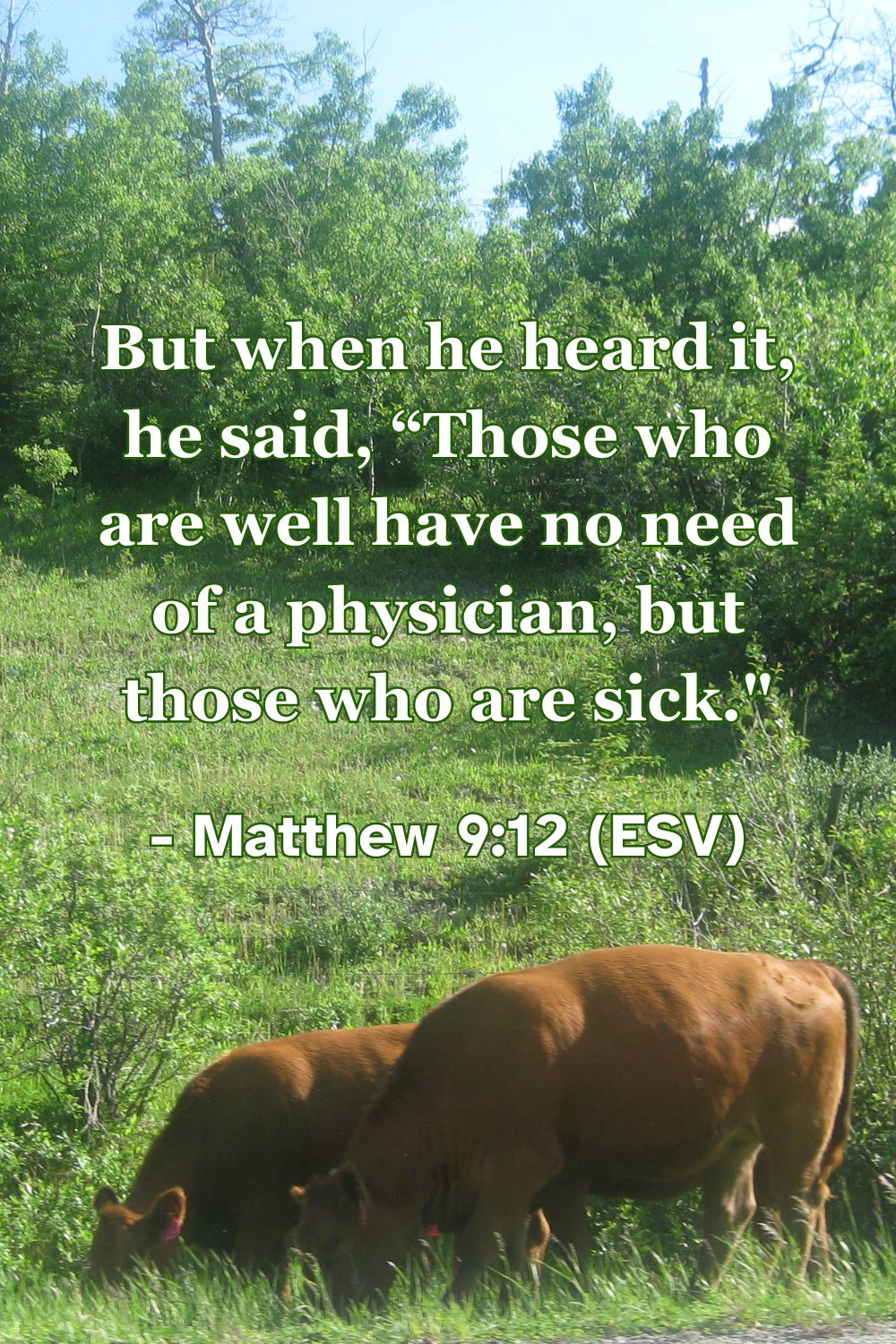
In Matthew 9, Jesus continues to heal the sick, forgive sins, and teach about faith and compassion. He heals a paralyzed man, calls Matthew as a disciple, and answers questions about fasting. Jesus also raises a girl from the dead, heals a bleeding woman, and restores sight to two blind men.
Matthew 10

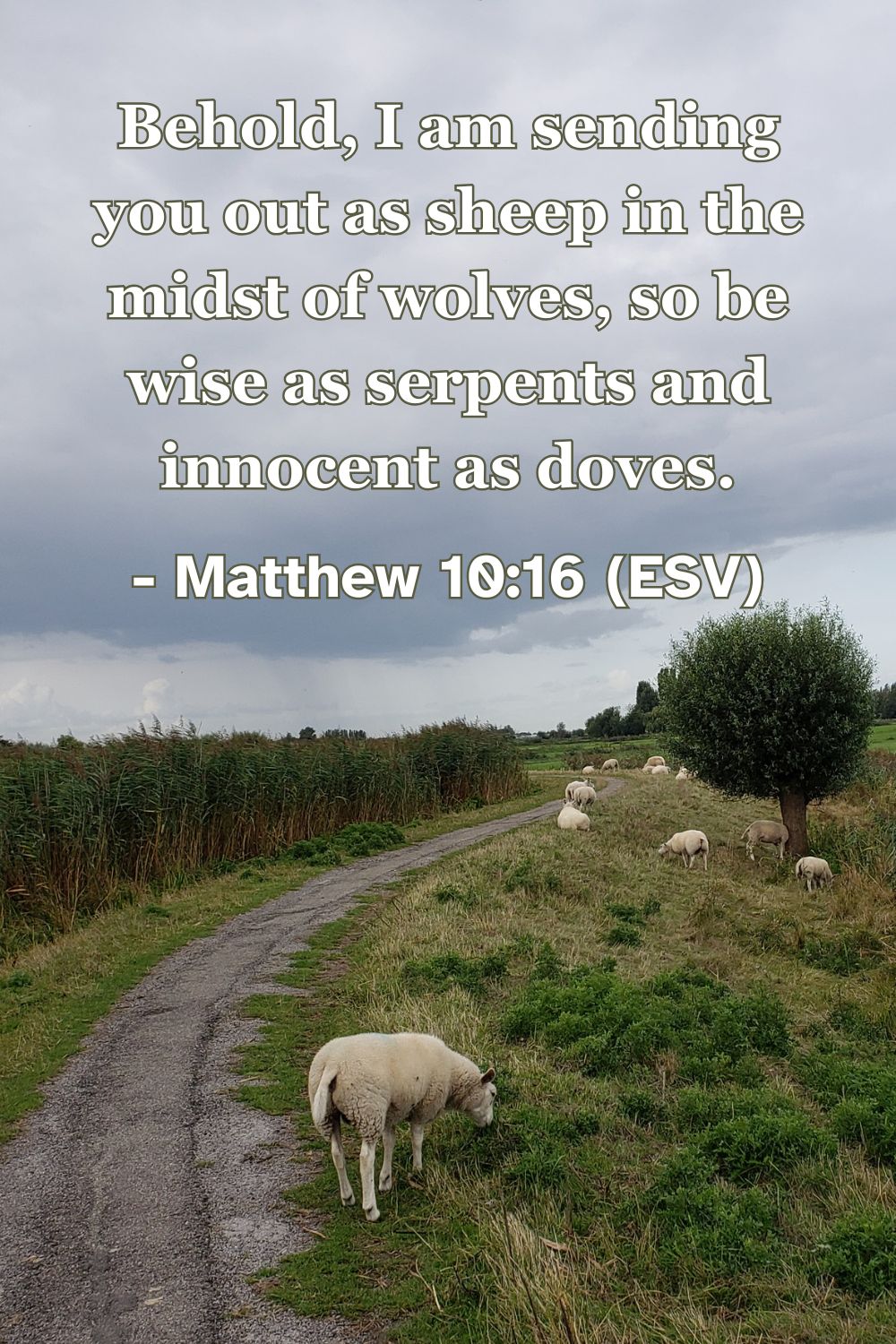
Matthew 10 records Jesus sending out the twelve disciples, giving them authority to heal, cast out demons, and preach the Kingdom. He warns them of persecution but encourages them to fear God, not man. Jesus teaches about the cost of discipleship, urging commitment even amid family tensions.
Matthew 11
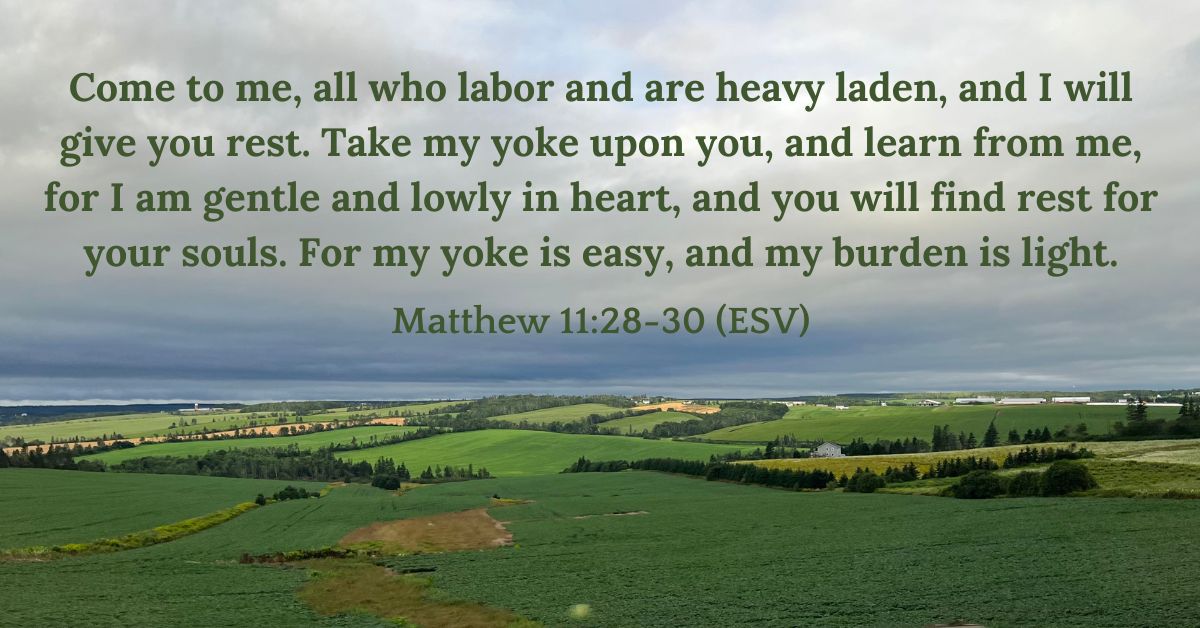
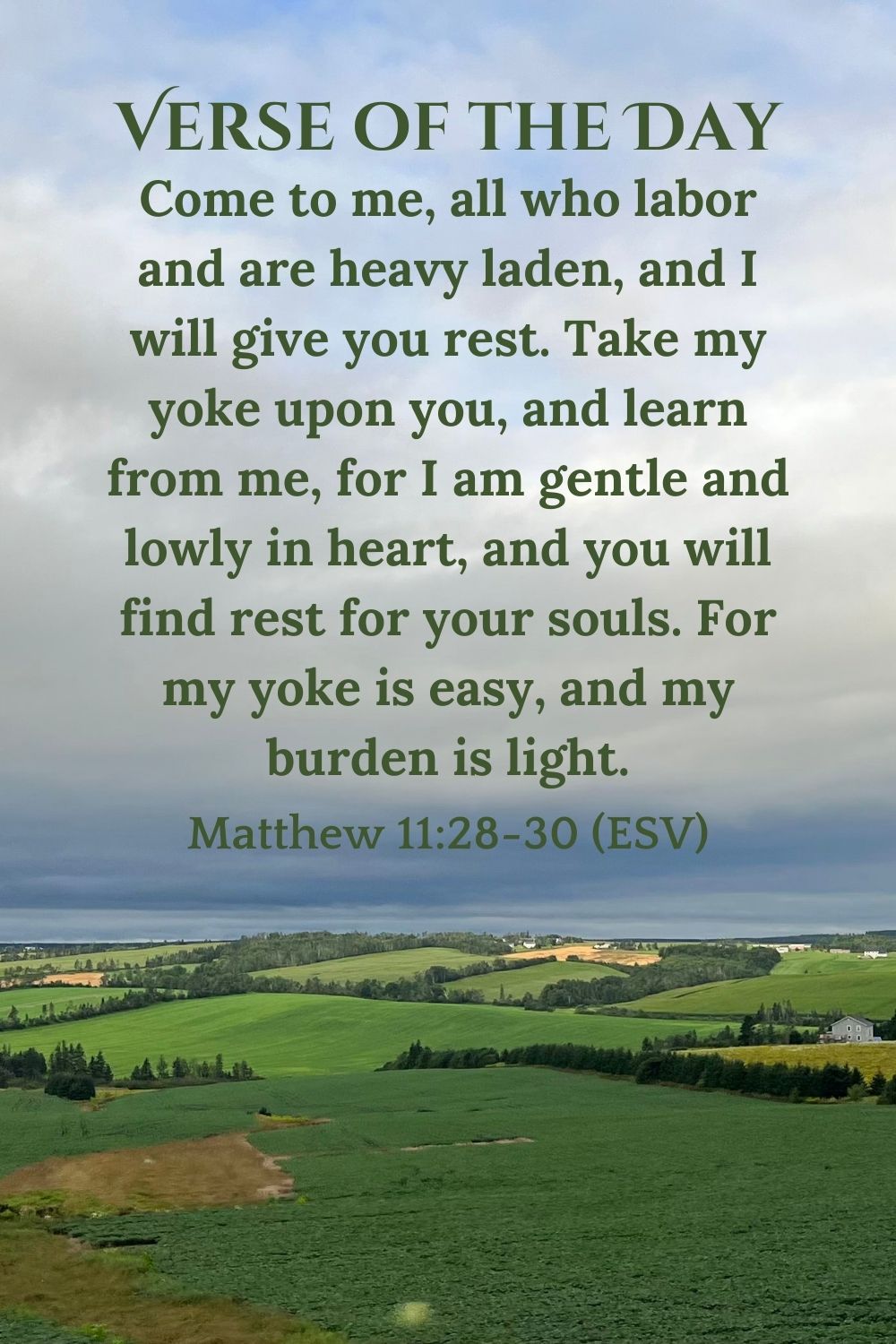
In Matthew 11, Jesus responds to John the Baptist’s questions about His identity, praises John’s ministry, and calls people to find rest in Him. He condemns unrepentant cities, contrasting their unbelief with the simple faith He desires. Jesus invites the weary to find rest for their souls in His yoke.
Week 40: New Testament Reading Assignment
Each week, we will read 5 chapters of the New Testament. Some people may prefer to read during the weekdays, while others might enjoy doing most of their reading on the weekends. Choose the method that works best for you!
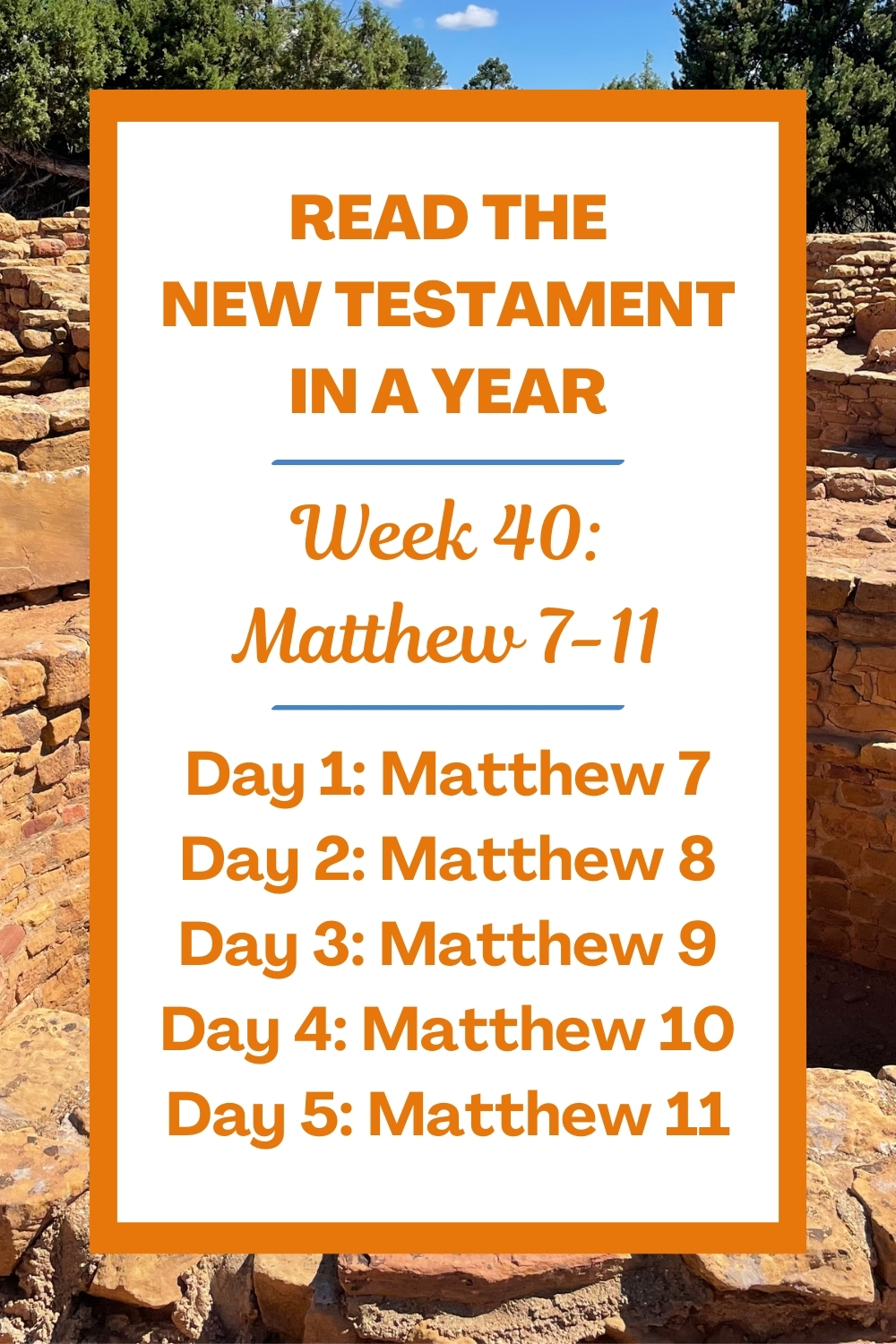
- Day 1: Matthew 7
- Day 2: Matthew 8
- Day 3: Matthew 9
- Day 4: Matthew 10
- Day 5: Matthew 11
Printable Resource:
Week 40: Reflection Questions for Matthew 7-11
Consider the following reflection questions:
Matthew 7: Judgment, Prayer, and True Discipleship
- How does Jesus caution against judging others, and in what ways can we develop a gracious attitude?
- Why does Jesus encourage persistence in prayer, and how can we incorporate this into our daily spiritual life?
- What does the narrow path represent in following Jesus, and what challenges might we face on this path?
- How can we recognize false prophets according to Jesus, and how can we remain discerning?
- How does the parable of the wise and foolish builders encourage us to build a solid foundation, and in what areas of life can we apply this teaching?
Matthew 8: Jesus’ Authority over Sickness and Nature
- How does Jesus’ willingness to heal demonstrate His compassion, and how can we rely on Him in our own struggles?
- What does the centurion’s faith teach us about humility and trust in Jesus’ power?
- How does Jesus’ calming of the storm reveal His control, and how can we find peace in challenging circumstances?
- What does Jesus’ authority over demons reveal about His power, and how can we apply this understanding to spiritual challenges?
- How can the actions and responses of those Jesus healed inspire our faith and relationship with Him?
Matthew 9: Healing, Compassion, and Calling
- How does Jesus’ forgiveness of the paralyzed man challenge us to value spiritual healing, and what areas in our lives need spiritual renewal?
- What does Jesus’ call to Matthew reveal about who is welcome in God’s Kingdom, and how can we embody this inclusiveness?
- How does Jesus’ response to questions about fasting emphasize compassion over ritual, and how can we focus on the heart of worship?
- How do the healings in this chapter showcase Jesus’ compassion, and how can we extend this to others in our communities?
- How does Jesus’ interaction with those in need reflect His mission, and in what ways can we follow His example?
Matthew 10: The Mission and Cost of Discipleship
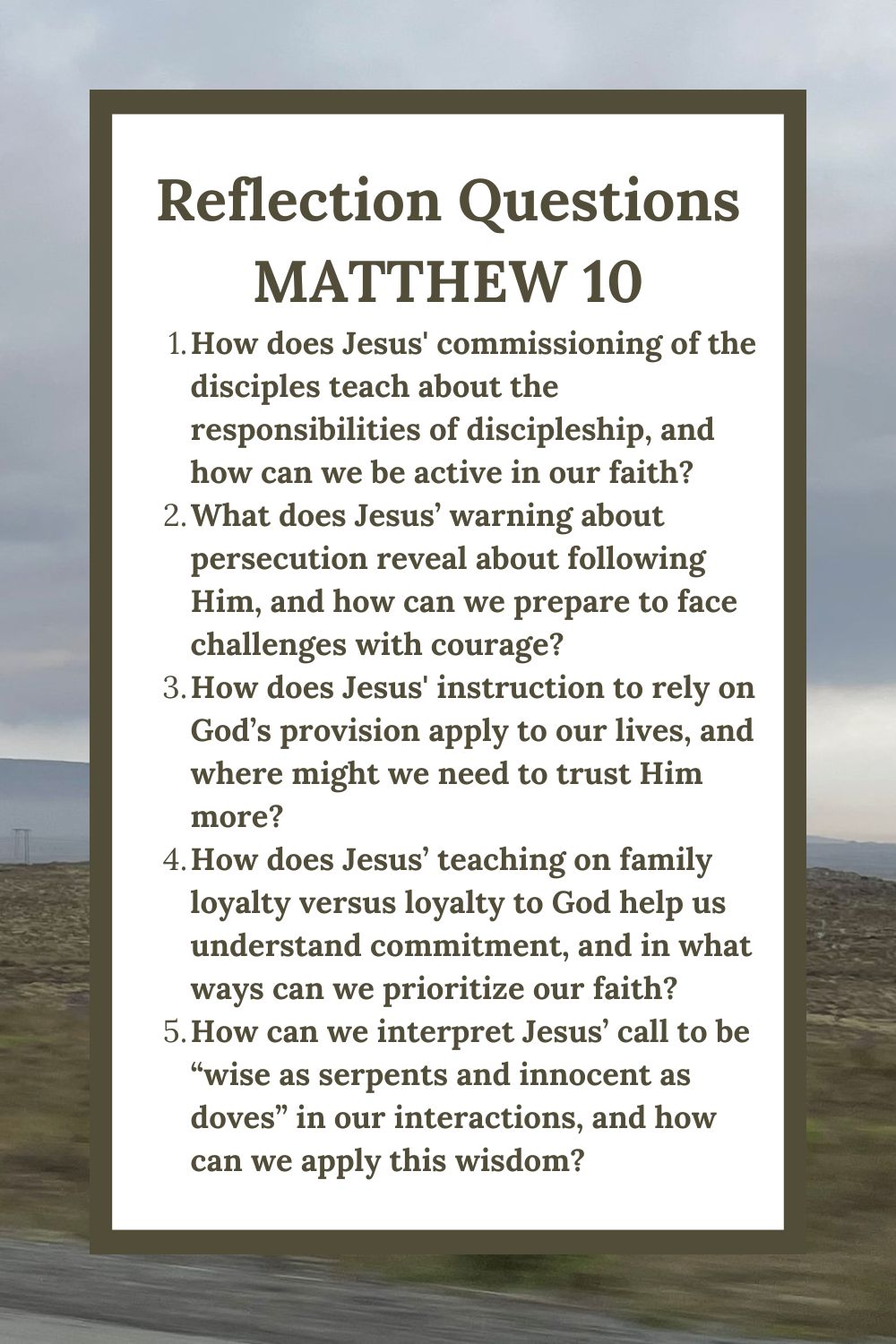
- How does Jesus’ commissioning of the disciples teach about the responsibilities of discipleship, and how can we be active in our faith?
- What does Jesus’ warning about persecution reveal about following Him, and how can we prepare to face challenges with courage?
- How does Jesus’ instruction to rely on God’s provision apply to our lives, and where might we need to trust Him more?
- How does Jesus’ teaching on family loyalty versus loyalty to God help us understand commitment, and in what ways can we prioritize our faith?
- How can we interpret Jesus’ call to be “wise as serpents and innocent as doves” in our interactions, and how can we apply this wisdom?
Matthew 11: Jesus’ Identity and the Call to Rest
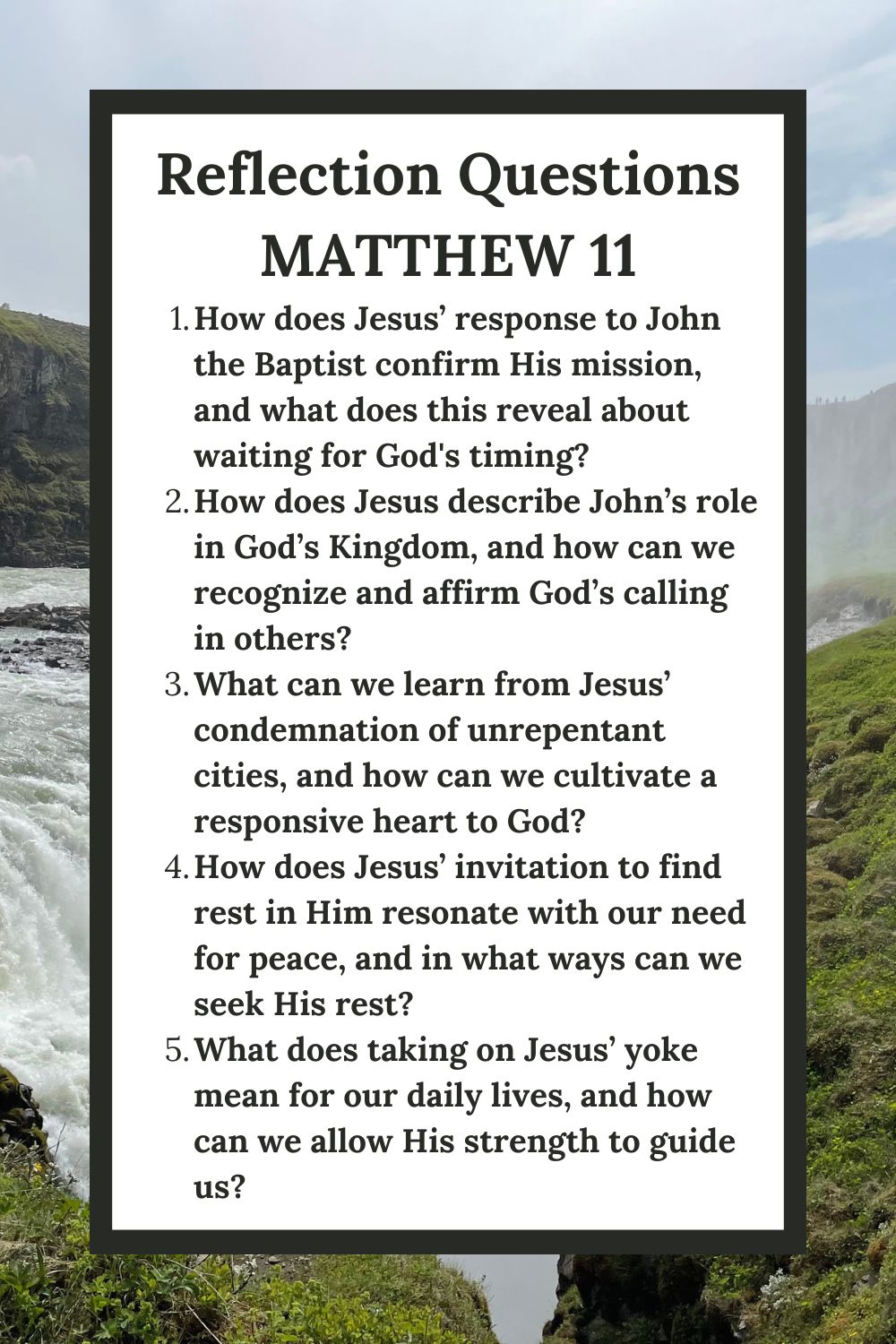
- How does Jesus’ response to John the Baptist confirm His mission, and what does this reveal about waiting for God’s timing?
- How does Jesus describe John’s role in God’s Kingdom, and how can we recognize and affirm God’s calling in others?
- What can we learn from Jesus’ condemnation of unrepentant cities, and how can we cultivate a responsive heart to God?
- How does Jesus’ invitation to find rest in Him resonate with our need for peace, and in what ways can we seek His rest?
- What does taking on Jesus’ yoke mean for our daily lives, and how can we allow His strength to guide us?
Reflective Prayer
Choose a few verses or topics from these chapters and pray over them. Consider using the ACTS method — Adoration, Confession, Thankfulness, Supplication:
- Adoration: Praise God. What specific characteristics of God do these readings bring to mind?
- Confession: Tell God that you are sorry for specific sins. What specific sins do these readings bring to mind?
- Thankfulness: Show gratitude towards God. What in these readings inspires gratitude?
- Supplication: Make requests for yourself and for others. What in these readings inspires a prayer?
If helpful, you can use a prayer journal template.
Other Reading Plans
Online Resources
Subscribe
If you enjoyed this post and wish to receive more Christian content, feel free to subscribe to my newsletters!
Related Resources
Visit the Joyful Moments in Christ homepage for all posts, or scroll through other blog posts related to reading the New Testament in a year:




English Standard Version (ESV): Unless otherwise noted, scripture quotations are from the ESV® Bible (The Holy Bible, English Standard Version®), © 2001 by Crossway, a publishing ministry of Good News Publishers. Used by permission. All rights reserved. The ESV text may not be quoted in any publication made available to the public by a Creative Commons license. The ESV may not be translated in whole or in part into any other language.

 Joyful Moments in Christ