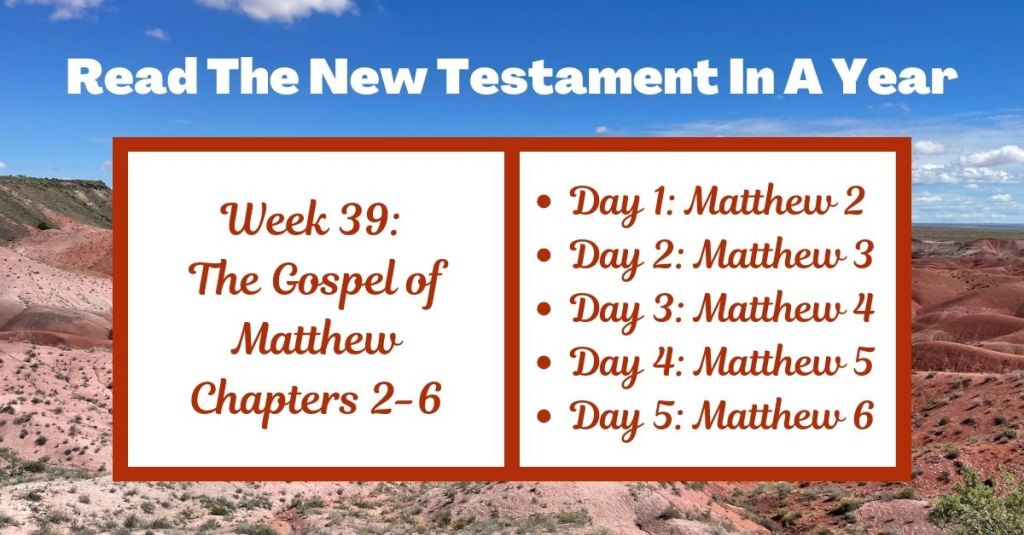
Week 39: Exploring Matthew 2-6
In week 39 of our quest to read the New Testament in a year, we will walk through some of the foundational events and teachings in the life and ministry of Jesus in Matthew 2-6. In these chapters, we will encounter the profound humility and dedication of the wise men, the call for repentance from John the Baptist, and Jesus’ own temptation and early teachings, which set the stage for His ministry. We will explore the heart of Jesus’ message in the Sermon on the Mount, where He emphasizes values like humility, compassion, and sincere devotion. This week’s readings encourage us to align our hearts with God’s Kingdom, respond faithfully to His call, and live in a way that reflects God’s love to others.
Matthew 2
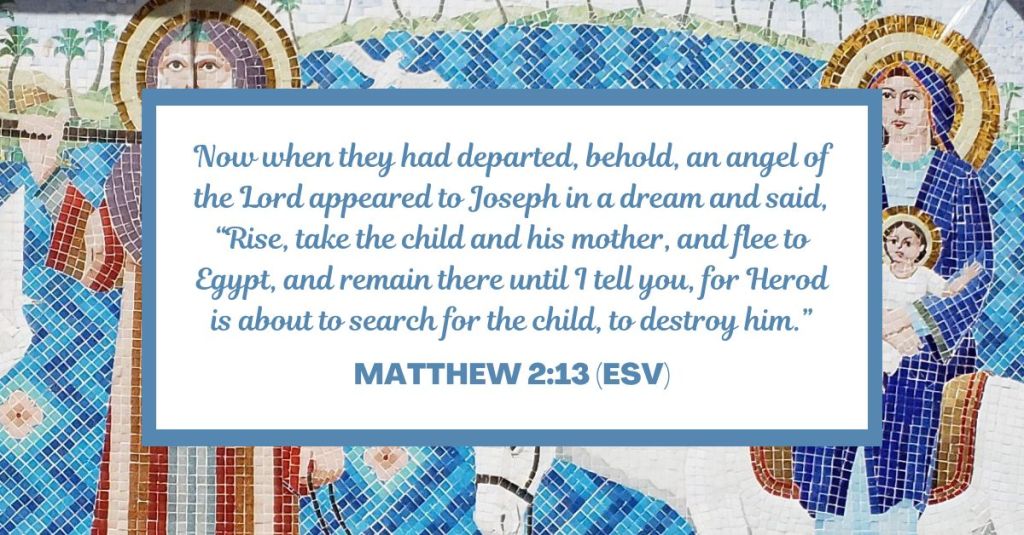
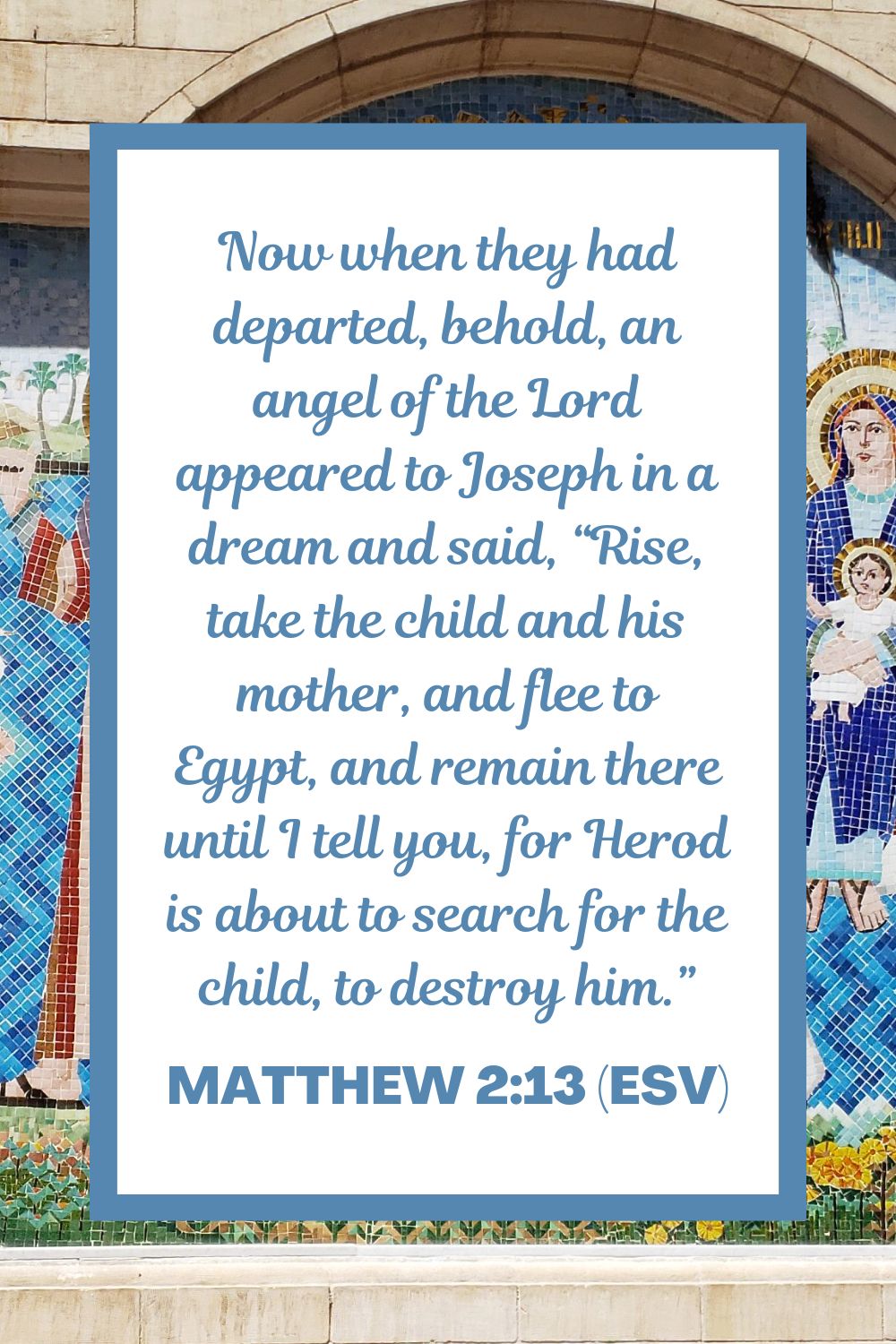
Matthew 2 describes the visit of the wise men, Herod’s attempt to kill the newborn King, and the Holy Family’s escape to Egypt. After the wise men honor Jesus with gifts, Herod’s jealousy drives him to order the massacre of infants in Bethlehem. The family returns from Egypt after Herod’s death, fulfilling further prophecies about the Messiah.
Matthew 3
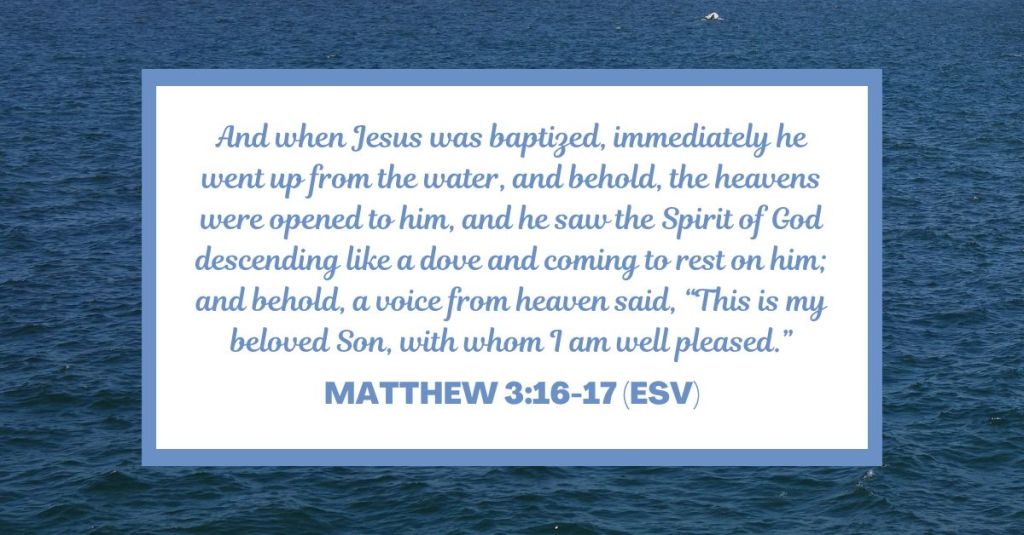
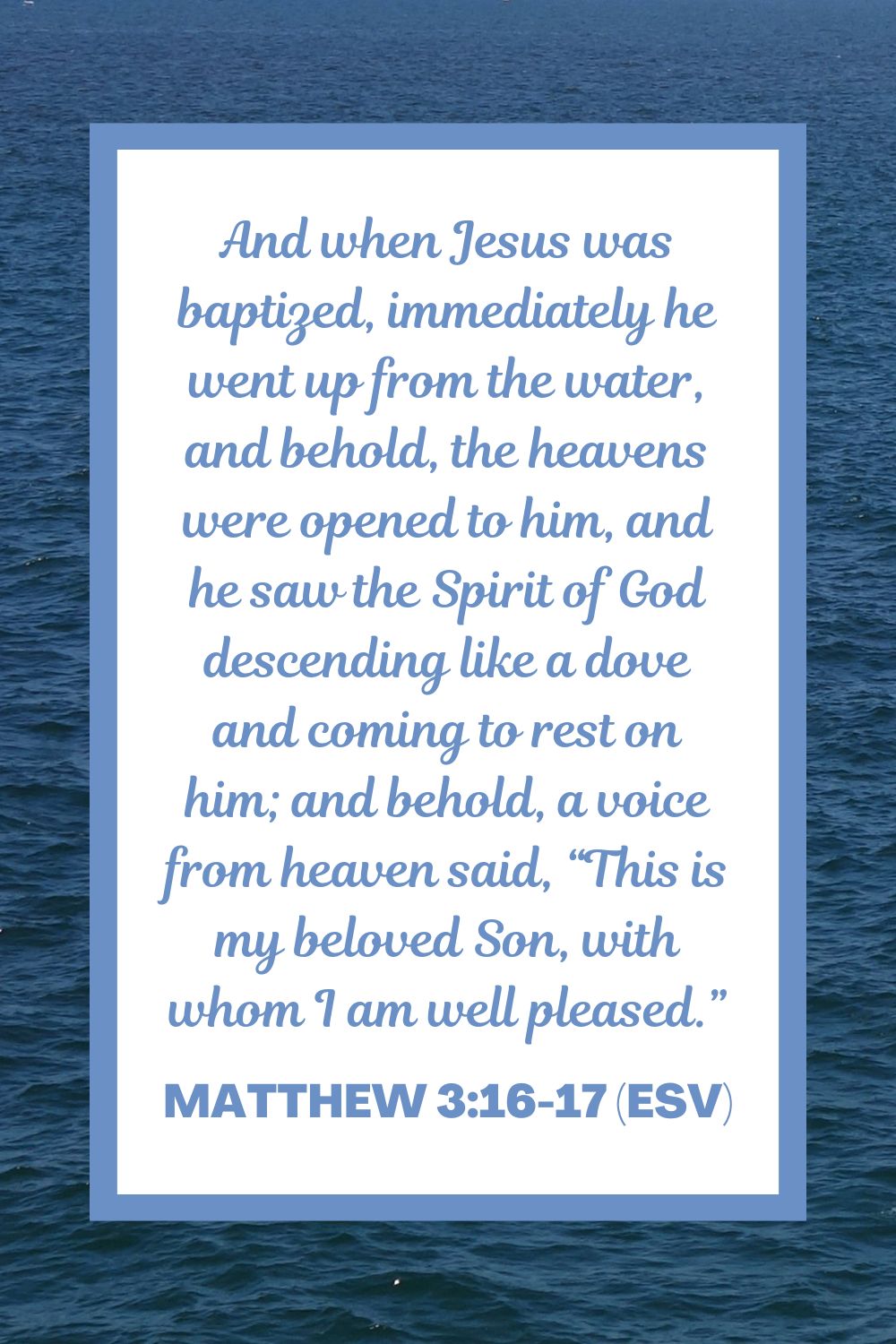
Matthew 3 introduces John the Baptist, who prepares the way for Jesus by preaching repentance and baptizing in the Jordan River. John emphasizes the coming judgment and the need for genuine repentance, symbolized through baptism. When Jesus arrives to be baptized, the heavens open, and God declares His pleasure in His Son.
Matthew 4
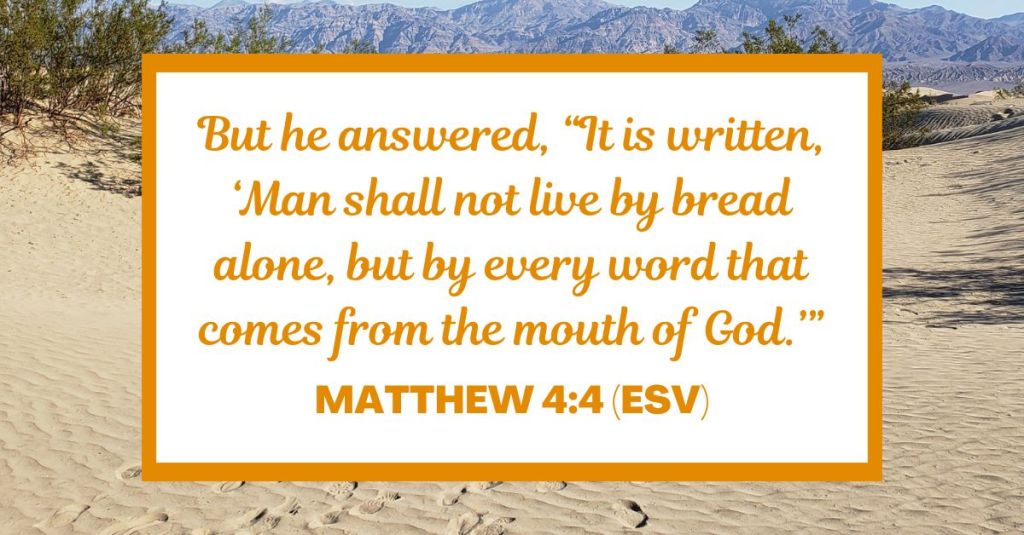
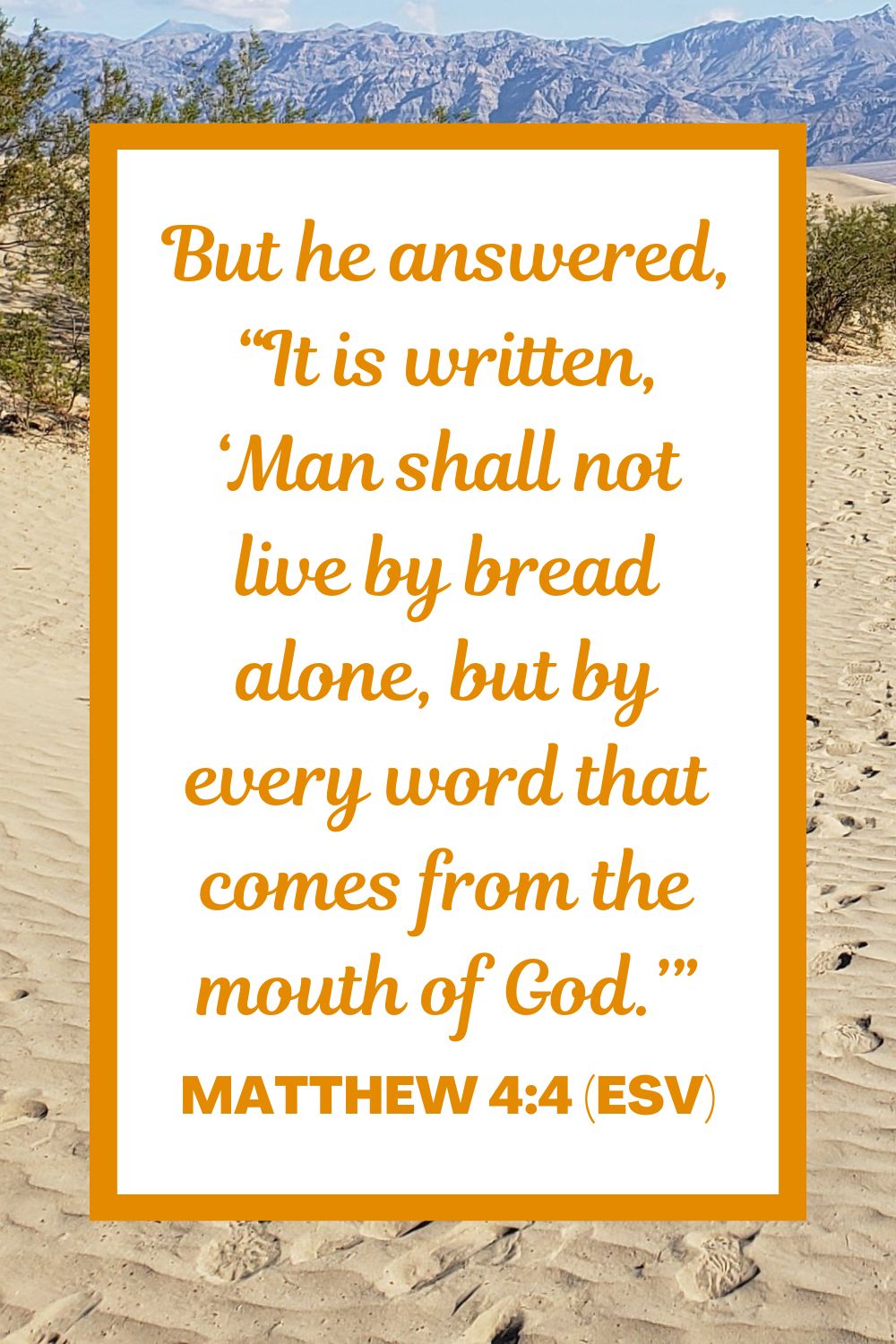
In Matthew 4, Jesus is led into the wilderness to be tempted by Satan. He withstands each temptation using scripture, demonstrating obedience and reliance on God’s Word. Following this, Jesus begins His ministry in Galilee, calls His first disciples, and starts teaching, preaching, and healing throughout the region.
Matthew 5

Matthew 5 is the beginning of the Sermon on the Mount, where Jesus teaches the Beatitudes, focusing on the blessings of humility, mercy, and righteousness. He emphasizes the importance of being salt and light in the world, fulfilling the law, and reinterprets various commandments to highlight heart motives.
Matthew 6

In Matthew 6, Jesus continues the Sermon on the Mount by teaching about sincere devotion in giving, praying, and fasting. He gives the Lord’s Prayer as a model for prayer and urges His followers to prioritize heavenly treasures over earthly possessions. He encourages trust in God rather than worry about daily needs.
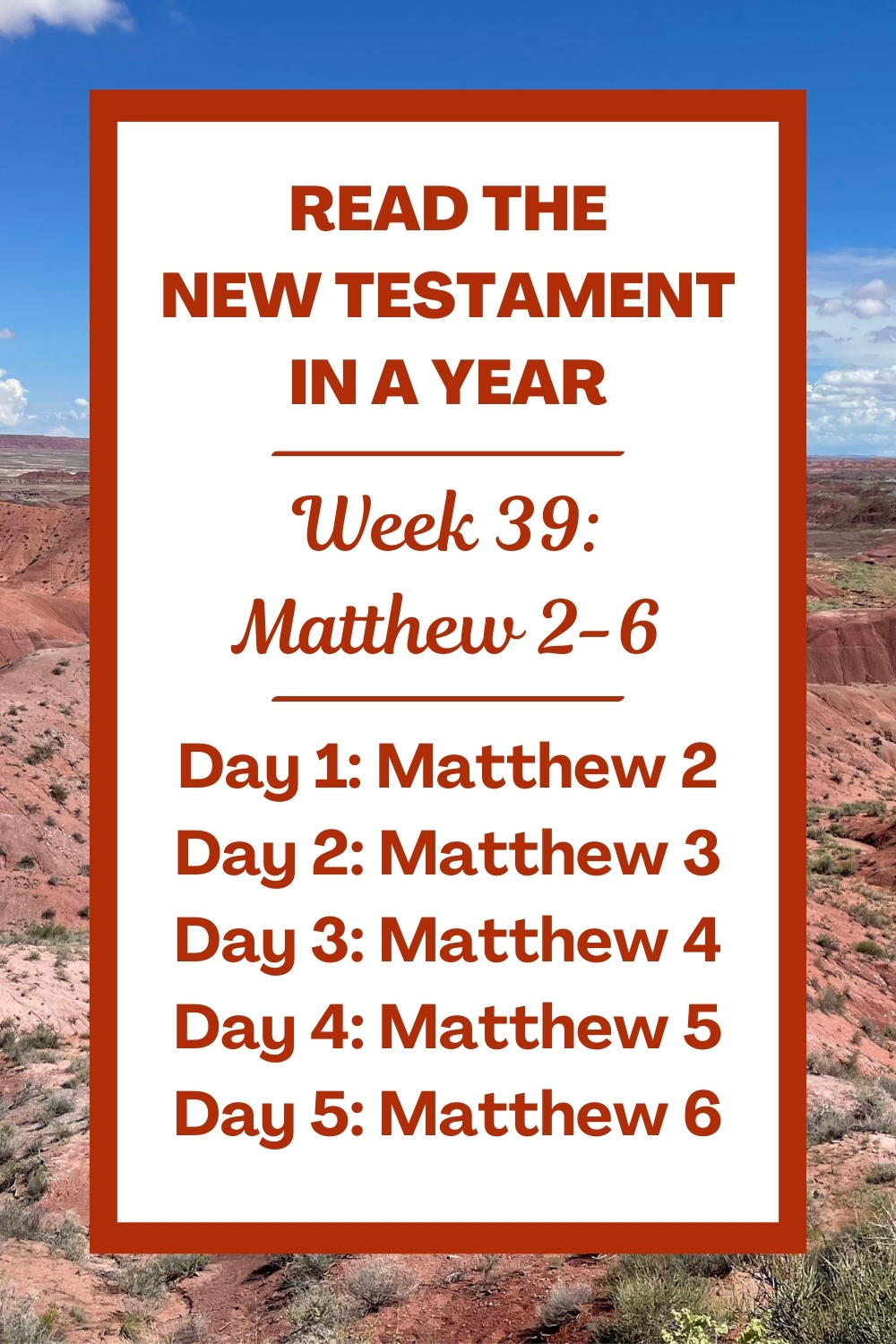
Week 39: New Testament Reading Assignment
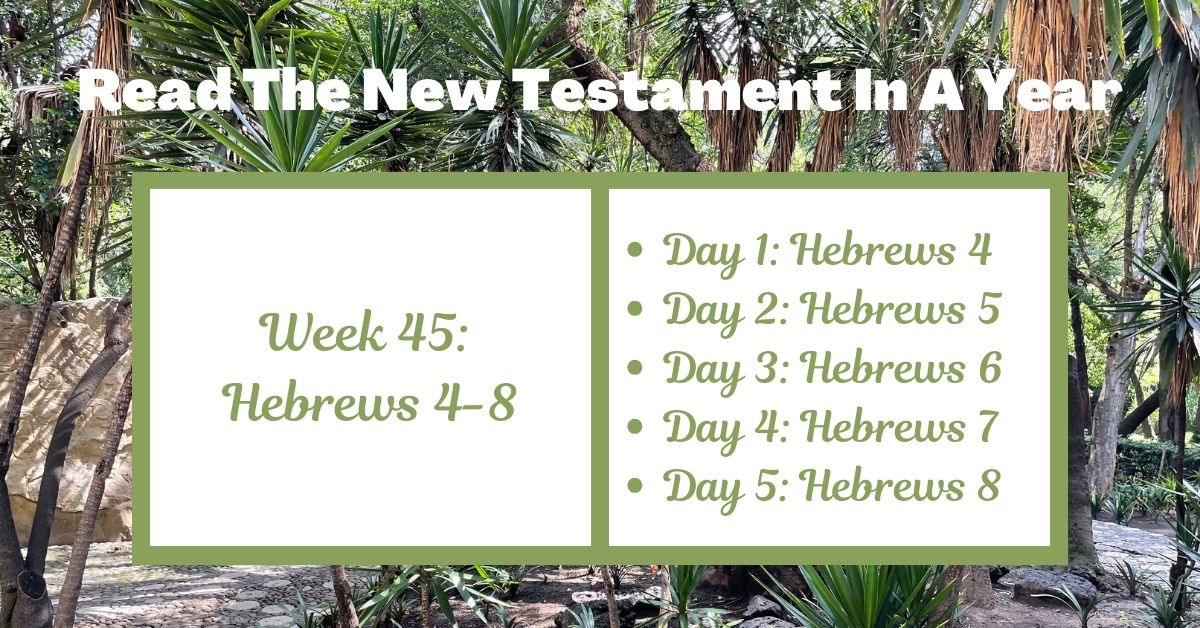
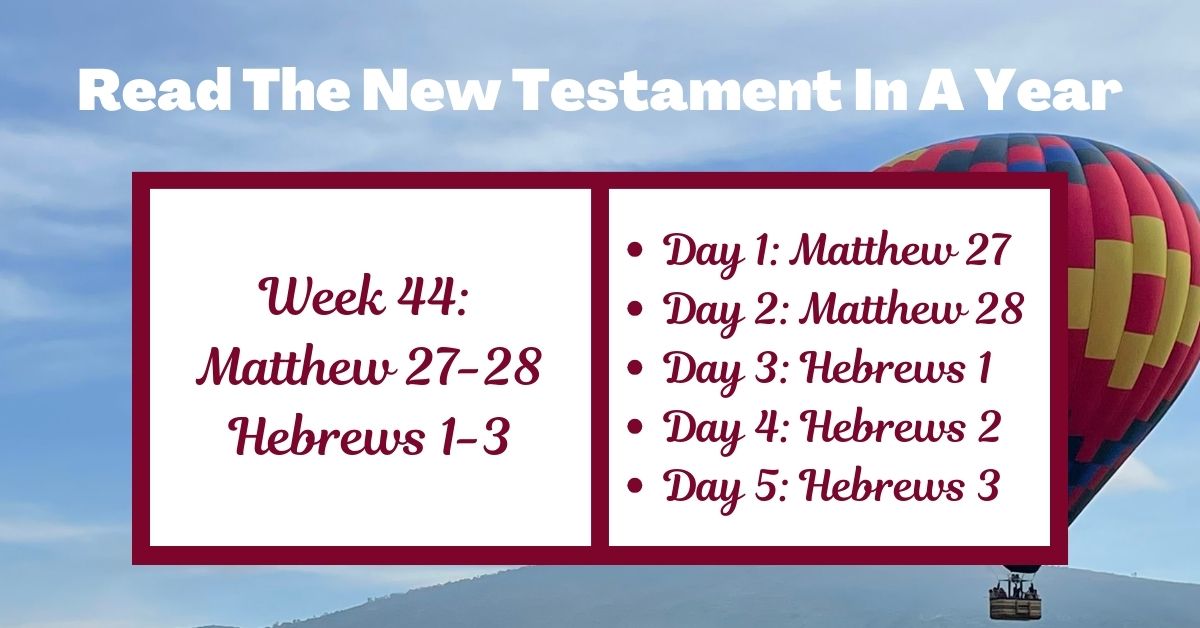
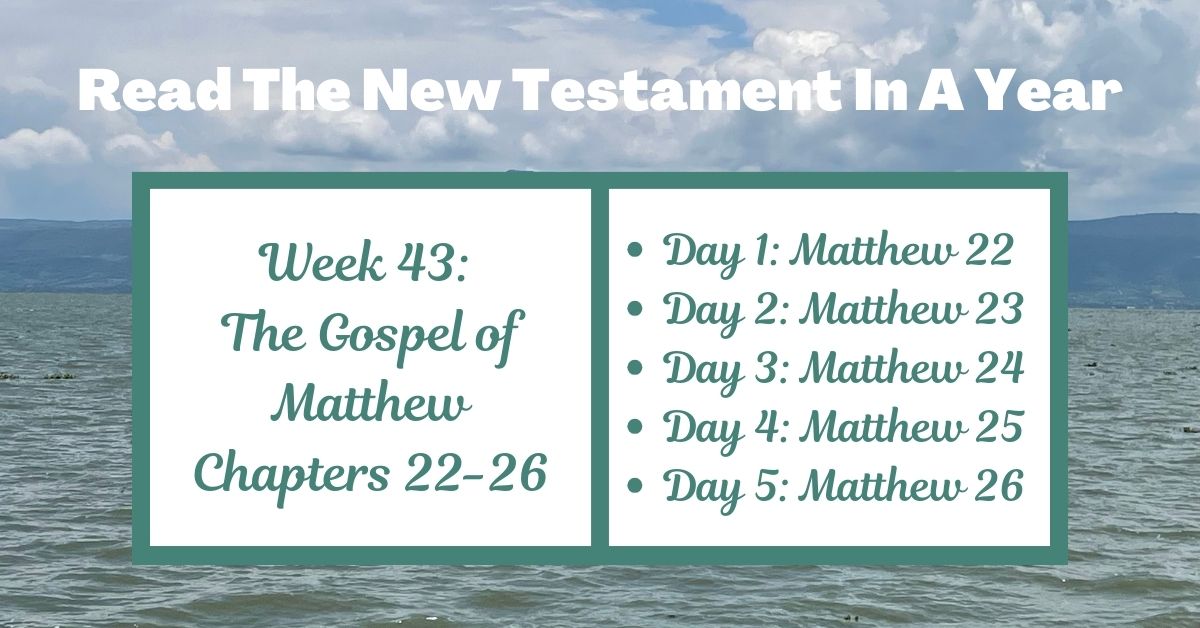
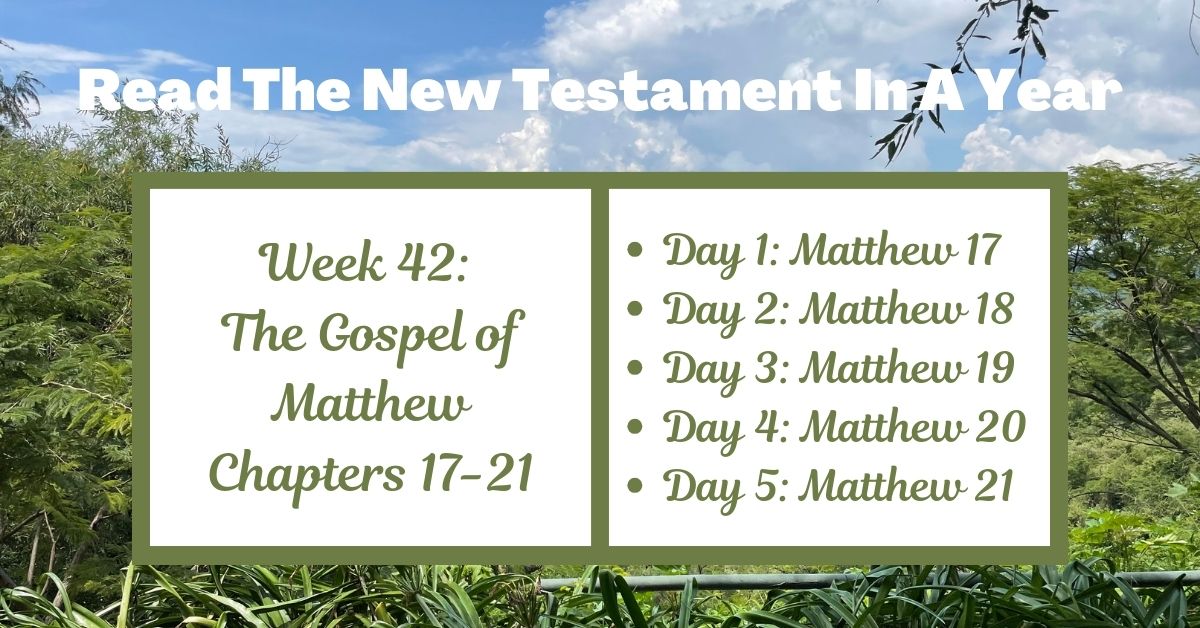
Each week, we will read 5 chapters of the New Testament. Some people may prefer to read during the weekdays, while others might enjoy doing most of their reading on the weekends. Choose the method that works best for you!
Printable Resource:
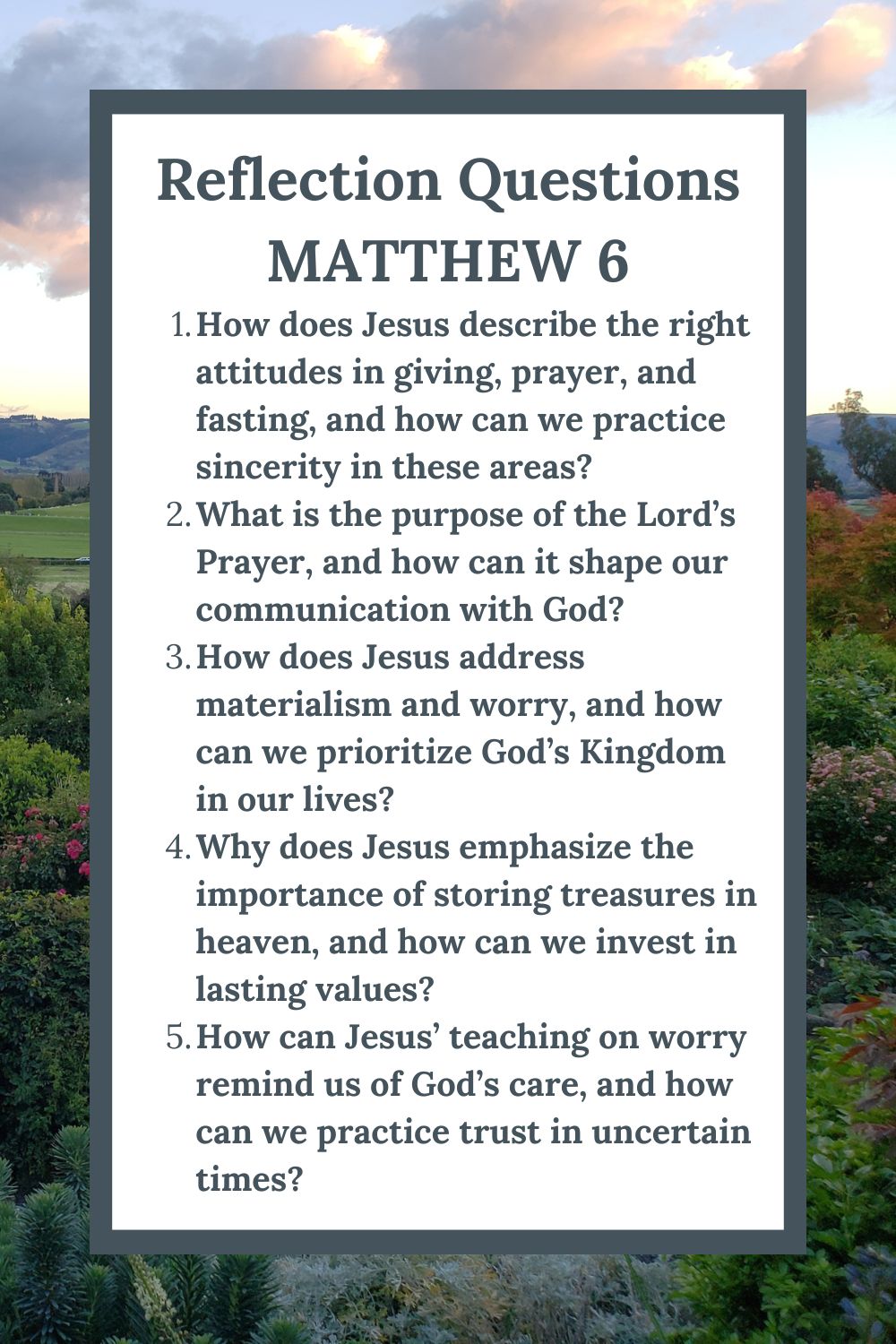
Week 39: Reflection Questions for Matthew 2-6
Consider the following reflection questions:
Matthew 2: The Wise Men, Herod’s Jealousy, and the Flight to Egypt
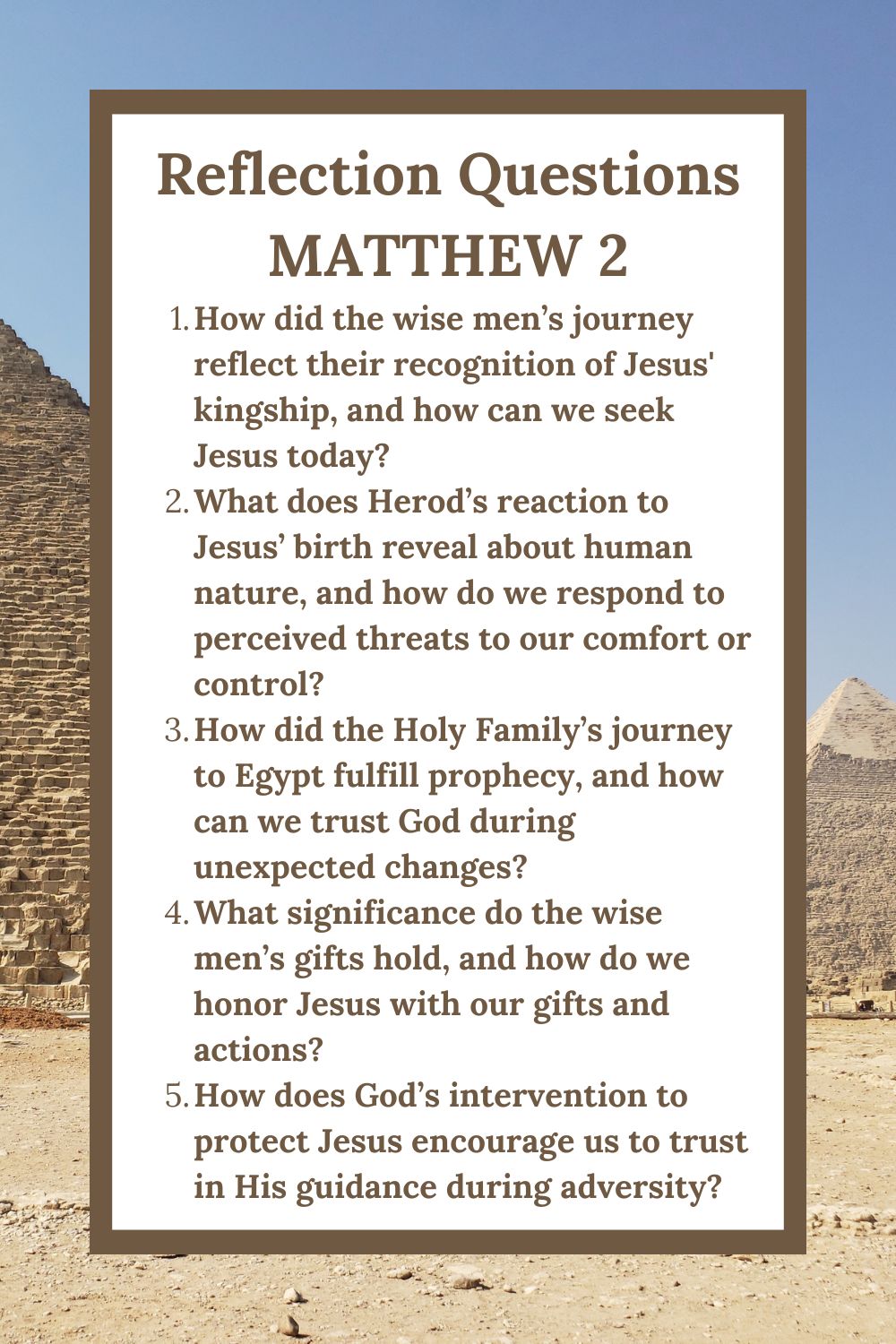
- How did the wise men’s journey reflect their recognition of Jesus’ kingship, and how can we seek Jesus today?
- What does Herod’s reaction to Jesus’ birth reveal about human nature, and how do we respond to perceived threats to our comfort or control?
- How did the Holy Family’s journey to Egypt fulfill prophecy, and how can we trust God during unexpected changes?
- What significance do the wise men’s gifts hold, and how do we honor Jesus with our gifts and actions?
- How does God’s intervention to protect Jesus encourage us to trust in His guidance during adversity?
Matthew 3: John the Baptist Prepares the Way
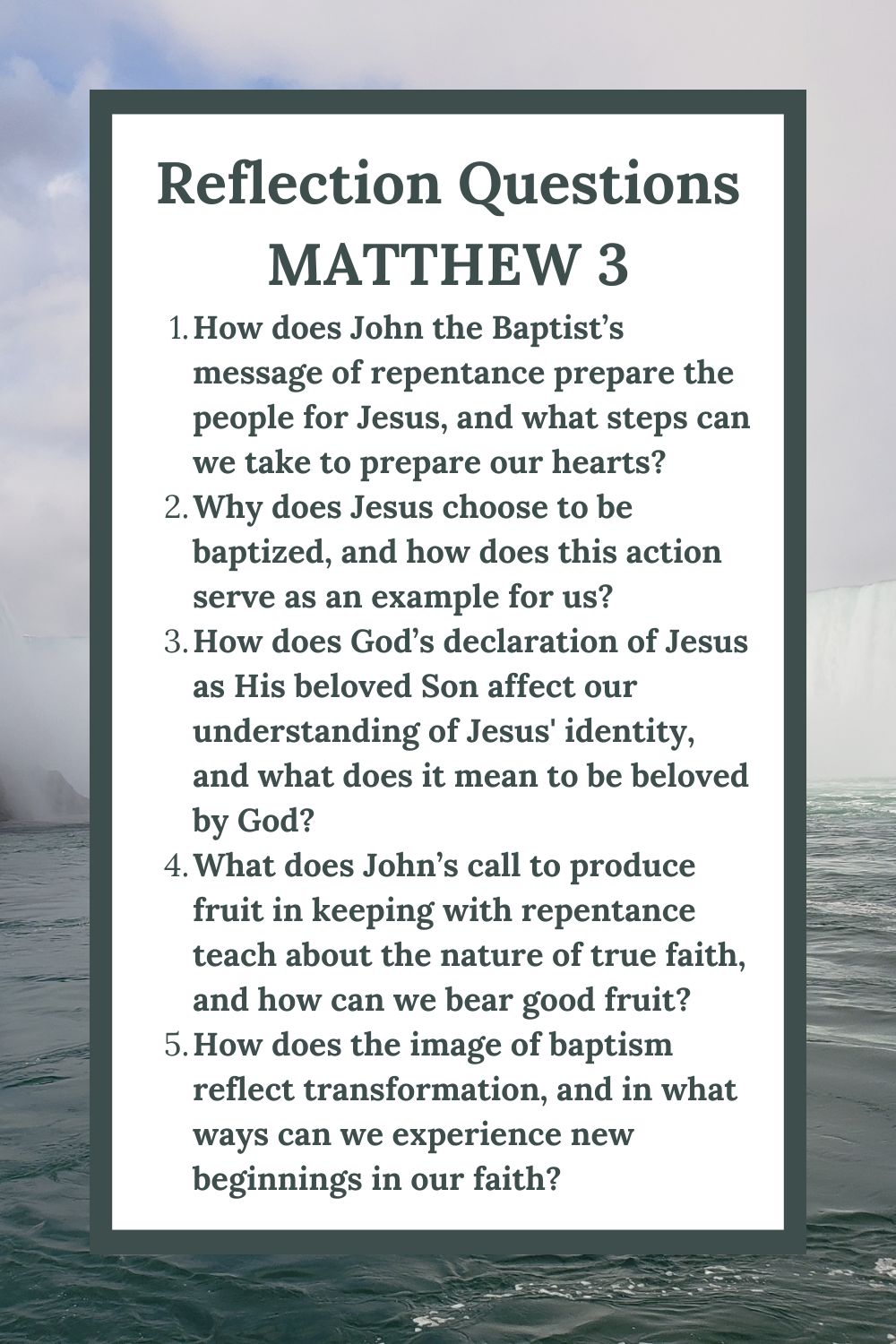
- How does John the Baptist’s message of repentance prepare the people for Jesus, and what steps can we take to prepare our hearts?
- Why does Jesus choose to be baptized, and how does this action serve as an example for us?
- How does God’s declaration of Jesus as His beloved Son affect our understanding of Jesus’ identity, and what does it mean to be beloved by God?
- What does John’s call to produce fruit in keeping with repentance teach about the nature of true faith, and how can we bear good fruit?
- How does the image of baptism reflect transformation, and in what ways can we experience new beginnings in our faith?
Matthew 4: Jesus’ Temptation and Beginning of Ministry
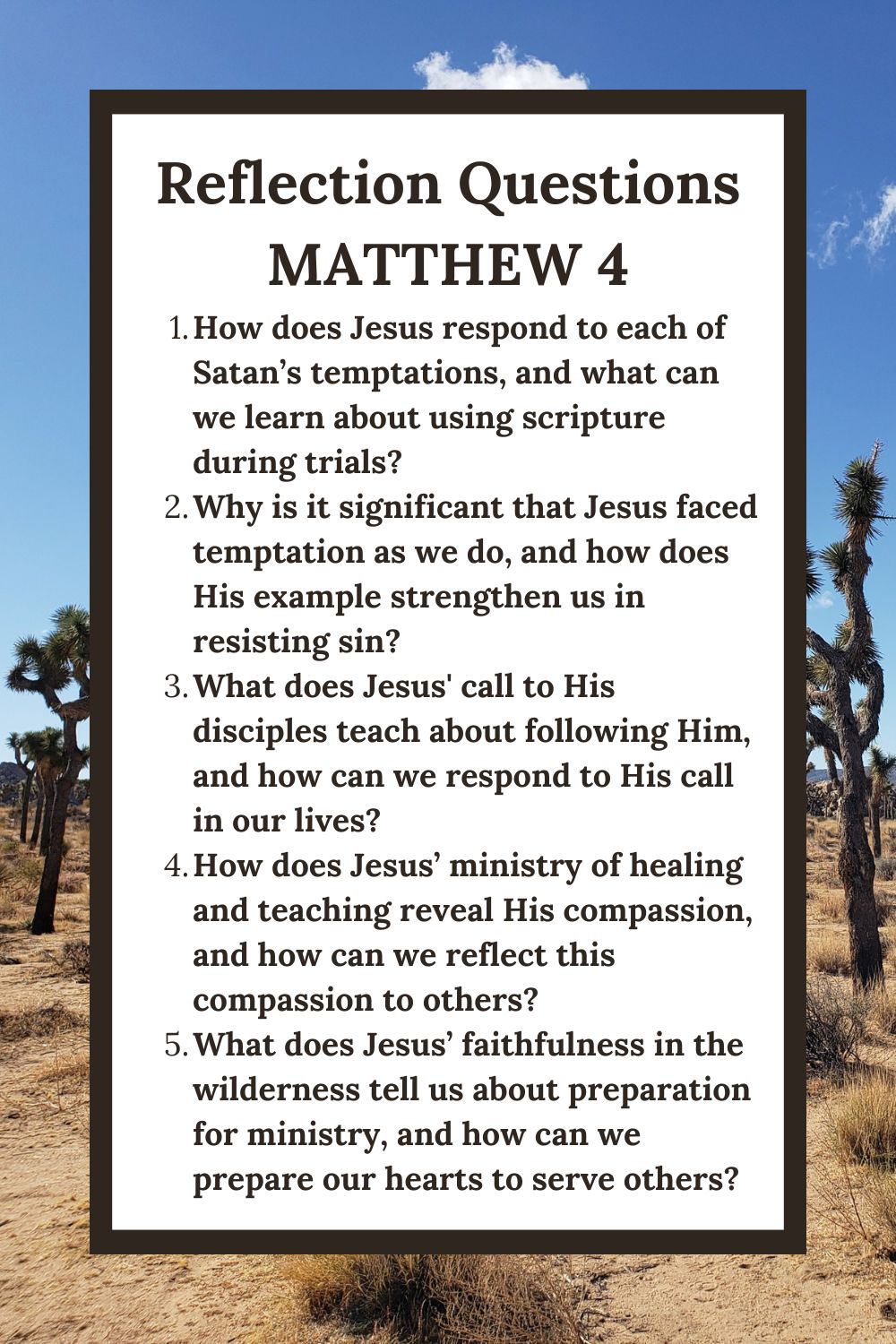
- How does Jesus respond to each of Satan’s temptations, and what can we learn about using scripture during trials?
- Why is it significant that Jesus faced temptation as we do, and how does His example strengthen us in resisting sin?
- What does Jesus’ call to His disciples teach about following Him, and how can we respond to His call in our lives?
- How does Jesus’ ministry of healing and teaching reveal His compassion, and how can we reflect this compassion to others?
- What does Jesus’ faithfulness in the wilderness tell us about preparation for ministry, and how can we prepare our hearts to serve others?
Matthew 5: The Beatitudes and Righteous Living
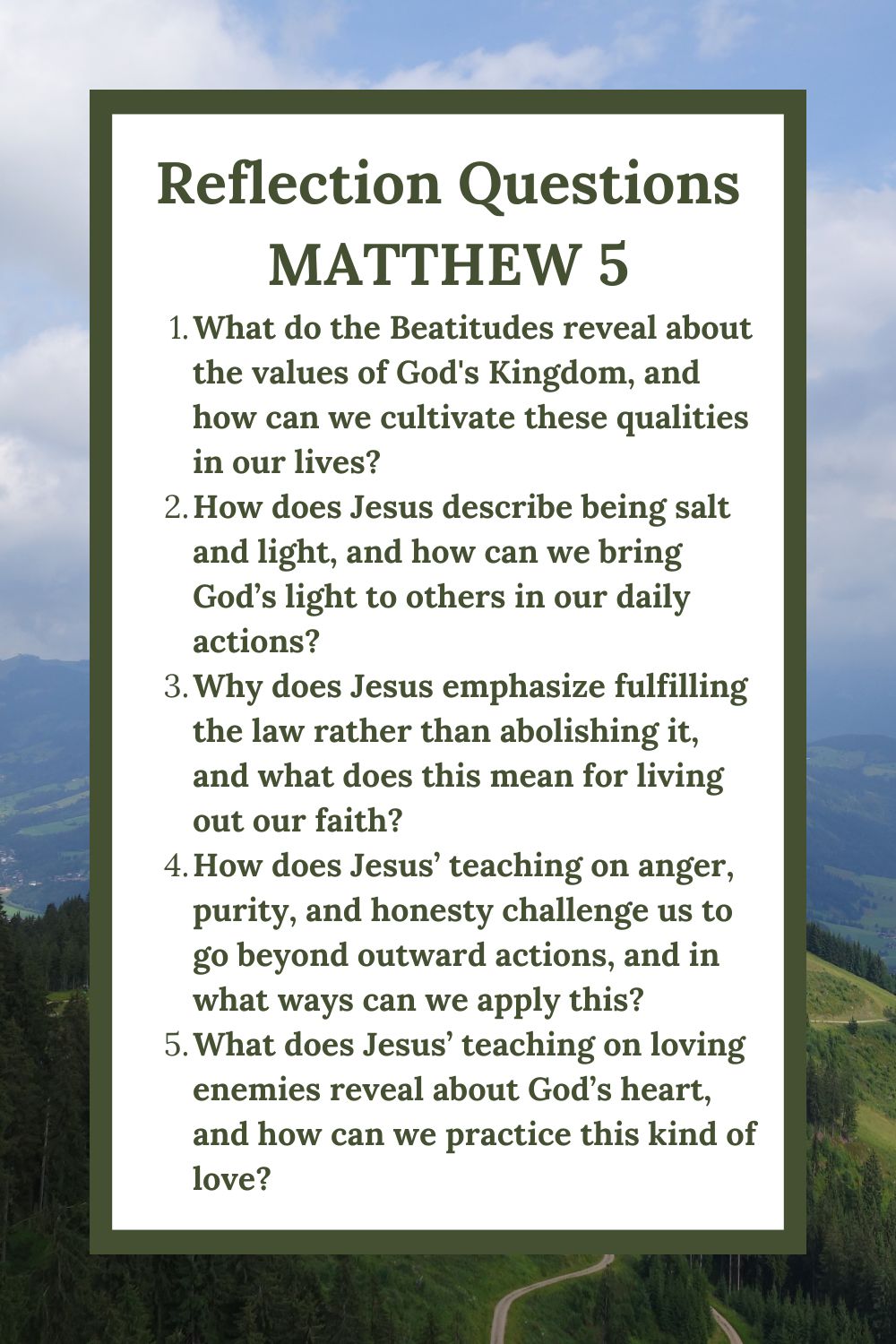
- What do the Beatitudes reveal about the values of God’s Kingdom, and how can we cultivate these qualities in our lives?
- How does Jesus describe being salt and light, and how can we bring God’s light to others in our daily actions?
- Why does Jesus emphasize fulfilling the law rather than abolishing it, and what does this mean for living out our faith?
- How does Jesus’ teaching on anger, purity, and honesty challenge us to go beyond outward actions, and in what ways can we apply this?
- What does Jesus’ teaching on loving enemies reveal about God’s heart, and how can we practice this kind of love?
Matthew 6: Sincere Devotion and Trust in God
- How does Jesus describe the right attitudes in giving, prayer, and fasting, and how can we practice sincerity in these areas?
- What is the purpose of the Lord’s Prayer, and how can it shape our communication with God?
- How does Jesus address materialism and worry, and how can we prioritize God’s Kingdom in our lives?
- Why does Jesus emphasize the importance of storing treasures in heaven, and how can we invest in lasting values?
- How can Jesus’ teaching on worry remind us of God’s care, and how can we practice trust in uncertain times?
Reflective Prayer
Choose a few verses or topics from these chapters and pray over them. Consider using the ACTS method — Adoration, Confession, Thankfulness, Supplication:
- Adoration: Praise God. What specific characteristics of God do these readings bring to mind?
- Confession: Tell God that you are sorry for specific sins. What specific sins do these readings bring to mind?
- Thankfulness: Show gratitude towards God. What in these readings inspires gratitude?
- Supplication: Make requests for yourself and for others. What in these readings inspires a prayer?
If helpful, you can use a prayer journal template.


Other Reading Plans
Online Resources
Subscribe
If you enjoyed this post and wish to receive more Christian content, feel free to subscribe to my newsletters!
Related Resources
Visit the Joyful Moments in Christ homepage for all posts, or scroll through other blog posts related to reading the New Testament in a year:




English Standard Version (ESV): Unless otherwise noted, scripture quotations are from the ESV® Bible (The Holy Bible, English Standard Version®), © 2001 by Crossway, a publishing ministry of Good News Publishers. Used by permission. All rights reserved. The ESV text may not be quoted in any publication made available to the public by a Creative Commons license. The ESV may not be translated in whole or in part into any other language.


 Joyful Moments in Christ