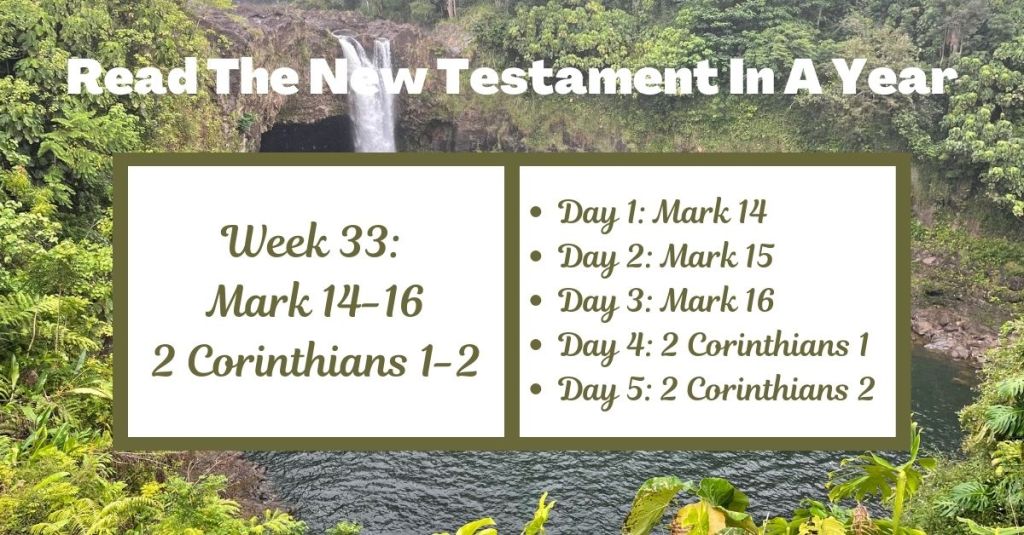
Week 33: Exploring Mark 14-16 and 2 Corinthians 1-2
In week 33 of our journey to read the New Testament in a year, we will explore the final chapters of Mark’s Gospel, where we witness Jesus’ suffering, crucifixion, and glorious resurrection. These events are foundational to our faith, offering profound insights into Jesus’ sacrifice, His love for humanity, and His ultimate victory over death. We’ll also begin 2 Corinthians, where Paul opens with words of comfort and encouragement, addressing God’s faithfulness and the importance of integrity and forgiveness in our relationships. This week’s readings invite us to reflect on how Jesus’ journey impacts our lives and challenges us to live out our faith with compassion, courage, and hope.
Mark 14

In Mark 14, Jesus is anointed at Bethany, foreshadowing His burial, and shares the Last Supper with His disciples, instituting communion. He predicts Peter’s denial and goes to Gethsemane to pray, expressing sorrow over His impending suffering. Judas betrays Him, leading to His arrest, and Peter denies Him three times, fulfilling Jesus’ prophecy of Peter’s weakness under pressure.
Mark 15
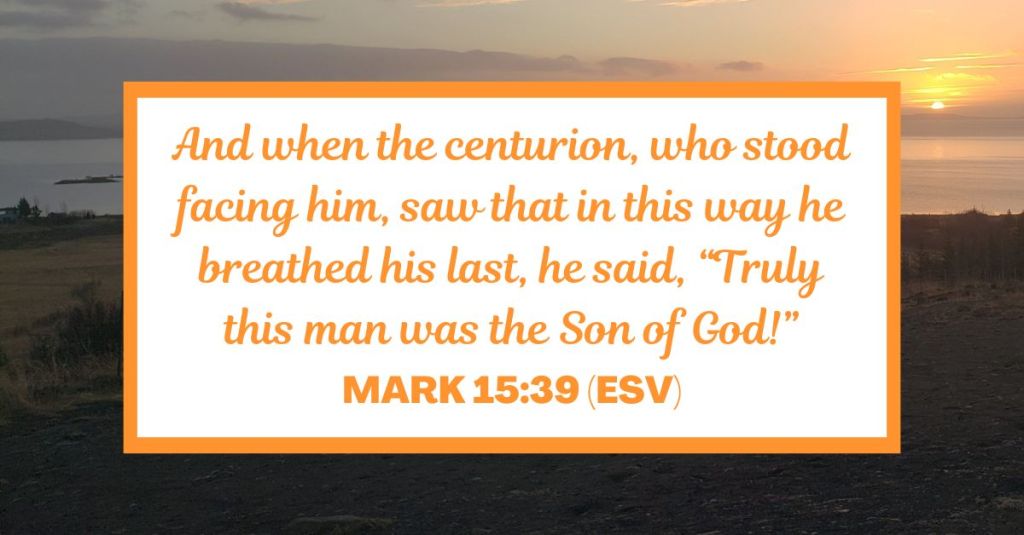
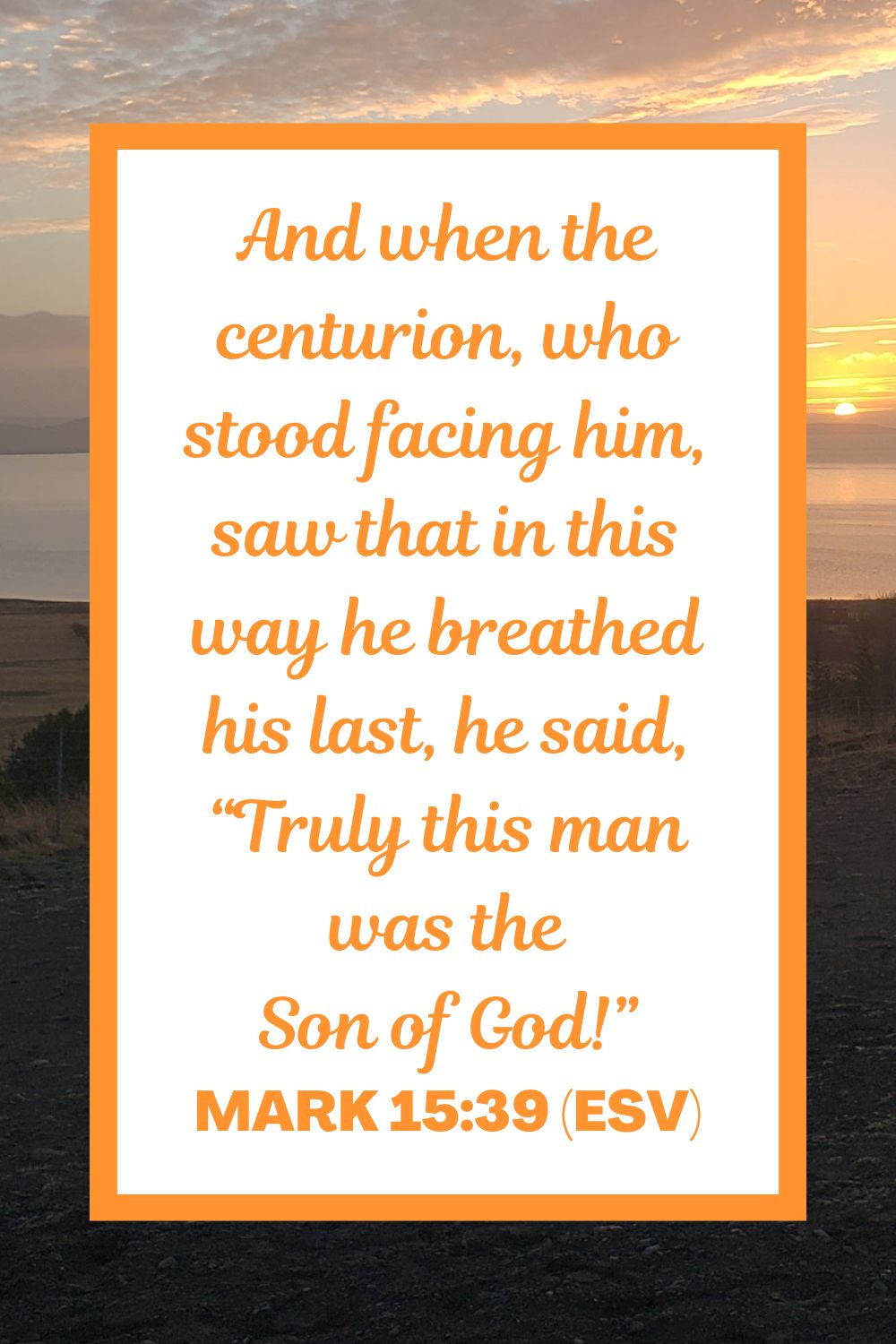
Mark 15 describes the trial, crucifixion, and death of Jesus. Despite Pilate finding no guilt in Him, the crowd demands His crucifixion, and He is mocked, beaten, and ultimately nailed to the cross. At His death, the temple curtain is torn, signifying access to God for all. A Roman centurion recognizes Him as the Son of God, affirming His divine identity even in death.
Mark 16
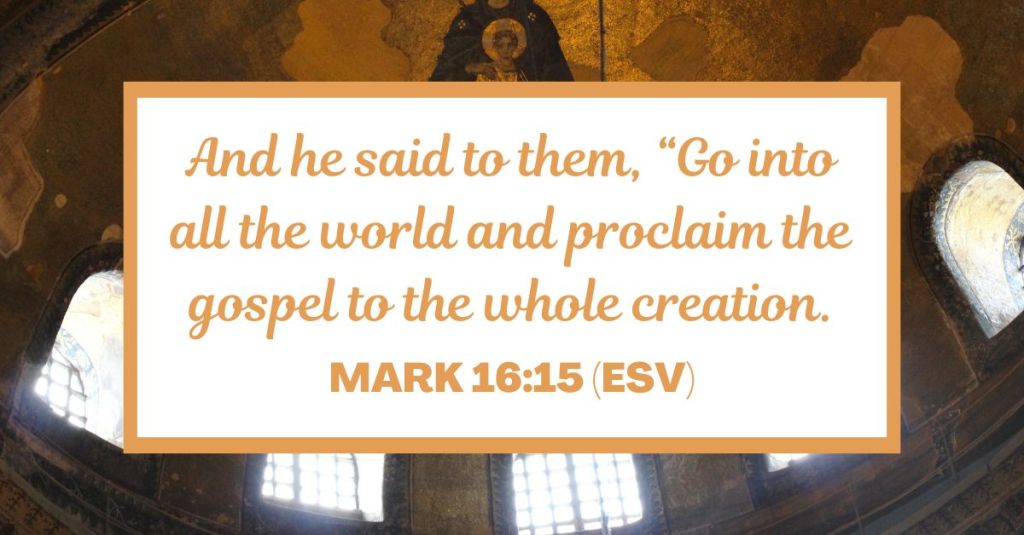
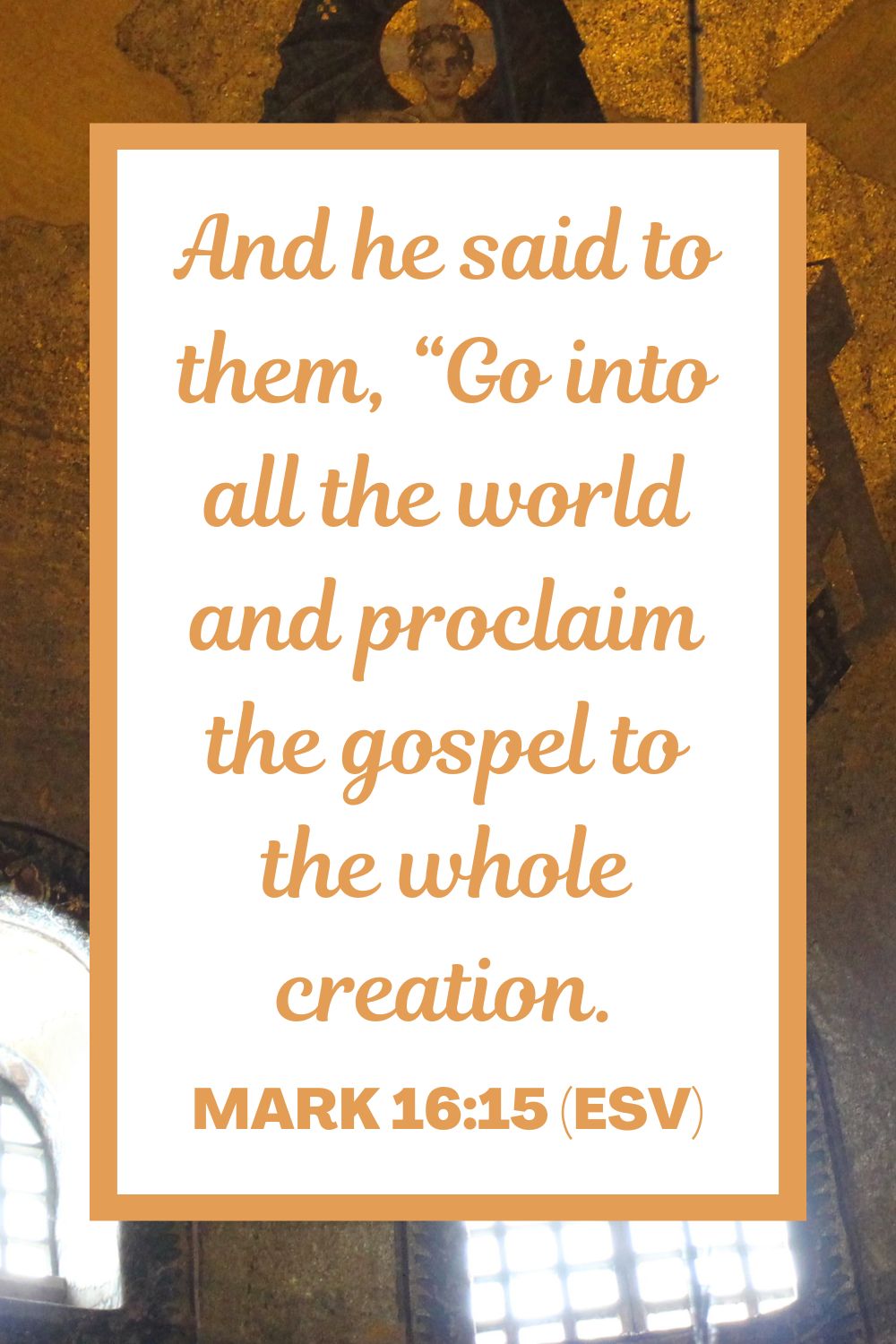
Mark 16 recounts the resurrection of Jesus, as women discover the empty tomb and are instructed by an angel to tell the disciples. Jesus appears to Mary Magdalene and later to His followers, commissioning them to spread the gospel to all nations. His resurrection affirms His victory over death and establishes the foundation of the Christian faith.
2 Corinthians 1

In 2 Corinthians 1, Paul opens with gratitude for God’s comfort in times of suffering, affirming that God’s support enables believers to comfort one another. Reflecting on hardships in Asia, he emphasizes that trials have taught him to depend fully on God. Paul clarifies his changed travel plans, assuring the Corinthians that he acts with sincerity and faithfulness to God’s will. He concludes by affirming that God’s promises are fulfilled in Christ, providing steadfast hope.
2 Corinthians 2

In 2 Corinthians 2, Paul urges the Corinthians to forgive and restore a previously offending member, warning that excessive punishment may lead to despair. He encourages them to reaffirm love for the individual, uniting in forgiveness to prevent harm. Paul then explains that God’s triumph leads him to spread the knowledge of Christ, likening believers to a “fragrance” of Christ’s presence in the world.
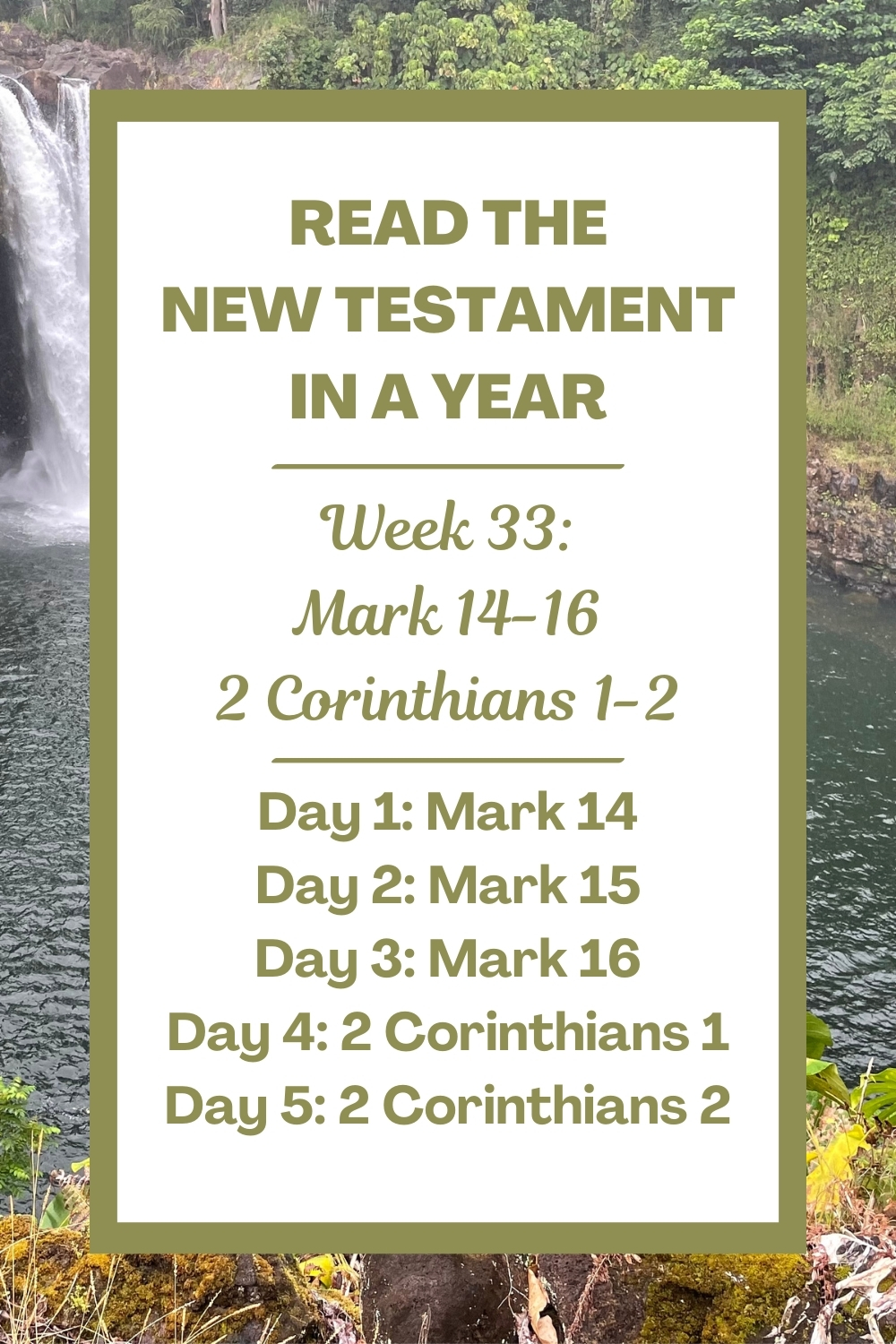
Week 33: New Testament Reading Assignment
Each week, we will read 5 chapters of the New Testament. Some people may prefer to read during the weekdays, while others might enjoy doing most of their reading on the weekends. Choose the method that works best for you!
- Day 1: Mark 14
- Day 2: Mark 15
- Day 3: Mark 16
- Day 4: 2 Corinthians 1
- Day 5: 2 Corinthians 2
Printable Resource:
Week 33: Reflection Questions for Mark 14-16 and 2 Corinthians 1-2
Consider the following reflection questions:
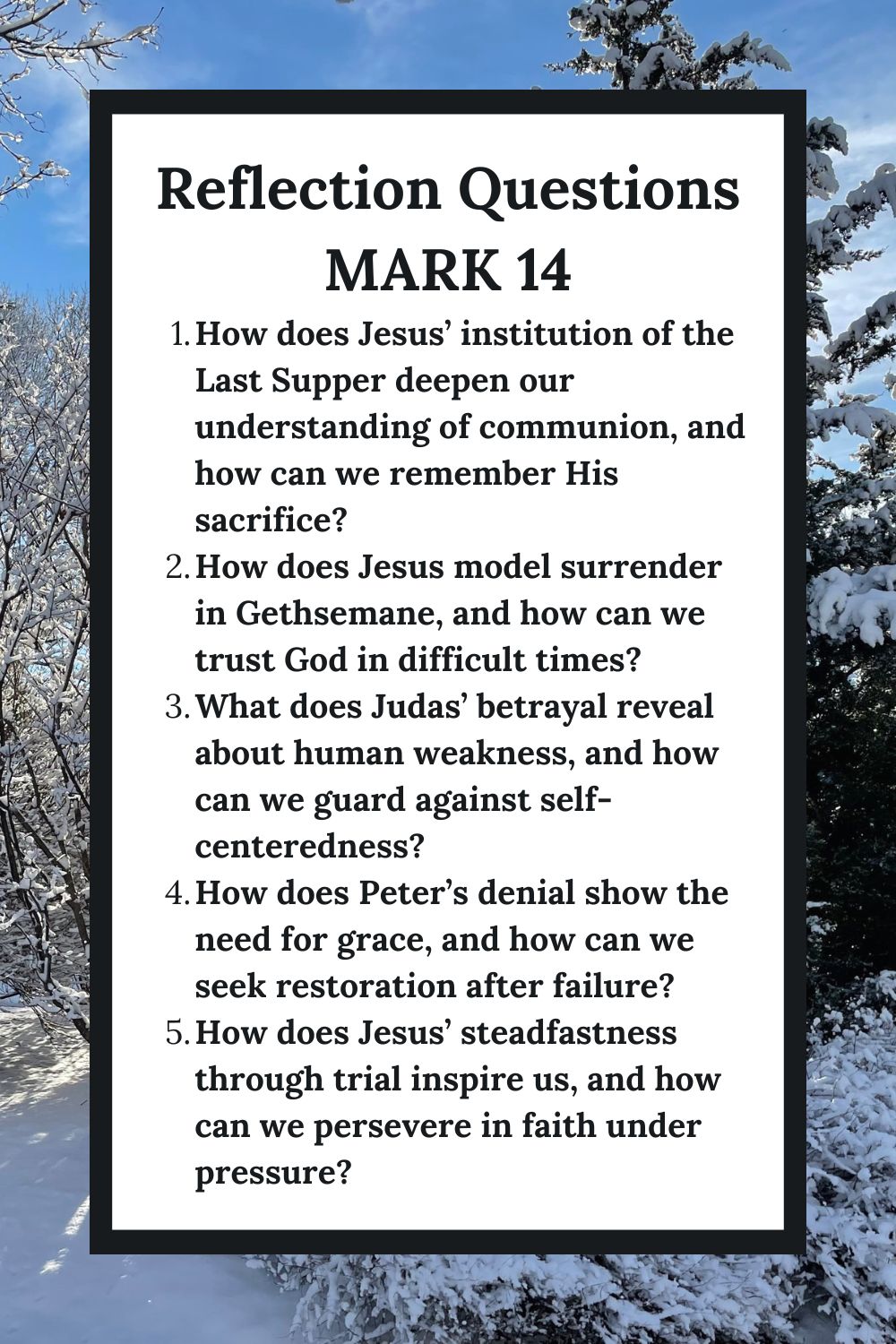
Mark 14: Betrayal, Prayer, and Perseverance
- How does Jesus’ institution of the Last Supper deepen our understanding of communion, and how can we remember His sacrifice?
- How does Jesus model surrender in Gethsemane, and how can we trust God in difficult times?
- What does Judas’ betrayal reveal about human weakness, and how can we guard against self-centeredness?
- How does Peter’s denial show the need for grace, and how can we seek restoration after failure?
- How does Jesus’ steadfastness through trial inspire us, and how can we persevere in faith under pressure?
Mark 15: The Crucifixion and Sacrifice of Jesus
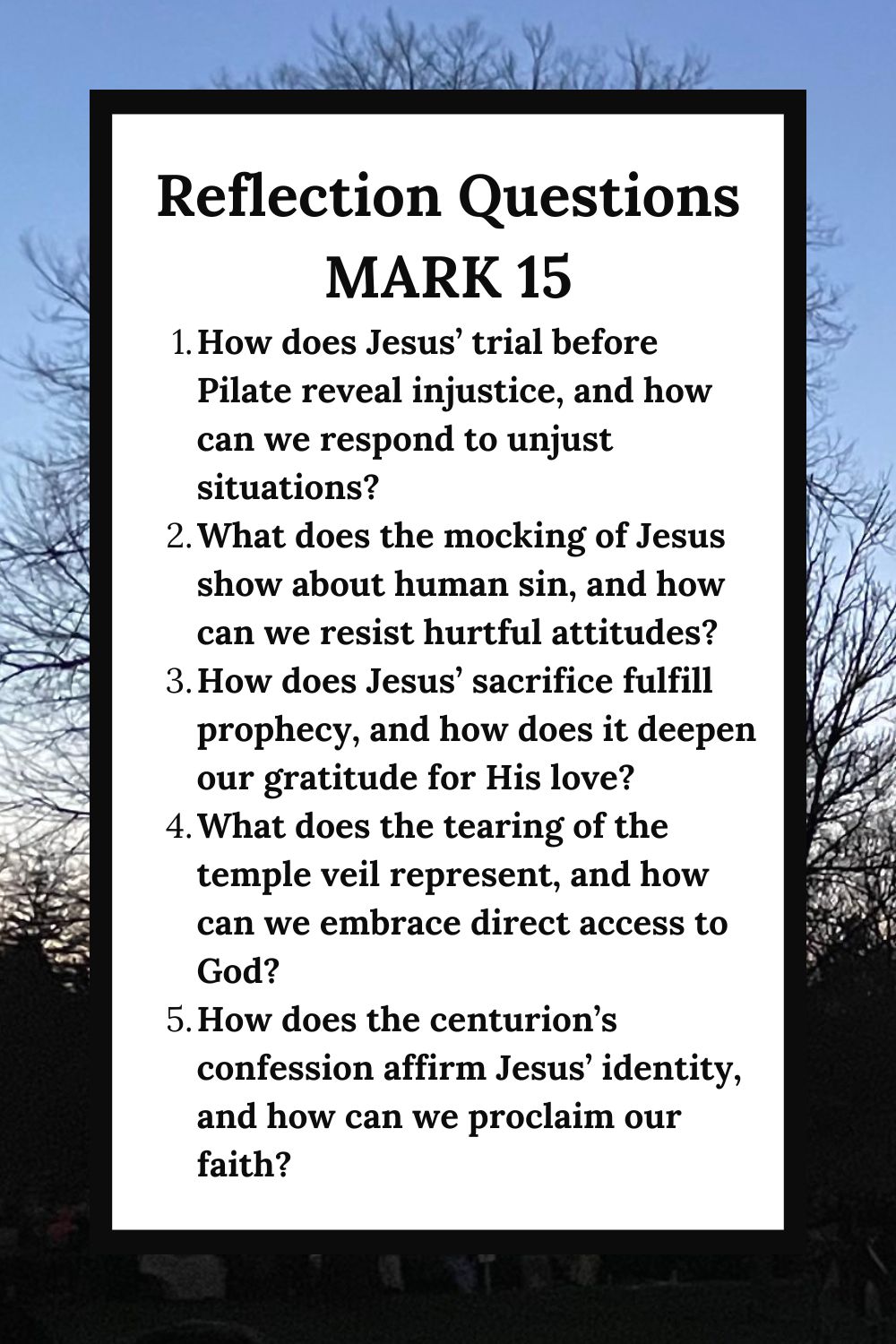
- How does Jesus’ trial before Pilate reveal injustice, and how can we respond to unjust situations?
- What does the mocking of Jesus show about human sin, and how can we resist hurtful attitudes?
- How does Jesus’ sacrifice fulfill prophecy, and how does it deepen our gratitude for His love?
- What does the tearing of the temple veil represent, and how can we embrace direct access to God?
- How does the centurion’s confession affirm Jesus’ identity, and how can we proclaim our faith?
Mark 16: Resurrection and the Great Commission
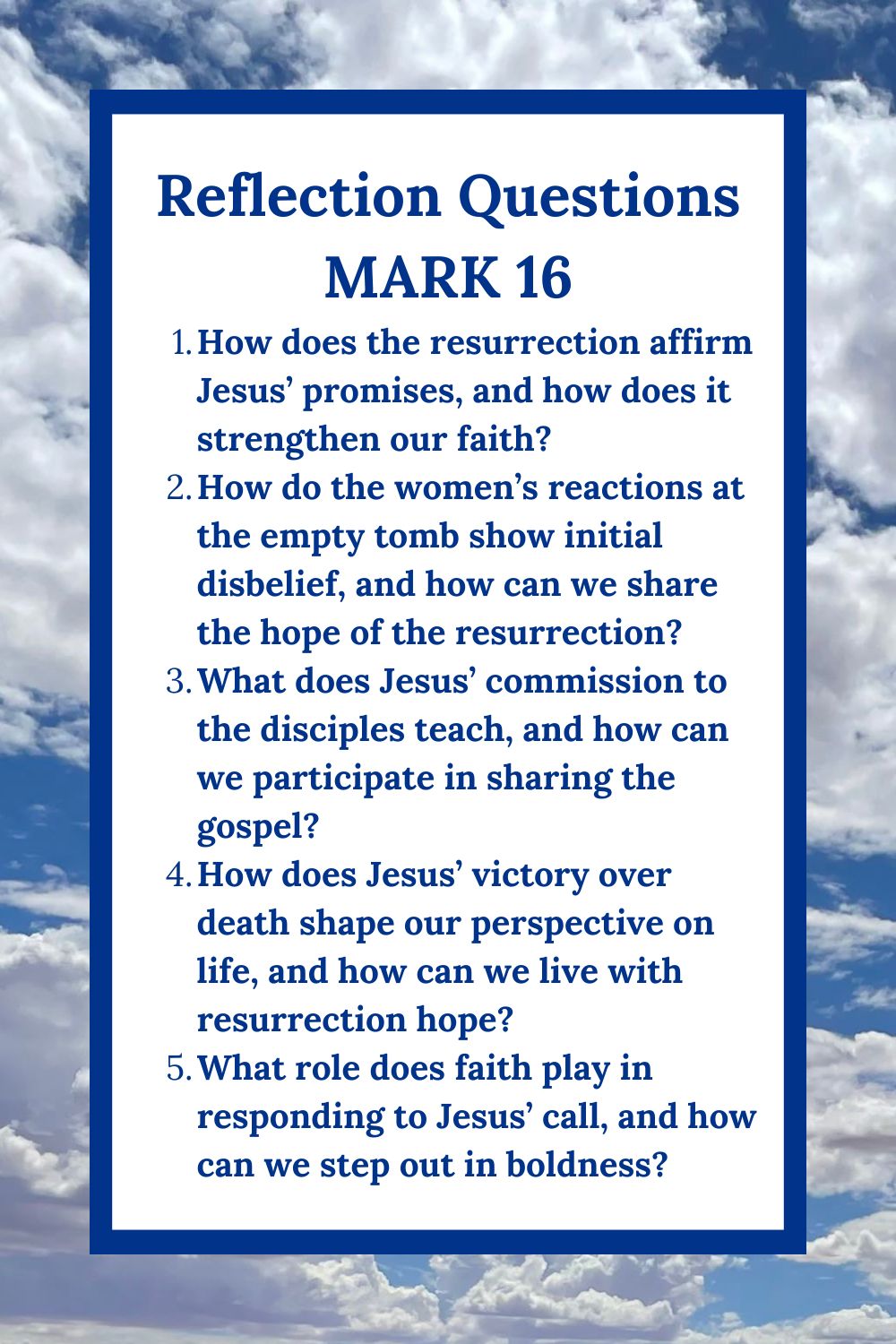
- How does the resurrection affirm Jesus’ promises, and how does it strengthen our faith?
- How do the women’s reactions at the empty tomb show initial disbelief, and how can we share the hope of the resurrection?
- What does Jesus’ commission to the disciples teach, and how can we participate in sharing the gospel?
- How does Jesus’ victory over death shape our perspective on life, and how can we live with resurrection hope?
- What role does faith play in responding to Jesus’ call, and how can we step out in boldness?
2 Corinthians 1: God’s Comfort and Integrity in Ministry
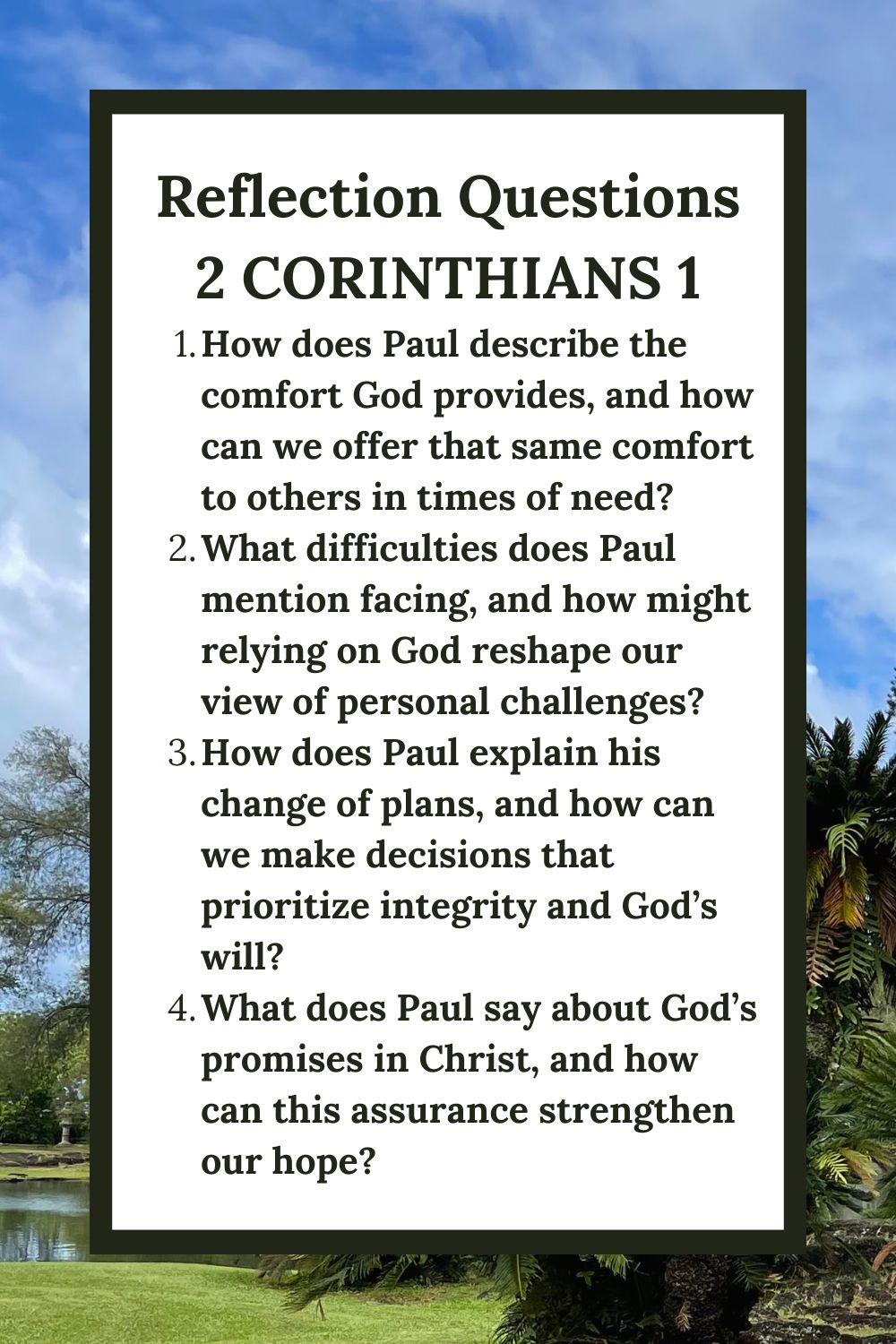
- How does Paul describe the comfort God provides, and how can we offer that same comfort to others in times of need?
- What difficulties does Paul mention facing, and how might relying on God reshape our view of personal challenges?
- How does Paul explain his change of plans, and how can we make decisions that prioritize integrity and God’s will?
- What does Paul say about God’s promises in Christ, and how can this assurance strengthen our hope?
2 Corinthians 2: Forgiveness and Spreading the Gospel
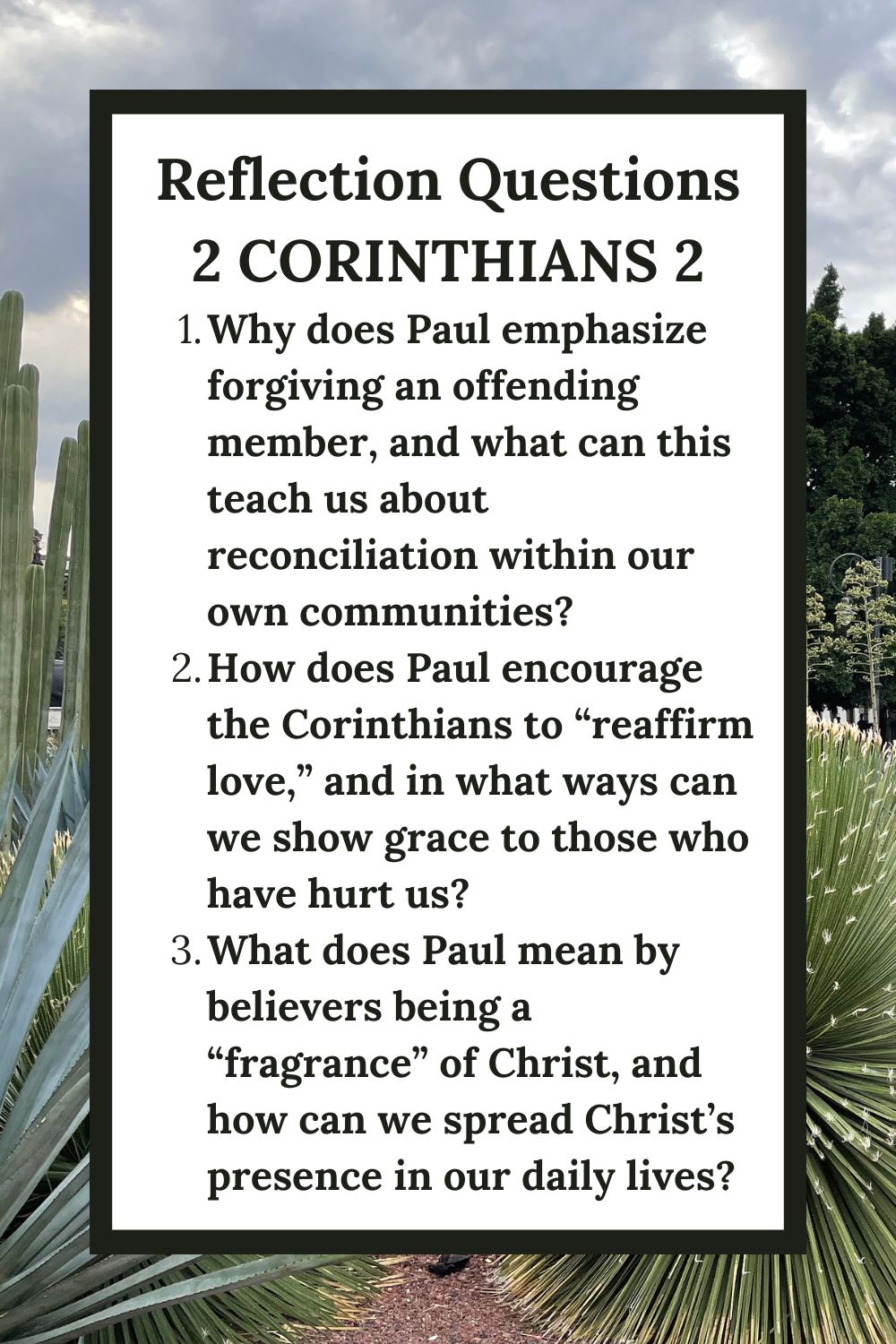
- Why does Paul emphasize forgiving an offending member, and what can this teach us about reconciliation within our own communities?
- How does Paul encourage the Corinthians to “reaffirm love,” and in what ways can we show grace to those who have hurt us?
- What does Paul mean by believers being a “fragrance” of Christ, and how can we spread Christ’s presence in our daily lives?
Reflective Prayer
Choose a few verses or topics from these chapters and pray over them. Consider using the ACTS method — Adoration, Confession, Thankfulness, Supplication:
- Adoration: Praise God. What specific characteristics of God do these readings bring to mind?
- Confession: Tell God that you are sorry for specific sins. What specific sins do these readings bring to mind?
- Thankfulness: Show gratitude towards God. What in these readings inspires gratitude?
- Supplication: Make requests for yourself and for others. What in these readings inspires a prayer?
If helpful, you can use a prayer journal template.



Other Reading Plans
Online Resources
Subscribe
If you enjoyed this post and wish to receive more Christian content, feel free to subscribe to my newsletters!
Related Resources
Visit the Joyful Moments in Christ homepage for all posts, or scroll through other blog posts related to reading the New Testament in a year:




English Standard Version (ESV): Unless otherwise noted, scripture quotations are from the ESV® Bible (The Holy Bible, English Standard Version®), © 2001 by Crossway, a publishing ministry of Good News Publishers. Used by permission. All rights reserved. The ESV text may not be quoted in any publication made available to the public by a Creative Commons license. The ESV may not be translated in whole or in part into any other language.


 Joyful Moments in Christ