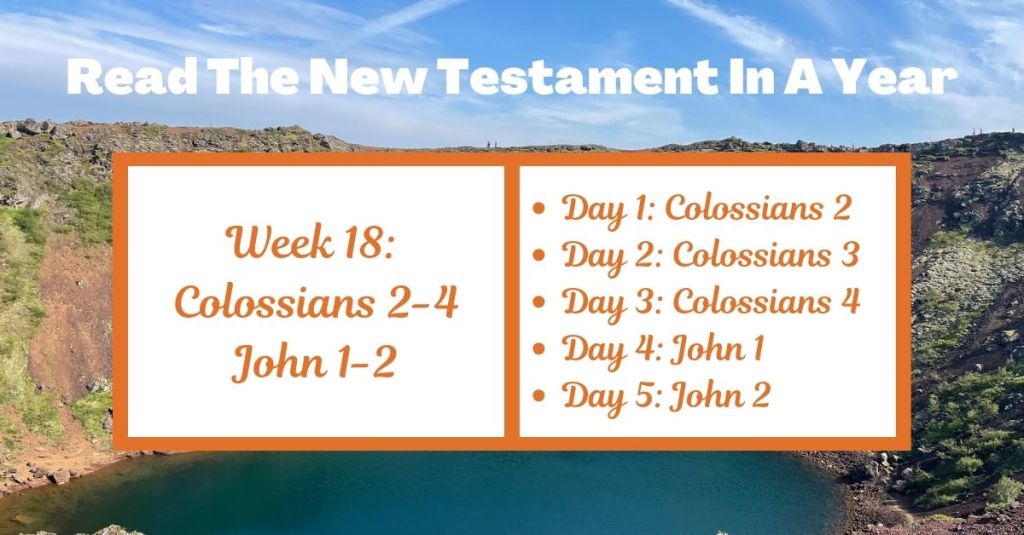
Week 18: Exploring Colossians 2-4 and John 1-2
In week 18 of our journey to read the New Testament in a year, we will read Colossians 2-4 and the Gospel of John 1-2.
In Colossians, Paul warns against being led astray by false teachings and emphasizes that Christ alone provides all we need for spiritual fulfillment. He encourages believers to embrace their new identity in Christ, live out His virtues, and maintain harmonious relationships.
In the Gospel of John, we see Jesus introduced as the Word made flesh, witness His first miracle of turning water into wine, and observe His cleansing of the temple.
This week’s readings will deepen our understanding of Jesus’ divine nature and mission, offering practical insights into how we can align our lives with His teachings and actions.
Colossians 2
In Colossians 2, Paul warns against being misled by deceptive philosophies and emphasizes that in Christ, believers have all they need for spiritual fullness. He also addresses the issue of legalism and ascetic practices, asserting the sufficiency of Christ’s work for spiritual growth.
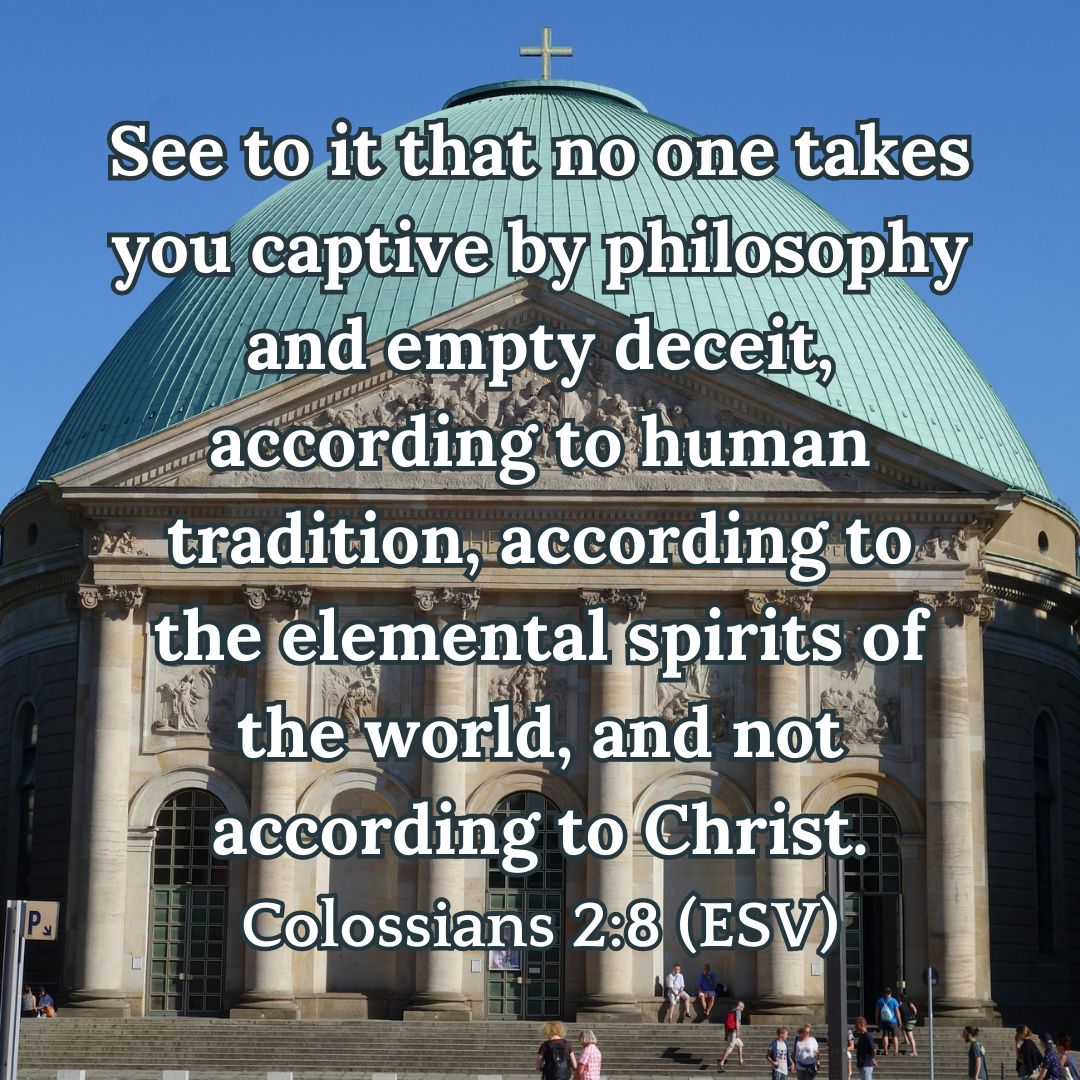
Colossians 3
In Colossians 3, Paul instructs believers to live out their new identity in Christ by focusing on heavenly things and putting away earthly practices. He provides guidance on how to cultivate Christlike virtues and maintain harmonious relationships within households.
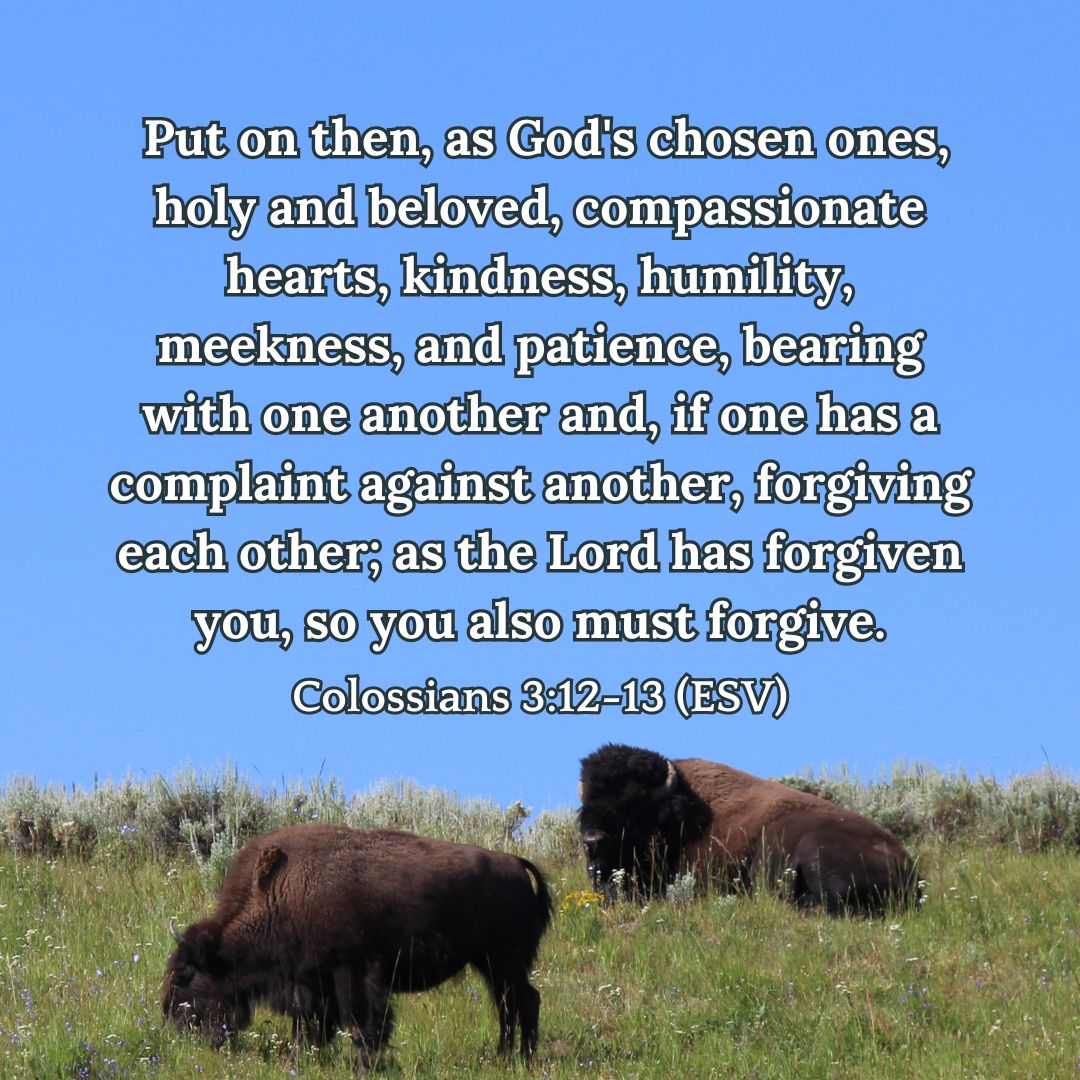
Colossians 4
In Colossians 4, Paul encourages persistent prayer and wise conduct towards outsiders while sending personal greetings and instructions to the Colossians. He underscores the importance of supporting one another in ministry and remaining steadfast in the faith despite his own imprisonment.
John 1
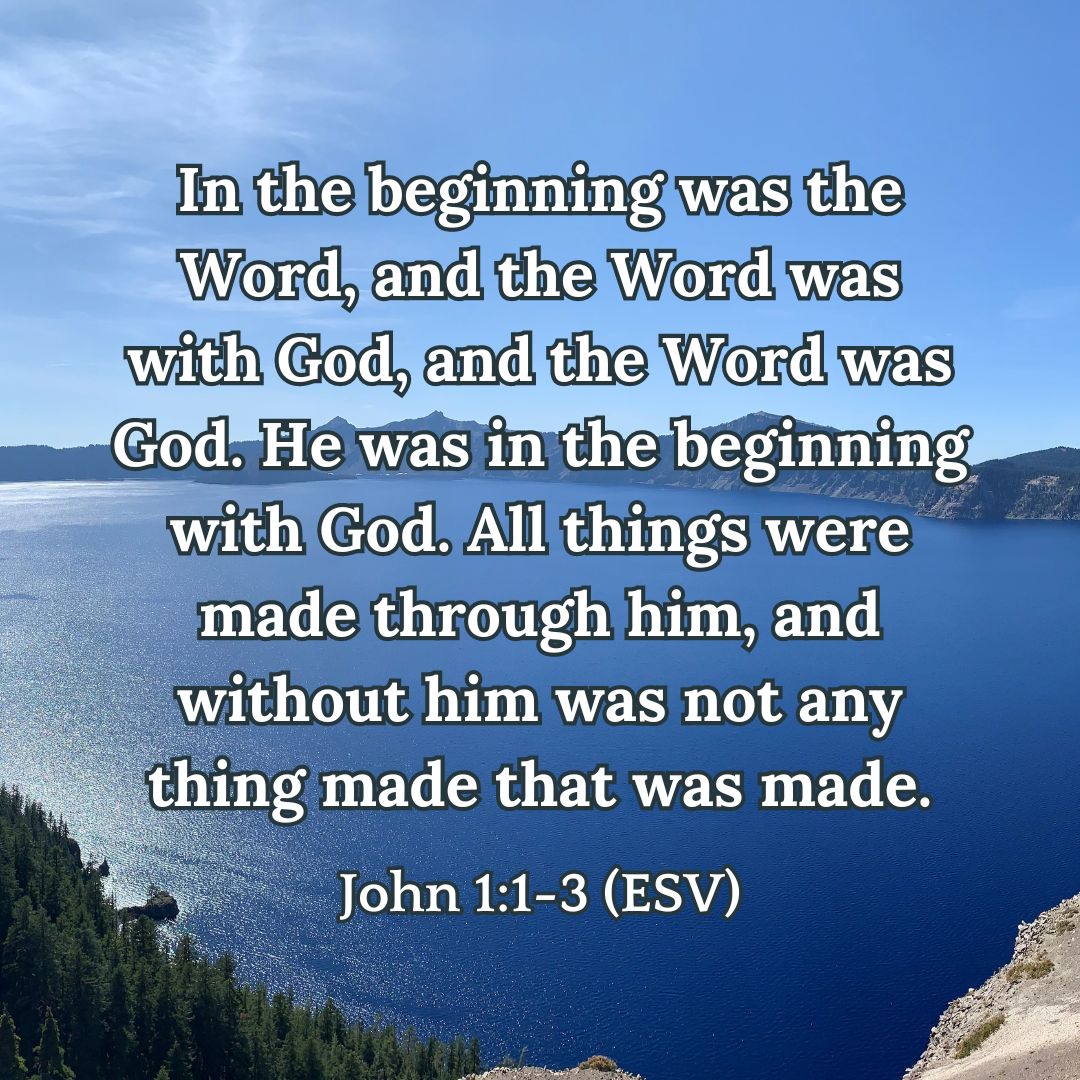
In the Gospel of John Chapter 1, John introduces Jesus as the Word who was with God and is God, emphasizing His divine nature and role in creation. John the Baptist testifies about Jesus as the Lamb of God who takes away the sins of the world, and Jesus begins to call His first disciples.
John 2
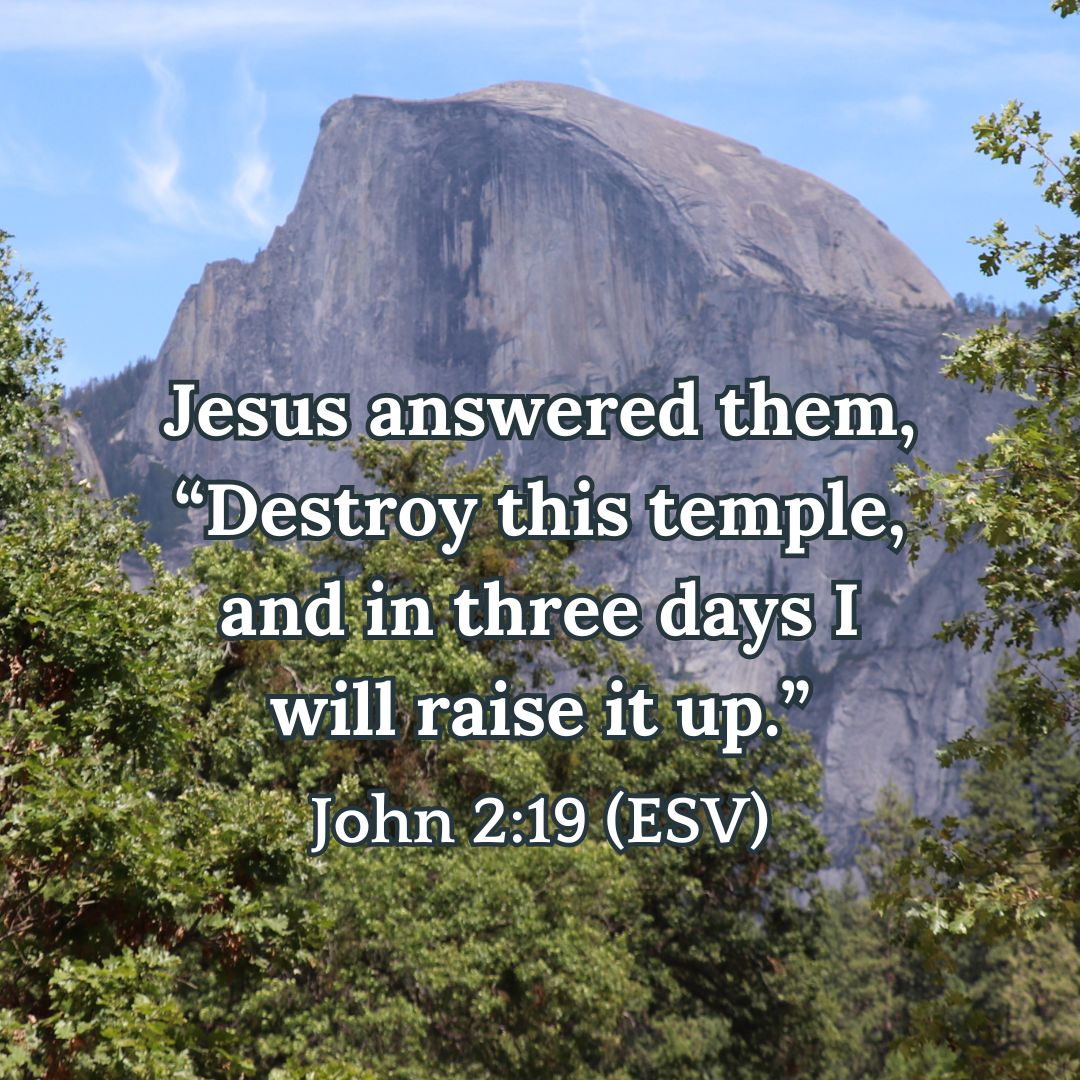
In the Gospel of John Chapter 2, Jesus performs His first miracle at the wedding in Cana, turning water into wine, which reveals His divine power and the start of His public ministry. He then clears the temple of merchants, symbolizing a new era of worship in spirit and truth.
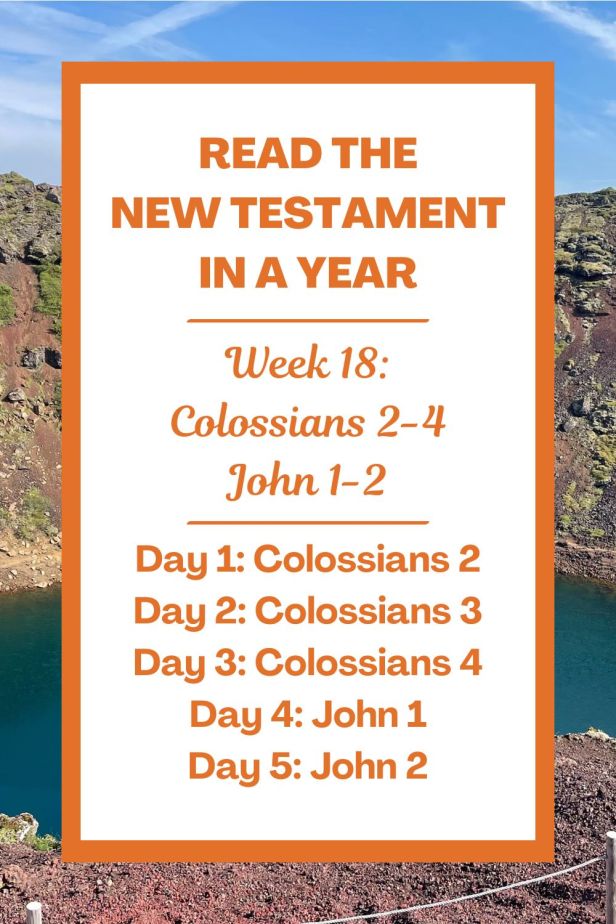
Week 18: New Testament Reading Assignment
Each week, we will read 5 chapters of the New Testament. Some people may prefer to read during the weekdays, while others might enjoy doing most of their reading on the weekends. Choose the method that works best for you!
- Day 1: Colossians 2
- Day 2: Colossians 3
- Day 3: Colossians 4
- Day 4: John 1
- Day 5: John 2
Printable Resource:
Week 18: Reflection Questions for Colossians 2-4 and John 1-2
Consider the following reflection questions:
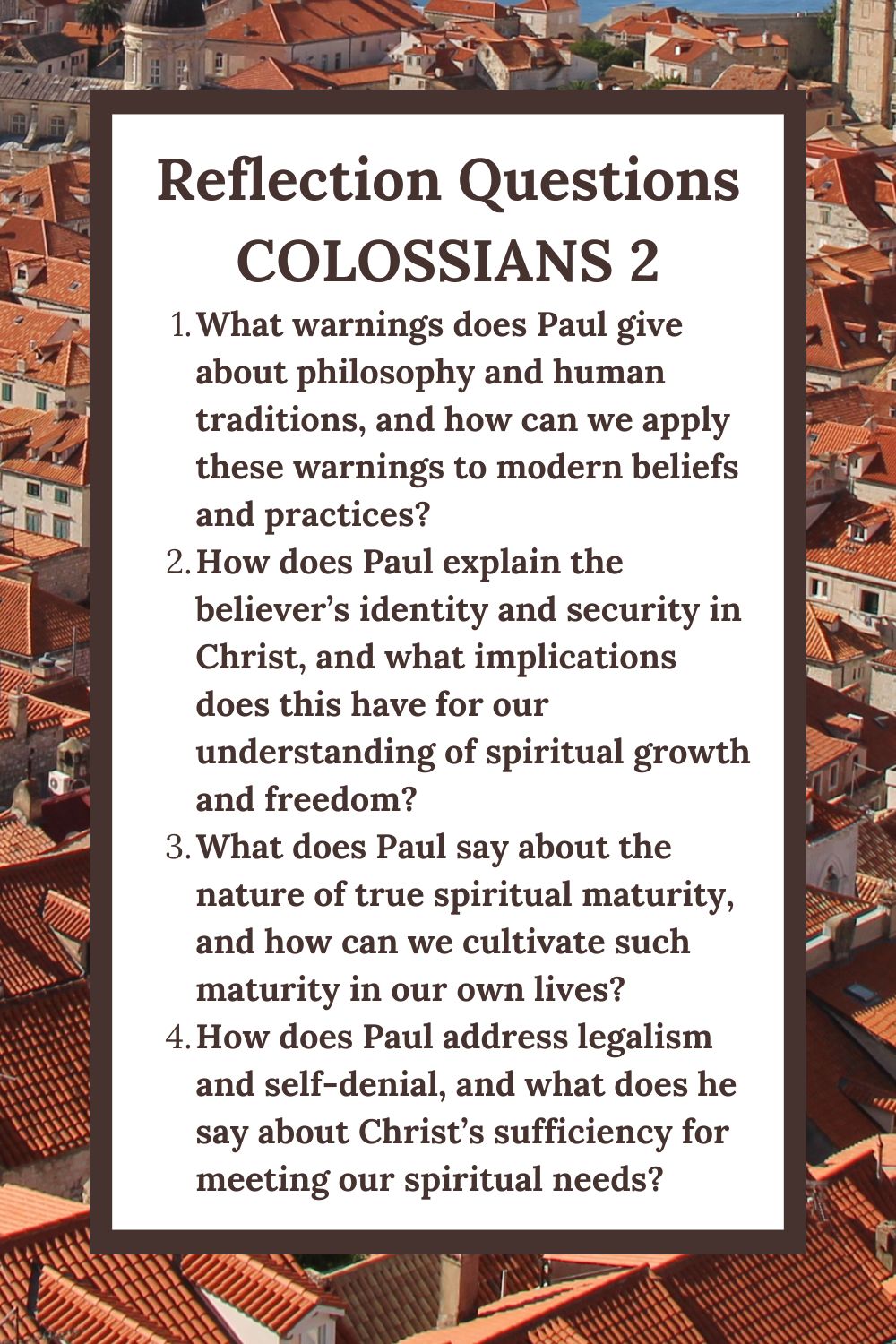
Colossians 2: Warnings and Spiritual Identity
- What warnings does Paul give about philosophy and human traditions, and how can we apply these warnings to modern beliefs and practices?
- How does Paul explain the believer’s identity and security in Christ, and what implications does this have for our understanding of spiritual growth and freedom?
- What does Paul say about the nature of true spiritual maturity, and how can we cultivate such maturity in our own lives?
- How does Paul address legalism and self-denial, and what does he say about Christ’s sufficiency for meeting our spiritual needs?
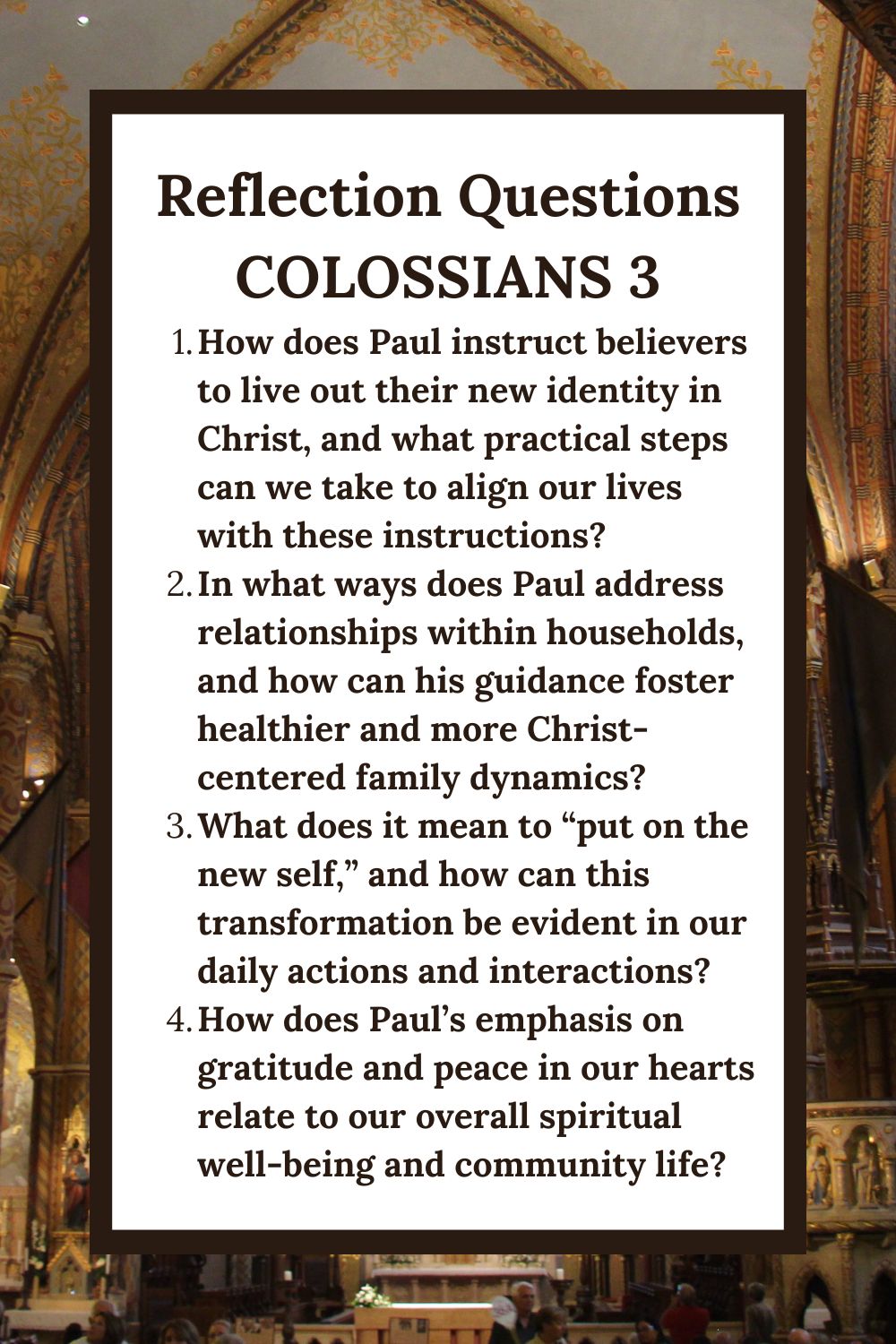
Colossians 3: Living Out the New Self
- How does Paul instruct believers to live out their new identity in Christ, and what practical steps can we take to align our lives with these instructions?
- In what ways does Paul address relationships within households, and how can his guidance foster healthier and more Christ-centered family dynamics?
- What does it mean to “put on the new self,” and how can this transformation be evident in our daily actions and interactions?
- How does Paul’s emphasis on gratitude and peace in our hearts relate to our overall spiritual well-being and community life?
Colossians 4: Instructions and Final Greetings
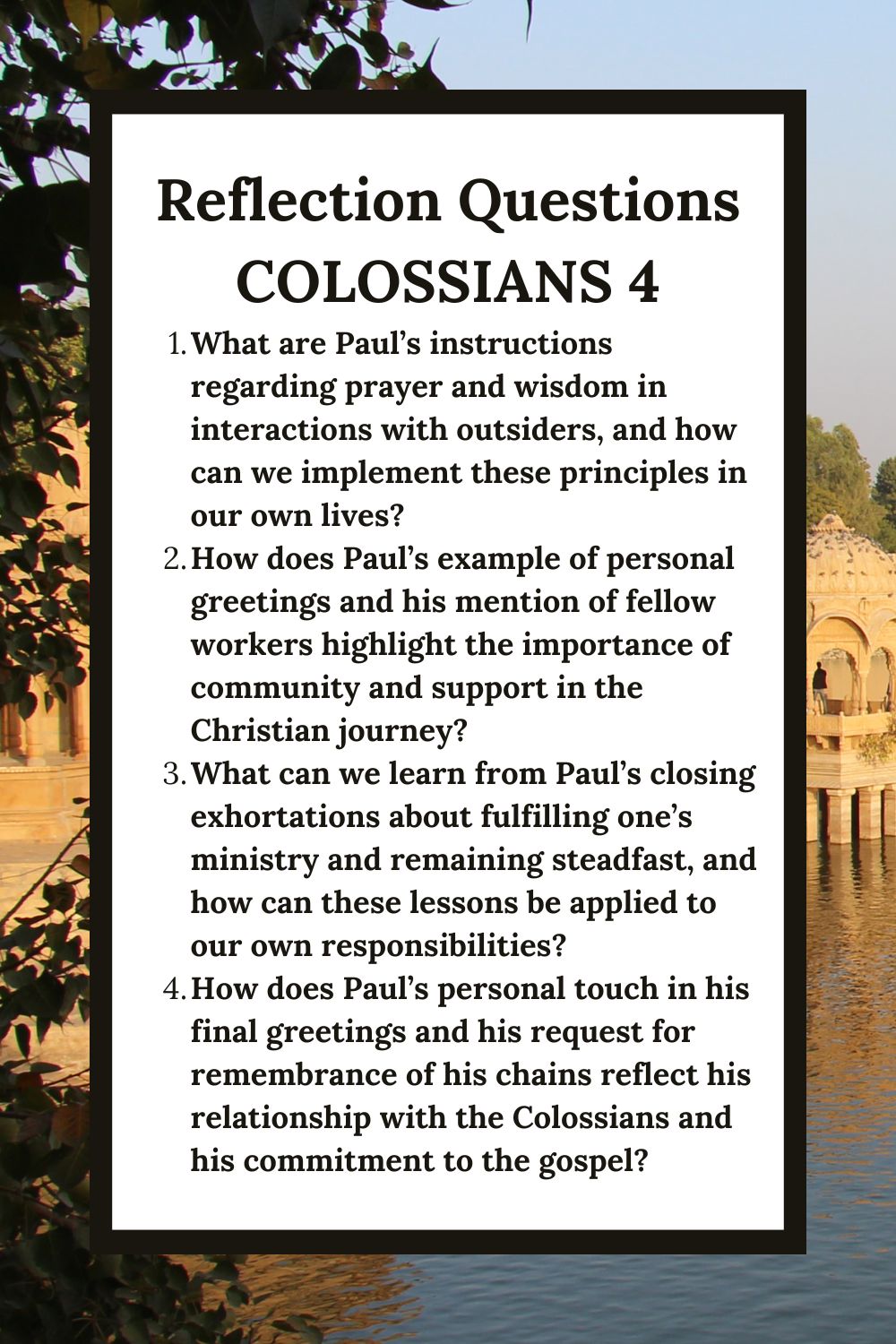
- What are Paul’s instructions regarding prayer and wisdom in interactions with outsiders, and how can we implement these principles in our own lives?
- How does Paul’s example of personal greetings and his mention of fellow workers highlight the importance of community and support in the Christian journey?
- What can we learn from Paul’s closing exhortations about fulfilling one’s ministry and remaining steadfast, and how can these lessons be applied to our own responsibilities?
- How does Paul’s personal touch in his final greetings and his request for remembrance of his chains reflect his relationship with the Colossians and his commitment to the gospel?
John 1: The Word Became Flesh
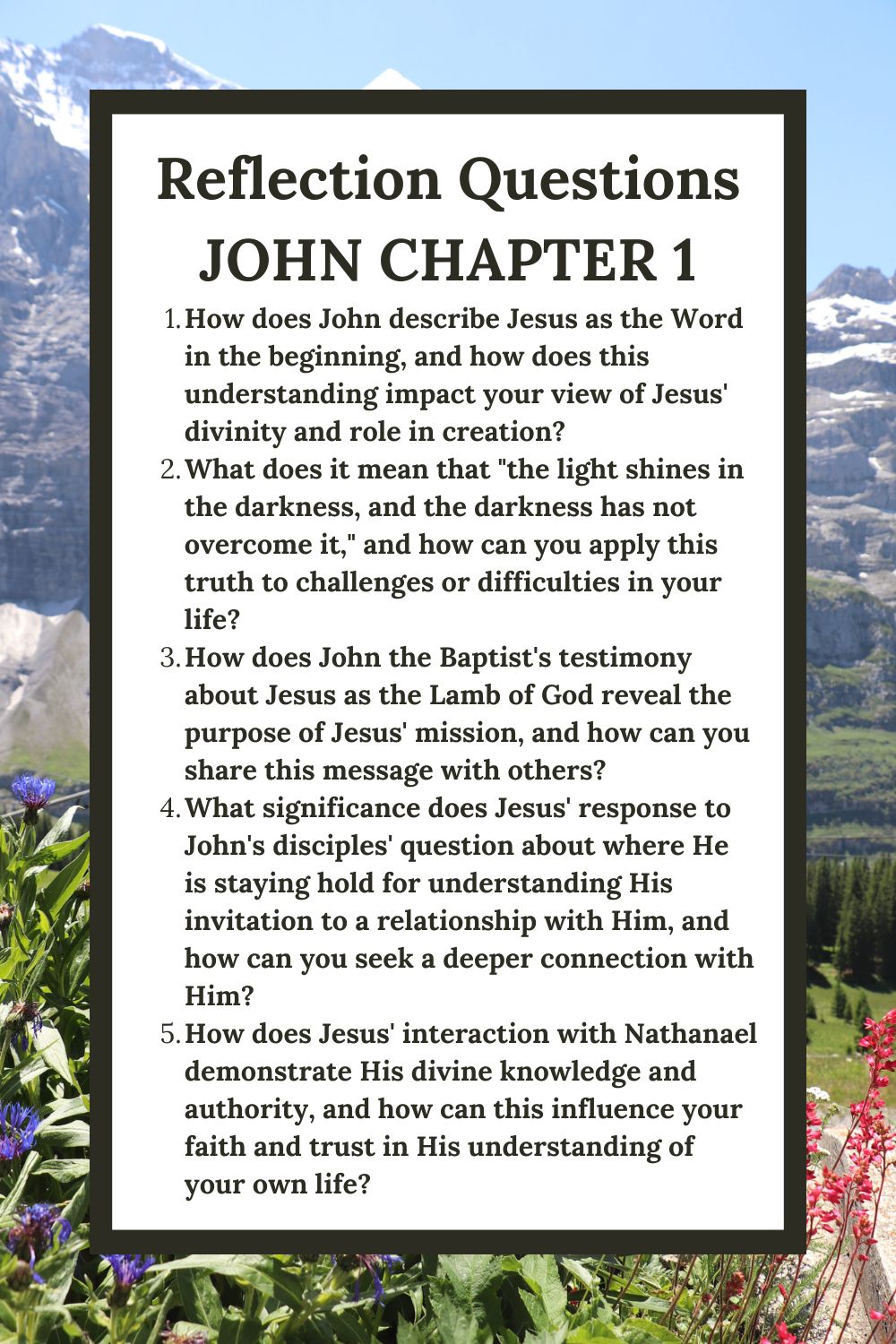
- How does John describe Jesus as the Word in the beginning, and how does this understanding impact your view of Jesus’ divinity and role in creation?
- What does it mean that “the light shines in the darkness, and the darkness has not overcome it,” and how can you apply this truth to challenges or difficulties in your life?
- How does John the Baptist’s testimony about Jesus as the Lamb of God reveal the purpose of Jesus’ mission, and how can you share this message with others?
- What significance does Jesus’ response to John’s disciples’ question about where He is staying hold for understanding His invitation to a relationship with Him, and how can you seek a deeper connection with Him?
- How does Jesus’ interaction with Nathanael demonstrate His divine knowledge and authority, and how can this influence your faith and trust in His understanding of your own life?
John 2: The Wedding at Cana and Cleansing the Temple
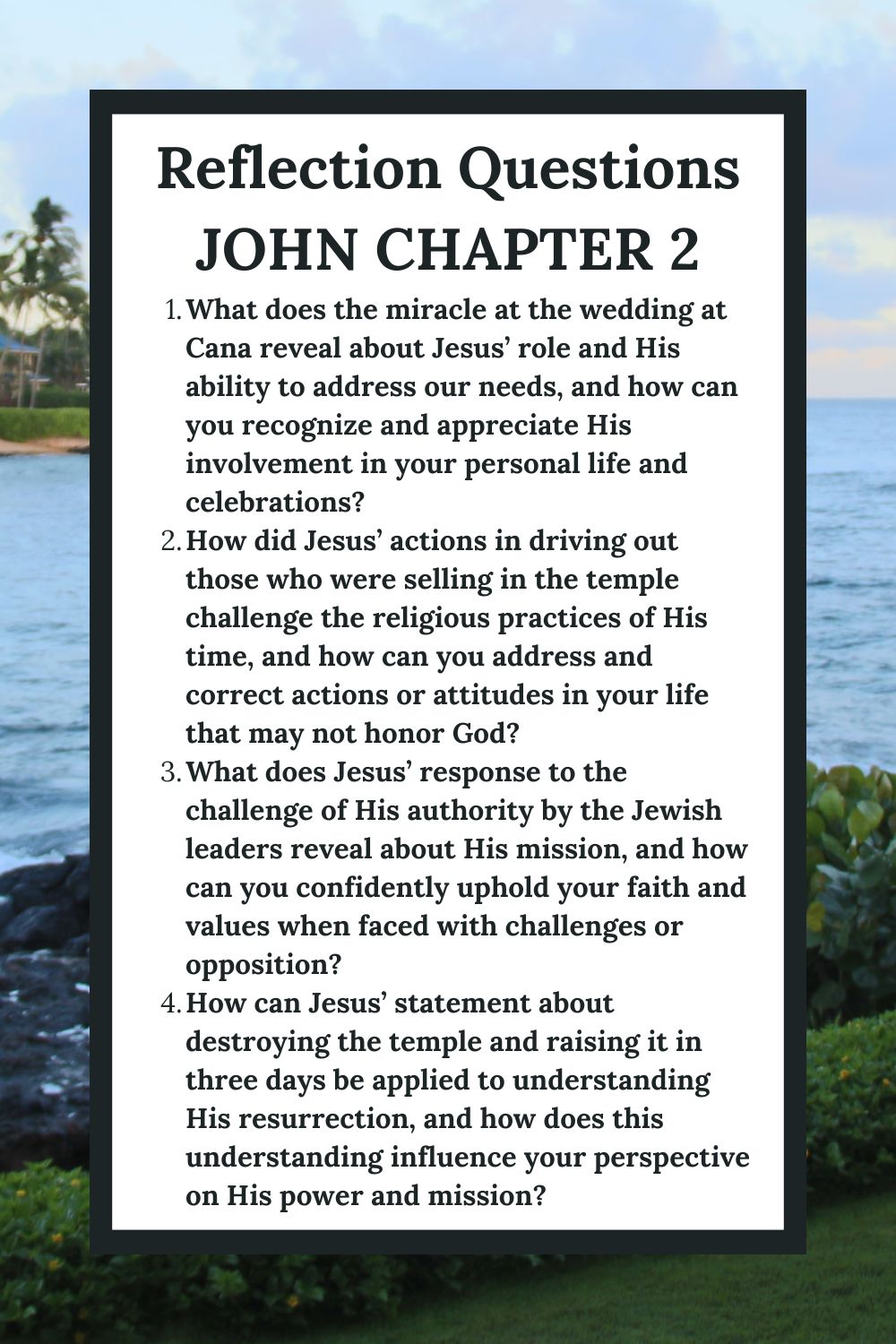
- What does the miracle at the wedding at Cana reveal about Jesus’ role and His ability to address our needs, and how can you recognize and appreciate His involvement in your personal life and celebrations?
- How did Jesus’ actions in driving out those who were selling in the temple challenge the religious practices of His time, and how can you address and correct actions or attitudes in your life that may not honor God?
- What does Jesus’ response to the challenge of His authority by the Jewish leaders reveal about His mission, and how can you confidently uphold your faith and values when faced with challenges or opposition?
- How can Jesus’ statement about destroying the temple and raising it in three days be applied to understanding His resurrection, and how does this understanding influence your perspective on His power and mission?
Reflective Prayer
Choose a few verses or topics from these chapters and pray over them. Consider using the ACTS method — Adoration, Confession, Thankfulness, Supplication:
- Adoration: Praise God. What specific characteristics of God do these readings bring to mind?
- Confession: Tell God that you are sorry for specific sins. What specific sins do these readings bring to mind?
- Thankfulness: Show gratitude towards God. What in these readings inspires gratitude?
- Supplication: Make requests for yourself and for others. What in these readings inspires a prayer?
If helpful, you can use a prayer journal template.
Other Reading Plans
Online Resources
Subscribe
If you enjoyed this post and wish to receive more Christian content, feel free to subscribe to my newsletters!
Related Resources
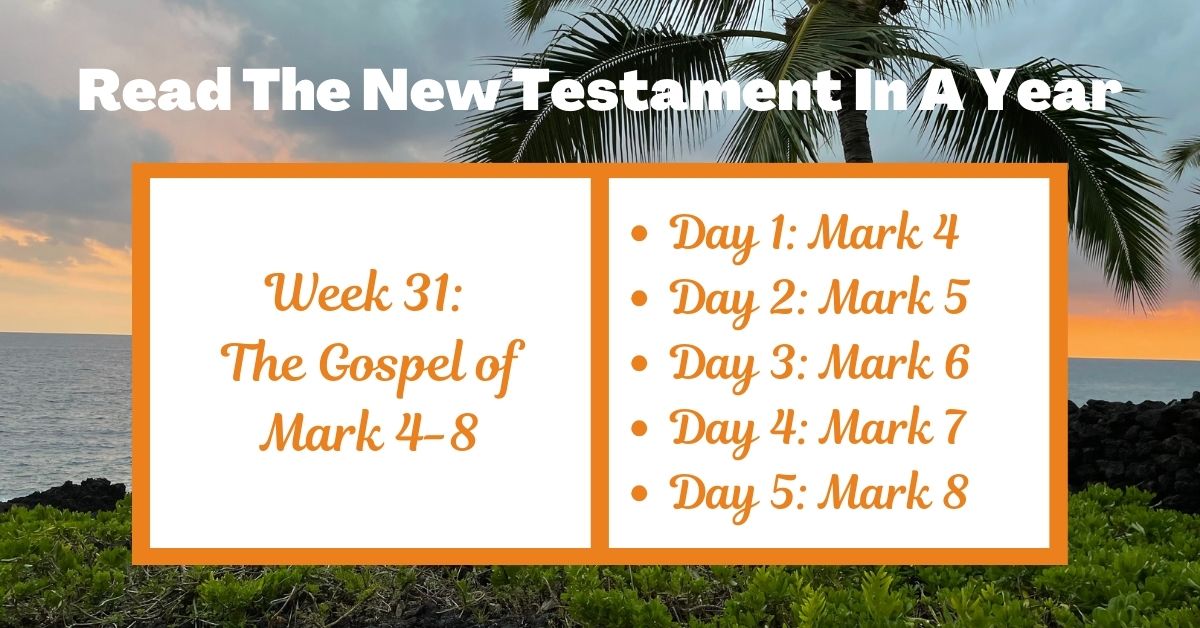
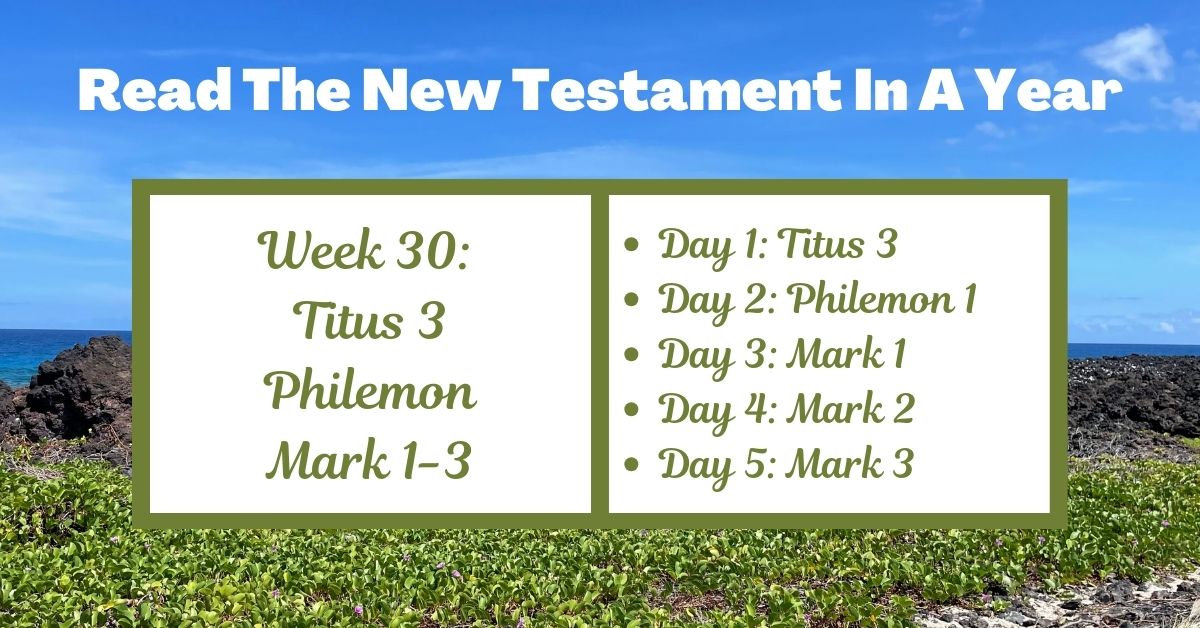
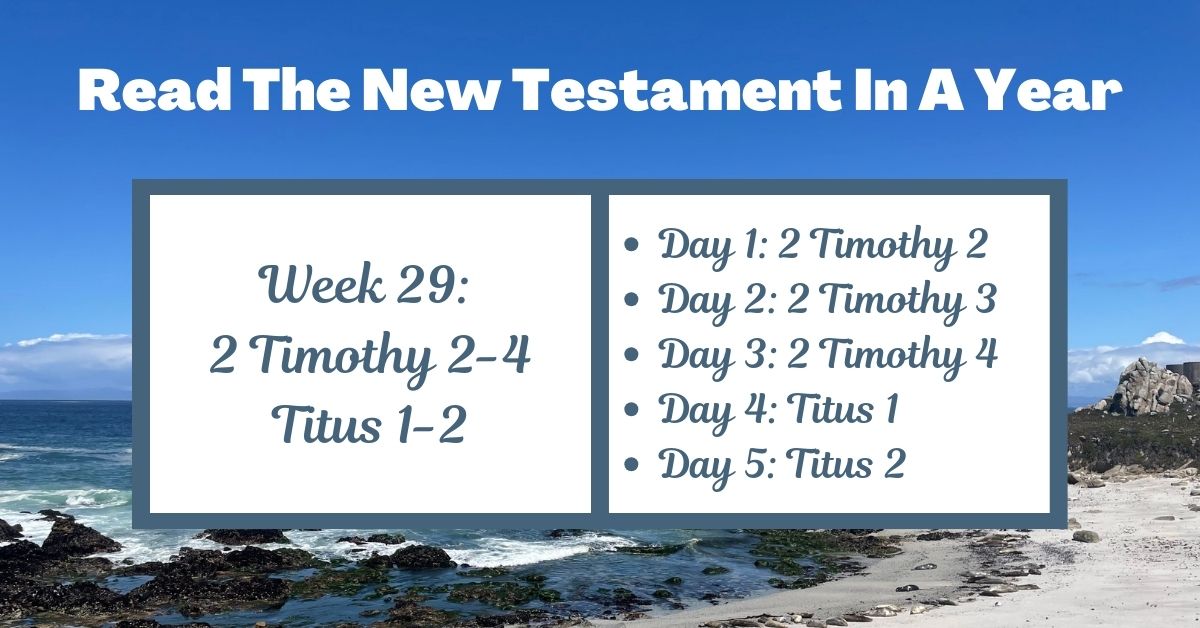
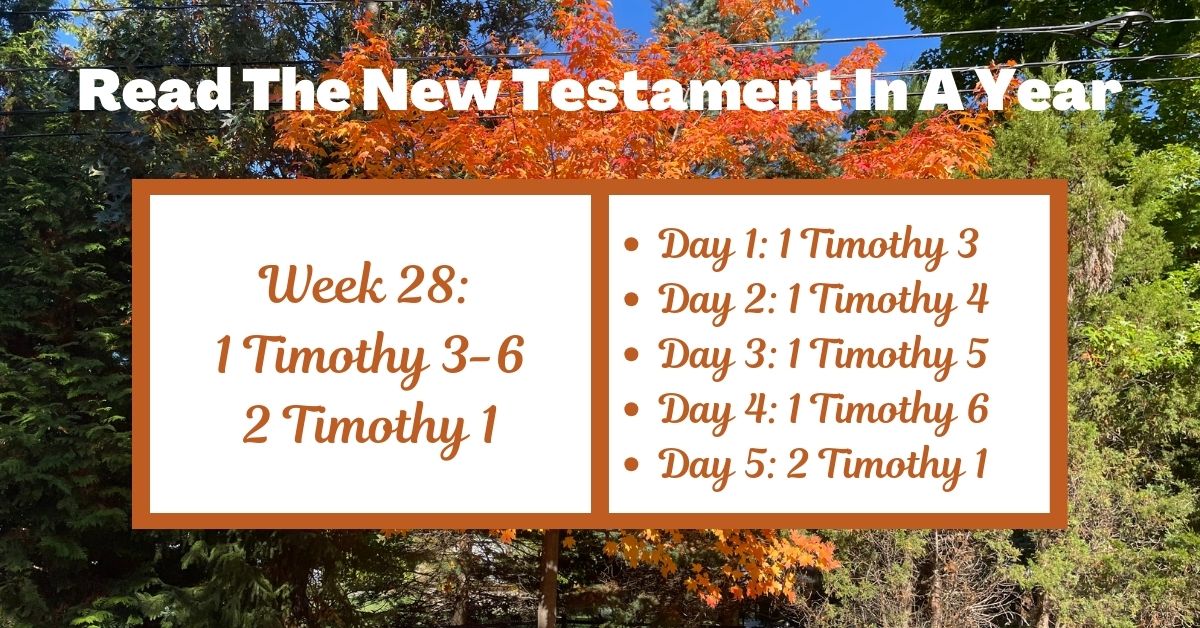
Visit the Joyful Moments in Christ homepage for all posts, or scroll through other blog posts related to reading the New Testament in a year:



English Standard Version (ESV): Unless otherwise noted, scripture quotations are from the ESV® Bible (The Holy Bible, English Standard Version®), © 2001 by Crossway, a publishing ministry of Good News Publishers. Used by permission. All rights reserved. The ESV text may not be quoted in any publication made available to the public by a Creative Commons license. The ESV may not be translated in whole or in part into any other language.
 Joyful Moments in Christ