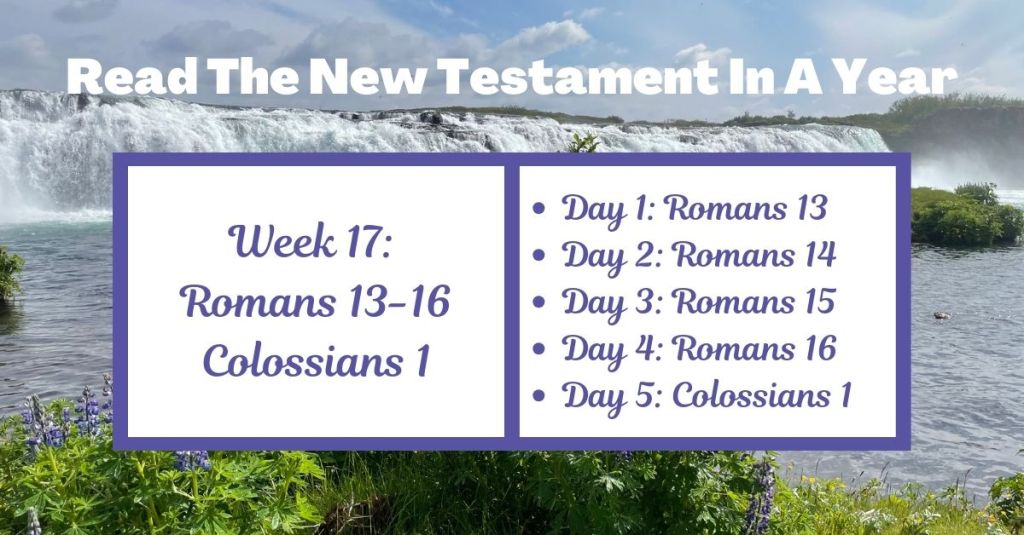
Week 17: Exploring Romans 13-16 and Colossians 1
In week 17 of our 1-year New Testament reading adventure, we will read Romans 13-16 and Colossians 1.
In the final chapters of Romans, Paul offers practical guidance on living out one’s faith, addressing relationships with authorities and managing conflicts within the church. He wraps up with personal greetings and a caution against division, highlighting the importance of unity and mutual support among believers.
In Colossians 1, Paul expresses gratitude for the Colossians’ faith, emphasizes Christ’s supreme role in creation and reconciliation, and discusses his commitment to his ministry.
Romans 13
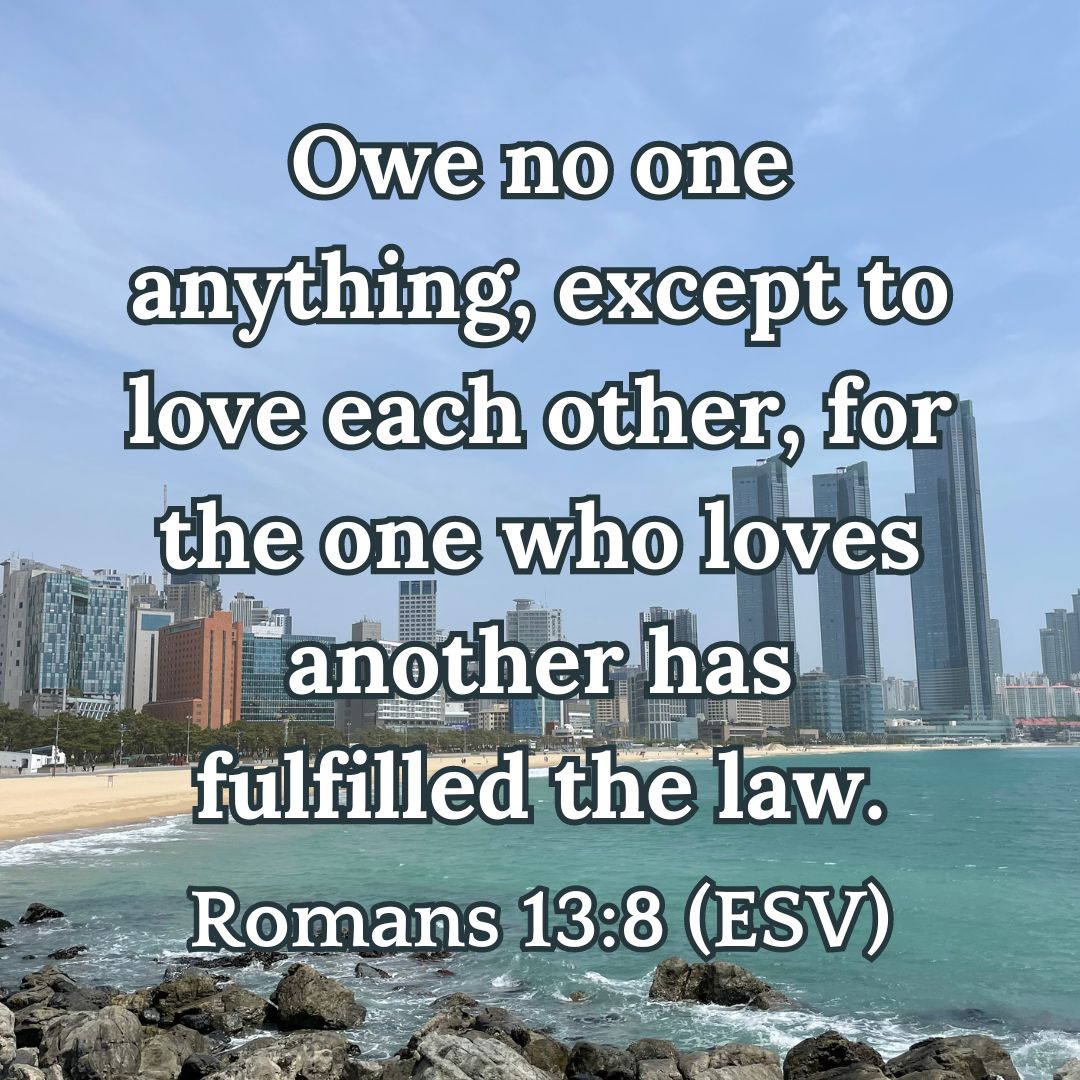
In Romans 13, Paul discusses the Christian’s responsibility to obey governing authorities, emphasizing that they are instituted by God for maintaining order. He also urges believers to live morally and love one another, as love fulfills the law.
Romans 14
In Romans 14, Paul addresses disputes between believers regarding dietary practices and observance of special days, urging them to accept one another and avoid judgment. He emphasizes that each person should act according to their own conviction, seeking to build each other up rather than causing division.

Romans 15
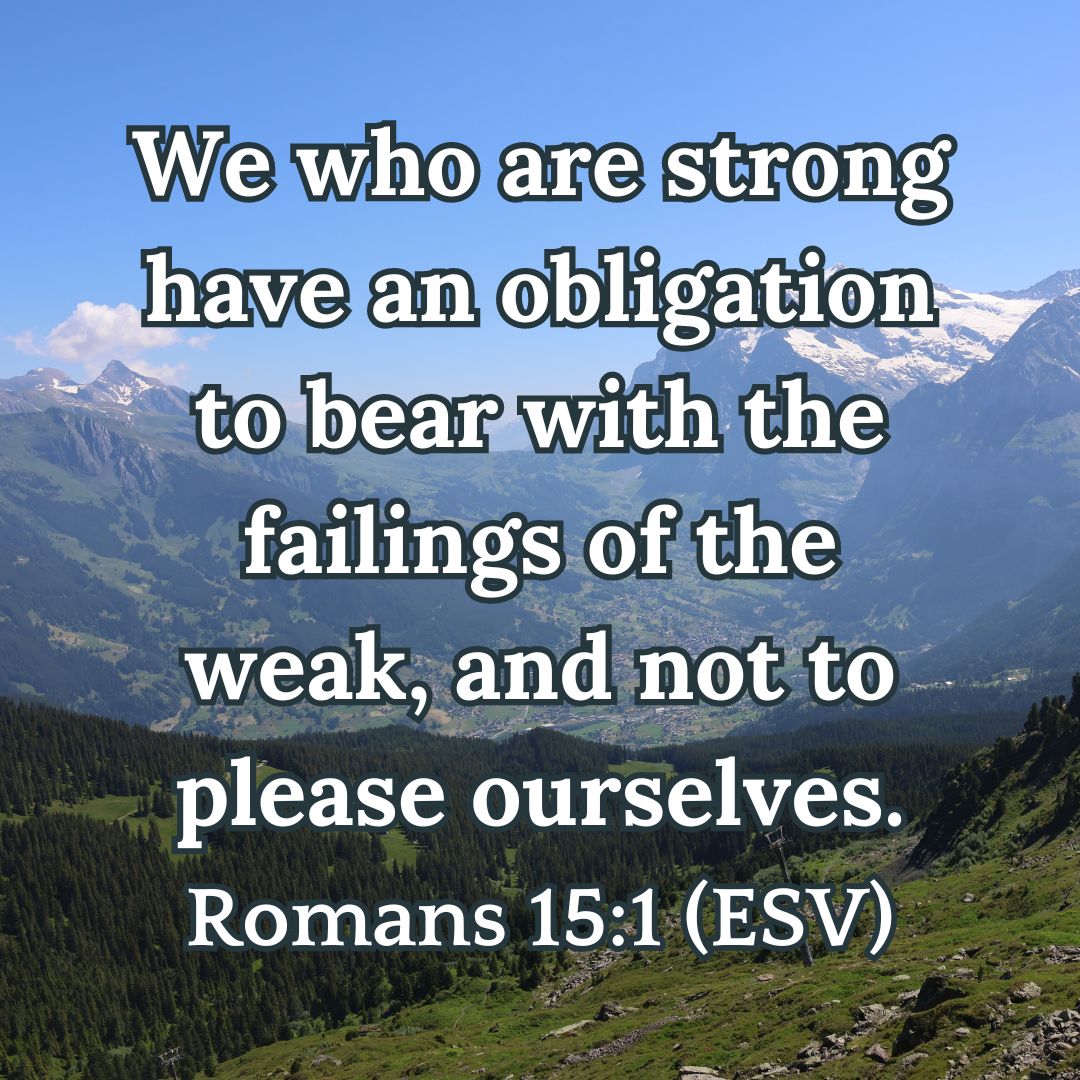
In Romans 15, Paul continues his discussion on unity, highlighting the importance of mutual support and the example of Christ’s acceptance of others. He shares his plans for visiting Rome and expresses his hope that they will support his mission to spread the gospel.
Romans 16
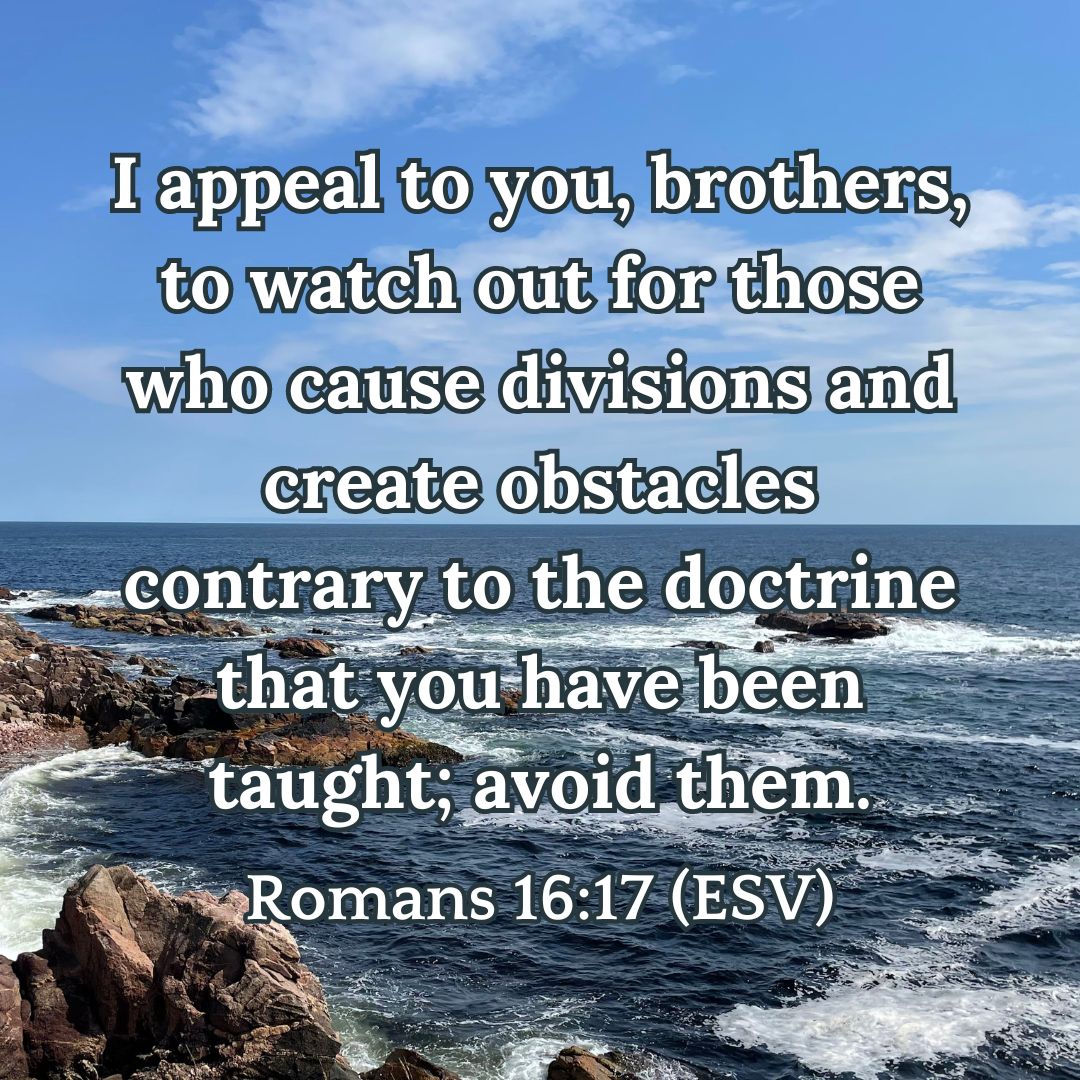
In Romans 16, Paul concludes the letter with personal greetings to various individuals in the Roman church, commending their faith and service. He also warns against divisive people and concludes with a doxology praising God for His wisdom and power.
Colossians 1
In Colossians 1, Paul opens his letter with a warm greeting and expresses gratitude for the Colossians’ faith and love. He emphasizes the supremacy of Christ as the creator and redeemer and describes his own ministry of suffering and proclamation to bring the message of Christ to maturity.
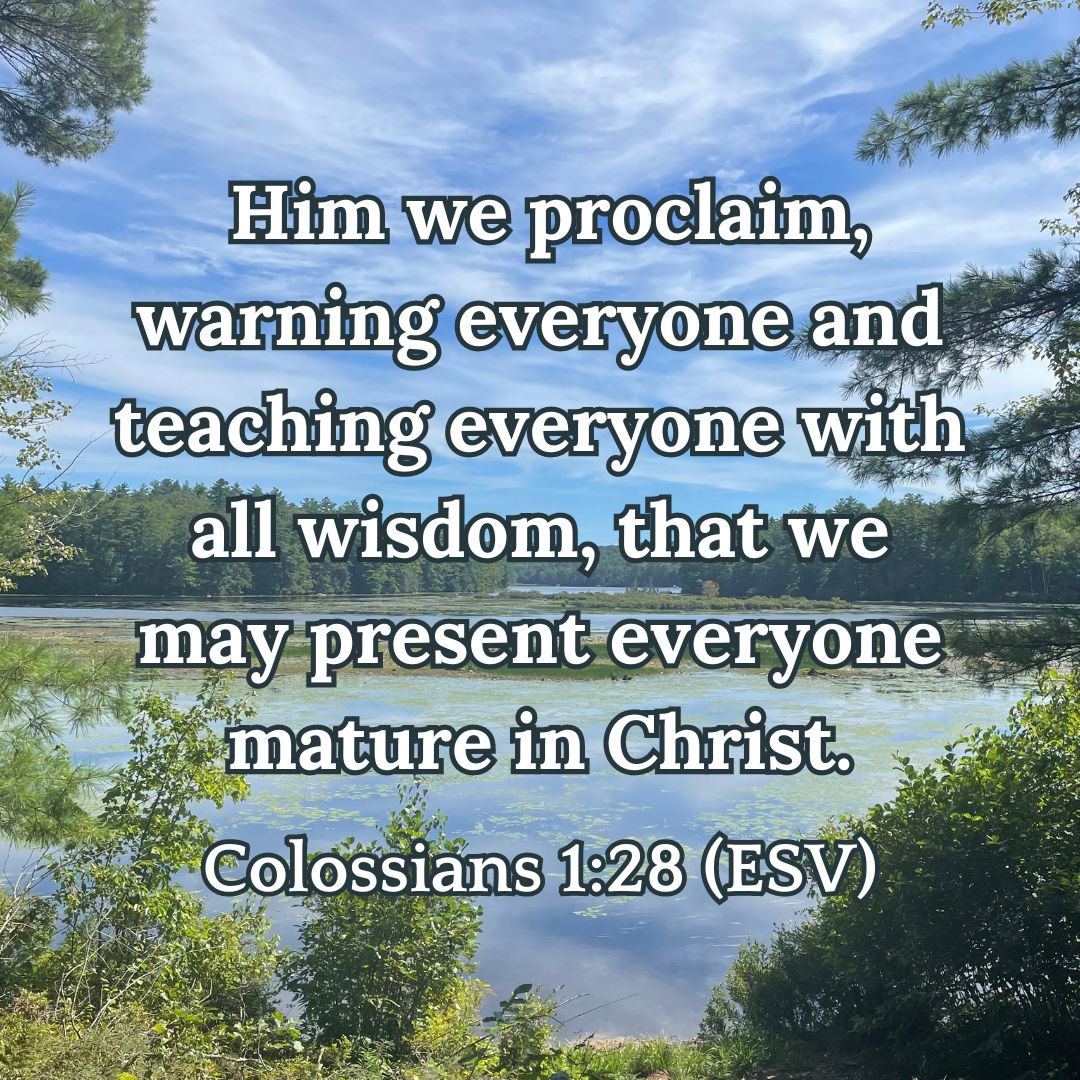
Week 17: New Testament Reading Assignment
Each week, we will read 5 chapters of the New Testament. Some people may prefer to read during the weekdays, while others might enjoy doing most of their reading on the weekends. Choose the method that works best for you!
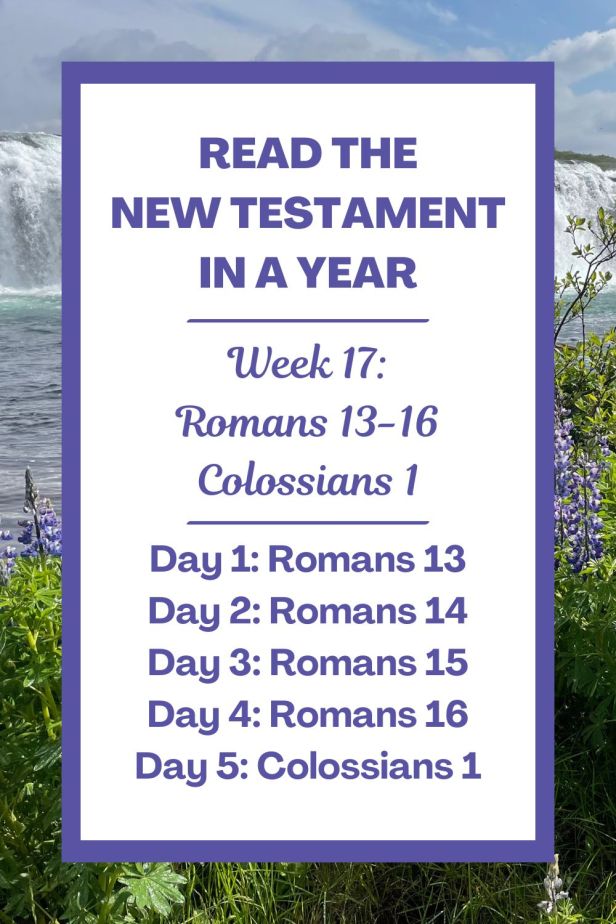
- Day 1: Romans 13
- Day 2: Romans 14
- Day 3: Romans 15
- Day 4: Romans 16
- Day 5: Colossians 1
Printable Resource:
Week 17: Reflection Questions for Romans 13-16 and Colossians 1
Consider the following reflection questions:
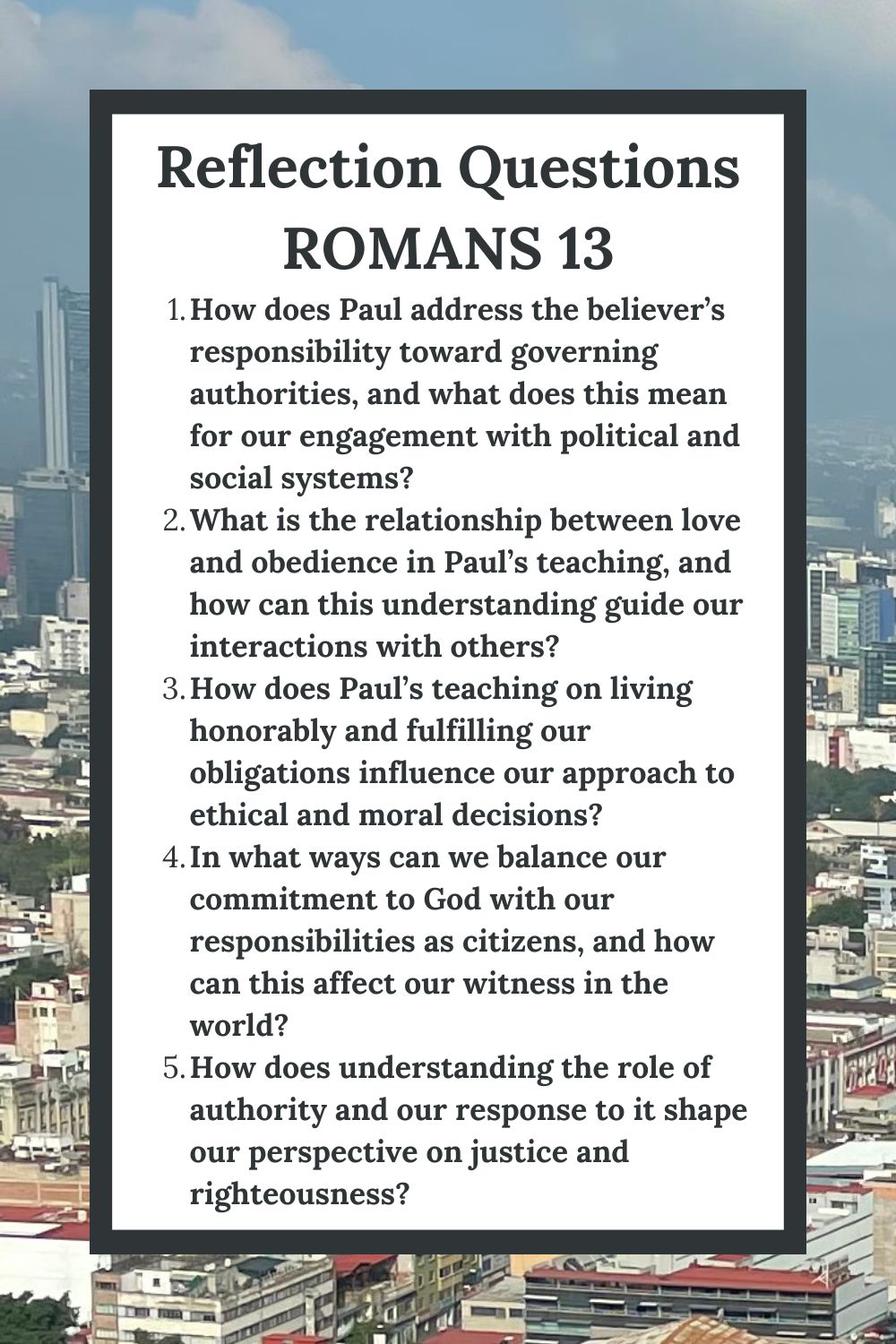
Romans 13: Submission to Authorities
- How does Paul address the believer’s responsibility toward governing authorities, and what does this mean for our engagement with political and social systems?
- What is the relationship between love and obedience in Paul’s teaching, and how can this understanding guide our interactions with others?
- How does Paul’s teaching on living honorably and fulfilling our obligations influence our approach to ethical and moral decisions?
- In what ways can we balance our commitment to God with our responsibilities as citizens, and how can this affect our witness in the world?
- How does understanding the role of authority and our response to it shape our perspective on justice and righteousness?
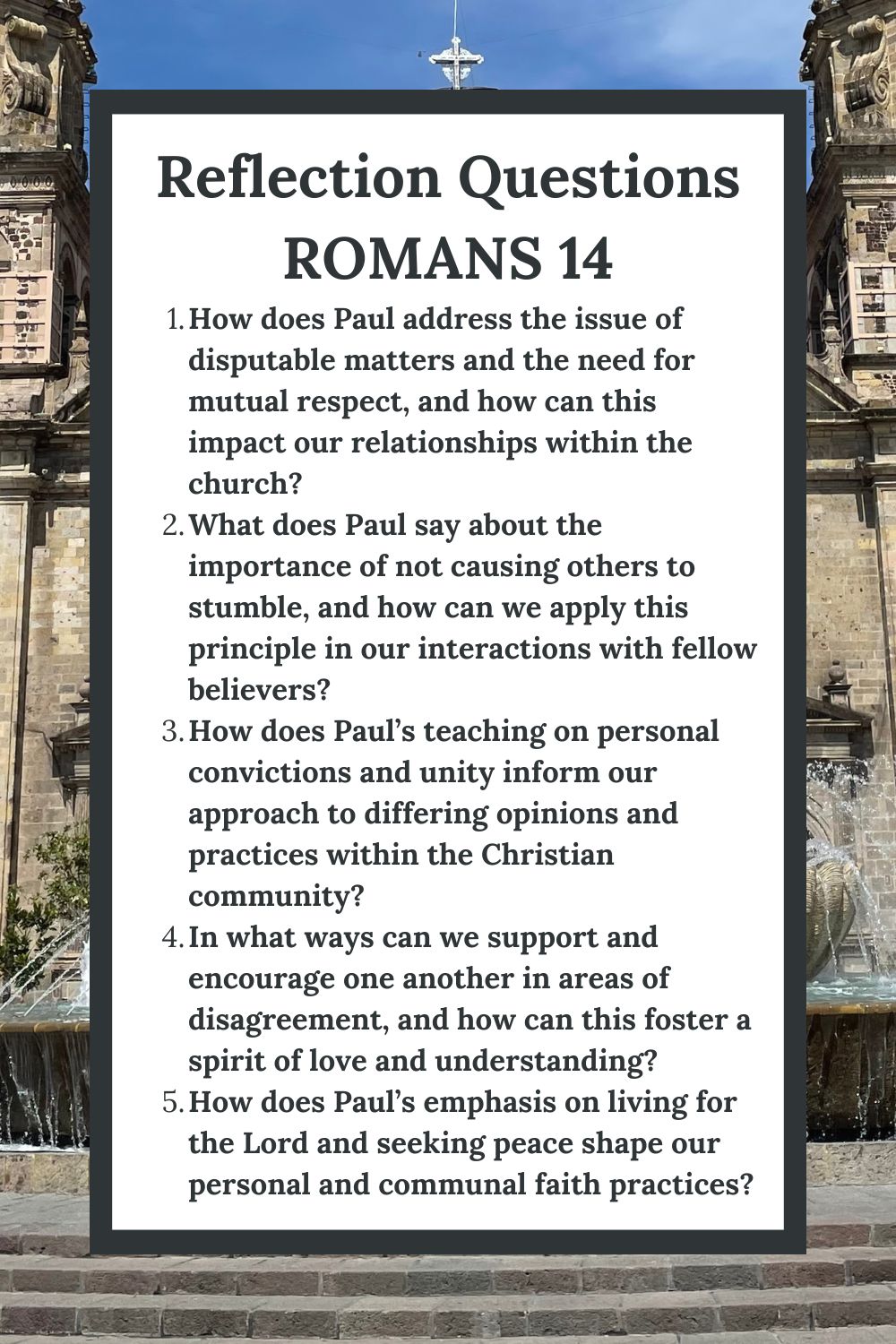
Romans 14: The Weak and the Strong
- How does Paul address the issue of disputable matters and the need for mutual respect, and how can this impact our relationships within the church?
- What does Paul say about the importance of not causing others to stumble, and how can we apply this principle in our interactions with fellow believers?
- How does Paul’s teaching on personal convictions and unity inform our approach to differing opinions and practices within the Christian community?
- In what ways can we support and encourage one another in areas of disagreement, and how can this foster a spirit of love and understanding?
- How does Paul’s emphasis on living for the Lord and seeking peace shape our personal and communal faith practices?
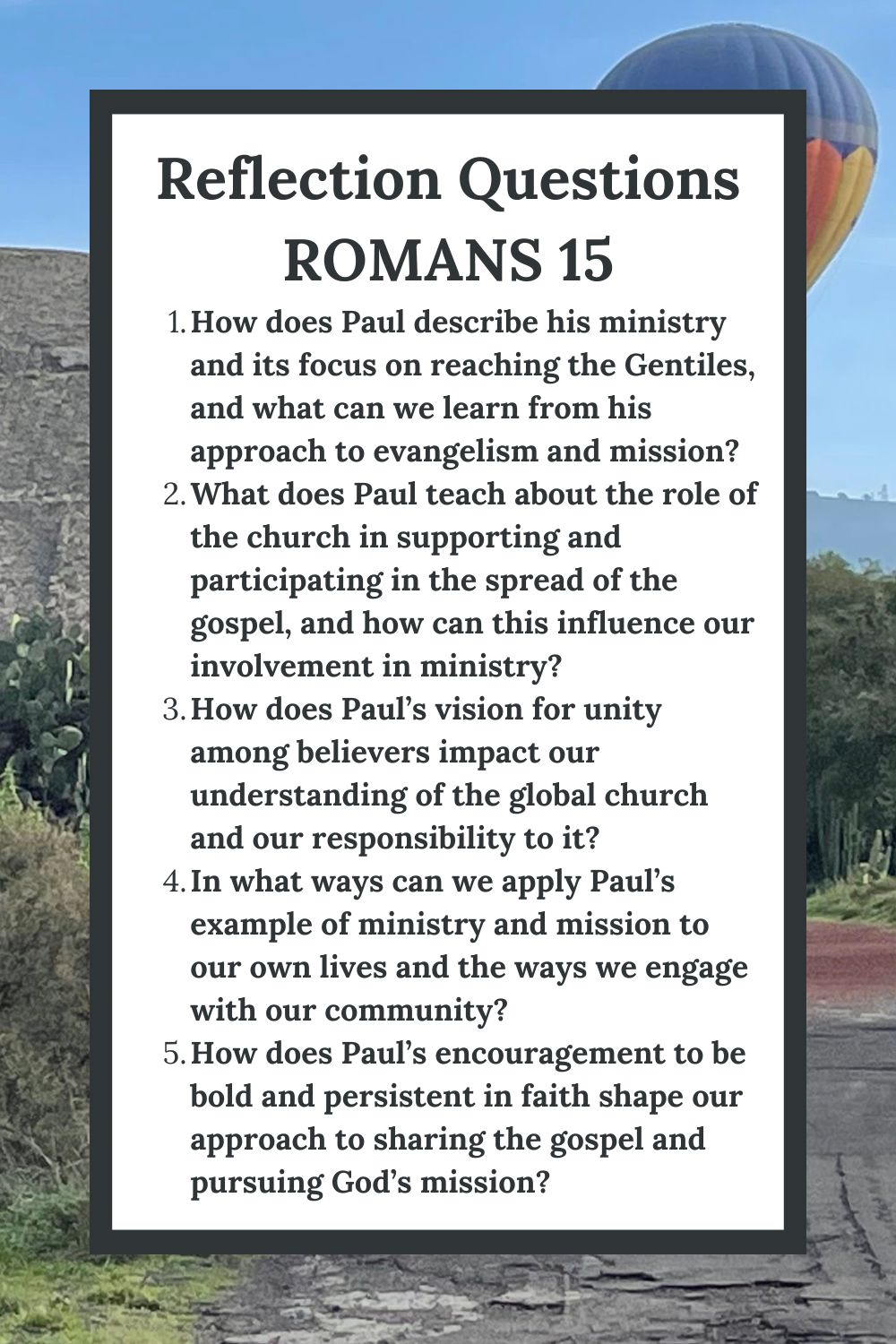
Romans 15: Paul’s Ministry and the Mission to the Gentiles
- How does Paul describe his ministry and its focus on reaching the Gentiles, and what can we learn from his approach to evangelism and mission?
- What does Paul teach about the role of the church in supporting and participating in the spread of the gospel, and how can this influence our involvement in ministry?
- How does Paul’s vision for unity among believers impact our understanding of the global church and our responsibility to it?
- In what ways can we apply Paul’s example of ministry and mission to our own lives and the ways we engage with our community?
- How does Paul’s encouragement to be bold and persistent in faith shape our approach to sharing the gospel and pursuing God’s mission?
Romans 16: Personal Greetings and Final Instructions
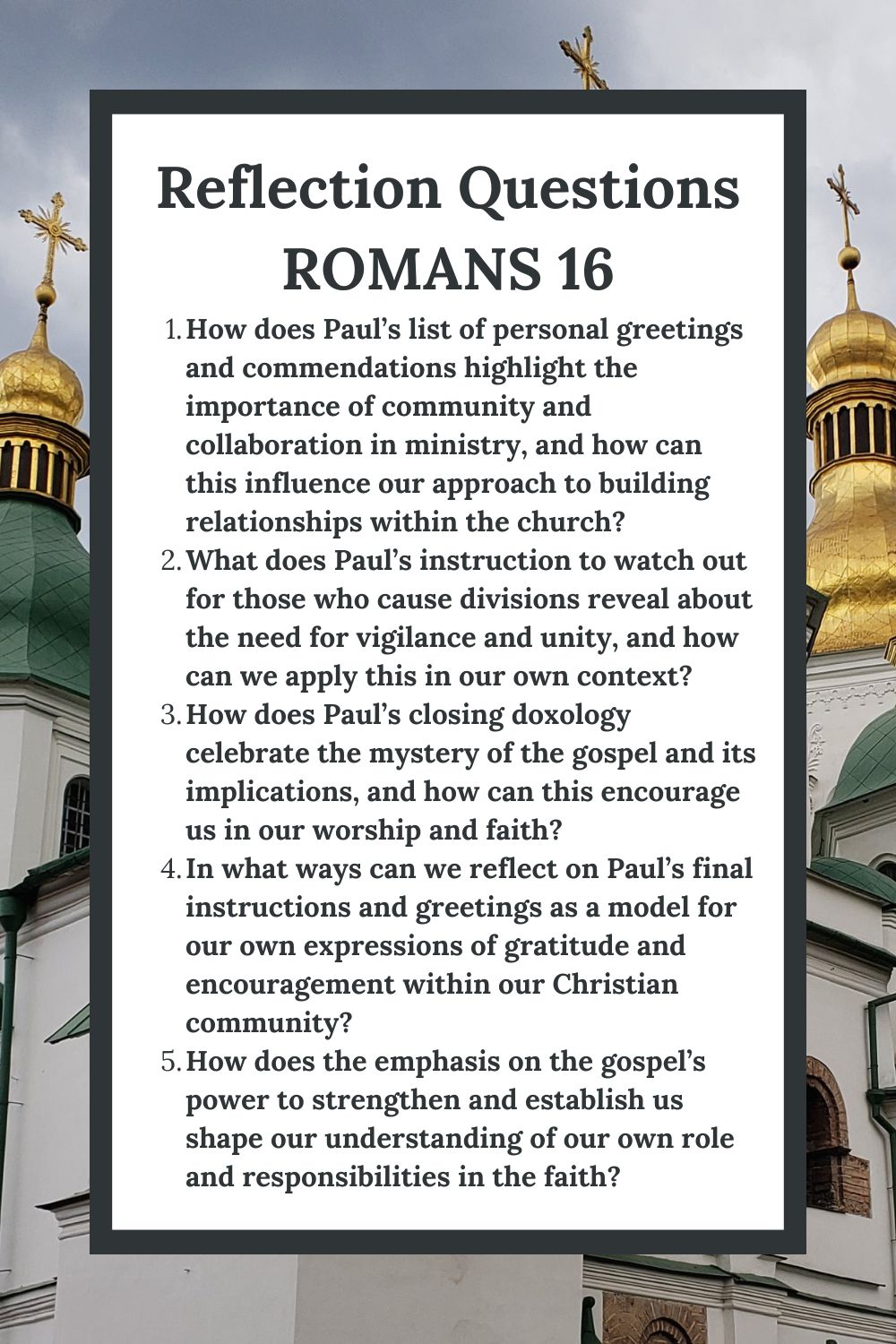
- How does Paul’s list of personal greetings and commendations highlight the importance of community and collaboration in ministry, and how can this influence our approach to building relationships within the church?
- What does Paul’s instruction to watch out for those who cause divisions reveal about the need for vigilance and unity, and how can we apply this in our own context?
- How does Paul’s closing doxology celebrate the mystery of the gospel and its implications, and how can this encourage us in our worship and faith?
- In what ways can we reflect on Paul’s final instructions and greetings as a model for our own expressions of gratitude and encouragement within our Christian community?
- How does the emphasis on the gospel’s power to strengthen and establish us shape our understanding of our own role and responsibilities in the faith?
Colossians 1: Thanksgiving and the Supremacy of Christ
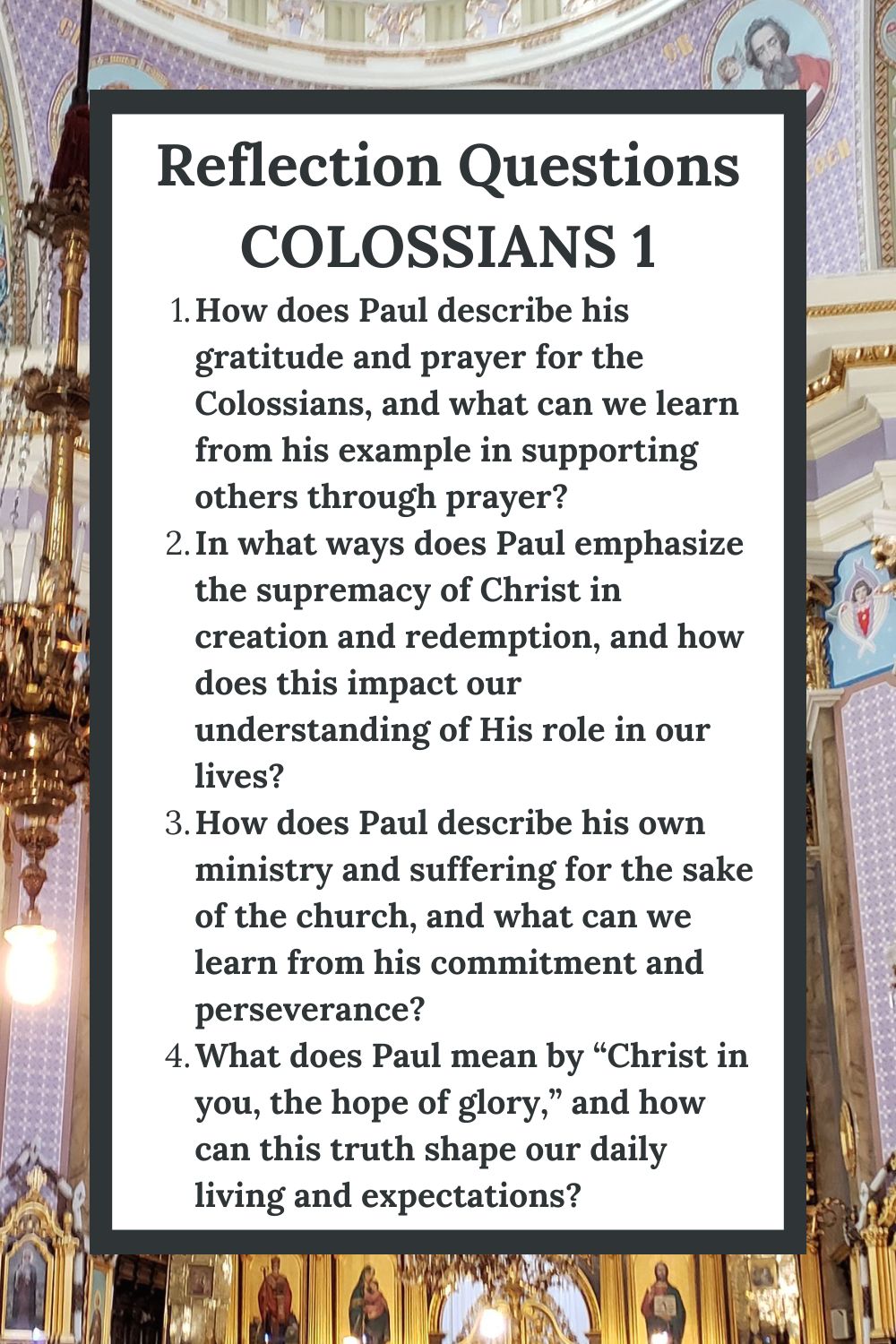
- How does Paul describe his gratitude and prayer for the Colossians, and what can we learn from his example in supporting others through prayer?
- In what ways does Paul emphasize the supremacy of Christ in creation and redemption, and how does this impact our understanding of His role in our lives?
- How does Paul describe his own ministry and suffering for the sake of the church, and what can we learn from his commitment and perseverance?
- What does Paul mean by “Christ in you, the hope of glory,” and how can this truth shape our daily living and expectations?
Reflective Prayer
Choose a few verses or topics from these chapters and pray over them. Consider using the ACTS method — Adoration, Confession, Thankfulness, Supplication:
- Adoration: Praise God. What specific characteristics of God do these readings bring to mind?
- Confession: Tell God that you are sorry for specific sins. What specific sins do these readings bring to mind?
- Thankfulness: Show gratitude towards God. What in these readings inspires gratitude?
- Supplication: Make requests for yourself and for others. What in these readings inspires a prayer?
If helpful, you can use a prayer journal template.
Other Reading Plans
Online Resources
Subscribe
If you enjoyed this post and wish to receive more Christian content, feel free to subscribe to my newsletters!
Related Resources
Visit the Joyful Moments in Christ homepage for all posts, or scroll through other blog posts related to reading the New Testament in a year:




English Standard Version (ESV): Unless otherwise noted, scripture quotations are from the ESV® Bible (The Holy Bible, English Standard Version®), © 2001 by Crossway, a publishing ministry of Good News Publishers. Used by permission. All rights reserved. The ESV text may not be quoted in any publication made available to the public by a Creative Commons license. The ESV may not be translated in whole or in part into any other language.

 Joyful Moments in Christ