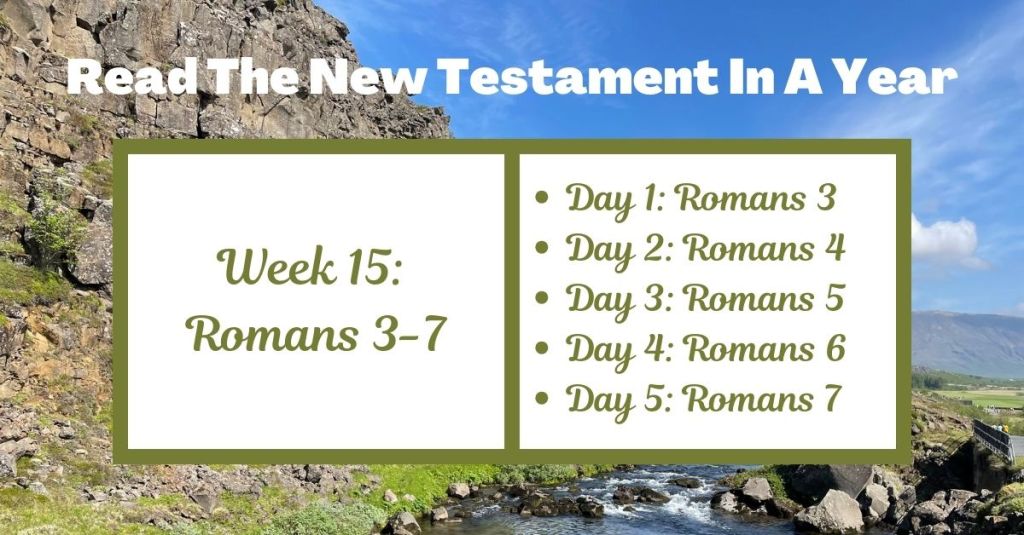
Week 15: Exploring Romans 3-7
In week 15 of our journey to read the New Testament in a year, we will explore Romans 3-7. These chapters will touch on some very important Christian theology, focusing on how faith frees us from the law and makes us righteous in God’s eyes. If you have ever wondered what justification and sanctification are, these chapters offer a perfect introduction!
Romans 3
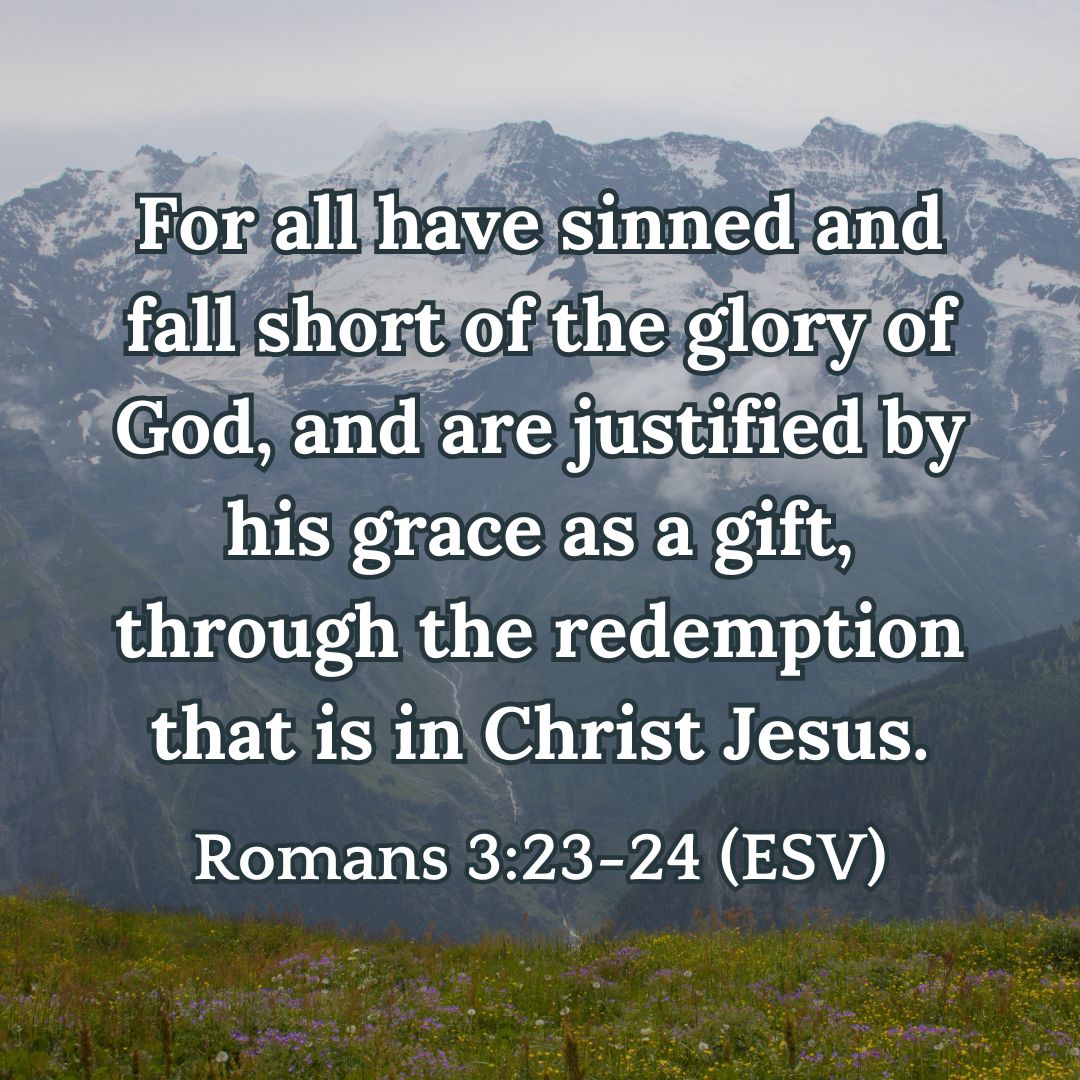
Chapter 3 will highlight the universal need for salvation, emphasizing that both Jews and Gentiles are under sin and that righteousness comes through faith in Jesus Christ. It will discuss how God’s justice is upheld through this faith, and how we are justified freely by His grace.
Romans 4
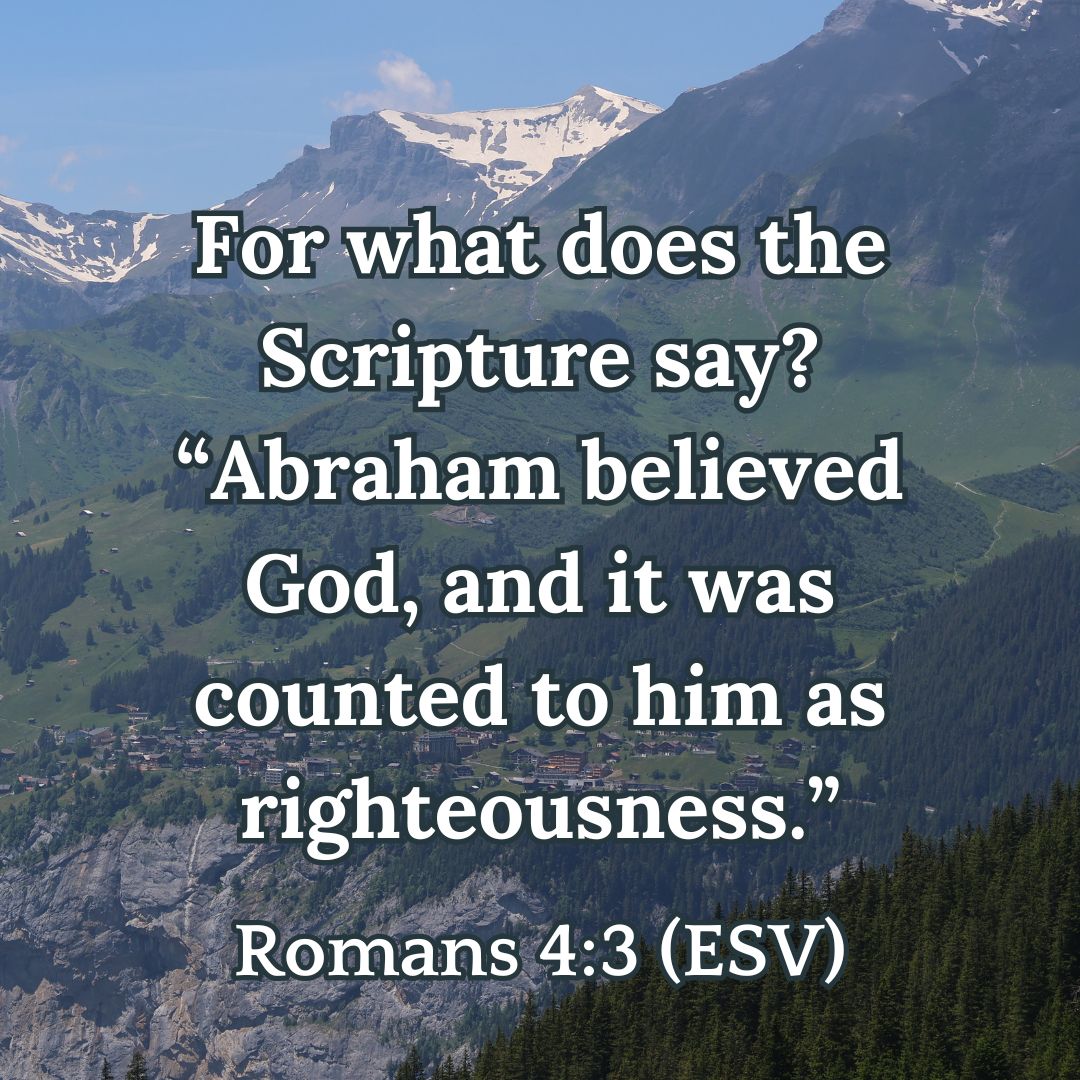
Chapter 4 will illustrate justification by faith through the example of Abraham, demonstrating that righteousness was credited to him before the law was given. This chapter will affirm that faith, not works, is the basis for our relationship with God.
Romans 5
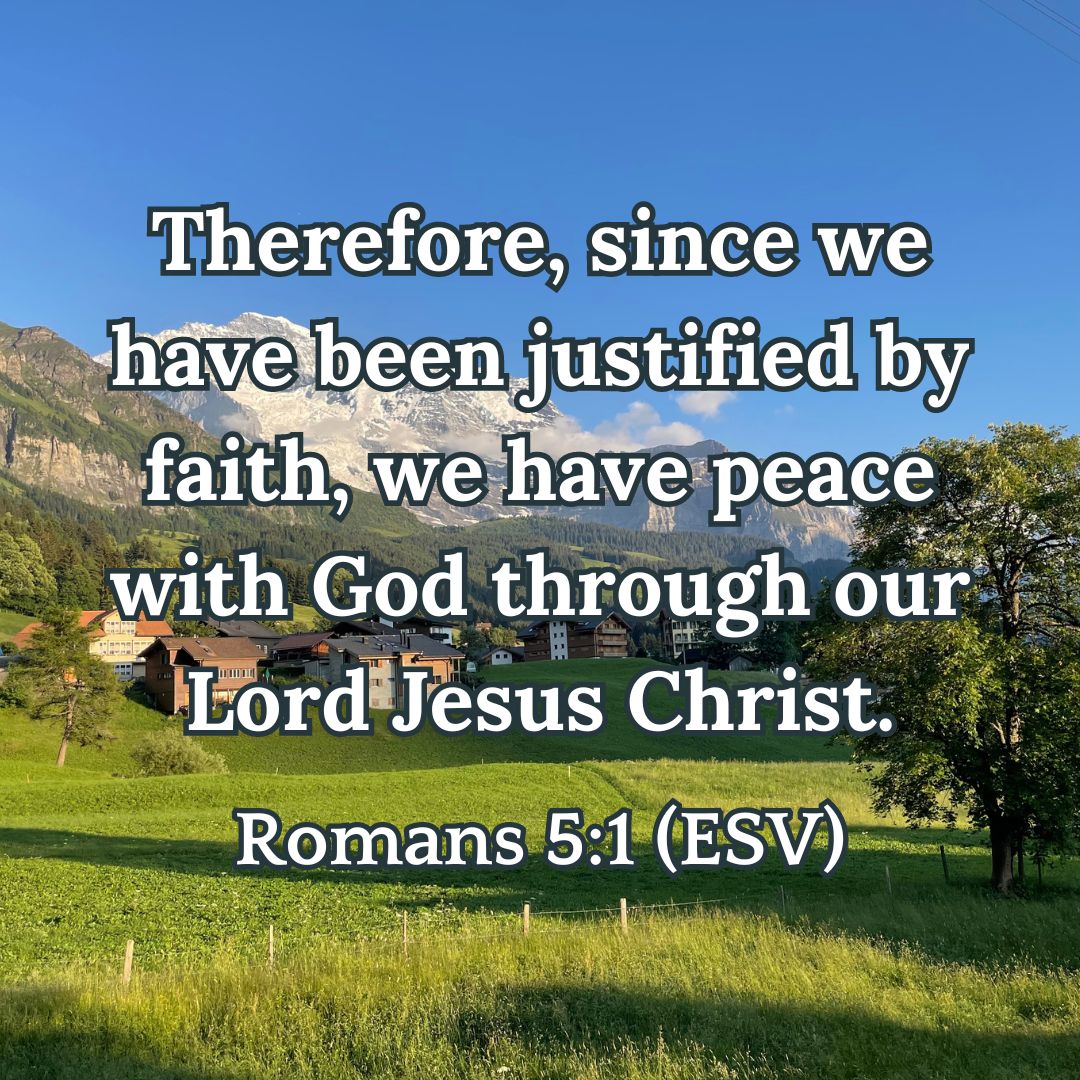
Chapter 5 will delve into the results of justification, explaining how peace with God and access to His grace are made possible. It will contrast the impact of Adam’s sin with the redemptive power of Christ’s obedience, showing how grace abounds where sin increased.
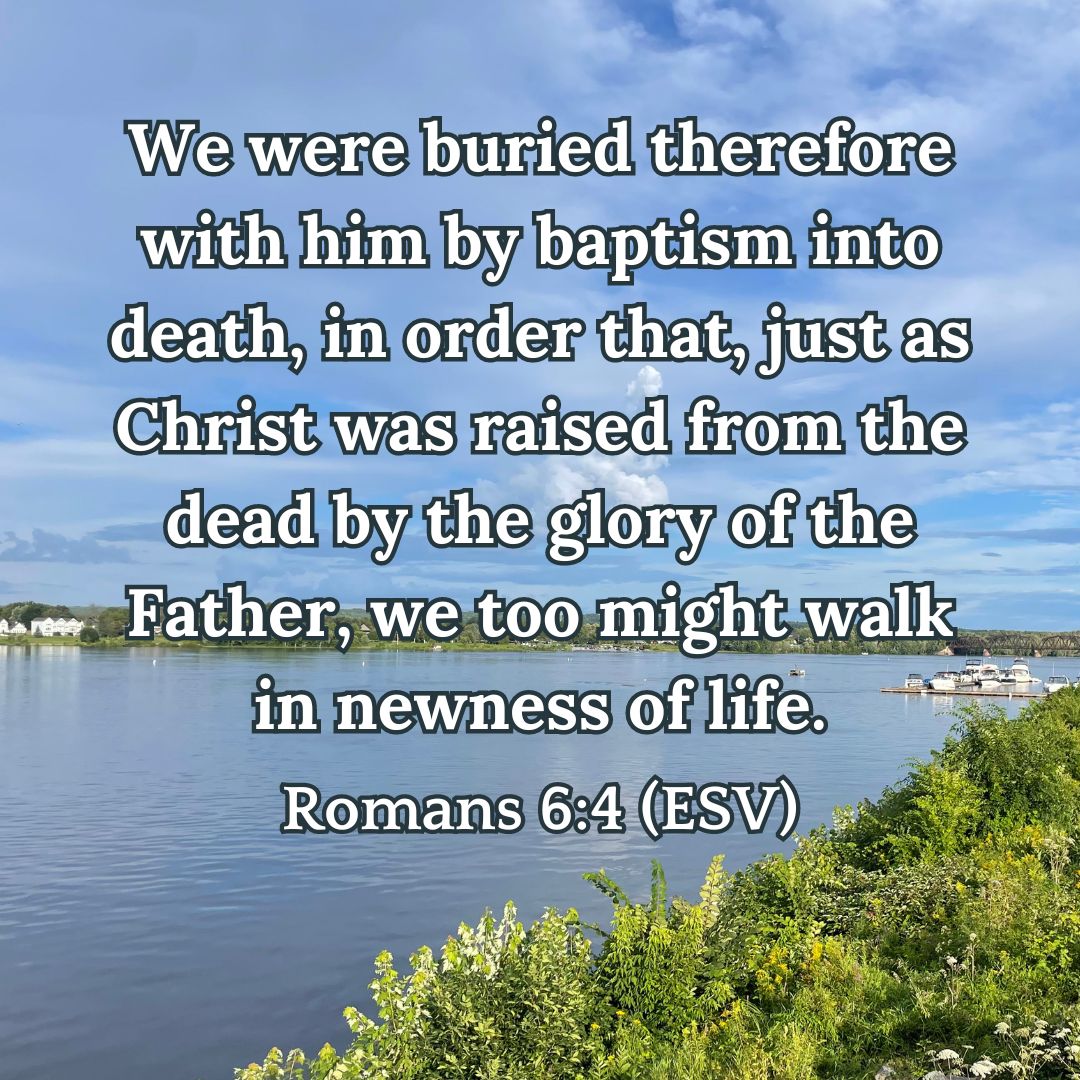
Romans 6
Chapter 6 will address the implications of grace for our daily lives, teaching that we are to live as instruments of righteousness rather than sin. It will emphasize that, having been set free from sin, we are called to live a new life in Christ, a process of sanctification that transforms our daily conduct and aligns us with God’s will.
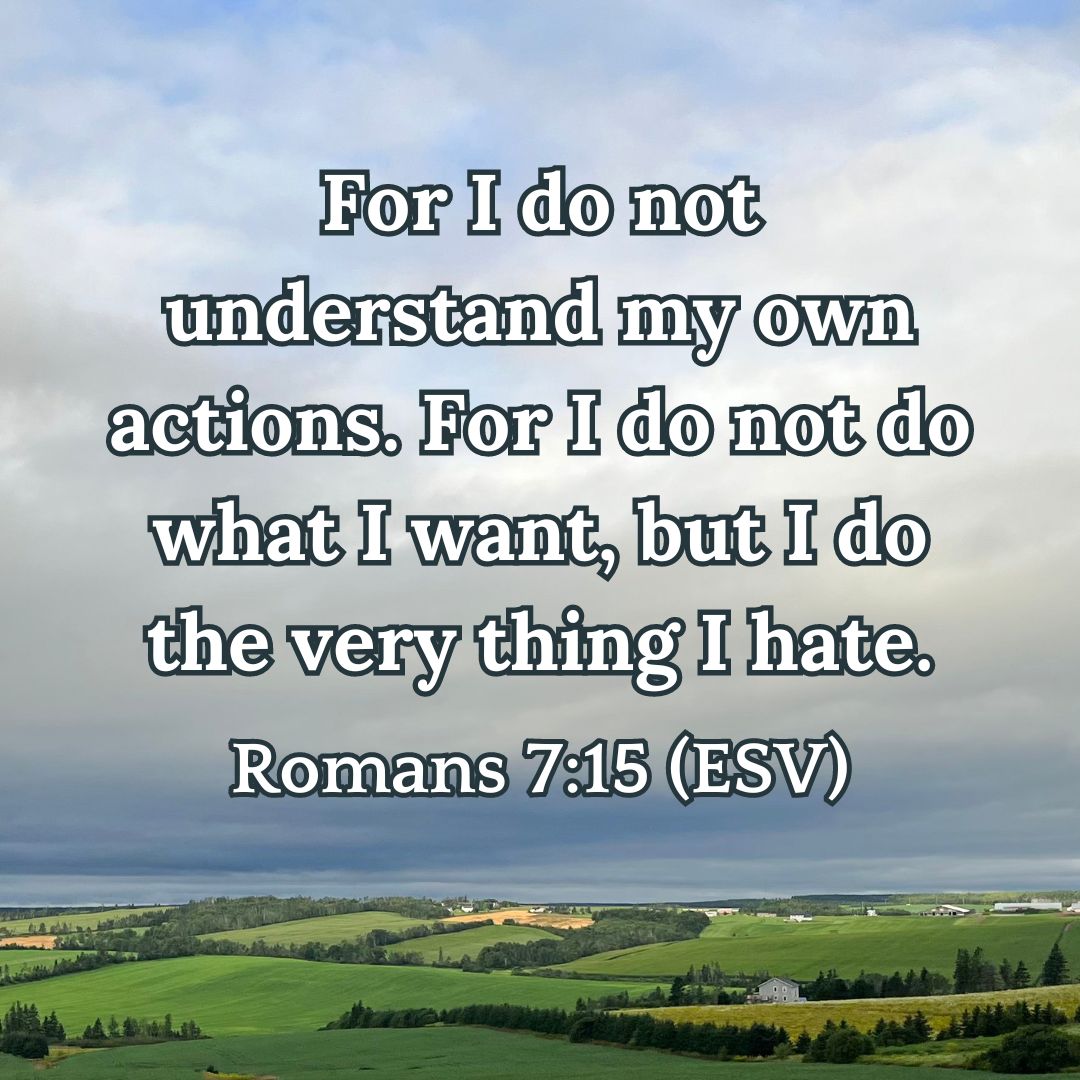
Romans 7
Chapter 7 will explore the relationship between believers and the law, illustrating the struggle between the desire to follow God and the reality of sin. It will highlight the need for deliverance through Jesus Christ, concluding that true freedom comes from living according to the Spirit.
These chapters provide a deep understanding of how faith transforms our relationship with God and empowers us to live according to His will.
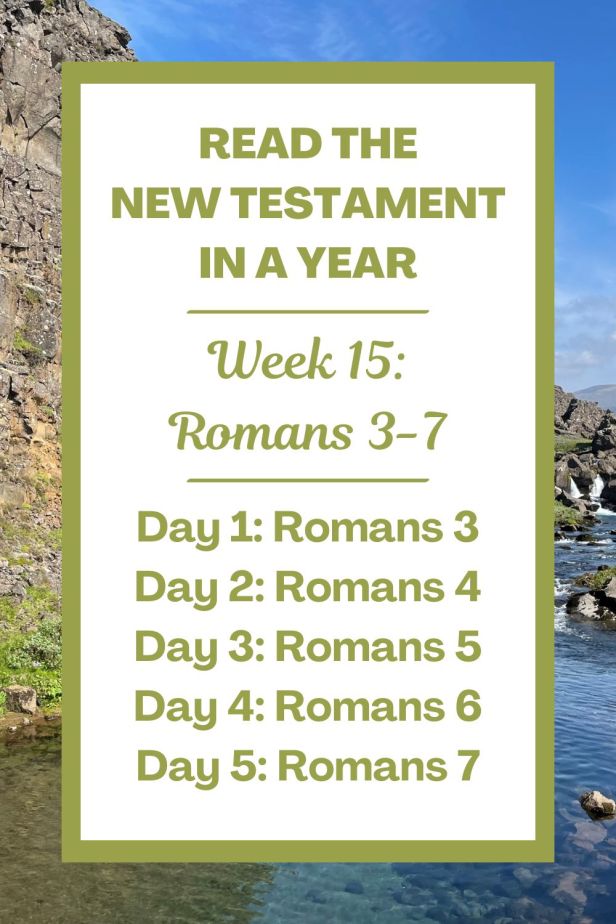
Week 15: New Testament Reading Assignment
Each week, we will read 5 chapters of the New Testament. Some people may prefer to read during the weekdays, while others might enjoy doing most of their reading on the weekends. Choose the method that works best for you!
Printable Resource:
Week 15: Reflection Questions for Romans 3-7
Consider the following reflection questions:
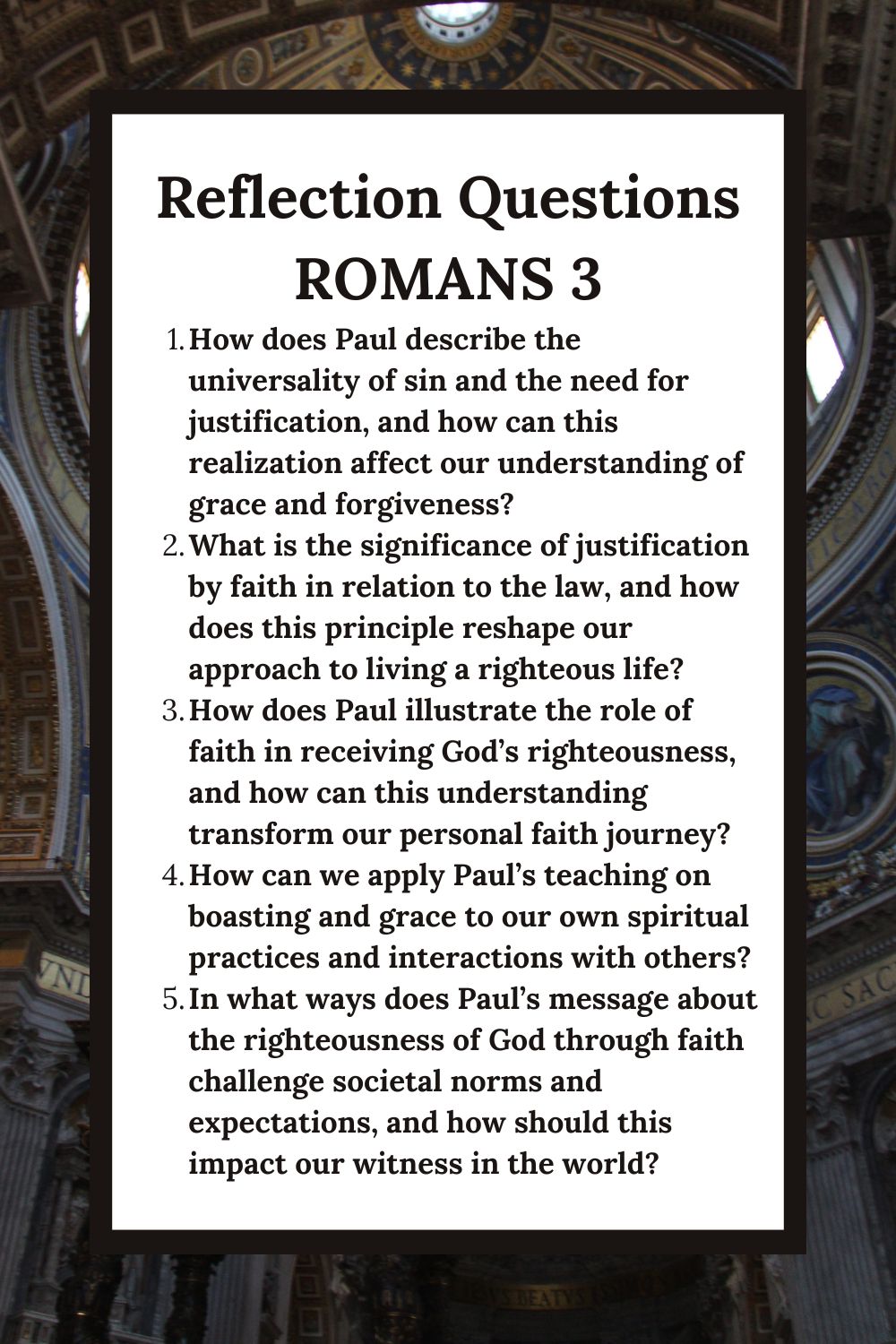
Romans 3: Justification by Faith
- How does Paul describe the universality of sin and the need for justification, and how can this realization affect our understanding of grace and forgiveness?
- What is the significance of justification by faith in relation to the law, and how does this principle reshape our approach to living a righteous life?
- How does Paul illustrate the role of faith in receiving God’s righteousness, and how can this understanding transform our personal faith journey?
- How can we apply Paul’s teaching on boasting and grace to our own spiritual practices and interactions with others?
- In what ways does Paul’s message about the righteousness of God through faith challenge societal norms and expectations, and how should this impact our witness in the world?
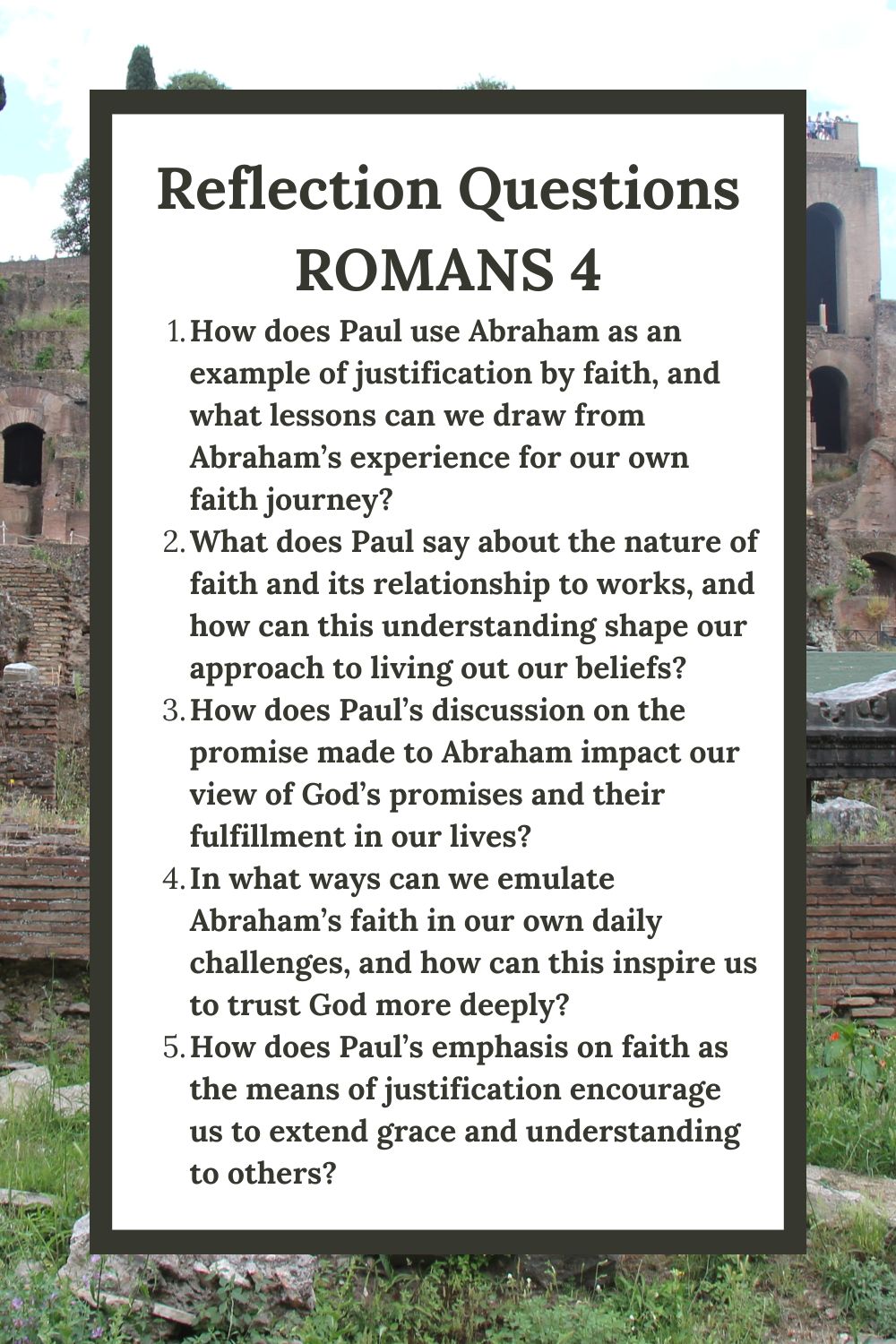
Romans 4: Abraham Justified by Faith
- How does Paul use Abraham as an example of justification by faith, and what lessons can we draw from Abraham’s experience for our own faith journey?
- What does Paul say about the nature of faith and its relationship to works, and how can this understanding shape our approach to living out our beliefs?
- How does Paul’s discussion on the promise made to Abraham impact our view of God’s promises and their fulfillment in our lives?
- In what ways can we emulate Abraham’s faith in our own daily challenges, and how can this inspire us to trust God more deeply?
- How does Paul’s emphasis on faith as the means of justification encourage us to extend grace and understanding to others?
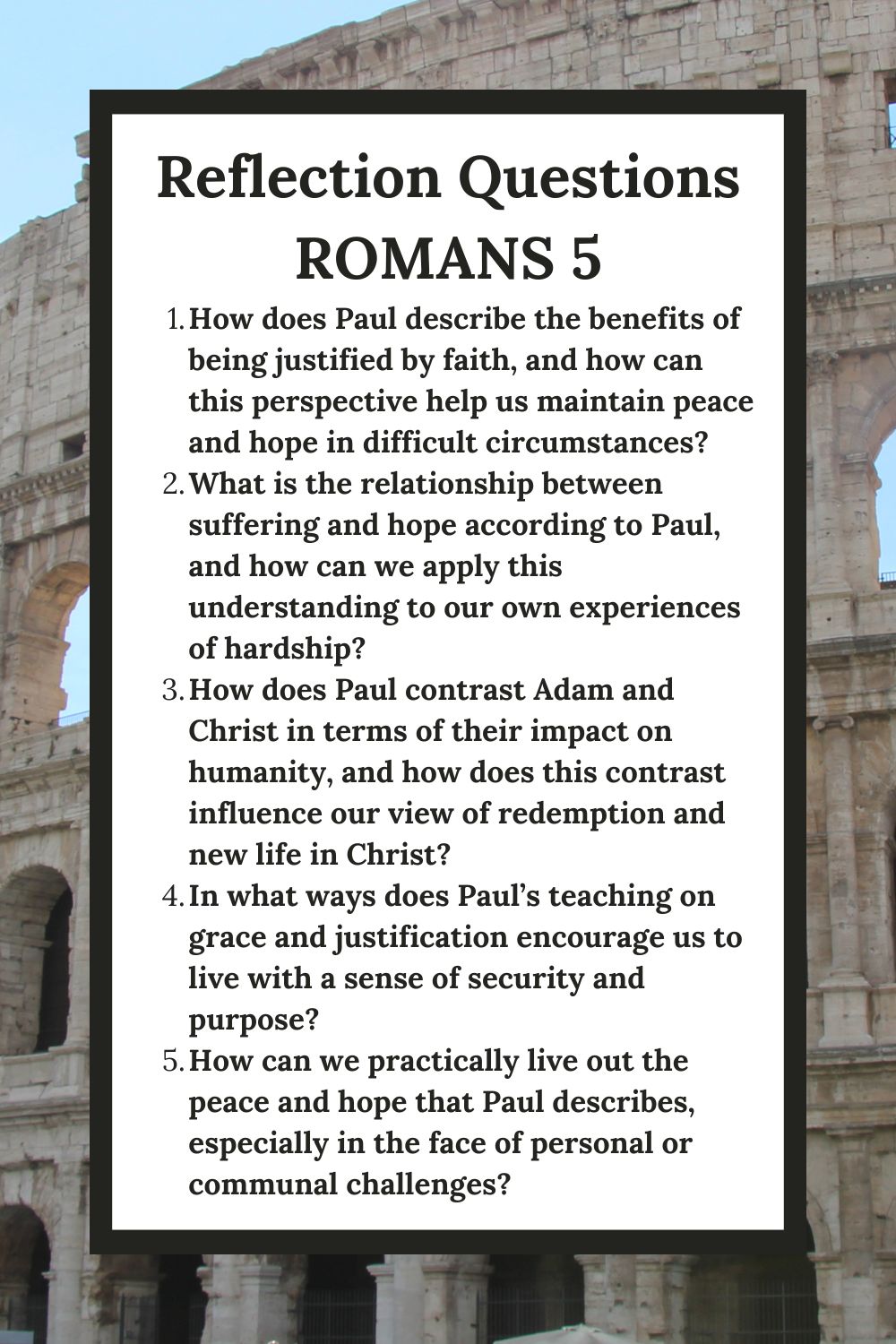
Romans 5: Peace and Hope
- How does Paul describe the benefits of being justified by faith, and how can this perspective help us maintain peace and hope in difficult circumstances?
- What is the relationship between suffering and hope according to Paul, and how can we apply this understanding to our own experiences of hardship?
- How does Paul contrast Adam and Christ in terms of their impact on humanity, and how does this contrast influence our view of redemption and new life in Christ?
- In what ways does Paul’s teaching on grace and justification encourage us to live with a sense of security and purpose?
- How can we practically live out the peace and hope that Paul describes, especially in the face of personal or communal challenges?
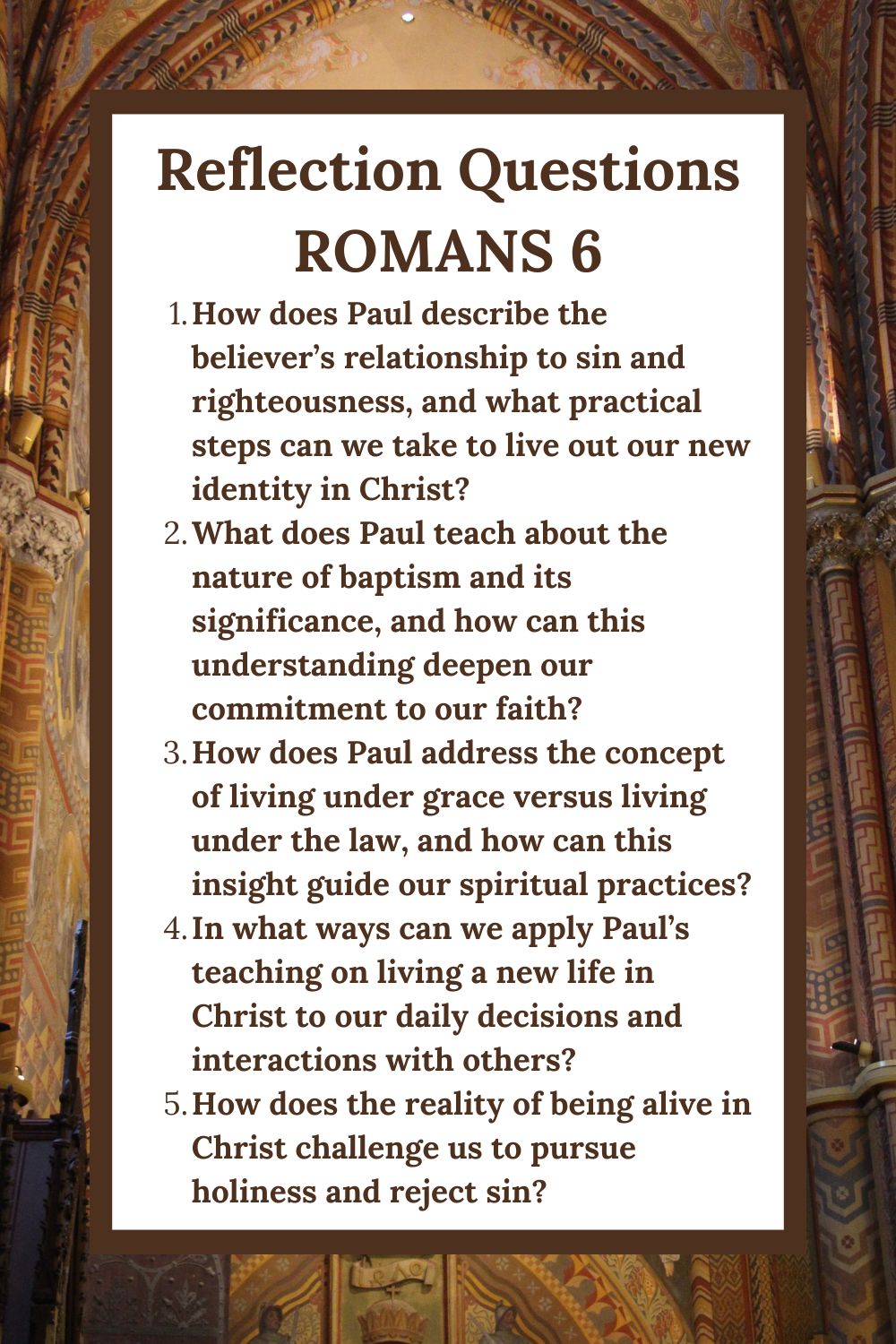
Romans 6: Dead to Sin, Alive in Christ
- How does Paul describe the believer’s relationship to sin and righteousness, and what practical steps can we take to live out our new identity in Christ?
- What does Paul teach about the nature of baptism and its significance, and how can this understanding deepen our commitment to our faith?
- How does Paul address the concept of living under grace versus living under the law, and how can this insight guide our spiritual practices?
- In what ways can we apply Paul’s teaching on living a new life in Christ to our daily decisions and interactions with others?
- How does the reality of being alive in Christ challenge us to pursue holiness and reject sin?
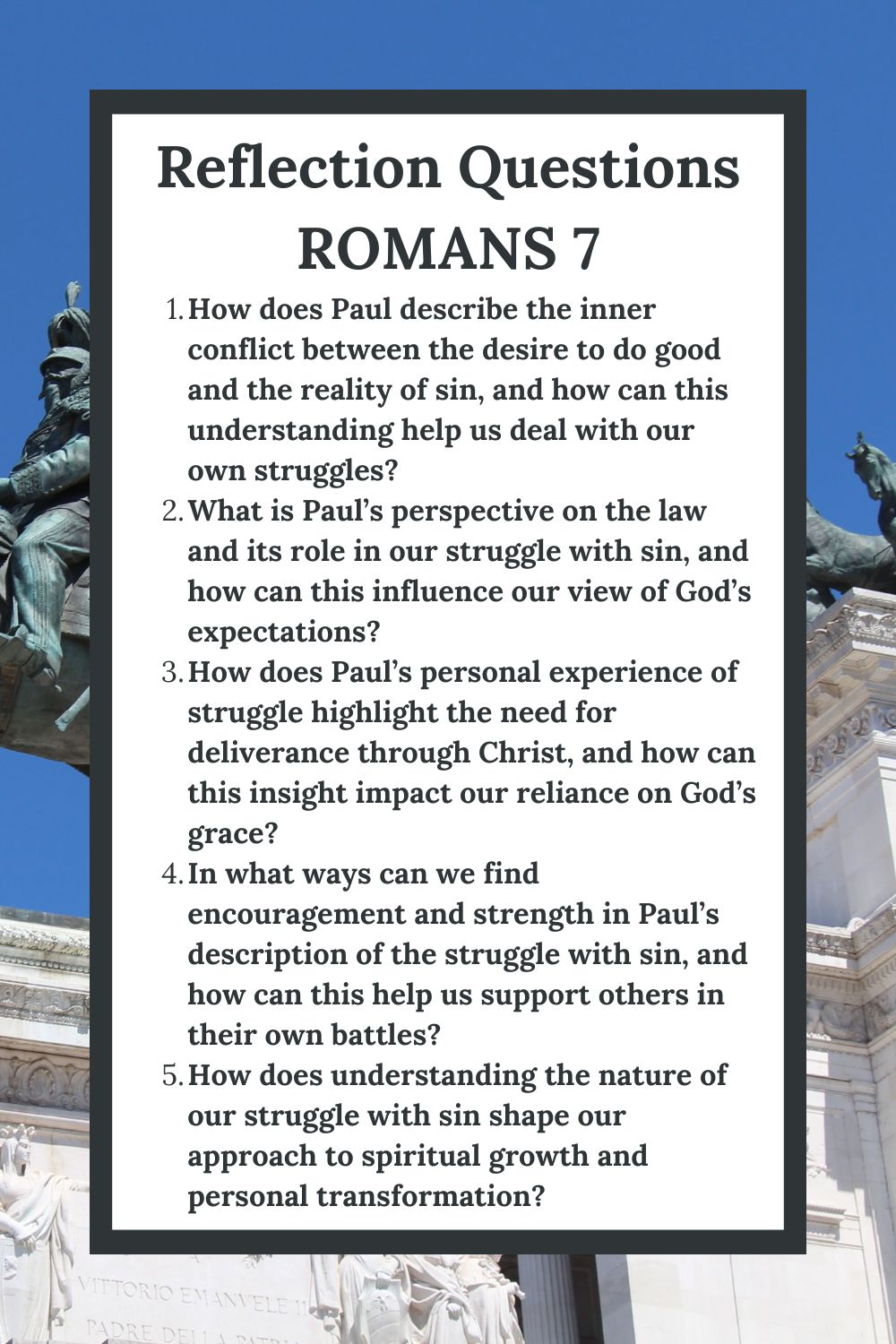
Romans 7: The Struggle with Sin
- How does Paul describe the inner conflict between the desire to do good and the reality of sin, and how can this understanding help us deal with our own struggles?
- What is Paul’s perspective on the law and its role in our struggle with sin, and how can this influence our view of God’s expectations?
- How does Paul’s personal experience of struggle highlight the need for deliverance through Christ, and how can this insight impact our reliance on God’s grace?
- In what ways can we find encouragement and strength in Paul’s description of the struggle with sin, and how can this help us support others in their own battles?
- How does understanding the nature of our struggle with sin shape our approach to spiritual growth and personal transformation?
Reflective Prayer
Choose a few verses or topics from these chapters and pray over them. Consider using the ACTS method — Adoration, Confession, Thankfulness, Supplication:
- Adoration: Praise God. What specific characteristics of God do these readings bring to mind?
- Confession: Tell God that you are sorry for specific sins. What specific sins do these readings bring to mind?
- Thankfulness: Show gratitude towards God. What in these readings inspires gratitude?
- Supplication: Make requests for yourself and for others. What in these readings inspires a prayer?
If helpful, you can use a prayer journal template.
Other Reading Plans
Online Resources
Subscribe
If you enjoyed this post and wish to receive more Christian content, feel free to subscribe to my newsletters!
Related Resources
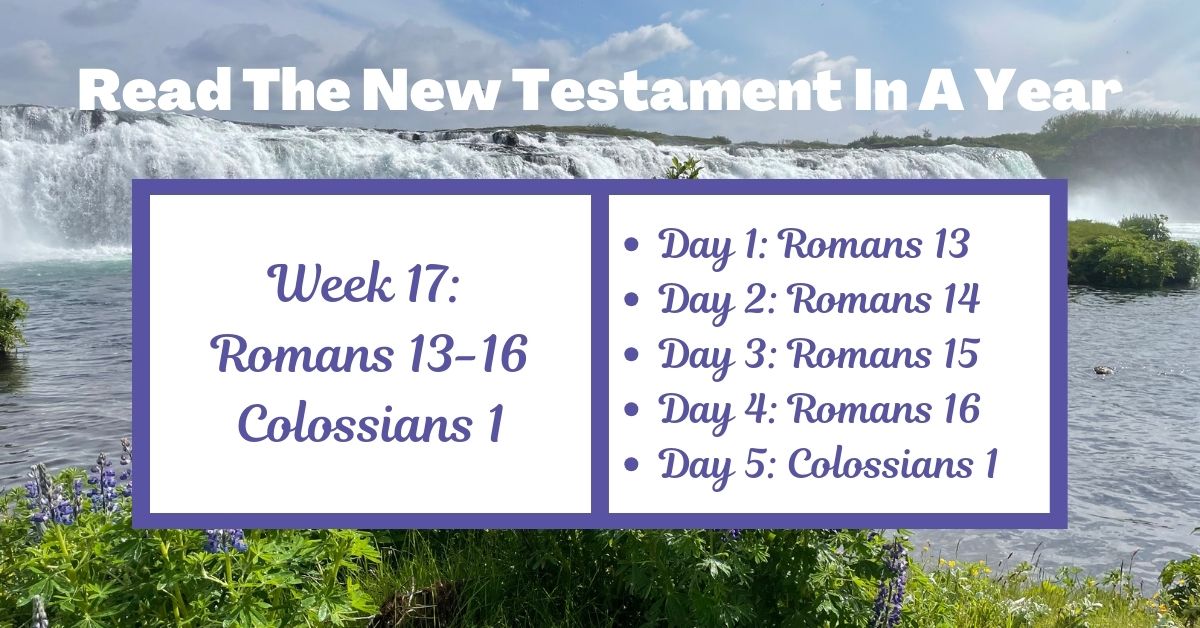
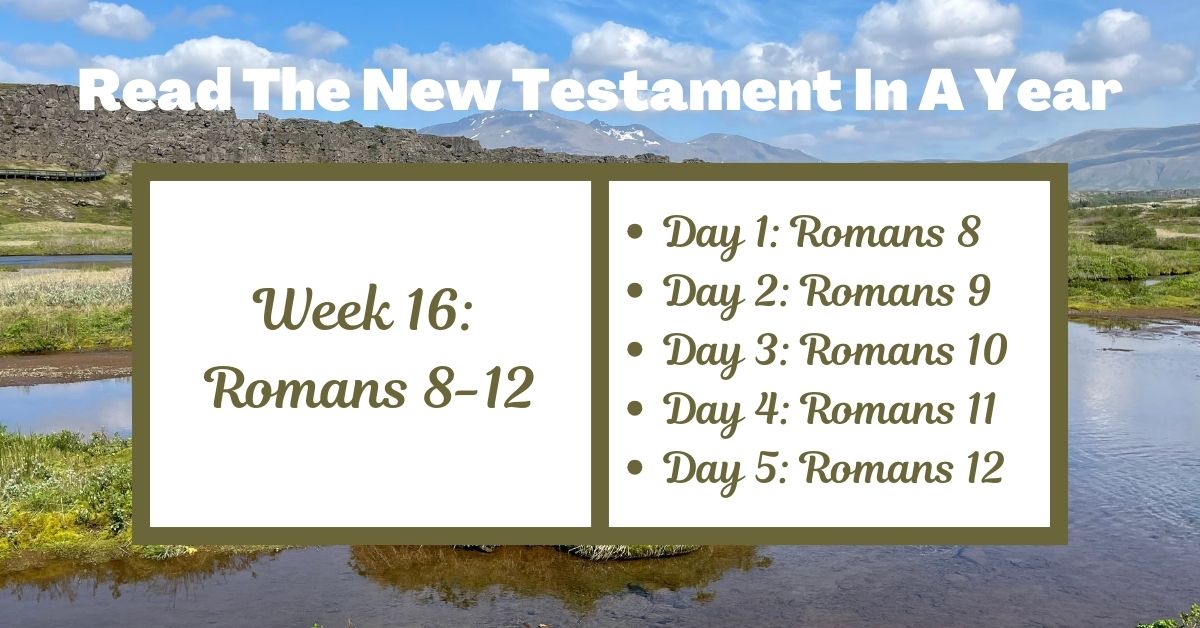
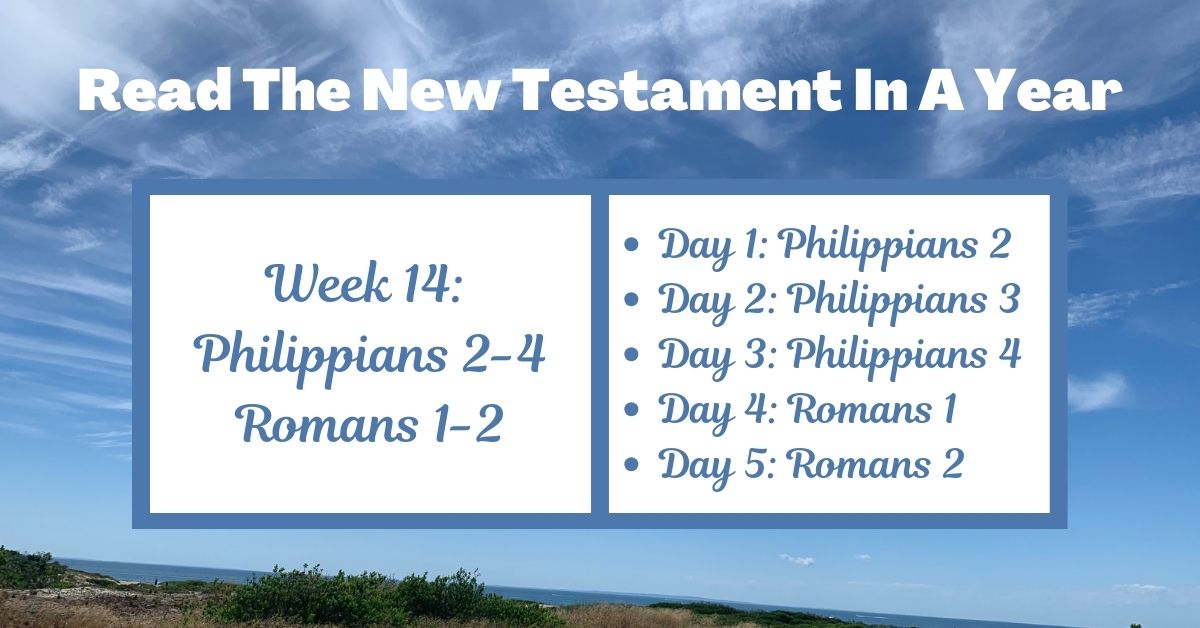
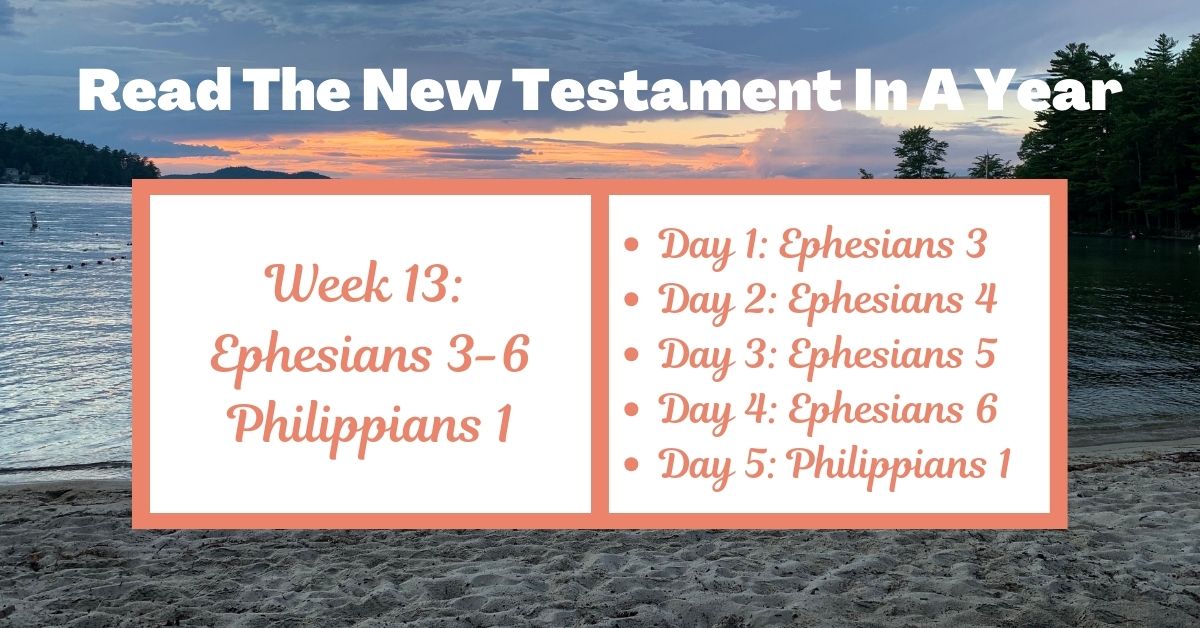
Visit the Joyful Moments in Christ homepage for all posts, or scroll through other blog posts related to reading the New Testament in a year:




English Standard Version (ESV): Unless otherwise noted, scripture quotations are from the ESV® Bible (The Holy Bible, English Standard Version®), © 2001 by Crossway, a publishing ministry of Good News Publishers. Used by permission. All rights reserved. The ESV text may not be quoted in any publication made available to the public by a Creative Commons license. The ESV may not be translated in whole or in part into any other language.

 Joyful Moments in Christ