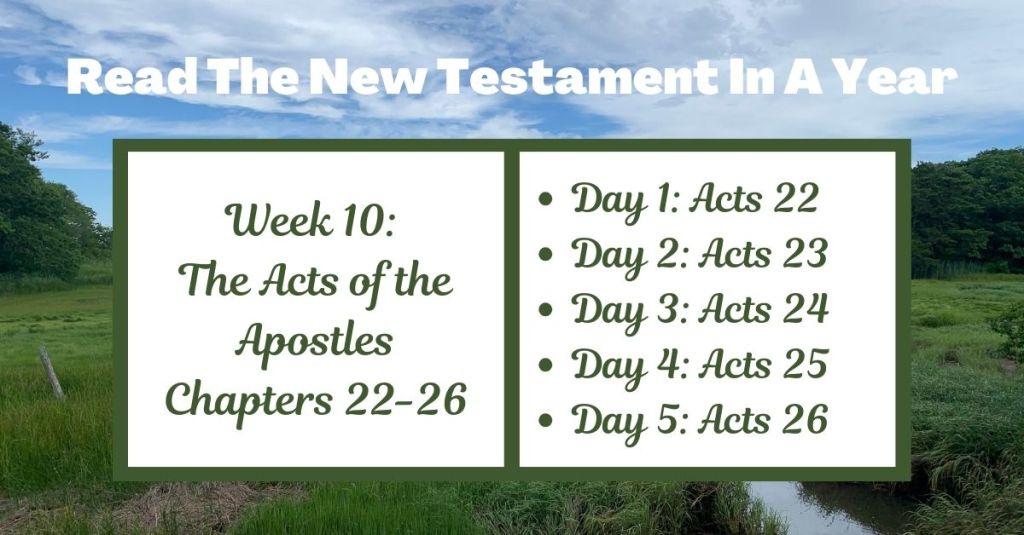
Week 10: Exploring Acts 22-26
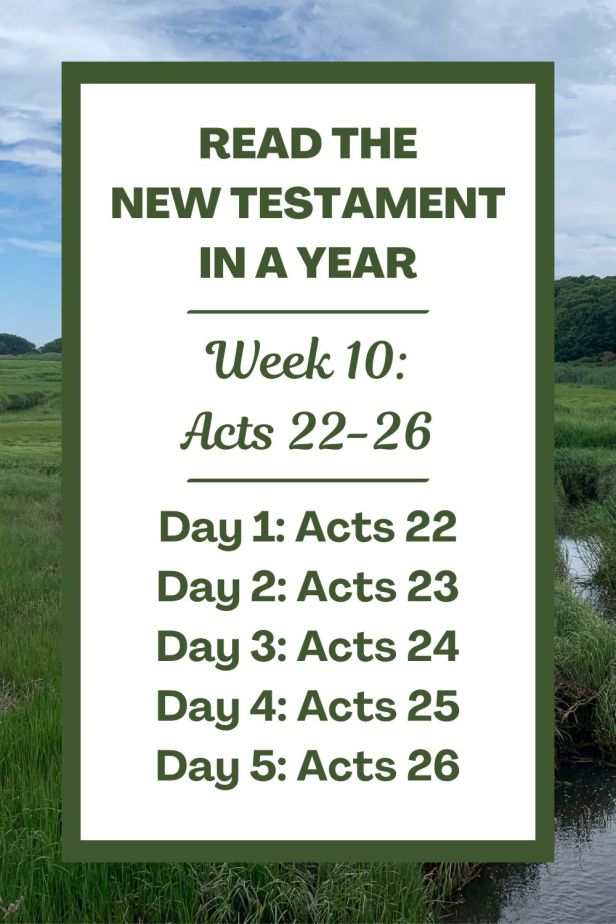
In week 10 of our quest to read the New Testament in a year, we will read the Acts of the Apostles chapters 22-26. Last week, Paul traveled to Jerusalem and was arrested based on false accusations of inciting unrest and bringing Greeks into the temple. These charges were fabricated by those who opposed the gospel message and sought to silence him.
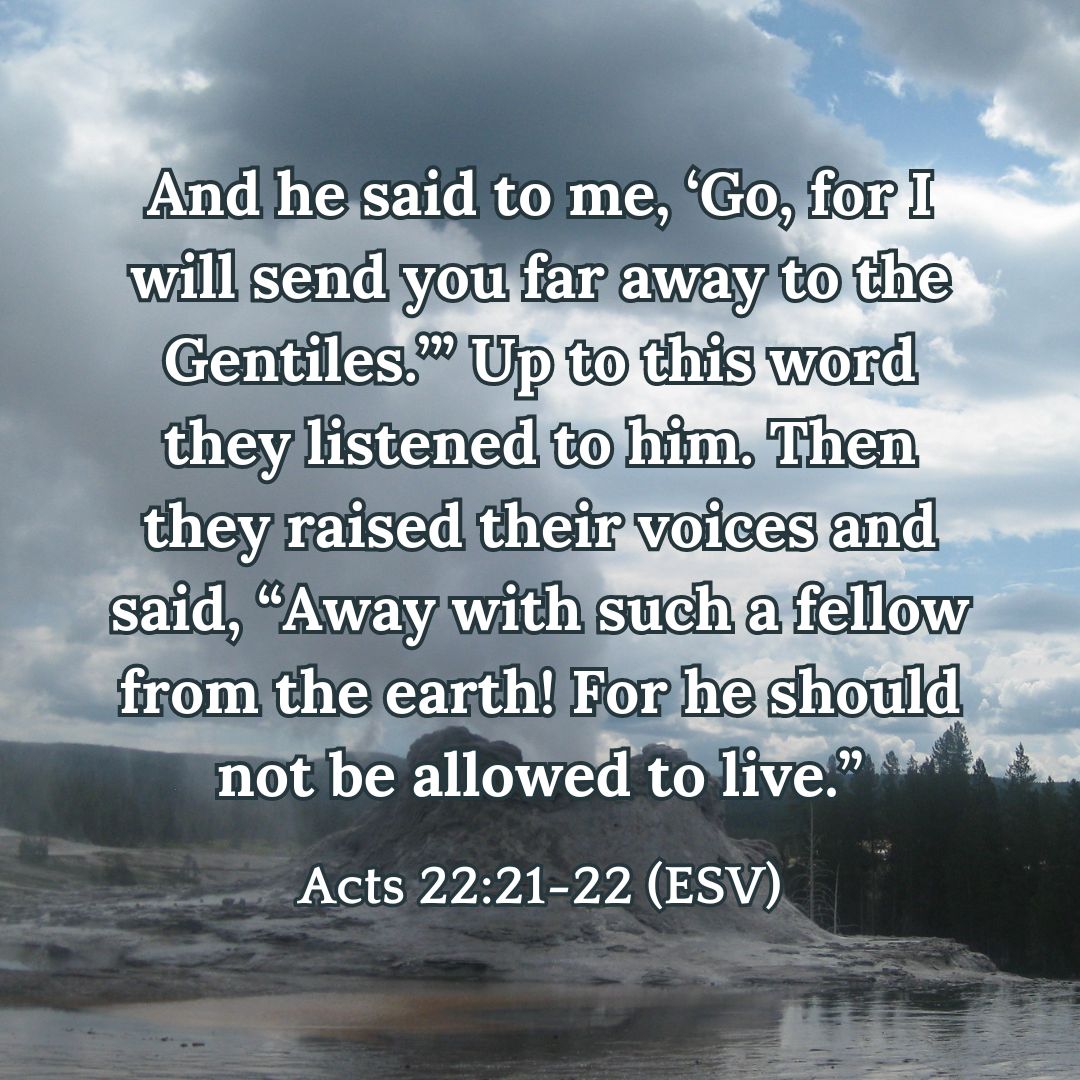
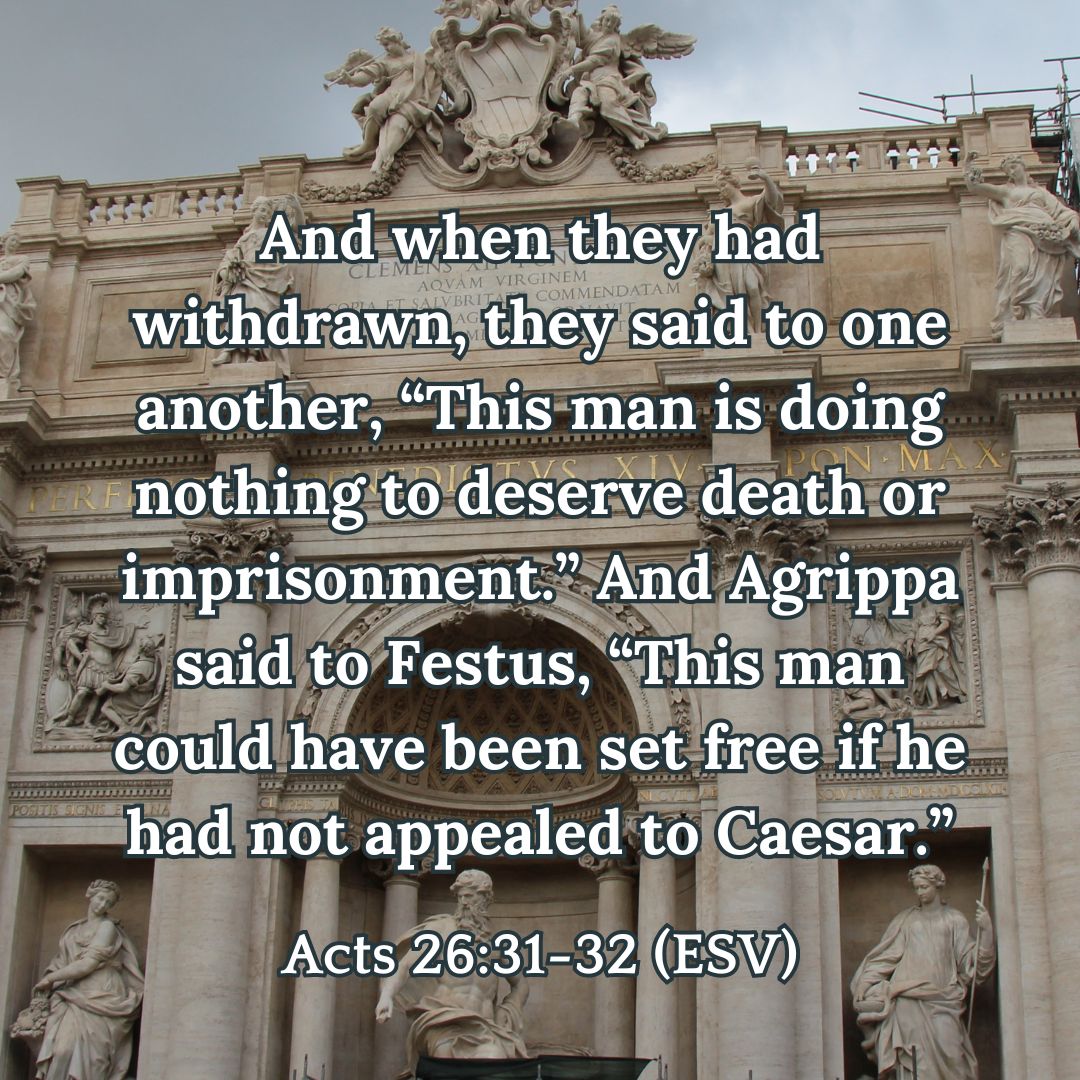
Despite these charges being untrue, Paul faced arrest. This week, Paul will navigate a series of trials: first before the Jewish crowds, then the Jewish council, followed by governors Felix and Festus, and finally King Agrippa and Queen Bernice. Each trial will reveal more about the political and religious tensions of the time, as well as Paul’s unwavering commitment to his mission.

Next week, Paul will embark on his final journey to Rome, marking a pivotal step in his mission to spread the gospel to the heart of the empire.
Week 10: New Testament Reading Assignment
Each week, we will read 5 chapters of the New Testament. Some people may prefer to read during the weekdays, while others might enjoy doing most of their reading on the weekends. Choose the method that works best for you!
Printable Resource:
Week 10: Reflection Questions for Acts 22-26
Consider the following reflection questions:
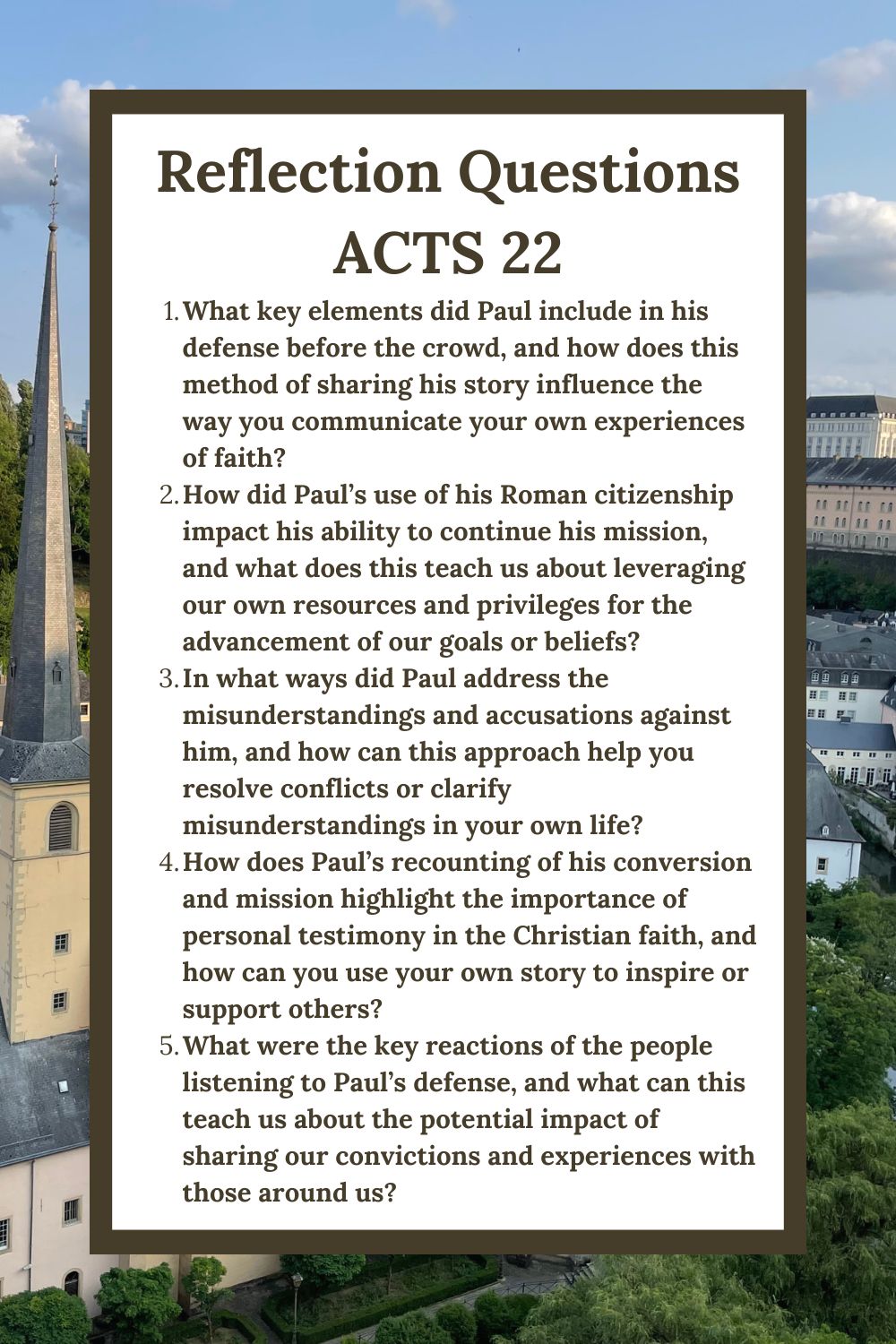
Acts 22: Paul’s Defense and Roman Citizenship
- What key elements did Paul include in his defense before the crowd, and how does this method of sharing his story influence the way you communicate your own experiences of faith?
- How did Paul’s use of his Roman citizenship impact his ability to continue his mission, and what does this teach us about leveraging our own resources and privileges for the advancement of our goals or beliefs?
- In what ways did Paul address the misunderstandings and accusations against him, and how can this approach help you resolve conflicts or clarify misunderstandings in your own life?
- How does Paul’s recounting of his conversion and mission highlight the importance of personal testimony in the Christian faith, and how can you use your own story to inspire or support others?
- What were the key reactions of the people listening to Paul’s defense, and what can this teach us about the potential impact of sharing our convictions and experiences with those around us?
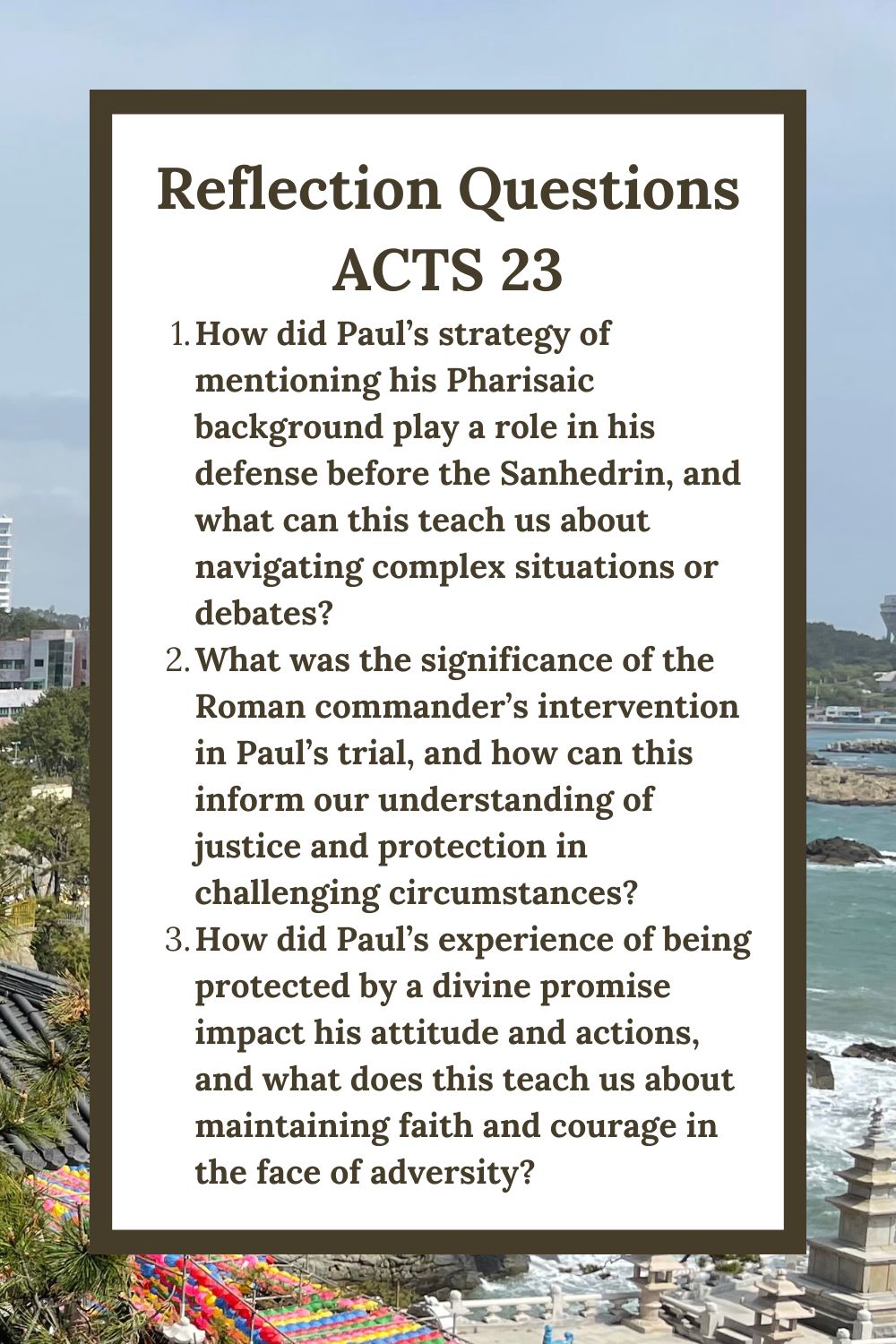
Acts 23: Paul’s Defense Before the Sanhedrin
- How did Paul’s strategy of mentioning his Pharisaic background play a role in his defense before the Sanhedrin, and what can this teach us about navigating complex situations or debates?
- What was the significance of the Roman commander’s intervention in Paul’s trial, and how can this inform our understanding of justice and protection in challenging circumstances?
- How did Paul’s experience of being protected by a divine promise impact his attitude and actions, and what does this teach us about maintaining faith and courage in the face of adversity?
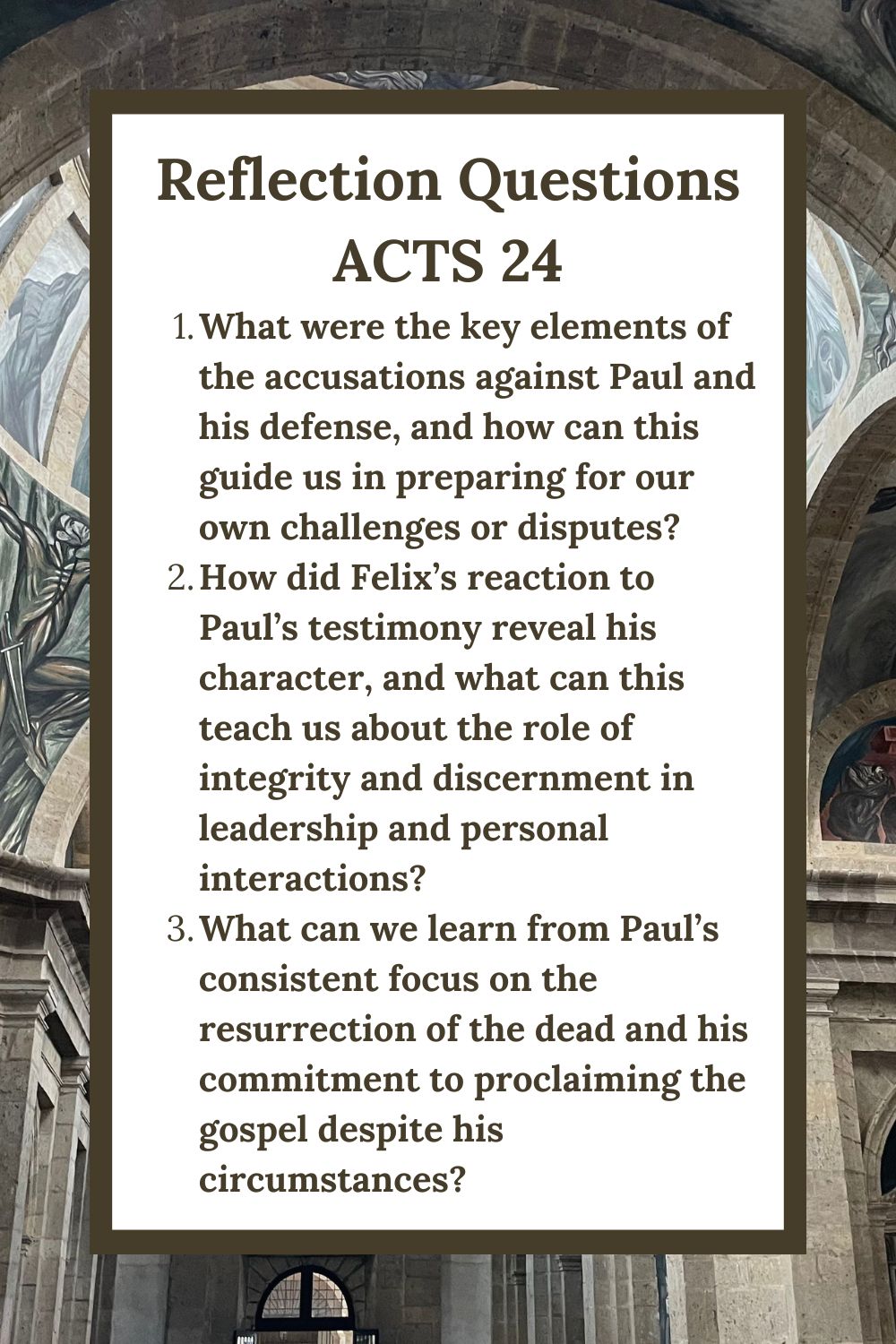
Acts 24: Paul’s Trial Before Felix
- What were the key elements of the accusations against Paul and his defense, and how can this guide us in preparing for our own challenges or disputes?
- How did Felix’s reaction to Paul’s testimony reveal his character, and what can this teach us about the role of integrity and discernment in leadership and personal interactions?
- What can we learn from Paul’s consistent focus on the resurrection of the dead and his commitment to proclaiming the gospel despite his circumstances?
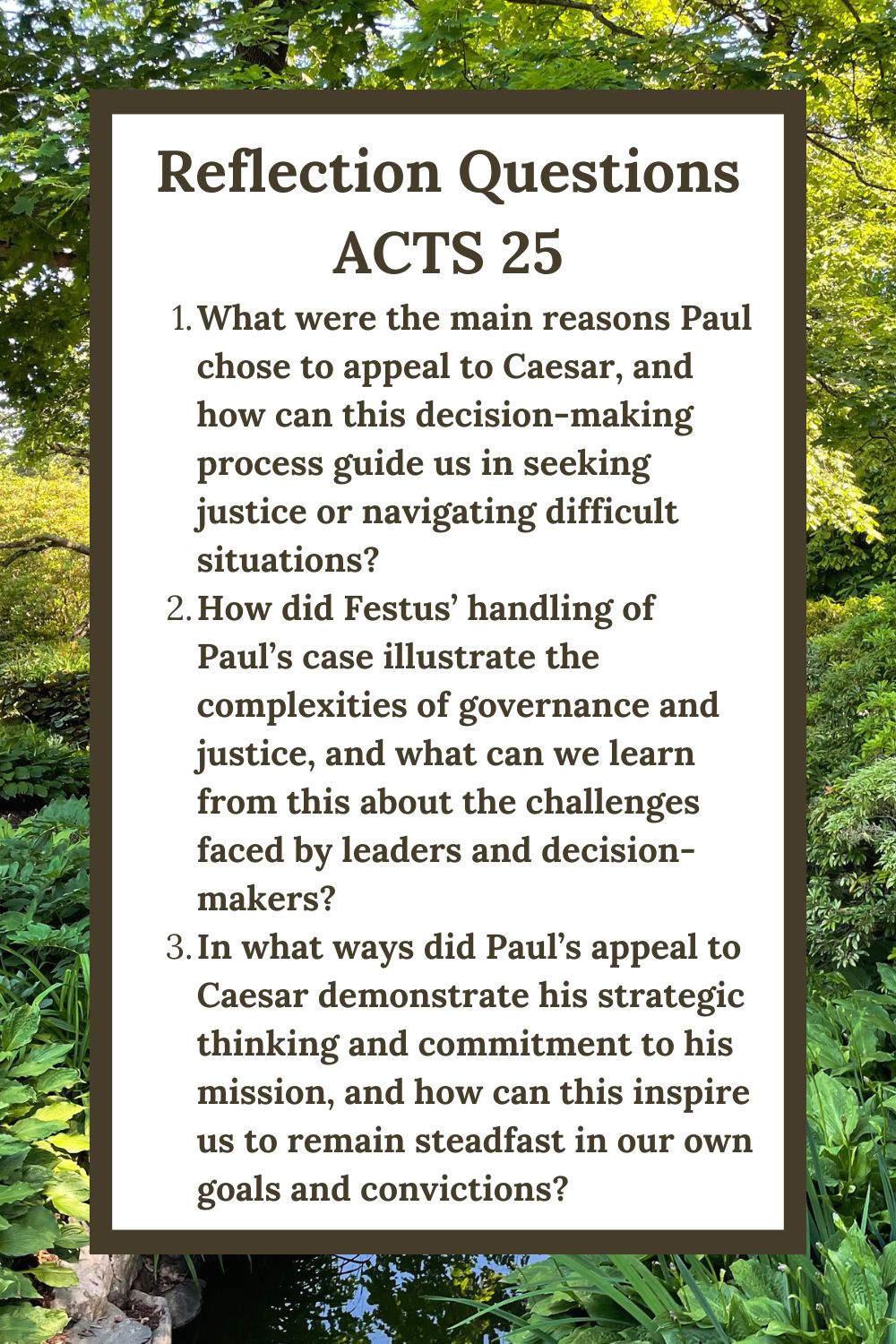
Acts 25: Paul’s Appeal to Caesar
- What were the main reasons Paul chose to appeal to Caesar, and how can this decision-making process guide us in seeking justice or navigating difficult situations?
- How did Festus’ handling of Paul’s case illustrate the complexities of governance and justice, and what can we learn from this about the challenges faced by leaders and decision-makers?
- In what ways did Paul’s appeal to Caesar demonstrate his strategic thinking and commitment to his mission, and how can this inspire us to remain steadfast in our own goals and convictions?
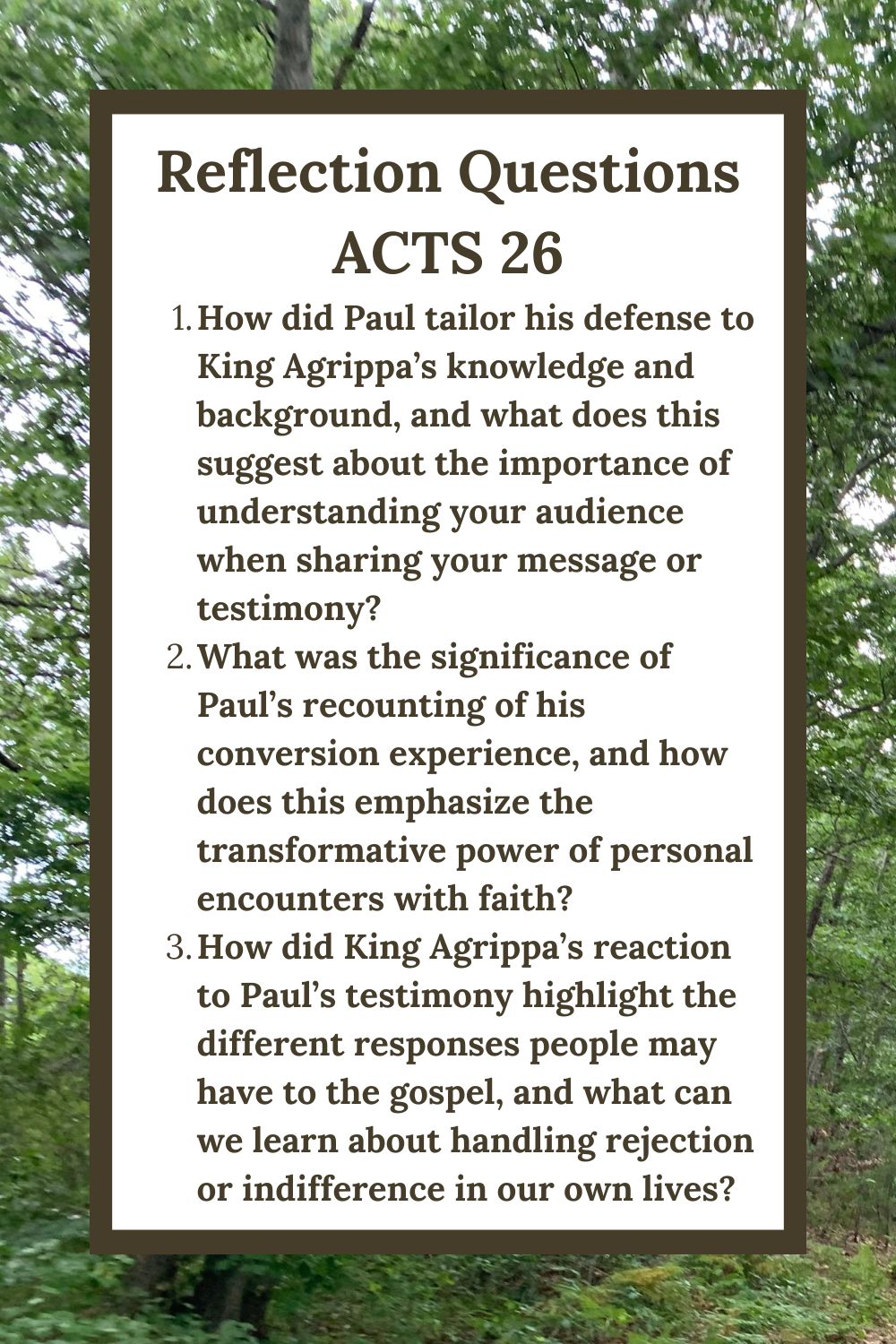
Acts 26: Paul’s Defense Before Agrippa
- How did Paul tailor his defense to King Agrippa’s knowledge and background, and what does this suggest about the importance of understanding your audience when sharing your message or testimony?
- What was the significance of Paul’s recounting of his conversion experience, and how does this emphasize the transformative power of personal encounters with faith?
- How did King Agrippa’s reaction to Paul’s testimony highlight the different responses people may have to the gospel, and what can we learn about handling rejection or indifference in our own lives?
Reflective Prayer
Choose a few verses or topics from these chapters and pray over them. Consider using the ACTS method — Adoration, Confession, Thankfulness, Supplication:
- Adoration: Praise God. What specific characteristics of God do these readings bring to mind?
- Confession: Tell God that you are sorry for specific sins. What specific sins do these readings bring to mind?
- Thankfulness: Show gratitude towards God. What in these readings inspires gratitude?
- Supplication: Make requests for yourself and for others. What in these readings inspires a prayer?
If helpful, you can use a prayer journal template.
Other Reading Plans
Online Resources
Subscribe
If you enjoyed this post and wish to receive more Christian content, feel free to subscribe to my newsletters!
Related Resources
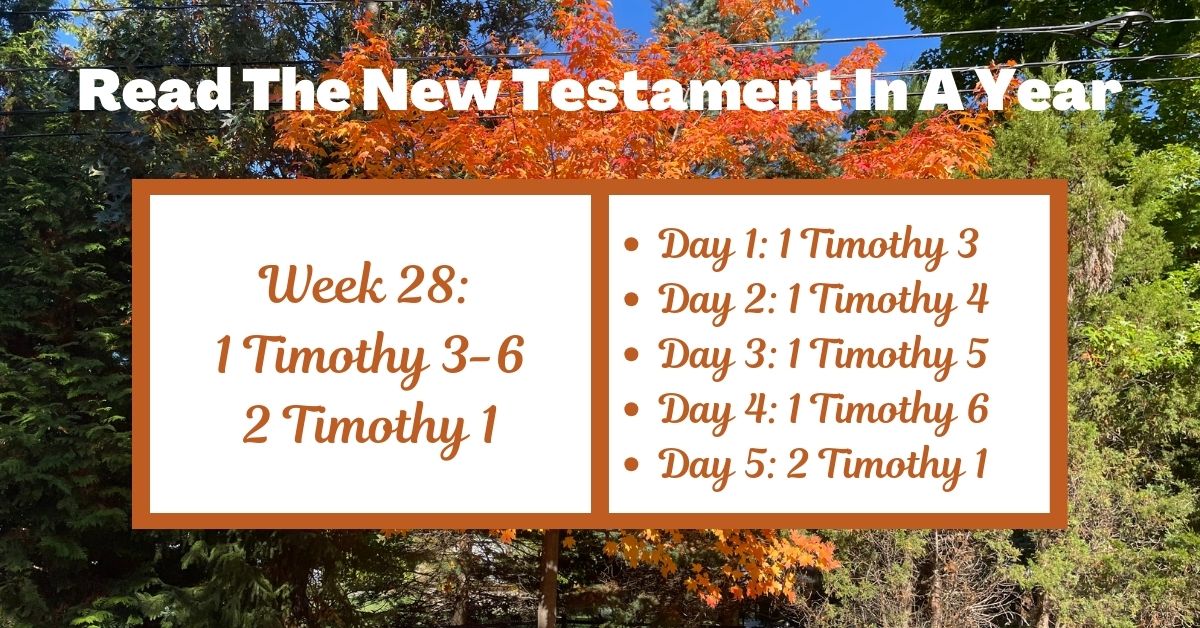
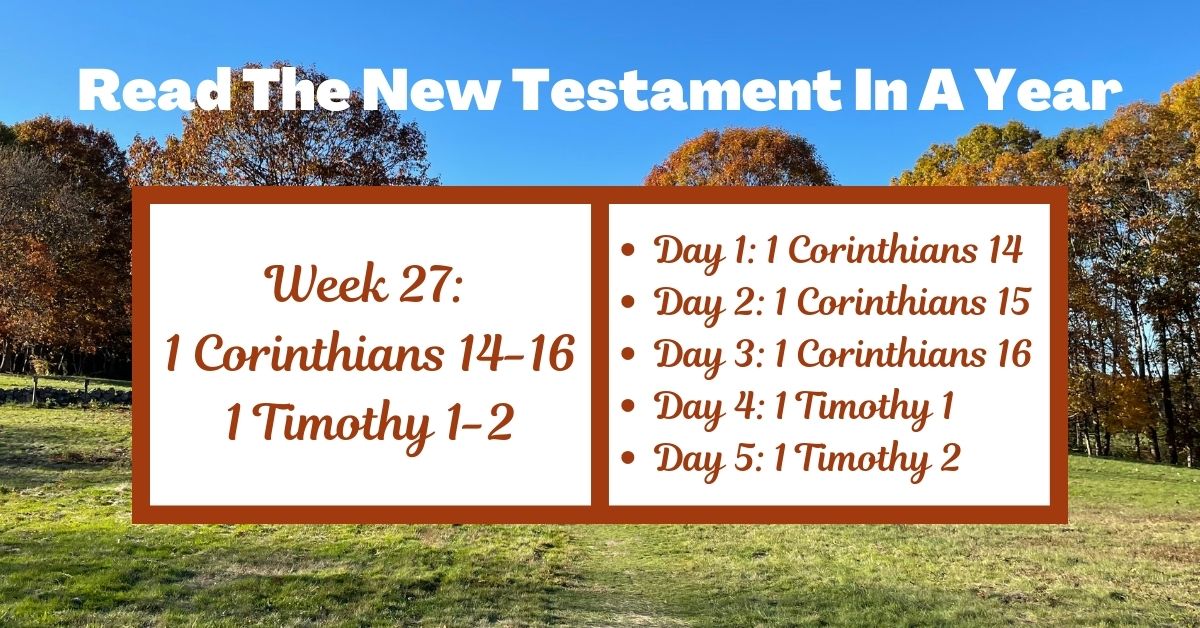
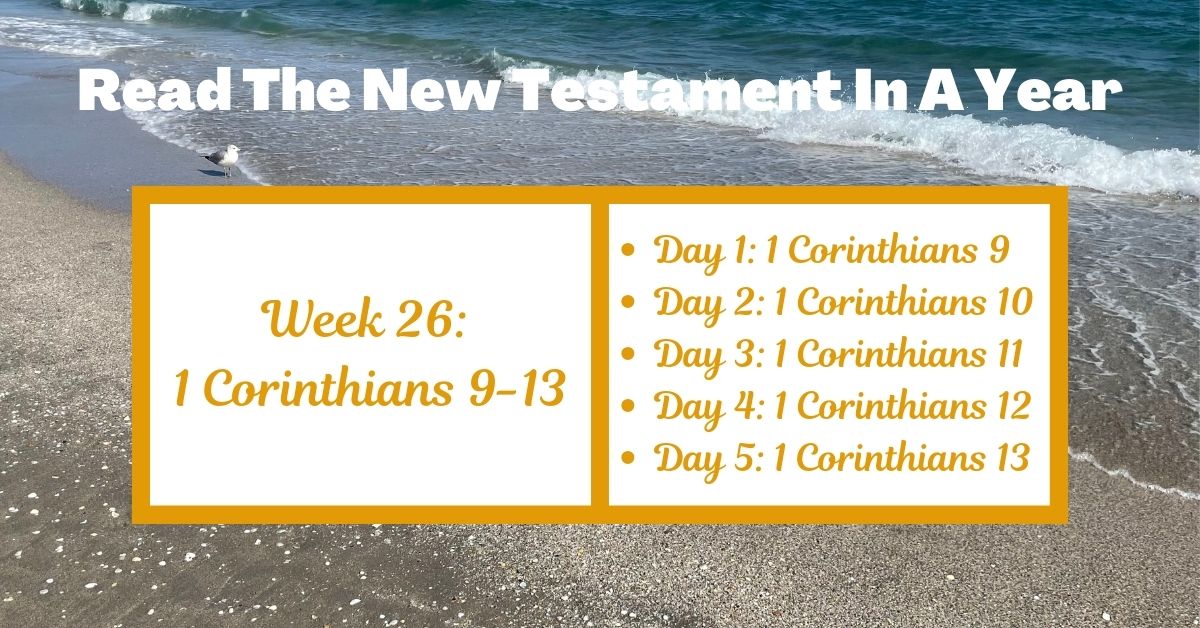
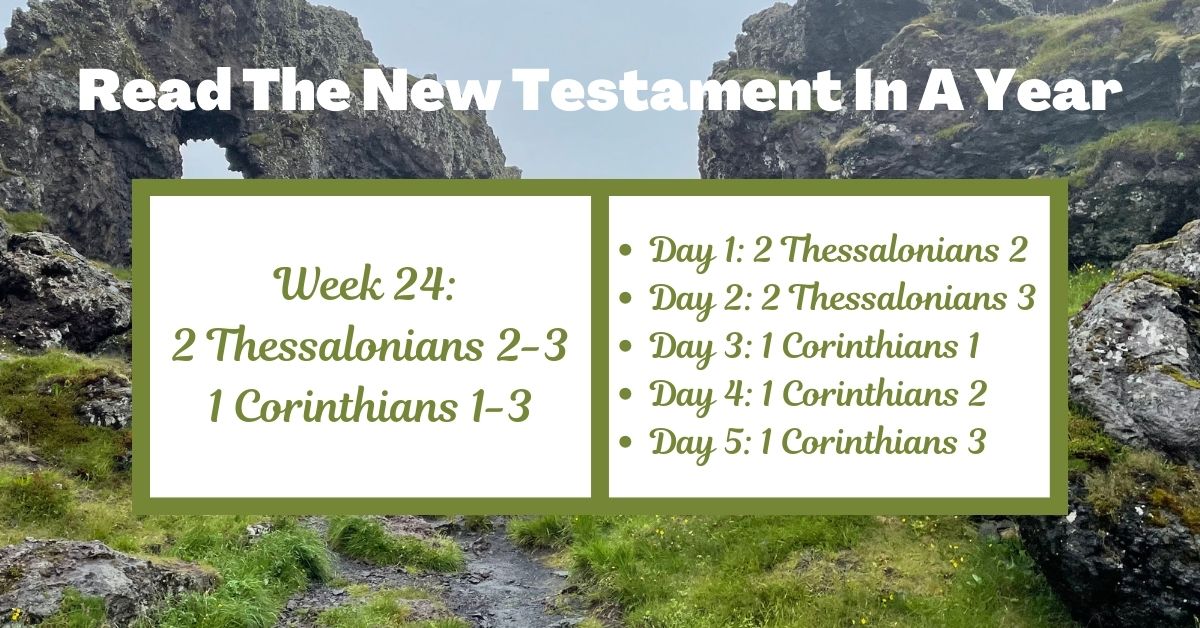
Visit the Joyful Moments in Christ homepage for all posts, or scroll through other blog posts related to reading the New Testament in a year:




English Standard Version (ESV): Unless otherwise noted, scripture quotations are from the ESV® Bible (The Holy Bible, English Standard Version®), © 2001 by Crossway, a publishing ministry of Good News Publishers. Used by permission. All rights reserved. The ESV text may not be quoted in any publication made available to the public by a Creative Commons license. The ESV may not be translated in whole or in part into any other language.



 Joyful Moments in Christ