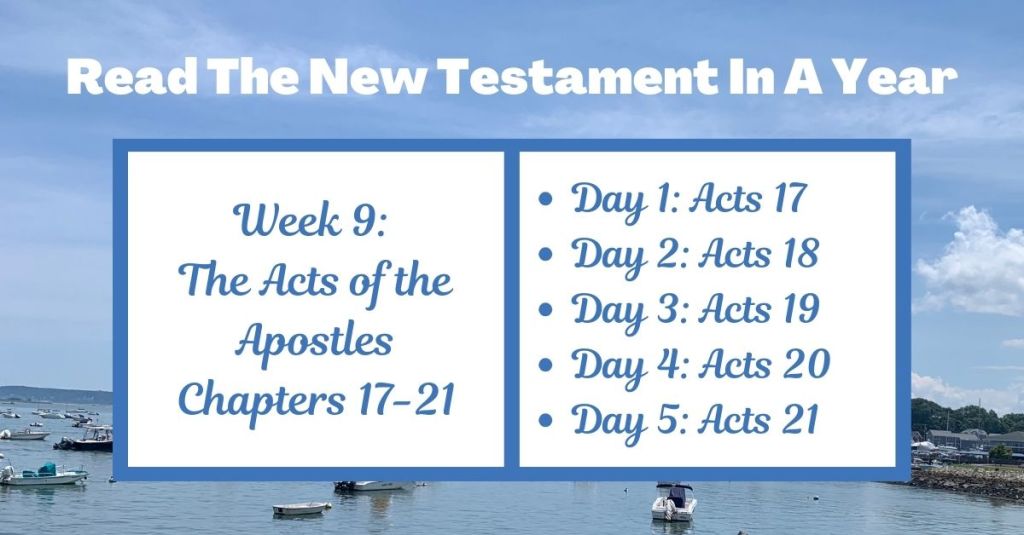
Week 9: Exploring Acts 17-21
In week 9 of our journey to read the New Testament in a year, we will read the Acts of the Apostles chapters 17-21. These passages detail Paul and Silas’s dynamic missionary journeys through Thessalonica, Berea, and Athens, where their preaching stirs both strong opposition and enthusiastic responses. Despite significant challenges from Jewish opponents, many come to faith in Jesus.
And some of them were persuaded and joined Paul and Silas, as did a great many of the devout Greeks and not a few of the leading women. But the Jews were jealous, and taking some wicked men of the rabble, they formed a mob, set the city in an uproar, and attacked the house of Jason, seeking to bring them out to the crowd. – Acts 17:4-5 (ESV)
We will also witness the dramatic events in Ephesus, where Paul encounters fierce resistance yet achieves significant victories. Notably, Paul performs a miraculous resurrection of a young man, demonstrating the power of God’s work through the apostles.
And a young man named Eutychus, sitting at the window, sank into a deep sleep as Paul talked still longer. And being overcome by sleep, he fell down from the third story and was taken up dead. But Paul went down and bent over him, and taking him in his arms, said, “Do not be alarmed, for his life is in him.” – Acts 20:9-10 (ESV)
Additionally, Paul will receive a prophetic warning about the trials awaiting him in Jerusalem. These chapters offer a compelling look at the challenges and triumphs of the early Christian mission, revealing the dedication and resilience of the apostles as they navigate adversity and strive to spread the gospel.
While we were staying for many days, a prophet named Agabus came down from Judea. And coming to us, he took Paul’s belt and bound his own feet and hands and said, “Thus says the Holy Spirit, ‘This is how the Jews at Jerusalem will bind the man who owns this belt and deliver him into the hands of the Gentiles.’” – Acts 21:10-11 (ESV)
Additional Reading: More Blog Posts from Acts
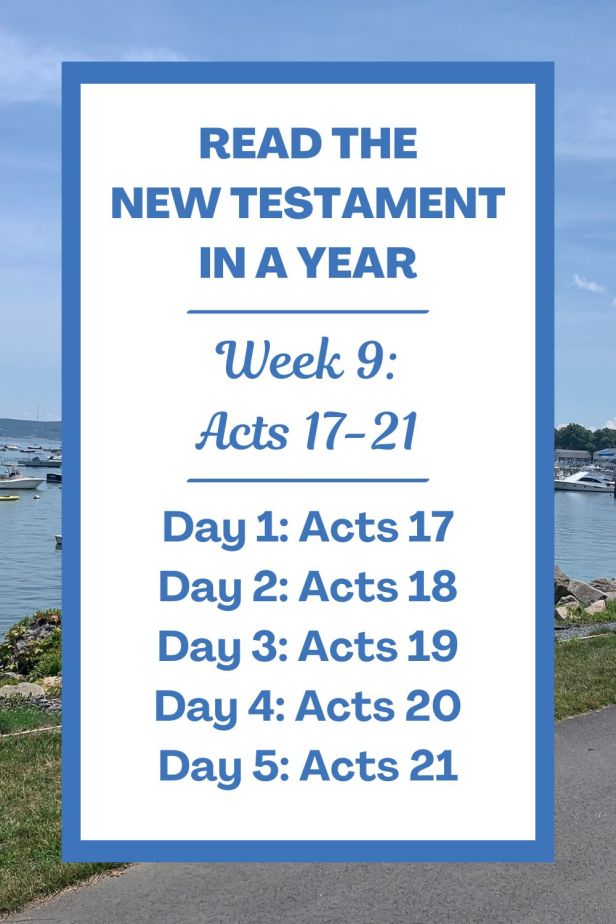
Week 9: New Testament Reading Assignment
Each week, we will read 5 chapters of the New Testament. Some people may prefer to read during the weekdays, while others might enjoy doing most of their reading on the weekends. Choose the method that works best for you!
Printable Resource:
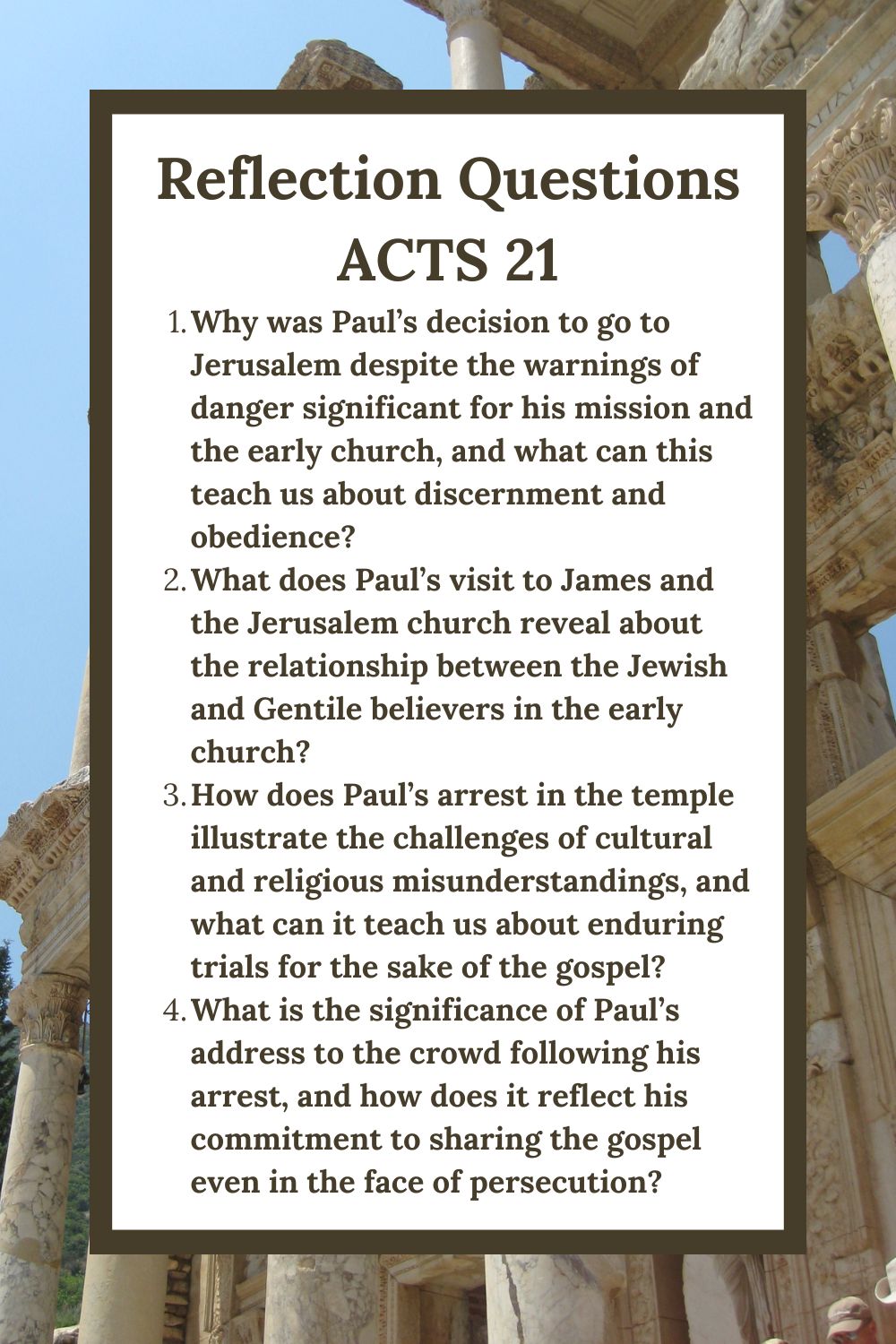
Week 9: Reflection Questions for Acts 17-21
Consider the following reflection questions:
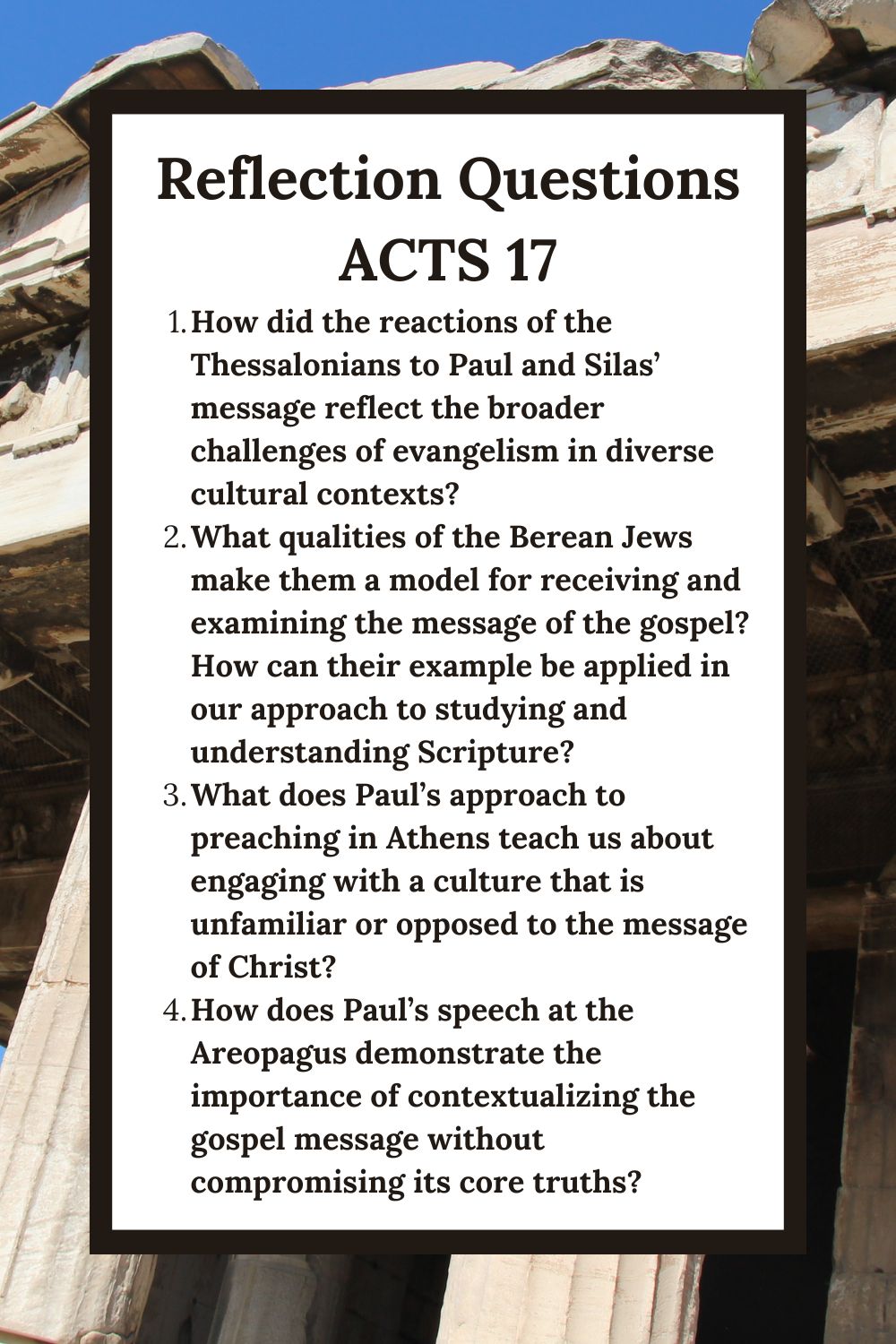
Acts 17: Paul and Silas’ Travels
- How did the reactions of the Thessalonians to Paul and Silas’ message reflect the broader challenges of evangelism in diverse cultural contexts?
- What qualities of the Berean Jews make them a model for receiving and examining the message of the gospel? How can their example be applied in our approach to studying and understanding Scripture?
- What does Paul’s approach to preaching in Athens teach us about engaging with a culture that is unfamiliar or opposed to the message of Christ?
- How does Paul’s speech at the Areopagus demonstrate the importance of contextualizing the gospel message without compromising its core truths?
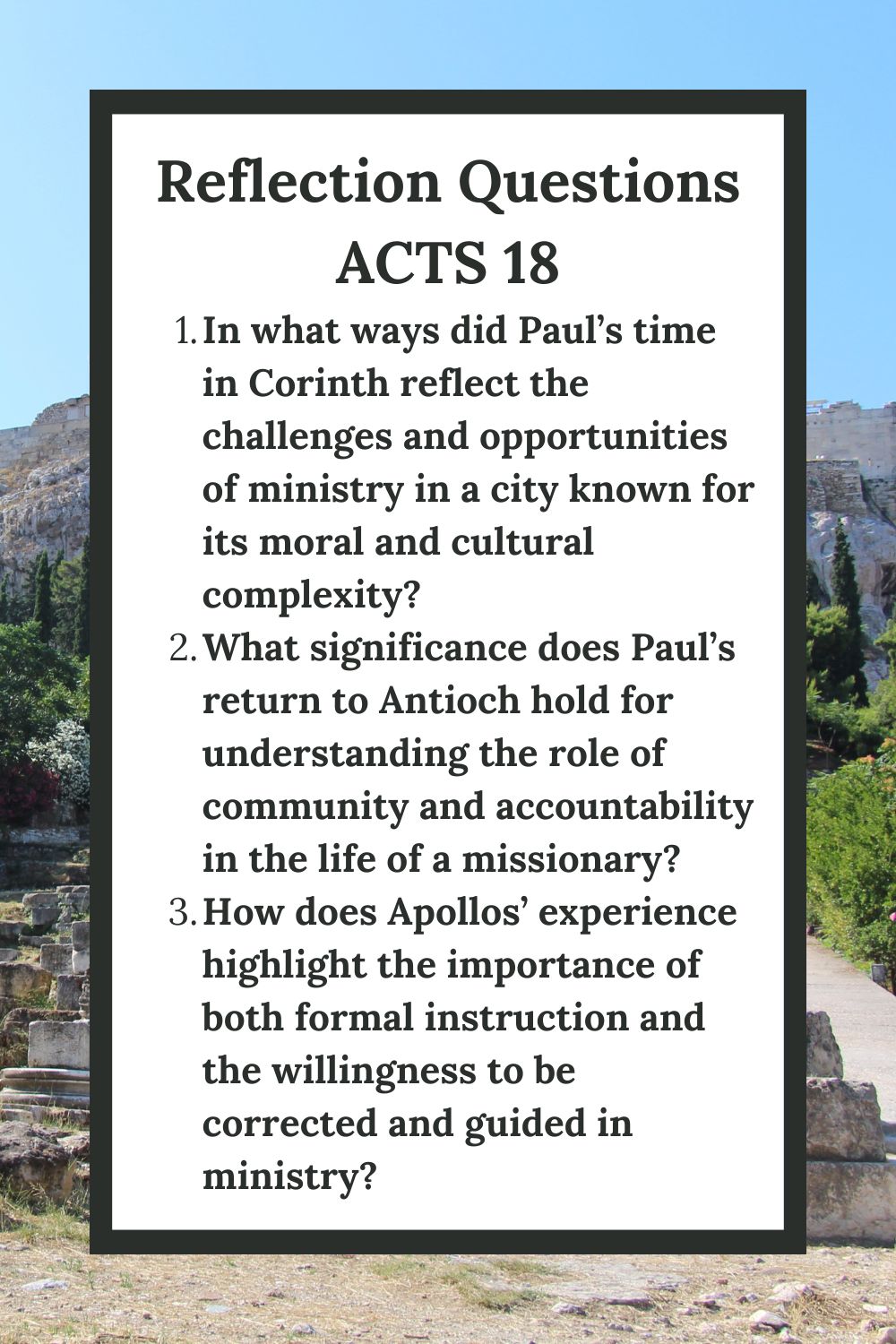
Acts 18: Paul in Corinth and Ephesus
- In what ways did Paul’s time in Corinth reflect the challenges and opportunities of ministry in a city known for its moral and cultural complexity?
- What significance does Paul’s return to Antioch hold for understanding the role of community and accountability in the life of a missionary?
- How does Apollos’ experience highlight the importance of both formal instruction and the willingness to be corrected and guided in ministry?
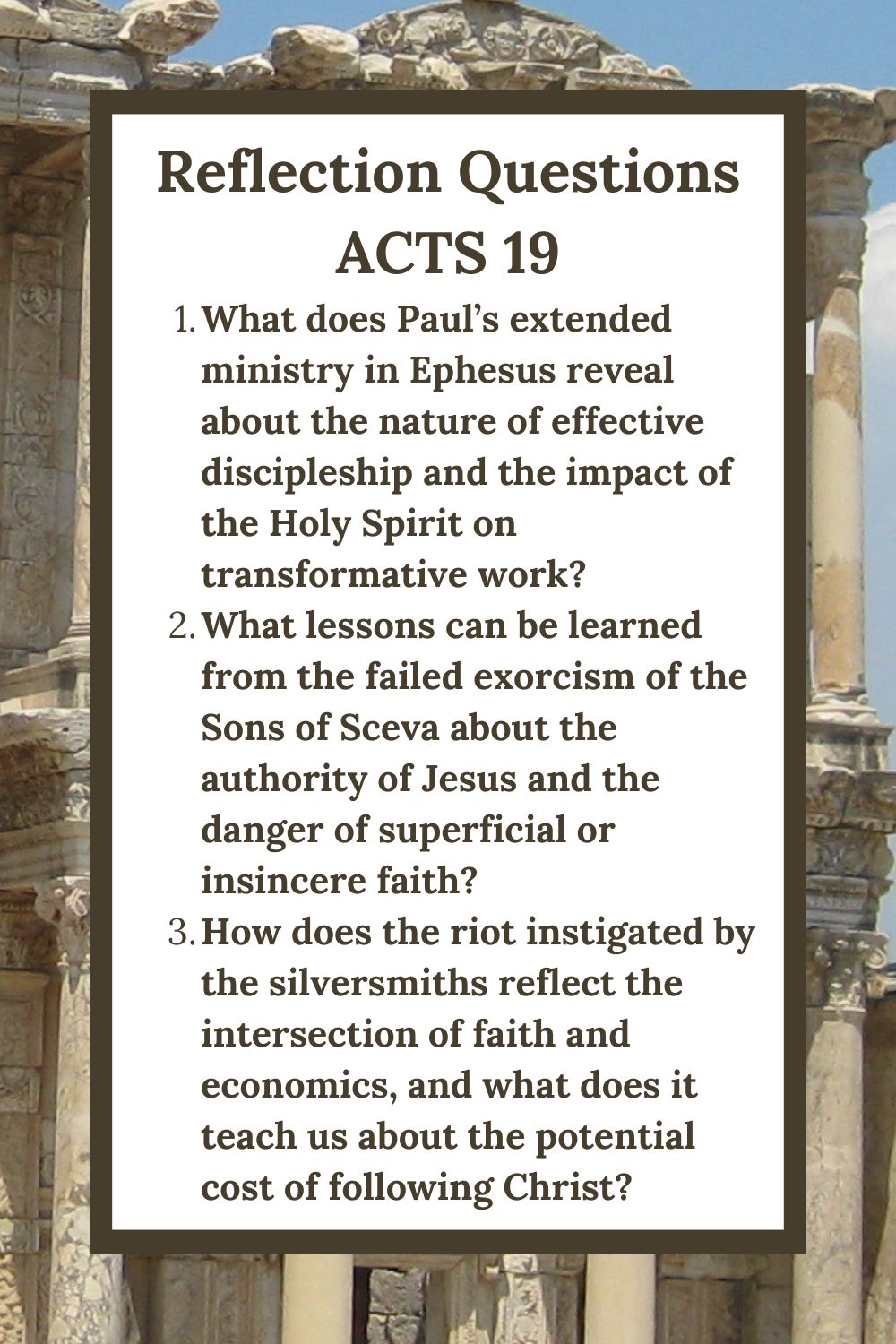
Acts 19: Paul’s Ministry in Ephesus
- What does Paul’s extended ministry in Ephesus reveal about the nature of effective discipleship and the impact of the Holy Spirit on transformative work?
- What lessons can be learned from the failed exorcism of the Sons of Sceva about the authority of Jesus and the danger of superficial or insincere faith?
- How does the riot instigated by the silversmiths reflect the intersection of faith and economics, and what does it teach us about the potential cost of following Christ?
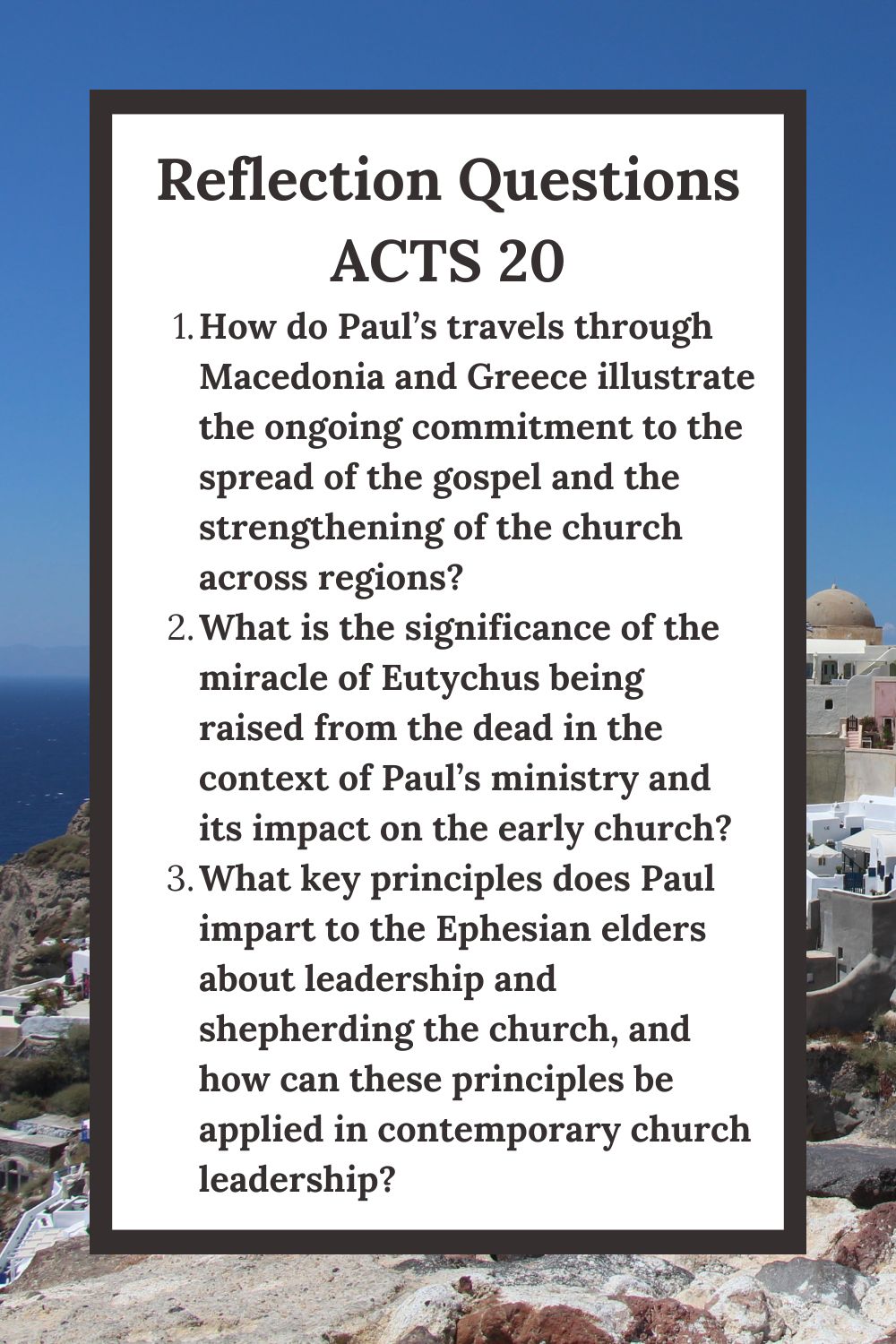
Acts 20: Paul’s Journey and Farewell
- How do Paul’s travels through Macedonia and Greece illustrate the ongoing commitment to the spread of the gospel and the strengthening of the church across regions?
- What is the significance of the miracle of Eutychus being raised from the dead in the context of Paul’s ministry and its impact on the early church?
- What key principles does Paul impart to the Ephesian elders about leadership and shepherding the church, and how can these principles be applied in contemporary church leadership?
Acts 21: Paul’s Arrival in Jerusalem and Arrest
- Why was Paul’s decision to go to Jerusalem despite the warnings of danger significant for his mission and the early church, and what can this teach us about discernment and obedience?
- What does Paul’s visit to James and the Jerusalem church reveal about the relationship between the Jewish and Gentile believers in the early church?
- How does Paul’s arrest in the temple illustrate the challenges of cultural and religious misunderstandings, and what can it teach us about enduring trials for the sake of the gospel?
- What is the significance of Paul’s address to the crowd following his arrest, and how does it reflect his commitment to sharing the gospel even in the face of persecution?
Reflective Prayer
Choose a few verses or topics from these chapters and pray over them. Consider using the ACTS method — Adoration, Confession, Thankfulness, Supplication:
- Adoration: Praise God. What specific characteristics of God do these readings bring to mind?
- Confession: Tell God that you are sorry for specific sins. What specific sins do these readings bring to mind?
- Thankfulness: Show gratitude towards God. What in these readings inspires gratitude?
- Supplication: Make requests for yourself and for others. What in these readings inspires a prayer?
If helpful, you can use a prayer journal template.
Other Reading Plans
Online Resources
Subscribe
If you enjoyed this post and wish to receive more Christian content, feel free to subscribe to my newsletters!
Related Resources
Visit the Joyful Moments in Christ homepage for all posts, or scroll through other blog posts related to reading the New Testament in a year:




English Standard Version (ESV): Unless otherwise noted, scripture quotations are from the ESV® Bible (The Holy Bible, English Standard Version®), © 2001 by Crossway, a publishing ministry of Good News Publishers. Used by permission. All rights reserved. The ESV text may not be quoted in any publication made available to the public by a Creative Commons license. The ESV may not be translated in whole or in part into any other language.


 Joyful Moments in Christ