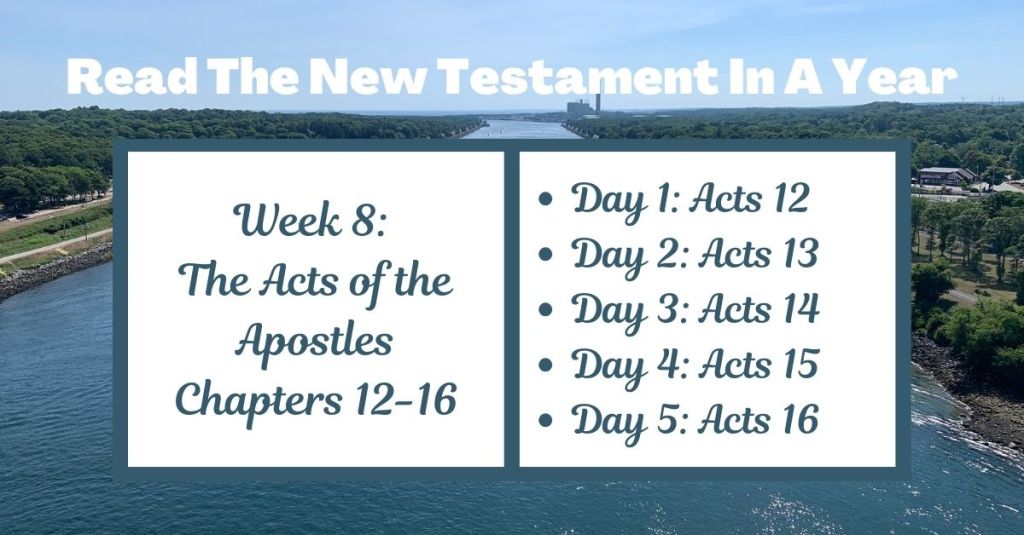
Week 8: Exploring Acts 12-16
In week 8 of our 1-year New Testament reading adventure, we will read the Acts of the Apostles chapters 12-16. We will begin with a dramatic account of a miraculous prison escape, highlighting the powerful interventions of God in the lives of His apostles. We will witness how divine rescue not only ensures the safety of Peter but also serves as a testimony to the unstoppable nature of the gospel.
And behold, an angel of the Lord stood next to him, and a light shone in the cell. He struck Peter on the side and woke him, saying, “Get up quickly.” And the chains fell off his hands. – Acts 12:7 (ESV)
Our reading will then shift to the challenges and triumphs experienced by early missionaries. We’ll follow the journeys of Paul and Barnabas as they confront opposition, spread the message of Christ across various regions, and establish new Christian communities. Their dedication and perseverance in the face of trials offer valuable lessons in faith and resilience.
While they were worshiping the Lord and fasting, the Holy Spirit said, “Set apart for me Barnabas and Saul for the work to which I have called them.” Then after fasting and praying they laid their hands on them and sent them off. – Acts 13:2-3 (ESV)
In addition, we will encounter significant doctrinal and personal disputes that arose within the early church. These conflicts, including debates over the necessity of following Jewish laws, provide insight into the struggles of defining Christian identity and unity. The decisions made during this period shape the trajectory of the church’s mission and its inclusivity.
And after Paul and Barnabas had no small dissension and debate with them, Paul and Barnabas and some of the others were appointed to go up to Jerusalem to the apostles and the elders about this question. – Acts 15:2 (ESV)
Additional Reading: More Blog Posts from Acts
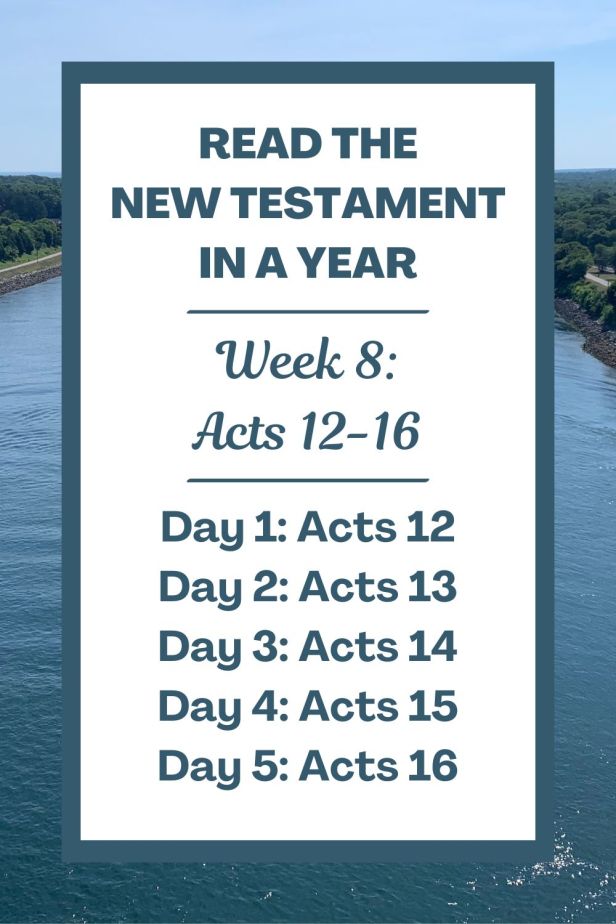
Week 8: New Testament Reading Assignment
Each week, we will read 5 chapters of the New Testament. Some people may prefer to read during the weekdays, while others might enjoy doing most of their reading on the weekends. Choose the method that works best for you!
Printable Resource:
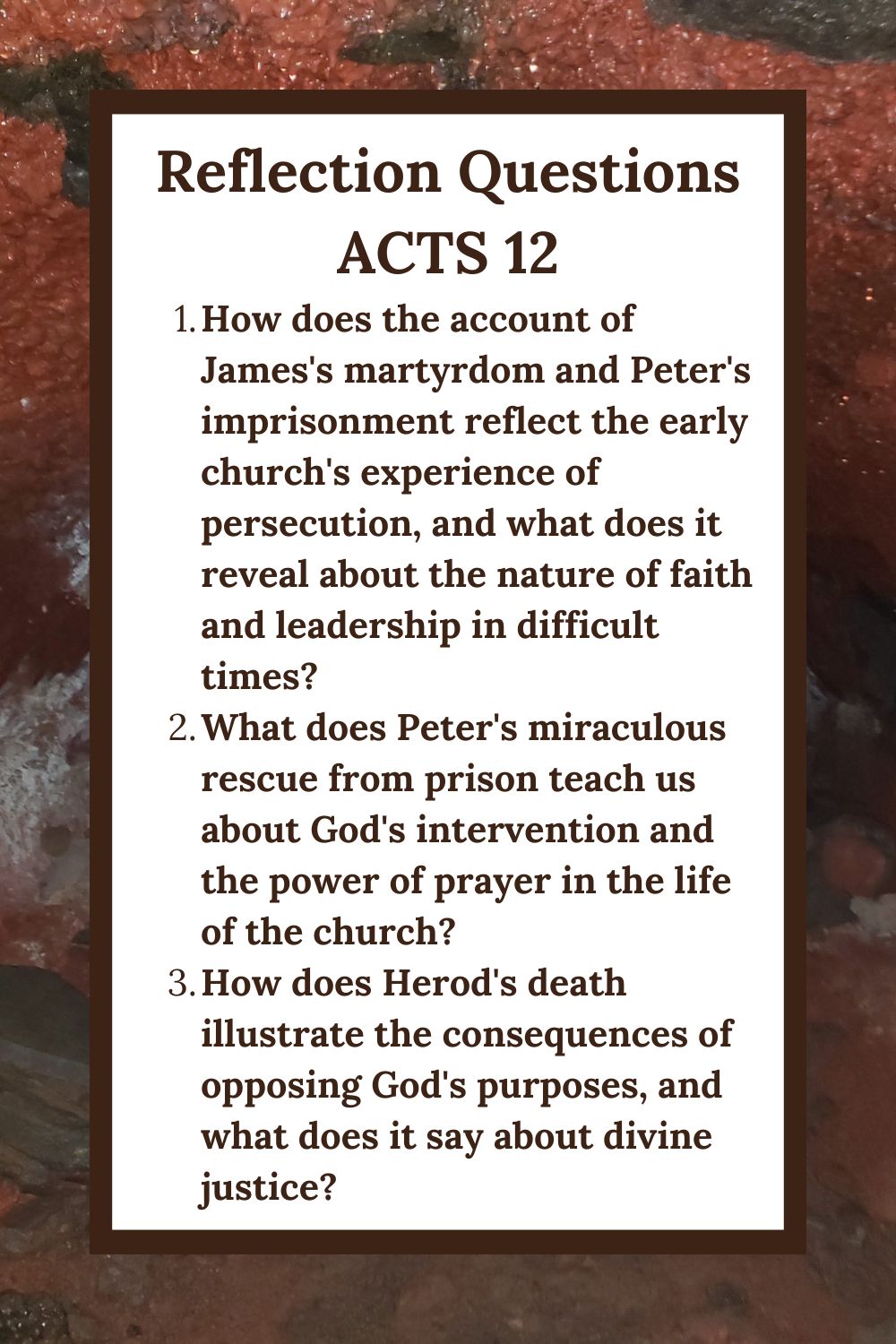
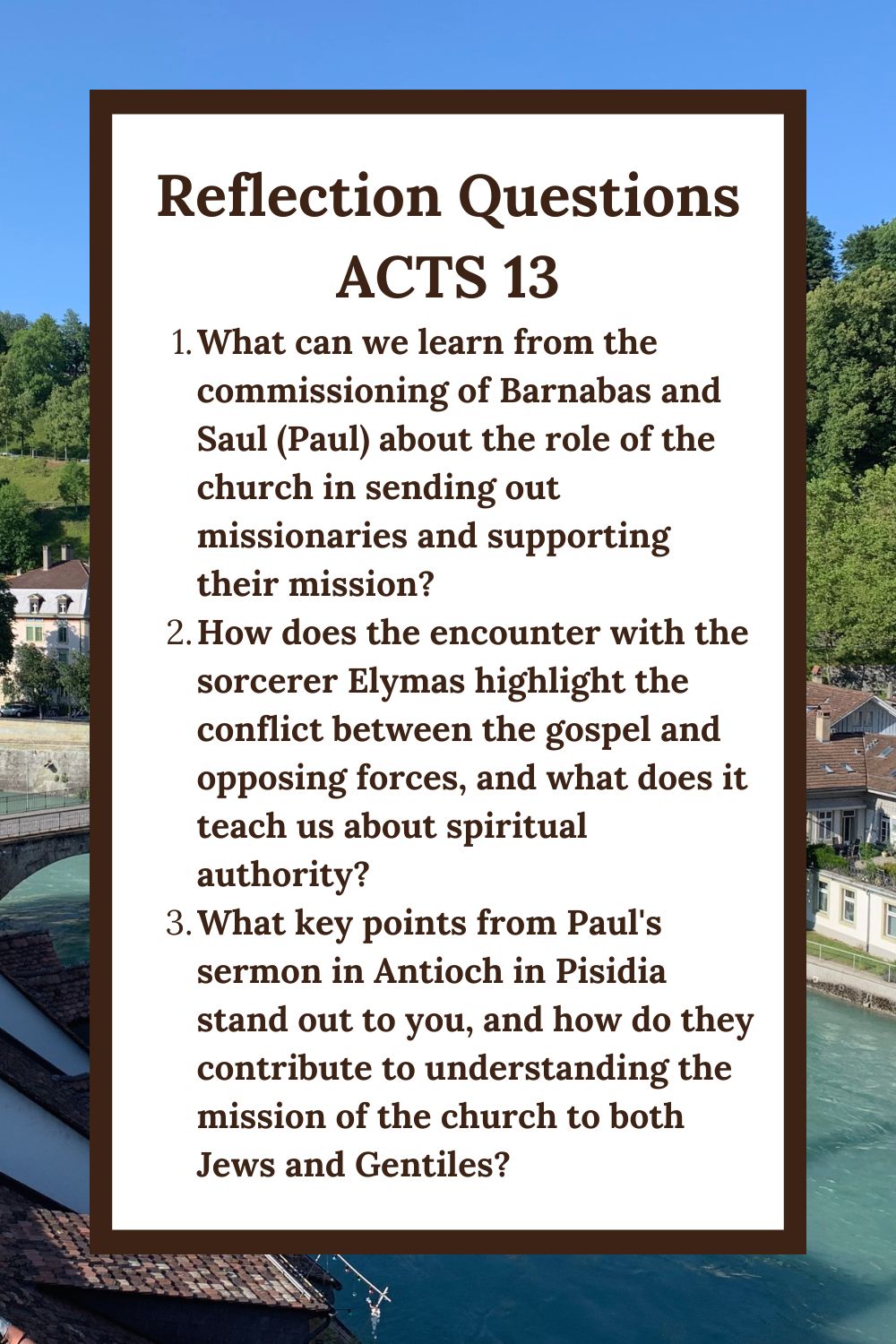
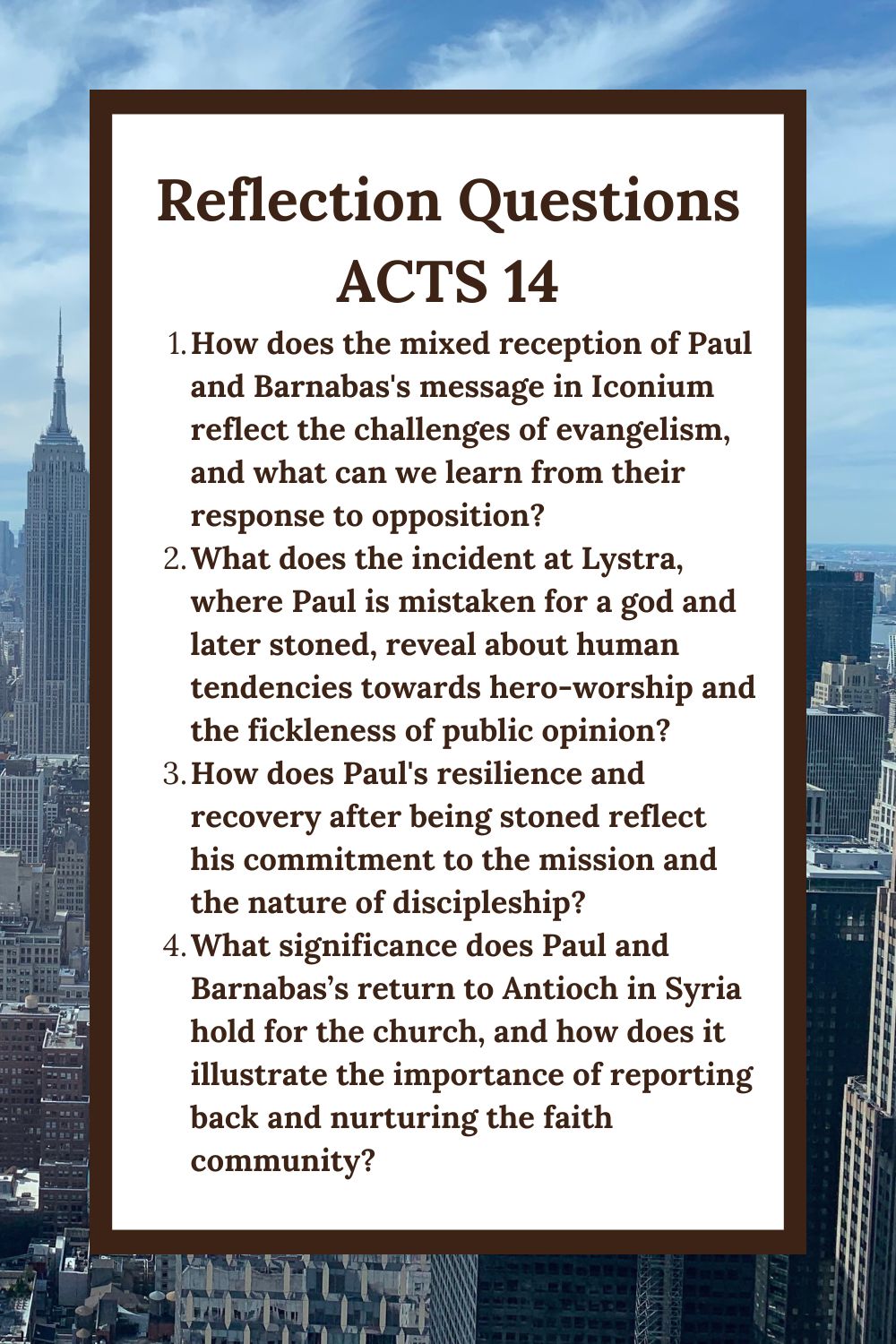
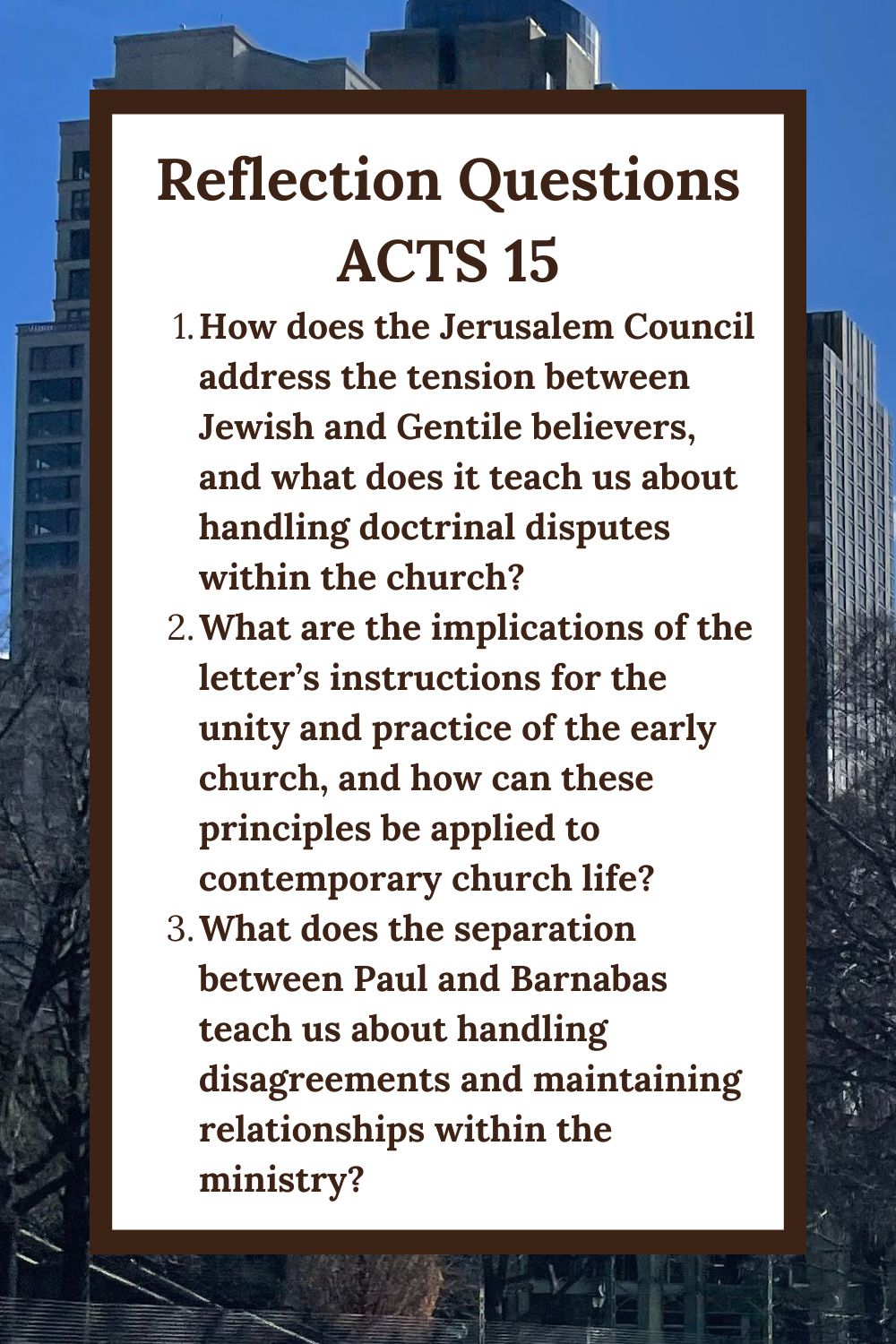
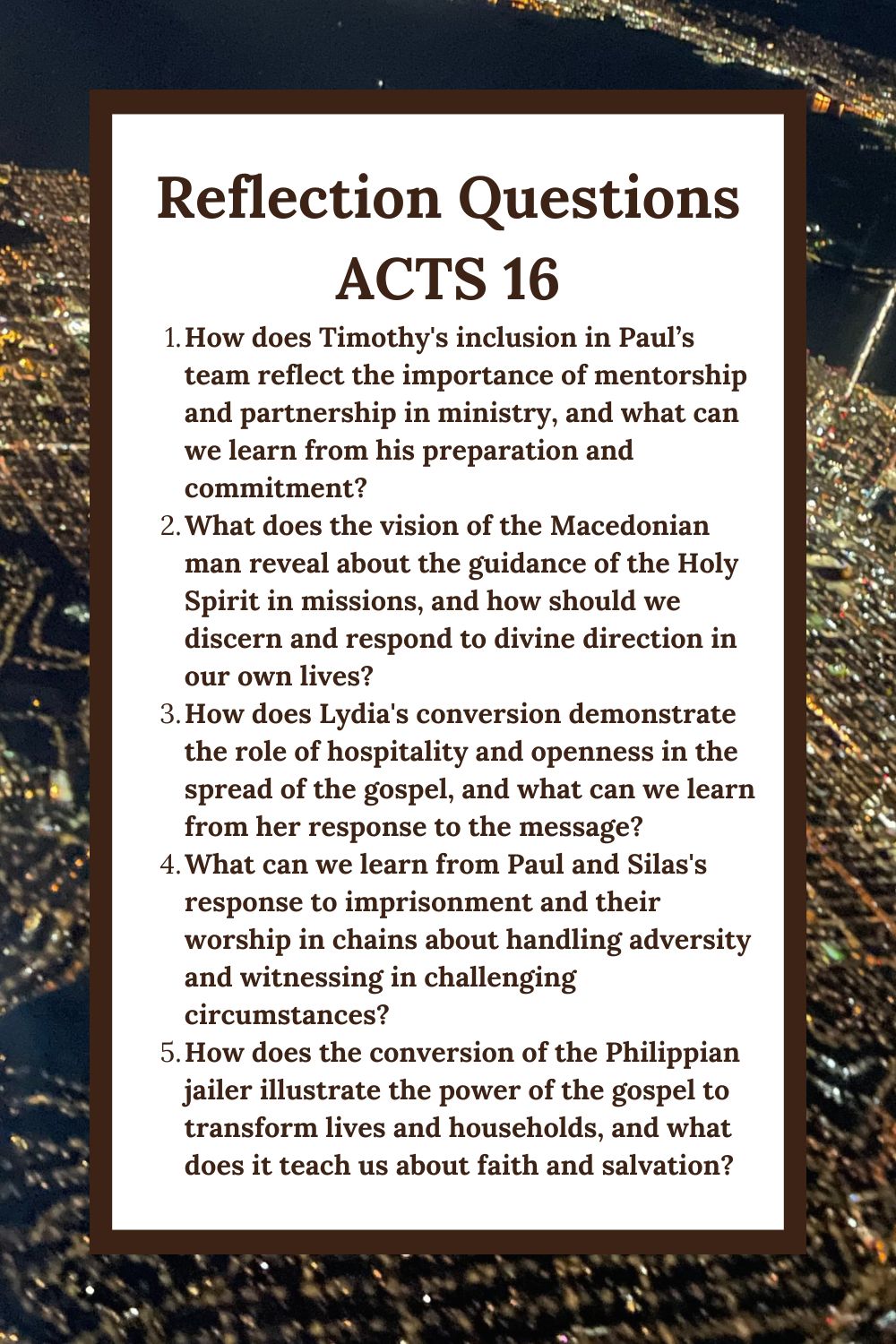
Week 8: Reflection Questions for Acts 12-16
Consider the following reflection questions:
Acts 12: Peter’s Miraculous Escape and Herod’s Death
- How does the account of James’s martyrdom and Peter’s imprisonment reflect the early church’s experience of persecution, and what does it reveal about the nature of faith and leadership in difficult times?
- What does Peter’s miraculous rescue from prison teach us about God’s intervention and the power of prayer in the life of the church?
- How does Herod’s death illustrate the consequences of opposing God’s purposes, and what does it say about divine justice?
Acts 13: The First Missionary Journey Begins
- What can we learn from the commissioning of Barnabas and Saul (Paul) about the role of the church in sending out missionaries and supporting their mission?
- How does the encounter with the sorcerer Elymas highlight the conflict between the gospel and opposing forces, and what does it teach us about spiritual authority?
- What key points from Paul’s sermon in Antioch in Pisidia stand out to you, and how do they contribute to understanding the mission of the church to both Jews and Gentiles?
Acts 14: Challenges and Triumphs in the Mission Field
- How does the mixed reception of Paul and Barnabas’s message in Iconium reflect the challenges of evangelism, and what can we learn from their response to opposition?
- What does the incident at Lystra, where Paul is mistaken for a god and later stoned, reveal about human tendencies towards hero-worship and the fickleness of public opinion?
- How does Paul’s resilience and recovery after being stoned reflect his commitment to the mission and the nature of discipleship?
- What significance does Paul and Barnabas’s return to Antioch in Syria hold for the church, and how does it illustrate the importance of reporting back and nurturing the faith community?
Acts 15: The Jerusalem Council and Its Impact
- How does the Jerusalem Council address the tension between Jewish and Gentile believers, and what does it teach us about handling doctrinal disputes within the church?
- What are the implications of the letter’s instructions for the unity and practice of the early church, and how can these principles be applied to contemporary church life?
- What does the separation between Paul and Barnabas teach us about handling disagreements and maintaining relationships within the ministry?
Acts 16: The Macedonian Call and Its Fruits
- How does Timothy’s inclusion in Paul’s team reflect the importance of mentorship and partnership in ministry, and what can we learn from his preparation and commitment?
- What does the vision of the Macedonian man reveal about the guidance of the Holy Spirit in missions, and how should we discern and respond to divine direction in our own lives?
- How does Lydia’s conversion demonstrate the role of hospitality and openness in the spread of the gospel, and what can we learn from her response to the message?
- What can we learn from Paul and Silas’s response to imprisonment and their worship in chains about handling adversity and witnessing in challenging circumstances?
- How does the conversion of the Philippian jailer illustrate the power of the gospel to transform lives and households, and what does it teach us about faith and salvation?
Reflective Prayer
Choose a few verses or topics from these chapters and pray over them. Consider using the ACTS method — Adoration, Confession, Thankfulness, Supplication:
- Adoration: Praise God. What specific characteristics of God do these readings bring to mind?
- Confession: Tell God that you are sorry for specific sins. What specific sins do these readings bring to mind?
- Thankfulness: Show gratitude towards God. What in these readings inspires gratitude?
- Supplication: Make requests for yourself and for others. What in these readings inspires a prayer?
If helpful, you can use a prayer journal template.
Other Reading Plans
Online Resources
Subscribe
If you enjoyed this post and wish to receive more Christian content, feel free to subscribe to my newsletters!
Related Resources
Visit the Joyful Moments in Christ homepage for all posts, or scroll through other blog posts related to reading the New Testament in a year:




English Standard Version (ESV): Unless otherwise noted, scripture quotations are from the ESV® Bible (The Holy Bible, English Standard Version®), © 2001 by Crossway, a publishing ministry of Good News Publishers. Used by permission. All rights reserved. The ESV text may not be quoted in any publication made available to the public by a Creative Commons license. The ESV may not be translated in whole or in part into any other language.
 Joyful Moments in Christ