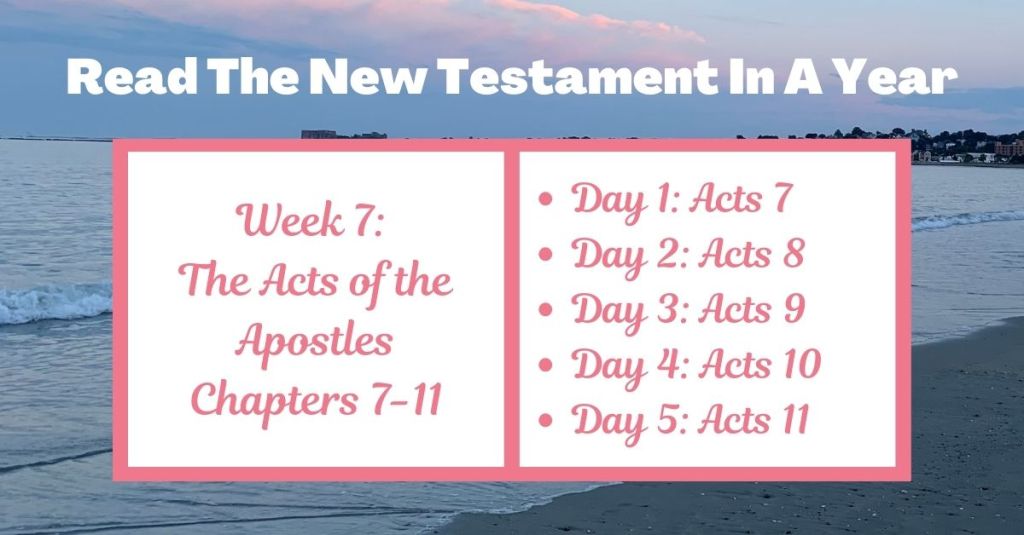
Week 7: Exploring Acts 7-11
In week 7 of our journey to read the New Testament in a year, we will explore the Acts of the Apostles chapters 7-11. This section covers significant events in the early church, beginning with the martyrdom of Stephen and the subsequent persecution of Christians. These early trials set the stage for the spread of Christianity far beyond Jerusalem.
But they cried out with a loud voice and stopped their ears and rushed together at him. Then they cast him out of the city and stoned him. And the witnesses laid down their garments at the feet of a young man named Saul. – Acts 7:57-58 (ESV)
We will also witness Saul’s (Paul’s) dramatic conversion, which marks a profound transformation from a fervent persecutor to a passionate advocate for Christ. His story illustrates the powerful and transformative impact of a personal encounter with Jesus.
For some days he was with the disciples at Damascus. And immediately he proclaimed Jesus in the synagogues, saying, “He is the Son of God.” And all who heard him were amazed and said, “Is not this the man who made havoc in Jerusalem of those who called upon this name? And has he not come here for this purpose, to bring them bound before the chief priests?” – Acts 9:19b-21 (ESV)
The church’s remarkable expansion, as it crosses cultural and ethnic boundaries, marks a pivotal period of growth and transformation for the early believers. This period of growth illustrates how the church adapts and evolves in its mission to reach diverse populations.
When they heard these things they fell silent. And they glorified God, saying, “Then to the Gentiles also God has granted repentance that leads to life.” – Acts 11:19 (ESV)
Additional Reading: More blog posts from Acts 7, Acts 8, Acts 9, Acts 10, and Acts 11
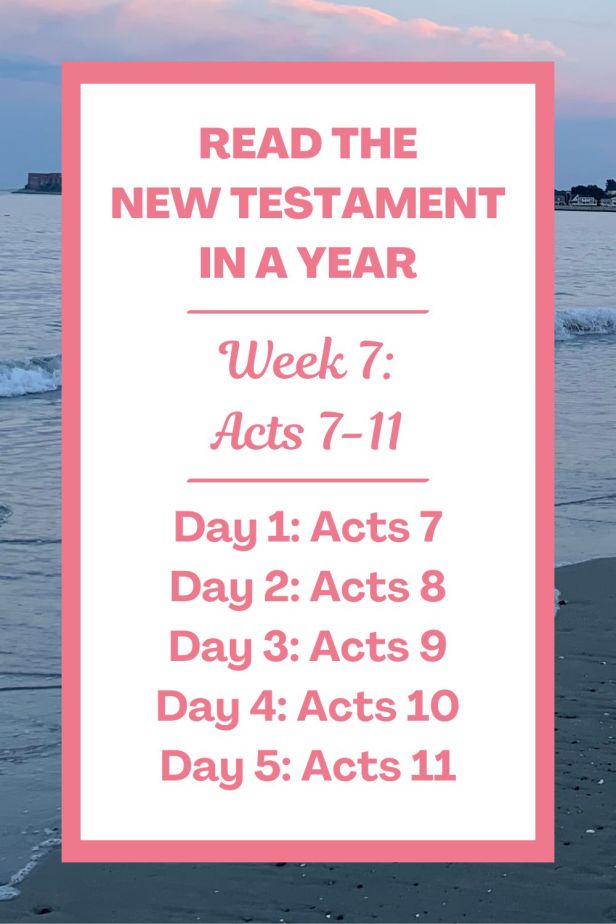
Week 7: New Testament Reading Assignment
Each week, we will read 5 chapters of the New Testament. Some people may prefer to read during the weekdays, while others might enjoy doing most of their reading on the weekends. Choose the method that works best for you!
Printable Resource:
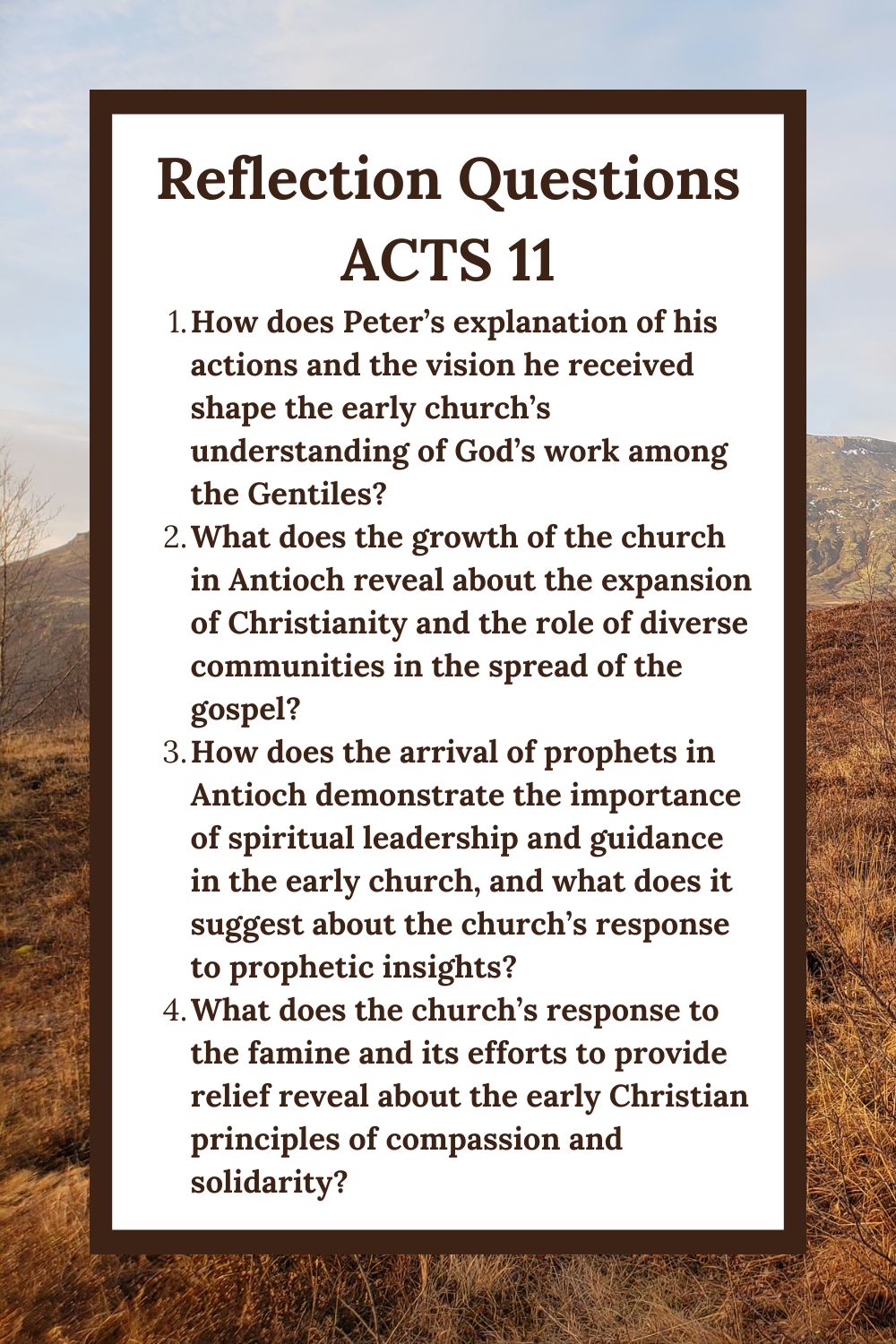
Week 7: Reflection Questions for Acts 7-11
Consider the following reflection questions:
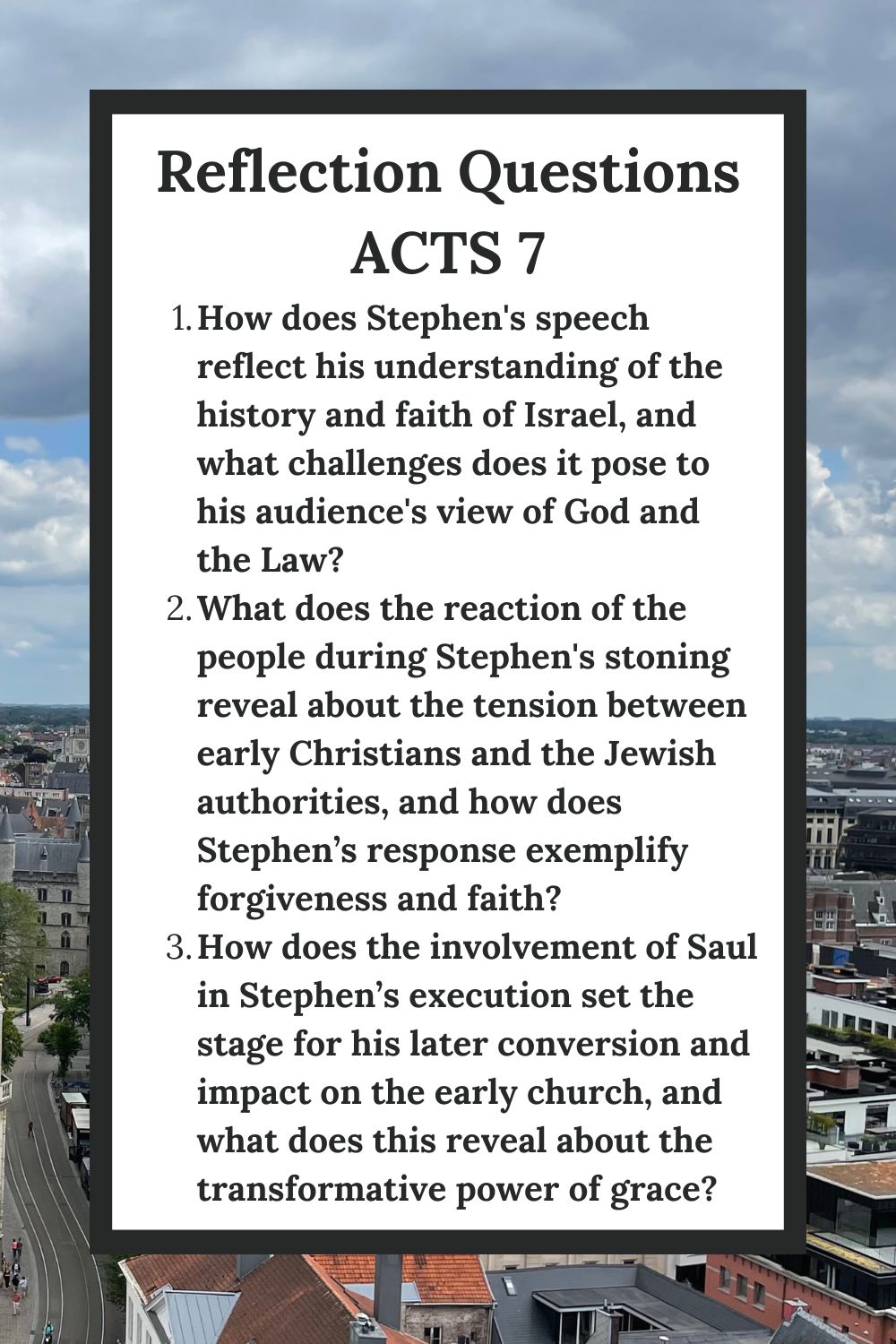
Acts Chapter 7: The Martyrdom of Stephen
- How does Stephen’s speech reflect his understanding of the history and faith of Israel, and what challenges does it pose to his audience’s view of God and the Law?
- What does the reaction of the people during Stephen’s stoning reveal about the tension between early Christians and the Jewish authorities, and how does Stephen’s response exemplify forgiveness and faith?
- How does the involvement of Saul in Stephen’s execution set the stage for his later conversion and impact on the early church, and what does this reveal about the transformative power of grace?
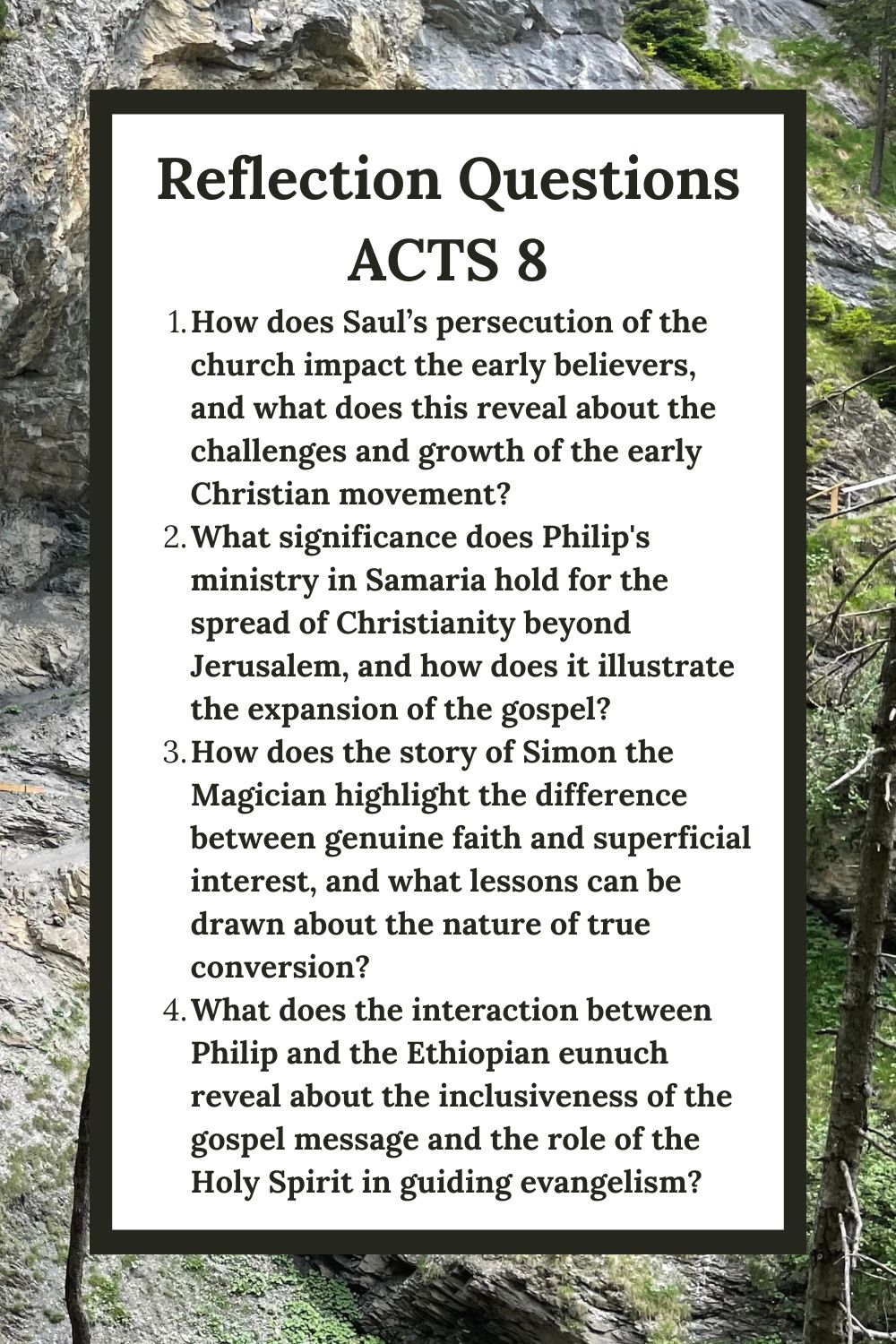
Acts Chapter 8: The Expansion of the Gospel
- How does Saul’s persecution of the church impact the early believers, and what does this reveal about the challenges and growth of the early Christian movement?
- What significance does Philip’s ministry in Samaria hold for the spread of Christianity beyond Jerusalem, and how does it illustrate the expansion of the gospel?
- How does the story of Simon the Magician highlight the difference between genuine faith and superficial interest, and what lessons can be drawn about the nature of true conversion?
- What does the interaction between Philip and the Ethiopian eunuch reveal about the inclusiveness of the gospel message and the role of the Holy Spirit in guiding evangelism?
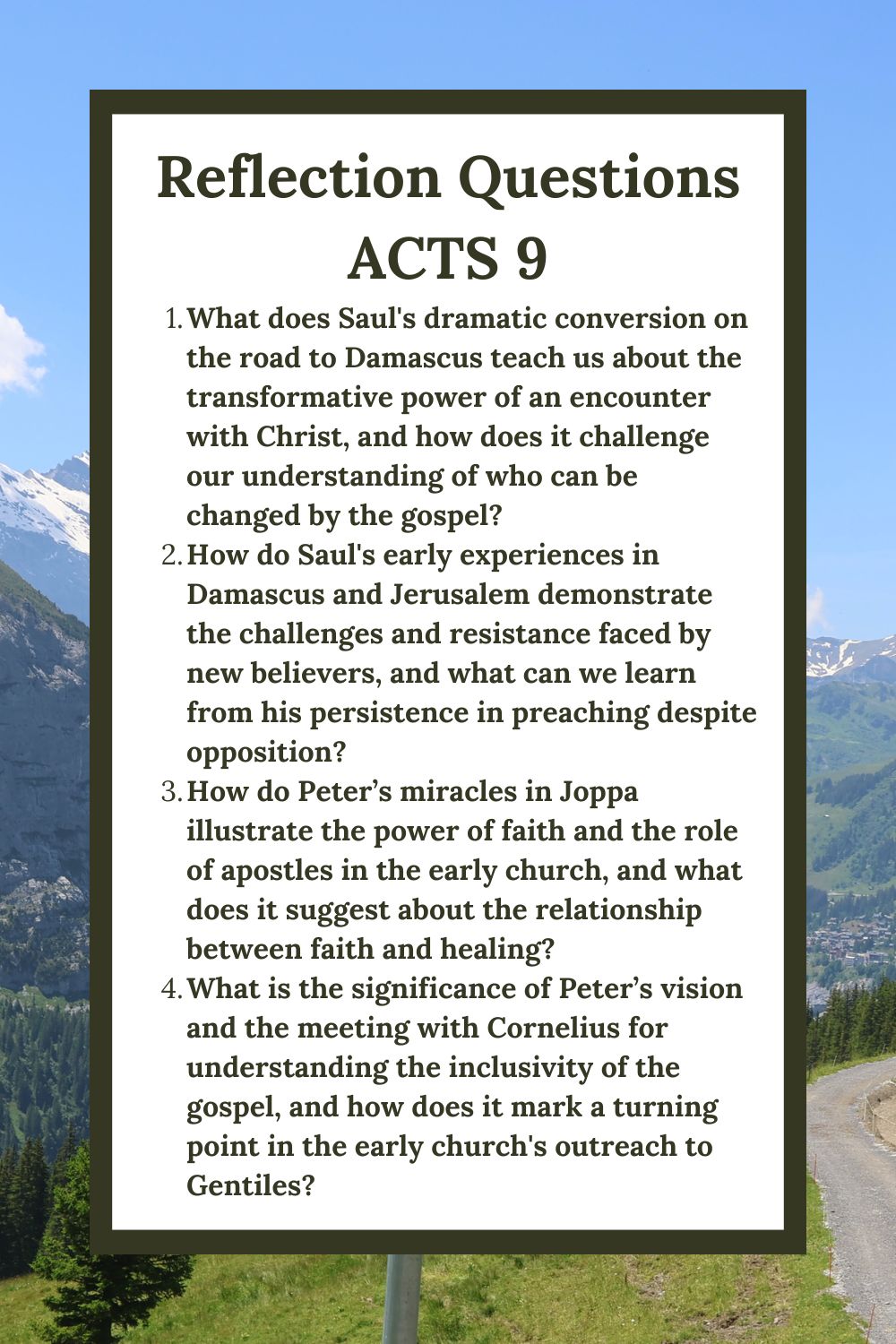
Acts Chapter 9: Saul’s Conversion and Peter’s Miracles
- What does Saul’s dramatic conversion on the road to Damascus teach us about the transformative power of an encounter with Christ, and how does it challenge our understanding of who can be changed by the gospel?
- How do Saul’s early experiences in Damascus and Jerusalem demonstrate the challenges and resistance faced by new believers, and what can we learn from his persistence in preaching despite opposition?
- How do Peter’s miracles in Joppa illustrate the power of faith and the role of apostles in the early church, and what does it suggest about the relationship between faith and healing?
- What is the significance of Peter’s vision and the meeting with Cornelius for understanding the inclusivity of the gospel, and how does it mark a turning point in the early church’s outreach to Gentiles?
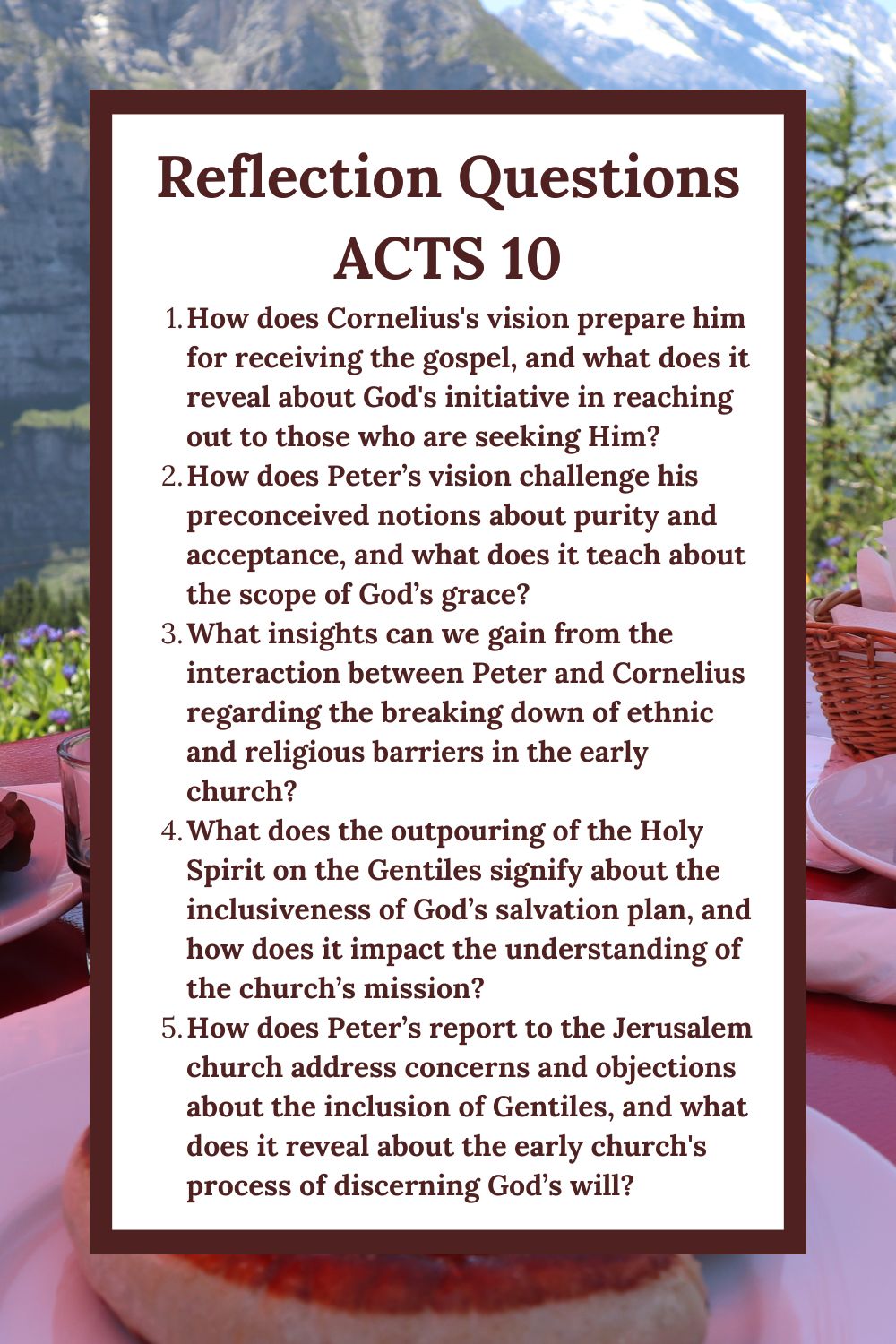
Acts Chapter 10: The Inclusion of the Gentiles
- How does Cornelius’s vision prepare him for receiving the gospel, and what does it reveal about God’s initiative in reaching out to those who are seeking Him?
- How does Peter’s vision challenge his preconceived notions about purity and acceptance, and what does it teach about the scope of God’s grace?
- What insights can we gain from the interaction between Peter and Cornelius regarding the breaking down of ethnic and religious barriers in the early church?
- What does the outpouring of the Holy Spirit on the Gentiles signify about the inclusiveness of God’s salvation plan, and how does it impact the understanding of the church’s mission?
- How does Peter’s report to the Jerusalem church address concerns and objections about the inclusion of Gentiles, and what does it reveal about the early church’s process of discerning God’s will?
Acts Chapter 11: Growth and Guidance in the Early Church
- How does Peter’s explanation of his actions and the vision he received shape the early church’s understanding of God’s work among the Gentiles?
- What does the growth of the church in Antioch reveal about the expansion of Christianity and the role of diverse communities in the spread of the gospel?
- How does the arrival of prophets in Antioch demonstrate the importance of spiritual leadership and guidance in the early church, and what does it suggest about the church’s response to prophetic insights?
- What does the church’s response to the famine and its efforts to provide relief reveal about the early Christian principles of compassion and solidarity?
Reflective Prayer
Choose a few verses or topics from these chapters and pray over them. Consider using the ACTS method — Adoration, Confession, Thankfulness, Supplication:
- Adoration: Praise God. What specific characteristics of God do these readings bring to mind?
- Confession: Tell God that you are sorry for specific sins. What specific sins do these readings bring to mind?
- Thankfulness: Show gratitude towards God. What in these readings inspires gratitude?
- Supplication: Make requests for yourself and for others. What in these readings inspires a prayer?
If helpful, you can use a prayer journal template.
Other Reading Plans
Online Resources
Subscribe
If you enjoyed this post and wish to receive more Christian content, feel free to subscribe to my newsletters!
Related Resources
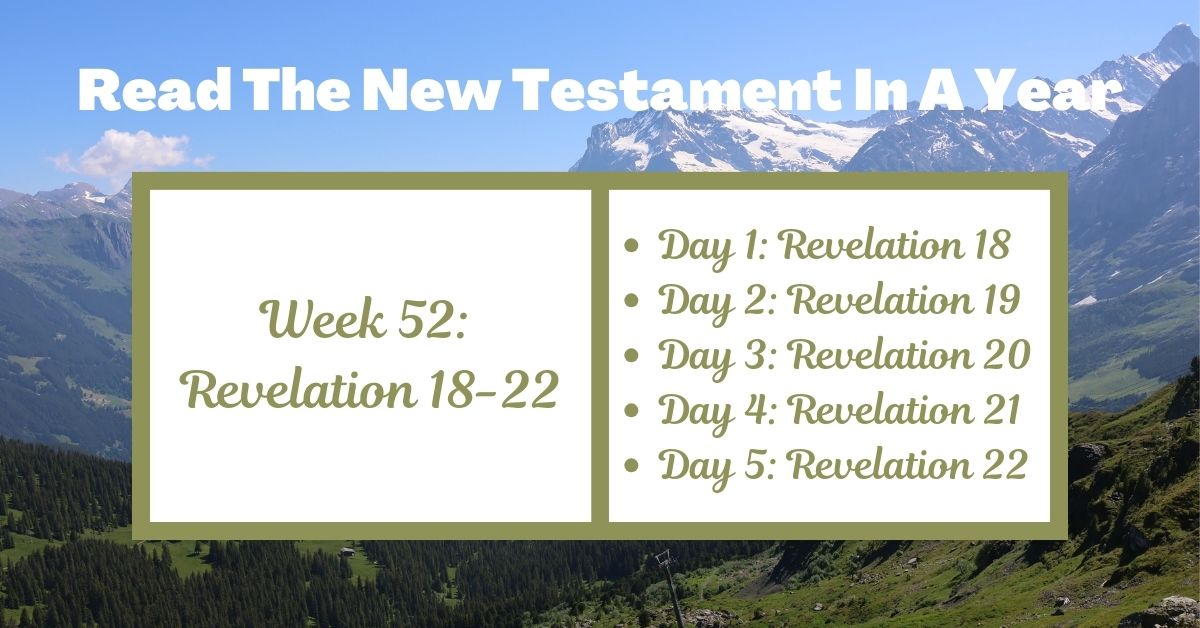
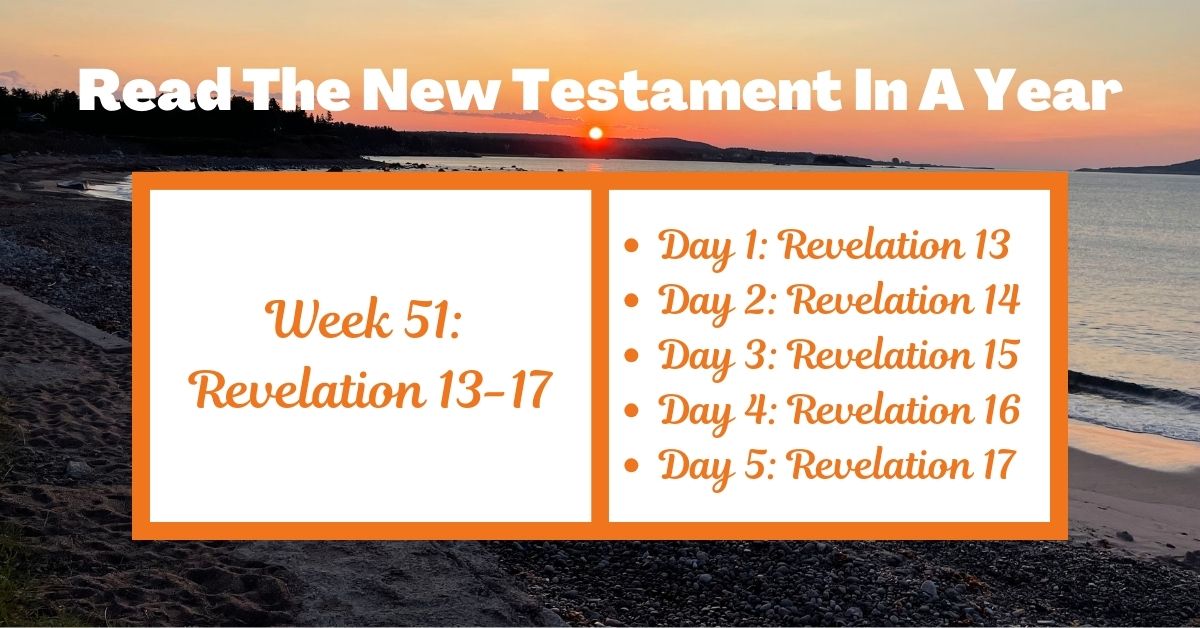
Visit the Joyful Moments in Christ homepage for all posts, or scroll through other blog posts related to reading the New Testament in a year:




English Standard Version (ESV): Unless otherwise noted, scripture quotations are from the ESV® Bible (The Holy Bible, English Standard Version®), © 2001 by Crossway, a publishing ministry of Good News Publishers. Used by permission. All rights reserved. The ESV text may not be quoted in any publication made available to the public by a Creative Commons license. The ESV may not be translated in whole or in part into any other language.

 Joyful Moments in Christ