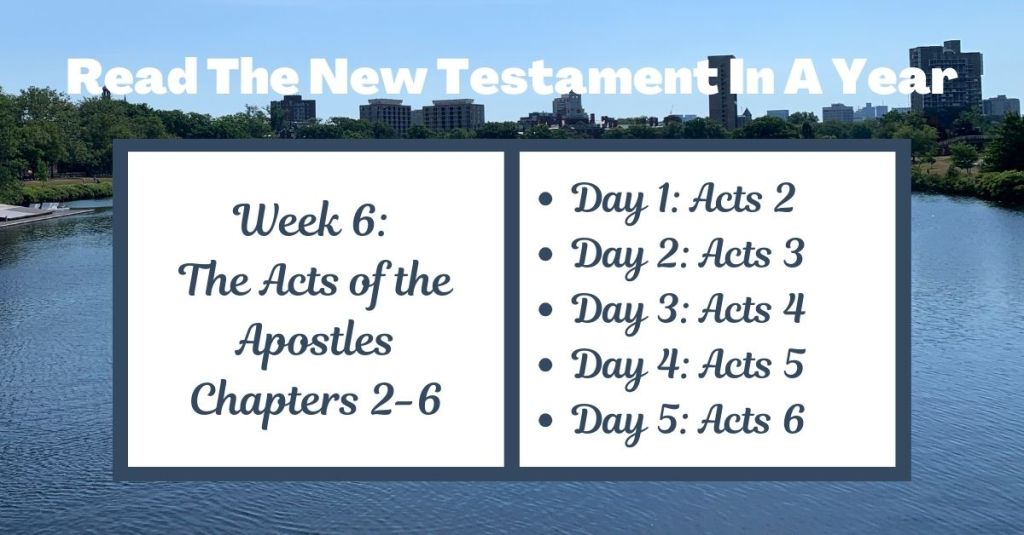
Week 6: Exploring Acts 2-6
In our sixth week of our quest to read the New Testament in a year, we will turn to Acts chapters 2-6. These chapters reveal the powerful events that shaped the early church: from the dramatic Day of Pentecost and the birth of the church to the apostles’ boldness and miraculous acts. The rapid growth and challenges faced by the early believers highlight both the dynamic nature of their faith and the foundational principles they established.
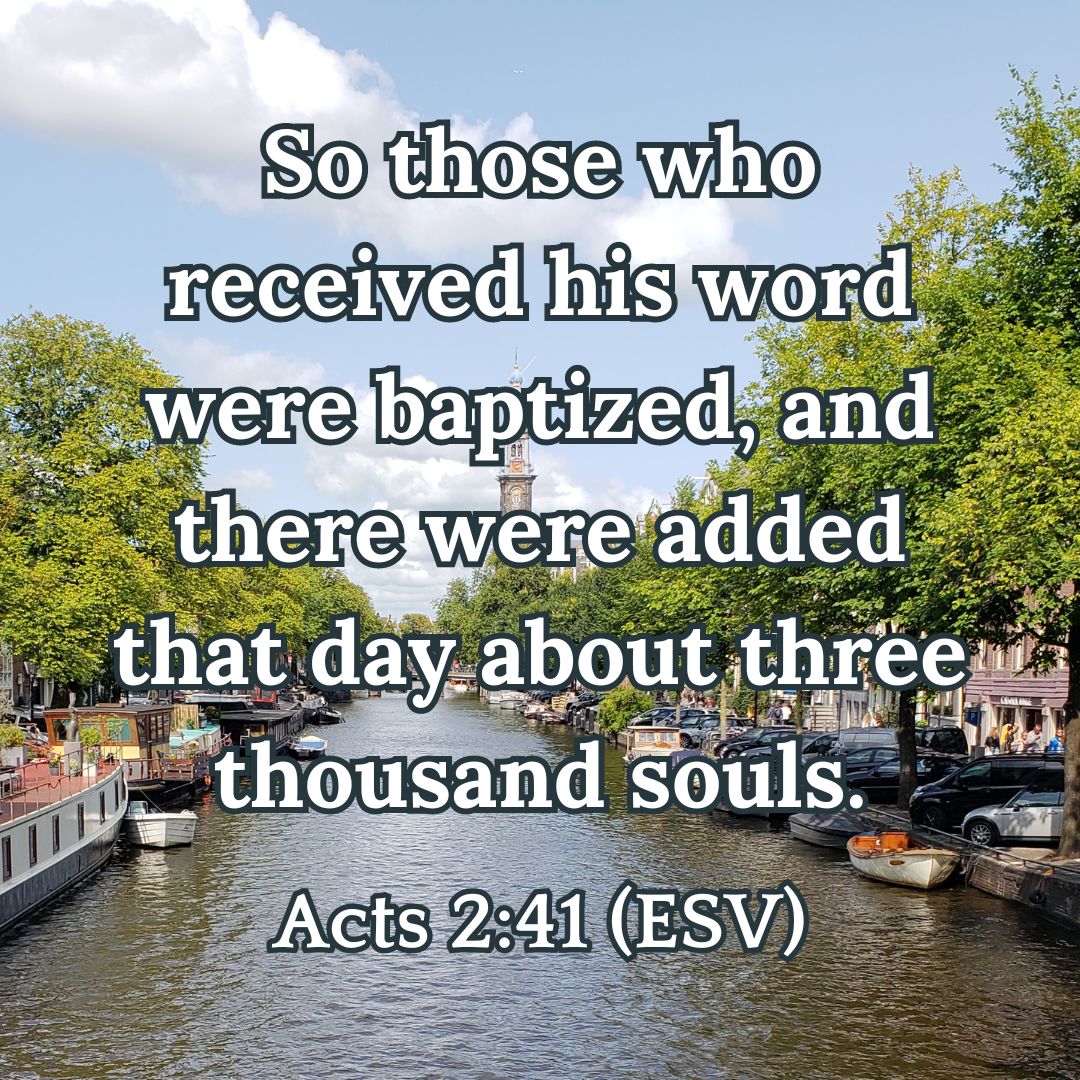
So those who received his word were baptized, and there were added that day about three thousand souls. – Acts 2:41 (ESV)
We also observe the early church’s experiences with persecution, the value of a strong community, and the serious consequences of dishonesty, as demonstrated by the story of Ananias and Sapphira. These experiences illustrate the tension between maintaining unity and dealing with internal conflicts, offering insights into the struggles and strengths of the early Christian community.
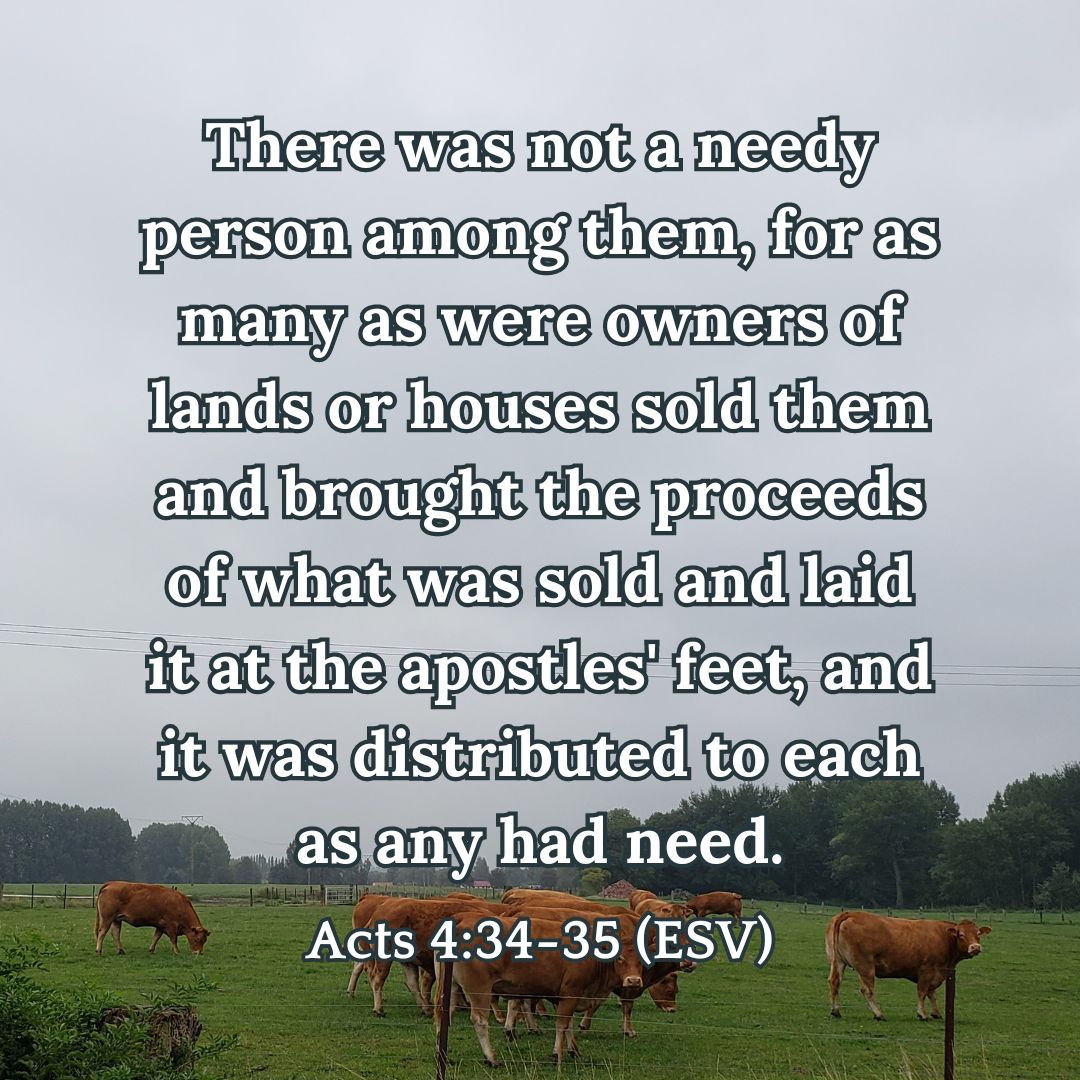
There was not a needy person among them, for as many as were owners of lands or houses sold them and brought the proceeds of what was sold and laid it at the apostles’ feet, and it was distributed to each as any had need. – Acts 4:34-35 (ESV)
Additionally, we witness the appointment of the first deacons to address organizational needs and begin the account of Stephen, whose role and subsequent trial play a crucial part in the early Christian narrative. Stephen’s story introduces themes of sacrificial leadership and serves as a prelude to the broader conflicts that the church will face as it expands.
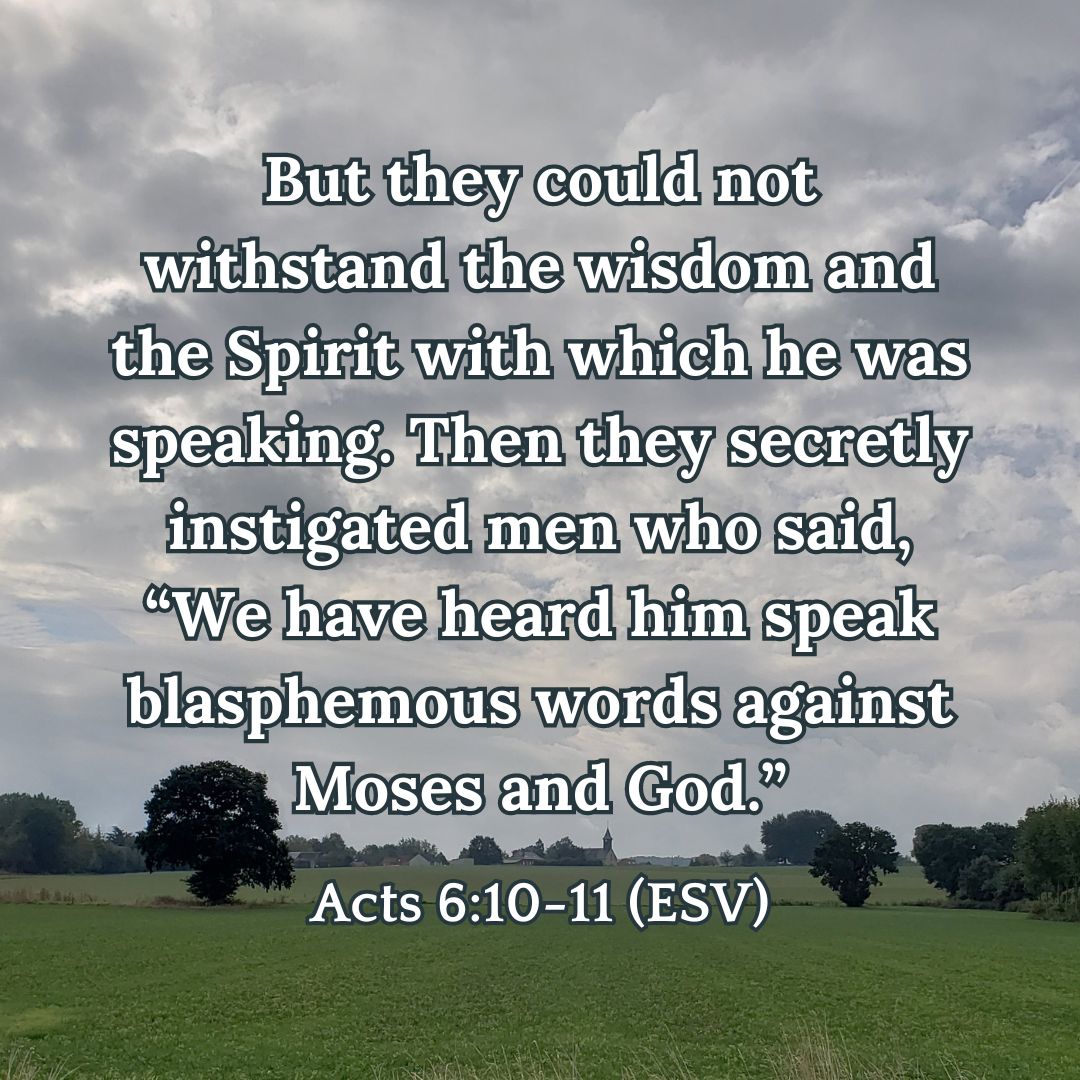
But they could not withstand the wisdom and the Spirit with which he was speaking. Then they secretly instigated men who said, “We have heard him speak blasphemous words against Moses and God.” – Acts 6:10-11 (ESV)
Additional Reading: More blog posts from Acts 2, Acts 3, Acts 4, Acts 5, and Acts 6.
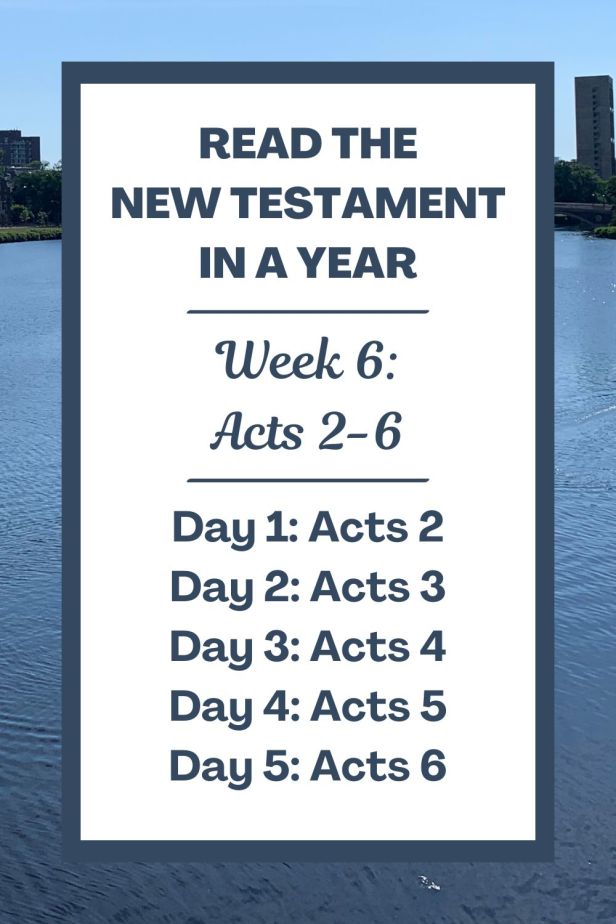
Week 6: New Testament Reading Assignment
Each week, we will read 5 chapters of the New Testament. Some people may prefer to read during the weekdays, while others might enjoy doing most of their reading on the weekends. Choose the method that works best for you!
Printable Resource:
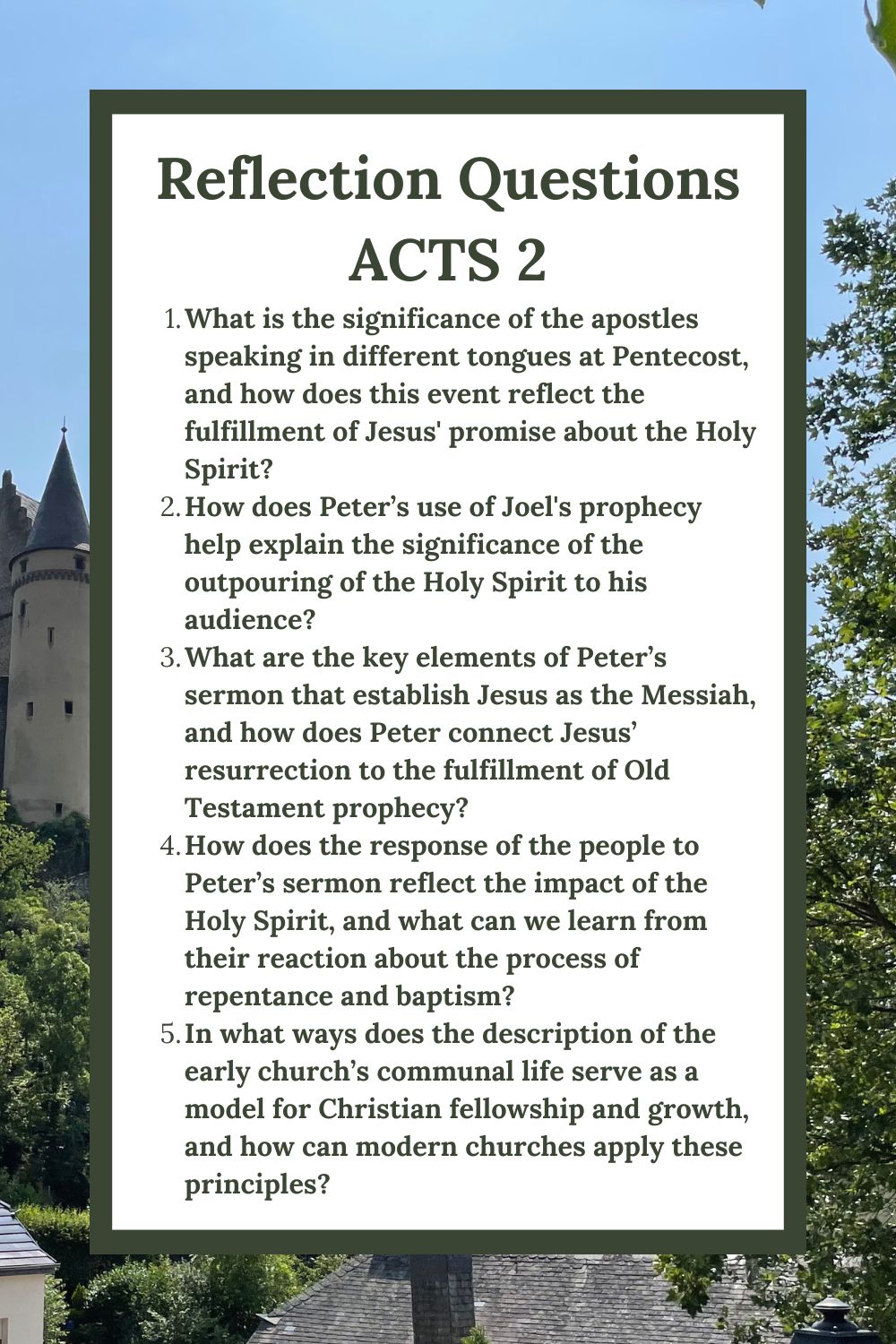
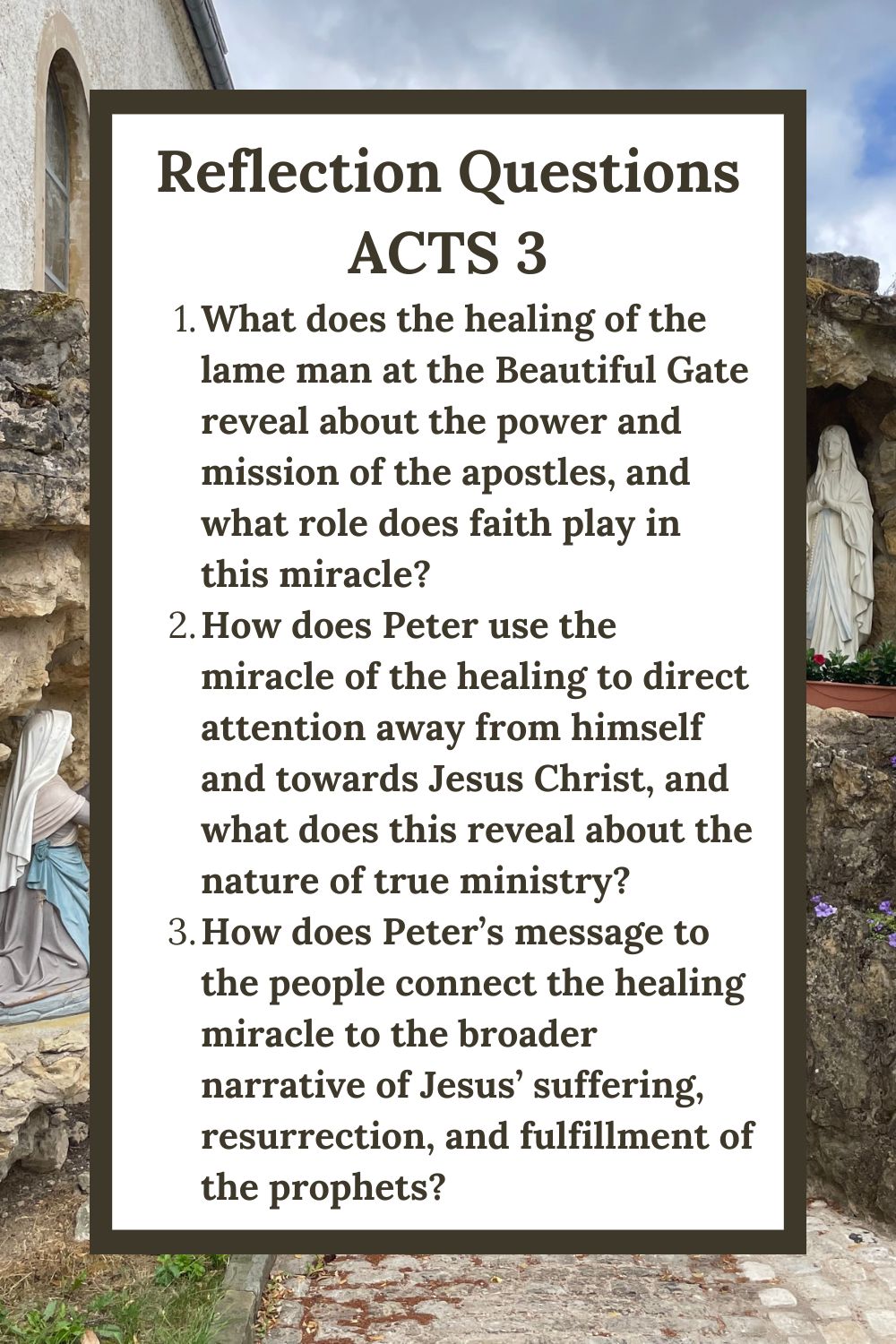
Week 6: Reflection Questions for Acts 2-6
Consider the following reflection questions:
Acts 2: The Day of Pentecost and the Birth of the Church
- What is the significance of the apostles speaking in different tongues at Pentecost, and how does this event reflect the fulfillment of Jesus’ promise about the Holy Spirit?
- How does Peter’s use of Joel’s prophecy help explain the significance of the outpouring of the Holy Spirit to his audience?
- What are the key elements of Peter’s sermon that establish Jesus as the Messiah, and how does Peter connect Jesus’ resurrection to the fulfillment of Old Testament prophecy?
- How does the response of the people to Peter’s sermon reflect the impact of the Holy Spirit, and what can we learn from their reaction about the process of repentance and baptism?
- In what ways does the description of the early church’s communal life serve as a model for Christian fellowship and growth, and how can modern churches apply these principles?
Acts 3: Healing and Preaching in the Temple
- What does the healing of the lame man at the Beautiful Gate reveal about the power and mission of the apostles, and what role does faith play in this miracle?
- How does Peter use the miracle of the healing to direct attention away from himself and towards Jesus Christ, and what does this reveal about the nature of true ministry?
- How does Peter’s message to the people connect the healing miracle to the broader narrative of Jesus’ suffering, resurrection, and fulfillment of the prophets?
Acts 4: The First Persecution and the Boldness of the Apostles
- What is the significance of Peter’s declaration that salvation is found in no one else but Jesus, especially in the context of the Jewish leaders’ opposition?
- How does the boldness of Peter and John in the face of persecution exemplify their commitment to their mission, and what can we learn about courage in faith from their example?
- How does the early church’s prayer for boldness in the face of persecution reflect their understanding of God’s sovereignty and their dependence on His power?
- What does the communal sharing of possessions among believers demonstrate about the unity and selflessness of the early church, and how can these practices be applied today?
Acts 5: Ananias and Sapphira, and the Growth of the Church
- What lessons can be drawn from the story of Ananias and Sapphira regarding honesty and integrity within the community of believers?
- How do the signs and wonders performed by the apostles contribute to the growth and influence of the early church, and what role does the fear of the Lord play in this context?
- What are the implications of the apostles’ refusal to obey the Sanhedrin’s orders, and how does their response reflect their understanding of divine authority versus human authority?
- How does Gamaliel’s advice in the Sanhedrin reflect a balanced perspective on dealing with new movements and ideas, and what does it reveal about the potential for God’s work to prevail?
Acts 6: The Appointment of Deacons and the Rise of Stephen
- What does the selection of the seven deacons reveal about the early church’s approach to leadership and the distribution of responsibilities, and how does this address the issue of fairness?
- How does Stephen’s role and subsequent trial demonstrate the growing tensions between the early church and the Jewish authorities, and what can we learn from his example of faithfulness?
- How does the appearance of Stephen’s face “like the face of an angel” contribute to the narrative of his testimony and the nature of his character?


Reflective Prayer
Choose a few verses or topics from these chapters and pray over them. Consider using the ACTS method — Adoration, Confession, Thankfulness, Supplication:
- Adoration: Praise God. What specific characteristics of God do these readings bring to mind?
- Confession: Tell God that you are sorry for specific sins. What specific sins do these readings bring to mind?
- Thankfulness: Show gratitude towards God. What in these readings inspires gratitude?
- Supplication: Make requests for yourself and for others. What in these readings inspires a prayer?
If helpful, you can use a prayer journal template.
Other Reading Plans
Online Resources
Subscribe
If you enjoyed this post and wish to receive more Christian content, feel free to subscribe to my newsletters!
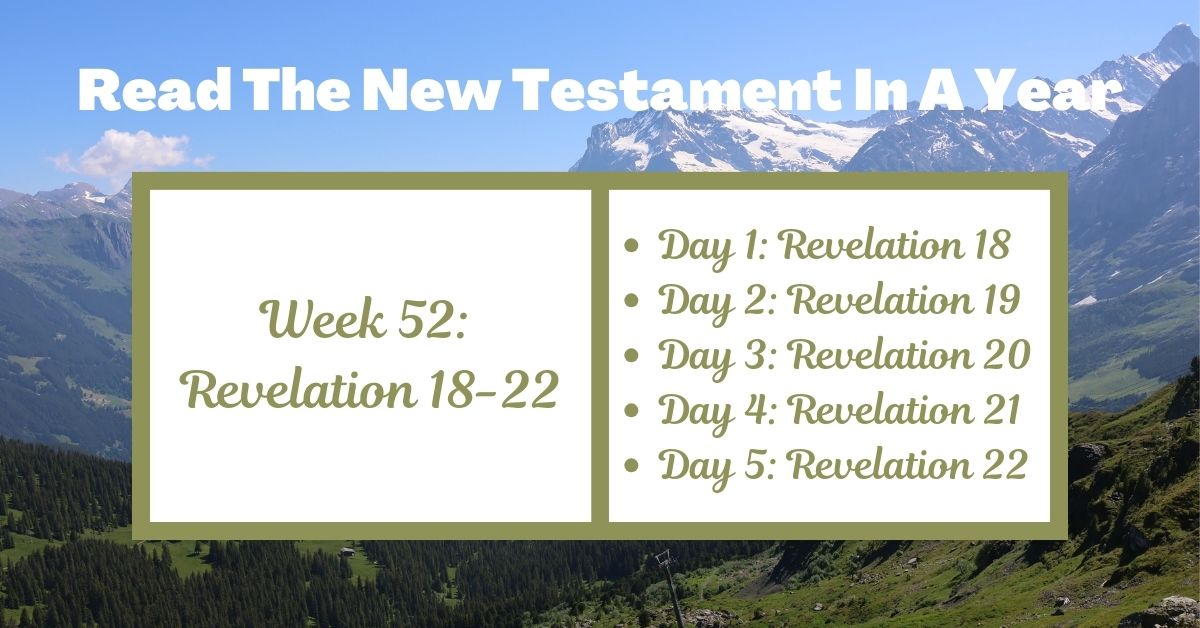
Related Resources
Visit the Joyful Moments in Christ homepage for all posts, or scroll through other blog posts related to reading the New Testament in a year:



English Standard Version (ESV): Unless otherwise noted, scripture quotations are from the ESV® Bible (The Holy Bible, English Standard Version®), © 2001 by Crossway, a publishing ministry of Good News Publishers. Used by permission. All rights reserved. The ESV text may not be quoted in any publication made available to the public by a Creative Commons license. The ESV may not be translated in whole or in part into any other language.
 Joyful Moments in Christ