
The book of Ruth is one of scripture’s most hopeful narratives — a story of loyal love, quiet courage, and God’s faithful hand at work in the ordinary details of life. Set during the tumultuous days of the judges, this short book offers a striking contrast to the chaos of its time, spotlighting two widows navigating loss, poverty, and uncertainty. Despite their difficulties, woven through their hardship is a thread of joy — joy found not in easy circumstances, but in steadfast devotion, God’s unexpected provision, and new beginnings.
This post explores ten verses from Ruth that reveal how joy rises in surprising places: in loyal commitment, in integrity, in redemption, and in the gentle unfolding of God’s greater plan. Ruth’s story reminds us that joy isn’t reserved for perfect seasons but can bloom in the middle of grief, risk, and ordinary kindness. May these verses and reflections stir hope in your heart and help you trace the hand of God in your own story.
Joy in Loyal Commitment

But Ruth said, “Do not urge me to leave you or to return from following you. For where you go I will go, and where you lodge I will lodge. Your people shall be my people, and your God my God.”
Ruth 1:16 (ESV)
This is one of the most moving declarations of loyalty in all of scripture. Ruth, a Moabite widow, refuses to abandon her Israelite mother-in-law, Naomi, despite Naomi’s urging to return to her own people. Ruth’s words reflect a profound decision — not just to stay with Naomi but to adopt her people and her God. In the surrounding verses, Naomi has expressed deep bitterness over her losses, but Ruth’s steadfast love hints at hope and redemption to come. In a period marked by grief and uncertainty, Ruth chooses belonging and faith over what would have been the safer, easier road.
For us, this verse captures the joy found in belonging — both to people and to God. Ruth’s commitment foreshadows the faithful love of God himself and reminds us that joy often blooms in loyalty and selfless devotion. By choosing to bind ourselves to others in love and to God in faith, we find a deeper, abiding joy that isn’t dictated by our circumstances.
Reflection question: Who in your life might need the reassurance of your faithful presence today?
Practical Application: Reach out to someone walking through difficulty this week and offer your support, reminding them they don’t have to journey alone.
Joy in God’s Faithfulness Amid Bitterness

She said to them, “Do not call me Naomi; call me Mara, for the Almighty has dealt very bitterly with me. I went away full, and the Lord has brought me back empty.”
Ruth 1:20-21 (ESV)
When Naomi returns to Bethlehem after a devastating famine and the loss of her husband and sons, she expresses her sorrow by changing her name to Mara, meaning “bitter.” In these surrounding verses, Naomi lays bare her grief and disillusionment, believing the Lord has afflicted her. Yet, even in this lament, the seeds of restoration are being planted through Ruth’s loyalty and the timing of their arrival at the beginning of barley harvest.
This passage reminds us that sorrow isn’t the end of our story. God is still at work, even when life feels empty. The book of Ruth unfolds to show Naomi’s bitterness transformed into joy through God’s quiet, sovereign provision. We too can find joy in knowing that seasons of grief are not final when God is writing the story.
Reflection question: Where have you felt “empty” in your life, and how might God be working behind the scenes?
Practical Application: Journal about a difficult season and pray for eyes to see glimpses of God’s provision and restoration in your current circumstances.
Joy Under God’s Wings

The Lord repay you for what you have done, and a full reward be given you by the Lord, the God of Israel, under whose wings you have come to take refuge!
Ruth 2:12 (ESV)
Boaz offers this blessing to Ruth after learning of her kindness to Naomi. In the context of chapter 2, Ruth is gleaning in Boaz’s fields, hoping to gather leftover grain for survival. Boaz recognizes her sacrifices and speaks of the God of Israel as a refuge, evoking the imagery of a mother bird sheltering her young under her wings — a common biblical metaphor for God’s protection and care.
The joy here comes in knowing we serve a God who rewards faithfulness and provides shelter for the vulnerable. Ruth’s decision to seek refuge in Israel’s God opened the way for divine provision and blessing, showing us that choosing trust over fear anchors us in joy, even when the future is uncertain.
Reflection question: In what areas of life do you need to consciously take refuge under God’s wings?
Practical Application: Memorize this verse as a reminder of God’s protective care during anxious moments this week.
Joy in Undeserved Kindness

Then she said, “I have found favor in your eyes, my lord, for you have comforted me and spoken kindly to your servant, though I am not one of your servants.”
Ruth 2:13 (ESV)
After Boaz extends kindness and protection to Ruth, a foreigner and outsider, she responds with humility and gratitude. The verses surrounding this one show Boaz going out of his way to ensure Ruth’s safety and provision, illustrating God’s heart for the marginalized. Ruth recognizes that this grace is unearned and unexpected, heightening the joy of being seen and valued.
This verse reminds us of the joy we experience when God’s kindness reaches us in places where we least expect it. Like Ruth, we are often recipients of grace we could never earn, and in that recognition is a deep, humbling joy. It also encourages us to extend similar kindness to others, becoming vessels of joy in someone else’s story.
Reflection question: When have you experienced undeserved kindness that pointed you to God’s care?
Practical Application: Look for a chance to offer unexpected encouragement or practical help to someone overlooked this week.
Joy in Recognizing God’s Kindness

And Naomi said to her daughter-in-law, “May he be blessed by the Lord, whose kindness has not forsaken the living or the dead!”
Ruth 2:20 (ESV)
Naomi, who had declared herself bitter, now begins to acknowledge God’s kindness through Boaz’s generosity. This verse sits at a turning point in the narrative as Naomi starts to glimpse the unseen hand of God working on her behalf. The surrounding context reveals that Boaz is a kinsman-redeemer, which hints at hope for both provision and legacy.
This passage teaches us to recognize God’s kindness in both small and significant moments. Joy increases when we train our hearts to notice the ways God weaves grace into our stories, even after seasons of loss or doubt. Naomi’s restored hope reminds us that God’s kindness often arrives through the hands of his people.
Reflection question: What signs of God’s kindness can you see in your life today?
Practical Application: Make a list of five ways you’ve experienced God’s kindness in the past month and thank him for each one.
Joy in Integrity and God’s Blessing

And he said, “May you be blessed by the Lord, my daughter. You have made this last kindness greater than the first in that you have not gone after young men, whether poor or rich.”
Ruth 3:10 (ESV)
In chapter 3, Ruth boldly approaches Boaz at the threshing floor to request his protection as a redeemer, an act of courage and integrity in a vulnerable moment. Boaz’s response in this verse highlights Ruth’s character: she chooses duty, faithfulness, and family over personal gain or youthful romance. The surrounding verses portray a delicate, honorable exchange in a potentially scandalous setting — but both Ruth and Boaz act with virtue, preserving dignity and honoring God.
This passage reminds us that joy isn’t only found in personal happiness but in making choices that honor God and bless others. Integrity, loyalty, and righteousness produce a deeper, lasting joy. In Ruth’s story, this choice sets in motion her redemption and inclusion in the lineage of Christ himself.
Reflection question: Are your decisions motivated by self-interest or by integrity and faithfulness to God’s calling?
Practical Application: When faced with a difficult choice this week, pause to ask which option best honors God’s character — then follow it.
Joy in Being Known and Valued

And now, my daughter, do not fear. I will do for you all that you ask, for all my fellow townsmen know that you are a worthy woman.
Ruth 3:11 (ESV)
Boaz’s words in this verse offer reassurance and affirmation. In a society where widowed, foreign women had little standing, Ruth’s consistent loyalty and honorable behavior earned her the respect of the entire community. The surrounding verses reveal Boaz’s willingness to protect her future, setting the stage for her redemption while affirming her worth.
This is a joy-giving reminder that our worth isn’t determined by status, background, or circumstance, but by our character and faithfulness before God. Ruth’s story assures us that God sees and values what the world often overlooks. The joy of being known and valued by God and his people provides peace and purpose in every season.
Reflection question: Are you placing your worth in God’s opinion of you or in the fleeting approval of people?
Practical Application: Write down three godly qualities you want to cultivate, and ask God to help you be known as a person of virtue and faith.
Joy in Redemption and Restoration

Then the women said to Naomi, “Blessed be the Lord, who has not left you this day without a redeemer, and may his name be renowned in Israel!”
Ruth 4:14 (ESV)
At the book’s climax, Boaz redeems Ruth, and they welcome a son, Obed. This verse captures the townspeople’s recognition of God’s goodness, praising him for providing a redeemer for Naomi’s family line. The surrounding verses reveal a beautiful reversal of Naomi’s earlier sorrow. Where she had declared herself “empty,” God has now filled her arms with new life and restored her hope.
This passage reminds us that no loss is too great for God to redeem. Even long seasons of grief can end in joy when God writes the final chapter. Naomi’s story is proof that restoration may not come quickly, but it comes fully. Joy is found in remembering that the God of redemption still works in our lives today.
Reflection question: What broken or barren area of your life are you trusting God to redeem?
Practical Application: Pray today for a specific area of your life where you long to see restoration, and ask God to reveal his redemptive work.
Joy in New Beginnings and Love

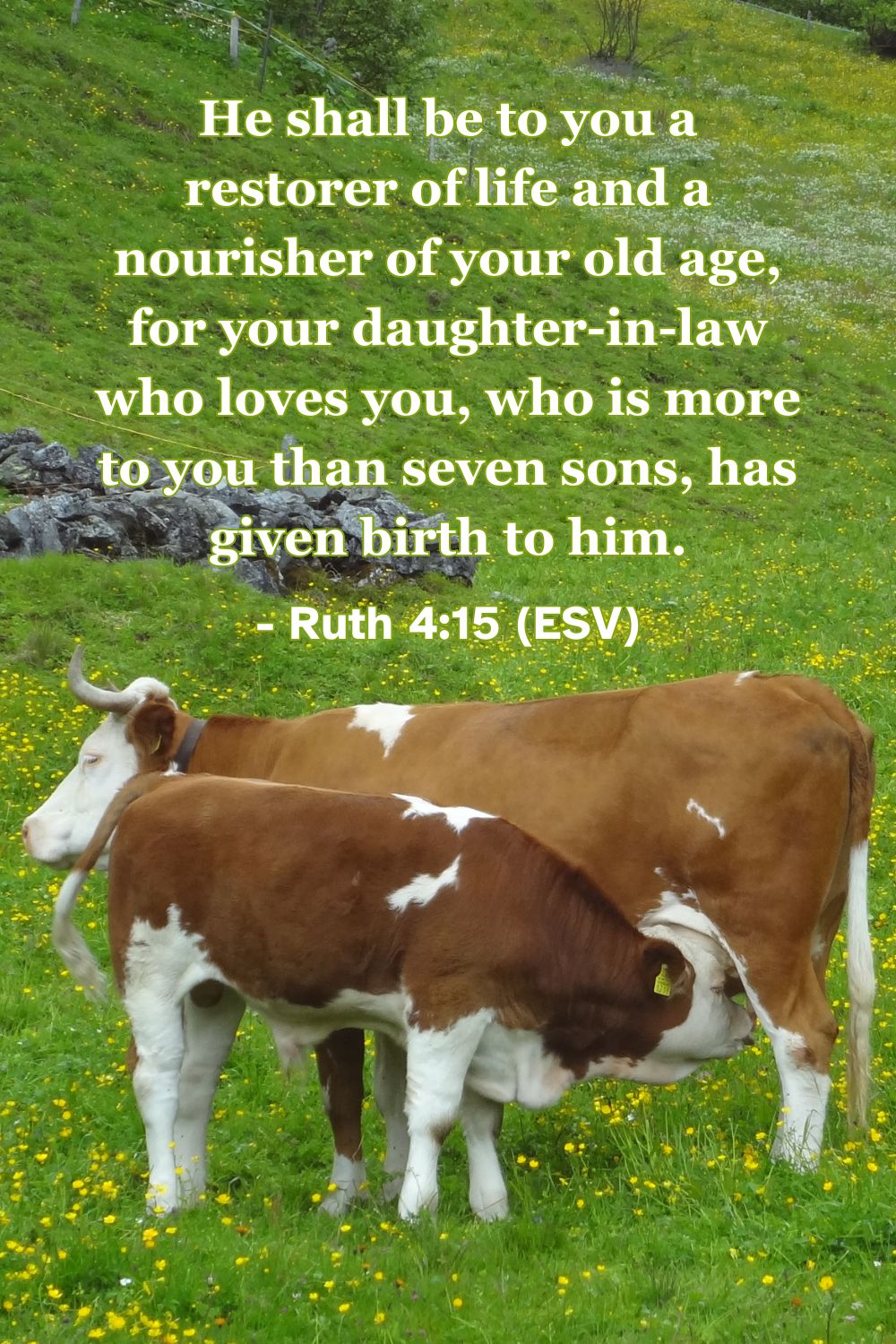
He shall be to you a restorer of life and a nourisher of your old age, for your daughter-in-law who loves you, who is more to you than seven sons, has given birth to him.
Ruth 4:15 (ESV)
This tender blessing to Naomi highlights the unexpected source of her restoration — Ruth, the foreigner once considered an outsider, is now more valuable to Naomi than multiple sons. In the ancient world, having sons was everything to a widow’s security, yet here, love and loyalty prove even greater. The surrounding verses continue the theme of reversal: sorrow to joy, emptiness to fullness, outsider to family.
This verse reminds us that God often brings new beginnings through unexpected people and means. Joy rises when we let go of old expectations and embrace the surprising ways God restores and nourishes our hearts, often through relationships and moments we didn’t anticipate.
Reflection question: What new beginnings might God be offering you that you have overlooked because they didn’t arrive how you expected?
Practical Application: This week, intentionally notice and give thanks for small moments of renewal — a kind word, a deep conversation, or a new opportunity.
Joy in Legacy and God’s Greater Story

And the women of the neighborhood gave him a name, saying, “A son has been born to Naomi.” They named him Obed. He was the father of Jesse, the father of David.
Ruth 4:17 (ESV)
The closing verses of Ruth link this seemingly quiet family story to Israel’s royal history and ultimately to the lineage of Christ. Obed’s birth, celebrated by the community, would impact generations. The surrounding verses culminate in a genealogy that connects Ruth and Boaz’s faithfulness to the arrival of King David — and later, Jesus.
This final scene teaches us that our faithful, everyday choices echo far beyond our own lifetimes. Joy comes in knowing that our small, unseen acts of faithfulness contribute to God’s grand, unfolding story. Even the most ordinary lives can become part of an extraordinary legacy in his hands.
Reflection question: Are you living with a sense of God’s greater story in mind, or only for immediate circumstances?
Practical Application: Reflect on one legacy-building action you can take this week — whether investing in someone’s life, cultivating a godly habit, or making a decision that will honor God for years to come.
Joy in the Everyday Faithful Story
The book of Ruth beautifully teaches that joy is often quiet, steady, and born out of faithfulness in the ordinary. It reminds us that even in seasons of bitterness or loss, God is at work behind the scenes, weaving kindness, provision, and restoration into our lives in ways we might not see right away. Ruth’s faithfulness, Naomi’s restoration, and Boaz’s integrity ultimately shaped the lineage of Israel’s greatest king and pointed ahead to the coming of Christ.
As we reflect on these verses, we are invited to cultivate joy—not by chasing fleeting happiness, but by choosing loyalty, kindness, and trust in the God who redeems. Whether you are in a season of emptiness or new beginnings, let Ruth’s story encourage you to watch for God’s goodness in small moments and to find joy in the simple, faithful acts that echo into eternity.
Reflective Prayer
Consider using these verses to pray using the ACTS method: Adoration, Confession, Thankfulness, and Supplication:
- Adoration: Praise God. Do these verses bring any specific characteristics of God to mind?
- Confession: Tell God that you are sorry for specific sins. Do these verses bring any specific sins to mind?
- Thankfulness: Show gratitude towards God. Does anything from these verses inspire gratitude?
- Supplication: Make requests for yourself and for others. Does anything from these verses inspire a prayer?
If helpful, you can use a prayer journal template.






Subscribe
If you enjoyed this post and wish to receive more Christian content, feel free to subscribe to my newsletters!
Related Resources
Visit the Joyful Moments in Christ homepage for all posts, or scroll through other blog posts related to the book of Ruth:








Something went wrong. Please refresh the page and/or try again.
English Standard Version (ESV): Unless otherwise noted, scripture quotations are from the ESV® Bible (The Holy Bible, English Standard Version®), © 2001 by Crossway, a publishing ministry of Good News Publishers. Used by permission. All rights reserved. The ESV text may not be quoted in any publication made available to the public by a Creative Commons license. The ESV may not be translated in whole or in part into any other language.



 Joyful Moments in Christ