Persecution and the Spread of the Gospel
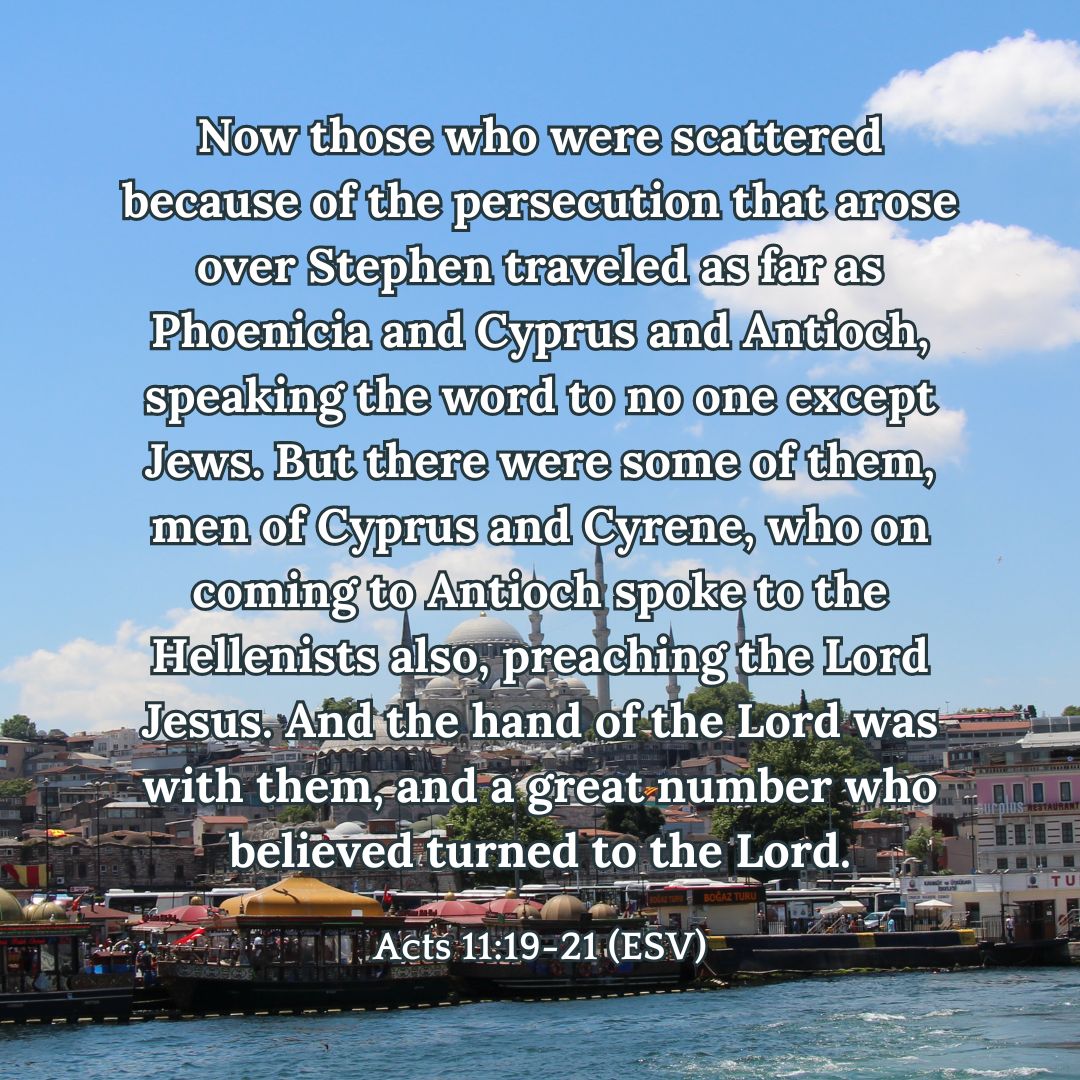
Now those who were scattered because of the persecution that arose over Stephen traveled as far as Phoenicia and Cyprus and Antioch, speaking the word to no one except Jews. But there were some of them, men of Cyprus and Cyrene, who on coming to Antioch spoke to the Hellenists also, preaching the Lord Jesus. And the hand of the Lord was with them, and a great number who believed turned to the Lord. – Acts 11:19-21 (ESV)
It’s fascinating to consider how persecution broadened the influence of the Gospel rather than stamping it out. The more the Jewish leaders tried to stop its spread, the further it went! We see this pattern clearly in Acts 11:19-21.
The Martyrdom of Stephen and the Scattering of Believers
The background to this story involves the first Christian martyr, Stephen. When he proclaimed the gospel message to the religious leaders in Jerusalem (Acts 7), they were outraged by his assertion that Jesus was the Messiah. Instead of debating him, they laid their cloaks at the feet of Saul (later known as Paul) and stoned Stephen to death.
Emboldened by this act, the persecutors targeted other followers of Jesus. As a result, believers fled to places like Phoenicia, Cyprus, and Antioch (Acts 11:19). Initially, they spoke the word only to Jews. However, some of them, men from Cyprus and Cyrene, decided to reach out beyond strict followers of the Jewish religion, to the Hellenists.
Additional Reading: Finding Solace and Strength in Forgiveness: A Lesson from Stephen’s Faith
Reaching Out to the Hellenists
The Hellenists were ethnic Jews who had adopted the Greek language and some of their customs. For instance, Ecclesiastes is thought to reflect Hellenistic influences, with its themes of wisdom and the fleeting nature of life echoing Greek philosophy. The challenge for Hellenistic Jews was navigating the tension between Jewish law and Greek customs, trying to remain loyal to the one true God while living in a polytheistic society.
In any case, Hebraic Jews often treated Hellenistic Jews as inferior, so it’s no surprise that they might initially avoid this group when fleeing persecution. Thankfully, some believers began to share the message of Jesus’ death and resurrection with them, and many Hellenistic Jews embraced this new teaching and became Christians.
Lessons for Today
How does this relate to us today? There are many different Christian denominations—Protestants and Catholics, Presbyterians and Baptists—each with its unique identity. Sometimes, these differences cause divisions. Why do Baptists get re-baptized when they change churches? Why do Catholics ask Mary to intercede for them? Why are Presbyterians often skeptical of supernatural occurrences?
Despite these differences, we all worship the same God, albeit imperfectly. How can we bridge these divides and focus on the core truths that unite us as Christians? How can we prioritize what truly matters over the things that distract us?
Let’s follow the example of the early Christians in Acts who chose to reach across divides to share the gospel with their Hellenistic brothers and sisters.
Reflection Questions
Persecution and the Spread of the Gospel
- How did persecution contribute to the spread of the Gospel in the early church?
- What can we learn from the way early Christians responded to persecution?
- Are there any modern examples where opposition to Christianity has led to its growth?
The Martyrdom of Stephen and the Scattering of Believers
- What impact did Stephen’s martyrdom have on the early Christian community?
- Why did the early Christians initially speak the word only to Jews?
- How might the scattering of believers have influenced the spread of Christianity?
Reaching Out to the Hellenists
- Who were the Hellenists, and why was it significant that the early Christians reached out to them?
- How did the cultural and religious tensions between Hebraic Jews and Hellenistic Jews affect their interactions?
- What lessons can we draw from the early Christians’ willingness to share the Gospel with those who were different from them?
Lessons for Today
- How do the divisions among early Christians compare to the divisions among modern Christian denominations?
- What are some practical ways we can bridge divides between different Christian groups today?
- How can we focus on the core truths of Christianity to foster unity among believers?
Reflective Prayer
Use the verses in this blog post to pray using the ACTS method: Adoration, Confession, Thankfulness, Supplication
- Adoration: Praise God. Do these verses bring any specific characteristics of God to mind?
- Confession: Tell God that you are sorry for specific sins. Do these verses bring any specific sins to mind?
- Thankfulness: Show gratitude towards God. Does anything from these verses inspire gratitude?
- Supplication: Make requests for yourself and for others. Does anything from these verses inspire a prayer?
If helpful, you can use a prayer journal template.
Subscribe
If you enjoyed this post and wish to receive more Christian content, feel free to subscribe to my newsletters!
Related Resources
Visit the Joyful Moments in Christ homepage for all posts, or scroll through other blog posts related to Stephen, persecution, and evangelism:
Something went wrong. Please refresh the page and/or try again.
English Standard Version (ESV): Unless otherwise noted, scripture quotations are from the ESV® Bible (The Holy Bible, English Standard Version®), © 2001 by Crossway, a publishing ministry of Good News Publishers. Used by permission. All rights reserved. The ESV text may not be quoted in any publication made available to the public by a Creative Commons license. The ESV may not be translated in whole or in part into any other language.

 Joyful Moments in Christ