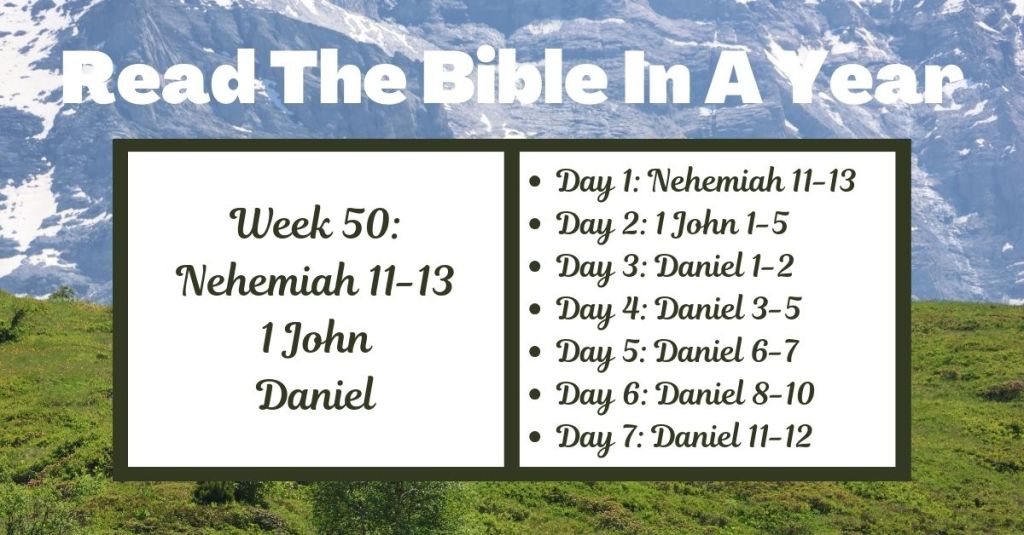
In week 50 of our journey to read the Bible in a year, we will finish the book of Nehemiah and read the entire books of 1 John and Daniel. The book of Nehemiah concludes with a focus on completing restoration efforts in Jerusalem, while 1 John delves into themes of love, truth, and fellowship with God. Daniel recounts the trials and triumphs of Daniel and his companions, offering insights into unwavering faith and divine intervention. Through these readings, we’ll explore leadership, spiritual resilience, and God’s overarching plan for humanity.
Nehemiah 11-13
In Nehemiah chapters 11 to 13, the narrative shifts towards completing the restoration efforts in Jerusalem. Initially focused on rebuilding the city’s walls and physical infrastructure, the narrative now addresses internal challenges and spiritual restoration. Chapter 11 outlines the strategic repopulation of the city to maintain its strength and vitality, while chapter 12 commemorates the dedication of Jerusalem’s rebuilt walls, symbolizing the community’s unity and perseverance.
However, in chapter 13, Nehemiah encounters challenges to Jerusalem’s spiritual integrity upon his return from Persia. He discovers instances of neglect of the temple service, desecration of the Sabbath, and intermarriage with foreigners. Nehemiah responds decisively, expelling those who do not belong and reinstating the observance of God’s laws. His actions underscore his unwavering commitment to upholding the sanctity of Jerusalem and ensuring its adherence to God’s commandments, demonstrating his steadfast leadership in both physical and spiritual matters.
Throughout these chapters, themes of community resilience, dedication to God’s laws, and the importance of leadership in times of adversity resonate strongly, illustrating Nehemiah’s enduring legacy as a leader who guided his people through challenges with unwavering faith and determination.
Reflection Questions
After reading Nehemiah 11-13, consider the following reflection questions:
- How does Nehemiah’s response to the challenges faced in Jerusalem reflect his leadership qualities and commitment to the well-being of the community?
- What significance do you find in the dedication of Jerusalem’s walls, and how does it contribute to the community’s sense of unity and perseverance?
- Reflect on Nehemiah’s actions in addressing spiritual challenges such as neglect of temple service and Sabbath desecration. How do these actions demonstrate his dedication to upholding God’s laws?
- Discuss the themes of community resilience and the importance of maintaining spiritual integrity amidst external pressures.
- How do Nehemiah’s experiences in these chapters offer insights into contemporary challenges faced by leaders in maintaining the spiritual and moral integrity of their communities?
1 John
The First Epistle of John, believed to have been written by John the Apostle in the late first century AD, is a significant book in the New Testament addressing a Christian community, likely situated in Asia Minor. It focuses on pivotal themes such as love, truth, fellowship with God, assurance of salvation, sin, righteousness, and eternal life. Love stands as a central idea, emphasizing both God’s love for humanity and the imperative for believers to love one another. The epistle underscores the importance of living out this love as a defining characteristic of genuine Christian faith.
Throughout 1 John, the author confronts the challenge of false teachings and deceptive influences within the early Christian community. He stresses the necessity of discerning truth from falsehood, urging believers to adhere steadfastly to the teachings of Christ. In this context, the epistle provides practical tests or criteria by which believers can evaluate their faith and discern whether they are truly following Christ. It calls for a commitment to righteousness and a rejection of sin, emphasizing the need for believers to live in accordance with God’s commandments.
1 John also offers assurance to believers regarding their salvation, emphasizing the hope and eternal life that they have in Christ. It reassures believers of their status as children of God and encourages them to abide in Christ and walk in the light. The epistle serves as a pastoral letter, offering guidance, encouragement, and exhortation to believers as they navigate their faith journey. Overall, 1 John stands as a testament to the enduring relevance of foundational Christian truths and the timeless message of love, truth, and fellowship with God.
Reflection Questions
After reading 1 John, consider the following reflection questions:
- How does the emphasis on love challenge or reshape your understanding of Christianity as a faith centered on love?
- Reflect on a time when you encountered false teachings or deceptive influences in your own life or within your community. How did you discern truth from falsehood, and how did your faith help you navigate that situation?
- The epistle provides practical tests for believers to evaluate their faith. Which of these tests resonate with you the most, and how do you apply them to your own spiritual journey?
- Consider the concept of assurance of salvation discussed in this book. How does the assurance of eternal life impact your perspective on life’s challenges and uncertainties?
- In what ways does 1 John’s pastoral guidance encourage you to deepen your relationship with God and strengthen your commitment to living a righteous life?
Daniel
The book of Daniel, located in the Old Testament, recounts the trials and triumphs of Daniel and his companions, who were uprooted from Jerusalem and placed in the Babylonian court. Daniel’s exceptional wisdom and his divine gift of interpreting dreams and visions earn him favor amidst the Babylonian rulers, including Nebuchadnezzar and Belshazzar. Iconic tales, such as Daniel’s interpretation of royal dreams and his miraculous survival amidst a fiery furnace, punctuate the narrative, showcasing his unwavering faith and commitment to God.
Interwoven with these narratives are profound visions and prophetic insights into the future. Daniel receives visions depicting powerful empires symbolized by four great beasts and foresees the ebb and flow of nations. Prophecies concerning the emergence of a significant ruler and the eventual supremacy of God’s kingdom over all others unfold, each laden with symbolism and open to varied interpretations across the ages.
In essence, the book of Daniel represents a fusion of historical storytelling and apocalyptic prophecy. It imparts valuable lessons on resilience and fidelity amid adversity while offering a glimpse into the divine plan for the future. Esteemed by both Jewish and Christian traditions, its narratives and prophecies continue to intrigue scholars and believers alike, inviting contemplation on themes of divine sovereignty and the ultimate fulfillment of God’s purposes.
Reflection Questions
After reading Daniel, consider the following reflection questions:
- How does Daniel’s unwavering faith and commitment to God inspire you in your own life and challenges you may face?
- Reflect on a specific instance from the book of Daniel where you see God’s intervention or provision in the midst of adversity. How does this narrative inspire you to trust in God’s faithfulness in your own life?
- In what ways do the prophecies in the book of Daniel offer hope and assurance for the future? How do they speak to the idea of divine sovereignty and the ultimate triumph of God’s kingdom?
- Consider Daniel’s interactions with the Babylonian rulers, particularly Nebuchadnezzar and Belshazzar. What lessons can be gleaned from Daniel’s approach to leadership and diplomacy in a foreign land?
- How does the fusion of historical storytelling and apocalyptic prophecy in the book of Daniel deepen your understanding of God’s overarching plan for humanity? How might these themes resonate with your own spiritual journey and worldview?
Flexible Plan: Reading for Week 50
If you are following the flexible plan for reading the Bible in a year, here is your reading assignment. You can break up the reading however you like throughout the week!
- Passage 1: Nehemiah 11-13
- Passage 2: 1 John
- Passage 3: Daniel
Printable Resource: Bible in a Year Reading Plan: Weekly Assignments
7-Day Reading Assignment: Week 50
For those who prefer a more organized approach, the weekly assignment can be broken into seven sections:
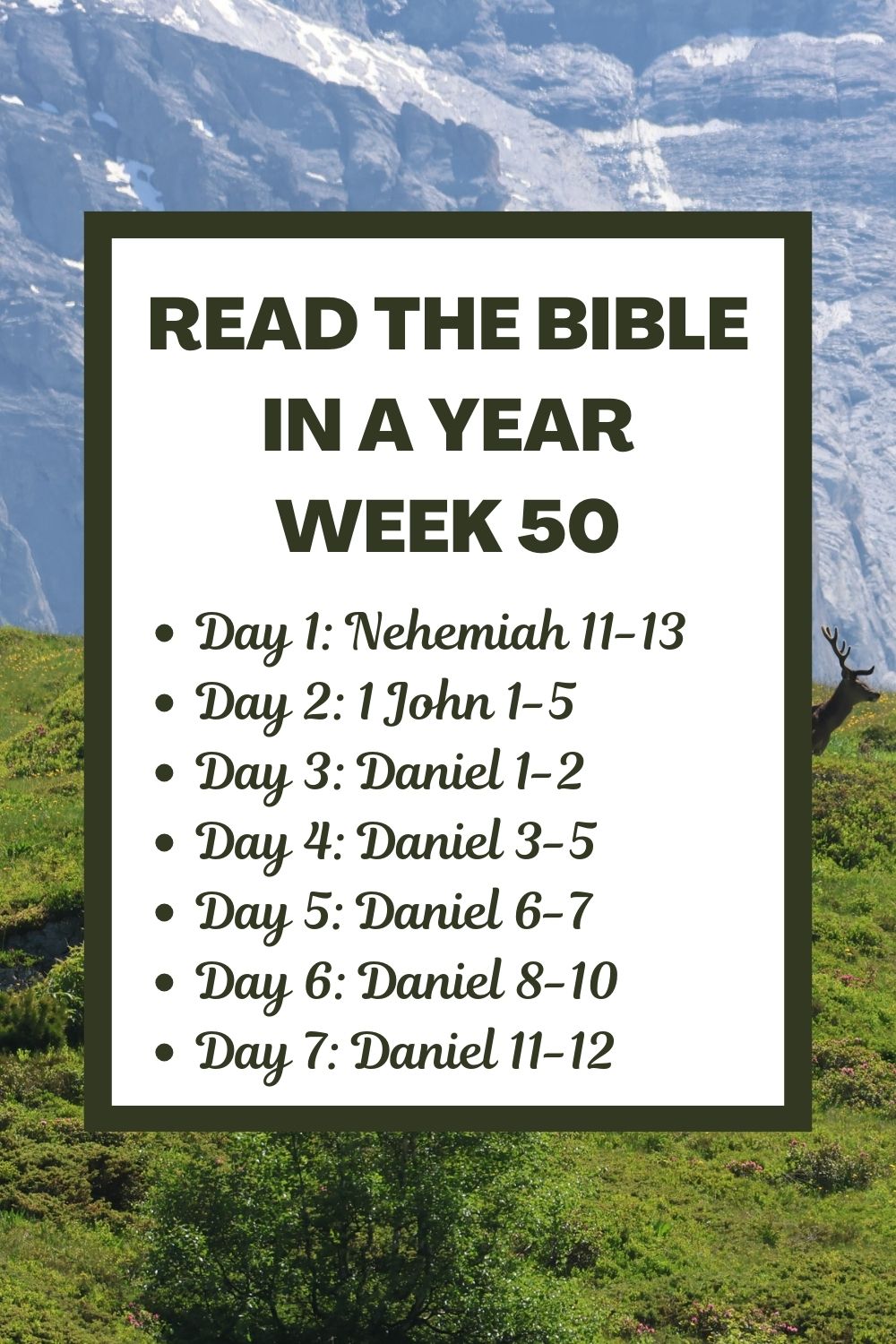
- Day 1: Nehemiah 11-13
- Day 2: 1 John 1-5
- Day 3: Daniel 1-2
- Day 4: Daniel 3-5
- Day 5: Daniel 6-7
- Day 6: Daniel 8-10
- Day 7: Daniel 11-12
Printable Resource: Bible in a Year Reading Plan: Daily Assignments
5-Day Reading Assignment: Week 50
Or if you know that you are likely to miss a day or two of reading, the weekly assignment can be broken into five sections:
- Day 1: Nehemiah 11-13
- Day 2: 1 John 1-5
- Day 3: Daniel 1-4
- Day 4: Daniel 5-8
- Day 5: Daniel 9-12
Printable Resource: Bible in a Year Reading Plan: 5 Days/Week Assignments
Subscribe
If you enjoyed this post and wish to receive more Christian content, feel free to subscribe to my newsletters!
Related Resources
Visit the Joyful Moments in Christ homepage for all posts, or scroll through other blog posts related to reading the Bible in a year:




 Joyful Moments in Christ