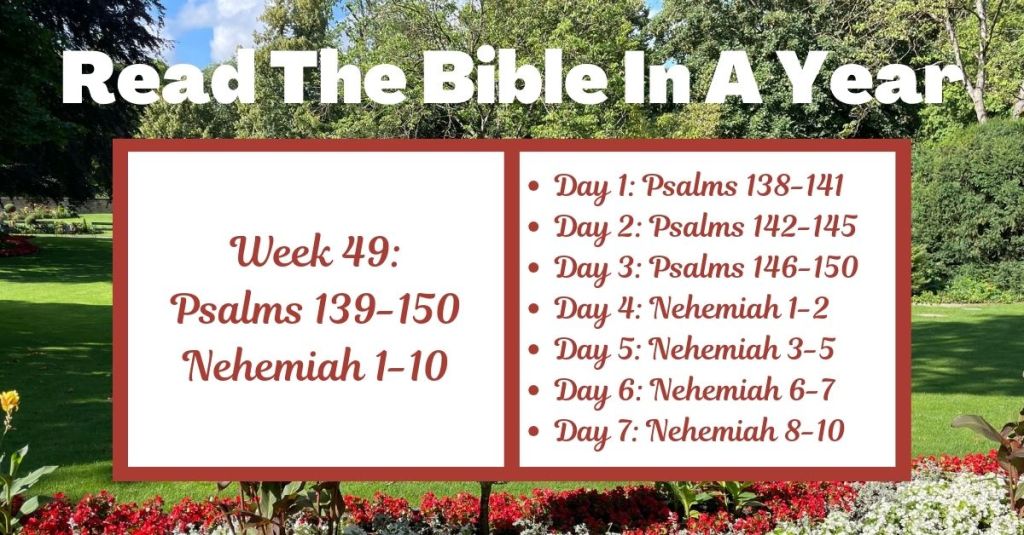
In week 49 of our quest to read the Bible in a year, we will finish the book of Psalms and begin the book of Nehemiah. The book of Psalms presents a rich collection of poetic prayers and songs, offering expressions of praise, lament, and worship. Nehemiah, on the other hand, chronicles the determined leadership of Nehemiah as he rallies the Jewish community to rebuild Jerusalem’s walls, showcasing themes of perseverance, faith, and community solidarity.
Psalms 138-150
Psalms 138-150 collectively offer an array of human emotion and devotion to God. Beginning with Psalm 138, the psalmist’s heartfelt thanksgiving and praise underscore the enduring faithfulness of God amidst life’s challenges, evoking feelings of joy and gratitude. This sentiment continues in Psalms 139-143, where the psalmist grapples with the complexities of human existence, finding solace in God’s omnipresence and seeking his guidance and protection in times of trouble. These psalms resonate with believers, offering reassurance of God’s constant care and presence, while also reflecting emotions such as awe, fear, dependence, and hope.
As the collection progresses to Psalms 144-147, themes of praise and petition resound with tones of triumph, celebration, and longing for divine intervention. The psalmist in Psalm 144 celebrates God as a fortress and provider, while Psalms 145-147 exalt his greatness, compassion, and sovereignty, evoking feelings of confidence, joy, and the desire for deliverance. These psalms serve as a reminder of God’s unfailing goodness and steadfast presence, inviting believers to express a wide range of emotions in their relationship with him.
Concluding with Psalms 148-150, the universal call to praise echoes throughout creation, urging all beings to exalt the Lord with music and voices, evoking awe, reverence, and adoration. Together, these psalms offer a comprehensive portrayal of the human experience in relation to faith, covering lamentation, supplication, gratitude, jubilation, and everything in between.
Reflection Questions
After reading Psalms 138-150, consider the following reflection questions:
- How do the emotions expressed in these psalms resonate with your own experiences of faith and devotion to God?
- Reflecting on Psalm 143’s expressions of distress and petition for deliverance, how do you find comfort in God’s constant care and presence amidst life’s challenges?
- In Psalms 145-147, the psalmist exalts God’s greatness, compassion, and sovereignty. How do these attributes of God inspire confidence and joy in your relationship with him?
- Psalm 149 celebrates victory and salvation, urging believers to sing and dance before God. How can you incorporate joyful expressions of praise and worship into your own spiritual life?
- Reflecting on the universal call to praise found in Psalms 148-150, consider how you can join all creation in exalting the Lord with music and voices, fostering a sense of awe, reverence, and adoration in your worship practices.
Nehemiah 1-10
The Book of Nehemiah is a historical account found in the Old Testament. It revolves around Nehemiah, who served as a trusted cupbearer to King Artaxerxes I of Persia during the 5th century BCE. The narrative begins with Nehemiah hearing about the distressed state of Jerusalem’s walls, prompting him to seek the king’s permission to return to Jerusalem and oversee the reconstruction efforts. Despite facing opposition from adversaries such as Sanballat and Tobiah, Nehemiah rallies the Jewish community and leads them in rebuilding the city walls, accomplishing the task in a remarkably short period. Throughout the book, Nehemiah emerges as a resolute and visionary leader, implementing social and religious reforms, conducting a census, and renewing the covenant with God to strengthen the community.
This week, we will read Nehemiah 1-10. In the initial chapters, we will witness Nehemiah’s emotional response upon learning about the plight of Jerusalem. He seeks the king’s permission to travel to Jerusalem and undertake the monumental task of rebuilding its walls. Despite facing challenges and opposition from neighboring adversaries, Nehemiah perseveres and mobilizes the Jewish community to join him in the reconstruction efforts. Throughout this process, Nehemiah’s leadership qualities shine through as he demonstrates determination and strategic planning to achieve his goal of restoring Jerusalem’s defenses and dignity.
As the narrative progresses, Nehemiah not only focuses on the physical reconstruction of Jerusalem but also implements crucial social and religious reforms. He enforces the observance of the Sabbath, addresses economic injustices, and purges the community of foreign influences. Nehemiah also conducts a census to ascertain the population and leads the people in a solemn renewal of their covenant with God. Despite facing internal challenges to his leadership, Nehemiah remains steadfast in his commitment to revitalizing Jerusalem and ensuring the spiritual and social well-being of its inhabitants. Through Nehemiah’s story, the book presents themes of perseverance, faith, and the importance of community solidarity in the face of adversity.
Reflection Questions
After reading Nehemiah 1-10, consider the following reflection questions:
- How does Nehemiah’s response to the distressing news about Jerusalem’s walls reflect his character and leadership qualities?
- In what ways does Nehemiah demonstrate resilience and determination in the face of opposition and challenges from adversaries like Sanballat and Tobiah?
- Consider the significance of Nehemiah’s emphasis on social and religious reforms, such as enforcing the observance of the Sabbath and addressing economic injustices. How do these reforms contribute to the restoration of Jerusalem’s strength and dignity?
- What do Nehemiah’s actions, such as conducting a census and renewing the covenant with God, reveal about his commitment to the well-being of the Jewish community in Jerusalem?
- Reflect on the themes of perseverance, faith, and community solidarity portrayed in Nehemiah’s story. How do these themes resonate with contemporary challenges and leadership principles?
Flexible Plan: Reading for Week 49
If you are following the flexible plan for reading the Bible in a year, here is your reading assignment. You can break up the reading however you like throughout the week!
- Passage 1: Psalms 138-150
- Passage 2: Nehemiah 1-10
Printable Resource: Bible in a Year Reading Plan: Weekly Assignments
7-Day Reading Assignment: Week 49
For those who prefer a more organized approach, the weekly assignment can be broken into seven sections:
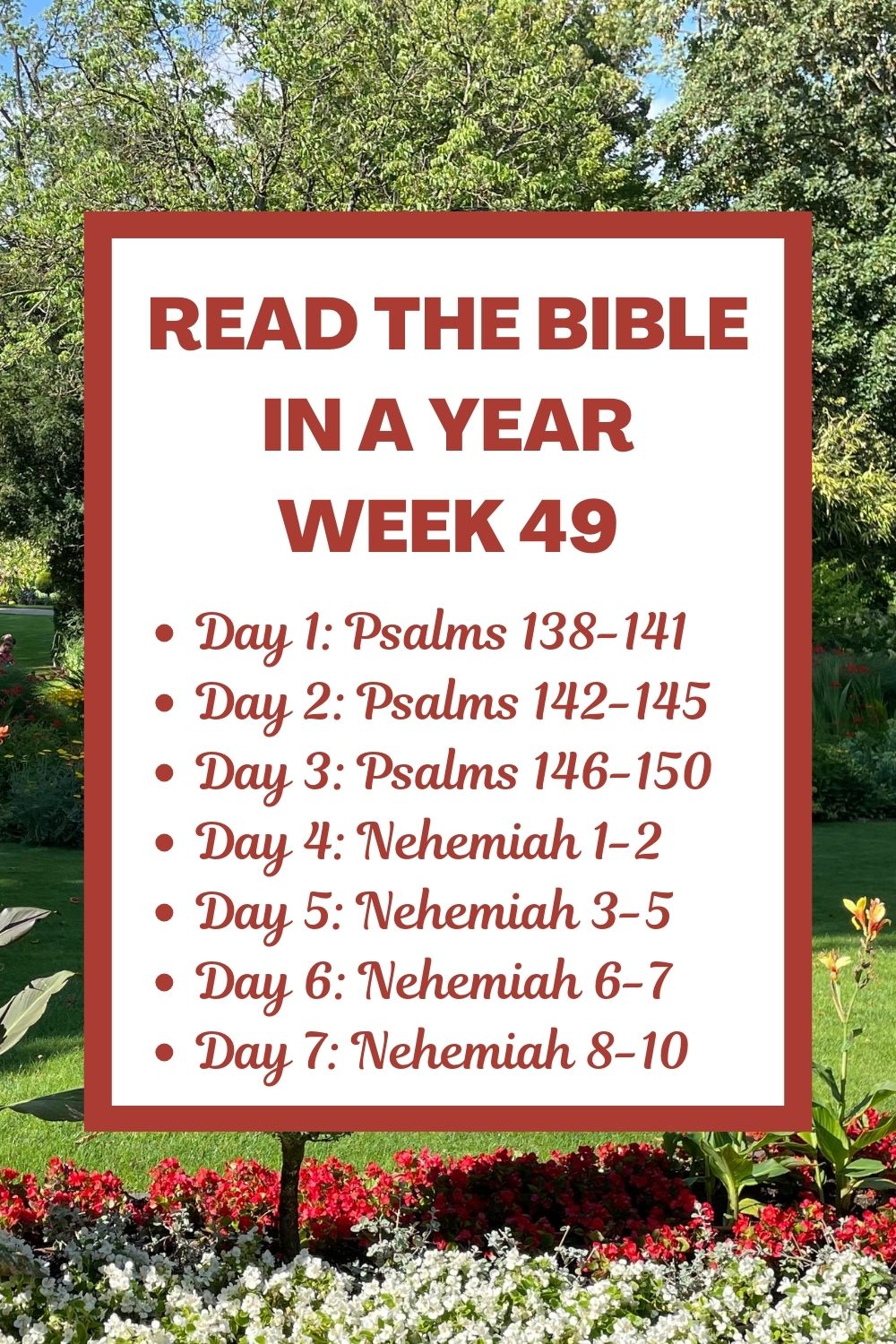
- Day 1: Psalms 138-141
- Day 2: Psalms 142-145
- Day 3: Psalms 146-150
- Day 4: Nehemiah 1-2
- Day 5: Nehemiah 3-5
- Day 6: Nehemiah 6-7
- Day 7: Nehemiah 8-10
Printable Resource: Bible in a Year Reading Plan: Daily Assignments
5-Day Reading Assignment: Week 49
Or if you know that you are likely to miss a day or two of reading, the weekly assignment can be broken into five sections:
- Day 1: Psalms 138-143
- Day 2: Psalms 144-150
- Day 3: Nehemiah 1-3
- Day 4: Nehemiah 4-7
- Day 5: Nehemiah 8-10
Printable Resource: Bible in a Year Reading Plan: 5 Days/Week Assignments
Subscribe
If you enjoyed this post and wish to receive more Christian content, feel free to subscribe to my newsletters!
Related Resources
Visit the Joyful Moments in Christ homepage for all posts, or scroll through other blog posts related to reading the Bible in a year:


 Joyful Moments in Christ