In week 46 of our 1-year Bible reading adventure, we will finish the Gospel of Matthew and begin the book of Deuteronomy. This week in Matthew, key themes will include Jesus’s teachings on the kingdom of heaven, confrontations with religious leaders, and the journey to his crucifixion and resurrection, emphasizing faith, redemption, and obedience. In Deuteronomy, themes will revolve around the renewal of the covenant, obedience to God’s commands, warnings against idolatry, and the importance of passing down faith through generations, highlighting faithfulness and worship.
Matthew 15-28
In the latter half of the Gospel of Matthew, Jesus engages in intense interactions with religious leaders, delivers profound teachings on the kingdom of heaven, and foretells his impending crucifixion and resurrection. He confronts the Pharisees and scribes, highlighting the importance of inner purity over outward rituals. Despite opposition, Jesus continues to demonstrate compassion and perform miracles, extending his ministry beyond the boundaries of Israel.
As Jesus approaches Jerusalem, he is hailed as the Messiah, fulfilling prophecy as he enters triumphantly. However, his arrival also sparks conflict, particularly in his cleansing of the temple and his scathing rebukes against the religious elite for their hypocrisy. Jesus uses parables to convey profound truths about the kingdom of heaven, stressing the importance of humility, forgiveness, and readiness for his return. He forewarns his disciples about the destruction of the temple and the signs preceding the end times, urging them to remain vigilant and faithful.
The narrative climaxes with Jesus’ betrayal, arrest, crucifixion, and resurrection. He shares a final meal with his disciples, instituting the sacrament of communion and predicting both Judas’ betrayal and Peter’s denial. In Gethsemane, Jesus agonizes in prayer, submitting to the Father’s will, before being betrayed and arrested. Despite Pilate’s reluctance, Jesus is sentenced to death by crucifixion. Yet, his resurrection triumphs over death, validating his divinity and commissioning his disciples to spread the gospel to all nations, ensuring his presence with them always. Thus, Matthew concludes with the ultimate victory of Christ, offering hope and salvation to all who believe.
Reflection Questions
After reading Matthew 15-28, consider the following reflection questions:
- How does Jesus’ confrontation with the religious leaders in Matthew 15-23 challenge your understanding of religious traditions and practices? Are there areas in your own life where you might prioritize tradition over genuine faith and compassion?
- Reflect on Jesus’ teachings on forgiveness, humility, and reconciliation in Matthew 18-20. How do these principles shape your relationships and interactions with others? Are there areas where you struggle to embody these values?
- Consider Jesus’ predictions of his death and resurrection in Matthew 16-20 and his subsequent journey to Jerusalem. How does Jesus’ willingness to embrace suffering and sacrifice challenge your understanding of discipleship? How might you apply his example to your own life?
- Reflect on Jesus’ parables in Matthew 21-25, particularly those concerning the kingdom of heaven and the final judgment. What insights do these parables offer about the nature of God’s kingdom and the responsibilities of believers? How might they prompt you to reevaluate your priorities and actions?
- Contemplate the significance of Jesus’ crucifixion and resurrection in Matthew 26-28. How does Jesus’ victory over sin and death offer hope and redemption to humanity? In what ways does his resurrection empower and commission his followers to share the gospel with others?
Deuteronomy 1-6
The Book of Deuteronomy, attributed to Moses, serves as a critical text within the Jewish Scriptures. Its name, derived from Greek, means “second law,” reflecting its role in revisiting and expanding upon laws previously given in Exodus, Leviticus, and Numbers. Divided into three main sections, Deuteronomy offers a comprehensive reflection on Israel’s journey as they prepare to enter the Promised Land after forty years of wandering in the wilderness.
The first section, the Historical Prologue, recounts key events from Israel’s history since their departure from Egypt. Moses emphasizes God’s faithfulness, Israel’s disobedience, and the resulting consequences. This part serves as a reminder of the covenant between God and Israel, highlighting pivotal moments such as the Exodus and the giving of the Ten Commandments.
The subsequent Legal Code section presents a collection of laws and regulations governing various aspects of Israelite life. Covering civil, criminal, and religious matters, these laws encompass moral principles, social justice, worship practices, dietary regulations, and guidelines for leadership. Their purpose is to guide the Israelites in their behavior and ensure their faithfulness to God as they settle in the Promised Land.
The final part, Covenant Ratification and Blessings/Curses, involves the formalization of the covenant between God and Israel, with blessings promised for obedience and curses for disobedience. Additionally, Moses appoints Joshua as his successor, delivers his final words and blessings to the tribes of Israel, and eventually passes away before the Israelites cross the Jordan River into Canaan. Deuteronomy’s enduring significance lies in its foundational role in understanding the covenant relationship between God and Israel, influencing ethical and legal systems across various cultures and traditions.
This week, we will read the first 6 chapters of Deuteronomy.
Reflection Questions
After reading Deuteronomy 1-6, consider the following reflection questions:
- Reflect on the significance of Moses’ recounting of Israel’s history in these chapters. How does understanding their journey shape your perspective on God’s faithfulness and provision in your own life?
- Consider the emphasis on obedience to God’s commands throughout these chapters. How do you prioritize obedience in your own life, and what steps can you take to align more closely with God’s will?
- In Chapter 4, Moses warns against the dangers of idolatry and turning away from God. How do you guard against idolatry in your life, and what are some practical ways you can remain steadfast in your faith?
- The renewal of the covenant in Chapter 5 underscores the importance of passing down God’s commandments to future generations. How do you actively engage in passing down your faith to those around you, especially to younger generations?
- Reflect on the central message of loving and fearing God with all your heart in Chapter 6. How does this commandment shape your priorities and actions in daily life, and what changes can you make to deepen your love and reverence for God?
Flexible Plan: Reading for Week 46
If you are following the flexible plan for reading the Bible in a year, here is your reading assignment. You can break up the reading however you like throughout the week!
- Passage 1: Matthew 15-28
- Passage 2: Deuteronomy 1-6
Printable Resource: Bible in a Year Reading Plan: Weekly Assignments
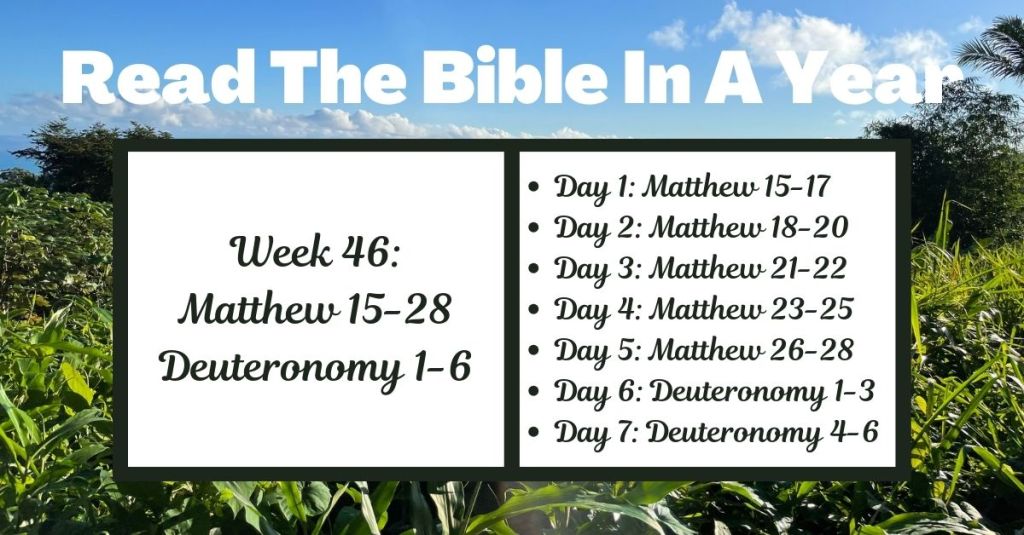
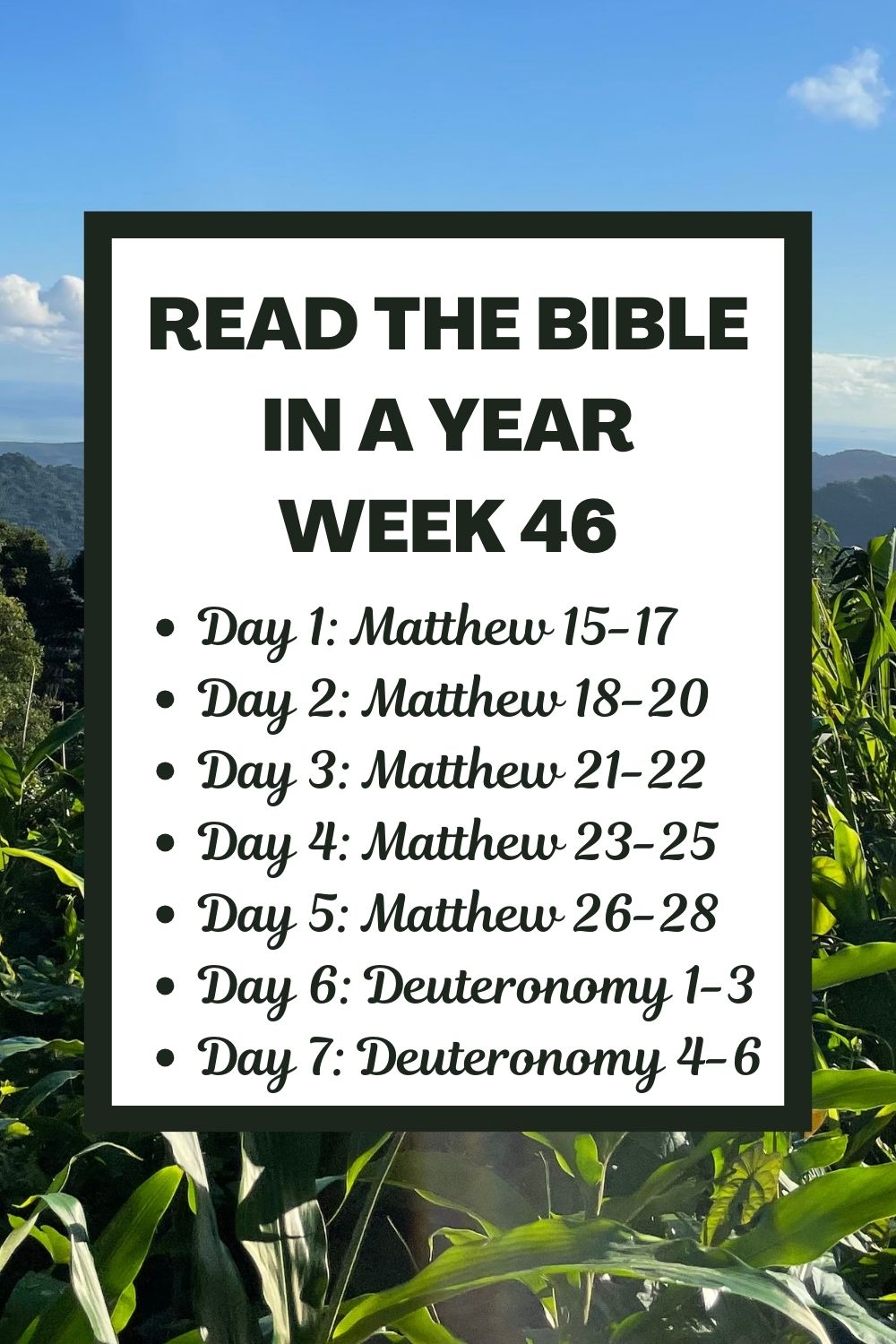
7-Day Reading Assignment: Week 46
For those who prefer a more organized approach, the weekly assignment can be broken into seven sections:
- Day 1: Matthew 15-17
- Day 2: Matthew 18-20
- Day 3: Matthew 21-22
- Day 4: Matthew 23-25
- Day 5: Matthew 26-28
- Day 6: Deuteronomy 1-3
- Day 7: Deuteronomy 4-6
Printable Resource: Bible in a Year Reading Plan: Daily Assignments
5-Day Reading Assignment: Week 46
Or if you know that you are likely to miss a day or two of reading, the weekly assignment can be broken into five sections:
- Day 1: Matthew 15-18
- Day 2: Matthew 19-21
- Day 3: Matthew 22-25
- Day 4: Matthew 26-28
- Day 5: Deuteronomy 1-6
Printable Resource: Bible in a Year Reading Plan: 5 Days/Week Assignments
Subscribe
If you enjoyed this post and wish to receive more Christian content, feel free to subscribe to my newsletters!
Related Resources
Visit the Joyful Moments in Christ homepage for all posts, or scroll through other blog posts related to reading the Bible in a year:



 Joyful Moments in Christ