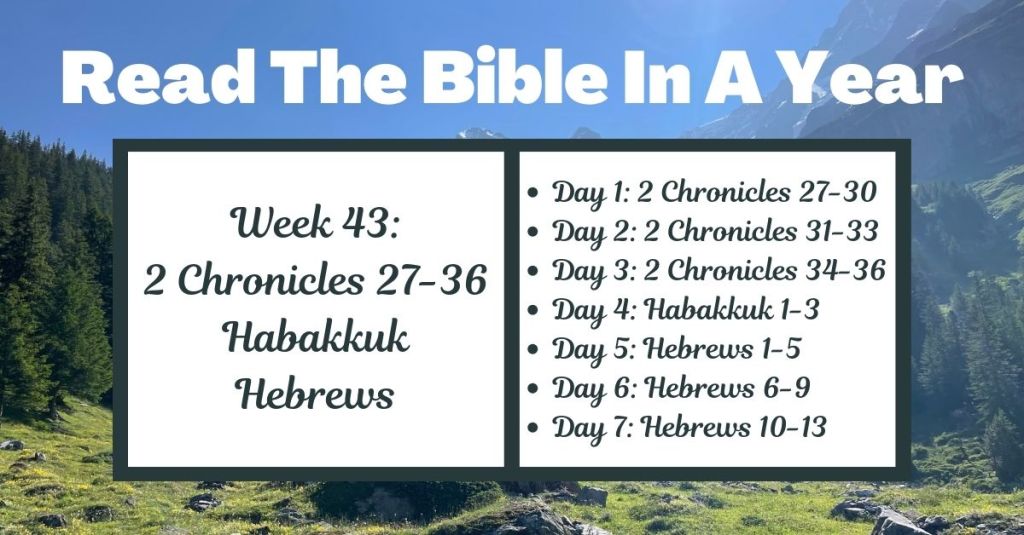
In week 43 of our journey to read the Bible in a year, we will finish the book of 2 Chronicles and read the complete books of Habakkuk and Hebrews. In these books, we will explore themes of obedience, repentance, justice, faith, and the profound significance of Jesus Christ, offering guidance for our Christian journey.
2 Chronicles 27-36
In 2 Chronicles 27-36, we will continue our journey through the historical narratives of the southern kingdom of Judah, delving into the reigns of various kings that significantly shape the spiritual and political landscape. This week’s exploration will begin with the relatively righteous rule of Jotham, who succeeded his father Uzziah, where we will witness a commitment to God’s commands. However, the narrative will take a dark turn under Ahaz, whose reign was marked by idolatry, human sacrifices, and the vulnerability of Judah to external threats. The subsequent reign of Hezekiah will show a significant chapter of reform, involving the cleansing of the temple, the restoration of proper worship, and a Passover celebration that drew the people closer to God.
As the narrative progresses to the reign of Manasseh, we will confront a stark contrast as the king chooses severe idolatry, leading the nation away from its covenant with God. Despite Manasseh’s eventual repentance, the consequences of his actions linger, setting the stage for the righteous rule of Josiah. Josiah’s reign will feature the rediscovery of the Book of the Law and fervent religious reforms, providing a temporary resurgence of faith. However, the narrative will take a somber turn with subsequent kings, the Babylonian invasion, the destruction of Jerusalem, and the exile of the people. The final chapters of 2 Chronicles will outline the downfall of Judah, underscoring the cyclical pattern of obedience, repentance, and judgment that we will find defines our relationship with the covenant-keeping God.
Habakkuk
In the Book of Habakkuk, we will read a three chapter dialogue between the prophet Habakkuk and God. Habakkuk will begin by expressing his distress over the prevailing injustice and violence in Judah and will question God’s apparent inaction. In response, God will reveal his plan to use the Babylonians as instruments of judgment, leading to Habakkuk’s second complaint about the perceived paradox of a more wicked nation being used to punish Judah. The second chapter will contain a series of “woes” outlining judgment for various sins and will emphasize the importance of the righteous living by faith. The final chapter will feature Habakkuk’s prayer and a powerful declaration of trust in God’s sovereignty, acknowledging God’s past deeds and expressing unwavering faith amidst challenging circumstances. The book will encapsulate themes of justice, faith, and the profound reliance on God’s righteousness, ultimately culminating in a prayerful affirmation of trust in the midst of uncertainty.
Hebrews
As we read through the Book of Hebrews, we will discover a rich exploration that highlights the unique significance of Jesus Christ. The author will skillfully depict how Jesus stands above angels, goes beyond the legacy of Moses, and transcends the traditional roles of the Levitical priesthood. Throughout the narrative, we will uncover the transformative essence of the New Covenant, recognizing its superiority over the Old Covenant, and understanding the everlasting impact of Christ’s sacrifice on forgiveness and sanctification. The author will use vivid imagery, drawing connections between the earthly tabernacle and profound heavenly truths, portraying Jesus as the ultimate high priest offering a singular and efficacious sacrifice for redemption.
As the book concludes, poignant exhortations will encourage us to embrace love, hospitality, and faithful living. This journey will promise a deep understanding of the profound importance of Christ and will equip us with enduring truths that will shape our Christian faith and give us guidance for Christian living.
Flexible Plan: Reading for Week 43
If you are following the flexible plan for reading the Bible in a year, here is your reading assignment. You can break up the reading however you like throughout the week!
- Passage 1: 2 Chronicles 27-36
- Passage 2: Habakkuk 1-3
- Passage 3: Hebrews 1-13
Printable Resource: Bible in a Year Reading Plan: Weekly Assignments
7-Day Reading Assignment: Week 43
For those who prefer a more organized approach, the weekly assignment can be broken into seven sections:
- Day 1: 2 Chronicles 27-30
- Day 2: 2 Chronicles 31-33
- Day 3: 2 Chronicles 34-36
- Day 4: Habakkuk 1-3
- Day 5: Hebrews 1-5
- Day 6: Hebrews 6-9
- Day 7: Hebrews 10-13
Printable Resource: Bible in a Year Reading Plan: Daily Assignments
5-Day Reading Assignment: Week 43
Or if you know that you are likely to miss a day or two of reading, the weekly assignment can be broken into five sections:
- Day 1: 2 Chronicles 27-31
- Day 2: 2 Chronicles 32-36
- Day 3: Habakkuk 1-3
- Day 4: Hebrews 1-7
- Day 5: Hebrews 8-13
Printable Resource: Bible in a Year Reading Plan: 5 Days/Week Assignments
Reflection Questions
2 Chronicles 27-36
- How do the reigns of Jotham, Ahaz, and Hezekiah reflect the ongoing struggle between obedience and disobedience to God’s commands?
- What impact did Manasseh’s idolatry have on the nation of Judah, and how did Josiah attempt to reverse the spiritual decline?
- How does the cyclical pattern of obedience, repentance, and judgment in Judah’s history provide insights into our own spiritual journeys?
- What role does leadership play in influencing the spiritual and political landscape, as seen in the various kings of Judah?
- In what ways do the events leading to the downfall of Judah parallel the consequences of straying from God’s covenant in our lives today?
Habakkuk
- How does Habakkuk’s initial distress and questioning of God resonate with contemporary concerns about injustice and violence?
- What insights can we gain from God’s response regarding the use of the Babylonians as instruments of judgment, especially when considering the apparent paradox of their role?
- How does the concept of living by faith, as emphasized in the “woes” of chapter two, relate to the challenges faced by the righteous in a world filled with sin?
- In what ways does Habakkuk’s prayer and declaration of trust in God’s sovereignty serve as a model for believers facing uncertainty and adversity today?
- How do the themes of justice, faith, and reliance on God’s righteousness in Habakkuk connect with the broader narrative of the Bible and our understanding of God’s character?
Hebrews
- How does the author of Hebrews portray the unique significance of Jesus Christ in comparison to angels, Moses, and the Levitical priesthood, and what implications does this have for our understanding of Jesus?
- In what ways does the narrative in Hebrews reveal the transformative essence of the New Covenant and its superiority over the Old Covenant, particularly in terms of forgiveness and sanctification?
- How does the author’s use of vivid imagery, drawing connections between the earthly tabernacle and heavenly truths, deepen our appreciation for the role of Jesus as the ultimate high priest?
- What enduring truths about Christian living and faith can we derive from the concluding exhortations in Hebrews, specifically those related to love, hospitality, and faithful living?
- How does the journey through the Book of Hebrews equip us with a deeper understanding of the profound importance of Christ and offer guidance for shaping our Christian faith in practical terms?
Subscribe
If you enjoyed this post and wish to receive more Christian content, feel free to subscribe to my newsletters!
Related Resources
Visit the Joyful Moments in Christ homepage for all posts, or scroll through other blog posts related to reading the Bible in a year:


 Joyful Moments in Christ