Unlocking the Timeless Wisdom of Psalm 1
Have you ever paused to contemplate the timeless wisdom of Psalm 1? This passage, encountered during the fifth week of my year-long journey through the Bible, left a profound impact on me. As we traverse the Book of Psalms, we find a rich tapestry of human emotions. It explores the depths of joy, grief, hope, fear, trust, anger, love, confusion, gratitude, repentance, and more, offering a comprehensive view of the human experience. However, in Psalm 1, the spotlight shines on wisdom as a guiding light, an ageless theme that resonates through the ages.
As we navigate the pages of this magnificent collection of poetry and music, it becomes evident that wisdom is not merely an attribute; it’s a guiding light. It distinguishes between the paths of the righteous and the wicked, echoing a truth that transcends time. Psalm 1 showcases the vital importance of wisdom as the foundation upon which a life of purpose and fulfillment is built.
In a world vastly different from ancient Israel, the wisdom of Psalm 1 remains as relevant as ever. Today, we face unique challenges and dilemmas, but the core values of wisdom, righteousness, and the consequences of unrighteousness are constants. We encounter decisions about our relationships, our actions, and our pursuit of meaning. In these modern times, where the noise of information can be deafening, finding the guiding light of wisdom is essential.
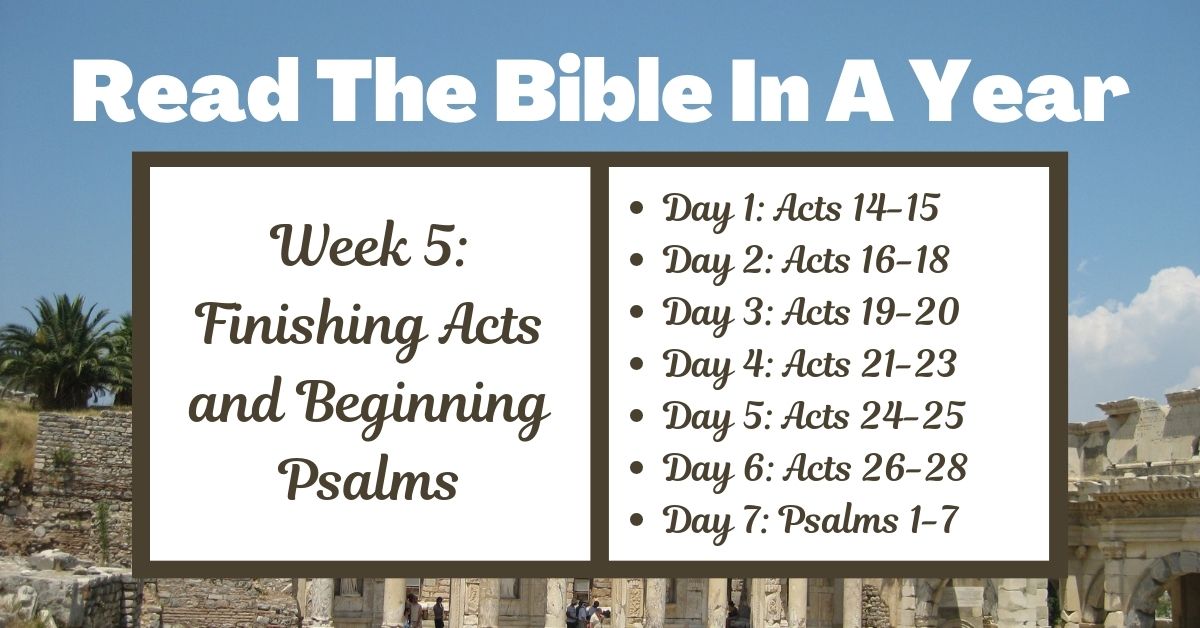
Read: Read the Bible in a Year: Week 5 – Finishing Acts and Beginning Psalms
Exploring the Historical Context of Psalm 1
Blessed is the man
Psalm 1:1-2 (ESV)
who walks not in the counsel of the wicked,
nor stands in the way of sinners,
nor sits in the seat of scoffers;
but his delight is in the law of the Lord,
and on his law he meditates day and night.
To fully grasp the profound wisdom of Psalm 1 embedded in the opening verses, it’s crucial to consider the historical context in which these words were written. These verses are believed to be the work of King David, who lived around 1000 BC. During David’s time, the Hebrew Bible, or the Old Testament as we know it today, was far from complete. The New Testament, with its teachings of Jesus, was centuries in the future. In David’s era, the primary source of divine guidance was the “law of the Lord,” which primarily referred to the Torah, the first five books of the Bible.
In this context, “the law of the Lord” held a special place in the lives of the ancient Israelites. It was their moral and legal compass, guiding their daily actions and decisions. Delighting in this law wasn’t just an intellectual exercise; it represented a way of life—a deep reverence for God’s guidance during a time when written words were rare treasures.
Verse 1 paints a vivid picture of the blessed life, one that begins by distancing oneself from unrighteous paths. It highlights the importance of choosing one’s companions wisely, avoiding the influence of the wicked, sinners, and mockers. The historical context deepens our understanding of this choice – it was a time when God’s teachings were held in highest esteem, and association with those who mocked or opposed them was to be avoided.
So, the wisdom encapsulated in these verses isn’t just a set of principles; it reflects a way of life in ancient Israel. It’s about actively seeking God’s wisdom, finding joy in it, and surrounding oneself with like-minded individuals who shared the same reverence for divine guidance. This historical context adds layers of meaning to verse 1 and invites us to consider how we can apply these principles to our own lives today, in a world where we have easy access to the entire Bible and a wealth of spiritual resources.
The Blessing of Righteous Living in Psalm 1: The Tree Metaphor
He is like a tree
Psalm 1:3 (ESV)
planted by streams of water
that yields its fruit in its season,
and its leaf does not wither.
In all that he does, he prospers.
In verse 3, we encounter a beautiful blessing for the righteous, conveyed through a vivid metaphor. Picture this: it’s like going apple picking in the bountiful orchards of New England, where you’re greeted by abundant, perfectly ripe fruit. Now, contrast that with the time that I went apple picking in California during a severe drought: the apples were lackluster, the leaves bore the marks of disease, and worms were rampant. This imagery distinctly underscores the author’s point, highlighting our innate yearning for prosperity and growth, a yearning that wisdom often fulfills.
Unraveling Unrighteousness in Psalm 1: The Chaff Metaphor
The wicked are not so,
Psalm 1:4-5 (ESV)
but are like chaff that the wind drives away.
Therefore the wicked will not stand in the judgment,
nor sinners in the congregation of the righteous;
The imagery of chaff being blown away by the wind in these verses is not merely poetic; it is deeply rooted in the agricultural practices and cultural context of ancient Israel. The process of winnowing, separating the grain from the chaff, was a common sight during the harvest season.
For more modern people who are far removed from the process of getting a bag of flour into the grocery store, the process is as follows:
- Harvest: The collection of wheat from the field.
- Thresh: The separation of grains from the stalk.
- Winnow: The separation of the lighter husks (or chaff) from the heavier grains.
- Mill: The grinding of grains into flour.
- Sift: The removal of larger pieces to ensure a consistent texture.
- Package: The packaging of flour into bags or containers for use.
In the winnowing process, the harvested grain was tossed into the air. As it fell back to the ground, the lighter chaff was carried away by the wind, while the heavier grain fell back to be collected. This metaphor of the wicked being like chaff reflects a tangible aspect of daily life for the ancient Israelites. It was a vivid picture of what they saw in their fields during the harvest, making the concept of the wicked being “blown away” easily relatable.
Understanding the cultural and agricultural background deepens our appreciation of the symbolism in these verses. The process of separating chaff from grain was labor-intensive and crucial for obtaining usable grain for food. In Psalm 1, this process serves as a metaphor for what befalls the wicked.
The chaff is light, unstable, and easily dispersed by the wind, much like the unrighteous ways of the wicked. In contrast, the righteous are compared to a stable, fruit-bearing tree, deeply rooted by the streams of water. This metaphorical language provides a profound contrast between those who seek wisdom and righteousness and those who lead unrighteous lives.
By incorporating the concept of winnowing and the metaphor of chaff, the Psalm invites readers to reflect on the instability of a life lived without wisdom and righteousness. This cultural and literary analysis enriches our understanding of the text, making the message more vivid and thought-provoking. It encourages us to choose the path of wisdom, symbolized by the stable, fruit-bearing tree, over the ephemeral and unstable nature of chaff.
God’s Watchful Care: Finding Refuge in the Wisdom of Psalm 1
for the Lord knows the way of the righteous,
Psalm 1:6 (ESV)
but the way of the wicked will perish.
In the final verse, we receive a divine promise from God: he will diligently watch over the path of the righteous. This is truly comforting news! Whatever adversity may come our way, we can find solace in the assurance that God is ever watchful, ready to intervene and safeguard us. When we consider this promise in conjunction with the other assurances provided by the Bible, we can take comfort in the knowledge that, despite any tribulations we may face, we will ultimately find refuge in his loving embrace.
Conversely, the wicked do not enjoy such assurances. Bereft of God’s care and protection, they are left to face inevitable ruin.
Applying the Wisdom of Psalm 1 to Daily Life
As we reflect on these verses, let’s consider how the wisdom of Psalm 1 can be applied to our daily lives. How can we delight in God’s word and avoid unrighteous paths?
- In our fast-paced world, how can we embrace the wisdom highlighted in Psalm 1?
- Can you share a personal experience where wisdom had a significant impact on your life?
- How does the Bible influence your daily life, and how does it shape your choices?
- How do you personally avoid unrighteous paths in your life?
- What is the modern relevance of the tree metaphor for personal growth?
- What practical steps ensure we follow the path of righteousness?
The wisdom of Psalm 1 remains a timeless beacon, guiding us through life’s intricate journey. It invites us to delve deeper into the word of God, seeking the wisdom that ensures meaning and purpose on our path.
Read: A Prayer for Seeking God’s Timing and Guidance: Yielding Fruit in the Right Season
Share your insights and experiences related to the wisdom of Psalm 1 in the comments below. How have you applied these timeless teachings in your life? Your contributions are not only valuable but can also inspire others on their own journeys.
If you enjoyed this prayer and wish to receive more Christian content from the Joyful Moments in Christ website, feel free to subscribe to my newsletters!
Related Resources
Visit the Joyful Moments in Christ homepage for all posts, or scroll through other blog posts related to wisdom:



















English Standard Version (ESV): Scripture quotations marked (ESV) are taken from the ESV® Bible (The Holy Bible, English Standard Version®), © 2001 by Crossway, a publishing ministry of Good News Publishers. Used by permission. All rights reserved. The ESV text may not be quoted in any publication made available to the public by a Creative Commons license. The ESV may not be translated in whole or in part into any other language.


 Joyful Moments in Christ