In our modern culture, we often cringe at the idea of abstinence before marriage. Even adultery is seen as fairly normal, even if a person does not want it in their own marriage. We live in an age that celebrates the following of every impulse and the satisfaction of every desire, and yet this lifestyle rarely produces the peace it promises. Proverbs 5 gives some good advice in these matters, speaking with a clarity that cuts through the noise of contemporary life. It reminds us that our physical choices are deeply connected to our spiritual state, and that the boundaries set by God are not meant to keep us from joy, but to preserve it within a safe and holy place.
The Call to Discretion
Proverbs 5 begins with a plea for undivided attention. This is not merely a lecture on morality, but a vital instruction for the soul. The father here knows that the world will offer many loud and colorful alternatives to the path of life, and so he urges his child to develop a quiet and discerning spirit.
Like many of the previous chapters of Proverbs, this chapter is written as a letter of advice from a father to a son. The father pleads that the son will heed the coming advice and that the son will be full of discretion and knowledge. While this chapter is written explicitly for men, women can still get a lot out of it by reversing the pronouns and changing “son” to “daughter.” Discretion is the ability to see the end of a path before you take the first step. It is a gift from God that allows us to look past the immediate gratification of a moment and see the long term consequences of our actions. When our lips guard knowledge, we speak truth to ourselves when temptation whispers lies.

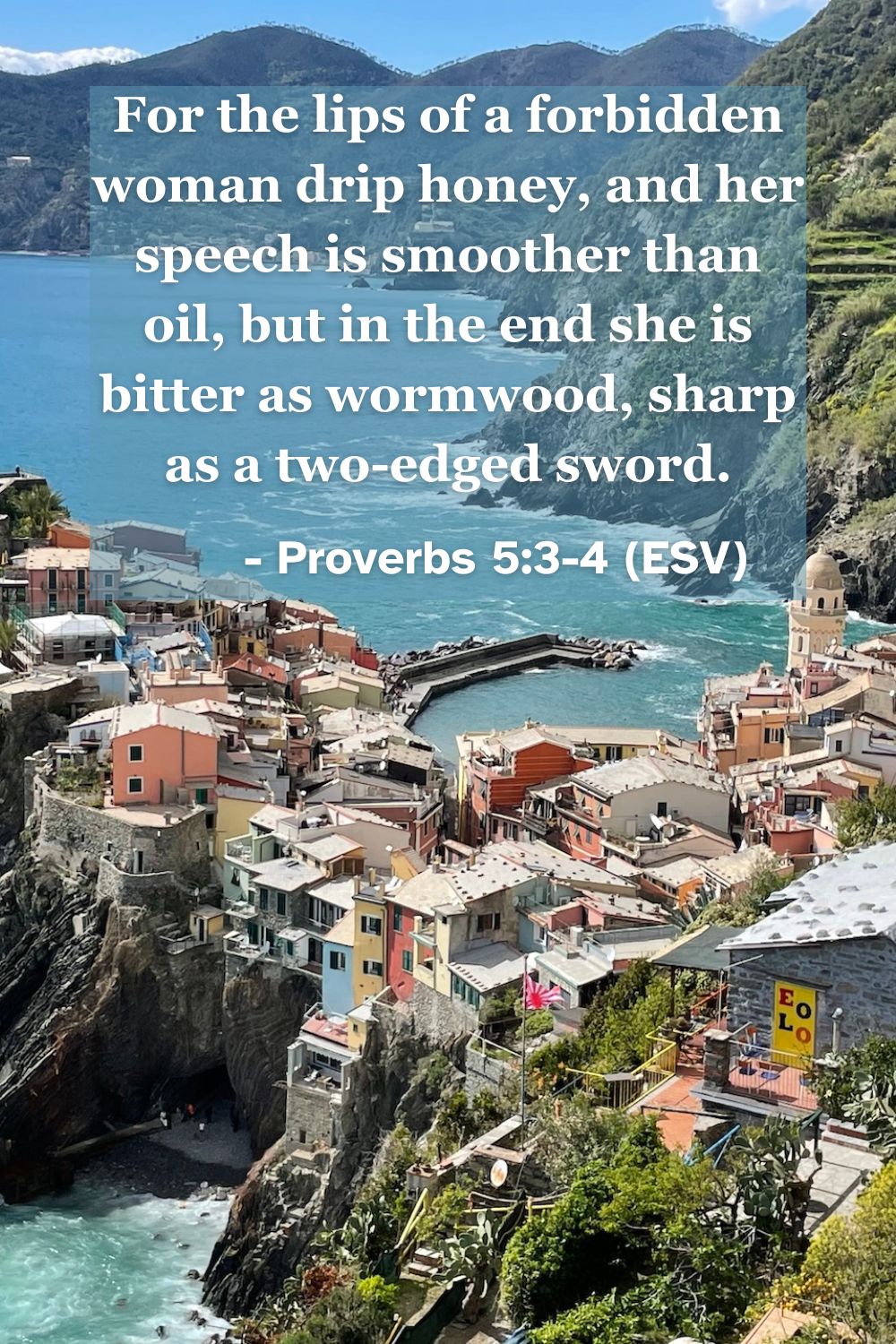
Throughout history, there has been the idea of a forbidden woman. She could be a prostitute, a married woman, or a woman who you would never consider marrying. The imagery here is powerful. Sin never introduces itself as a monster; it arrives as something sweet. The honey and oil represent the sensory appeal of forbidden intimacy: the flattery, the excitement, and the ease of slipping into a secret life. However, the father warns that the aftertaste is poison. Wormwood is famously bitter, and a two-edged sword does not just cut; it destroys. The pleasure is fleeting, but the pain is deep and lasting. We must learn to see the sword behind the honey.
The Path that Leads to Death
We must understand that sexual sin is not a victimless crime or a private mistake. It carries a spiritual weight that drags the soul toward the darkness. When we choose to step outside the covenant of marriage, we are stepping off a cliff that we often mistake for a staircase.
Her feet go down to death;
Proverbs 5:5-6
her steps follow the path to Sheol;
she does not ponder the path of life;
her ways wander, and she does not know it.
Engaging in a relationship with a forbidden person will have a detrimental effect on your soul. The first step might seem benign, but the further you tread the path, the closer you will come to death. You may not see how close you are to giving up eternal life until it is too late. Once you start compromising on one area of your life, you will start to compromise in other areas. The forbidden woman is described as someone who does not ponder her own path. She wanders aimlessly, lost in her own desires. When we follow such a path, we lose our own spiritual orientation. We forget the beauty of the gospel and the holiness to which we are called. The end of this wandering is Sheol, the grave, and a separation from the life giving presence of God.
The father pleads once more to heed this very important advice. Anyone who has dealt with teenagers understands the idea of rebellion and unwise choices. We plead with our kids and sometimes they will accept our words and other times they run the opposite way. What pain it causes when they do! Our Heavenly Father feels the same way about us. He wants to teach us the way of life, but we continue to chase after death instead. His words are like a guardrail on a mountain road. If we depart from them, we do not find freedom; we find the abyss. Listening to God is an act of trust that his design for our lives is better than our own.
The Cost of Forbidden Fruit
The consequences of ignoring this wisdom are not just spiritual; they are often visible in the ruin of a person’s life and reputation. The father describes the loss of honor, strength, and resources that follow a life of unfaithfulness.
Keep your way far from her,
Proverbs 5:8-12 (ESV)
and do not go near the door of her house,
lest you give your honor to others
and your years to the merciless,
lest strangers take their fill of your strength,
and your labors go to the house of a foreigner,
and at the end of your life you groan,
when your flesh and body are consumed,
and you say, “How I hated discipline,
and my heart despised reproof!”
The son is told to stay far from temptation. He isn’t to flirt with danger. There are so many ways that an intimate relationship can go wrong when it is engaged outside the bounds of marriage. Many of my high school friends ended up pregnant, and when I look at them today, not many of them are now with the man of their youth. They also experienced many difficulties with raising a child while still being a child.
Other friends and co-workers have engaged in adultery, often ending in divorce and trauma for their children. Alimony payments, STDs, and more are par for the course. At some point, most of these men and women wished for their lives to turn out differently. By ignoring, or in some cases not receiving, discipline poor choices were made that resulted in lifetime consequences. To give your years to the merciless is to find that sin is a cruel master. It takes your best years and leaves you with nothing but regret.
These choices can cast us out of the assembled congregation if we do not mend our ways. Can you imagine what would be said if you started attending church with someone else’s husband? What would be said if you had so many sexual relationships that you had to take a paternity test to know who the father was? The assembled congregation represents our community of faith and accountability. When we live a secret life of sin, we distance ourselves from the very people who can help us. There is a specific kind of shame that comes when our hidden actions are brought into the light of the church. We find ourselves on the brink of ruin because we have traded the fellowship of the saints for the fleeting pleasure of a stranger.
Of course there is always forgiveness, but God does ask us to repent of our wicked ways. Just think of the woman in John 8:1-11 who almost got stoned for her adultery. In the end, Jesus forgave her, but told her to “go, and from now on sin no more.” We can all use this advice! We may not all struggle with sexual sin, but there are plenty of other sins that each of us is guilty of. Repentance is not just being sorry for getting caught; it is a turning of the heart back toward the Father. It is a decision to value his grace more than our sin.
The Joy of the Marriage Covenant
In contrast to the bitterness of the forbidden relationship, the Bible paints a beautiful picture of faithfulness within marriage. God created intimacy to be a source of profound joy and refreshment, like a private well that provides clean, flowing water.
Drink water from your own cistern,
Proverbs 5:15-17 (ESV)
flowing water from your own well.
Should your springs be scattered abroad,
streams of water in the streets?
Let them be for yourself alone,
and not for strangers with you.
This father instructs his child to “drink water from your own cistern.” Find a spouse and be faithful to that spouse! If you are a man, do you really want your child to be raised by someone else? Do you want to have children scattered around your town? The metaphor of water suggests that intimacy is a natural thirst that God intends to satisfy within a specific boundary. When that water is scattered in the streets, it becomes wasted and polluted. It no longer brings life; it brings chaos. By keeping these “springs” for yourself alone, you preserve the dignity and the sacredness of the relationship. Faithfulness creates a private world of trust that cannot be found in the arms of a stranger.
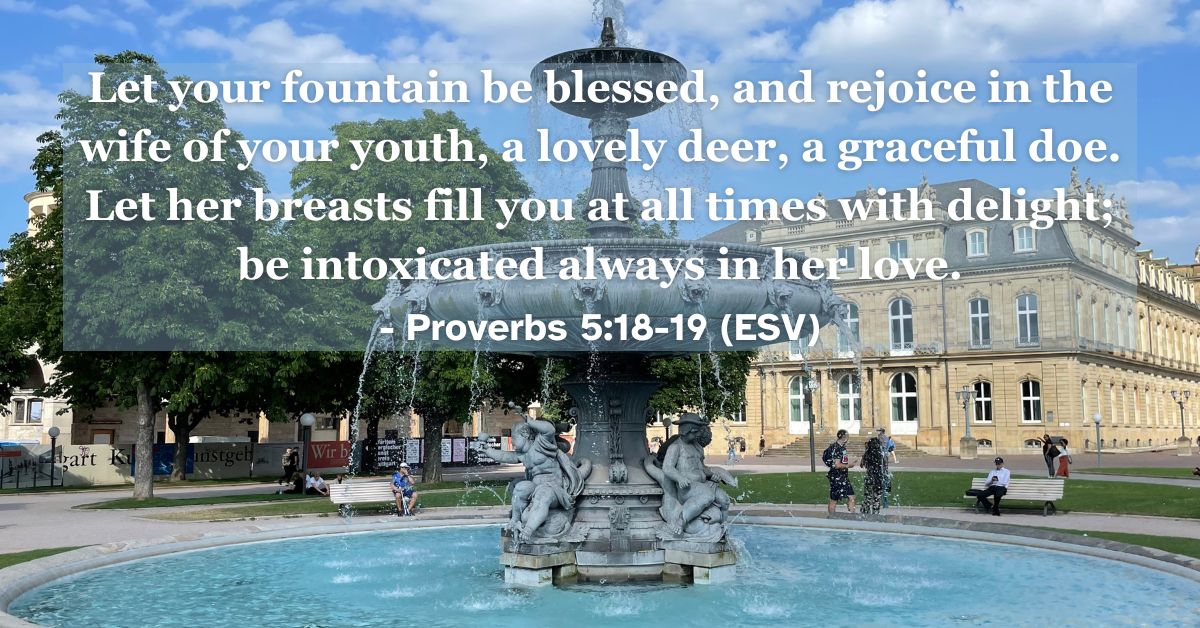
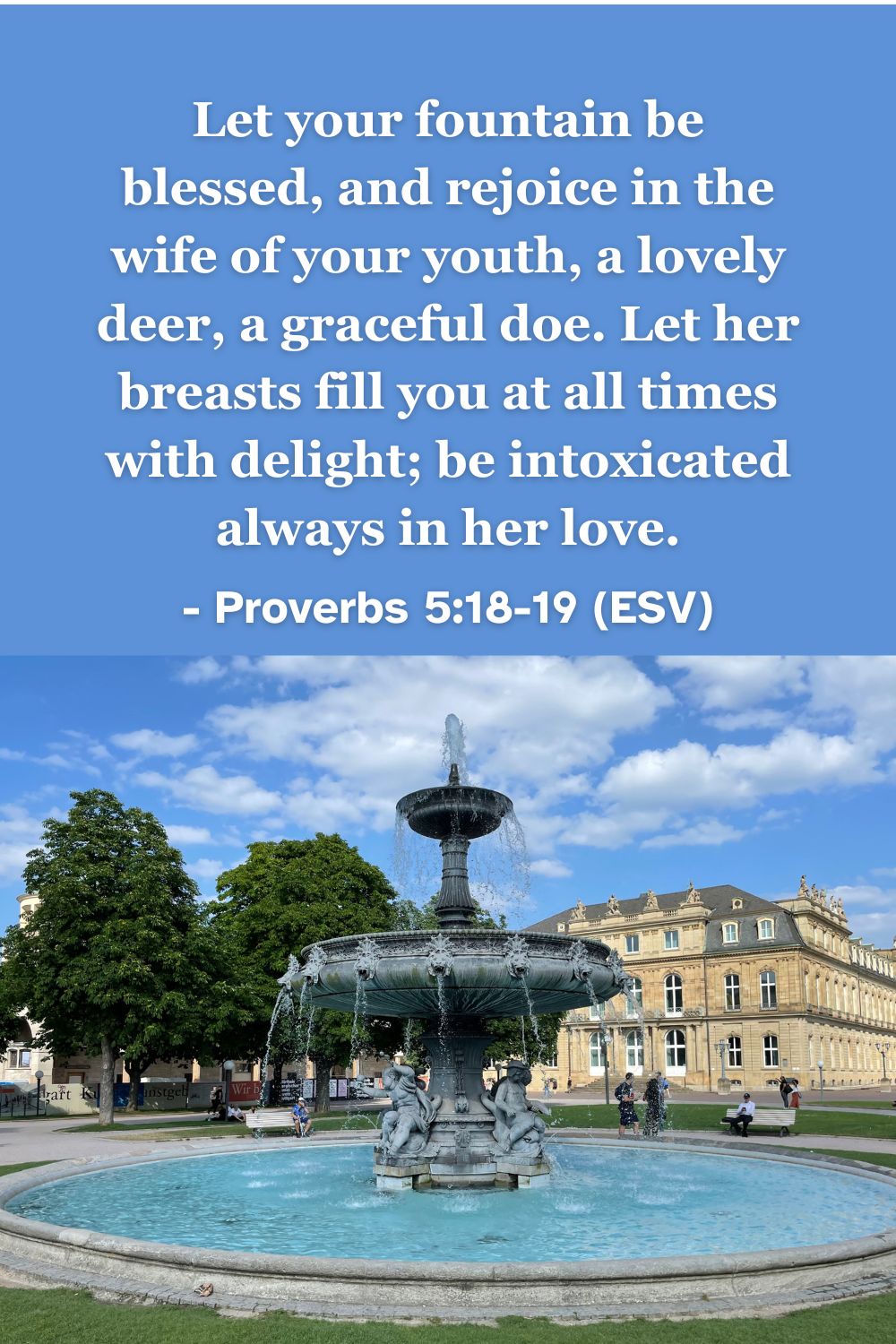
The language here is incredibly celebratory. God wants us to find delight in our spouses. The joy of a long term marriage is a gift from his hand. To be intoxicated with the love of your spouse is a holy kind of intoxication. It is a commitment that grows deeper with time, finding beauty in the shared history and the common life you have built together. This joy is a shield against the honeyed lips of the forbidden. When we are satisfied at home, we are far less likely to go searching in the streets. We are called to actively rejoice in the person God has given us, cultivating an affection that is both passionate and permanent.
Do you want your wife to have the shame of seeing the children of your forbidden relationship? Do you want the shame of raising a child who is not yours? With the prevalence of DNA testing sites like 23 and Me, you may not be able to contain your secret relationships. How many children have been devastated when they get their DNA results back and learn that their mother had an affair and their father is not their biological father? Or that the father had an affair with a neighbor that resulted in a child? The ripples of unfaithfulness reach into the next generation, causing trauma and confusion that may never fully heal in this life.
The All-Seeing Eye of God
We often think that if we can keep our actions hidden from our spouse or our church, we have gotten away with it. However, we forget that we live our entire lives in the presence of the Almighty. There is no secret so deep that he does not see it, and no path so winding that he does not know where it leads.

Even if you manage to keep your wicked secret, God knows the truth. There is nothing that is hidden from him. He wants each one of us to repent. The knowledge that God is watching should not just be a deterrent; it should be a comfort to the repentant heart. He sees our struggle, he knows our weakness, and he offers the strength of his Spirit to help us choose the better way. He ponders our paths, weighing our motives and our choices. When we embrace the forbidden, we are essentially saying that we do not care that our Creator is watching. We are prioritizing a moment of pleasure over our relationship with the one who gives us every breath.
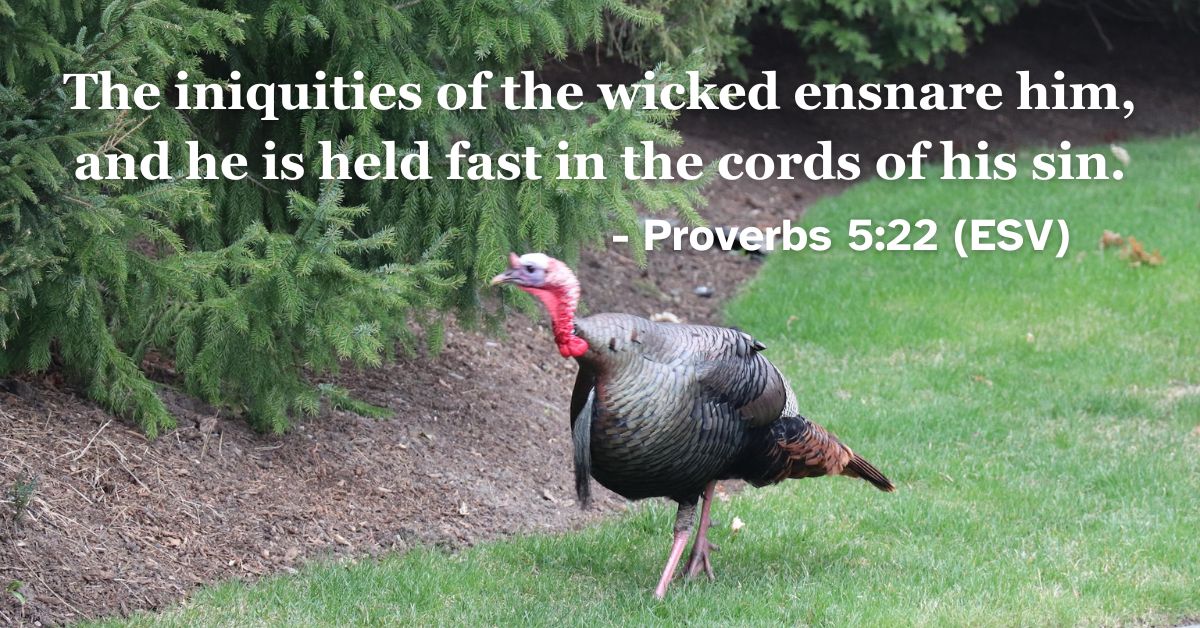
If we fail to repent, we will be caught in a trap. Sin has a way of becoming its own punishment. The “cords of sin” are the habits and dependencies that we develop when we reject God’s wisdom. At first, the sin feels like a choice, but eventually, it feels like a cage. We become held fast by the very things we thought would make us happy. Repent now and be saved! The cords can be broken by the power of Christ, but we must be willing to let them go.

If you don’t accept discipline and correction from God, it will be harder and harder for you to accept him as your Lord and King in Heaven. The lack of discipline leads to a spiritual death long before the body fails. Folly is a deceptive guide that leads us into the wilderness and leaves us there. However, wisdom is a loving father who leads us home. Let us choose to be attentive to the words of the Lord today, finding our joy in his holiness and our security in his grace.
Reflection Questions
- How does the imagery of “honey” and “oil” help you identify the subtle temptations in your own life?
- In what ways can you actively cultivate “rejoicing in the spouse of your youth” (or preparing for such a future) to protect your heart?
- What does it mean to you that God “ponders all your paths” even when you think you are alone?
- How can the church community better support those who feel they are on the “brink of ruin” due to their choices?
- What is one practical step you can take today to “stay far from the door” of a temptation you currently face?
Reflective Prayer
Consider using these verses to pray using the ACTS method: Adoration, Confession, Thankfulness, and Supplication:
- Adoration: Praise God. Do these verses bring any specific characteristics of God to mind?
- Confession: Tell God that you are sorry for specific sins. Do these verses bring any specific sins to mind?
- Thankfulness: Show gratitude towards God. Does anything from these verses inspire gratitude?
- Supplication: Make requests for yourself and for others. Does anything from these verses inspire a prayer?
If helpful, you can use a prayer journal template.

Subscribe
If you enjoyed this post and wish to receive more Christian content, feel free to subscribe to my newsletters!
Related Resources
Visit the Joyful Moments in Christ homepage for all posts, or scroll through other blog posts related to relationships and temptation:





Something went wrong. Please refresh the page and/or try again.
English Standard Version (ESV): Unless otherwise noted, scripture quotations are from the ESV® Bible (The Holy Bible, English Standard Version®), © 2001 by Crossway, a publishing ministry of Good News Publishers. Used by permission. All rights reserved. The ESV text may not be quoted in any publication made available to the public by a Creative Commons license. The ESV may not be translated in whole or in part into any other language.
 Joyful Moments in Christ