A good father wants good things for his children. He wants them to make good choices, walk in a manner that brings joy and contentment, and thrive. God is the best of fathers and wants this even more than our earthly fathers. The first few chapters of Proverbs is written in the style of an earthly father to his son, but these words are so much more. This book is a letter of loving wisdom written from our heavenly Father to us. He does not provide these instructions to restrict us, but to liberate us. By understanding his nature and his expectations, we will find the boundaries within which true human flourishing occurs. Just as a child finds safety in the consistent rules of a loving home, we will find our greatest joy in the structured grace of our Father’s commands.
The Foundation of a Father’s Love
Before we can walk the path our Father has set for us, we must be willing to hear the voice of the one who mapped it out. Our journey into wisdom begins with a posture of humility and a recognition that we do not possess the map within ourselves. We are invited to sit at the feet of our creator and listen to the heritage of truth he has preserved for us in the Bible.
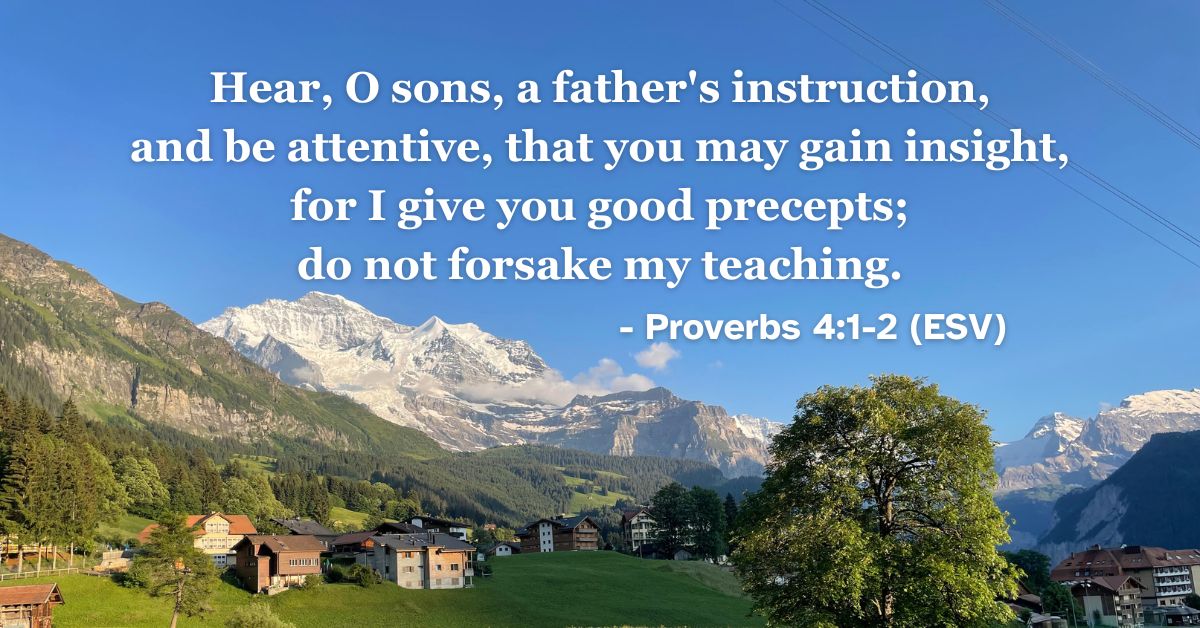
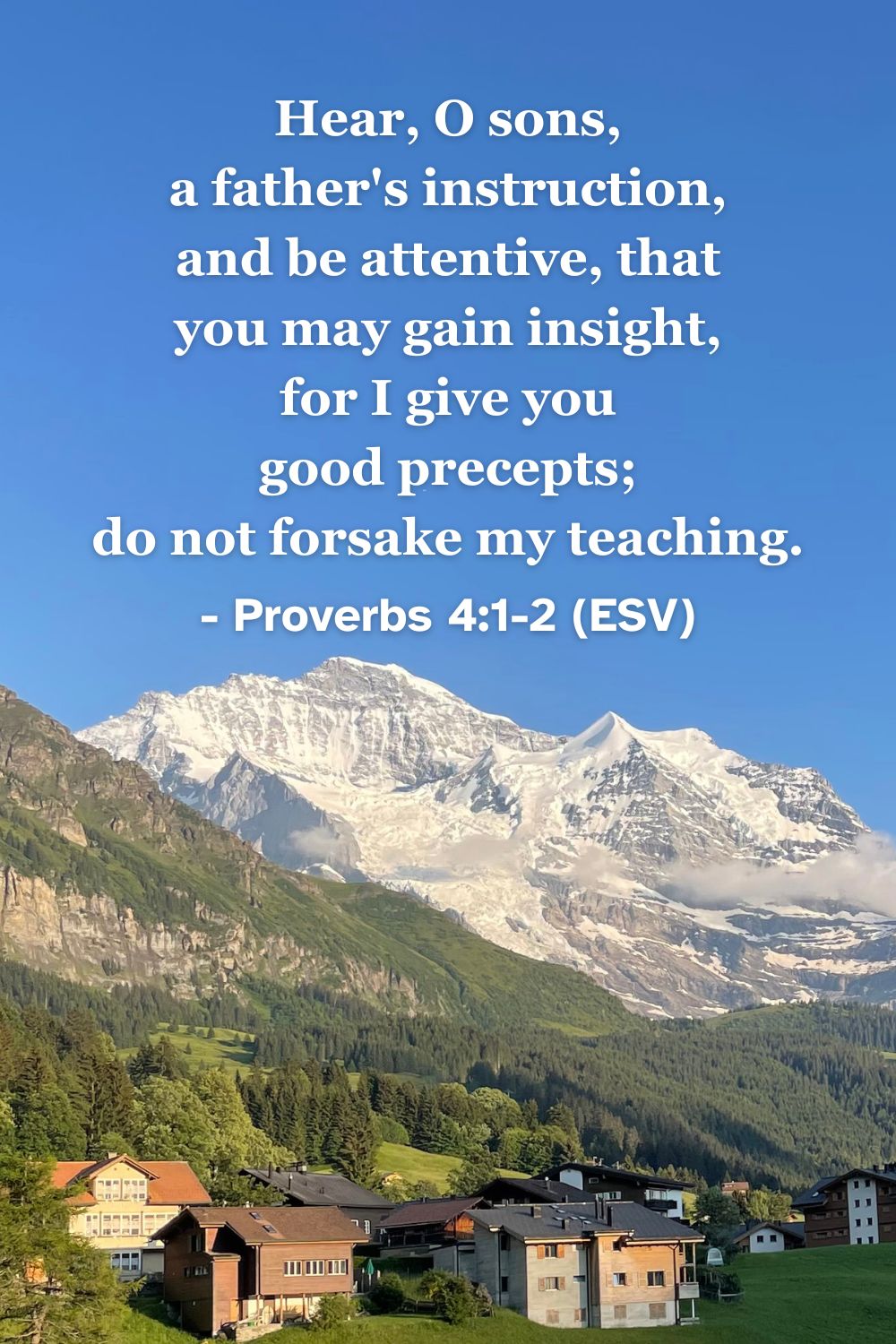
God entreats us to listen to his wisdom, to listen to his instruction. He reminds us that his words are of high value and are good. He tells us to listen up and not forsake his teaching. This is not merely an intellectual exercise; it is a heart felt plea. When the Father calls us to be attentive, he is inviting us into a relationship where insight is the fruit of our communion with him. These precepts are described as good because they originate from a source that is perfectly holy and kind. To forsake this teaching is not just to break a rule, but to turn away from the very source of our life and stability.
When I was a son with my father,
Proverbs 4:3-6 (ESV)
tender, the only one in the sight of my mother,
he taught me and said to me,
“Let your heart hold fast my words;
keep my commandments, and live.
Get wisdom; get insight;
do not forget, and do not turn away from the words of my mouth.
Do not forsake her, and she will keep you;
love her, and she will guard you.”
The formation years are some of the most important. The love and instruction from both a mother and a father can completely change the trajectory of a child’s life. If a parent can figure out how to get a child to listen and to grasp ahold of wisdom and insight with love and delight, protection will be at the child’s beck and call. We are reminded that wisdom is often a generational gift. The father in Proverbs recalls his own upbringing, highlighting the tenderness and care that accompanied the instruction, reinforcing the idea that God’s law is wrapped in his love. We are told to love wisdom, to treat her as a cherished companion. When we love the truth, it ceases to be a burden and becomes a guardian.
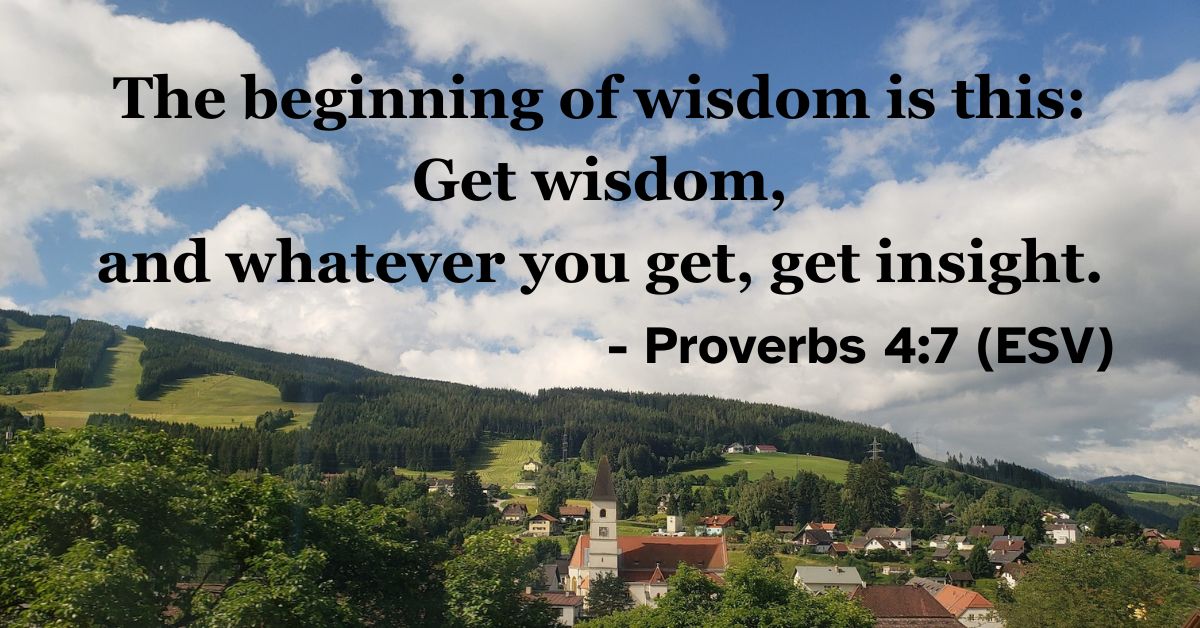
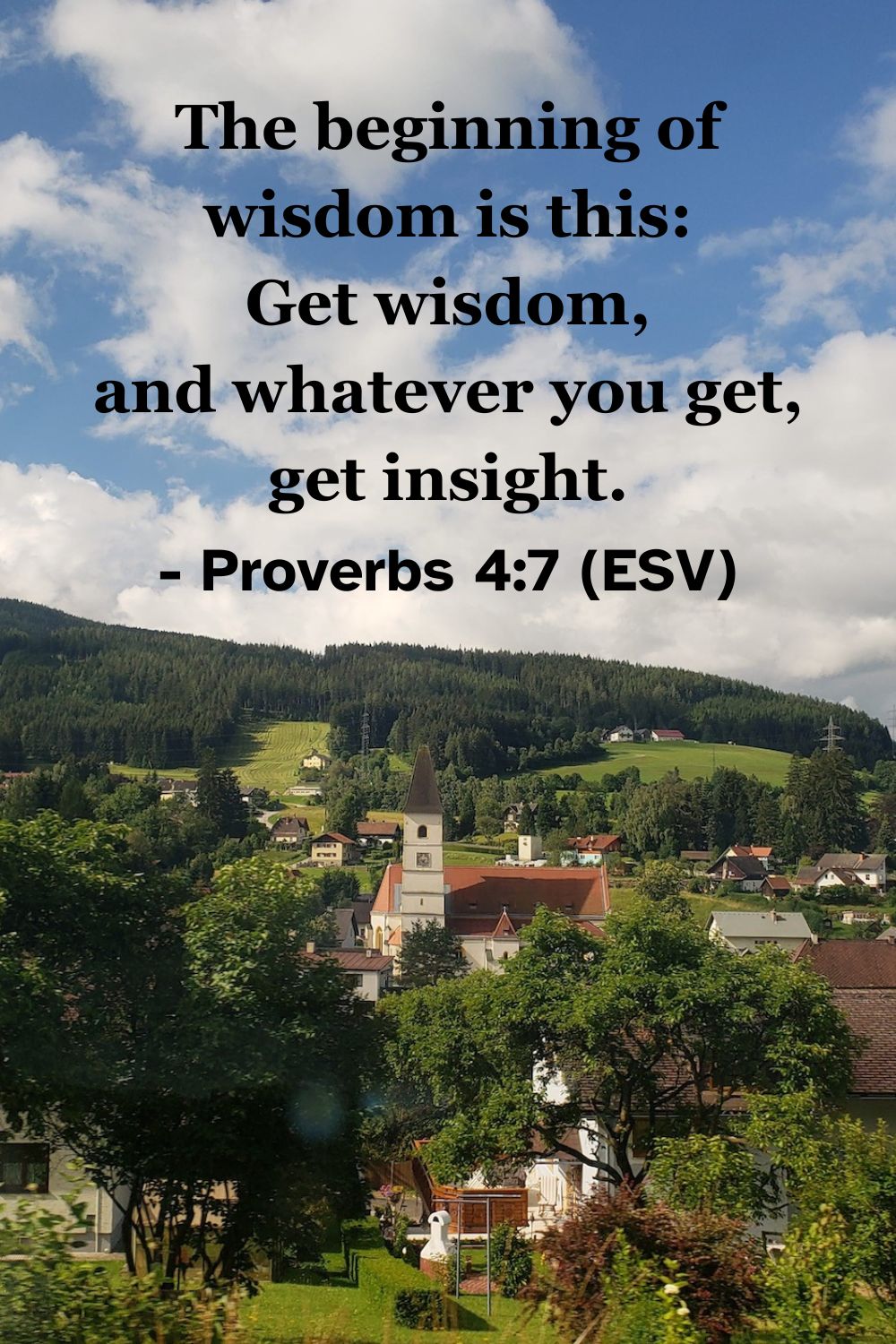
Without at least a little bit of wisdom and insight, it is quite difficult to get more. If your foundation is foolishness, most likely you will continue in foolishness. However, if your foundation is wisdom, most likely wisdom will grow and flourish. This verse sounds almost humorous in its simplicity, and yet it contains a profound spiritual truth. The first step toward wisdom is the desire for it. We must acknowledge our lack and actively seek the insight that only God can provide. In our own strength, we are prone to wander into the thickets of our own making. But when we prioritize the acquisition of divine insight above all other worldly gains, we will find that the Lord is faithful to pour it out upon us.

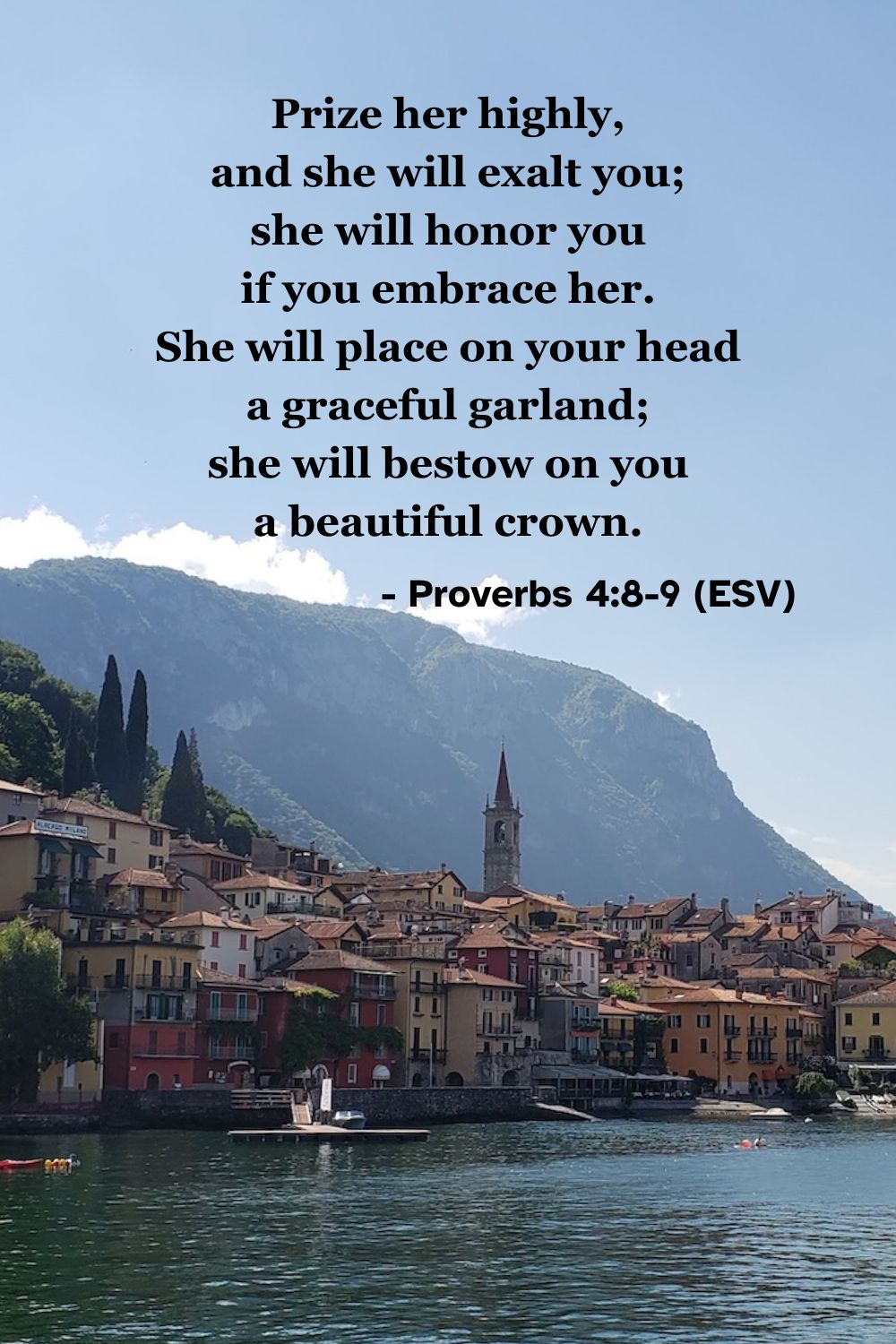
When you see the benefits of wisdom and insight, glory in it; you will reap great reward. Life may have its difficulties, but you will be able to walk through life with confidence, a graceful garland and a beautiful crown. This imagery of the garland and crown suggests a life of dignity and favor. We should remember that it is not a promise of worldly wealth, but of a spiritual beauty that radiates from a soul at peace with its maker. There is a specific kind of joy found in being honored by God through the manifestation of a wise and quiet spirit. When we embrace his truth, he beautifies us with the character of Christ.
The Choice of the Two Paths
Our heavenly Father continues his instruction by contrasting the life of the faithful with the life of those who reject his grace. We are presented with a fork in the road, and the consequences of our choice affect every single moment of our existence.
Hear, my son, and accept my words,
Proverbs 4:10-13 (ESV)
that the years of your life may be many.
I have taught you the way of wisdom;
I have led you in the paths of uprightness.
When you walk, your step will not be hampered,
and if you run, you will not stumble.
Keep hold of instruction; do not let go;
guard her, for she is your life.
So often, we start with receiving great teaching from our parents, but choose not to accept it. We want to think for ourselves, make our own way, figure out our own path. While the attitude of figuring it ourselves can be quite helpful in some parts of our lives, wisdom is not the place for going it alone. One mistake can ruin a life. How many people are in jail because something bad happened to them and then they decided to take justice into their own hands rather than seeking help from the law? When we keep hold of instruction, we are essentially holding onto our very life. The paths of uprightness are designed for steady movement. God promises that when we walk in his wisdom, our steps will not be hampered by the constant friction of guilt or the obstacles of avoidable sin.
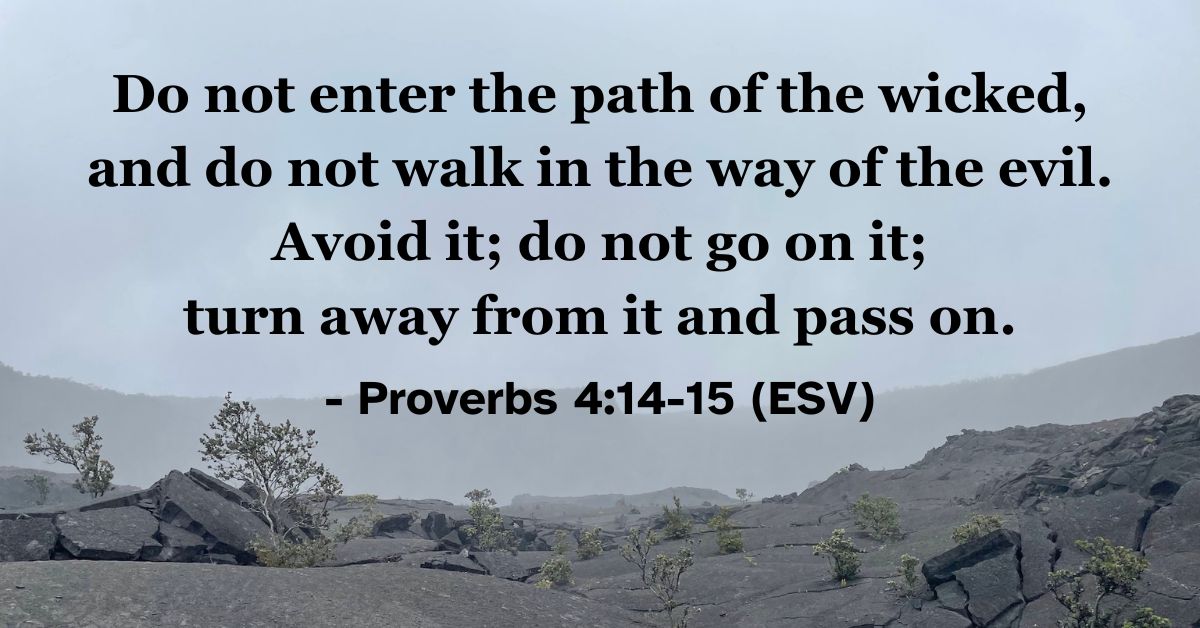
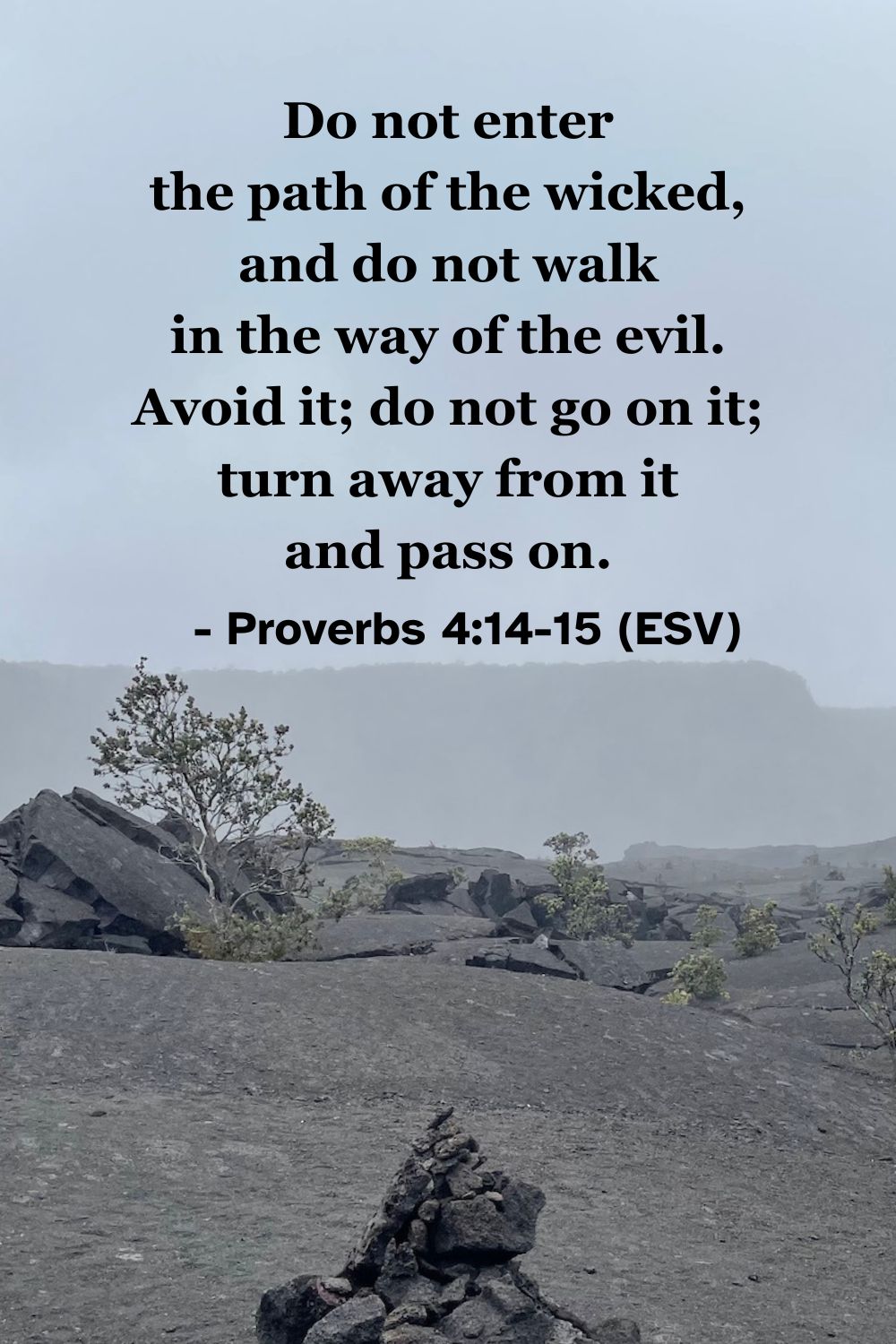
As soon as we choose a path of evil, wisdom begins to leave us. We put one foot in front of the other and soon we are on a path far from God. We need to completely avoid this path. Putting one foot on the path of God and one foot on the path of evil will sweep us away from God. The language here is incredibly strong: avoid it, do not go on it, turn away. There is no room for flirting with darkness. Our Father knows that sin is addictive and progressive. What begins as a curious glance at the path of the wicked can quickly become a habitual stroll, and eventually, a permanent residence. We are called to a radical separation from the ways that lead to destruction.
For they cannot sleep unless they have done wrong;
Proverbs 4:16-17 (ESV)
they are robbed of sleep unless they have made someone stumble.
For they eat the bread of wickedness
and drink the wine of violence.
An attitude of evil will take over our minds if we let it. When we start on the path of revenge, we will think of nothing else until we get it. When we start on the path of gaining wealth through unrighteous means, we will take one step, then another, until we barely recognize our old self. When we eat the bread of wickedness and drink the wine of violence, we are consuming things that will eventually consume us. The wicked become enslaved to their own malice, needing to cause harm just to find a restless kind of peace. This is the opposite of the joy found in the Spirit. It is a hunger that can never be satisfied and a thirst that only grows more parched with every drink of unrighteousness.
Walking in the Light of Dawn
The contrast between the two ways of living is most vividly seen in the metaphor of light and darkness. As we yield to the working of the Holy Spirit in our lives, our perception of the world changes. We move from the shadows of our own limited understanding into the radiant clarity of God’s truth.
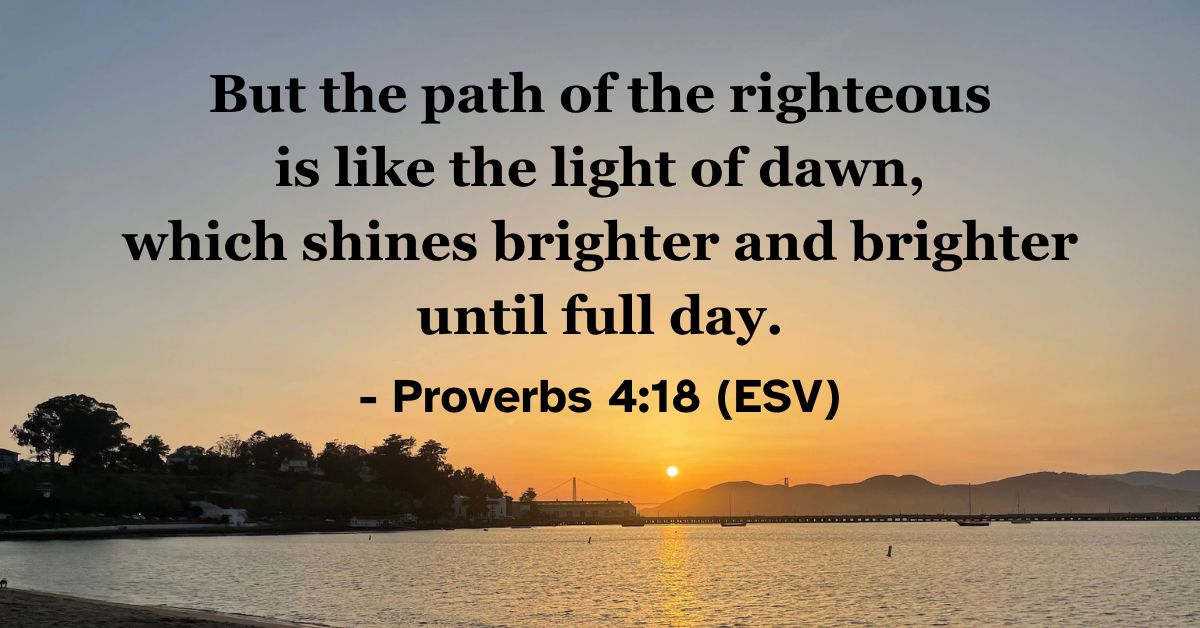
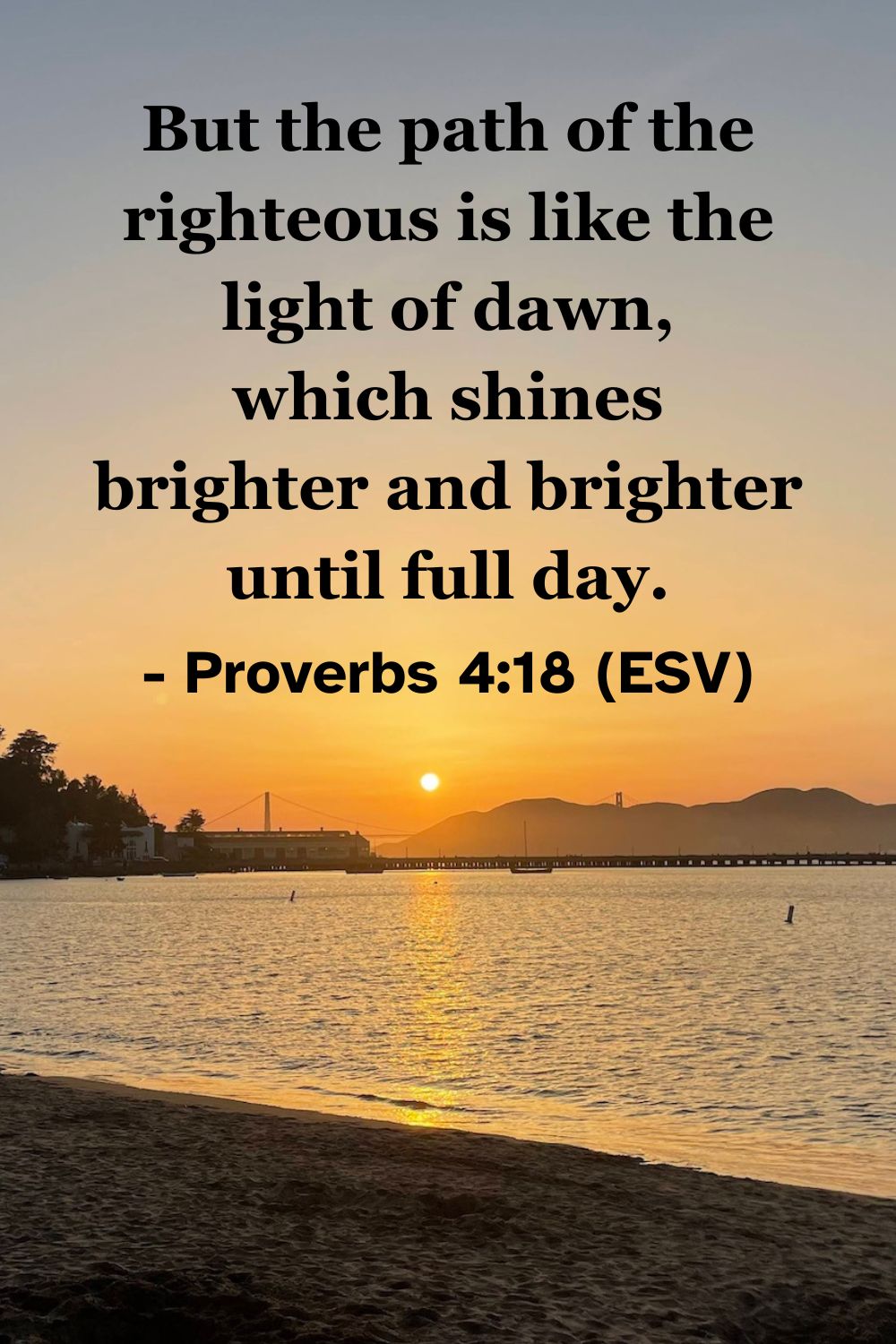
When we choose the path of righteousness, God shines light and illuminates our way. Our first step may be dim like the light of early dawn, but as each foot is placed before the other, our way will become clearer and clearer. This is a beautiful promise of sanctification. We do not become perfectly wise or perfectly holy in an instant. Instead, it is a gradual awakening. As we walk with Christ, the “Sun of Righteousness,” he will clear the fog of our confusion. Things that used to baffle us become plain. The joy of this path is that it is always getting brighter. Even in old age, the believer can look forward to a day that is more luminous than the one before, culminating in the perfect light of his presence in Heaven.
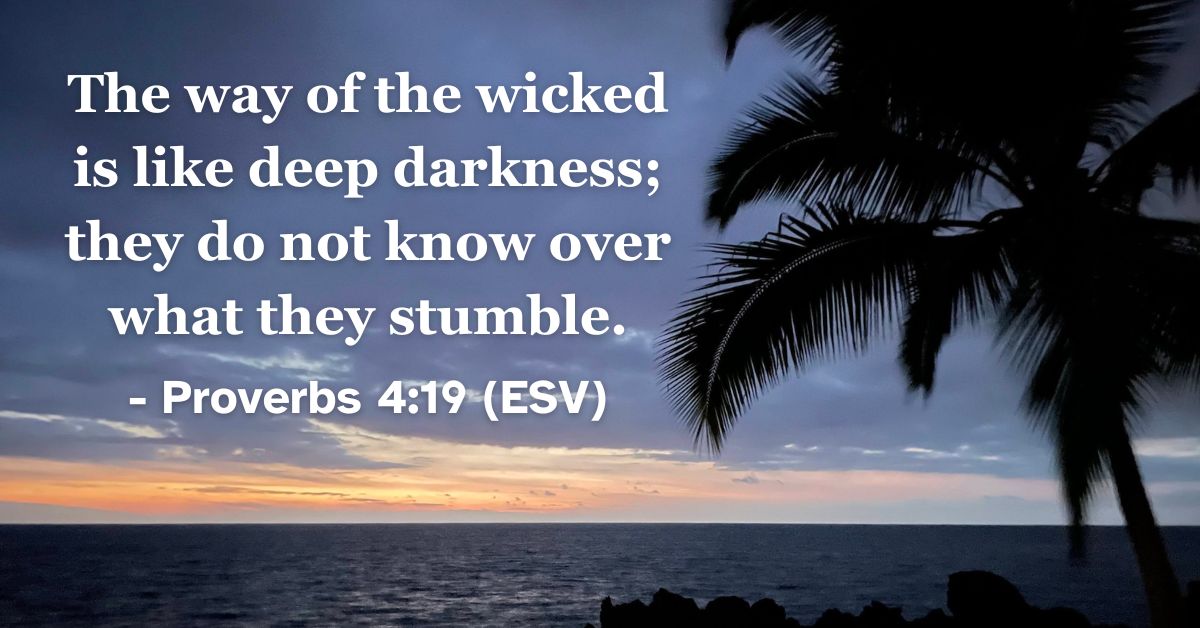
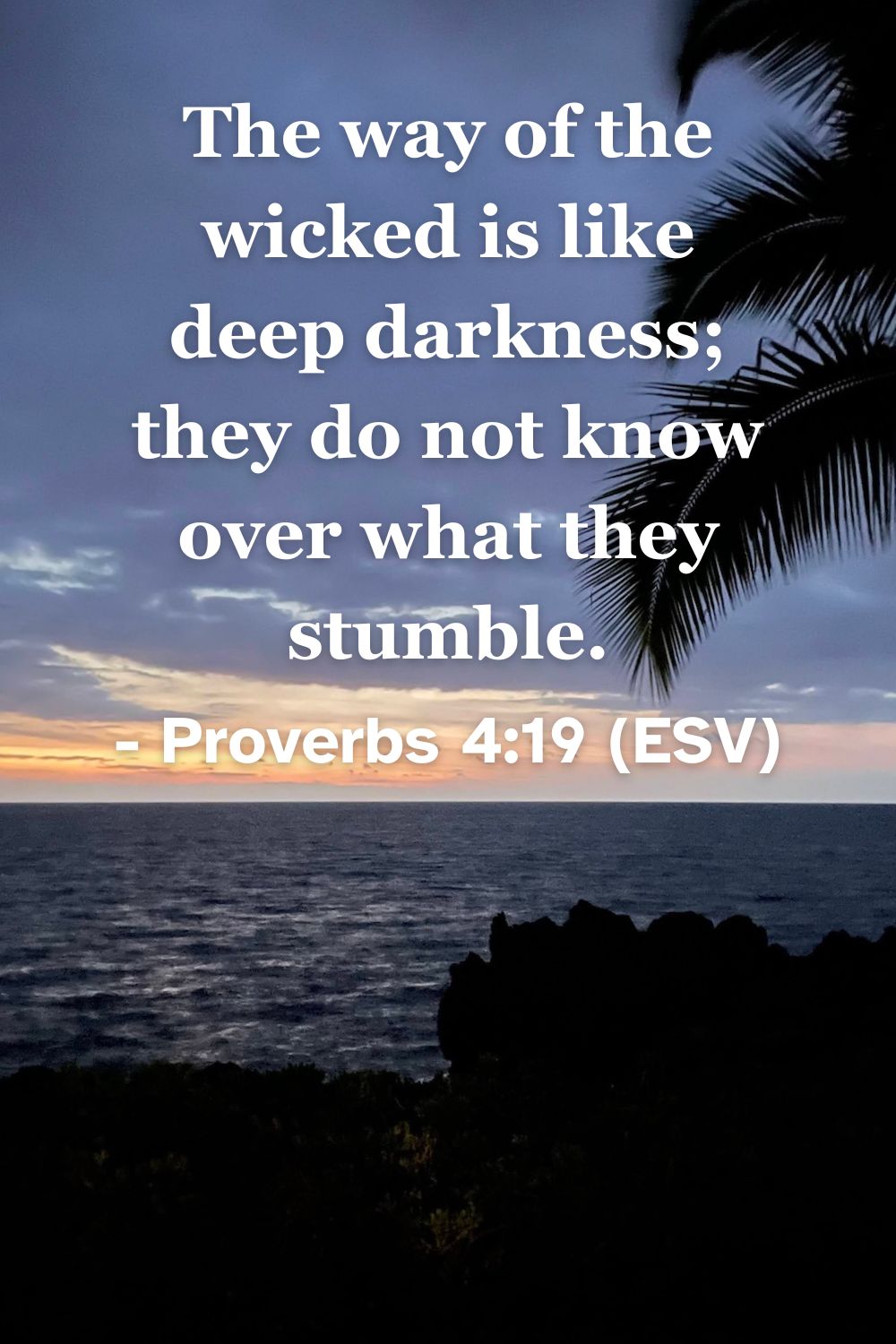
On the other hand, the way of the wicked is like hiking in the dark without a flashlight. Eventually we will trip, but when we do, we may or may not know if it is over a root, a rock, or a tiger. Every step will feel like it is leading us somewhere important, but really we will be making one mistake after another without even realizing it. This is the great tragedy of life apart from God. People stumble through their careers, their marriages, and their personal ethics, wondering why they feel so broken, and yet they cannot see the obstacles because they have rejected the light. Deep darkness is not just an absence of sight; it is a spiritual blindness that prevents someone from even recognizing their own danger.
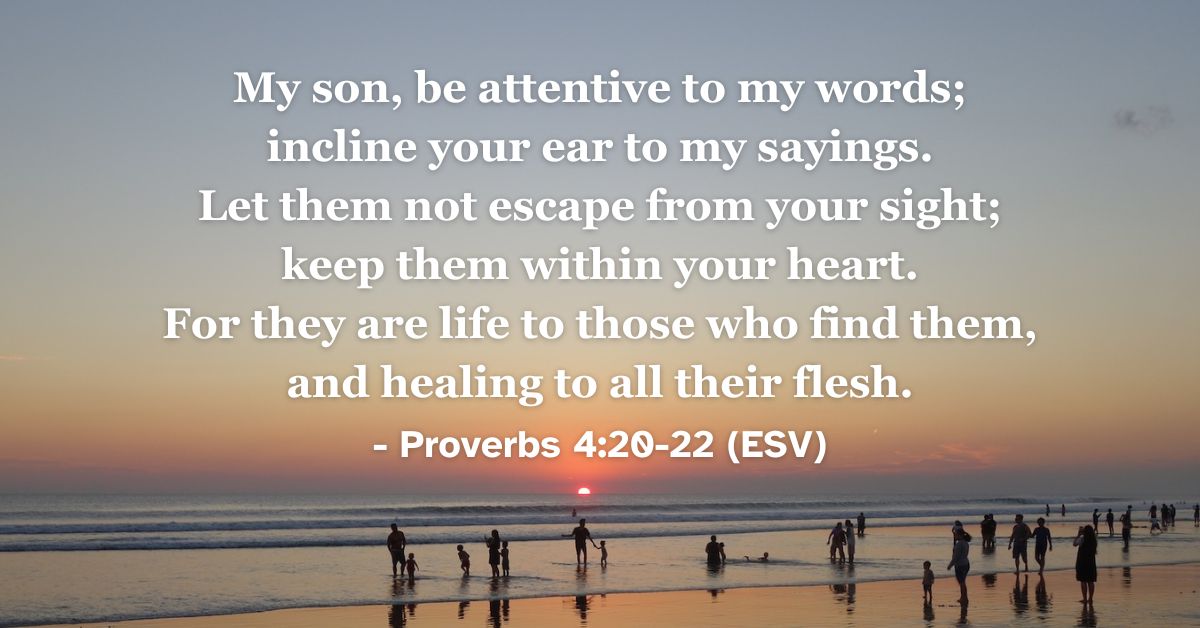
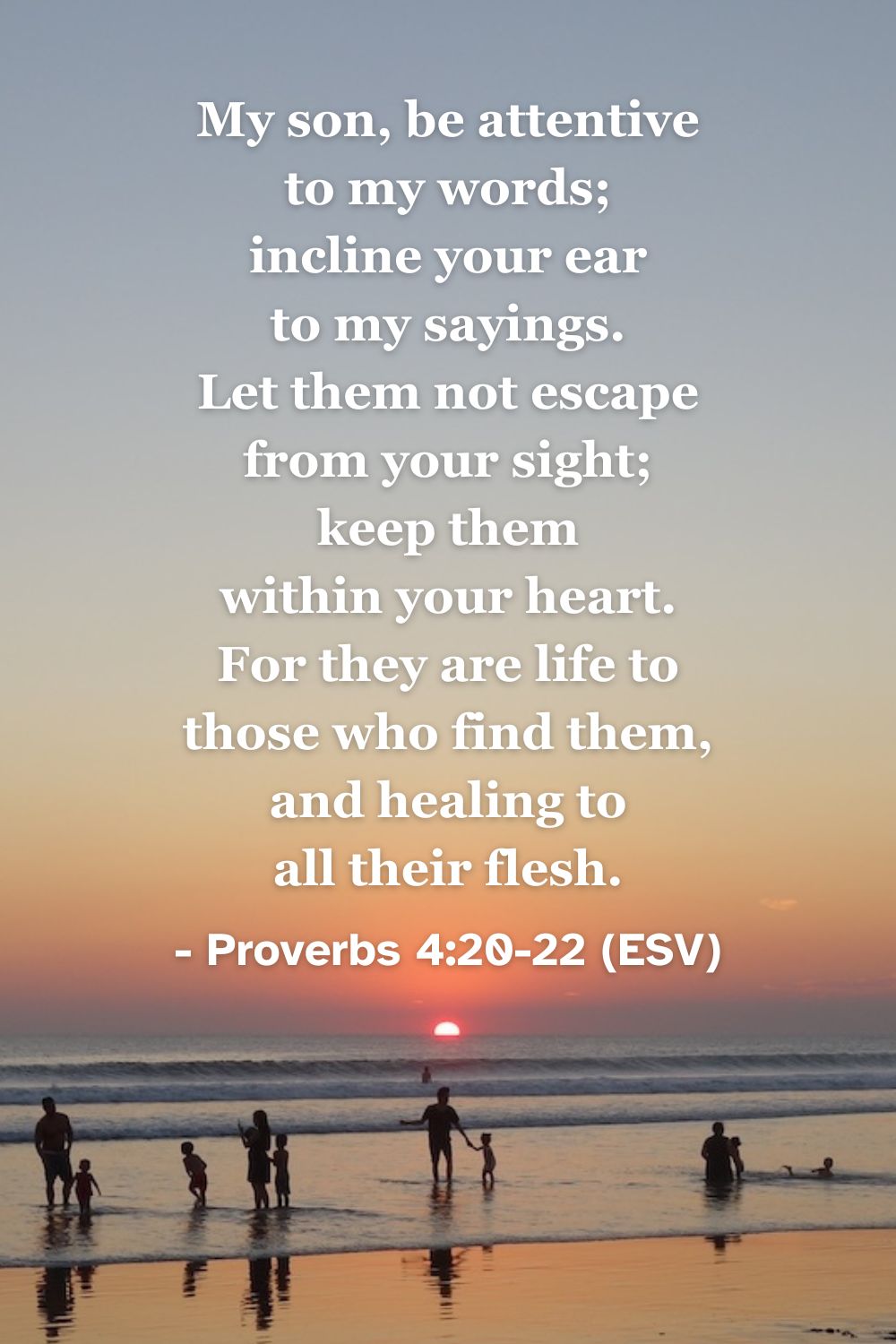
Just like our earthly fathers want us to be attentive to their words, our heavenly Father also wants us to be attentive to the Scriptures. The first time we read our Bibles from cover to cover, we will learn the basics of God’s plan. And each successive reading will open new truths. This word is described as healing to the flesh. When we live in accordance with God’s design, we are spared much of the physical and emotional toll that comes from high stakes rebellion and unrestrained appetites. There is a wholeness that comes to the human person when the heart is aligned with the sayings of the Lord.
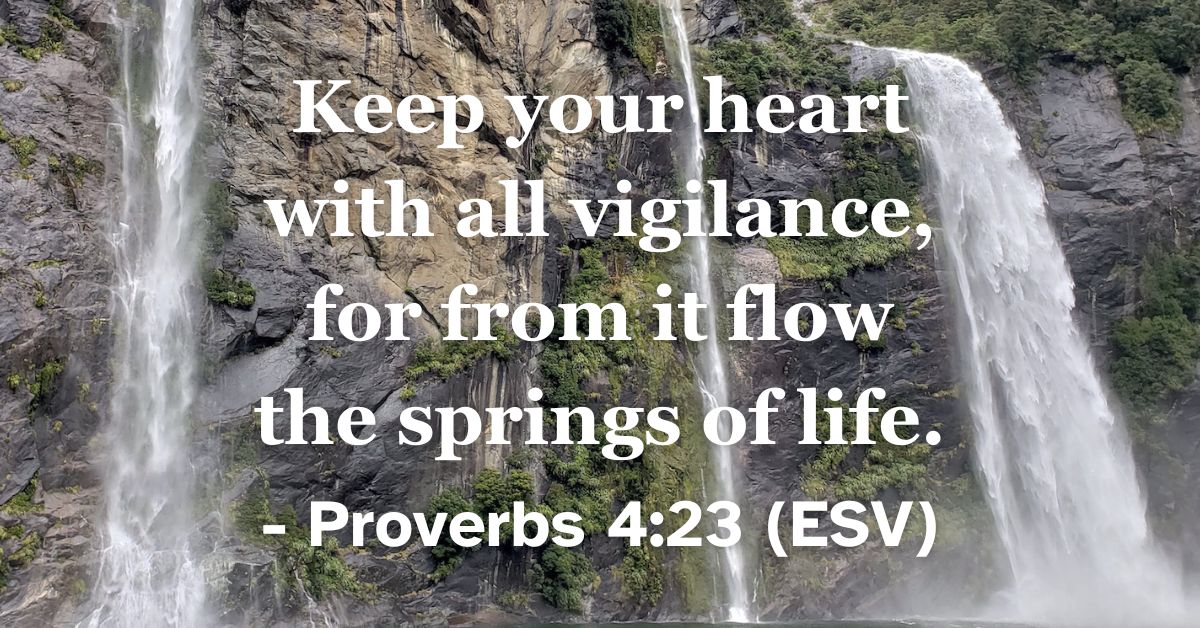
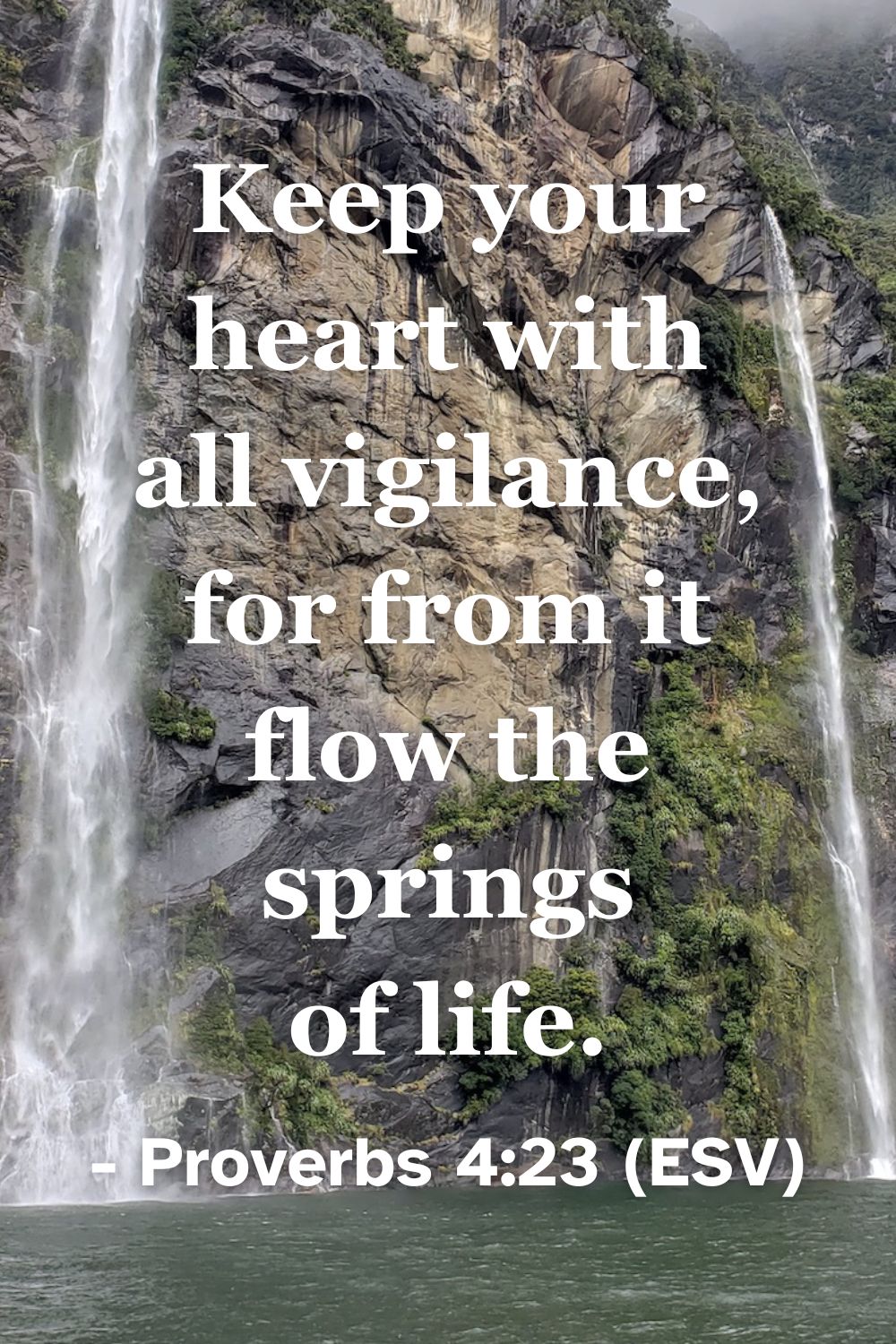
Throughout this process, as we make one revelation, the Holy Spirit will lead us to another. By staying vigilant, we will find the springs of life. The heart is the command center of our being and everything we do, say, and think flows from what we value most. If we allow the heart to become a stagnant pond of worldly desires, our life will reflect that decay. But if we guard our heart, keeping it filled with the pure water of the word, then springs of life will flow out to bless those around us. This vigilance is a daily duty. We must be careful about what we allow to take root in our affections, knowing that our outward life is simply an overflow of our inward state.
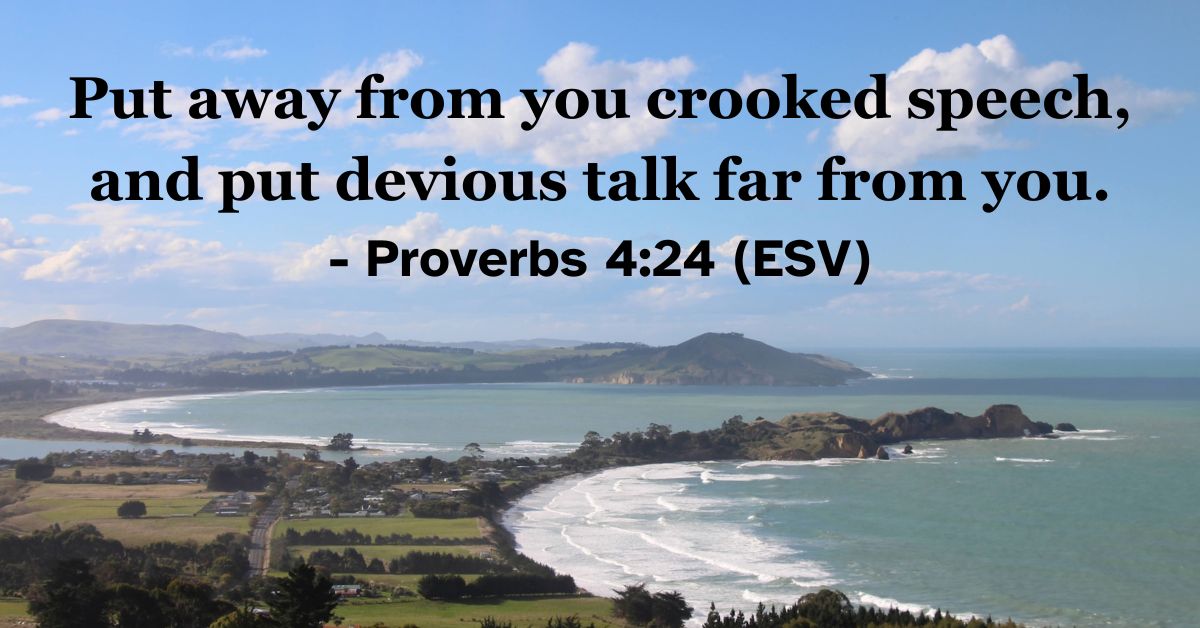
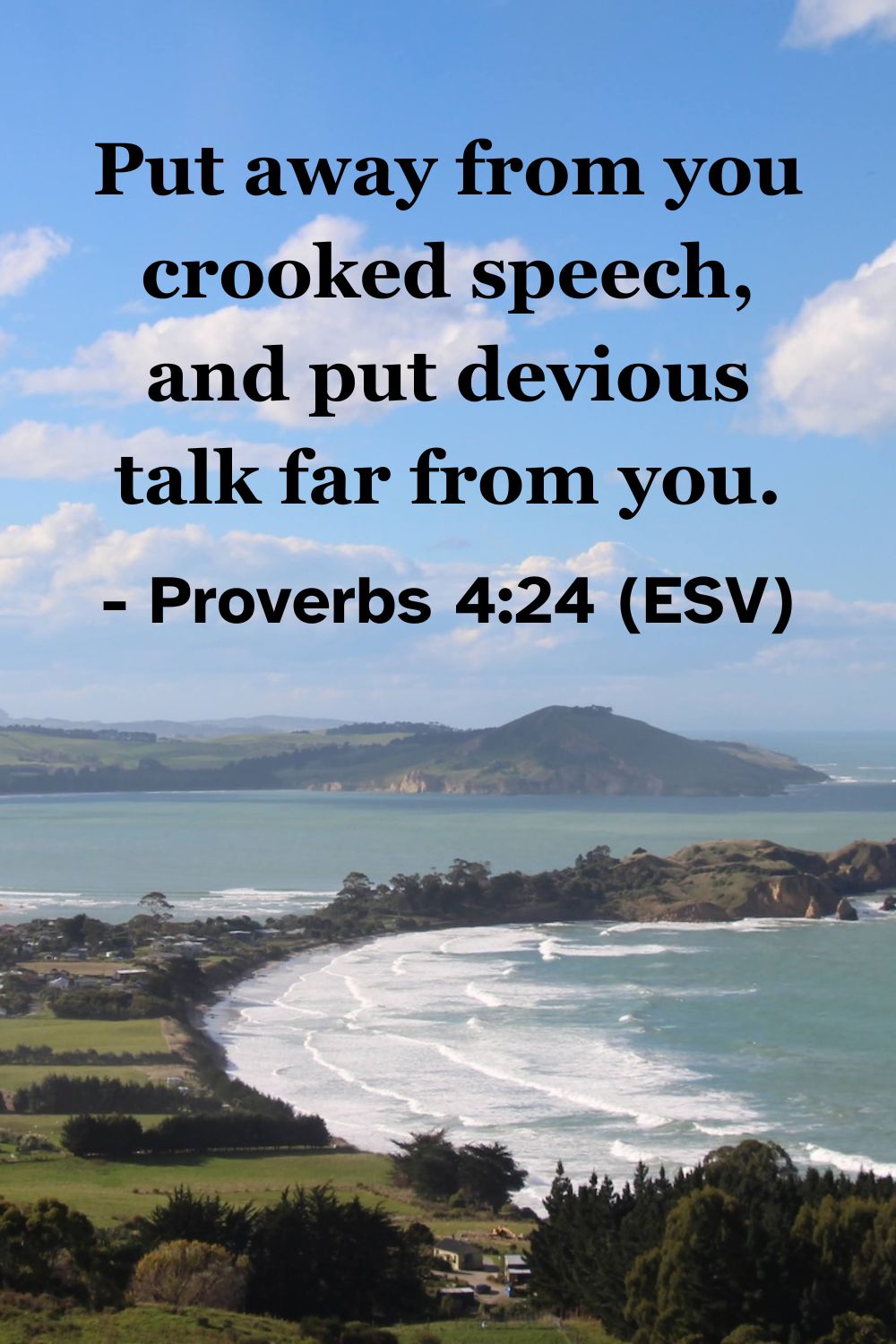
These revelations will show us what we need to put away from our lives. For some it will be our speech patterns. For others it will be something else. When we dwell in the Scriptures, our path will be illuminated. Crooked speech is a sign of a crooked heart. As we grow in grace, our words should become more transparent, more honest, and more encouraging. We can put away devious talk because we serve a God who is truth itself. Our tongues should reflect the light that has dawned in our souls.
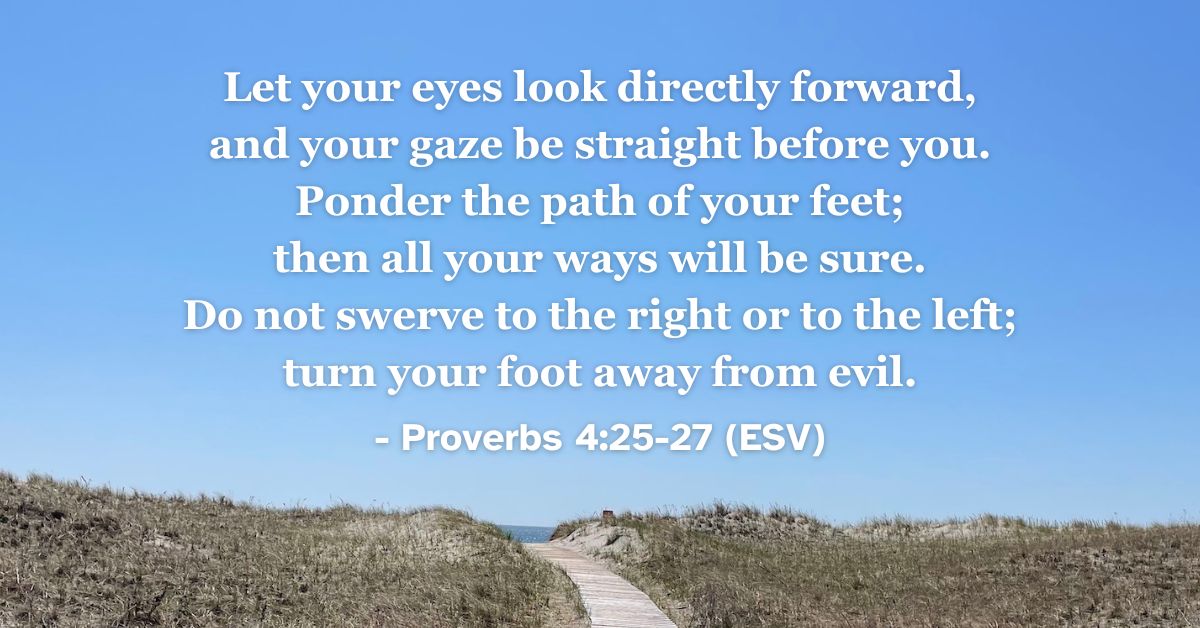
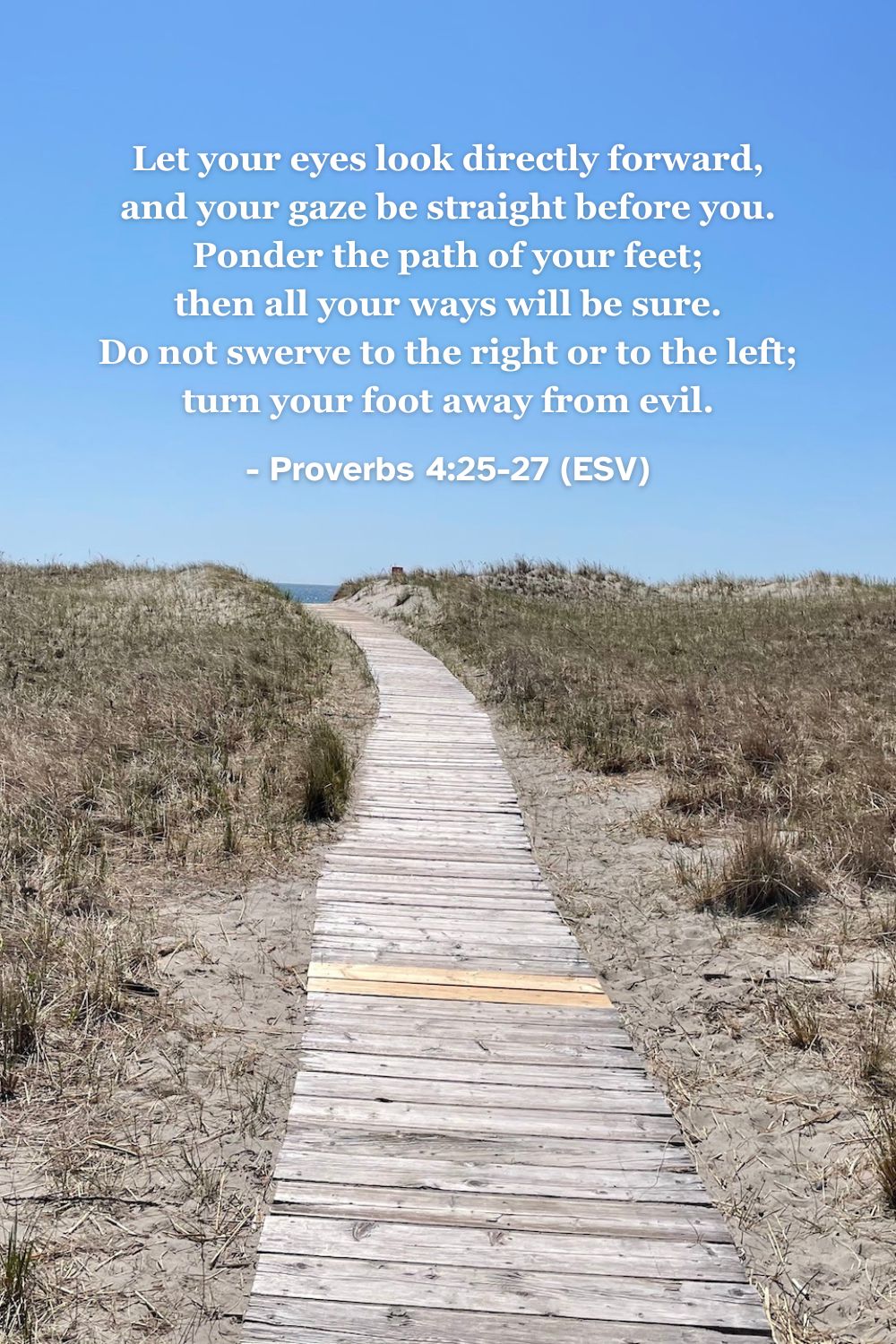
To do this, Hebrews 2:12 (ESV) tells us that we need to look “to Jesus, the founder and perfecter of our faith. Jesus will show us what to ponder. He will show us our path. It is only in him that we can be sure. Jesus never swerved to the right or to the left; he never stepped onto the path of evil. He is the perfect personification of the wisdom described in Proverbs. The good news is that he wants the same for us! When we turn to him in faith, he will help us. He provides the strength to keep our gaze forward, undistracted by the glittering lures of the wicked path. In his presence, we will find the fullness of joy, and at his right hand will be pleasures forevermore. By ponding the path of our feet in light of his example, we will find that our way is not just sure, but blessed.
Reflection Questions
- In what areas of your life do you find it hardest to be attentive to the Father’s instruction?
- How have you seen the “light of dawn” grow brighter in your own spiritual journey?
- What does it practically look like for you to guard your heart with all vigilance this week?
- When you feel tempted to swerve to the right or the left, what specific truths about Jesus help you stay on the straight path?
- How can the promise of “springs of life” flowing from your heart change the way you interact with your family, friends, or coworkers?
Reflective Prayer
Consider using these verses to pray using the ACTS method: Adoration, Confession, Thankfulness, and Supplication:
- Adoration: Praise God. Do these verses bring any specific characteristics of God to mind?
- Confession: Tell God that you are sorry for specific sins. Do these verses bring any specific sins to mind?
- Thankfulness: Show gratitude towards God. Does anything from these verses inspire gratitude?
- Supplication: Make requests for yourself and for others. Does anything from these verses inspire a prayer?
If helpful, you can use a prayer journal template.

Subscribe
If you enjoyed this post and wish to receive more Christian content, feel free to subscribe to my newsletters!
Related Resources
Visit the Joyful Moments in Christ homepage for all posts, or scroll through other blog posts related to wisdom and choice:

Something went wrong. Please refresh the page and/or try again.
English Standard Version (ESV): Unless otherwise noted, scripture quotations are from the ESV® Bible (The Holy Bible, English Standard Version®), © 2001 by Crossway, a publishing ministry of Good News Publishers. Used by permission. All rights reserved. The ESV text may not be quoted in any publication made available to the public by a Creative Commons license. The ESV may not be translated in whole or in part into any other language.
 Joyful Moments in Christ