Anyone who has spent time with American teenagers knows the cultural narrative that surrounds them. It is so commonly repeated that many parents accept it as inevitable. The assumption is that rebellion is simply part of adolescence, as natural as acne or growth spurts. Parents are told to prepare themselves for behavior that is wild, risky, and deeply unwise. Schools and doctors often advise parents to talk about harm reduction instead of moral clarity. Instead of encouraging purity, discipline, or discernment, parents are told to warn about drunk driving while assuming alcohol will be used freely. They are told to talk about safe sex instead of God’s design for sexuality. The world expects teens to experiment with drugs, dishonesty, cruelty, disrespect, and greed. It is presented almost as a rite of passage.
A Better Vision
This quiet resignation is heartbreaking. It sends a message that foolishness is normal, wisdom is optional, and sin is simply part of growing up. The Bible paints a very different picture. The book of Proverbs begins with an urgent plea from a parent to a child, rooted in love, clarity, and truth. Instead of lowering expectations to match the world, Proverbs raises them to match the dignity and calling of a young person made in the image of God. These verses not only challenge the assumptions of our culture but remind us of the holy responsibility parents bear as they guide their children. They also remind teenagers that God calls them to live with wisdom long before adulthood arrives.
The Call to Listen and Live Wisely
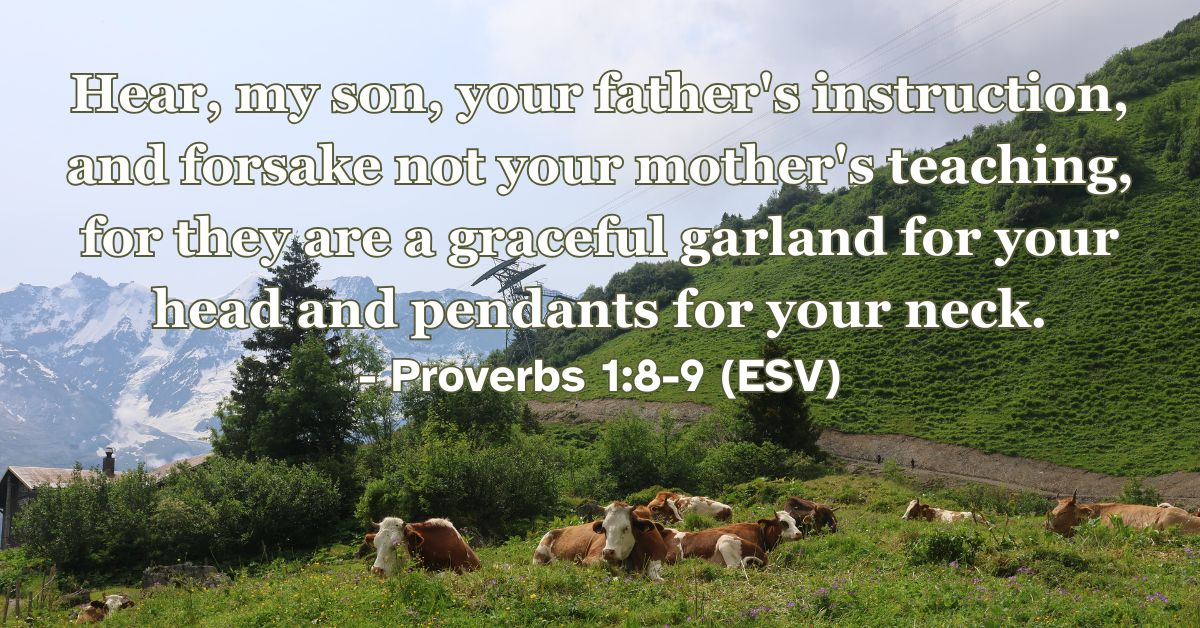
Proverbs 1:8-9 places parents in the role of moral instructors. According to these verses, teaching children about righteousness is not an optional extra, but is part of faithful parenting. Fathers and mothers are called to pass down moral clarity, spiritual truth, and godly habits. The world may encourage parents to stand back and hope for the best, but the Bible calls them to lead with intention and consistency. The imagery of a garland and pendants is striking. These verses picture parental teaching not as a burden or a chain around the neck, but as something beautiful and valuable. The child who listens is not weighed down but adorned with honor.
This challenges the modern lie that moral instruction harms children or limits their freedom. In reality, moral boundaries protect children. They give shape to the conscience. They provide a framework for wise choices. They keep a young person from wandering into dangers that the culture presents as harmless experimentation. When parents faithfully teach, and children humbly listen, they receive gifts that last far longer than adolescence. The benefits of obedience echo throughout adulthood in the form of stability, wisdom, strength, and a sincere walk with God.
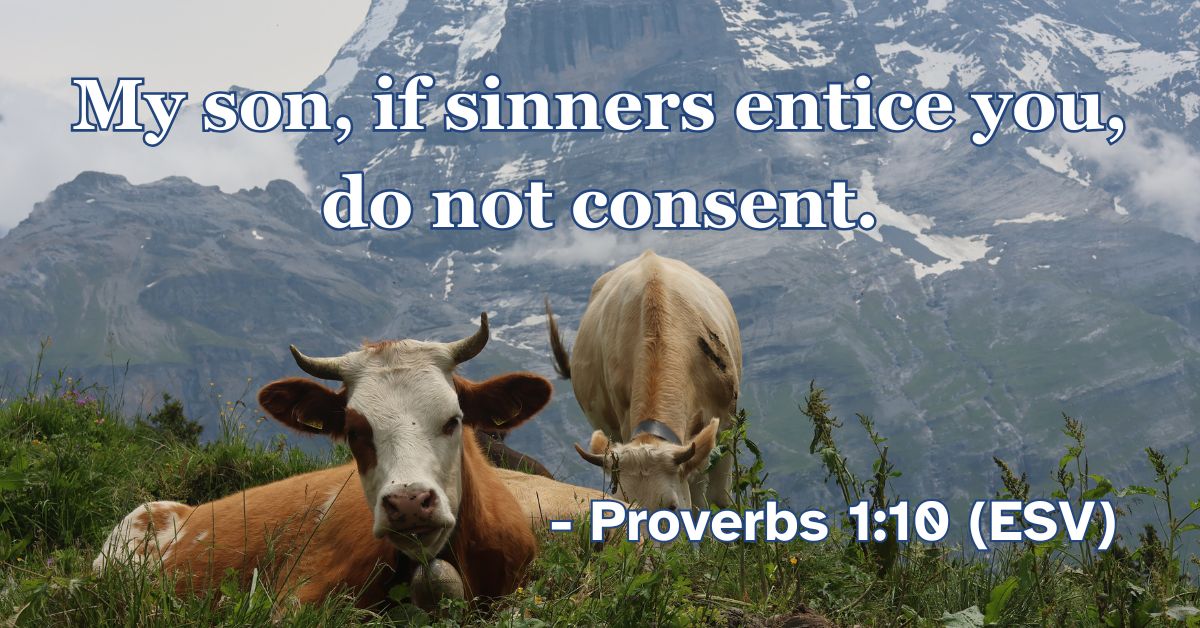
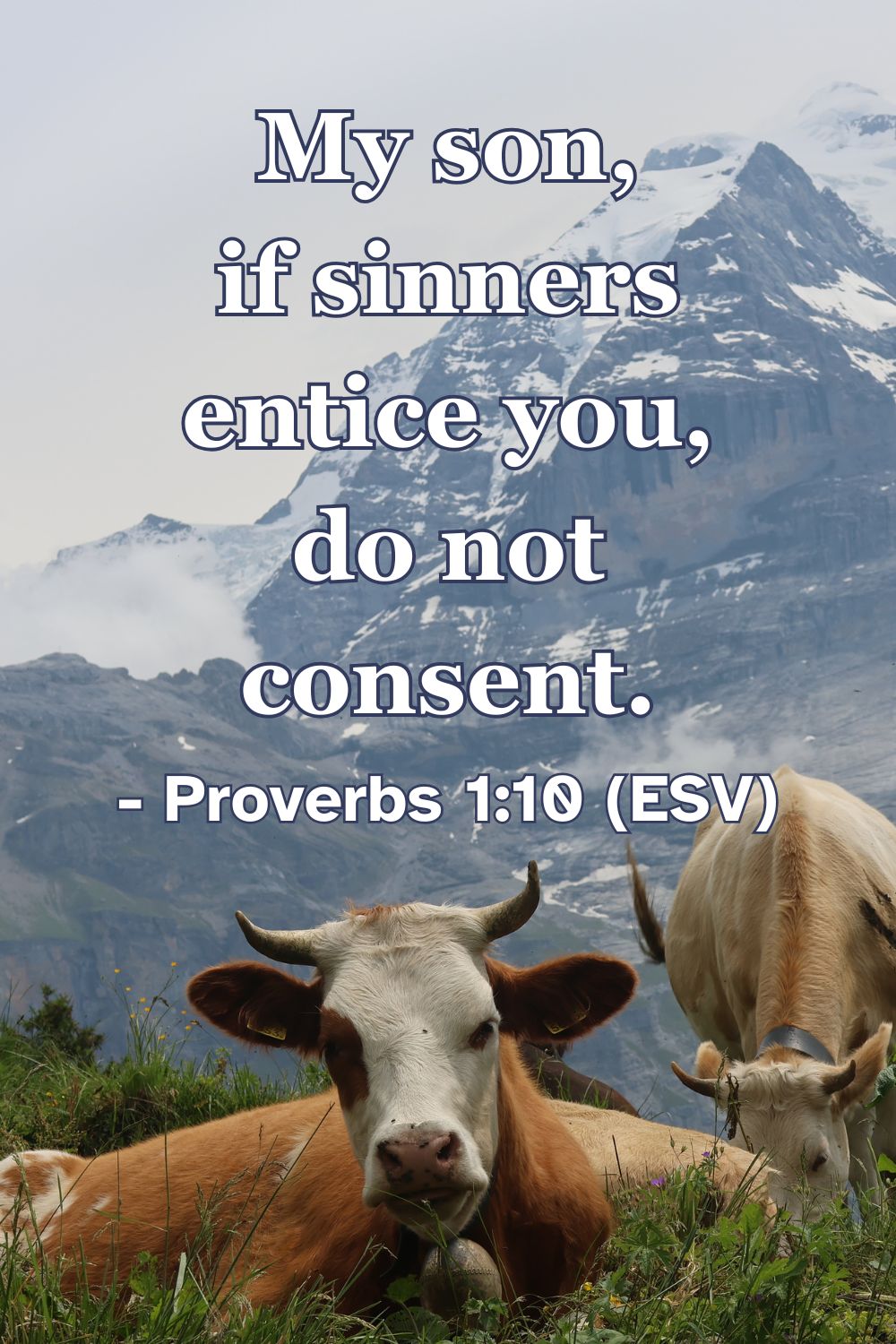
In Proverbs 1:10, the focus shifts from the parent to the child. The instruction becomes personal and direct. “My son, if sinners entice you, do not consent.” This assumes something crucial: children must learn to distinguish good from evil. They must learn to recognize what sin is. Many parents avoid confronting sin clearly. Some fear awkward conversations. Others worry that naming sin too plainly will push their children away. Still others have accepted cultural messages about certain sins being harmless. However, if we do not teach children what sin is, how can we expect them to refuse it?
Some teens today are confused about why drunkenness is harmful, why sexual activity outside marriage is sinful, or why materialism damages the heart. Many believe these behaviors are normal milestones rather than spiritual dangers. When Christian parents avoid naming sin, they leave their children defenseless. The author of Proverbs expects something better. The command “do not consent” assumes moral clarity, spiritual strength, and a well-formed conscience. These things do not grow by accident, but develop when parents consistently speak truth in love.
The Danger of Following the Wrong Voices
If they say,
Proverbs 1:11-16 (ESV)
“Come with us, let us lie in wait for blood;
let us ambush the innocent without reason;
like Sheol let us swallow them alive, and whole,
like those who go down to the pit;
we shall find all precious goods,
we shall fill our houses with plunder;
throw in your lot among us;
we will all have one purse”—
my son, do not walk in the way with them;
hold back your foot from their paths,
for their feet run to evil,
and they make haste to shed blood.
Proverbs 1:11-16 describes a group of people whose intentions are openly evil. They lie in wait for the innocent. They seek violence, plunder, and harm. Most modern parents would never imagine their children joining a group like this. The extremes described in these particular verses seem distant from daily life. Few American teens will be tempted to commit violent ambushes or shed blood. However, the spirit behind these behaviors is definitely alive and well.
Bullying, for example, is a modern form of ambush. It targets the innocent without reason. It harms those who are vulnerable. Children with disabilities, those who look different, or those who simply do not fit into the social group often suffer cruelty that leaves emotional wounds far deeper than physical harm. The behaviors may not involve literal bloodshed, but they reveal hearts running toward evil. Social media has magnified this cruelty. A teenager can join an online attack with a comment or a joke, harming another child without ever seeing the damage.
The desire to belong also drives much of modern peer pressure. Young people may not be invited to rob houses or hurt others, but they are invited to join in gossip, mockery, sexual sin, substance use, cheating, and deceit. The voices are not identical, but the invitation is the same: “Come with us. Everyone else is doing it. You do not want to be left out.” The Bible responds clearly, calling the child to refuse the invitation and walk in another direction.
The Cost of Choosing Sin
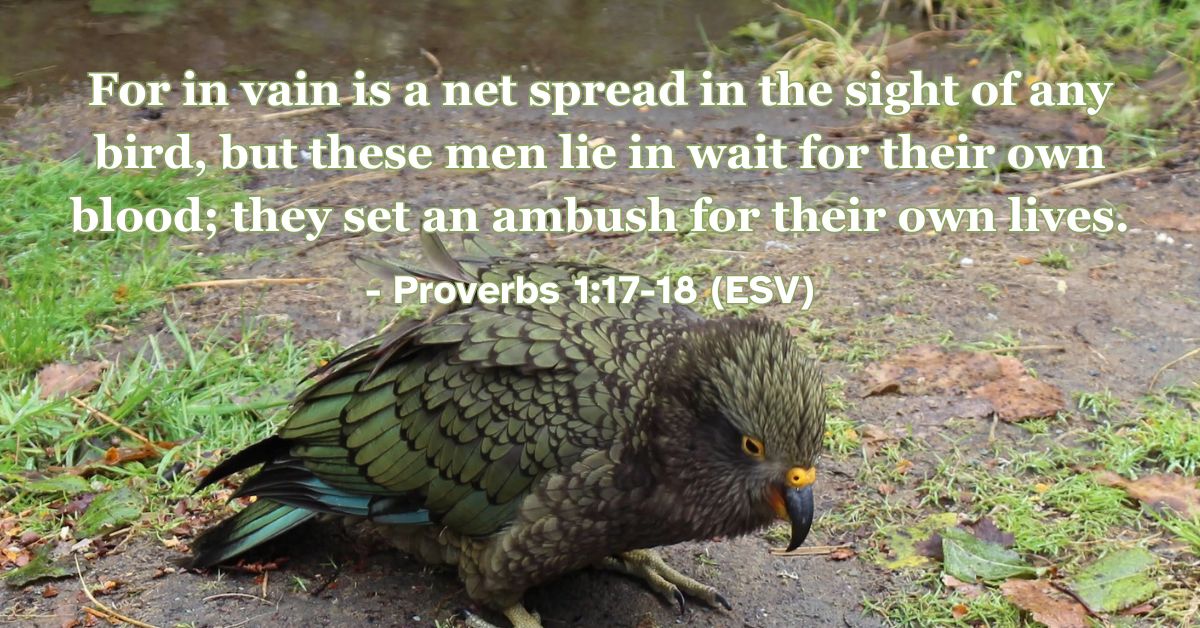
Proverbs 1:17-18 explains why evil behavior harms the one who commits it. The picture is simple. A bird will not fly into a trap it sees being set, however people often walk straight into choices that destroy them. When a person chooses cruelty, deceit, or sin, the damage is not limited to the victim. The one who commits the act walks into a spiritual trap. The ambush they planned for someone else circles back to wound them.
This is true for teenagers who harm others to gain acceptance or status, and it is also true for adults who wound others for personal gain. Any attempt to build a life on sin is ultimately self-destructive. Proverbs reminds us that sin is never empowered by God. It may appear to give short-term pleasure, popularity, or comfort, but it always steals more than it gives. The person who hurts others becomes hardened, restless, or ashamed. Sin drains life rather than giving it.
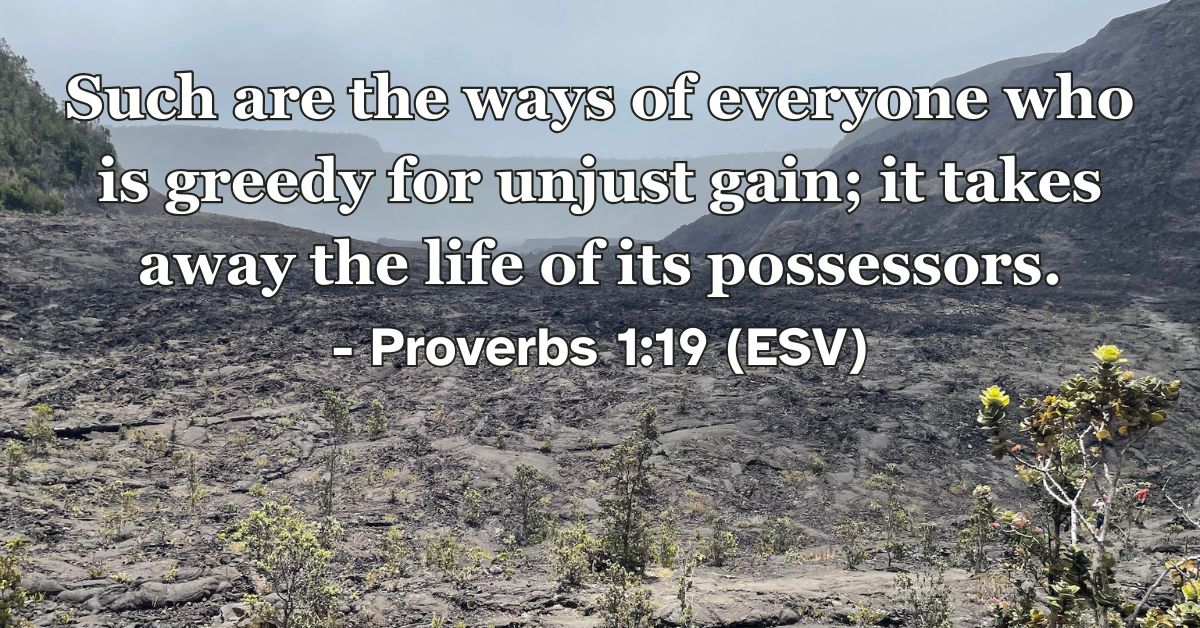
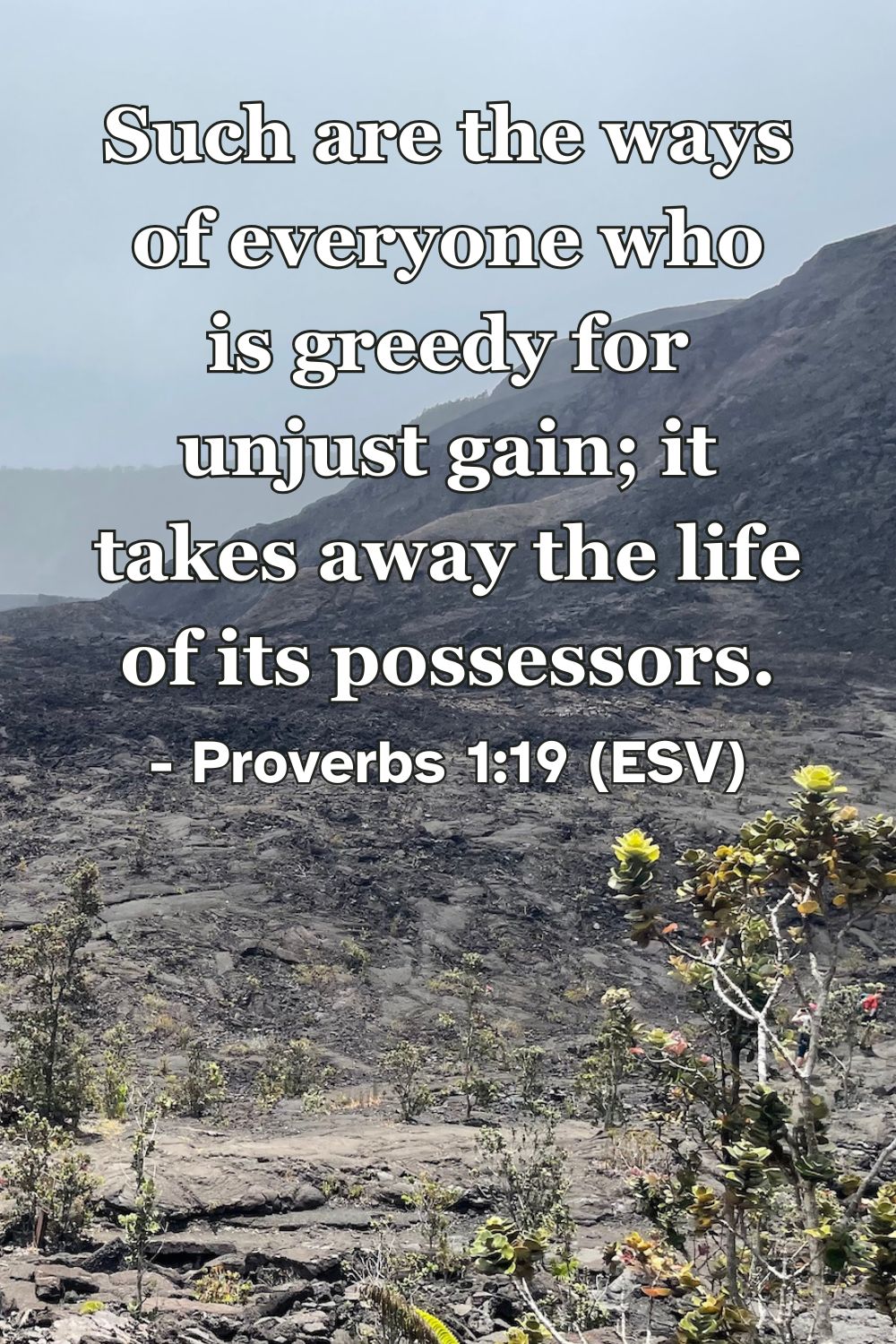
Proverbs 1:19 summarizes this truth with painful clarity. Greed for unjust gain drains life from the one who pursues it. Greed can take many forms. It can be the desire for money, admiration, pleasure, power, popularity, or control. When a person lusts after these things, especially in unjust or sinful ways, Proverbs warns that something precious is lost.
Wisdom for Parents and Children Today
The damage to the victim is often temporary, but the damage to the sinner is long-lasting. Greed rearranges the heart, turning our attention inward, feeding selfishness, and dulling the ability to see the needs of others. Over time, it squeezes the life out of the soul. Proverbs 1:8-19 is a sober invitation to examine the desires that drive us and the desires we are passing on to our children. Are we teaching them contentment or competition? Love or self-interest? Wisdom or worldly ambition?
As Christian parents and as Christian people, we must examine our own hearts. Children learn from our words, but they also learn from our habits, our spending, our conversations, and our reactions. A parent who models humility, faith, generosity, and truth will shape a child in ways lectures never could. Proverbs calls both generations to wisdom, because both generations influence one another. A wise child blesses a family. A wise parent blesses a home. Together, they form a community that shines God’s character in a world filled with confusion.
The culture may expect rebellion, but the Bible expects faithfulness. The culture may shrug at sin, but the Bible confronts it. The culture may celebrate self-centeredness, but the Bible calls us to righteousness and love. Parents are called to teach. Children are called to listen. Both are called to walk in wisdom, shaped by the fear of the Lord.
For those walking through a season with a rebellious teenager, this can appear to be a gloomy message, but if we allow it, this can also be a message of hope. It means rebellion is not inevitable or permanent, and sin is not unavoidable or unfixable. Adolescence is not a wasted season. Through the grace of God and the wisdom of the Bible, young people can walk with strength and clarity. Parents can guide with patience and conviction. The wisdom of Proverbs is not outdated, but is a treasure that protects the heart, strengthens families, and leads us toward life.
Reflection Questions
- What cultural expectations about teenagers do you think most need to be challenged by the Bible?
- How does Proverbs 1:8-9 encourage you in your role as a parent, grandparent, or mentor?
- In what ways can families talk more openly about what sin is and why it harms us?
- How might Proverbs 1:11-16 apply to the pressures teens face today, even when those pressures look different?
- Which form of “unjust gain” in Proverbs 1:19 feels most tempting or common in our culture?
- What practical steps can help us learn to recognize and refuse sinful invitations?
Reflective Prayer
Consider using these verses to pray using the ACTS method: Adoration, Confession, Thankfulness, and Supplication:
- Adoration: Praise God. Do these verses bring any specific characteristics of God to mind?
- Confession: Tell God that you are sorry for specific sins. Do these verses bring any specific sins to mind?
- Thankfulness: Show gratitude towards God. Does anything from these verses inspire gratitude?
- Supplication: Make requests for yourself and for others. Does anything from these verses inspire a prayer?
If helpful, you can use a prayer journal template.



Subscribe
If you enjoyed this post and wish to receive more Christian content, feel free to subscribe to my newsletters!
Related Resources
Visit the Joyful Moments in Christ homepage for all posts, or scroll through other blog posts related to children and parenting:





Something went wrong. Please refresh the page and/or try again.
English Standard Version (ESV): Unless otherwise noted, scripture quotations are from the ESV® Bible (The Holy Bible, English Standard Version®), © 2001 by Crossway, a publishing ministry of Good News Publishers. Used by permission. All rights reserved. The ESV text may not be quoted in any publication made available to the public by a Creative Commons license. The ESV may not be translated in whole or in part into any other language.

 Joyful Moments in Christ