
Paul spends a long time in Galatians explaining salvation and justification by faith. In chapter 2, he spoke boldly about his own struggles and Peter’s moment of failure, showing that even the apostles could forget the heart of the gospel. Now, in chapter 3, Paul shifts his focus, choosing to firmly and lovingly turn to the Galatians themselves. The Christians in Galatia were in danger of returning to the same old trap that both Peter and Paul had escaped: the trap of believing that human effort can secure God’s favor.
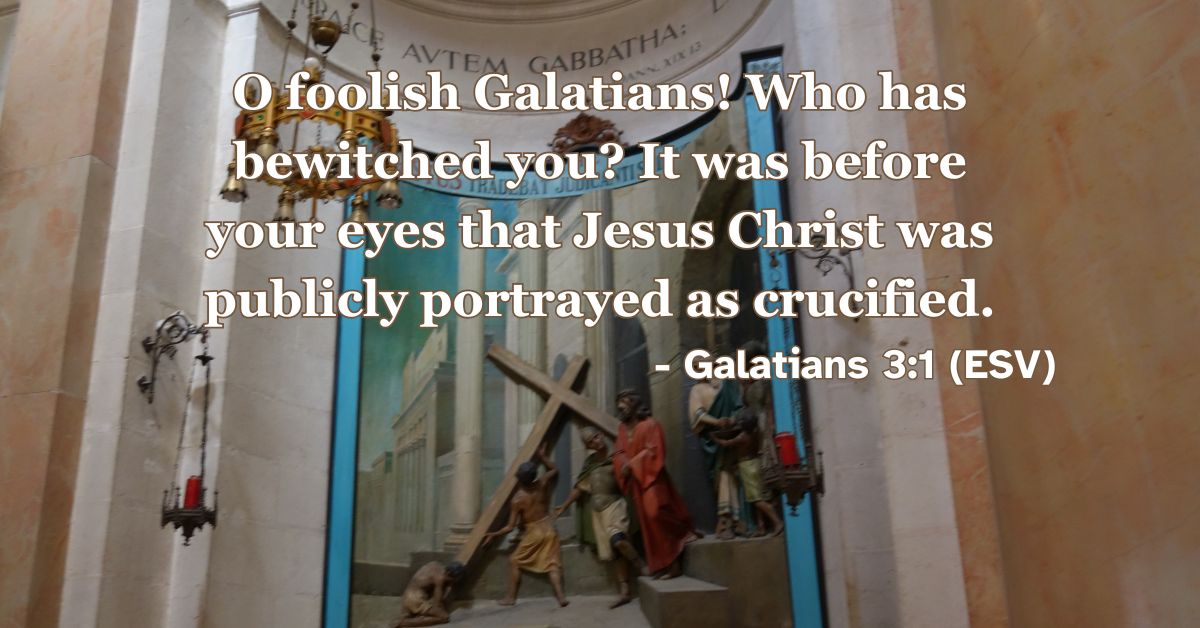
When Paul says “O foolish Galatians,” his words might sound harsh, but they come from a deep pastoral concern. The Galatians had begun their Christian lives by trusting in Christ’s finished work, but now they were acting as though salvation depended on what they could do for God. In this chapter, Paul reminds them that it is not just the biological descendants of Abraham who are the children of the promise, but the Galatians also have a share in the promise. They need to return to this belief!
Faith or Works?
Paul begins chapter 3 by asking them to stop and think carefully about what they believe, starting with some reflective questions:
Let me ask you only this:
Galatians 3:2-6 (ESV)
Did you receive the Spirit by works of the law or by hearing with faith?
Are you so foolish?
Having begun by the Spirit, are you now being perfected by the flesh?
Did you suffer so many things in vain—if indeed it was in vain?
Does he who supplies the Spirit to you and works miracles among you do so by works of the law, or by hearing with faith— just as Abraham “believed God, and it was counted to him as righteousness”?
Paul goes on to remind them of their own story. They had received the Holy Spirit not because of anything they did, but because they believed in the gospel message. From start to finish, salvation is a work of grace. We are not begin with grace and then switch to self-effort after some amount of time. Faith is not just the entry point of the Christian life, but is the entire pathway.
Many of us fall into this same trap. We know we were saved by grace, but after some time we begin to live as if continued salvation depends entirely on our performance. We measure our worth by how often we pray, how faithfully we serve, or how consistently we read Scripture. Those things are all very good, but they are not the source of our standing before God. Our standing is secure only because of Christ’s perfect obedience, not because of our flawed attempts.
The Example of Abraham
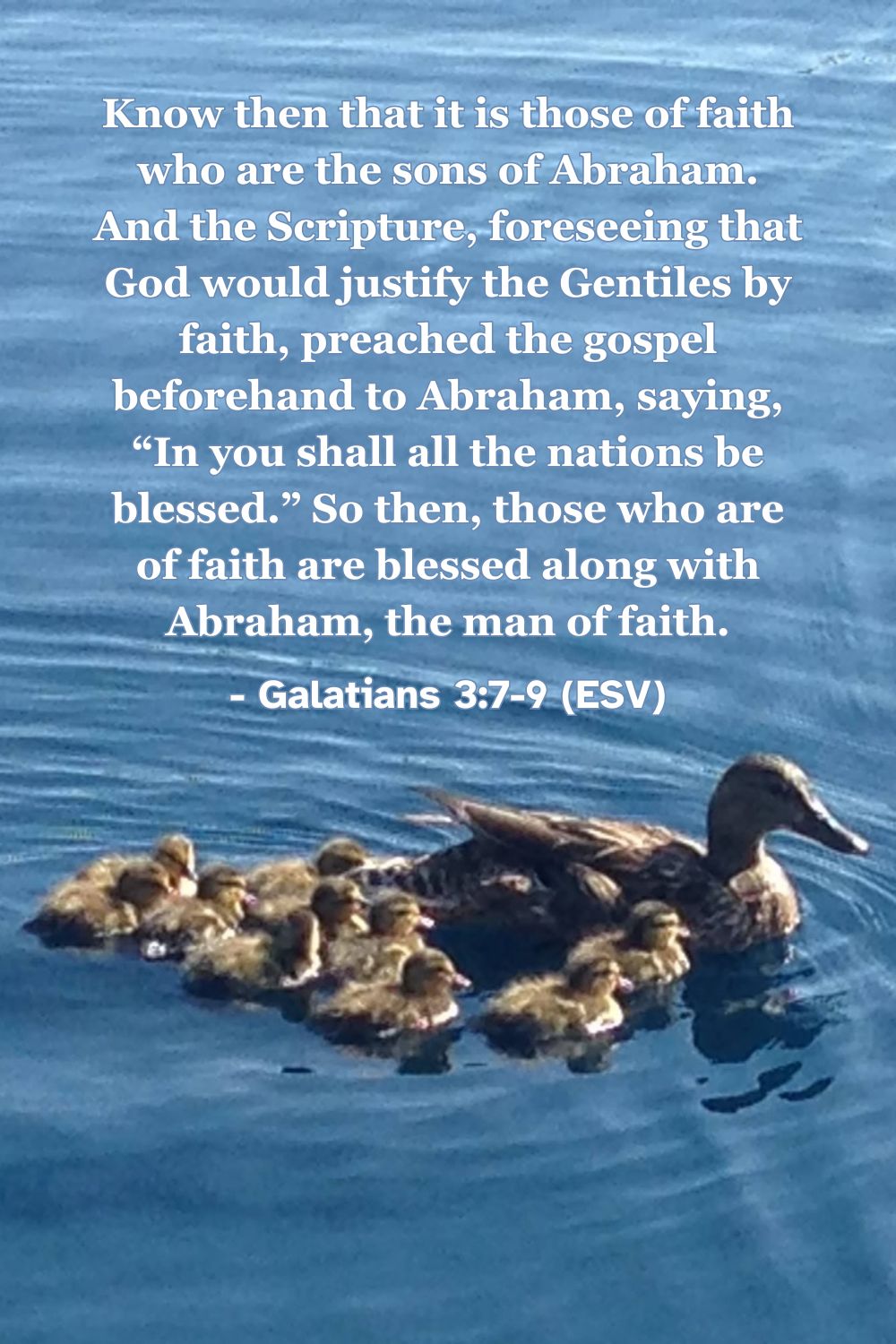
To illustrate this, Paul points the Galatians back to Abraham, the great example of faith.
When Abraham believed God, long before the law of Moses existed, God counted him righteous. His faith in this promise, not his works, made him a child of God. That same pattern holds true for us today. Through faith, we become sons and daughters of Abraham, heirs of the same promise!

While some may think that since most of us are not biological descendants of Abraham, that we have no part in this promise, but Genesis 12:3 paints a different picture, showing us that God’s promise to Abraham was never limited to one ethnic group. From the very beginning, God intended to bring blessing to all of the nations. It is only through Jesus Christ, the ultimate “offspring” of Abraham, that this blessing has come to all who believe.
Our adoption into God’s family is not decided in a courtroom by a judge or earned through moral behavior. It is a gift of grace received through faith. When we try to make ourselves God’s children by good works, we are like a foster child trying to secure adoption through perfect obedience. Without the child’s birth parents rights being released, no amount of good behavior will change the adoptive status. It cannot be done. Similarly, God’s love is not for sale, we cannot earn his love, but it is given freely when we put our trust in Christ.
The Curse of the Law
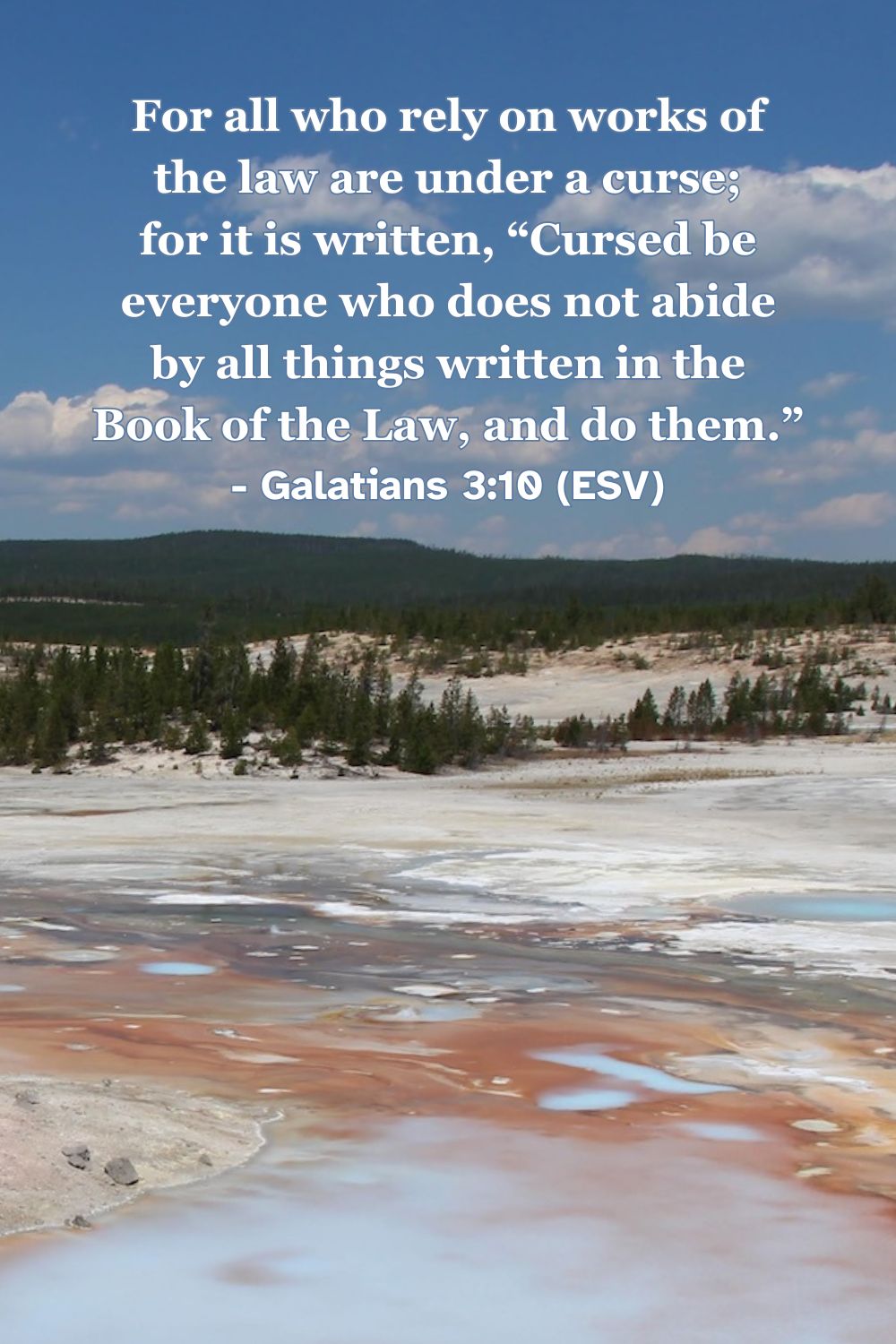
At first glance this seems like it is in conflict with the law. When we read the law, we will quickly see that it demands perfection, and all of us know that we fall far short of perfection.
Fortunately, this verse has to do with reliance. If we want to rely on the law, we must obey it completely, yet we will quickly find that this task is impossible. The law exposes our inability and drives us to our need for a Savior. Paul’s words here strike at human pride. The curse of the law is not that the law is bad, but that we are. Every time we disobey, even in thought or motive, we confirm our guilt. The weight of that standard crushes any illusion of self-righteousness. Yet this very realization is the thing that prepares us for grace. Only those who see the full weight of their sin can marvel at the mercy of the cross.

While the law is good, revealing the holiness of God, it cannot give life. It can show us our guilt, but it does not remove it. Only faith in Christ can free us from the curse! When we start putting our faith back into ourselves, we are doomed to failure. God tells us that either we need to be perfect, or we need to put our faith in Jesus, the only perfect human that has ever existed.
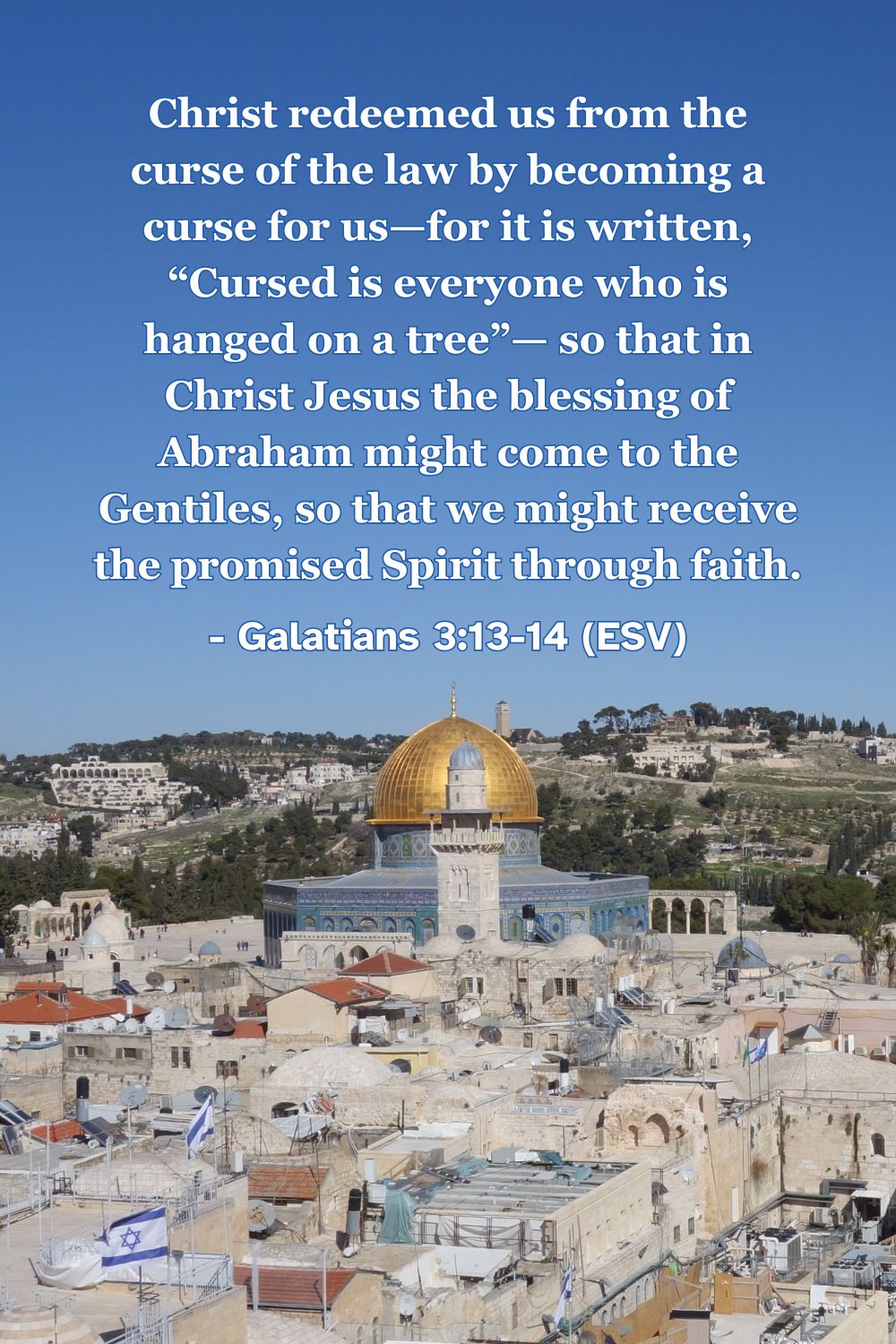
Paul gives us a vivid picture of redemption:
At the cross, Jesus bore the curse we deserved. He took our punishment so that we could share in his blessing. The law demanded death, but Christ offered life. The exchange of our curse for his righteousness is the heart of the gospel message! When we understand this, joy begins to take root. We no longer work to earn God’s love. We serve him out of gratitude. We obey not to gain acceptance but because we already have it.
A Covenant That Cannot Be Broken
Paul then turns from the language of curse and redemption to that of covenant and inheritance, showing the unbreakable nature of God’s promise:
To give a human example, brothers: even with a man-made covenant, no one annuls it or adds to it once it has been ratified. Now the promises were made to Abraham and to his offspring. It does not say, “And to offsprings,” referring to many, but referring to one, “And to your offspring,” who is Christ. This is what I mean: the law, which came 430 years afterward, does not annul a covenant previously ratified by God, so as to make the promise void. For if the inheritance comes by the law, it no longer comes by promise; but God gave it to Abraham by a promise.
Galatians 3:15-18 (ESV)
Just as no one tears up a legal contract after it has been signed, God does not revoke his promise once it has been given. God’s promise to Abraham came long before the law. The law cannot cancel or rewrite that special covenant of grace, a covenant that was sealed by God’s word and fulfilled in Christ, Abraham’s true offspring. Paul’s argument is simple but profound: salvation has always been by promise, not performance. The law came later to show our sin, but the promise came first to show God’s mercy.
We cannot change the method of cleansing. God alone determines the path to forgiveness, and it is through faith in the one he sent. Trying to earn salvation is like a child using a filthy towel to clean a mess on the floor, it only spreads the stain. I still remember one such incident while potty training my son! Just as he was unable to clean the floor with his disgusting rag, only the grace of Christ can make us clean.
Why Then the Law?
So then Paul asks why God gave us the law at all, knowing that we were not going to live up to it:
Paul claims that the law had a very important purpose. It revealed sin, restrained evil, and pointed forward to the coming Savior. The law served as a guardian, teaching us about God’s holiness and our desperate need for grace. It is like scaffolding around a building: necessary for construction, but removed once the structure is complete.
He then asks about the apparent contradiction, but then tells us that the law and the promise do not compete, they cooperate. The law shows our imprisonment under sin, and the promise shows the door to freedom. Those who still cling to it for salvation are like people living inside the scaffolding, never stepping into the finished house. The scaffolding was once necessary, but at some point it becomes obsolete.
The Law as Our Guardian
The law was like a guardian watching over a child until maturity. It protected, guided, and disciplined, but it could not give life. Once Christ came, the role of the guardian was fulfilled. We no longer need to live under the shadow of the law because we live in the light of grace.
Paul’s illustration reminds us that discipline is not punishment; it is preparation. If we never realized our captivity, we might never ask for release. Anyone who has ever launched a child into adulthood will understand the captivity that a teenager feels, but they will also know that this apparent captivity is necessary for growth. To succeed as an adult, a teenager needs to buy into some particular rules, knowing that following these rules will lead to flourishing.
Similarly, God’s law makes us aware of our need for redemption and teaches us how to live a good and fruitful life. Just a a launched child rejoices in their newfound freedom, when God grants us salvation we can rejoice all the more in our glorious freedom!
Sons and Daughters of God
Eventually, we will graduate into this wonderful life:

Here is the joyful climax of Paul’s message: through faith in Christ, we are not only forgiven, we are adopted. We are sons and daughters of the King!
The gospel erases the barriers that once divided humanity. All of us can choose faith and be baptized. In Christ, there is unity, equality, and belonging. Every believer, no matter their background, is clothed in Christ and welcomed as an heir of the promise. This truth is the heartbeat of Christian joy. To belong to God by faith means to live each day in security and gratitude. We no longer strive to earn what has already been given. Instead, we walk in freedom, serve in love, and rejoice in the grace that made us children of Abraham through Christ!
Reflection Questions
- What are some ways you are tempted to rely on good works for salvation, rather than faith in Christ?
- How does Abraham’s example strengthen your confidence in God’s promises?
- Why do you think God gave the law if it could not save us?
- How does knowing you are adopted as God’s child change how you view your daily struggles?
- In what specific ways can you live joyfully in the freedom Christ has purchased for you?
Reflective Prayer
Consider using these verses to pray using the ACTS method: Adoration, Confession, Thankfulness, and Supplication:
- Adoration: Praise God. Do these verses bring any specific characteristics of God to mind?
- Confession: Tell God that you are sorry for specific sins. Do these verses bring any specific sins to mind?
- Thankfulness: Show gratitude towards God. Does anything from these verses inspire gratitude?
- Supplication: Make requests for yourself and for others. Does anything from these verses inspire a prayer?
If helpful, you can use a prayer journal template.




Subscribe
If you enjoyed this post and wish to receive more Christian content, feel free to subscribe to my newsletters!
Related Resources
Visit the Joyful Moments in Christ homepage for all posts, or scroll through other blog posts related to grace and salvation:








Something went wrong. Please refresh the page and/or try again.
English Standard Version (ESV): Unless otherwise noted, scripture quotations are from the ESV® Bible (The Holy Bible, English Standard Version®), © 2001 by Crossway, a publishing ministry of Good News Publishers. Used by permission. All rights reserved. The ESV text may not be quoted in any publication made available to the public by a Creative Commons license. The ESV may not be translated in whole or in part into any other language.



 Joyful Moments in Christ