As we begin the Christian journey, there are many twists and turns that we will face along the way. During the entire process, we need to continually return to the basic belief that it is our faith that saves us. As a Pharisee, Paul tried being saved by good works, even approving of Stephen’s death as he was stoned for believing that salvation is through faith in Jesus. Fortunately for Paul, Jesus was not willing to let him stay in that false belief. While traveling to Damascus, Jesus himself appeared to Paul and set him on a course that would influence all of Christianity. Fourteen years later, Paul would go to Peter and correct Peter’s beliefs. Which of our beliefs do we need to correct?
Paul Returns to Jerusalem
In Galatians 1, we saw Paul recount the story of this transformation (see Acts 9 for the long version). Immediately after his conversion, both the apostles and the local Christians knew about Paul’s persecutions of them, so when Paul claimed to be a changed man, the apostles were understandably skeptical. Once again, Jesus intervened, appearing in a vision to Ananias and assuring him that Paul was his chosen instrument.
Fourteen years later, even though Paul was accepted as a genuine Christian, many were still uncertain and skeptical about his ministry to the Gentiles. Galatians 2 records Paul’s return to Jerusalem to address these concerns and strengthen the unity within the church.
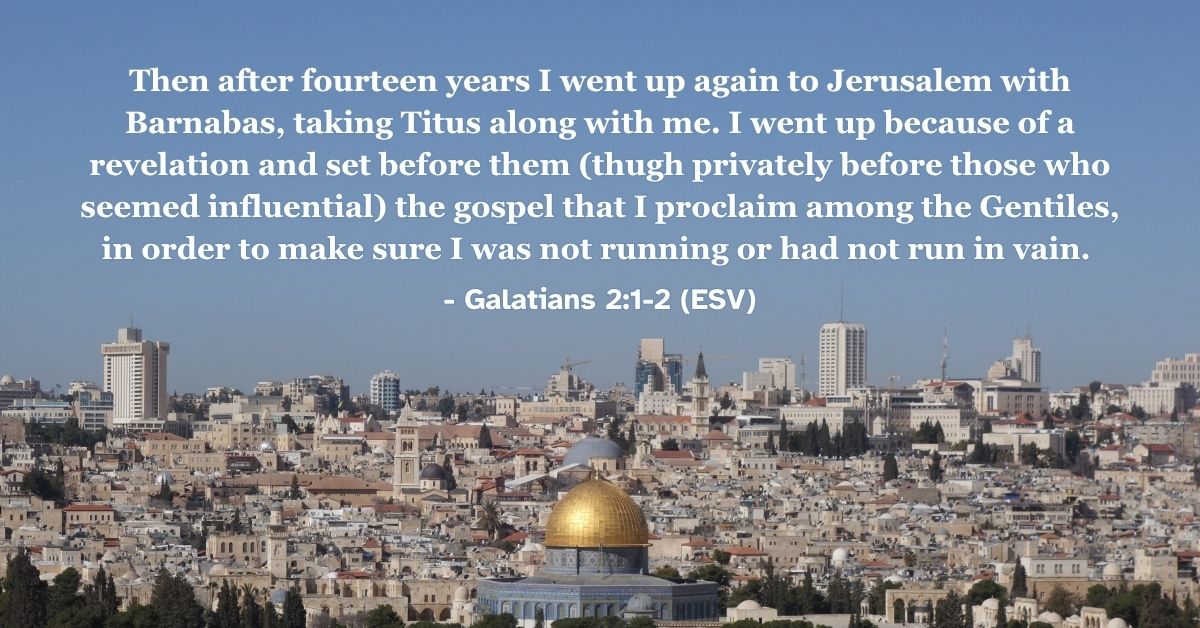
Paul’s journey shows a man who, though confident in his calling, remained humble before the other apostles. He did not question the truth of his message, but sought confirmation that their ministries stood together on the same foundation of grace. A divided church could have weakened the witness of the gospel, so Paul wisely sought unity by going directly to the church leaders to clarify their shared faith. Interestingly, Paul brought along Titus, a Gentile believer who was not circumcised:
But even Titus, who was with me, was not forced to be circumcised, though he was a Greek.
Galatians 2:3 (ESV)
This was not by accident. Titus was a living example of what Paul preached: that faith in Christ alone saves, not adherence to Jewish ceremonial law. When the apostles agreed that Titus did not need to be circumcised, it was a monumental confirmation that salvation truly comes by grace through faith. Still, not everyone accepted this truth easily:
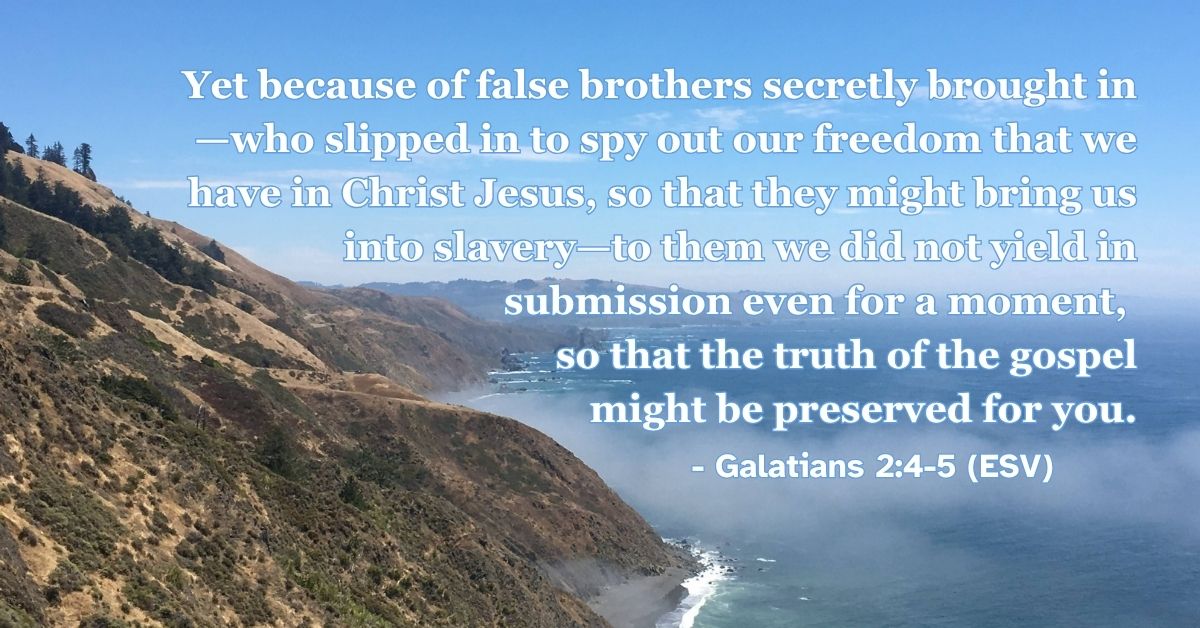
Some Jewish Christians struggled to let go of old habits and traditions, and others tried to undermine Paul’s ministry. Paul described them as false brothers who secretly slipped in to spy out their freedom in Christ. They wanted to drag believers back into spiritual slavery, but Paul stood firm for the sake of the truth.
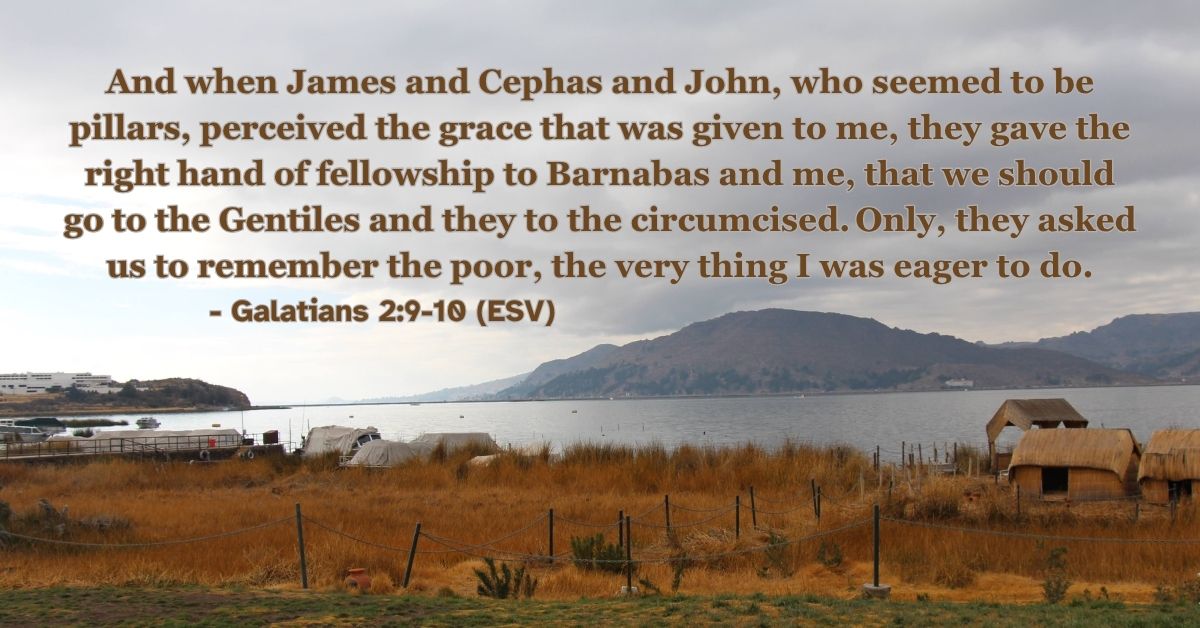
And from those who seemed to be influential (what they were makes no difference to me; God shows no partiality)—those, I say, who seemed influential added nothing to me. On the contrary, when they saw that I had been entrusted with the gospel to the uncircumcised, just as Peter had been entrusted with the gospel to the circumcised (for he who worked through Peter for his apostolic ministry to the circumcised worked also through me for mine to the Gentiles)
Galatians 2:6-8 (ESV)
Even the most respected leaders, Peter, James, and John, recognized that the same God who empowered Peter among the Jews was also working through Paul among the Gentiles. They extended to Paul and Barnabas the “right hand of fellowship,” affirming that there was one gospel for all people, not two.
We may not face the same issues around ceremonial laws today, but the temptation remains to measure faith by external signs. Some measure spiritual maturity by church attendance, volunteer hours, or personal devotion habits. These things can be and should be wonderful expressions of faith, but they cannot replace the saving work of Christ. Paul fought to protect this truth, and we must do the same. Our freedom in Christ should never be exchanged for a return to spiritual slavery.
The Law and True Freedom
Given that Jesus mostly preached to a Jewish audience, it is no wonder that most of the apostles initially struggled with following every letter of Jewish law rather than the heart of it. This particular story deals with circumcision, which for Jews was the covenant sign of belonging to God. For Gentiles, however, the sign of belonging became baptism, a new outward mark representing an inward faith.

The change from circumcision to baptism shows the shift from the old covenant to the new. The law of circumcision pointed toward the Messiah, but once Christ came, faith became the sign of belonging. God had always desired hearts devoted to him, not just outward conformity. In Deuteronomy 10:16, Moses said, “Circumcise therefore the foreskin of your heart, and be no longer stubborn.” Paul’s teaching fulfills that ancient call. Through Jesus, hearts are truly changed!
Salvation by faith, not works, can be quite confusing and the act of salvation and the expression of salvation can be swapped in our minds. It is important to note that freedom in Christ is not the freedom to do whatever we wish, but the freedom from trying to earn God’s favor through works. When we know that we are already loved, we can serve God with joy instead of fear. There is great peace in knowing that our salvation rests not in our hands but in the hands of our Savior.
Confronting Peter
After Paul’s meeting with the apostles, another challenge arose from Peter, also known as Cephas. Even though he was a great leader of the early church, today known as the first Pope of the Catholic church, he still wrestled with fear of man and the pressure of tradition.
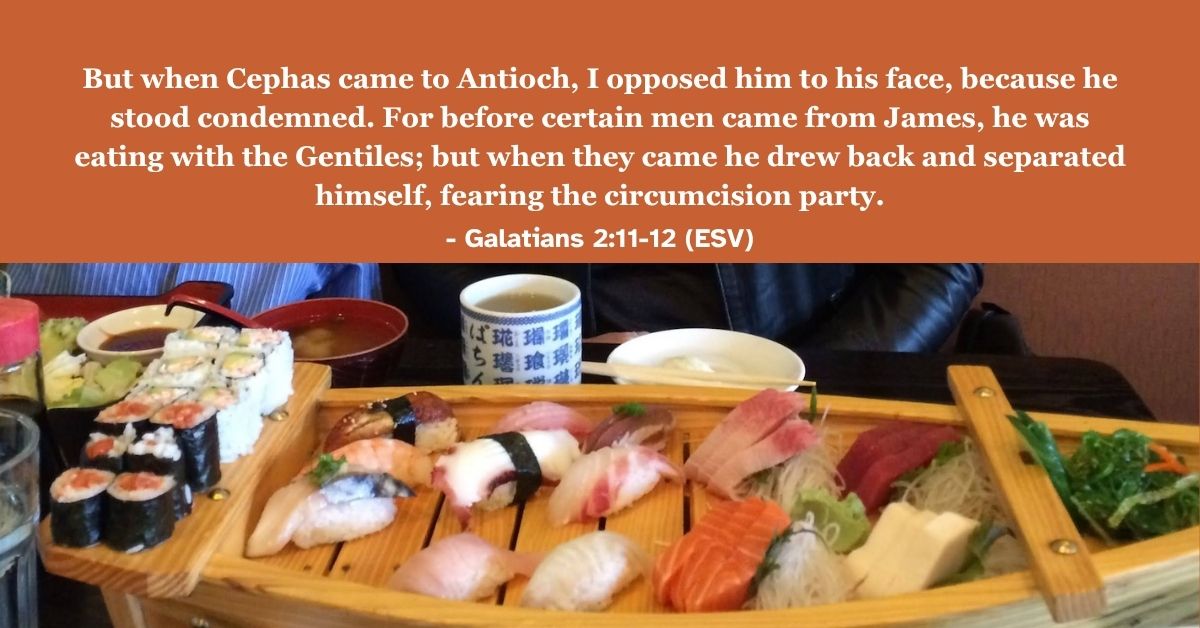
Peter had been eating freely with Gentile believers, enjoying their fellowship as equals, but when Jewish Christians arrived, people still devoted to the old traditions, Peter pulled back. He separated himself, fearing judgment from his peers. Even Barnabas, who had partnered with Paul in ministry, followed Peter’s example. Their actions sent a dangerous message: that Gentile believers were second-class citizens in the kingdom of God and that actions that had been previously approved, no longer were.
And the rest of the Jews acted hypocritically along with him, so that even Barnabas was led astray by their hypocrisy. But when I saw that their conduct was not in step with the truth of the gospel, I said to Cephas before them all, “If you, though a Jew, live like a Gentile and not like a Jew, how can you force the Gentiles to live like Jews?”
Galatians 2:13-14 (ESV)
Paul could not let that stand. His confrontation with Peter was not cruel or self-serving, but was rooted in love for the truth. When a public sin threatened the unity of the gospel, a public correction was necessary. Peter’s actions contradicted his own belief that salvation is by faith alone. Paul’s words restored clarity to the gospel: no one is saved by the law, not even those who once lived under it.
We may sympathize with Peter. It is easy to be swayed by the opinions of others, even when we know better. In Acts 10, Peter had received a dream from God letting him know that it was okay to eat the food of the Gentiles. He knew better, but sometimes we fear disapproval more than we fear compromising the truth. Like Peter, we need brothers and sisters who love us enough to speak truth into our lives. Paul’s rebuke was an act of grace, not condemnation. God often uses faithful correction to draw us back into alignment with his word.
Justified by Faith Alone
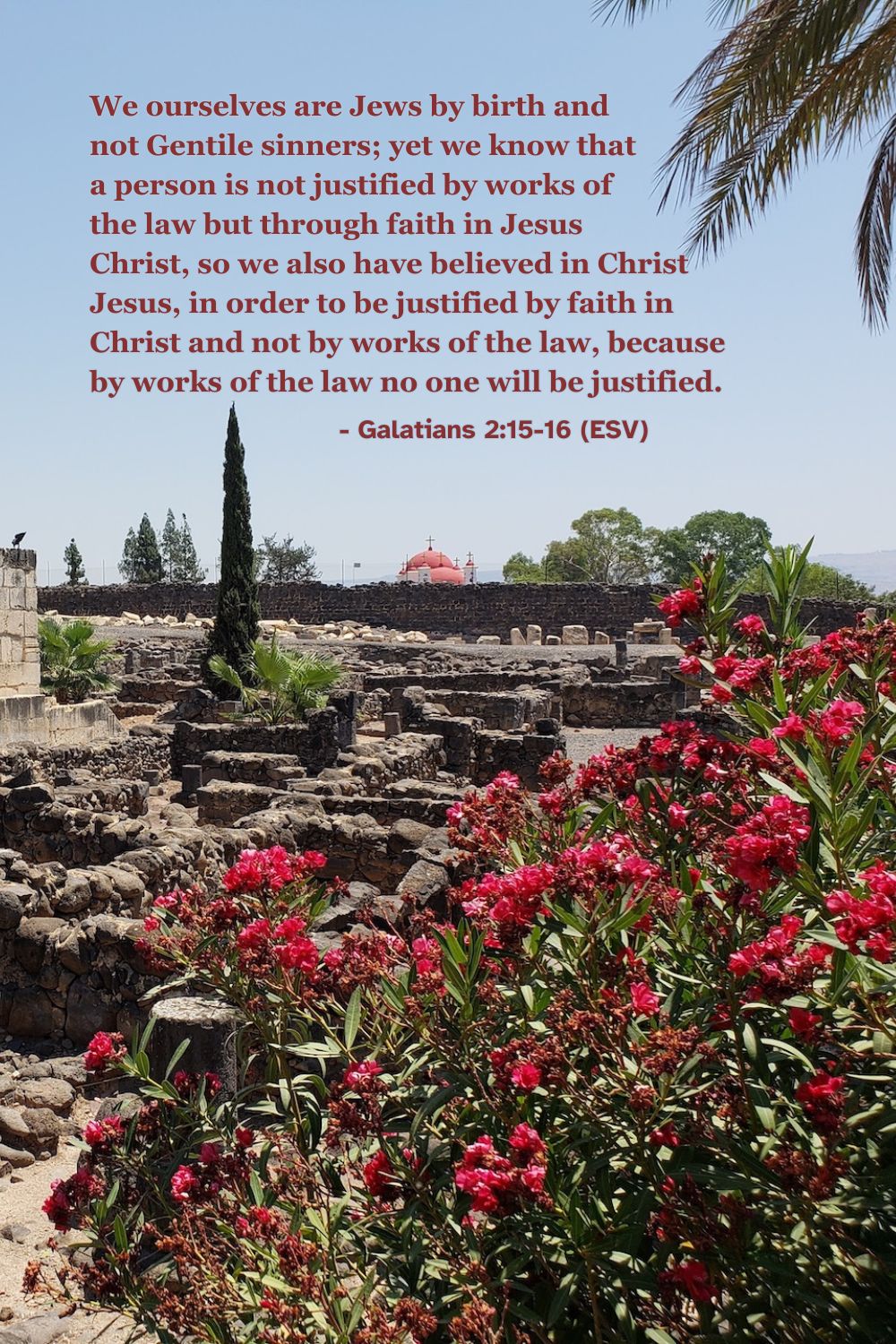
Paul then summarized the heart of the gospel in one of the clearest explanations of justification by faith in all of Scripture:

To be justified means to be declared righteous before God. This is not earned through human effort, but is granted through faith in Jesus Christ. In the Reformed tradition, justification is understood as a once-for-all act of God’s grace, entirely based on Christ’s righteousness imputed to us. We contribute nothing to it but our need.
Paul’s statement dismantles every attempt to add conditions to salvation. Faith in Christ alone is enough because Christ’s work is complete. To try to earn God’s approval through moral effort is to misunderstand grace entirely. It is like trying to pay for a meal that has already been purchased.
There is deep joy in knowing that our standing before God does not shift with our performance. Our failures do not remove us from his love, and our successes do not make him love us more. That truth frees us to obey God not out of guilt or fear but out of gratitude. The Christian life becomes a joyful response to grace rather than a desperate attempt to earn it.
Crucified with Christ
When we reject this grace, we also reject Christ:
But if, in our endeavor to be justified in Christ, we too were found to be sinners, is Christ then a servant of sin? Certainly not! For if I rebuild what I tore down, I prove myself to be a transgressor.
Galatians 2:17-18 (ESV)
Paul’s point is simple, but piercing. If we try to return to the law for righteousness after trusting in Christ, we undo the very truth of the gospel. We rebuild what Jesus tore down at the cross. Grace and law cannot be mixed as equal partners in salvation. In the matter of salvation, to add works to faith is to subtract from the sufficiency of Christ.
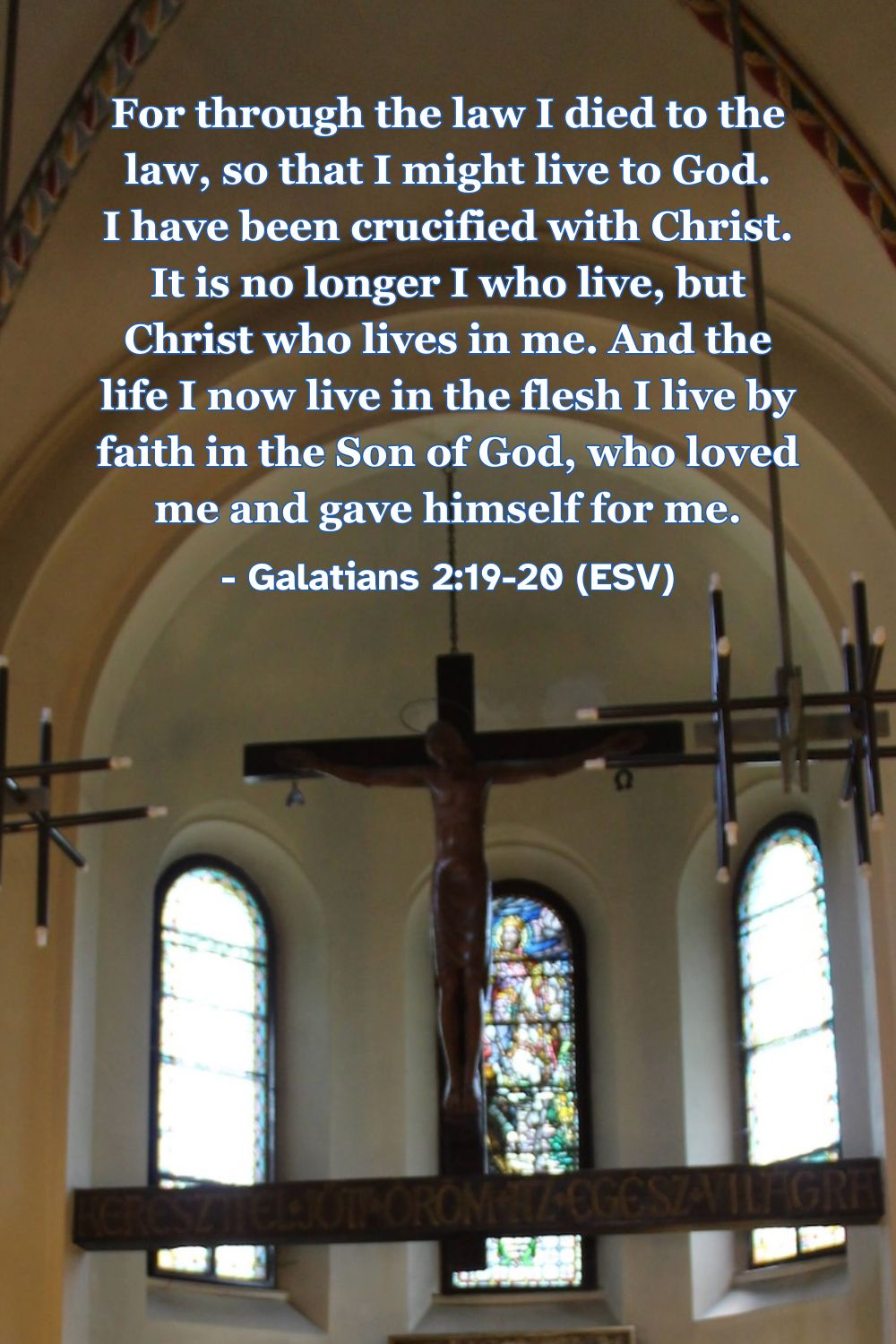
From here Paul moves from theology to testimony. His next words describe what it truly means to live as one redeemed by grace:
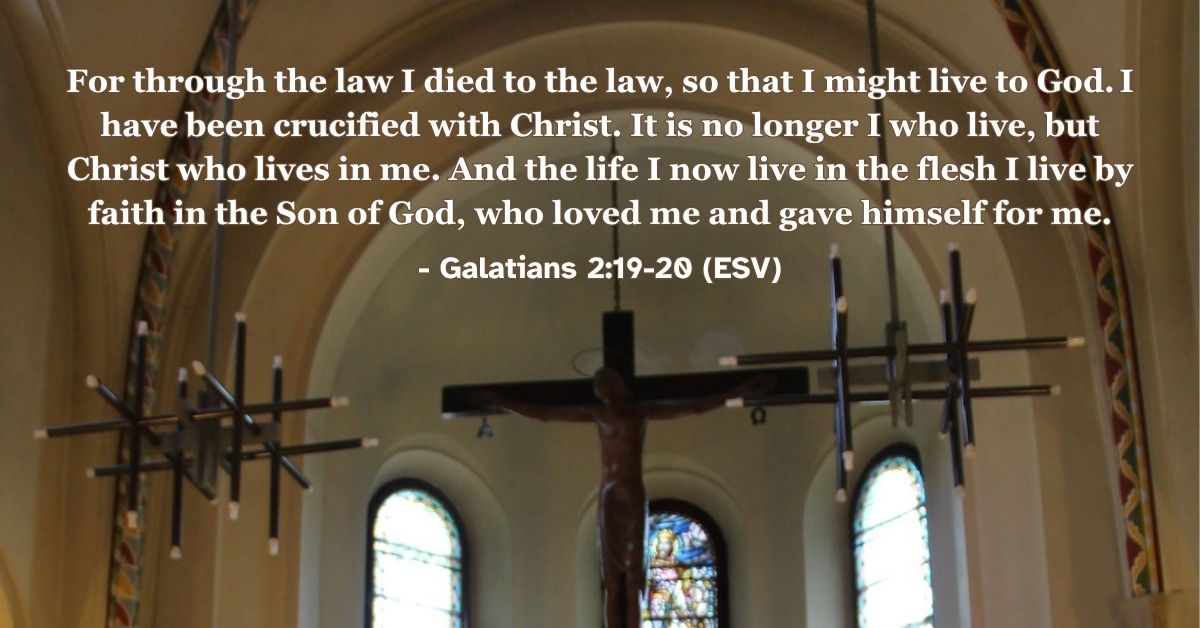
To be crucified with Christ is to die to our old way of striving and to live a new life of faith. The law once revealed our sin and condemned us, but now Christ has fulfilled it on our behalf. We live to God, not as servants working for wages, but as children loved by a Father.
Paul’s words remind us that the Christian life is not about self-improvement, but transformation. Christ lives in us. That reality changes how we approach everything: our relationships, our suffering, our purpose, and our joy. We no longer live to please others or to maintain an image of righteousness. Instead, we live by faith in the one who loved us and gave himself for us.

If righteousness could come by the law, then Christ died for nothing. But Christ’s death was not in vain. It accomplished what we never could. The cross stands as both our death and our new life. In Christ, we are free, forgiven, and deeply loved.
Living in Grace and Joy
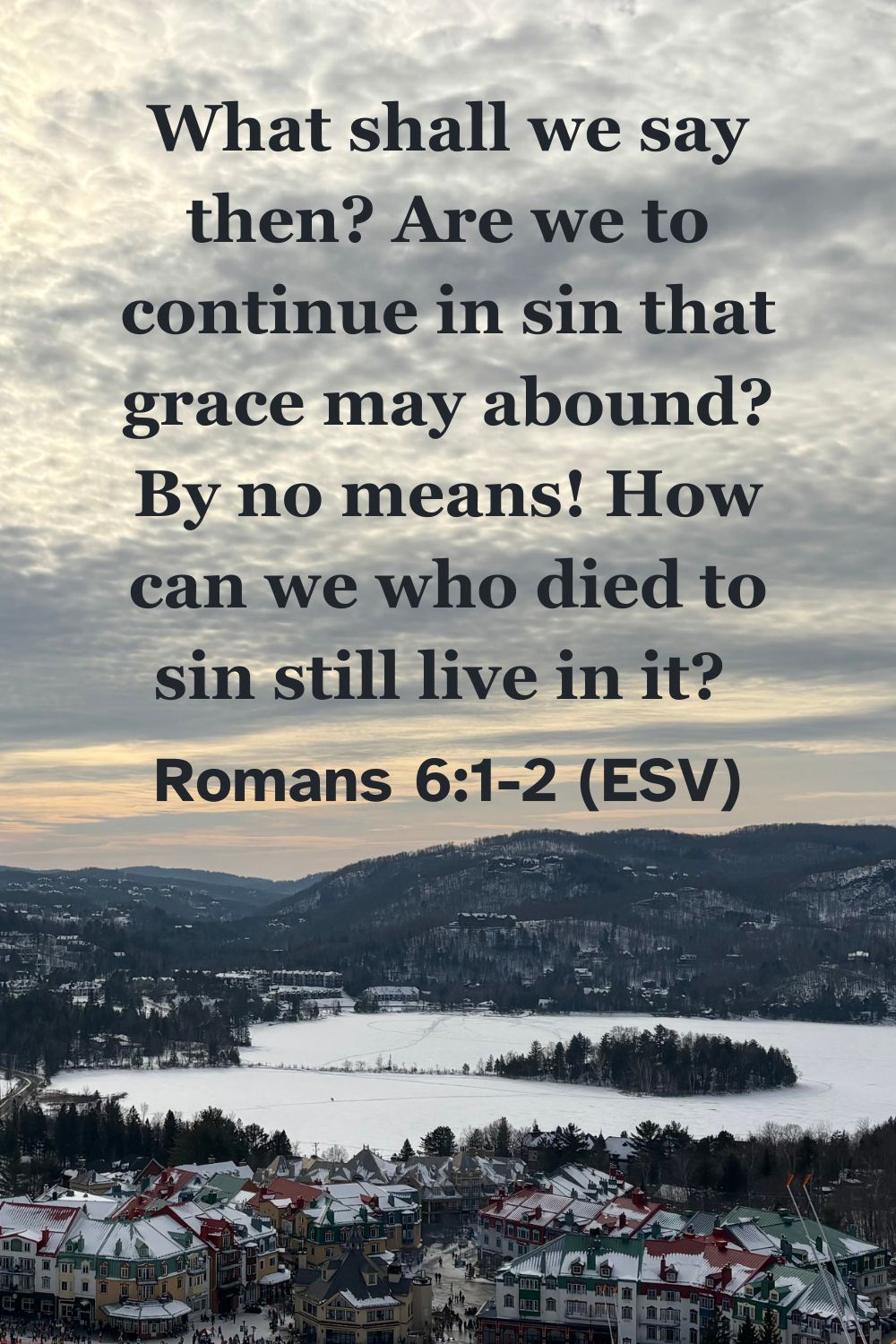
There is a slippery slope between understanding grace rightly and abusing it. Some hear that we are saved by faith alone and conclude that obedience no longer matters. In Romans 6:1-2 Paul makes it clear: grace does not lead us to lawlessness, but rather, it leads us to joyful obedience. Because Christ lives in us, our desires will begin to change. This newfound belief in grace given through justification by faith will make us want to please God, not to earn his favor, but because we already have it.
The freedom of the gospel produces joy. It lifts the heavy burden of earning righteousness and replaces it with the light yoke of Christ. We are called to live in step with the truth of the gospel, just as Paul reminded Peter. That means walking in humility, repentance, and love. It means extending grace to others as freely as we have received it.
The joy of knowing Christ is not shallow happiness or fleeting emotion, but the deep, abiding peace of being reconciled to God. It is the freedom of a conscience cleansed and a heart made new. As we grow in faith, let’s never move beyond the simple yet powerful truth that we are justified by faith alone through grace alone in Christ alone.
Reflection Questions
- In what ways do you sometimes rely on your good works to feel right before God, rather than resting in Christ’s finished work?
- How can genuine faith in Jesus produce joyful obedience and love for others?
- When have you, like Peter, struggled to live out the truth of the gospel because of fear or pressure from others?
- What does it mean in your daily life to live as one who has been “crucified with Christ”?
- How can understanding justification by faith strengthen both your assurance and your desire to do good works for God’s glory?
Reflective Prayer
Consider using these verses to pray using the ACTS method: Adoration, Confession, Thankfulness, and Supplication:
- Adoration: Praise God. Do these verses bring any specific characteristics of God to mind?
- Confession: Tell God that you are sorry for specific sins. Do these verses bring any specific sins to mind?
- Thankfulness: Show gratitude towards God. Does anything from these verses inspire gratitude?
- Supplication: Make requests for yourself and for others. Does anything from these verses inspire a prayer?
If helpful, you can use a prayer journal template.






Subscribe
If you enjoyed this post and wish to receive more Christian content, feel free to subscribe to my newsletters!
Related Resources
Visit the Joyful Moments in Christ homepage for all posts, or scroll through other blog posts related to salvation and justification:








Something went wrong. Please refresh the page and/or try again.
English Standard Version (ESV): Unless otherwise noted, scripture quotations are from the ESV® Bible (The Holy Bible, English Standard Version®), © 2001 by Crossway, a publishing ministry of Good News Publishers. Used by permission. All rights reserved. The ESV text may not be quoted in any publication made available to the public by a Creative Commons license. The ESV may not be translated in whole or in part into any other language.


 Joyful Moments in Christ