
The book of Jonah is one of the most surprising stories in Scripture. Unlike other prophets, Jonah does not end his book with a triumphant word from God or a faithful act of obedience. Instead, the story closes with tension, leaving us unsettled. We see Jonah wrestling with anger, bitterness, and disappointment, even after witnessing one of the greatest revivals in history. What makes this account so powerful is not just the miraculous events, such as the storm, the great fish, or the repentance of an entire city, but the way God patiently exposes the condition of Jonah’s heart.
As we walk through Jonah 4, we are invited to examine our own hearts as well. How do we respond when God shows mercy to those we would rather see judged? How do we handle it when God’s grace interrupts our sense of fairness? And perhaps most importantly, do we allow God to replace our anger with the joy of seeing others brought into his kingdom?
A Prophet’s Strange Disappointment
The last chapter of Jonah is a rather sad commentary on the state of the human heart. We watch a prophet of God who has seen incredible miracles, who has experienced God’s mercy firsthand, and who has been given the rare privilege of preaching to an entire city respond with disappointment rather than joy. The story of Jonah is often told in children’s Bibles as an adventure tale with a big fish, but chapter 4 reveals that the real challenge of Jonah’s mission was not the storm or the sea, nor even the enormous city of Nineveh. The greatest struggle Jonah faced was the stubbornness of his own heart.
In Jonah 1:2, the book begins with a clear command from God:

Instead of obeying, Jonah runs in the opposite direction. He boards a ship bound for Tarshish, determined to put as much distance as possible between himself and God’s call. His rebellion nearly costs the sailors their lives, and when the storm intensifies, Jonah knows that it is his fault. Thrown into the raging sea, he is swallowed by a great fish, not as punishment but as a strange mercy. In the belly of the fish, Jonah prays and acknowledges that salvation belongs to the Lord. Chapter 2 ends with Jonah being spit back onto dry land, humbled and ready to obey.
In chapter 3, Jonah finally goes to Nineveh. His message in Jonah 3:4 is brief and sharp:
To Jonah’s dismay, the people of Nineveh believe. From the king down to the cattle in the fields, the city repents in sackcloth and ashes. God sees their repentance and spares them. By every measure, this should be one of the greatest revival stories in history. Yet chapter 4 begins on a sour note. Jonah 4:1-2 says:
Jonah’s anger is shocking. The prophet who was grateful for his own rescue in chapter 2 is now furious that God has rescued others in chapter 4. His problem is not that he doubts God’s character, but that he knows it too well. He wanted justice for Nineveh, but mercy for himself.
This is where Jonah’s story touches our own. We often want the same thing. We are quick to cry out for God’s patience when we fail, yet when someone else sins against us, our hearts leap toward judgment. Like Jonah, we struggle to accept that God’s mercy is wider than we would like it to be.
Justice for Them, Mercy for Me
At the heart of Jonah’s anger is a distorted view of justice and mercy. Being made in the image of God, we all have an innate sense that wrongs should be punished. Children cry out, “That’s not fair!” before they can explain why. We long for justice when others sin against us. But when we are the guilty party, suddenly our sense of fairness shifts. We plead for leniency, for understanding, for forgiveness. Jonah was no different.
When Jonah prayed from the belly of the fish, his words in Jonah 2:7-9 were filled with gratitude:

Jonah rejoiced that God heard him, that God remembered him, that God saved him from drowning. Yet, when God remembered Nineveh, Jonah could not rejoice. He wanted justice for them, not mercy. The irony is impossible to miss. The same grace that preserved Jonah’s life is now despised when it is extended to his enemies.
We face this same tension in our own lives. Think of the moments when someone has wronged you deeply, perhaps through betrayal, cruelty, or long years of neglect. Everything in us cries out for that person to face the consequences. Yet, if we are honest, we know that our own record before God is far from spotless. If God were to deal with us strictly according to justice, who could stand? The psalmist asks this very question in Psalm 130:3-4:

Jonah wanted forgiveness for himself but judgment for others. That same inconsistency lurks in our hearts. God’s lesson for Jonah is meant to be a lesson for us as well: his mercy is not just for the people we like, but for the people we would rather see destroyed.
Waiting on the Hill
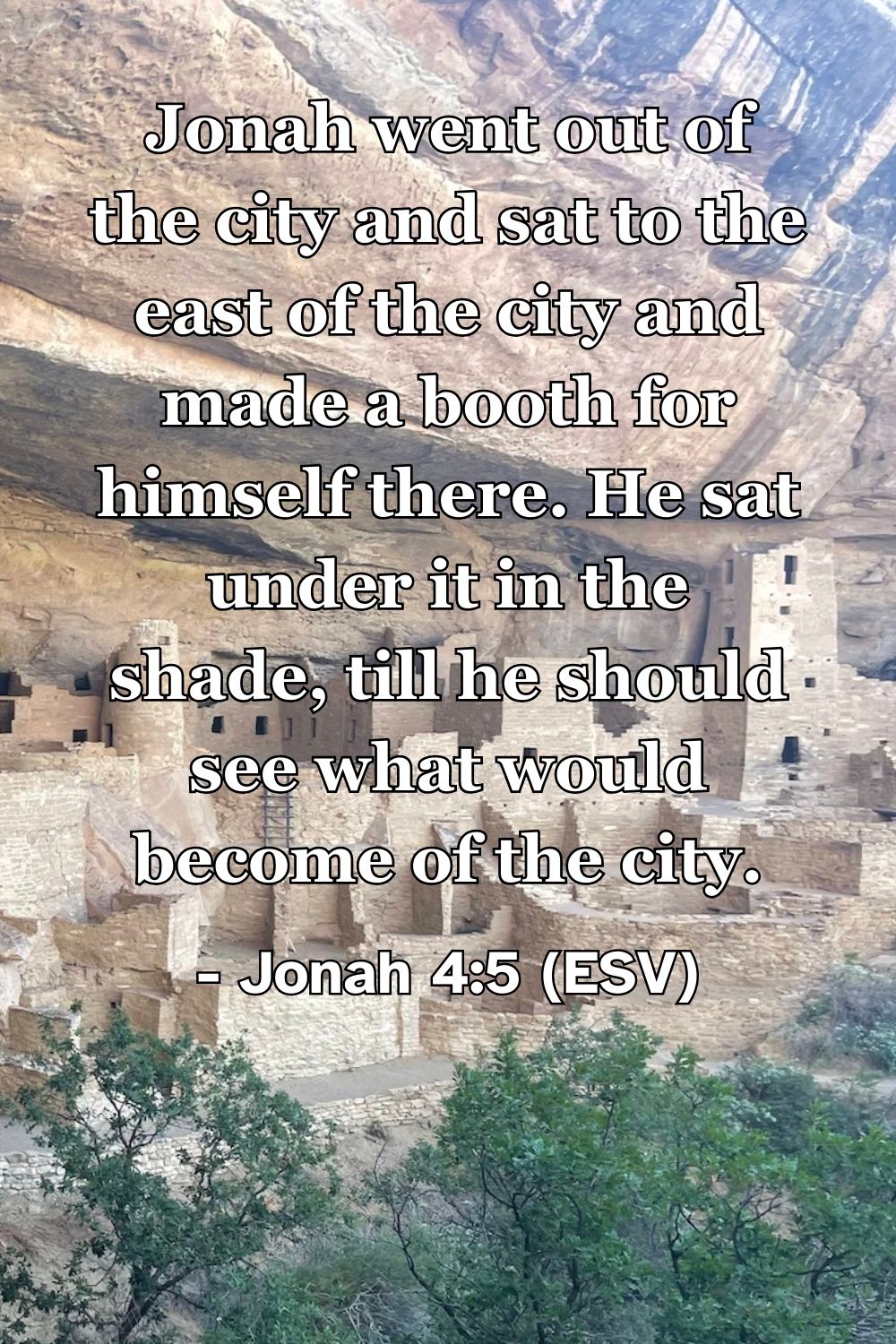
Jonah’s frustration is so intense that he walks outside the city, builds a small shelter, and waits to see if perhaps God might still destroy Nineveh. Jonah 4:5 says:
The picture is almost comical. Jonah sits sulking, like a child who did not get his way. He knows God has spared the city, but he is still holding out hope that fire might fall from heaven. He would rather see destruction than rejoice over repentance.
How often do we sit on our own “hills,” watching and waiting for those who hurt us to get what we think they deserve? Perhaps it is an estranged family member, a cruel boss, or even a former friend. We may not admit it out loud, but part of us waits for the moment their life falls apart. Like Jonah, we are more comfortable sitting in the shade of bitterness than standing in the light of mercy.
Yet God does not leave Jonah there. Instead, he provides a poignant illustration in Jonah 4:6-8:
Jonah’s joy over the plant reveals the smallness of his heart. He is “exceedingly glad” for the comfort of shade, but furious when the plant withers. His concern is not for the people of Nineveh but for his own comfort.
God’s Final Word
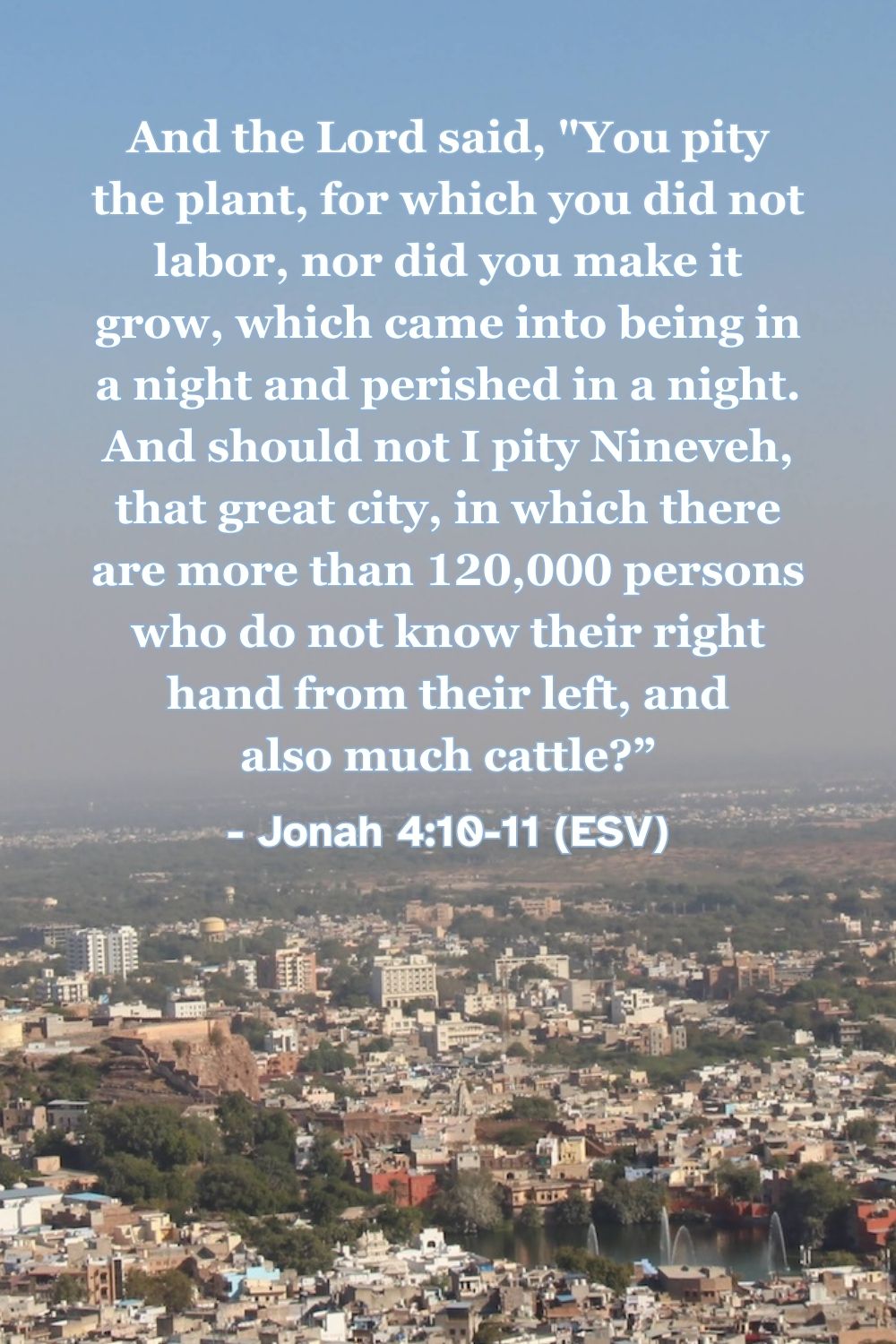
God uses this illustration and Jonah’s response to expose Jonah’s misplaced priorities. The book of Jonah ends with God’s gentle but piercing question in Jonah 4:10-11:
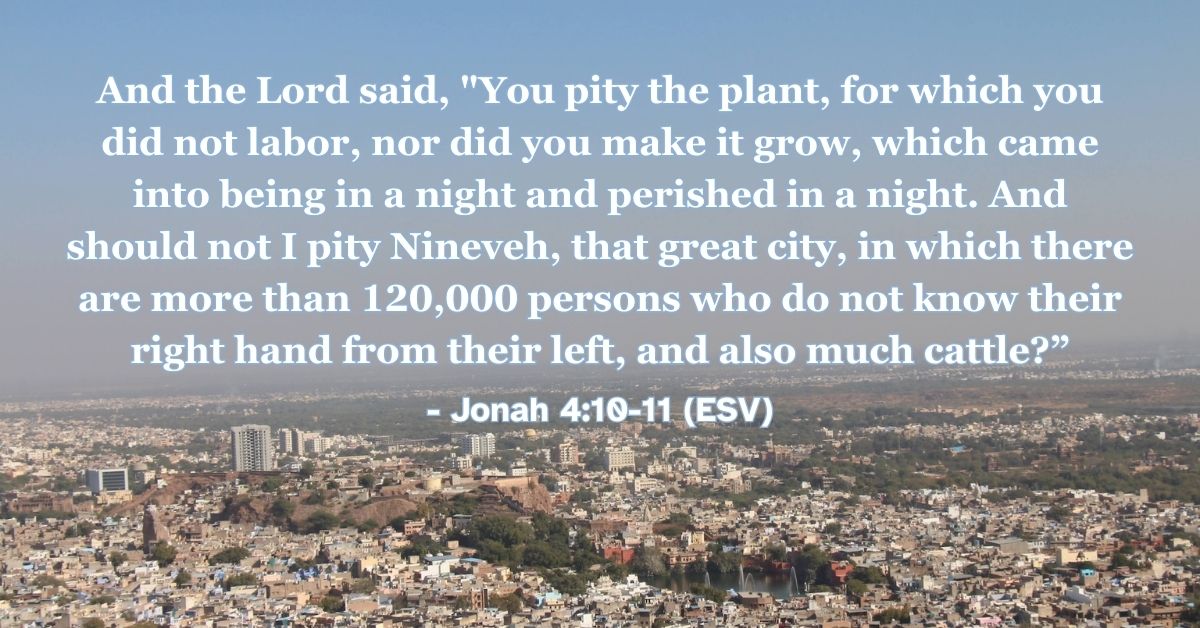
The contrast is stark. Jonah grieves over a plant that lived for a single day, while God grieves over a city of 120,000 souls. Jonah’s compassion is self-centered; God’s compassion is expansive. The book ends without resolution. We never learn how Jonah responded. Did he continue sulking in the sun, or did God’s words finally pierce his heart?
This open ending is intentional. The story is not meant to satisfy our curiosity about Jonah’s personal growth, but to confront us with our own. How will we respond to God’s mercy toward those we find difficult to forgive? Will we rejoice over repentance, or will we sit on the hill with Jonah, bitter that God’s grace extends further than our own?
Learning to Rejoice in God’s Mercy
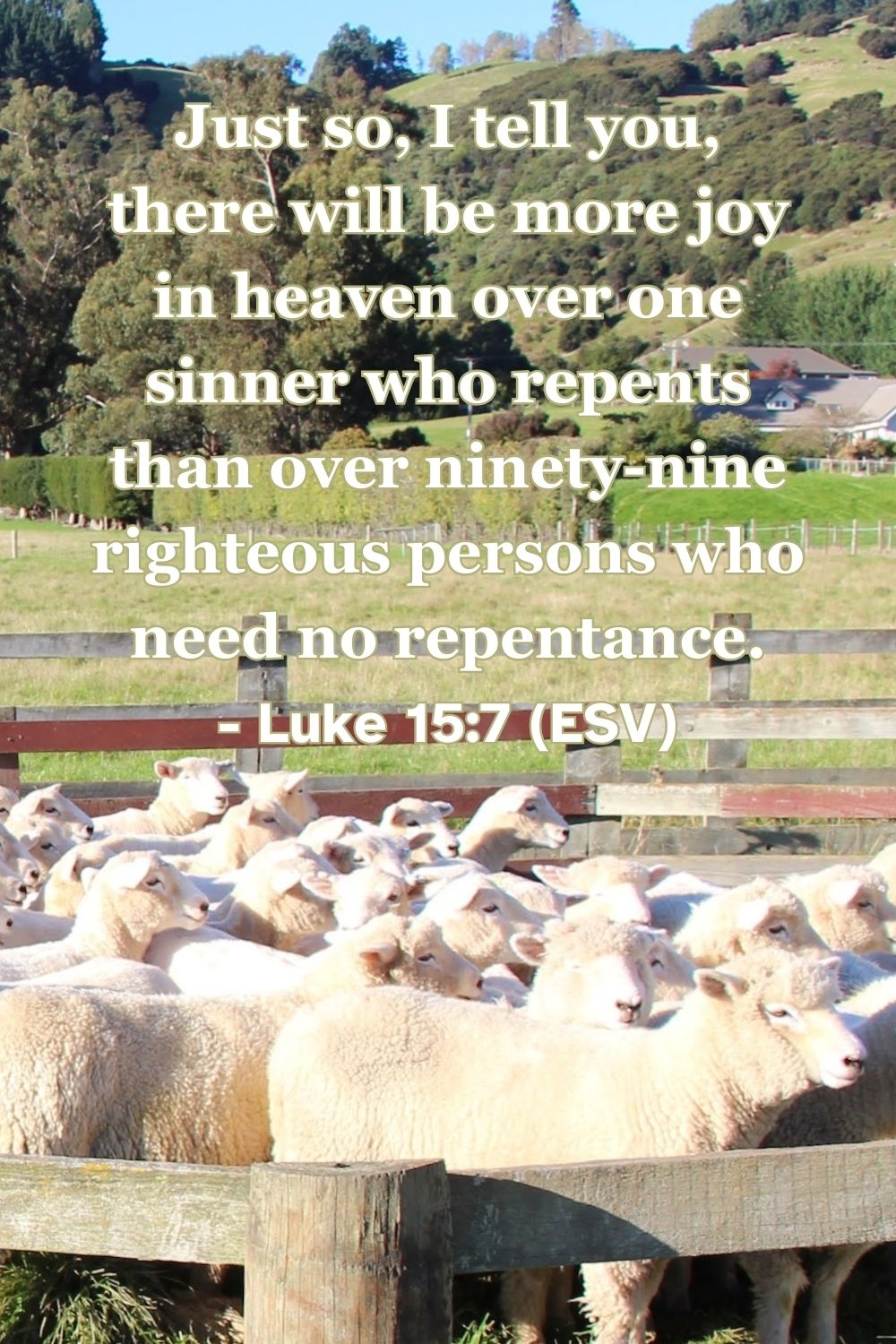
The challenge of Jonah 4 is not simply to accept God’s mercy for others, but to rejoice in it. Scripture reminds us in Luke 15:7 that there is joy in heaven whenever a sinner repents:
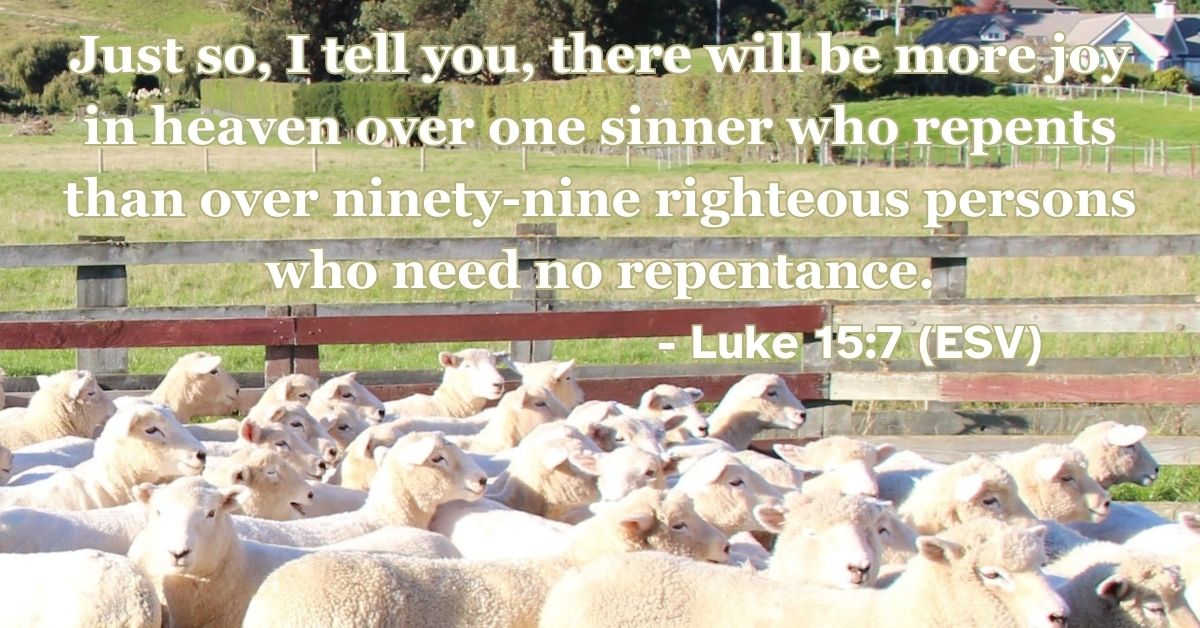
God calls us to share in that joy. He does not want reluctant servants who obey outwardly while resenting his compassion inwardly. He wants hearts that reflect his own, hearts that rejoice when grace triumphs over judgment.
This is not easy. Forgiving others can feel like betraying our own pain. Rejoicing in their repentance can feel like excusing the harm they caused. But forgiveness is not the same as excusing sin. It is entrusting judgment to the God who is perfectly just and merciful. It is choosing to believe that God’s grace is big enough to cover not only our sins, but theirs as well.
True joy comes when we learn to see mercy as a victory, not a loss. Jonah saw Nineveh’s repentance as a defeat, as if God had failed to uphold justice. But the gospel tells us that justice and mercy meet at the cross. Our sins are not ignored; they are paid for by the blood of Jesus. The same is true for the sins of others. When we struggle to rejoice in God’s mercy, we need to look again at the cross, where judgment fell so that forgiveness might be offered to all.
A Call to Examine Our Hearts
Jonah 4 leaves us with a mirror. Do we see in ourselves the same bitterness that consumed Jonah? Or do we see the beginnings of a heart that rejoices in mercy?
The truth is that every one of us has been both Jonah and Nineveh. At times we are the rebellious prophet, angry that God would show kindness to others. And at other times we are the guilty city, desperately in need of grace. In both cases, God’s mercy is our only hope.
The book ends with a question, and so must our reflection. How will we respond to God’s mercy? Will we cling to bitterness, or will we share in heaven’s joy over repentance?
Reflection Questions
- When have you found yourself angry that God showed kindness to someone you thought did not deserve it?
- In what ways do you ask for God’s mercy for yourself while hoping for justice against others?
- How does Jonah’s disappointment reveal your own struggles with forgiveness?
- What “hill” are you sitting on today, waiting for someone else’s downfall?
- How can remembering the cross help you rejoice in God’s mercy toward others?
Reflective Prayer
Consider using these verses to pray using the ACTS method: Adoration, Confession, Thankfulness, and Supplication:
- Adoration: Praise God. Do these verses bring any specific characteristics of God to mind?
- Confession: Tell God that you are sorry for specific sins. Do these verses bring any specific sins to mind?
- Thankfulness: Show gratitude towards God. Does anything from these verses inspire gratitude?
- Supplication: Make requests for yourself and for others. Does anything from these verses inspire a prayer?
If helpful, you can use a prayer journal template.





Subscribe
If you enjoyed this post and wish to receive more Christian content, feel free to subscribe to my newsletters!
Related Resources
Visit the Joyful Moments in Christ homepage for all posts, or scroll through other blog posts related to mercy and forgiveness:


Something went wrong. Please refresh the page and/or try again.
English Standard Version (ESV): Unless otherwise noted, scripture quotations are from the ESV® Bible (The Holy Bible, English Standard Version®), © 2001 by Crossway, a publishing ministry of Good News Publishers. Used by permission. All rights reserved. The ESV text may not be quoted in any publication made available to the public by a Creative Commons license. The ESV may not be translated in whole or in part into any other language.

 Joyful Moments in Christ