New Life and True Rest in Jesus
This Sunday School lesson is intended for upper elementary students. All lessons on this website are protected by copyright, but you can use them for free in small groups or Sunday School classes. You may share a link to this page, but please do not copy these pages and put them on other websites.
The Big Idea
Jesus brings new life, true rest, and calls us to show love and mercy, even when it is hard.
Lesson Objectives
- Understand that Jesus brings joy and new life that cannot be contained by old traditions.
- Learn that Jesus is Lord of the Sabbath and cares about people’s needs more than exact rules.
- See that doing good and showing mercy is right in God’s eyes.
- Explore how we can follow Jesus with hearts full of love, trust, and kindness.
Class Setting Notes
- Recommended for upper elementary Sunday School.
- Lesson length: 45–60 minutes. Can be shortened or extended based on activities selected.
Opening Activity
Worn-Out and Brand-New
- Bring two items: an old, worn-out shirt or cloth and a new piece of fabric.
- Show students the difference in quality and ask, “Would this new piece fix the old one?”
- Next, show a plastic cup and a fizzy soda bottle. Ask, “What would happen if we shook the soda and poured it into this old, cracked cup?”
- Let students predict or imagine the result.
This activity helps introduce Jesus’ teaching about old and new, and prepares students to think about how Jesus brings something better than what came before.
Bible Reading
Ask the class to read Luke 5:33-6:11 aloud together or have one person read it.
- Very Easy: Easy-to-Read Version: Luke 5:33-6:11 (ERV)
- Very Easy: New International Reader’s Version: Luke 5:33-6:11 (NIRV)
- Easy: Good News Translation: Luke 5:33-6:11 (GNT)
- Medium: New Living Translation: Luke 5:33-6:11 (NLT)
- Hard: New International Version: Luke 5:33-6:11 (NIV)
- Very Hard: English Standard Version: Luke 5:33-6:11 (ESV)
Additional Reading: Choosing the Right Bible Translation
Suggested prompts:
As the class reads aloud, consider asking some of these prompts:
- What do you notice about the questions people ask Jesus?
- How does Jesus use examples to help others understand?
- What does this passage tell us about what matters most to Jesus?
Teacher Background Notes
- Fasting was a common spiritual practice among the Pharisees and John’s disciples. Jesus’ disciples did not fast because they were in a time of joyful fellowship with him.
- The image of the bridegroom points to Jesus as the long-awaited Messiah. His presence is a time for joy, not mourning.
- The parables of the new patch and new wine illustrate the incompatibility of Jesus’ new covenant with the old ways of thinking under the law.
- The Sabbath was established by God for rest and worship, but the Pharisees had added many rigid traditions.
- By referring to the story of David, Jesus highlights that mercy and human need can take precedence over ceremonial rules.
- Calling himself the “Son of Man” and “Lord of the Sabbath,” Jesus asserts his divine authority to interpret and fulfill the law.
- In healing on the Sabbath, Jesus demonstrates both his compassion and his divine authority.
- The anger of the Pharisees highlights how Jesus’ mission challenged human traditions that had overshadowed God’s heart for mercy.
Theological Insights
- Jesus brings a new covenant, marked by grace and joy rather than burdensome legalism.
- True righteousness is found in relationship with Jesus, not in religious rituals.
- Jesus is the Lord of the Sabbath; he has authority over the law and invites us into true rest.
- God desires mercy and compassion over rigid rule-keeping.
- The gospel transforms our hearts and leads us to love, not just outward obedience.
Discussion Questions
Understanding the Text
- Why did people ask Jesus about fasting?
- What do the parables of the new patch and wineskins teach?
- What happened when Jesus and his disciples walked through the wheat fields on the Sabbath?
- Why were the Pharisees upset, and how did Jesus answer them?
- What happened in the synagogue when Jesus met the man with the paralyzed hand?
- What question did Jesus ask about doing good on the Sabbath?
- How did the religious leaders react to Jesus’ healing?
Personal Reflection and Application
- Why is it sometimes hard to let go of old ways or habits?
- When have you experienced joy because of Jesus’ work in your life?
- How can we rest in Jesus, not just on Sundays but every day?
- What would you do if showing kindness went against what others expected?
- How can you show mercy and care for others this week, like Jesus did?
Suggested Activities
Joyful Feast Collage
- Provide magazines, scissors, glue, and paper.
- Ask students to create a collage of foods, celebrations, and joyful scenes.
- Encourage them to label it “Joy with Jesus” and talk about how Jesus brings gladness.
This activity reinforces the idea that following Jesus is a joyful and life-giving experience.
Sabbath Snapshot
- Give each student a small blank card or piece of paper.
- Have them draw or write about one way they can rest in Jesus or help someone else on a Sabbath.
- Invite volunteers to share their ideas.
This activity helps students connect the meaning of Sabbath with real-life expressions of love and trust.
“Act It Out” Skit
- Divide students into small groups to act out the three short stories:
- People asking Jesus about fasting.
- The disciples picking grain on the Sabbath.
- Jesus healing the man with the paralyzed hand.
- After each skit, ask: “What does this teach us about Jesus?”
This activity helps students engage with the stories by stepping into the scene.
Memory Verse
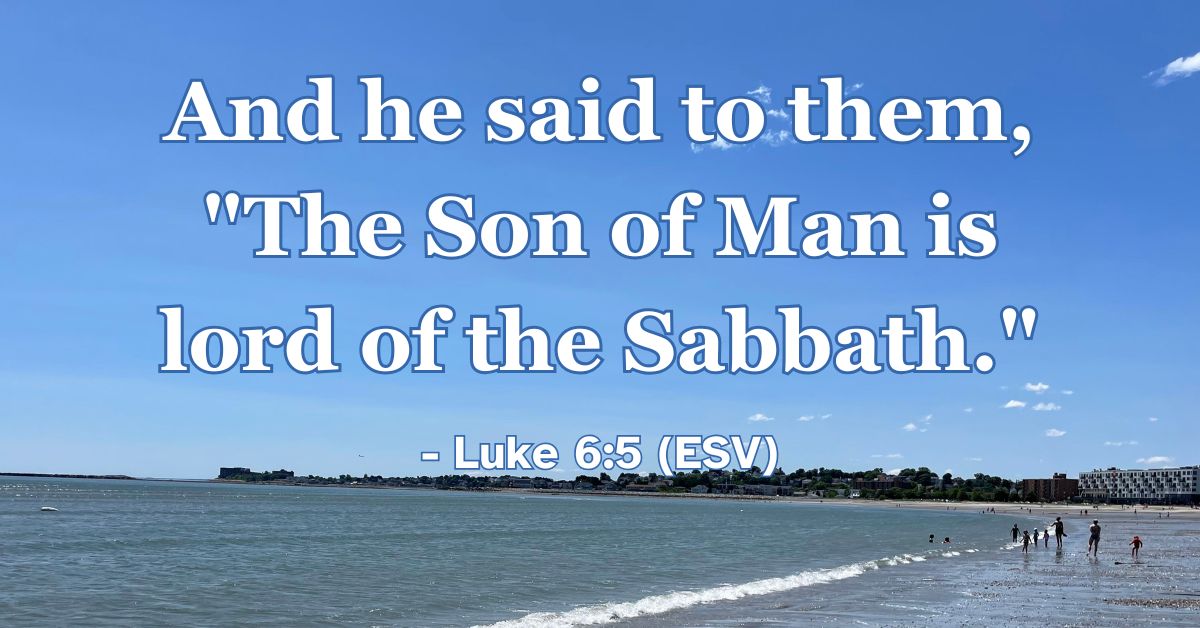
And he said to them, “The Son of Man is lord of the Sabbath.”
Luke 6:5 (ESV)
Closing Prayer
Father,
Thank you for sending Jesus to bring new life, true rest, and mercy. Help us to follow him with joyful hearts and to show kindness, even when it is difficult. Teach us to rest in you and to love others as you love us.
In Jesus’ name we pray. Amen.

The ESL Version
I also create materials for adult English Language Learners (ELLs) and ESL students. You can find my ELL Bible Study based on Luke 5:33-6:11 here:
- ELL Bible Study: Luke 5:33-39 — The Question about Fasting
- ELL Bible Study: Luke 6:1-5 — The Question about the Sabbath
- ELL Bible Study: Luke 6:6-11 — Jesus Heals a Man’s Hand
Subscribe
If you enjoyed this post and wish to receive more Christian content, consider subscribing to my newsletters!
Related Resources
Visit the Joyful Moments in Christ homepage for all posts, or scroll through other blog posts related to Sunday School:


Something went wrong. Please refresh the page and/or try again.
English Standard Version (ESV): Unless otherwise noted, scripture quotations are from the ESV® Bible (The Holy Bible, English Standard Version®), © 2001 by Crossway, a publishing ministry of Good News Publishers. Used by permission. All rights reserved. The ESV text may not be quoted in any publication made available to the public by a Creative Commons license. The ESV may not be translated in whole or in part into any other language.


 Joyful Moments in Christ