Jesus Calls Ordinary People and Sinners to Follow Him
This Sunday School lesson is intended for upper elementary students. All lessons on this website are protected by copyright, but you can use them for free in small groups or Sunday School classes. You may share a link to this page, but please do not copy these pages and put them on other websites.
The Big Idea
Jesus calls ordinary people and sinners to follow him and share his love with others.
Lesson Objectives
- Understand that Jesus calls people to follow him, even those others might reject.
- Recognize that following Jesus sometimes means leaving behind old ways of life.
- See that Jesus has the power to change hearts and give new purpose.
- Learn that we can trust and obey Jesus, even when it is hard or surprising.
Class Setting Notes
- Recommended for upper elementary Sunday School.
- Lesson length: 45–60 minutes. Can be shortened or extended based on activities selected.
Opening Activity
Fish Net Toss Game
- Place two baskets or boxes on opposite ends of the room labeled “Follow” and “Stay.”
- Write different actions or decisions on slips of paper (e.g., “Help a friend,” “Ignore someone,” “Read the Bible,” “Tell a lie”).
- Students take turns tossing each slip into the basket they think matches what it means to follow Jesus.
- After the game, briefly discuss why each action belongs in one basket or the other.
This activity helps introduce the idea that following Jesus means making choices that reflect his love and commands.
Bible Reading
Ask the class to read Luke 5:1–11 and 27–32 aloud together or have one person read it.
- Very Easy: Easy-to-Read Version: Luke 5:1-11 (ERV) & Luke 5:27-32 (ERV)
- Very Easy: New International Reader’s Version: Luke 5:1-11 (NIRV) & Luke 5:27-32 (NIRV)
- Easy: Good News Translation: Luke 5:1-11 (GNT) & Luke 5:27-32 (GNT)
- Medium: New Living Translation: Luke 5:1-11 (NLT) & Luke 5:27-32 (NLT)
- Hard: New International Version: Luke 5:1-11 (NIV) & Luke 5:27-32 (NIV)
- Very Hard: English Standard Version: Luke 5:1-11 (ESV) & Luke 5:27-32 (ESV)
Additional Reading: Choosing the Right Bible Translation
Suggested prompts:
As the class reads aloud, consider asking some of these prompts:
- What surprises you about this passage?
- How do the people in these stories respond to Jesus?
- What do these stories teach us about who Jesus invites to follow him?
Teacher Background Notes
- Jesus’ call to Simon Peter, James, and John came after a miraculous catch of fish, which demonstrated his divine authority.
- These men were ordinary fishermen, not religious leaders or scholars, yet Jesus called them to become “fishers of men.”
- Peter’s response shows humility and awareness of sin, but Jesus’s words offer grace and a new purpose.
- Levi (also called Matthew) was a tax collector, a profession despised by many Jews due to its association with greed and Roman oppression.
- Levi’s immediate response and his feast show joy and transformation—he invites others to meet Jesus.
- Jesus’s words about sickness and repentance highlight his mission: he came for sinners, not for the self-righteous.
- These passages teach that no one is too ordinary or too sinful to be called by Jesus.
Theological Insights
- Jesus demonstrates his divine power and authority through miracles and his call to discipleship.
- Jesus calls people not because of their status or worthiness, but because of his grace and purpose.
- True discipleship involves repentance, trust, and a willingness to leave behind old ways.
- Jesus’s mission is to seek and save the lost—those who know their need of him.
- The church is made up of redeemed sinners, called to share the good news with others.
Discussion Questions
Understanding the Text
- What miracle did Jesus perform before calling Simon Peter?
- Why was Simon Peter afraid when he saw the large catch of fish?
- What did Jesus mean when he said they would now “catch men”?
- What did Levi do after Jesus said, “Follow me”?
- Why were the Pharisees upset about who Jesus was eating with?
- What does Jesus mean when he says, “Those who are well have no need of a physician”?
Personal Reflection and Application
- Have you ever felt like you were not good enough to follow Jesus? What does this passage say about that?
- What might it look like for you to “leave everything” and follow Jesus?
- Are there people around you who might feel left out? How can you include them like Jesus did?
- How can you respond with trust when Jesus calls you to do something hard or unexpected?
Suggested Activities
Fishing for People Relay
- Create two stations: one with paper fish containing action words (e.g., “pray,” “serve,” “share Jesus”), and another with baskets.
- Students take turns “fishing” (using a stick with a string) for a paper fish and racing to place it in the basket labeled “Ways to Follow Jesus.”
This activity reinforces how Jesus gives us a new mission as his followers.
Invitation Scroll Craft
- Provide paper, ribbon, and markers for students to create scroll-style invitations.
- Students write a simple message like “Jesus invites you to follow him” and decorate it.
- Encourage students to take it home and share it with someone.
This activity helps children think about sharing Jesus’s invitation with others.
Outcast Welcome Role Play
- Discuss what it means to feel left out.
- Have students act out short scenes where someone is being left out and others choose to welcome them.
- Talk about how Jesus welcomed those others rejected.
This activity encourages empathy and helps students practice Christlike love and inclusion.
Memory Verse
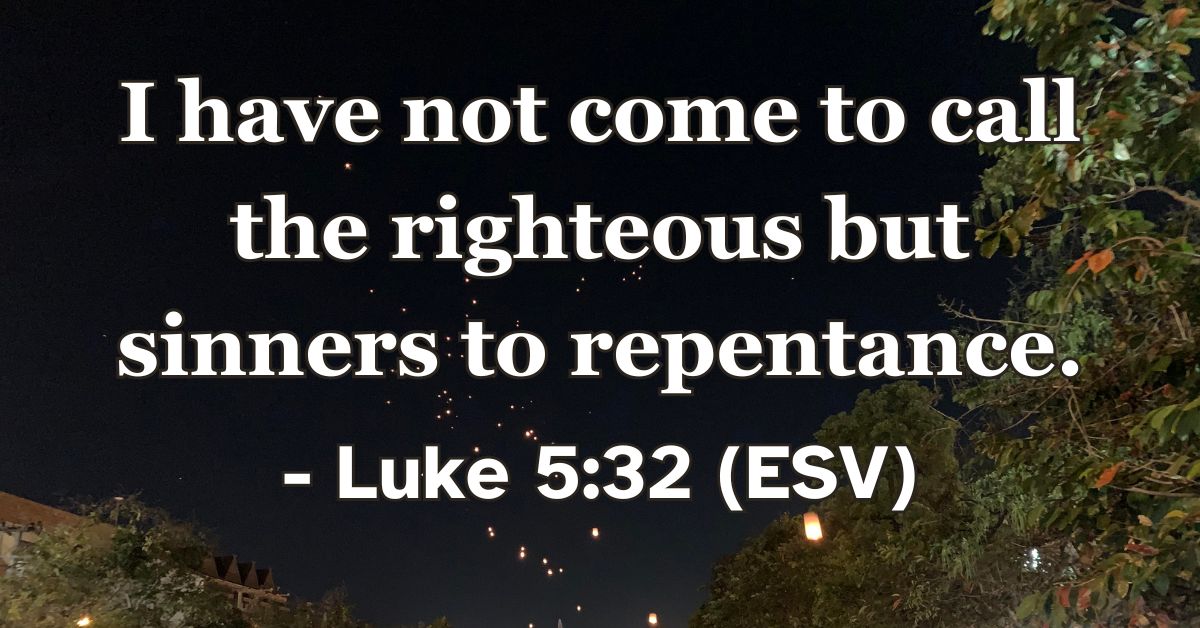
I have not come to call the righteous but sinners to repentance.
Luke 5:32 (ESV)
Closing Prayer
Father,
Thank you for calling ordinary people like Peter and Levi to follow Jesus. Help us to hear your call, to turn from our sin, and to follow you with joy. Make us bold to welcome others and share your love with those who feel left out.
In Jesus’ name we pray. Amen.
The ESL Version
I also create materials for adult English Language Learners (ELLs) and ESL students. You can find my ELL Bible Study based on Luke 5:1–11 and 27–32 here:
- ELL Bible Study: Luke 5:1-11 — Jesus Calls His First Disciples
- ELL Bible Study: Luke 5:27-32 — Jesus Calls Levi
Subscribe
If you enjoyed this post and wish to receive more Christian content, consider subscribing to my newsletters!
Related Resources
Visit the Joyful Moments in Christ homepage for all posts, or scroll through other blog posts related to Sunday School:



Something went wrong. Please refresh the page and/or try again.
English Standard Version (ESV): Unless otherwise noted, scripture quotations are from the ESV® Bible (The Holy Bible, English Standard Version®), © 2001 by Crossway, a publishing ministry of Good News Publishers. Used by permission. All rights reserved. The ESV text may not be quoted in any publication made available to the public by a Creative Commons license. The ESV may not be translated in whole or in part into any other language.




 Joyful Moments in Christ