
Serving others often feels like hard work, more work than we really want to put in. And while we are grumbling, we often worry that our efforts may go unnoticed or under-appreciated. However, the Bible consistently reminds us that true joy is found not in being served, but in giving ourselves away for the good of others. From the example of Jesus washing his disciples’ feet to Paul’s words about the blessing of sacrifice, Scripture points us to a joy that runs deeper than recognition or reward. Serving others is not simply a duty that we grudgingly complete, but a privilege that reflects the heart of Christ himself. The following ten passages show us that when we give of ourselves in love, we do not lose joy, but instead, we gain it!
Matthew 20:26-28 – Greatness in Serving

Matthew 20:26-28 (ESV)
It shall not be so among you. But whoever would be great among you must be your servant, and whoever would be first among you must be your slave, even as the Son of Man came not to be served but to serve, and to give his life as a ransom for many.
In Matthew 20, Jesus turns the world’s idea of greatness upside down. The disciples had been arguing about position and rank, and Jesus gently reminded them that greatness in his kingdom looks very different from greatness in the world. Rather than seeking power, prestige, or comfort, Jesus pointed to himself as the model: the Son of Man came not to be served but to serve. His whole life and mission centered on giving himself away for the good of others, even to the point of death on a cross. This redefines success, showing us that the highest honor in God’s kingdom is to take the lowly place, gladly offering our time, energy, and love to others.
- Key Takeaway: Joy is found in following Jesus’ example, where true greatness comes through humble service.
- Reflection Question: Where am I tempted to measure greatness by the world’s standards instead of Christ’s?
- Practical Application: Look for one way today to serve someone quietly and without recognition, remembering that Jesus sees and delights in it.
John 13:14-15 – Following Jesus’ Example of Service

John 13:14-15 (ESV)
If I then, your Lord and Teacher, have washed your feet, you also ought to wash one another’s feet. For I have given you an example, that you also should do just as I have done to you.
In John 13, we see one of the most tender and surprising moments in the Gospels. On the night before his crucifixion, Jesus took the role of a servant and washed his disciples’ dusty feet, a job typically reserved for lowly servants and slaves. This act was not only shocking because of the humility it required, but it was also deeply symbolic of the cleansing work he would accomplish on the cross. Afterwards, Jesus called his disciples to imitate his example, not in the literal act of foot washing alone, but in living a life of humble service to others. The joy of serving comes from knowing that when we lower ourselves for the good of others, we are walking in the very footsteps of our Savior.
- Key Takeaway: Serving others with humility mirrors Christ’s love and fills us with joy.
- Reflection Question: Am I willing to take on humble, unnoticed tasks for the sake of others?
- Practical Application: Choose a small, ordinary act of service this week that demonstrates love in action, even if no one thanks you for it.
Acts 20:35 – The Blessing of Giving
Acts 20:35 (ESV)
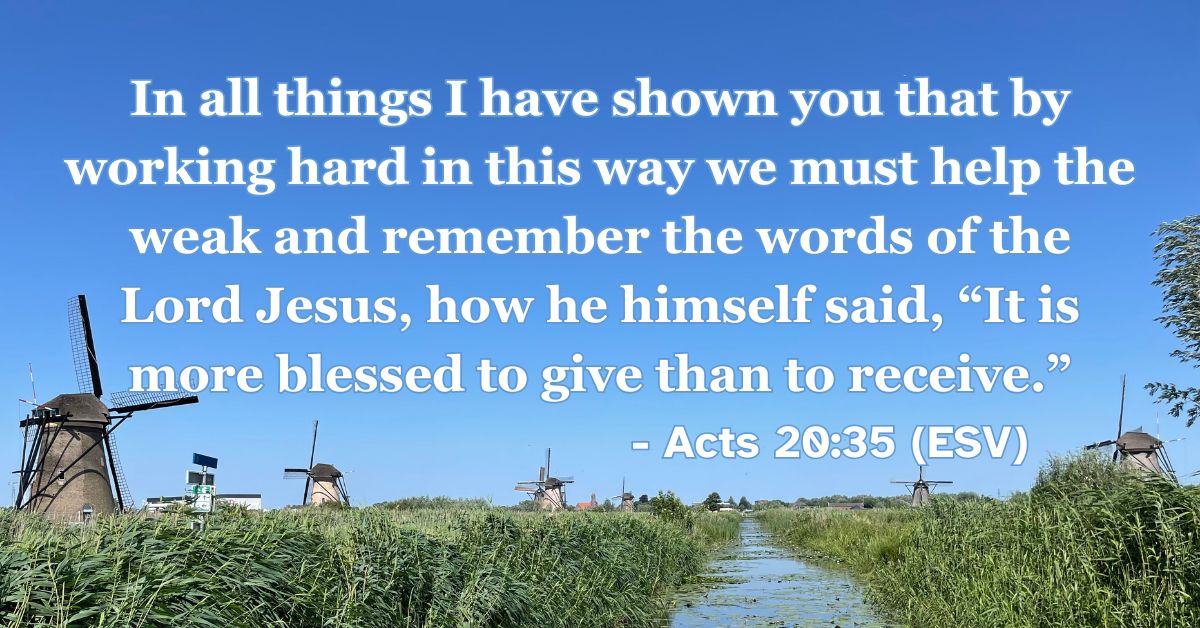
In all things I have shown you that by working hard in this way we must help the weak and remember the words of the Lord Jesus, how he himself said, “It is more blessed to give than to receive.”
In Acts 20, Paul spoke to the elders of the Ephesian church, urging them to shepherd God’s people with diligence and compassion. He reminded them of Jesus’ teaching that it is more blessed to give than to receive, a saying not recorded in the Gospels, but still treasured by the early church. Paul wanted them to see that joy is not found in clinging to possessions or seeking personal gain but in freely giving of themselves for the good of others. In giving, we mirror the heart of Jesus, who gave all that we might be rich in grace. This truth still holds power today: the more we give away, the more deeply we taste the joy of Christ.
- Key Takeaway: Joy grows when we give ourselves away for the good of others.
- Reflection Question: Do I believe that giving can actually bring me more joy than receiving?
- Practical Application: Set aside a small portion of your time or resources this week to give generously to someone in need.
Romans 12:10-11 – Serving with Zeal and Love

Romans 12:10-11 (ESV)
Love one another with brotherly affection. Outdo one another in showing honor. Do not be slothful in zeal, be fervent in spirit, serve the Lord.
In Romans 12, Paul describes what a life transformed by the gospel should look like. Rather than cold duty, Christian service should overflow with love, warmth, and energy. In this verse, Paul calls believers to outdo one another in showing honor, to keep their zeal alive, and to serve the Lord with wholehearted devotion. This is not the weary drudgery of trying to earn God’s favor, but the joyful overflow of hearts that have been captured by his mercy. The more we taste the goodness of God, the more we find joy in serving his people with eagerness and affection.
- Key Takeaway: Joy is found in serving others with genuine love and fervent devotion to Christ.
- Reflection Question: Is my service to others marked by joy and eagerness, or has it grown cold?
- Practical Application: Pray for renewed love and energy in your service, asking God to make your acts of kindness overflow with warmth.
Galatians 5:13 – Freedom Expressed in Love

Galatians 5:13-14 (ESV)
For you were called to freedom, brothers. Only do not use your freedom as an opportunity for the flesh, but through love serve one another. For the whole law is fulfilled in one word: “You shall love your neighbor as yourself.”
In Galatians 5, Paul reminds believers that they have been set free from the law’s condemnation through Christ. However, Christian freedom is not a license for selfishness. Instead, it is a calling to serve others in love. The paradox of the Christian life is that when we stop living for ourselves, we actually find greater joy and freedom than we ever could by chasing our own desires. Serving in love reflects the freedom of the gospel, where our hearts are no longer bound by sin but liberated to pour out kindness and compassion.
- Key Takeaway: Joy is discovered when we use our freedom to love and serve others.
- Reflection Question: How am I tempted to use my freedom for myself instead of serving others?
- Practical Application: Identify one area where you can freely serve someone else this week, offering your time or energy without expecting anything in return.
Philippians 2:3-4 – Humility that Brings Joy

Philippians 2:3-4 (ESV)
Do nothing from selfish ambition or conceit, but in humility count others more significant than yourselves. Let each of you look not only to his own interests, but also to the interests of others.
In Philippians 2, Paul urges believers to imitate the humility of Christ. Rather than chasing ambition or seeking recognition, Christians are called to place the needs of others ahead of their own. This command flows directly into Paul’s description of Christ’s humility in Philippians 2:5-11, where Jesus took the form of a servant and obeyed to the point of death. True joy is found not in clinging to our rights but in laying them down for the good of others, because that is the way of our Savior. Serving with humility is not a loss, but a gain, as it draws us closer to the heart of Christ.
- Key Takeaway: Joy comes from laying aside pride and serving others with humility.
- Reflection Question: Do I see others as more significant than myself in daily life?
- Practical Application: Practice humility by intentionally listening to someone else’s needs and placing their interests before your own.
Philippians 2:17 – Joy in Costly Service
Philippians 2:17-18 (ESV)
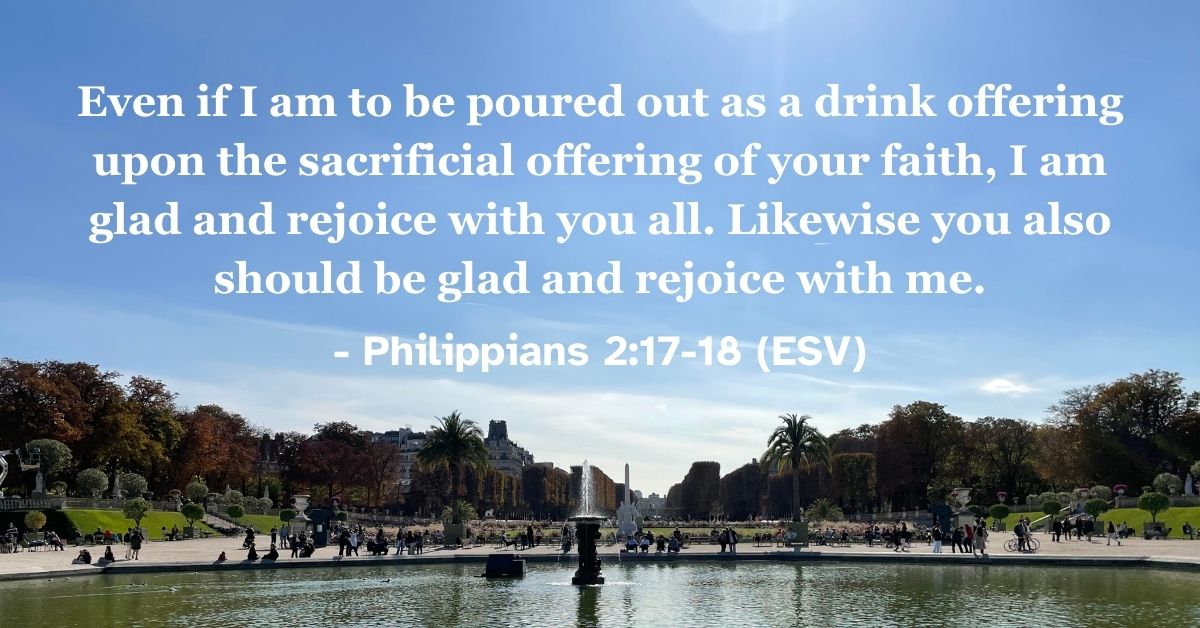
Even if I am to be poured out as a drink offering upon the sacrificial offering of your faith, I am glad and rejoice with you all. Likewise you also should be glad and rejoice with me.
In Philippians 2, Paul continues from a description of Jesus’ service, to a description of his own, describing his ministry to the church in vivid imagery. He likens his life to a drink offering poured out, meaning that his labor and even his suffering are gladly given for the sake of strengthening their faith. Instead of complaining about the cost, Paul rejoices, knowing that his sacrifices bring glory to Christ and growth to the church. When we choose this perspective, it can transform the way we view costly service. Even when it stretches us or requires something dear, serving others for the sake of the gospel can fill our hearts with joy, because it connects us to Christ’s own sacrificial love.
- Key Takeaway: Joy flourishes even in sacrifice when our service strengthens the faith of others.
- Reflection Question: Do I see costly service as a burden or as an opportunity for joy?
- Practical Application: Reflect on one way you can give sacrificially this week, whether through time, energy, or resources, and do it gladly.
Colossians 3:23-24 – Working for the Lord

Colossians 3:23-24 (ESV)
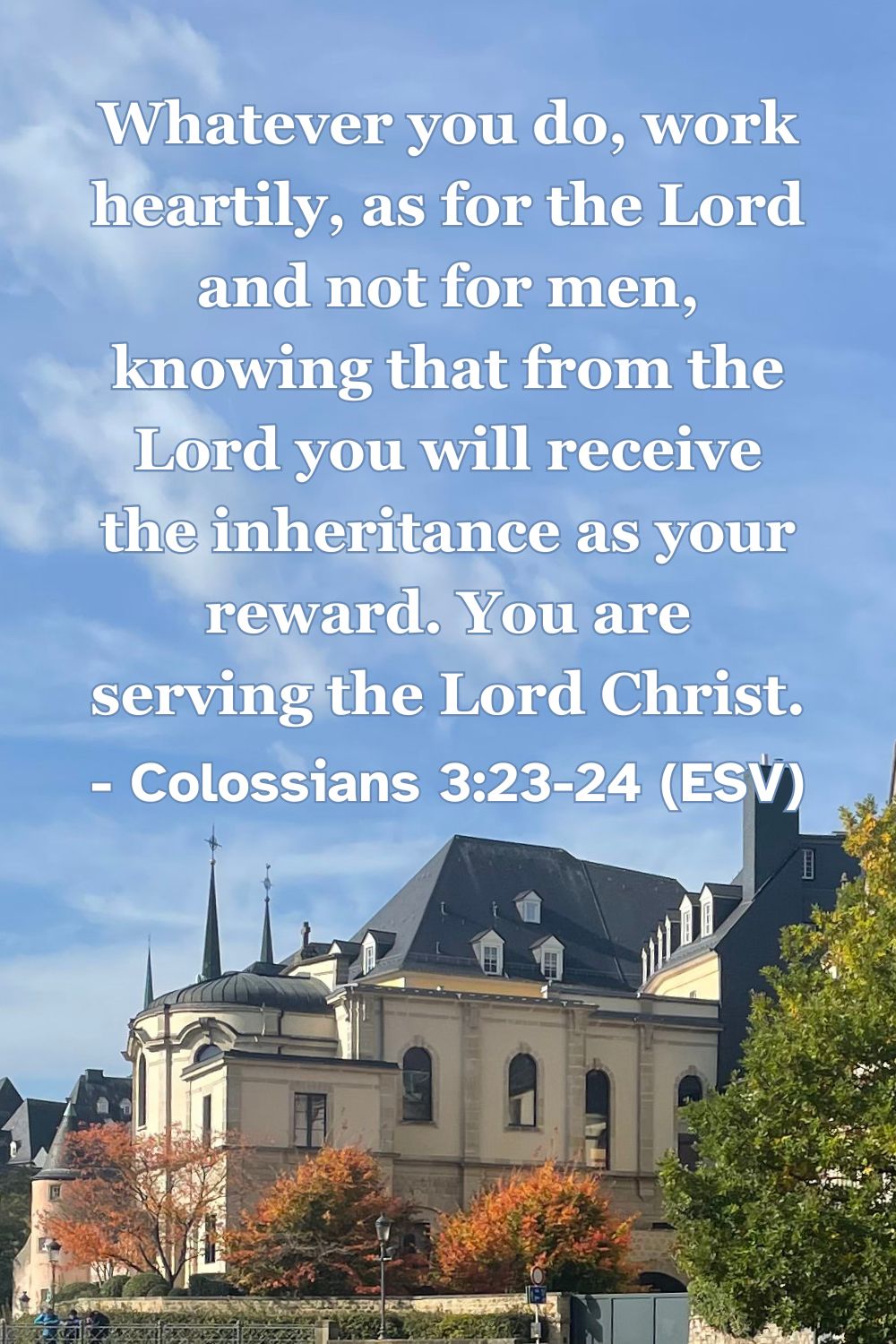
Whatever you do, work heartily, as for the Lord and not for men, knowing that from the Lord you will receive the inheritance as your reward. You are serving the Lord Christ.
In Colossians 3, Paul urges believers to remember that every act of work or service is ultimately directed toward Christ, not merely human approval. This perspective lifts even the most ordinary tasks into sacred opportunities to glorify God. Whether at home, at work, or in ministry, we find joy in knowing that nothing done for Christ is wasted. The promise of an eternal inheritance reminds us that serving with all our hearts is not in vain, because Christ himself rewards our labor. Joy grows when we realize that we are not serving for recognition here on earth but for the smile of our Savior.
- Key Takeaway: Joy fills our hearts when we serve others as though serving Christ himself.
- Reflection Question: Do I serve with a heart that seeks Christ’s approval or people’s praise?
- Practical Application: Approach one ordinary task today with the mindset that it is being done for Christ, and let that truth fill you with joy.
1 Peter 4:10-11 – Serving with God’s Strength
1 Peter 4:10-11 (ESV)
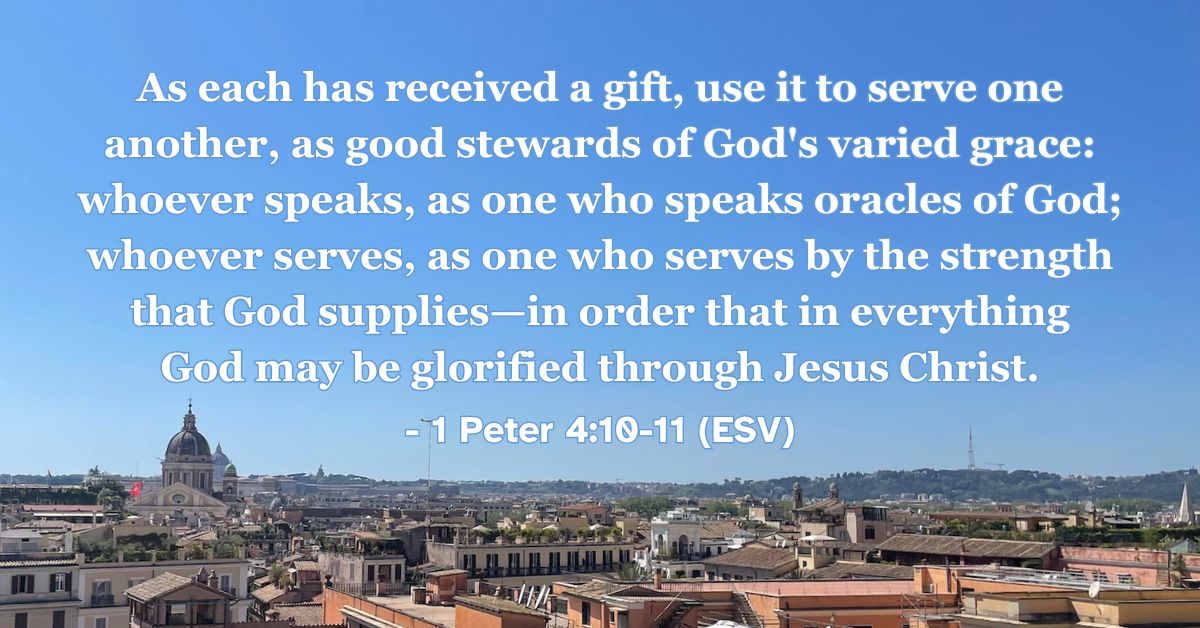
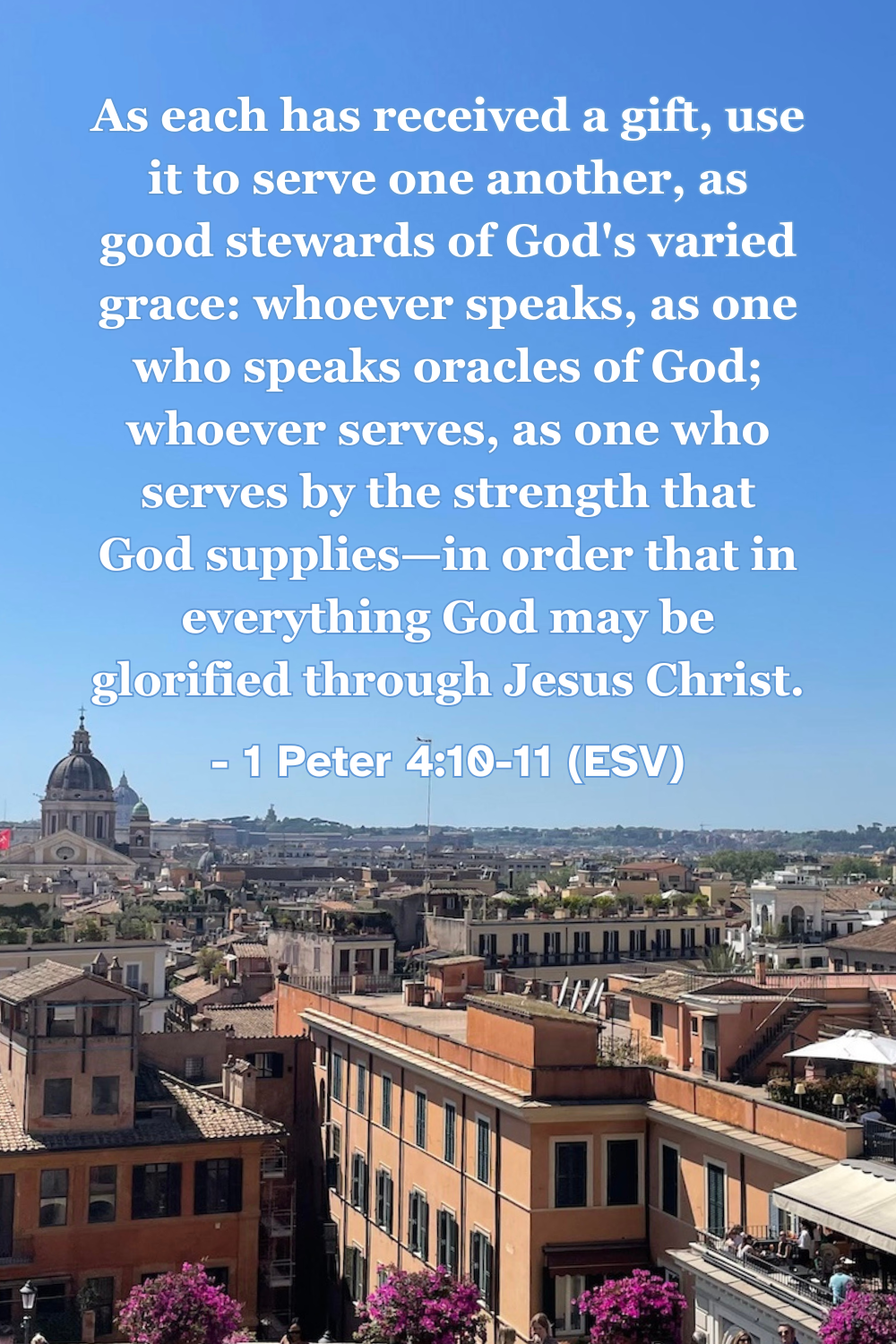
As each has received a gift, use it to serve one another, as good stewards of God’s varied grace: whoever speaks, as one who speaks oracles of God; whoever serves, as one who serves by the strength that God supplies—in order that in everything God may be glorified through Jesus Christ.
In 1 Peter 4, Peter encourages believers to recognize that every gift we have is given by God for the purpose of serving others. Whether through words of encouragement, practical help, or acts of mercy, each believer has a role in building up the body of Christ. Importantly, Peter reminds us that we serve not in our own strength but in the strength that God provides. This frees us from discouragement when we feel weak, because the source of power is not within us but in God himself. Joy arises when we know that our efforts, empowered by his grace, bring glory to Christ.
- Key Takeaway: Joy comes from using our God-given gifts to serve others by his strength.
- Reflection Question: Am I relying on God’s strength in my service, or am I trying to do it on my own?
- Practical Application: Identify one way you can use a specific gift or talent to bless someone this week, praying for God’s strength to do it joyfully.
Hebrews 6:10 – God Delights in Our Service

Hebrews 6:10 (ESV)
For God is not unjust so as to overlook your work and the love that you have shown for his name in serving the saints, as you still do.
Hebrews 6 encourages believers who may have grown weary in their service. The writer reminds them that God is perfectly just and will never overlook the work and love they have shown in his name. Even when others forget, God remembers every act of kindness and service done for the good of his people. This reminder fills us with joy, because our labor is never wasted in God’s eyes. Serving others becomes a beautiful expression of love for Christ himself, and knowing that God delights in it strengthens us to keep serving with gladness.
- Key Takeaway: Joy grows when we remember that God sees and delights in every act of service done in his name.
- Reflection Question: Do I believe that God notices even my smallest acts of service?
- Practical Application: Remember one quiet act of service you did recently and thank God that he saw it and delighted in it.
Reflective Prayer
Consider using these verses to pray using the ACTS method: Adoration, Confession, Thankfulness, and Supplication:
- Adoration: Praise God. Do these verses bring any specific characteristics of God to mind?
- Confession: Tell God that you are sorry for specific sins. Do these verses bring any specific sins to mind?
- Thankfulness: Show gratitude towards God. Does anything from these verses inspire gratitude?
- Supplication: Make requests for yourself and for others. Does anything from these verses inspire a prayer?
If helpful, you can use a prayer journal template.








Subscribe
If you enjoyed this post and wish to receive more Christian content, feel free to subscribe to my newsletters!
Related Resources
Visit the Joyful Moments in Christ homepage for all posts, or scroll through other blog posts related to joy and service:









Something went wrong. Please refresh the page and/or try again.
English Standard Version (ESV): Unless otherwise noted, scripture quotations are from the ESV® Bible (The Holy Bible, English Standard Version®), © 2001 by Crossway, a publishing ministry of Good News Publishers. Used by permission. All rights reserved. The ESV text may not be quoted in any publication made available to the public by a Creative Commons license. The ESV may not be translated in whole or in part into any other language.



 Joyful Moments in Christ