In the book of Philippians, the apostle Paul offers wisdom for living a life anchored in God’s provision. Whether facing hardship or joy, Paul’s words emphasize the importance of trusting in Christ for strength and peace. The message is clear: God’s provision is not only about meeting our physical needs but also about strengthening our hearts and minds through the power of the Holy Spirit. As Paul reflects on his own challenges, he draws attention to the need for prayer, the work of the Holy Spirit, and the hope of eternal life with Christ, offering a way to find peace and hope in every circumstance.
Let’s look at 10 Bible verses from Philippians that will offer powerful reminders of God’s ongoing work in our lives. Through them, we will learn how to stand firm in our faith, embrace contentment, and find joy in all circumstances. Whether struggling with anxiety, enduring suffering, or seeking peace in the midst of uncertainty, Philippians provides the guidance we need to trust in God’s provision. As we meditate on these verses, may we be reminded that God’s strength, peace, and provision are available to us, and we can rely on him for every need.
Strength and Deliverance through Prayer and the Spirit
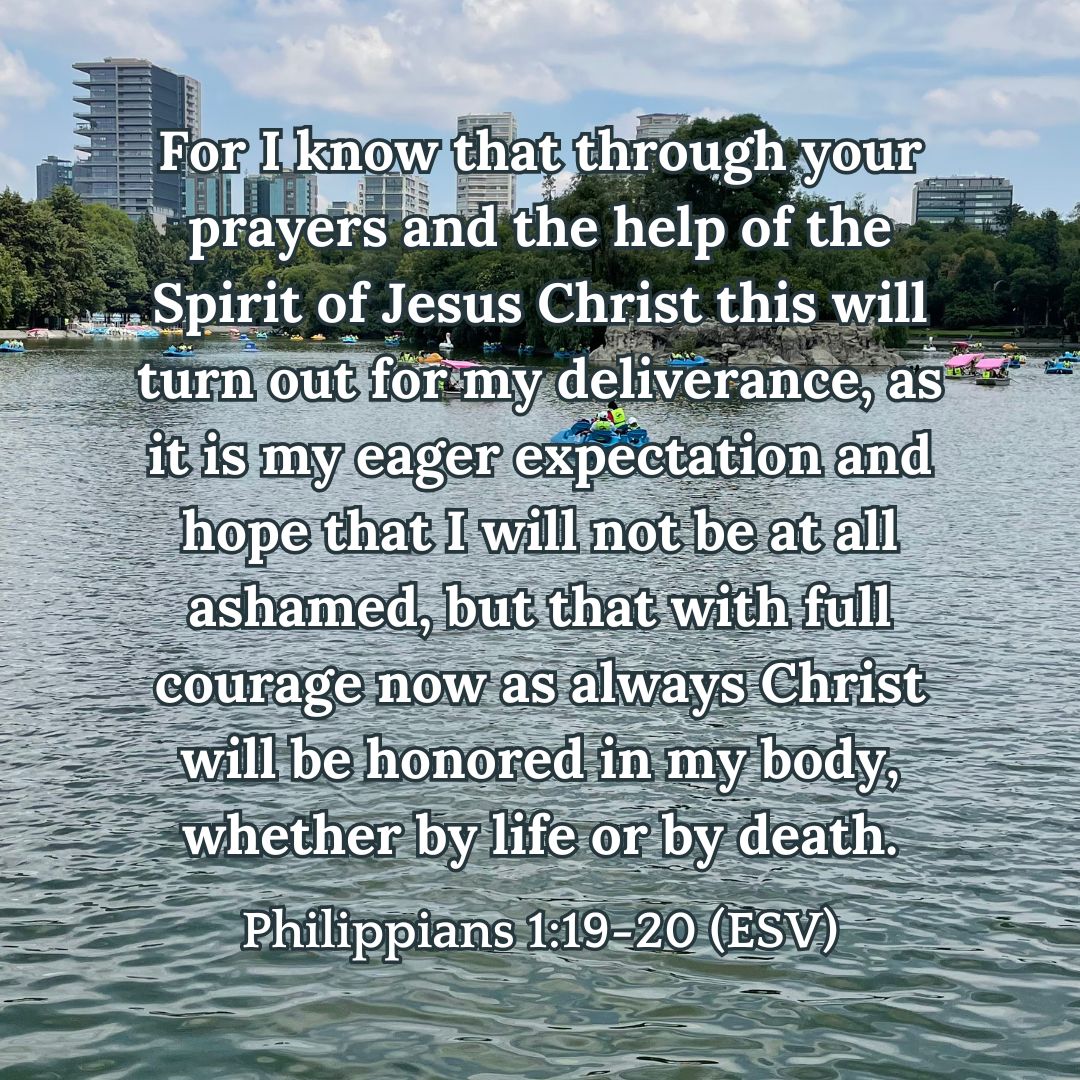
For I know that through your prayers and the help of the Spirit of Jesus Christ this will turn out for my deliverance, as it is my eager expectation and hope that I will not be at all ashamed, but that with full courage now as always Christ will be honored in my body, whether by life or by death.
Philippians 1:19-20 (ESV)
In this verse, Paul expresses his confidence in God’s provision through the prayers of the Philippians and the empowerment of the Holy Spirit. Despite facing uncertain circumstances, Paul is certain that God’s help will lead to his ultimate deliverance. His faith is grounded in the hope that he will stand firm, unashamed, even if his situation does not change in this life.
Paul’s words remind us of the power of prayer and the Spirit in difficult situations. Even when faced with hardship, God’s provision can give us strength, and our hope remains in his ability to work through our struggles. This verse calls us to trust God’s help through the intercession of others and his presence within us.
Reflection question: How can you rely more on prayer and the Holy Spirit for strength in your current struggles?
Practical Application: Reach out to someone this week and ask for prayer, trusting that God works through the prayers of others to provide ultimate deliverance.
Living for Christ, Living with Hope
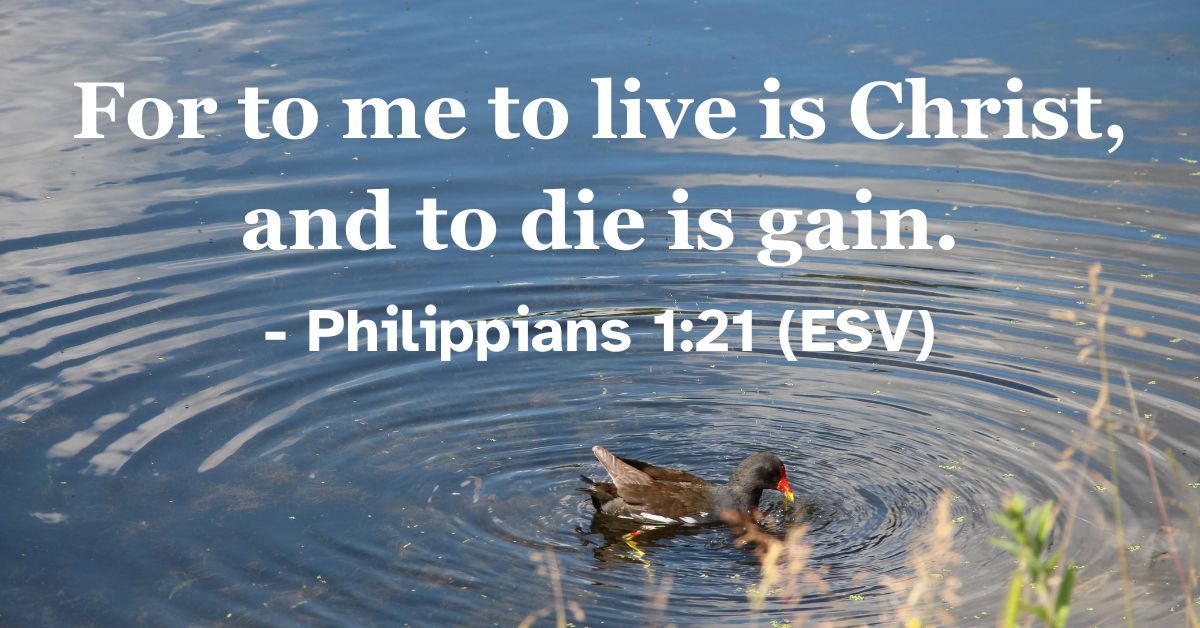
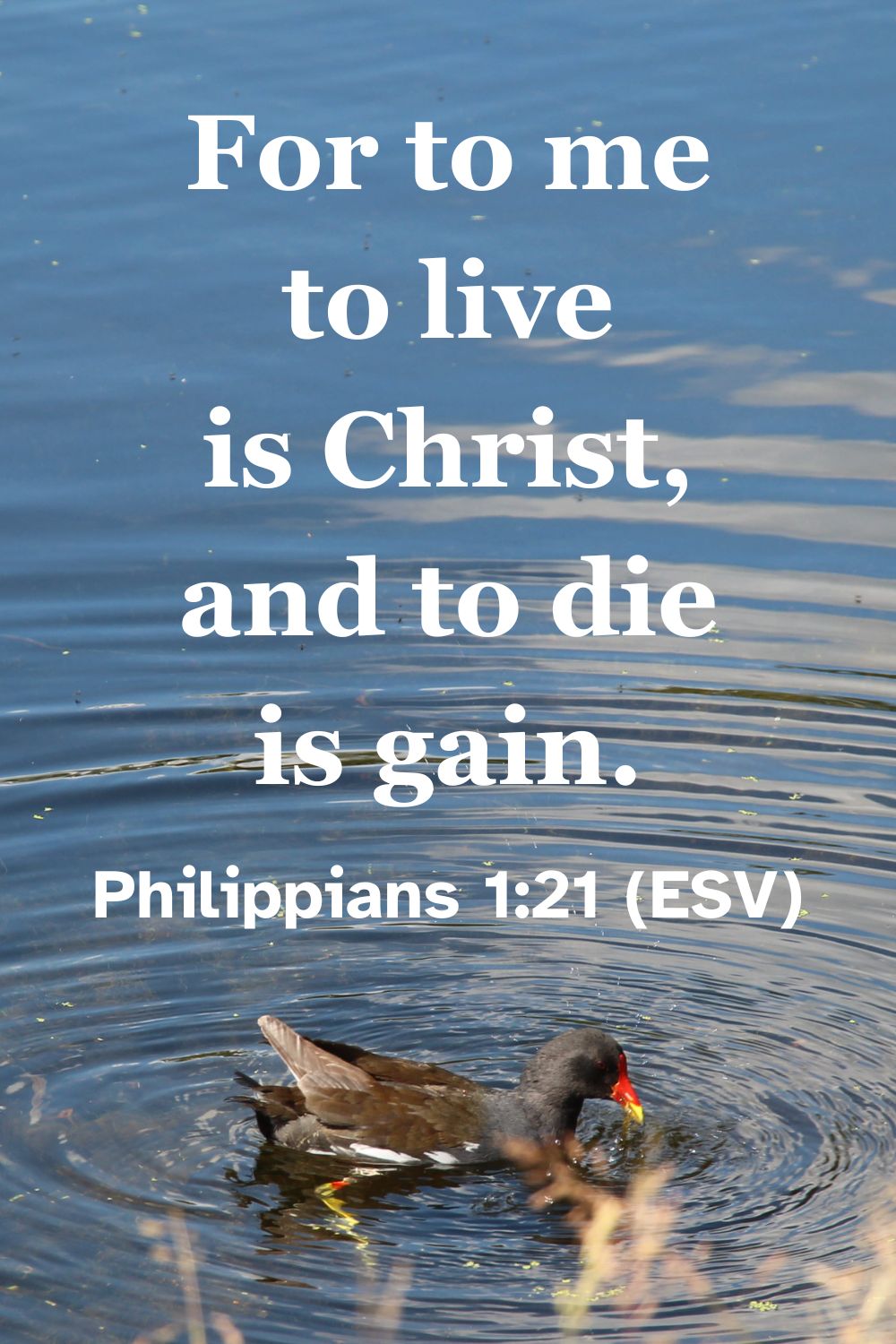
For to me to live is Christ, and to die is gain.
Philippians 1:21 (ESV)
This deceptively simple statement from Paul encapsulates the essence of his worldview: Christ is the reason for living, and death is not a loss but a gain. Paul’s life was fully dedicated to Christ’s mission. Even in the face of possible death, he saw that his ultimate reward would be to be with Christ. The larger context of this passage highlights Paul’s willingness to endure suffering for the sake of the gospel, as knows that both his life and death will serve to glorify Christ.
Paul’s perspective challenges us to view life and death through the lens of Christ’s eternal kingdom. It shifts our focus from earthly gain and success to spiritual fulfillment and the hope of eternal life with Christ. This verse invites us to evaluate what motivates our lives, whether we are truly living for Christ or whether our lives are focused on temporary, worldly pursuits.
Reflection question: In what ways can you live more fully for Christ, focusing on eternal gain rather than temporary loss?
Practical Application: Take time to evaluate how your daily actions align with the purpose of glorifying Christ, and make one change that reflects this focus.
Suffering for the Sake of Christ
For it has been granted to you that for the sake of Christ you should not only believe in him but also suffer for his sake.
Philippians 1:29 (ESV)
Paul reminds the Philippians that their faith is a gift, not only in believing in Christ but also in participating in Jesus’ sufferings. Contrary to our natural inclinations, suffering for Christ is not something to fear or avoid but rather a privilege, a sign of true union with him. In the broader context, Paul addresses the challenges of living out the gospel in a world that opposes it. The Philippians are encouraged to stand firm in their faith, even when it brings hardship.
This verse shifts our view of suffering from something negative to something that deepens our relationship with Christ. It teaches us that our faith can be refined and strengthened through trials, and these challenges can be a source of joy as we share in the sufferings of Christ. We are reminded that Christ suffered for us, and in our suffering, we identify with him.
Reflection question: How can you embrace suffering for Christ with the same joy and hope Paul expresses?
Practical Application: When facing difficulty or opposition for your faith, remember that it is an opportunity to grow closer to Christ and reflect his glory.
God’s Work in Us
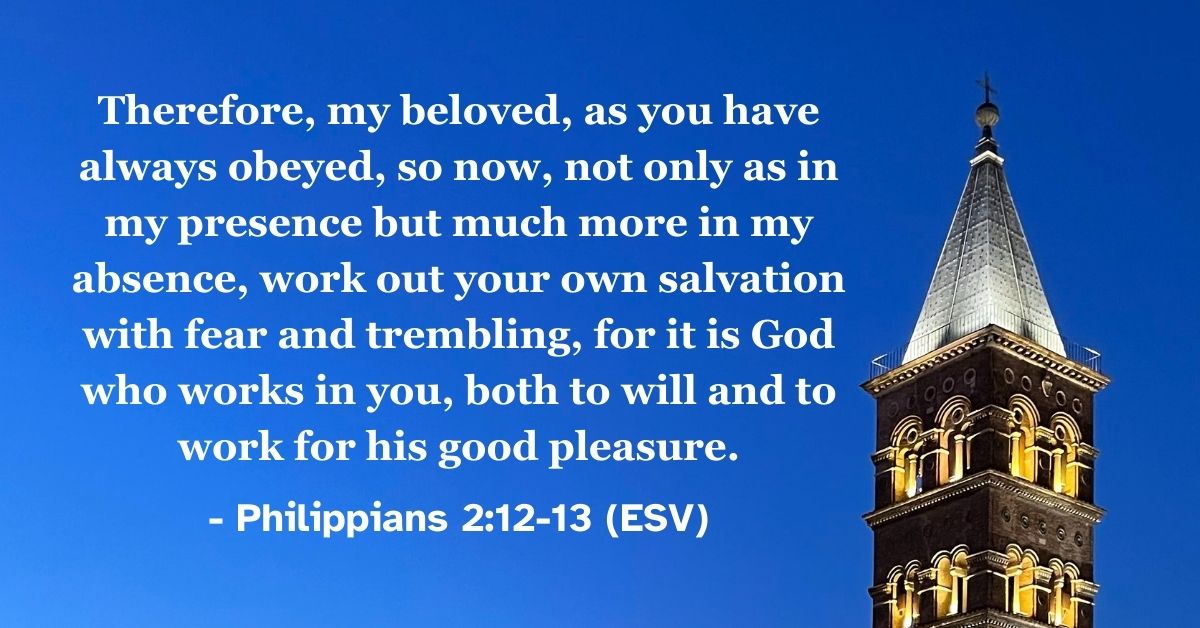
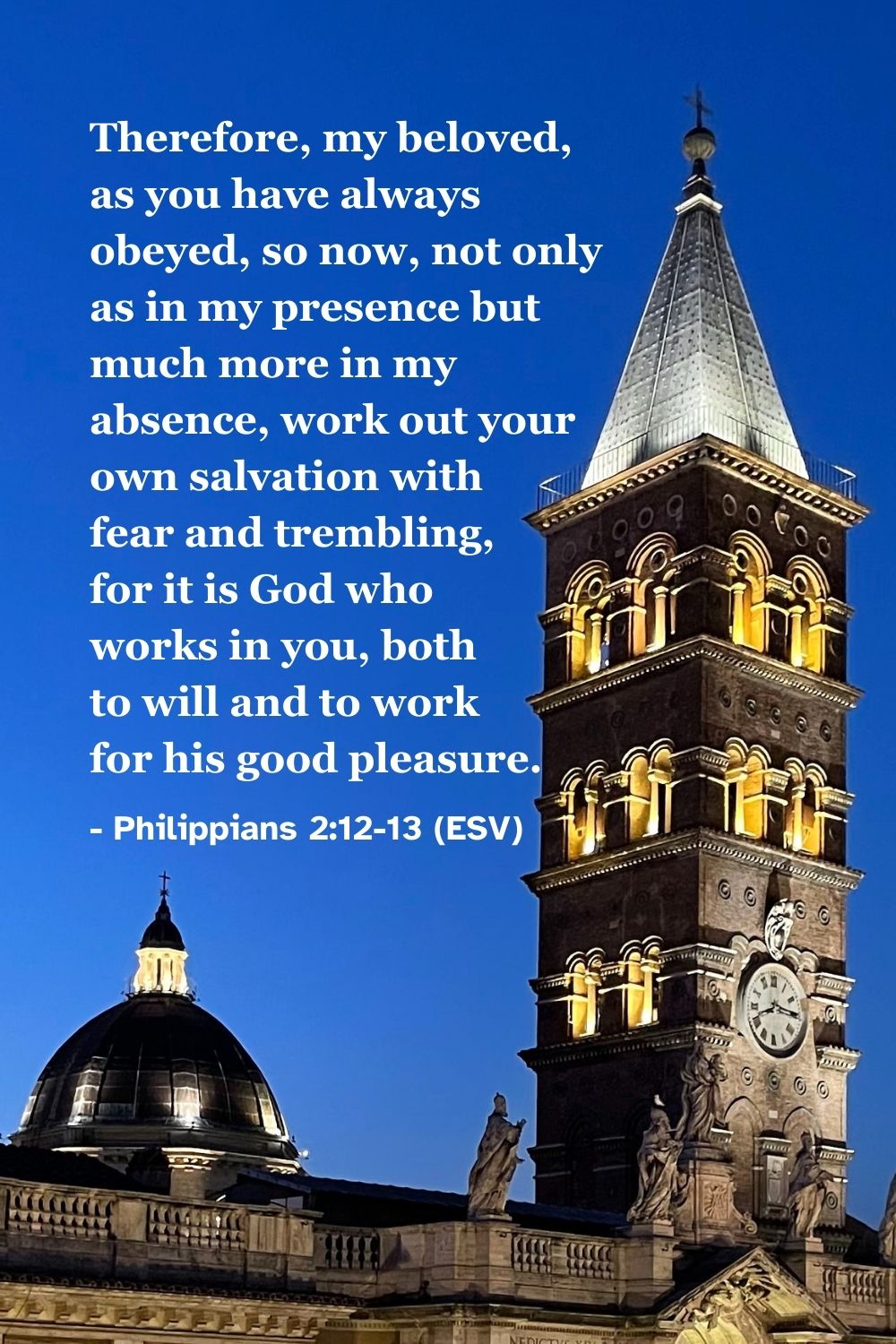
Therefore, my beloved, as you have always obeyed, so now, not only as in my presence but much more in my absence, work out your own salvation with fear and trembling, for it is God who works in you, both to will and to work for his good pleasure.
Philippians 2:13 (ESV)
This verse highlights the truth that God is actively involved in our lives, working within us both to desire and to carry out his will. The context emphasizes that believers are called to live out the humility and selflessness of Christ, and God’s work within us empowers us to do so. It is not our own strength or ability but God’s grace that enables us to live according to his purposes.
Understanding that God works within us encourages humility and dependence on him. We cannot live out his will on our own, but he provides both the desire and the strength to do so. This truth should motivate us to trust more fully in God’s work within us and to rely on his strength, knowing that he is always at work for his glory.
Reflection question: How can you surrender more fully to God’s work within you and trust him to accomplish his purposes in your life?
Practical Application: Reflect on an area of your life where you’re trying to rely on your own strength, and pray for God to work in you, empowering you to align with his will.
Righteousness through Faith in Christ
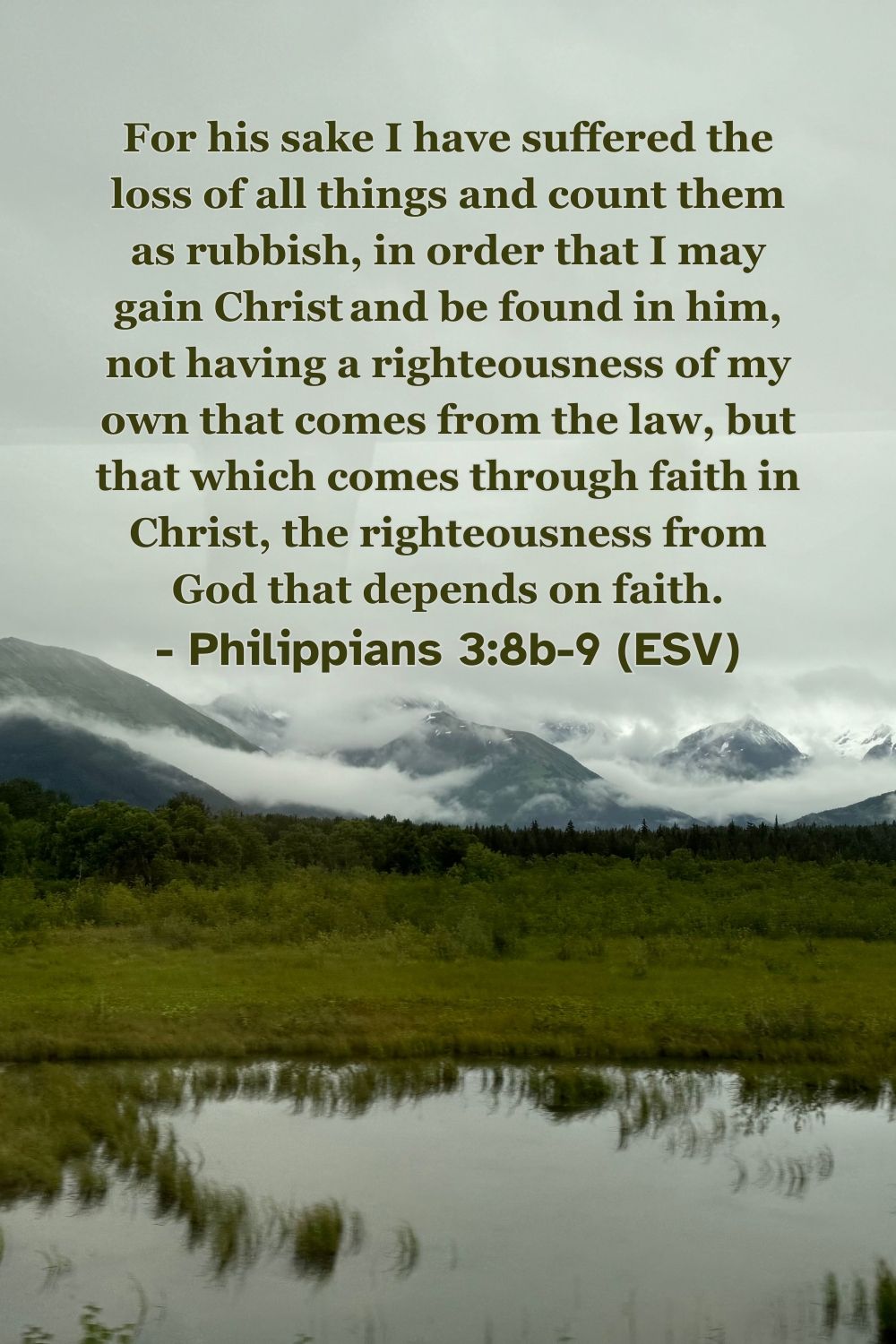
For his sake I have suffered the loss of all things and count them as rubbish, in order that I may gain Christ and be found in him, not having a righteousness of my own that comes from the law, but that which comes through faith in Christ, the righteousness from God that depends on faith.
Philippians 3:8b-9 (ESV)
In this verse, Paul contrasts his former self-righteousness with the righteousness that comes through faith in Christ. Paul’s pre-Christian attempts at righteousness were rooted in the law and self-effort, but now, he understands that true righteousness comes only through faith in Jesus. The broader context of Philippians 3 discusses Paul’s rejection of his former achievements and his desire to know Christ more fully.
This verse challenges us to examine our own sources of righteousness. Are we relying on our own efforts and achievements, or are we trusting in the righteousness that comes through faith in Christ? True righteousness isn’t about what we do, but about trusting in what Christ has done for us. This understanding shifts the focus from self-effort to God’s grace.
Reflection question: In what ways are you tempted to rely on your own efforts for righteousness rather than trusting fully in Christ?
Practical Application: Take a moment to reflect on areas where you may be seeking approval or worth through your own efforts. Surrender these areas to Christ and embrace his righteousness.
Our Heavenly Citizenship
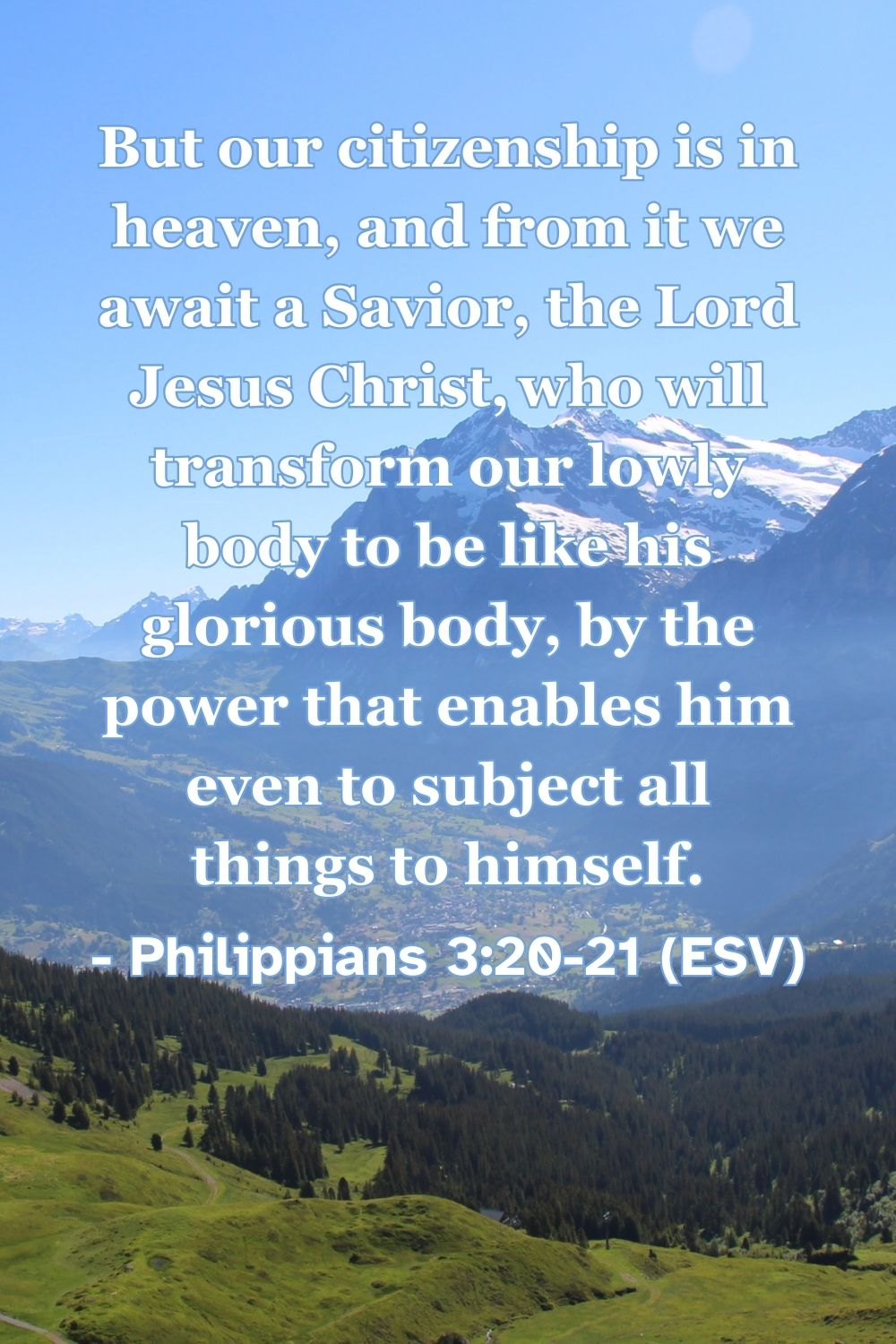
But our citizenship is in heaven, and from it we await a Savior, the Lord Jesus Christ, who will transform our lowly body to be like his glorious body, by the power that enables him even to subject all things to himself.
Philippians 3:20-21 (ESV)
In this passage, Paul reminds the Philippians that their true citizenship is in heaven, not in their earthly circumstances. This truth is a source of hope, especially in light of their struggles. Paul further emphasizes that Christ will one day transform their bodies, just as he was gloriously raised from the dead. The broader context urges believers to set their minds on heavenly things, rather than being consumed by earthly desires.
As citizens of heaven, we are called to live with a sense of anticipation for Christ’s return. This verse offers hope to those facing trials, reminding us that our earthly bodies and struggles are temporary. The transformation that awaits us in Christ gives us strength to endure hardship with joy and confidence.
Reflection question: How does the reality of your heavenly citizenship change the way you view your current struggles?
Practical Application: Meditate on the hope of Christ’s return this week, and allow this anticipation to shape your perspective on your earthly challenges.
Stand Firm in the Lord
Therefore, my brothers, whom I love and long for, my joy and crown, stand firm thus in the Lord, my beloved.
Philippians 4:1 (ESV)
Paul exhorts the Philippians to stand firm in the Lord, encouraging them to remain steadfast in their faith, even amid challenges. The larger context involves Paul urging the Philippians to rejoice, remain united, and practice peace with one another. Standing firm in the Lord means trusting his promises and being resolute in the gospel, despite external pressures.
Standing firm in the Lord is a call to unwavering faith and perseverance. Life will bring challenges, but we are called to hold fast to Christ, trusting in his sufficiency and power. This verse serves as both a command and an encouragement, reminding us that our strength comes from Christ.
Reflection question: In what areas of your life do you need to stand firm in your faith, trusting in the Lord’s strength?
Practical Application: Reflect on a current situation where you are tempted to doubt or waver. Stand firm in the truth of God’s Word, trusting that he is with you.
Overcoming Anxiety with God’s Peace
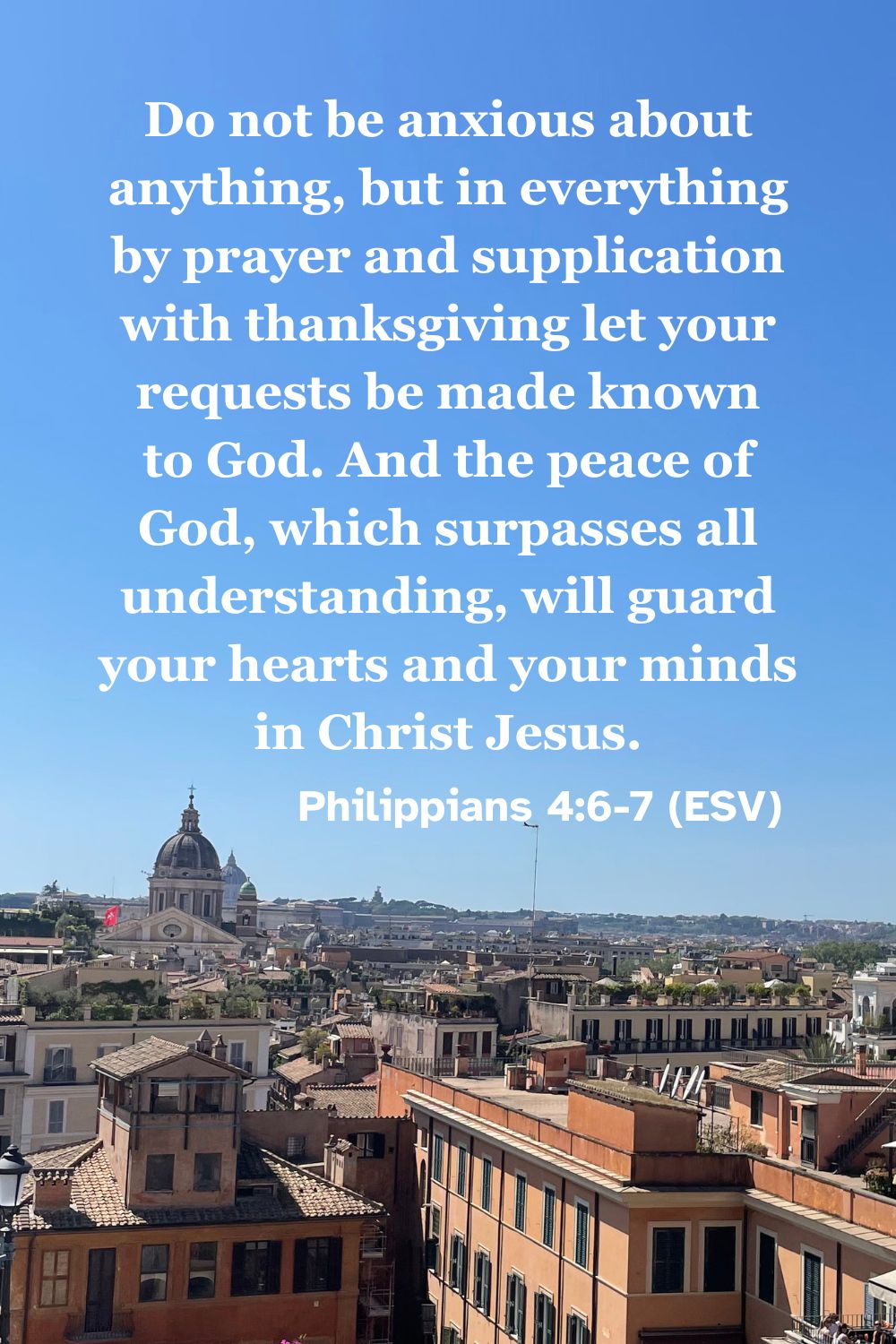
Do not be anxious about anything, but in everything by prayer and supplication with thanksgiving let your requests be made known to God. And the peace of God, which surpasses all understanding, will guard your hearts and your minds in Christ Jesus.
Philippians 4:6-7 (ESV)
Paul offers powerful counsel on dealing with anxiety: instead of worrying, we are called to bring our concerns to God in prayer, with thanksgiving. The promise that God’s peace will guard our hearts and minds is a powerful assurance. This peace is not just the absence of anxiety but a profound sense of security and trust in God’s provision. The surrounding verses highlights the importance of rejoicing in the Lord and thinking about good things as part of cultivating peace.
This verse is a reminder that peace is not found in controlling our circumstances but in surrendering them to God. By turning to prayer, we invite God’s peace to reign in our hearts, helping us to navigate life’s challenges without anxiety. It’s a call to trust in God’s faithfulness.
Reflection question: How can you bring your anxieties to God in prayer this week, trusting that his peace will guard you?
Practical Application: The next time you feel anxious, pause to pray with thanksgiving, trusting that God will provide peace beyond understanding.
Contentment in All Circumstances
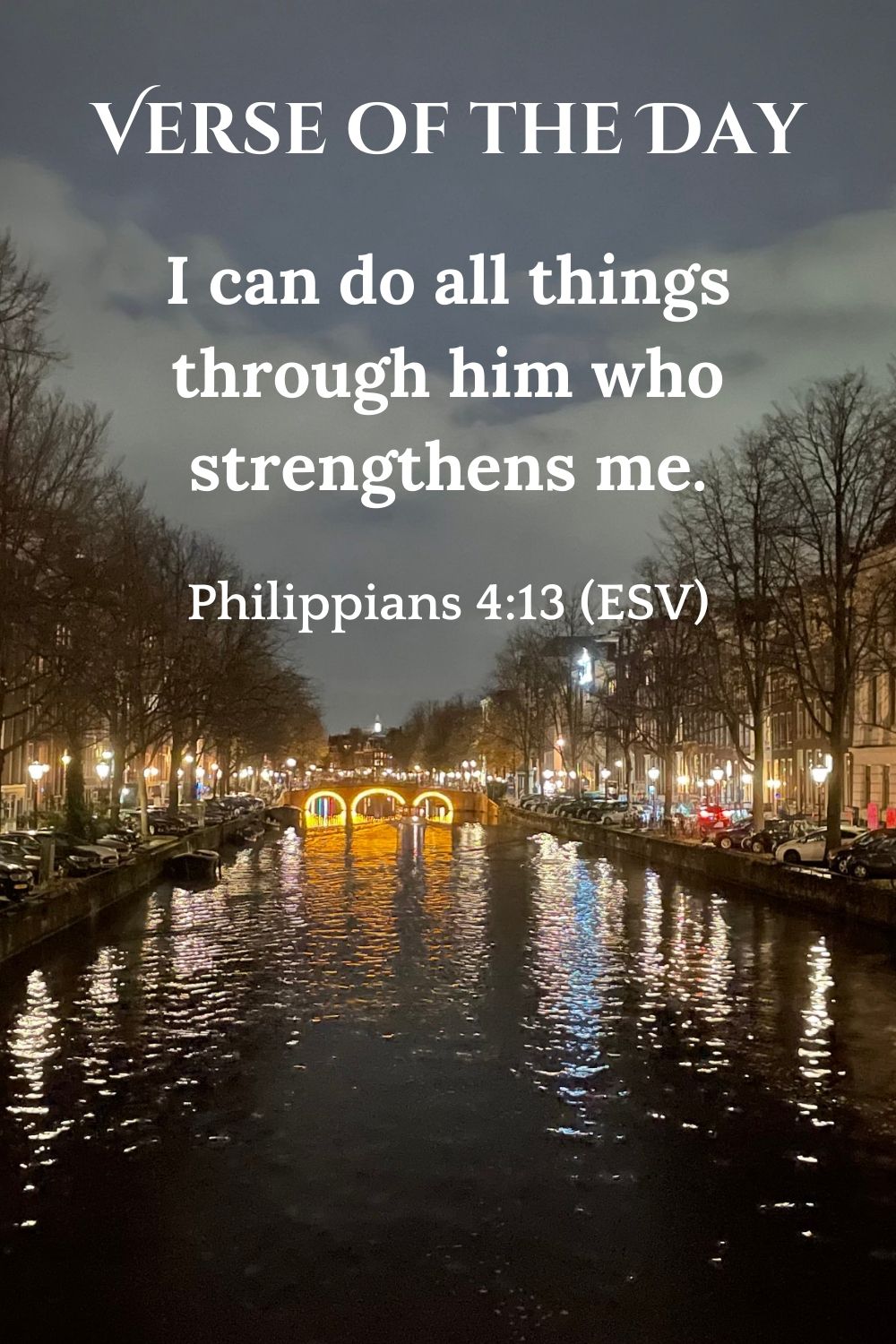
Not that I am speaking of being in need, for I have learned in whatever situation I am to be content. I know how to be brought low, and I know how to abound. In any and every circumstance, I have learned the secret of facing plenty and hunger, abundance and need. I can do all things through him who strengthens me.
Philippians 4:11-13 (ESV)
In these verses, Paul shares his secret to contentment: he has learned to be content in every circumstance, whether in abundance or need. The key to his contentment is not in external conditions but in Christ’s strength. Paul’s confidence comes from knowing that Christ empowers him to face all situations, even hardships, with a peaceful and content heart.
This passage challenges our culture’s constant pursuit of more and better. Contentment doesn’t depend on our circumstances, but on Christ’s strength within us. When we rely on Christ, we are empowered to endure any situation with joy and peace, knowing that he is enough.
Reflection question: What areas of your life are you struggling to be content in, and how can you rely on Christ’s strength to shift your perspective?
Practical Application: Practice contentment by taking a moment each day to thank God for what you have, trusting that his strength is sufficient for every situation.
God’s Provision for Every Need
And my God will supply every need of yours according to his riches in glory in Christ Jesus.
Philippians 4:19 (ESV)
Paul assures the Philippians that God will supply all their needs, according to his abundant riches in Christ. This promise comes in the context of Paul thanking them for their generous support, emphasizing that God provides both materially and spiritually for his people. His provision is limitless and guaranteed, rooted in the wealth of Christ’s sacrifice and glory.
Contrary to prosperity gospel messages, this verse reassures us that we don’t need to worry about what we lack. God knows our needs and will provide for us, according to his perfect plan. While we may not have everything we desire, it does encourages us to trust in his provision, no matter what we face.
Reflection question: How does trusting in God’s provision change the way you approach your needs?
Practical Application: Take a moment this week to identify a need you have been worrying about, and surrender it to God, trusting that he will provide according to his riches in glory.
Final Thoughts
As we reflect on these 10 verses from Philippians, we are reminded that true strength and peace come not from our own efforts, but from God’s provision in Christ. Whether in suffering, joy, or need, we are called to trust in God’s ability to supply all our needs and to work through us for his good pleasure. By embracing the hope of eternal life, standing firm in our faith, and surrendering our anxieties to prayer, we find the strength to endure all circumstances with peace. May we continually rely on God’s provision, knowing that he is with us every step of the way.
Reflective Prayer
Consider using these verses to pray using the ACTS method: Adoration, Confession, Thankfulness, and Supplication:
- Adoration: Praise God. Do these verses bring any specific characteristics of God to mind?
- Confession: Tell God that you are sorry for specific sins. Do these verses bring any specific sins to mind?
- Thankfulness: Show gratitude towards God. Does anything from these verses inspire gratitude?
- Supplication: Make requests for yourself and for others. Does anything from these verses inspire a prayer?
If helpful, you can use a prayer journal template.
Subscribe
If you enjoyed this post and wish to receive more Christian content, feel free to subscribe to my newsletters!
Related Resources
Visit the Joyful Moments in Christ homepage for all posts, or scroll through other blog posts related to peace and strength:







Something went wrong. Please refresh the page and/or try again.
English Standard Version (ESV): Unless otherwise noted, scripture quotations are from the ESV® Bible (The Holy Bible, English Standard Version®), © 2001 by Crossway, a publishing ministry of Good News Publishers. Used by permission. All rights reserved. The ESV text may not be quoted in any publication made available to the public by a Creative Commons license. The ESV may not be translated in whole or in part into any other language.



 Joyful Moments in Christ