Waiting in Hope: Simeon and Anna See the Promised Savior
This Sunday School lesson is intended for upper elementary students. All lessons on this website are protected by copyright, but you can use them for free in small groups or Sunday School classes. You may share a link to this page, but please do not copy these pages and put them on other websites.
The Big Idea
God keeps his promises. Jesus is the long-awaited Savior who brings salvation to all who trust in him.
Lesson Objectives
- Understand that Jesus’ parents obeyed God’s law by presenting him at the temple.
- Learn how Simeon and Anna recognized Jesus as the Savior God had promised.
- See how God keeps his promises, even when the waiting is long.
- Encourage students to trust God’s timing and give thanks for his faithfulness.
Class Setting Notes
- Recommended for upper elementary Sunday School.
- Lesson length: 45–60 minutes. Can be shortened or extended based on activities selected.
Opening Activity
“The Waiting Game”
- Ask students to sit quietly and raise their hand when they think one minute has passed (no counting allowed).
- Afterward, see who came closest to one minute.
- Then ask: Was it easy or hard to wait? What made it feel long or short?
This activity helps introduce the theme of waiting and prepares students to think about how Simeon and Anna waited for God’s promises to come true.
Bible Reading
Ask the class to read Luke 2:21–38 aloud together or have one person read it.
- Very Easy: Easy-to-Read Version: Luke 2:21-38 (ERV)
- Very Easy: New International Reader’s Version: Luke 2:21-38 (NIRV)
- Easy: Good News Translation: Luke 2:21-38 (GNT)
- Medium: New Living Translation: Luke 2:21-38 (NLT)
- Hard: New International Version: Luke 2:21-38 (NIV)
- Very Hard: English Standard Version: Luke 2:21-38 (ESV)
Additional Reading: Choosing the Right Bible Translation
Suggested prompts:
As the class reads aloud, consider asking some of these prompts:
- What do you notice about how Mary and Joseph obeyed God’s commands?
- What do Simeon’s words tell us about who Jesus is?
- Why do you think Anna was so excited to see Jesus?
- What does this passage show us about trusting God’s promises?
Teacher Background Notes
- Jewish law required that a firstborn son be presented at the temple (Exodus 13:2), along with a purification offering for the mother (Leviticus 12:1–8).
- Mary and Joseph’s offering of doves or pigeons shows their modest financial situation.
- Simeon is described as righteous and devout. He was uniquely told by the Holy Spirit that he would live to see the Messiah.
- Anna is a prophetess who remained in the temple, devoted to worship and prayer. Her proclamation confirms Jesus’ identity.
- This passage bridges the Old Testament promises with the New Testament fulfillment in Christ.
Theological Insights
- God always fulfills his promises, even when the waiting is long.
- Jesus is the promised Savior, the light for the Gentiles and the glory of Israel.
- The Holy Spirit guides believers and confirms the truth of God’s Word.
- Faithful worship and prayer prepare our hearts to recognize God’s work.
- Salvation is for all people, Jews and Gentiles alike.
- Suffering and sorrow, like what Mary would face, are part of God’s redemptive plan through Christ.
Discussion Questions
Understanding the Text
- What name was given to the baby, and who chose it?
- What did Mary and Joseph do at the temple, and why?
- Who was Simeon, and what had the Holy Spirit told him?
- How did Simeon react when he saw Jesus?
- What did Simeon say about Jesus being a light and bringing salvation?
- Who was Anna, and how did she respond to seeing Jesus?
Personal Reflection and Application
- Why is it important to trust that God keeps his promises?
- Have you ever waited a long time for something good? How did it feel when it finally happened?
- How can we grow in faith and patience like Simeon and Anna?
- In what ways can you thank God today for sending Jesus?
- How might you share the good news of Jesus with others like Anna did?
Suggested Activities
Promise Tracker
- Give each student a sheet of paper and ask them to draw a scroll.
- Inside the scroll, have them write or draw a promise from God (for example: “God will never leave me,” or “Jesus is my Savior”).
- Encourage them to decorate it and take it home to remind them of God’s faithfulness.
This activity helps children remember that God’s promises are sure and worth holding on to.
Simeon’s Song Memory Craft
- Provide small cards and write out Luke 2:29–32 in short phrases.
- Let students decorate the cards and arrange them in order like a scroll or song sheet.
- Practice saying the passage together as a class.
This activity helps students meditate on Simeon’s joyful response and reflect on the meaning of salvation.
Act It Out: The Temple Scene
- Assign roles for Mary, Joseph, Simeon, Anna, and the narrator.
- Read through the passage and have students act out the scene quietly and reverently.
- Invite discussion afterward about how the characters may have felt.
This activity allows students to engage the story with their imagination and better understand the emotions and faith behind the events.
Memory Verse
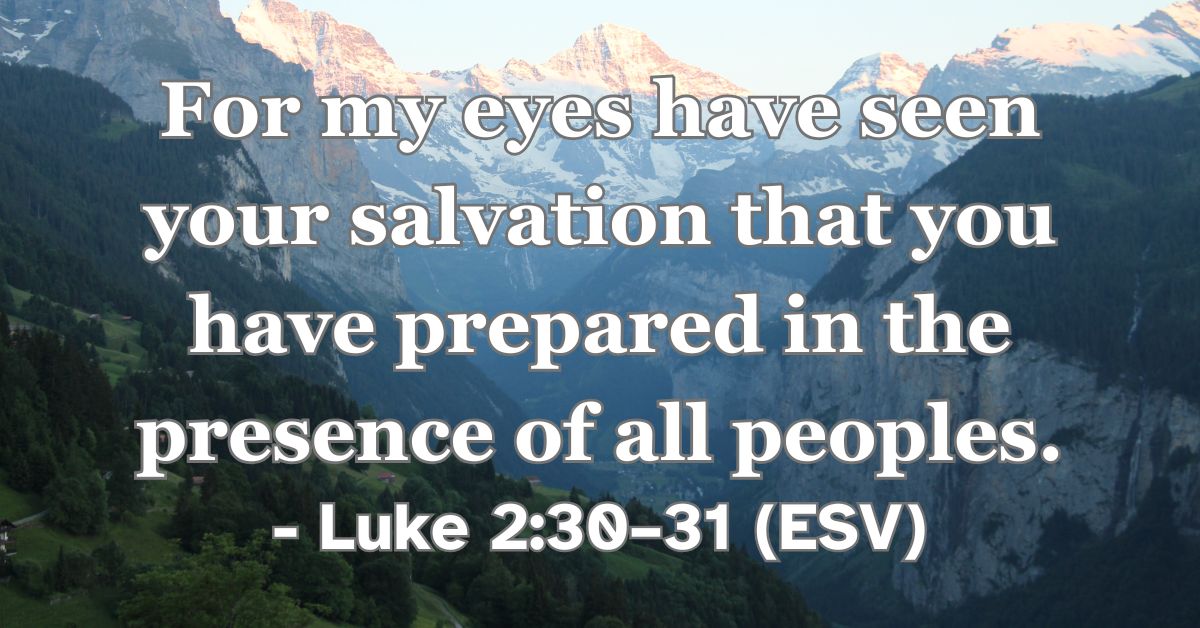
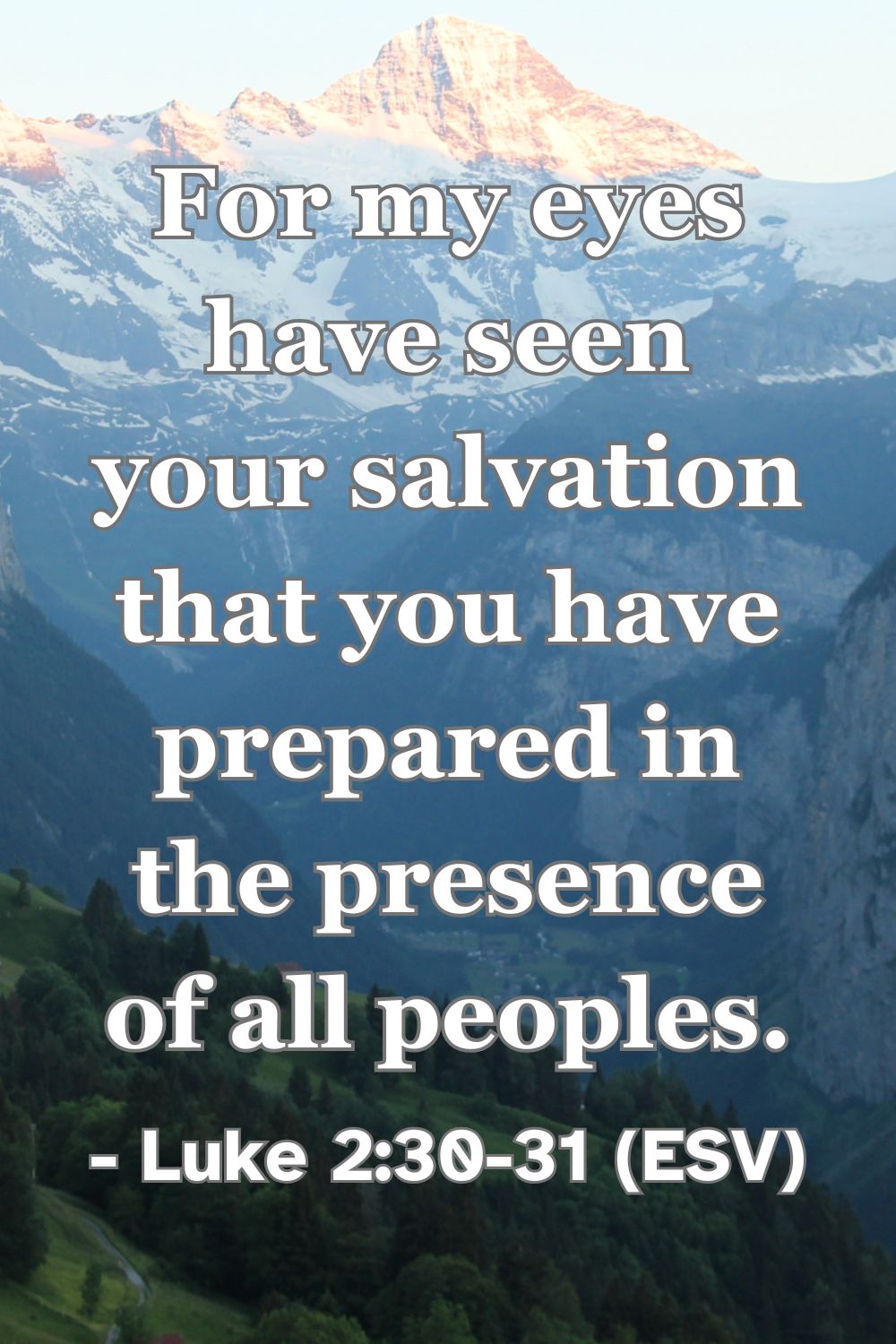
For my eyes have seen your salvation that you have prepared in the presence of all peoples.
Luke 2:30–31 (ESV)
Closing Prayer
Father,
Thank you for keeping your promises. Thank you for sending Jesus, the Savior, just as you said you would. Help us to trust you when we wait and to give thanks for your faithfulness. Like Simeon and Anna, may we rejoice in your salvation and share it with others.
In Jesus’ name we pray. Amen.
The ESL Version
I also create materials for adult English Language Learners (ELLs) and ESL students. You can find my ELL Bible Study based on Luke 2:21-38 here:
ELL Bible Study: Luke 2:21-38 — Jesus Is Named and Presented
Subscribe
If you enjoyed this post and wish to receive more Christian content, consider subscribing to my newsletters!
Related Resources
Visit the Joyful Moments in Christ homepage for all posts, or scroll through other blog posts related to Sunday School:
Something went wrong. Please refresh the page and/or try again.
English Standard Version (ESV): Unless otherwise noted, scripture quotations are from the ESV® Bible (The Holy Bible, English Standard Version®), © 2001 by Crossway, a publishing ministry of Good News Publishers. Used by permission. All rights reserved. The ESV text may not be quoted in any publication made available to the public by a Creative Commons license. The ESV may not be translated in whole or in part into any other language.



 Joyful Moments in Christ