God Keeps His Promises: The Birth of John the Baptist
This Sunday School lesson is intended for upper elementary students. All lessons on this website are protected by copyright, but you can use them for free in small groups or Sunday School classes. You may share a link to this page, but please do not copy these pages and put them on other websites.
The Big Idea
God is faithful to his promises and prepares the way for Jesus through the birth and mission of John the Baptist.
Lesson Objectives
- Understand that God kept his promise by giving Zechariah and Elizabeth a son.
- Learn that John’s role was to prepare people for the coming of Jesus.
- See that Zechariah’s song points to God’s salvation and peace.
- Be encouraged to trust God and praise him for his mercy.
Class Setting Notes
- Recommended for upper elementary Sunday School.
- Lesson length: 45–60 minutes. Can be shortened or extended based on activities selected.
Opening Activity
“Name Meaning” Discussion
- Ask students if they know the meaning of their name or why it was chosen.
- Let each child briefly share who chose their name and any story behind it.
- Share that in today’s Bible passage, a baby receives a very special name chosen by God.
This activity helps introduce the importance of John’s name and his role in God’s redemptive plan.
Bible Reading
Ask the class to read Luke 1:57–80 aloud together or have one person read it.
- Very Easy: Easy-to-Read Version: Luke 1:57-80 (ERV)
- Very Easy: New International Reader’s Version: Luke 1:57-80 (NIRV)
- Easy: Good News Translation: Luke 1:57-80 (GNT)
- Medium: New Living Translation: Luke 1:57-80 (NLT)
- Hard: New International Version: Luke 1:57-80 (NIV)
- Very Hard: English Standard Version: Luke 1:57-80 (ESV)
Additional Reading: Choosing the Right Bible Translation
Suggested prompts:
As the class reads aloud, consider asking some of these prompts:
- What stands out to you about how John was named?
- How do the people react when Zechariah speaks again?
- What does Zechariah praise God for?
- What does this passage teach us about God’s faithfulness?
Teacher Background Notes
- Naming a son after his father was customary, which is why naming him John was unexpected.
- The name John means “God is gracious,” fitting for a child born by God’s mercy.
- Zechariah had been silent since doubting the angel’s message (Luke 1:20); he regains his voice when he obeys by confirming the child’s name.
- Zechariah’s song, often called the Benedictus, is filled with Old Testament references and praise for God’s covenant faithfulness.
- John is the promised messenger from Malachi 3:1 and Isaiah 40:3 who would prepare the way for the Messiah.
Theological Insights
- God always keeps his promises, even when they seem delayed.
- God is sovereign and works through unexpected people and events to fulfill his plans.
- Zechariah’s prophecy reveals that salvation comes through the forgiveness of sins.
- John’s role as a prophet was to prepare hearts to receive the Savior.
- Jesus is the fulfillment of God’s covenant with Abraham and David.
- God’s mercy shines light into darkness and leads his people into peace.
Discussion Questions
Understanding the Text
- What happened when Zechariah confirmed his son’s name?
- Why were the neighbors amazed at this baby’s birth and naming?
- What are some things Zechariah praised God for in his prophecy?
- What does Zechariah say John’s mission will be?
- How does this story show that God’s promises are trustworthy?
Personal Reflection and Application
- Can you think of a time when someone kept a promise to you? How did it feel?
- Why do you think it mattered that Zechariah obeyed by naming his son John?
- What can we learn from how Zechariah responded to God’s work in his life?
- How do you think God prepares our hearts to know and trust Jesus today?
- What are some ways we can praise God this week for his mercy and salvation?
Suggested Activities
Name Meaning Craft
- Provide students with paper, markers, and name meaning cards (if possible, look up their name meanings ahead of time).
- Let them decorate a small nameplate with their name and a truth about how God knows and calls them.
- Reflect together on how names can remind us of God’s purposes.
This activity helps students connect personally with how God chooses and calls his people by name.
Praise Song Acrostic
- Give each student the word PRAISE written vertically on a sheet of paper.
- Encourage them to write one word or phrase beginning with each letter that describes something about God (e.g., P = Promise Keeper, R = Redeemer).
- Share a few aloud and hang them around the room.
This activity encourages students to reflect on who God is and how we can respond with worship.
Prophet Footsteps Game
- Set up a simple path in the classroom using footprints or arrows.
- Along the path, place short prompts from John’s message (e.g., “Turn from sin,” “Prepare for Jesus,” “Trust God’s Word”).
- As students walk the path, have them pause and read each prompt aloud.
This activity helps students picture John’s role in preparing the way for the Lord.
Memory Verse

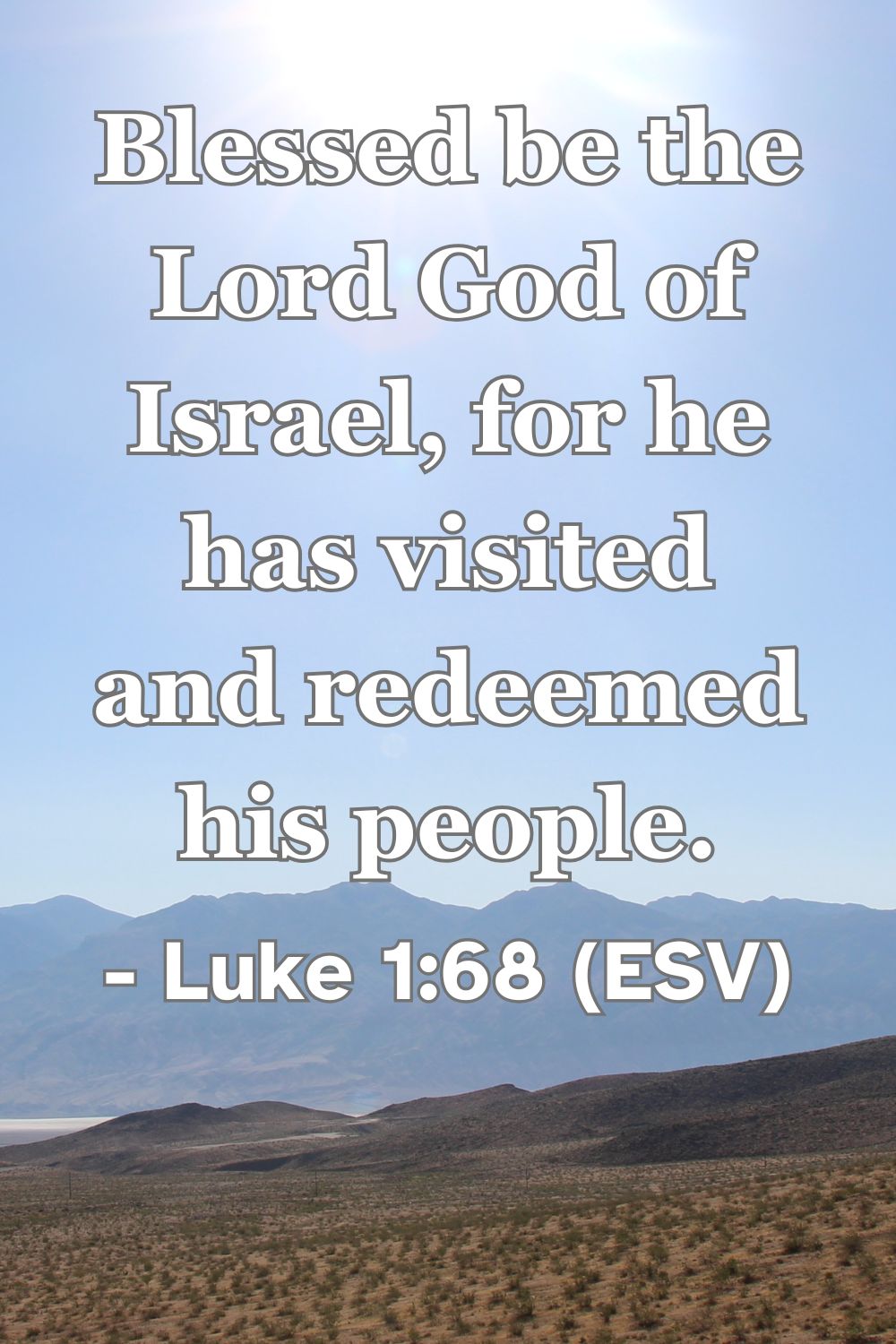
Blessed be the Lord God of Israel, for he has visited and redeemed his people.
Luke 1:68 (ESV)
Closing Prayer
Father,
Thank you for keeping your promises and for sending Jesus to bring us peace and forgiveness. Help us to trust you and to praise you with joyful hearts, just like Zechariah did.
In Jesus’ name we pray. Amen.
The ESL Version
I also create materials for adult English Language Learners (ELLs) and ESL students. You can find my ELL Bible Study on Luke 1:57–80 here:
ELL Bible Study: Luke 1:57-80 — The Birth of John the Baptist
Subscribe
If you enjoyed this post and wish to receive more Christian content, consider subscribing to my newsletters!
Related Resources
Visit the Joyful Moments in Christ homepage for all posts, or scroll through other blog posts related to Sunday School:
Something went wrong. Please refresh the page and/or try again.
English Standard Version (ESV): Unless otherwise noted, scripture quotations are from the ESV® Bible (The Holy Bible, English Standard Version®), © 2001 by Crossway, a publishing ministry of Good News Publishers. Used by permission. All rights reserved. The ESV text may not be quoted in any publication made available to the public by a Creative Commons license. The ESV may not be translated in whole or in part into any other language.
 Joyful Moments in Christ