God Keeps His Promises in His Perfect Time
This Sunday School lesson is intended for upper elementary students. All lessons on this website are protected by copyright, but you can use them for free in small groups or Sunday School classes. You may share a link to this page, but please do not copy these pages and put them on other websites.
The Big Idea
God hears the prayers of his people and keeps his promises, even when we must wait.
Lesson Objectives
- Recognize that God hears our prayers, even in long seasons of waiting.
- Understand the significance of the angel’s message to Zechariah.
- See how God prepared the way for Jesus through the birth of John.
- Reflect on how we respond to God’s promises—with faith or doubt.
- Trust that God’s timing is wise, loving, and always right.
Class Setting Notes
- Recommended for upper elementary Sunday School.
- Lesson length: 30–45 minutes. Can be shortened or extended based on activities selected.
Opening Activity
Waiting Game
- Prepare a small treat or prize for each student, but tell them they must wait to receive it until the end of class.
- Ask students how they feel while waiting and what they think about during the delay.
- Let them guess what they are waiting for, but do not reveal it until the end.
This activity helps introduce the theme of waiting on God’s promises and trusting him even when we do not understand the timing.
Bible Reading
Ask the class to read Luke 1:5–25 aloud together or have one person read it. You may want to read it slowly more than once.
- Very Easy: Easy-to-Read Version: Luke 1:5-25 (ERV)
- Very Easy: New International Reader’s Version: Luke 1:5-25 (NIRV)
- Easy: Good News Translation: Luke 1:5-25 (GNT)
- Medium: New Living Translation: Luke 1:5-25 (NLT)
- Hard: New International Version: Luke 1:5-25 (NIV)
- Very Hard: English Standard Version: 1:5-25 Luke (ESV)
Additional Reading: Choosing the Right Bible Translation
Suggested prompts:
As the class reads aloud, consider asking some of these prompts:
- Who are the main people in this passage?
- What were Zechariah and Elizabeth waiting for?
- How did Zechariah respond to the angel’s message?
- What surprises you in this story?
- What does this teach us about God’s timing?
Teacher Background Notes
- Zechariah and Elizabeth were both from priestly families and were described as righteous before God.
- They were elderly and childless, which in their culture was considered a source of sorrow and even shame.
- Zechariah was chosen by lot to offer incense in the temple—an act of worship and a rare privilege.
- The angel Gabriel appeared to Zechariah during this sacred duty, delivering God’s promise of a son.
- John the Baptist, their promised child, would fulfill Old Testament prophecies by preparing the way for the Messiah.
- Zechariah doubted the angel’s message and was made mute until the promise was fulfilled.
- Elizabeth’s joyful response shows gratitude and recognition of God’s mercy in lifting her disgrace.
- This passage marks the beginning of God’s dramatic intervention in history after centuries of prophetic silence.
Theological Insights
- God hears the prayers of his people, even when his answers come after long seasons of waiting.
- God is able to do what seems impossible to us—he gives life and keeps his promises.
- God prepares the way for salvation in precise and purposeful ways, as seen in John the Baptist’s role.
- Doubt does not cancel God’s faithfulness, but it can lead to discipline meant to grow our trust.
- God’s grace restores and brings joy—Zechariah was silenced, but his voice would return in praise.
- God’s timing is not our timing, but it is always right and good.
Discussion Questions
Understanding the Text
- Who were Zechariah and Elizabeth, and what burden did they carry?
- What was Zechariah doing when the angel appeared to him?
- What message did the angel give Zechariah about his future son?
- Why did Zechariah question the angel’s words?
- What happened to Zechariah because of his doubt?
- How did Elizabeth respond when she learned she would have a child?
Personal Reflection and Application
- Have you ever prayed for something for a long time? How did you feel while waiting?
- Why do you think God sometimes makes us wait for good things?
- How do you respond when God’s promises feel delayed or hard to believe?
- What can we learn from Elizabeth’s joy and gratitude?
- How does this passage help you trust God’s faithfulness more deeply?
Suggested Activities
Silent Charades
- Choose key words from the story (angel, prayer, temple, baby, mute, joy).
- Have students act them out silently while others guess.
- Talk about how Zechariah had to use signs to communicate and what it might have felt like.
This activity engages students with the story through movement and helps them recall key themes in a memorable way.
Promise Chain
- Give each student a strip of paper and have them write one promise of God.
- Link the strips together into a paper chain.
- Hang the chain as a visual reminder that God’s promises are connected and trustworthy.
This activity provides a visual reminder that God’s promises are trustworthy, connected, and enduring.
Prayer Journal Page
- Provide paper with prompts:
- Something I have prayed for:
- How I feel while waiting:
- A time God answered prayer:
- Allow students to reflect and write quietly.
- Encourage them to take it home as a reminder of God’s faithfulness.
This activity helps students process their own experiences with prayer and reflect on God’s faithfulness in personal ways.
Memory Verse
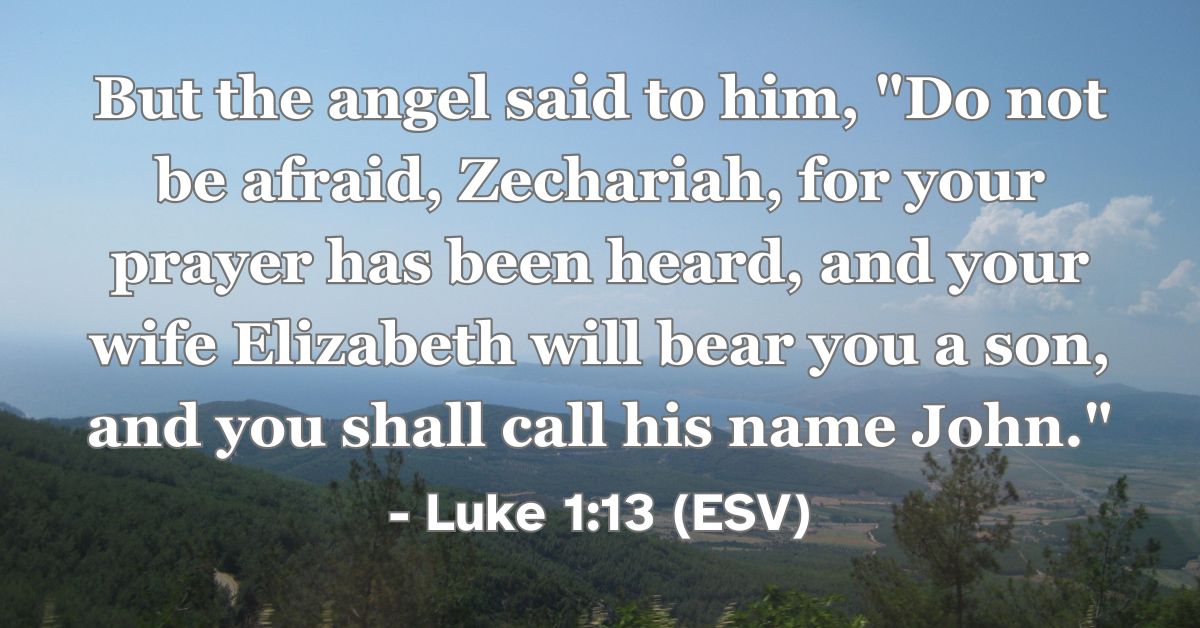
But the angel said to him, “Do not be afraid, Zechariah, for your prayer has been heard, and your wife Elizabeth will bear you a son, and you shall call his name John.”
Luke 1:13 (ESV)
Closing Prayer
Father,
Thank you for hearing our prayers and showing us your mercy, even when we doubt. Help us to trust your promises and wait with hope, knowing that you are always faithful. Fill our hearts with joy like Elizabeth’s and prepare us to share your good news with others.
In Jesus’ name we pray. Amen.

The ESL Version
I also create materials for adult English Language Learners (ELLs) and ESL students. You can find my ELL Bible Study on Luke 1:5-25 here:
ELL Bible Study: Luke 1:5-25 — God’s Promise to Zechariah
Subscribe
If you enjoyed this post and wish to receive more Christian content, consider subscribing to my newsletters!
Related Resources
Visit the Joyful Moments in Christ homepage for all posts, or scroll through other blog posts related to Sunday School:
Something went wrong. Please refresh the page and/or try again.
English Standard Version (ESV): Unless otherwise noted, scripture quotations are from the ESV® Bible (The Holy Bible, English Standard Version®), © 2001 by Crossway, a publishing ministry of Good News Publishers. Used by permission. All rights reserved. The ESV text may not be quoted in any publication made available to the public by a Creative Commons license. The ESV may not be translated in whole or in part into any other language.


 Joyful Moments in Christ