The Book of Acts is a story of bold faith, miraculous transformation, and unstoppable joy. From the outpouring of the Holy Spirit at Pentecost to the gospel’s spread to the ends of the earth, Acts records the birth of the church and the lives it changed along the way. What’s striking is how often joy appears in unexpected places—amid persecution, following hardship, or in the humblest of gatherings. The early believers didn’t wait for ideal circumstances to rejoice; their gladness sprang from knowing Christ, walking in his presence, and witnessing the gospel’s power at work.
This collection of ten Bible verses from Acts highlights moments where joy breaks through: in worship, healing, suffering, fellowship, and salvation. Each passage invites us to consider where we are seeking joy and reminds us that the deepest, most lasting gladness comes from the presence and promises of God. Whether you are in a season of triumph or trial, Acts offers timeless encouragement to anchor your joy in the unshakable love of Christ.
Joy in God’s Presence

You have made known to me the paths of life; you will make me full of gladness with your presence.
Acts 2:28 (ESV)
This verse is part of Peter’s sermon at Pentecost, where he quotes Psalm 16 to show how David prophetically spoke of the resurrection of Christ. In Acts 2, Peter applies David’s words of joy and security to Jesus, whose resurrection secured eternal life for all who believe. The verse reminds believers that true gladness isn’t found in earthly ease but in the presence of the risen Lord.
For us, this verse is a promise of lasting joy, reminding us that Jesus’ death and resurrection were part of God’s unshakable plan. When life feels uncertain or heavy, remembering that God himself walks with us brings peace that circumstances can’t touch. The path of life is not simply a future hope but a present reality for those who belong to Christ. His presence is what makes our hearts glad — whether in triumph, grief, or ordinary days. The same presence that raised Jesus from the dead fills our lives with meaning and hope.
Reflection question: Where in your life do you need to experience the gladness of God’s presence today?
Practical Application: Set aside ten minutes of quiet today to pray, reflect on Psalm 16, and ask God to make you aware of his nearness in both joy and sorrow.
Joy in Community Fellowship
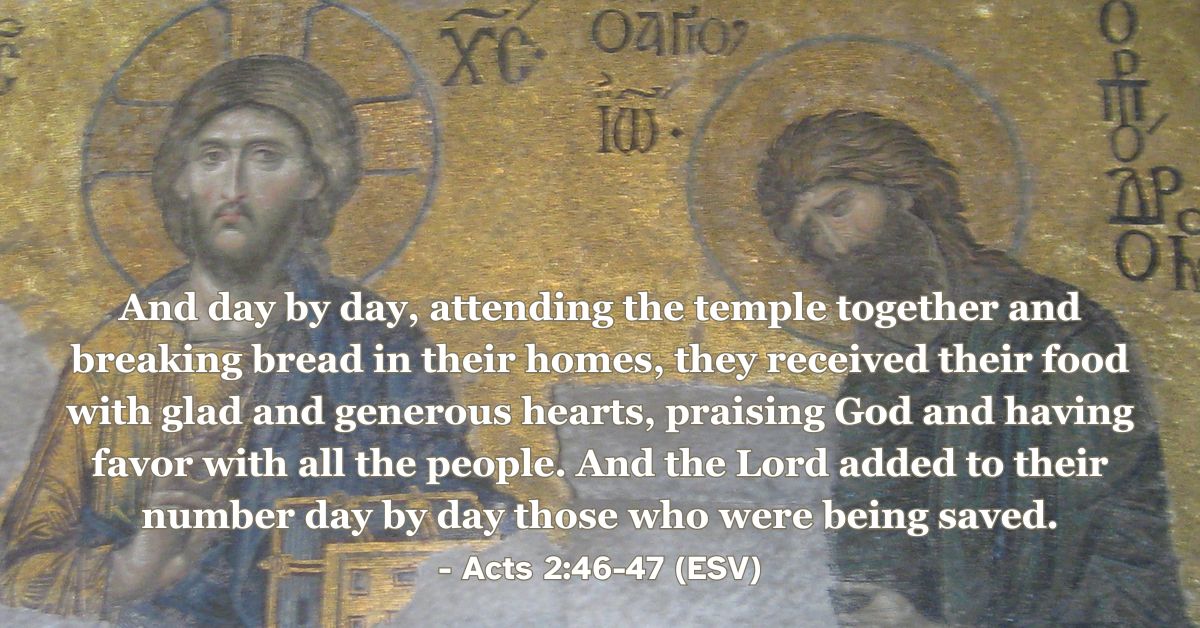
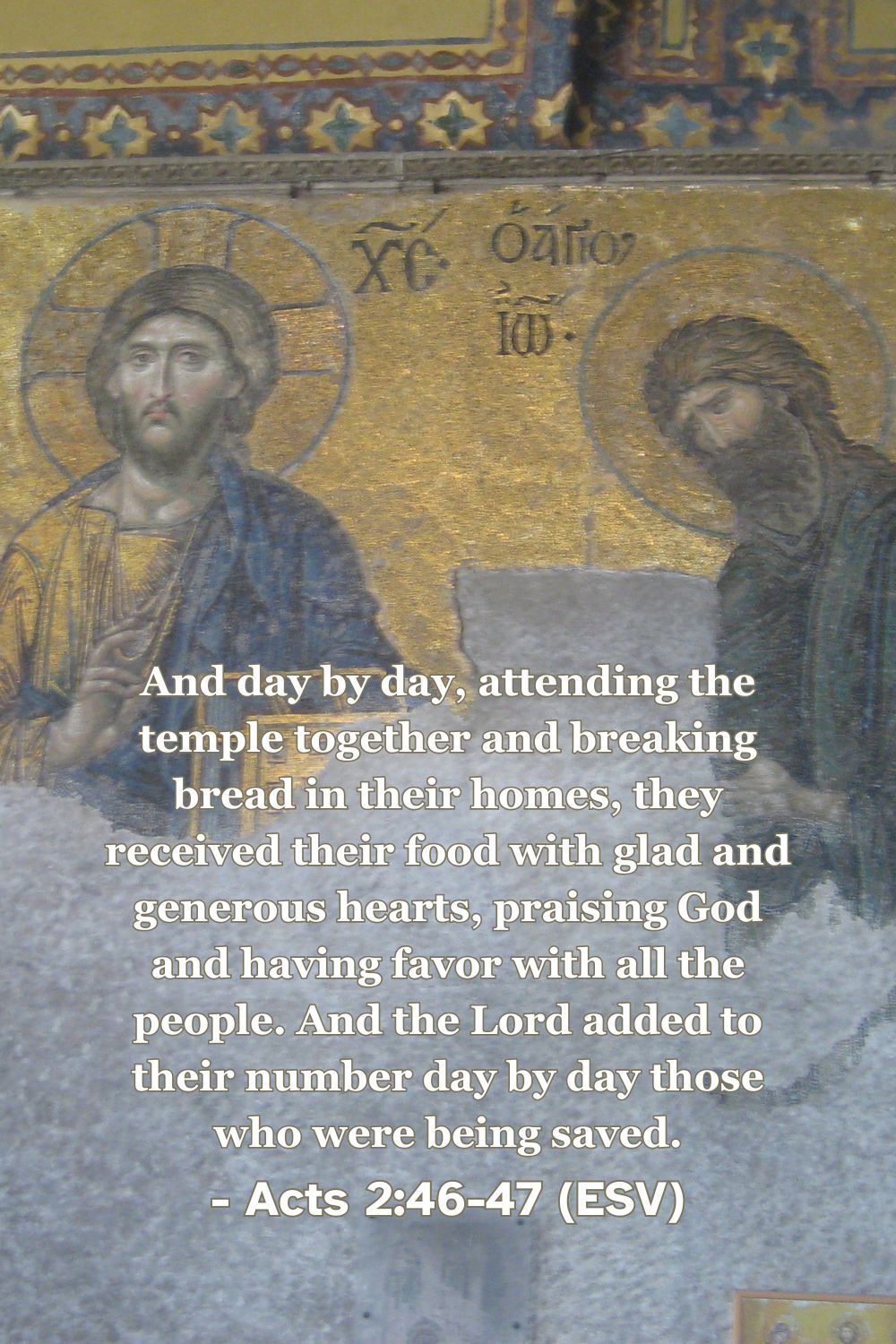
And day by day, attending the temple together and breaking bread in their homes, they received their food with glad and generous hearts, praising God and having favor with all the people. And the Lord added to their number day by day those who were being saved.
Acts 2:46-47 (ESV)
These verses paint a beautiful picture of the early church’s daily rhythm. Freshly filled with the Holy Spirit at Pentecost, the believers dedicated themselves to both public worship and personal fellowship. The combination of attending worship meetings and sharing meals in their homes reflected a faith both communal and intimate. This harmony of worship, generosity, and joy was so authentic it drew the admiration of those around them. In the surrounding verses, Luke describes a growing, Spirit-filled community marked by signs, wonders, and remarkable unity — a church alive with gladness.
For modern readers, this passage offers a simple truth: joy often takes root in the ordinary moments we share with others. Sharing meals, praying together, and praising God side by side can turn everyday routines into sacred, joy-filled experiences. The early believers didn’t wait for grand miracles to celebrate; they found gladness in God’s provision and each other’s company.
Reflection question: How might you cultivate deeper joy in the rhythms of daily fellowship with others?
Practical application: Intentionally share a meal, a prayer, or a simple conversation with another believer this week, inviting joy into your ordinary moments.
Joy in God’s Healing Power
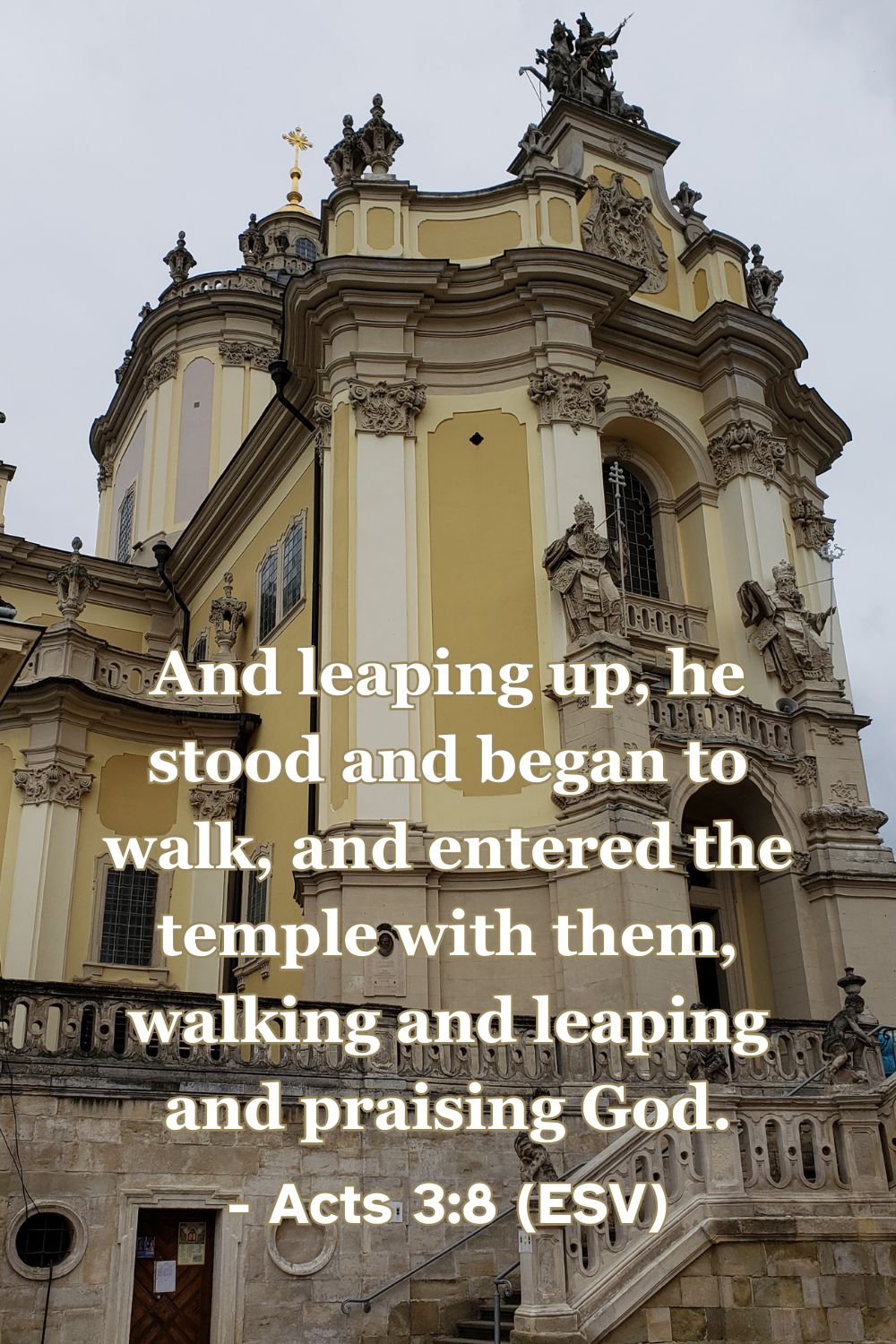
And leaping up, he stood and began to walk, and entered the temple with them, walking and leaping and praising God.
Acts 3:8 (ESV)
This verse captures the exuberant reaction of a man healed at the temple gate. For years, he had been lame, dependent on others’ charity. Peter’s declaration, “In the name of Jesus Christ of Nazareth, rise up and walk!” transformed his life in an instant. His first response wasn’t mere relief or quiet gratitude — it was public, physical, uncontainable joy. The context of Acts 3 shows this miracle sparking awe among the people and providing Peter an opportunity to proclaim Christ crucified and risen.
This passage reminds us that joy often springs from recognizing God’s intervention in our lives. Whether healing is physical, emotional, or spiritual, the proper response is praise. Even more, this man’s unashamed leaping challenges us: when God restores what was broken, our joy need not be subdued.
Reflection question: When has God restored something in your life, and how did you respond?
Practical application: Recall a time of healing or answered prayer. Share that testimony with someone this week as an act of joy and encouragement.
Joy in Suffering for Christ
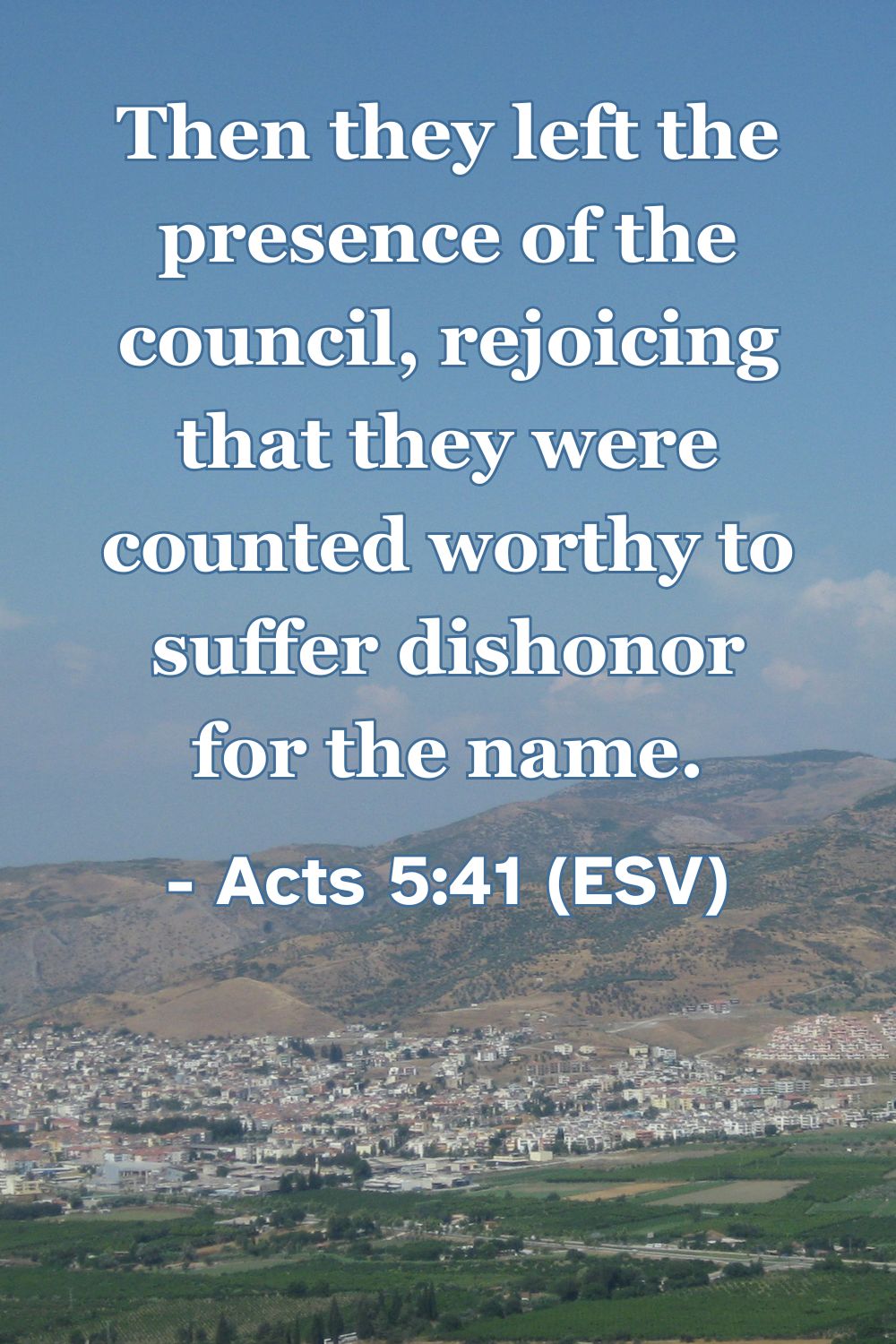
Then they left the presence of the council, rejoicing that they were counted worthy to suffer dishonor for the name.
Acts 5:41 (ESV)
In Acts 5, the apostles face opposition for preaching the gospel. They are arrested, beaten, and threatened with further harm, yet they leave the council rejoicing. It should be noted that their joy is not in the suffering itself, but in the honor of being counted worthy to suffer for Christ. In their eyes, being linked to Jesus in this way was a privilege, and they found joy in sharing in his suffering.
This verse challenges our understanding of joy. Joy is not always about comfort or victory in worldly terms, but about aligning our lives with Christ’s purposes. The apostles found joy in knowing they were fulfilling their calling despite the pain. They viewed suffering as a part of their mission, and through this perspective, joy didn’t need to remain absent, but rather they found a deeper joy that comes from participating in God’s work.
Reflection question: When have you experienced hardship for your faith? How can you find joy in that experience?
Practical application: When facing difficulties, ask God for the strength to endure and the joy of knowing you are serving him, regardless of the outcome.
Joy in the Gospel’s Impact
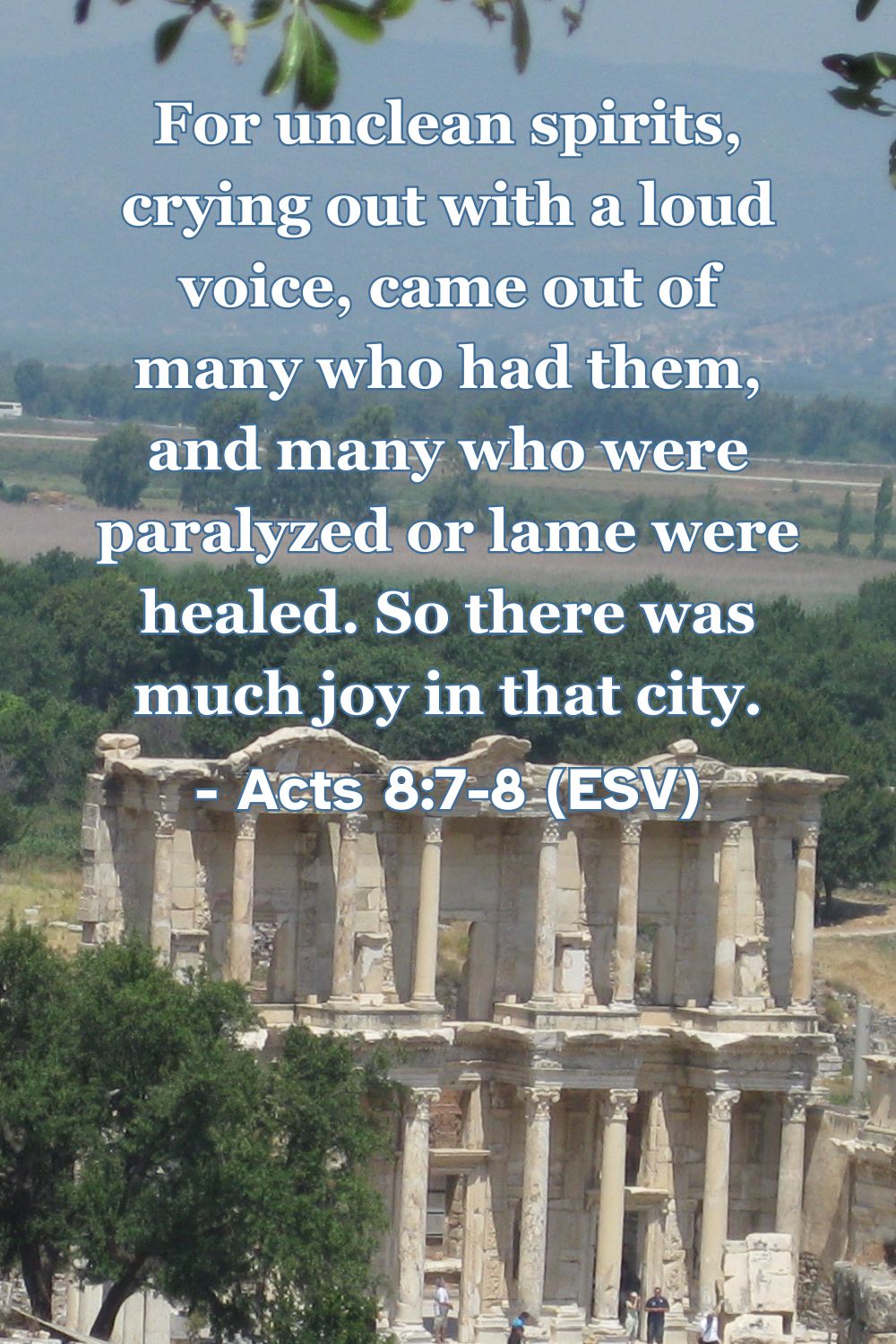
For unclean spirits, crying out with a loud voice, came out of many who had them, and many who were paralyzed or lame were healed. So there was much joy in that city.
Acts 8:7-8 (ESV)
In Acts 8, Philip brings the gospel to Samaria, and his preaching leads to a powerful move of God. Many were healed, and the people of the city were filled with joy. This joy was the result of the transformation that occurs when people come to know Jesus. It was a joy that affected not just individuals, but an entire community. The gospel brought light into a place of darkness, and healing where there was once pain.
The joy in this verse is not just the natural joy of healing or miracles, but also the deeper joy of recognizing salvation. When we see lives transformed by Christ, our joy deepens because it is a reminder of the power of the gospel and its ability to change everything. Just as this city was filled with joy, we too can share in the joy of seeing God at work in the world around us.
Reflection question: How can you contribute to bringing the joy of the gospel to your community?
Practical application: Look for an opportunity this week to share your faith with someone, or to invite them to experience the joy of God’s presence in a tangible way.
Joy After Salvation
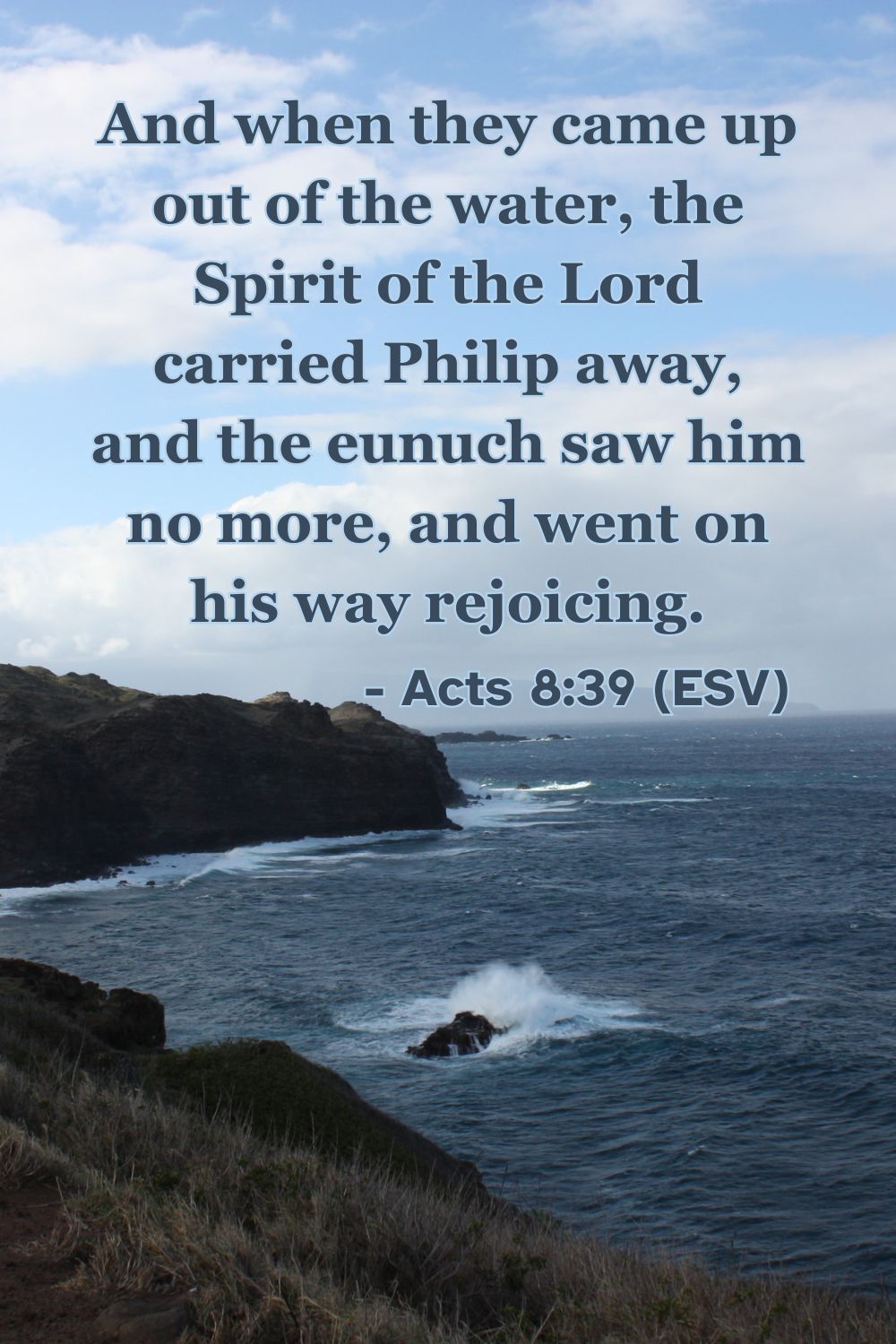
And when they came up out of the water, the Spirit of the Lord carried Philip away, and the eunuch saw him no more, and went on his way rejoicing.
Acts 8:39 (ESV)
This moment captures the immediate joy that follows a genuine encounter with Christ. The Ethiopian eunuch, a high official from Candace’s court, had traveled far to Jerusalem seeking truth. After Philip explained the good news about Jesus, beginning with Isaiah 53, the eunuch eagerly requested baptism at the first available water. The Spirit miraculously carried Philip away afterward, but the eunuch didn’t respond with confusion or sadness — he rejoiced, because his heart had been transformed. The story emphasizes that joy doesn’t depend on circumstances, people, or proximity to spiritual leaders. It is the natural overflow of salvation and the indwelling of God’s presence.
In the broader context of Acts 8, this conversion was part of the gospel’s rapid expansion beyond Jerusalem. The eunuch’s joy signals the inclusion of the nations in God’s salvation plan. For us, it is a reminder that while mentors and moments of encounter may be brief, the joy of salvation is lasting. Joy isn’t tethered to who is beside us but to who dwells within us. It frees us to journey forward in confidence, knowing we belong to Christ.
Reflection question: Is your joy rooted in the presence of Christ, or in the people and moments around you?
Practical application: Take time to remember your own salvation story today, particularly the moment where joy first broke through. Share it with someone who might need encouragement.
Joy in Witnessing Grace

When he came and saw the grace of God, he was glad, and he exhorted them all to remain faithful to the Lord with steadfast purpose.
Acts 11:23 (ESV)
When Barnabas arrived in Antioch, he witnessed firsthand the grace of God at work in a diverse, growing church. These new believers, many of them Gentiles, were embracing faith in Christ, and the sight filled Barnabas with gladness. His joy didn’t stop with observation; it moved him to exhortation. He encouraged them to remain steadfast and faithful, understanding that following Jesus requires endurance. Joy isn’t passive—it compels us to strengthen one another in the faith.
Acts 11 marks a pivotal moment for the early church as it wrestled with the inclusion of Gentiles. The joy Barnabas felt was more than personal satisfaction; it was a communal celebration of God’s grace extending beyond expected boundaries. For us, it’s a call to look for God’s grace in others’ lives and respond with gladness. When we see people growing in faith, our role isn’t to critique or compare but to rejoice and encourage them to keep going.
Reflection question: Do you rejoice when you see God’s grace in others’ lives, or do you struggle with comparison or skepticism?
Practical application: Intentionally encourage a fellow believer today. Affirm God’s grace at work in them.
Joy Rooted in the Spirit
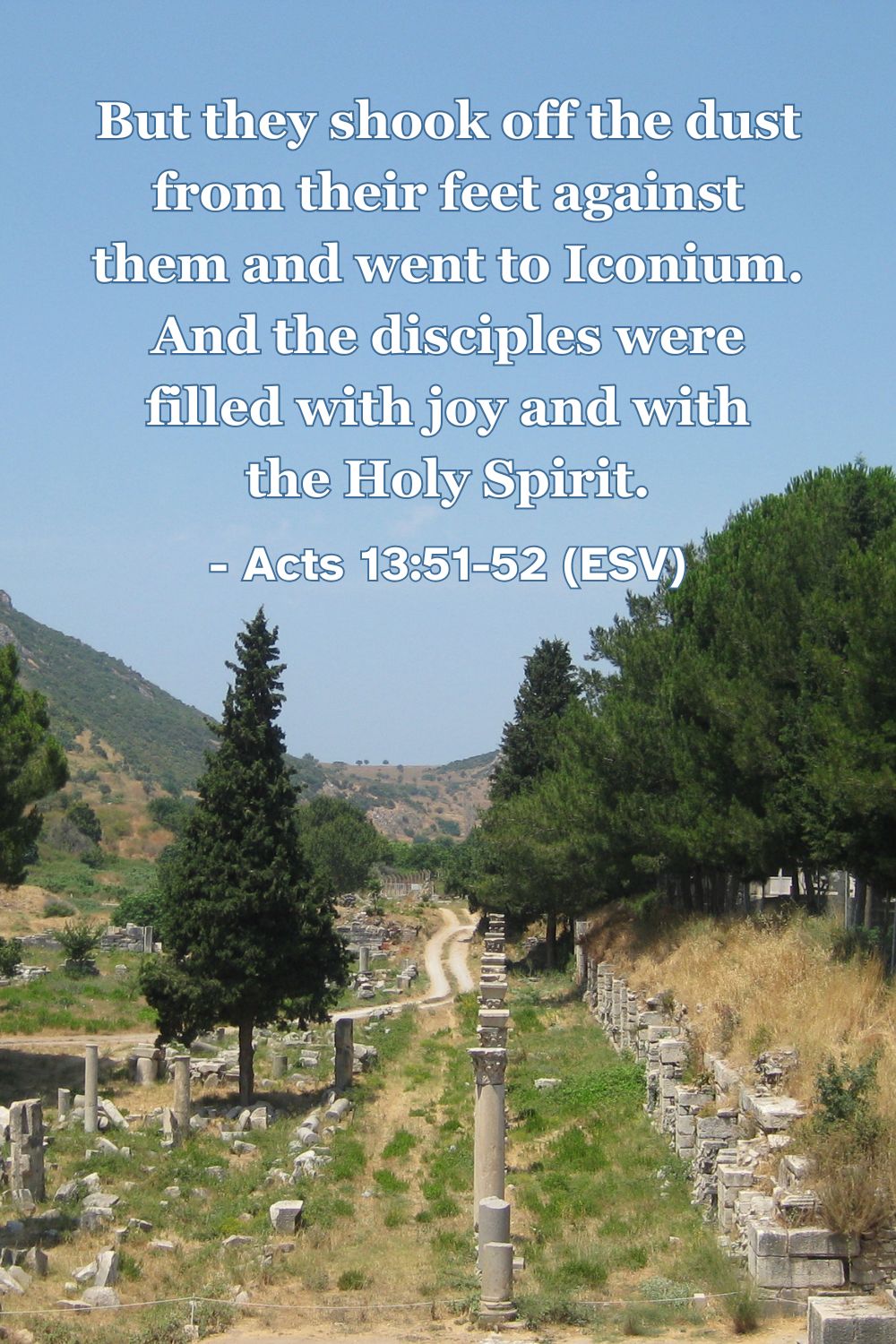
But they shook off the dust from their feet against them and went to Iconium. And the disciples were filled with joy and with the Holy Spirit.
Acts 13:51-52 (ESV)
Despite being driven out of Pisidian Antioch by opposition, Paul and Barnabas left the city not in defeat but in joy. The believers who remained were filled with both joy and the Holy Spirit. This verse highlights the connection between the Spirit’s presence and lasting joy, even in the face of persecution. Joy isn’t dependent on ease or public approval but arises from the assurance that God is near and his mission is advancing.
Acts 13 recounts Paul’s first missionary journey, marked by both powerful conversions and fierce resistance. The joy described here wasn’t shallow optimism but Spirit-given confidence that God was at work through their faithful witness. It reminds us today that authentic joy often coexists with trial. Rather than shrinking back, we are called to be people whose joy grows deeper as the Spirit strengthens us.
Reflection question: How might your perspective shift if you rooted your joy in the Holy Spirit’s presence instead of your circumstances?
Practical application: Memorize this verse and recite it when you feel opposition or discouragement this week.
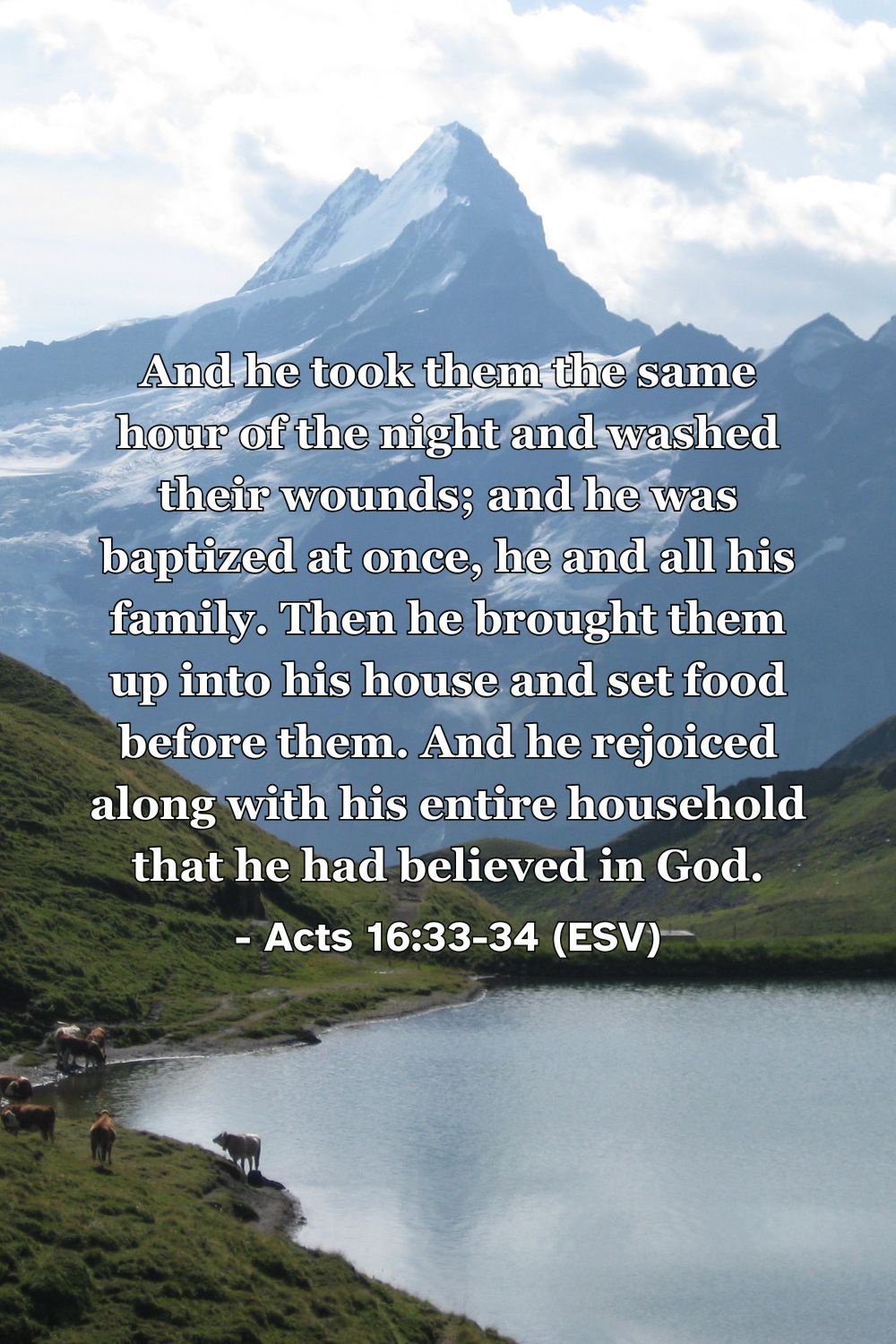
Joy That Fills a Household
And he took them the same hour of the night and washed their wounds; and he was baptized at once, he and all his family. Then he brought them up into his house and set food before them. And he rejoiced along with his entire household that he had believed in God.
Acts 16:33-34 (ESV)
After a miraculous prison escape that left both prisoners and jailers unharmed, the Philippian jailer’s life was radically changed. Contemplating suicide due to fear of punishment, he found hope instead in the message Paul and Silas shared. That very night, he and his household believed in Jesus and were baptized. Their immediate response was joy — a complete reversal from fear and despair to celebration. This verse reflects the joy that fills hearts and homes when salvation comes.
Within Acts 16, this event marks a pivotal moment in Paul’s ministry at Philippi. It illustrates how the gospel moves not only individuals but entire families. Joy spreads when hearts are transformed. For us, it is a reminder that no one is too far gone. God’s joy-filled redemption can reach anyone, anywhere, even in the most unlikely settings. It encourages us to hope for whole households, workplaces, and communities to be transformed by the gospel.
Reflection question: Are you praying expectantly for those around you to experience the joy of salvation?
Practical application: Reach out to someone in your family or community with a simple encouragement about Christ’s love this week.
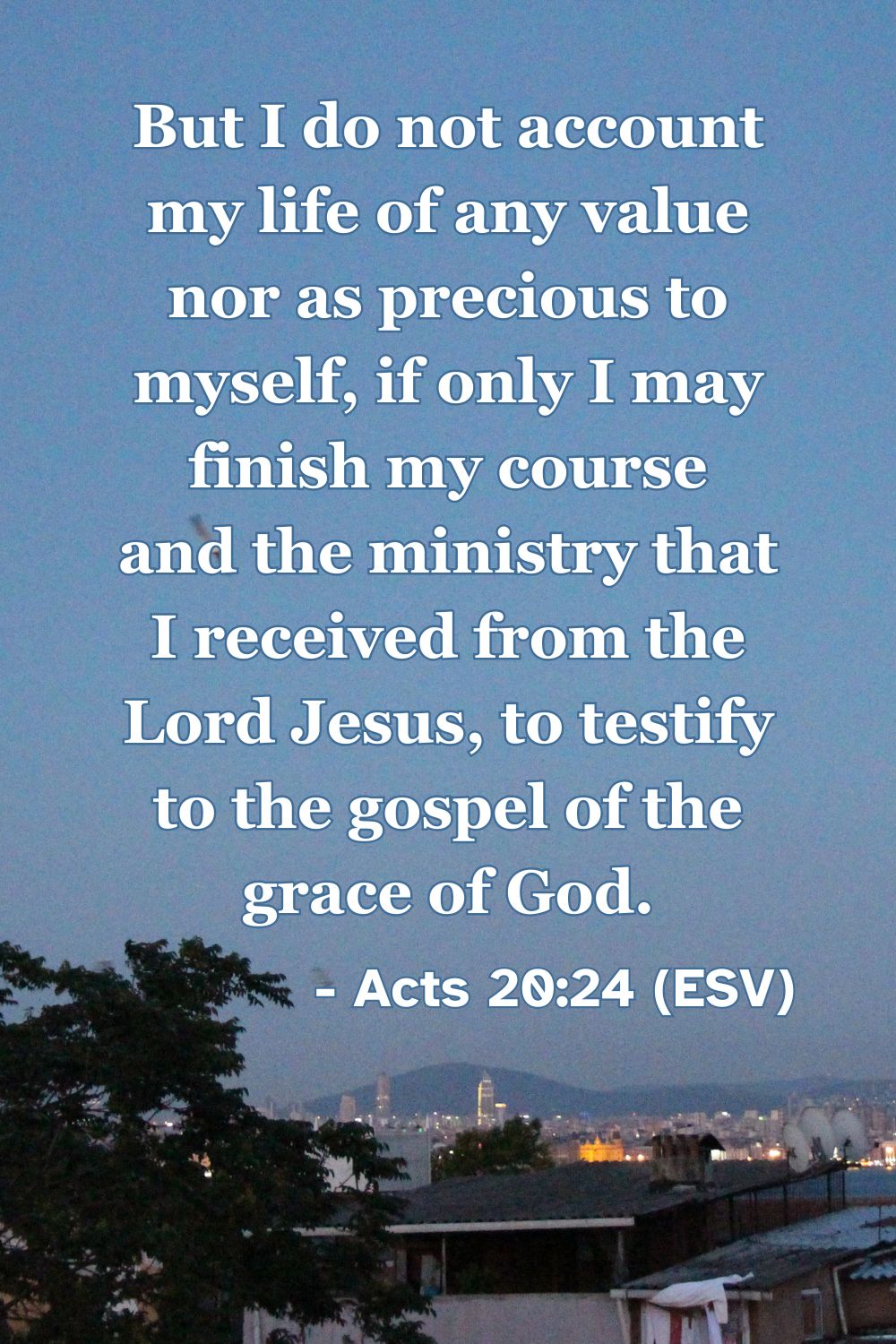
Joy in Finishing the Race
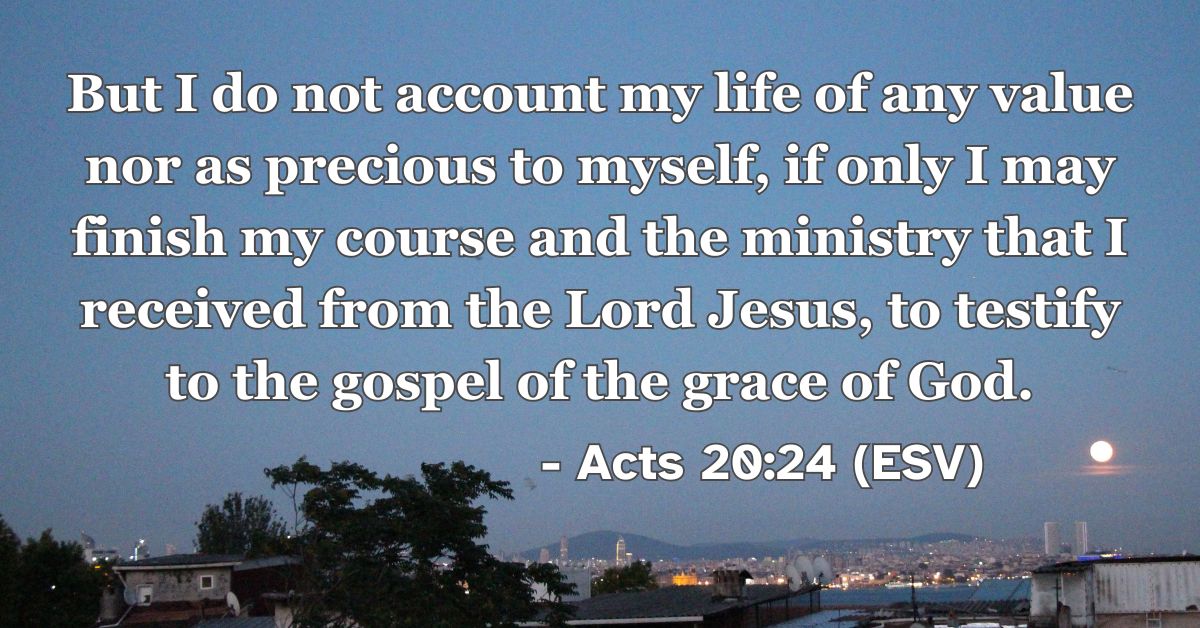
But I do not account my life of any value nor as precious to myself, if only I may finish my course and the ministry that I received from the Lord Jesus, to testify to the gospel of the grace of God.
Acts 20:24 (ESV)
In one of his final addresses to the Ephesian elders, Paul reflects on the cost of ministry and his singular purpose: to testify to the gospel of grace. Paul wasn’t tied to safety or personal preservation, but to faithfulness in completing the task Christ entrusted to him. He recognized his life as valuable, not for its comforts, but for its usefulness in advancing God’s kingdom. Joy came from knowing he was fulfilling his calling.
Acts 20, rich with emotion, captures Paul’s farewell to dear friends he may never see again. It underscores the costliness of discipleship and the deep joy found in obedience. Paul’s words challenge us to evaluate what we value most. Joy increases when our lives are centered on eternal purposes rather than temporary securities. It invites us to live with open hands, willing to surrender comfort for the sake of gospel witness.
Reflection question: What might God be asking you to lay down in order to live with this kind of joy and purpose?
Practical application: Write down one way you can testify to God’s grace this week — whether through words, actions, or generosity — and follow through.
Joy in the Advancement of God’s Kingdom
Joy in the Book of Acts is not a fleeting emotion tied to good fortune; it is a resilient, Spirit-fueled gladness rooted in the presence of God and the advancement of his kingdom. The early church experienced joy in homes and in prison cells, in miracles and in beatings, in conversion stories and communal meals. Their example reminds us that we too can live with joy, not because life is easy, but because Christ is near and his Spirit is alive within us.
As you reflect on these ten passages, may you be encouraged to look for God’s presence in your ordinary moments, to celebrate the grace at work in others’ lives, and to find joy even when the path is difficult. Joy is more than a feeling—it’s a fruit of the Spirit and a signpost pointing to the goodness of God in every season.
Reflective Prayer
Consider using these verses to pray using the ACTS method: Adoration, Confession, Thankfulness, and Supplication:
- Adoration: Praise God. Do these verses bring any specific characteristics of God to mind?
- Confession: Tell God that you are sorry for specific sins. Do these verses bring any specific sins to mind?
- Thankfulness: Show gratitude towards God. Does anything from these verses inspire gratitude?
- Supplication: Make requests for yourself and for others. Does anything from these verses inspire a prayer?
If helpful, you can use a prayer journal template.


Subscribe
If you enjoyed this post and wish to receive more Christian content, feel free to subscribe to my newsletters!
Related Resources
Visit the Joyful Moments in Christ homepage for all posts, or scroll through other blog posts related to the Acts of the Apostles:






Something went wrong. Please refresh the page and/or try again.
English Standard Version (ESV): Unless otherwise noted, scripture quotations are from the ESV® Bible (The Holy Bible, English Standard Version®), © 2001 by Crossway, a publishing ministry of Good News Publishers. Used by permission. All rights reserved. The ESV text may not be quoted in any publication made available to the public by a Creative Commons license. The ESV may not be translated in whole or in part into any other language.


 Joyful Moments in Christ