
Life has a way of challenging our peace and stealing our joy. Whether through hardship, uncertainty, or loss, we can find ourselves searching for a steady, lasting source of joy that circumstances cannot take away. As the apostle Paul wrote this letter while imprisoned in Rome, he highlighted a powerful truth: joy is not dependent on what is happening around us, but on the unshakable hope we have in Christ.
This short epistle is one of Paul’s most personal and affection-filled writings, and its constant theme of joy weaves through every chapter, offering encouragement to believers in every season of life. Let’s walk through ten passages from Philippians that teach us how to hold onto joy in every circumstance.
Joy in Prayerful Fellowship

I thank my God in all my remembrance of you, always in every prayer of mine for you all making my prayer with joy, because of your partnership in the gospel from the first day until now.
Philippians 1:3-5 (ESV)
At the very beginning of his letter, Paul expresses sincere gratitude for the Philippians. Despite his sorrow over his imprisonment, Paul’s mind is filled with joyful memories of their faithfulness and partnership in the work of the gospel. This wasn’t a casual friendship—it was a deep, spiritual bond formed through shared ministry and mutual encouragement. Paul’s joy came not only from their personal relationship but from their unwavering support of the shared mission to proclaim Christ.
In the following verses, Paul continues to affirm his confidence that God will complete the work he started in them, showing that his joy is rooted in both past faithfulness and future hope. The Philippians’ support wasn’t just emotional but practical, as they had sent aid to Paul. This opening passage reminds us of the joy that can be found in Christian community—when we labor together in faith, pray for one another, and share in the joys and sorrows of gospel ministry.
Reflection question: Who are the people in your life that bring you joy through their faith, and how can you pray for them today?
Practical Application: Write a note or send a message to someone you are praying for, letting them know they are a source of joy in your life.
Joy in God’s Ongoing Work

And I am sure of this, that he who began a good work in you will bring it to completion at the day of Jesus Christ.
Philippians 1:6 (ESV)
Paul’s confidence in the Philippians wasn’t based on their own strength or ability to persevere. Instead, he was certain that, despite the challenges they were facing, the work God had started in them would be faithfully completed. This promise speaks to the ongoing, transformative nature of salvation—that when God begins a good work in a believer’s heart, he doesn’t abandon it halfway through. The “good work” here refers to both their personal growth in Christ and their active partnership in the gospel.
In context, this verse follows Paul’s joyful prayer for the Philippians and precedes his deeper explanation of his affection for them. His gratitude and joy come not only from their support but from his assurance of their spiritual progress. Even though Paul was physically separated from them, he found joy in knowing that their faith would endure, and God would carry them through every challenge until the final day of Christ’s return.
This assurance isn’t just for the Philippians—it’s a promise for every believer. It reminds us that our Christian journey isn’t dependent solely on our own efforts. God’s faithfulness guarantees that the work he starts in us will be brought to maturity. This truth offers deep, sustaining joy, especially in seasons of struggle, when progress feels slow or uncertain.
Reflection question: Where have you seen God’s work in your life, and how does that assurance bring you joy?
Practical Application: Reflect on areas of growth and thank God for the ways he’s shaping your heart.
Joy in the Proclamation of Christ
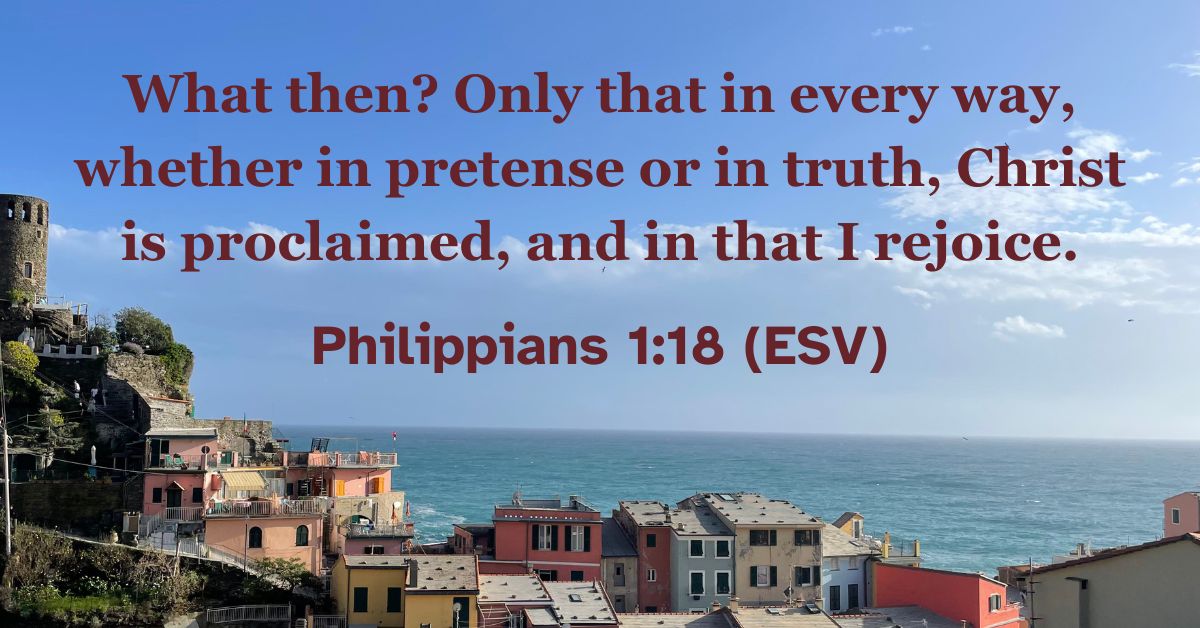
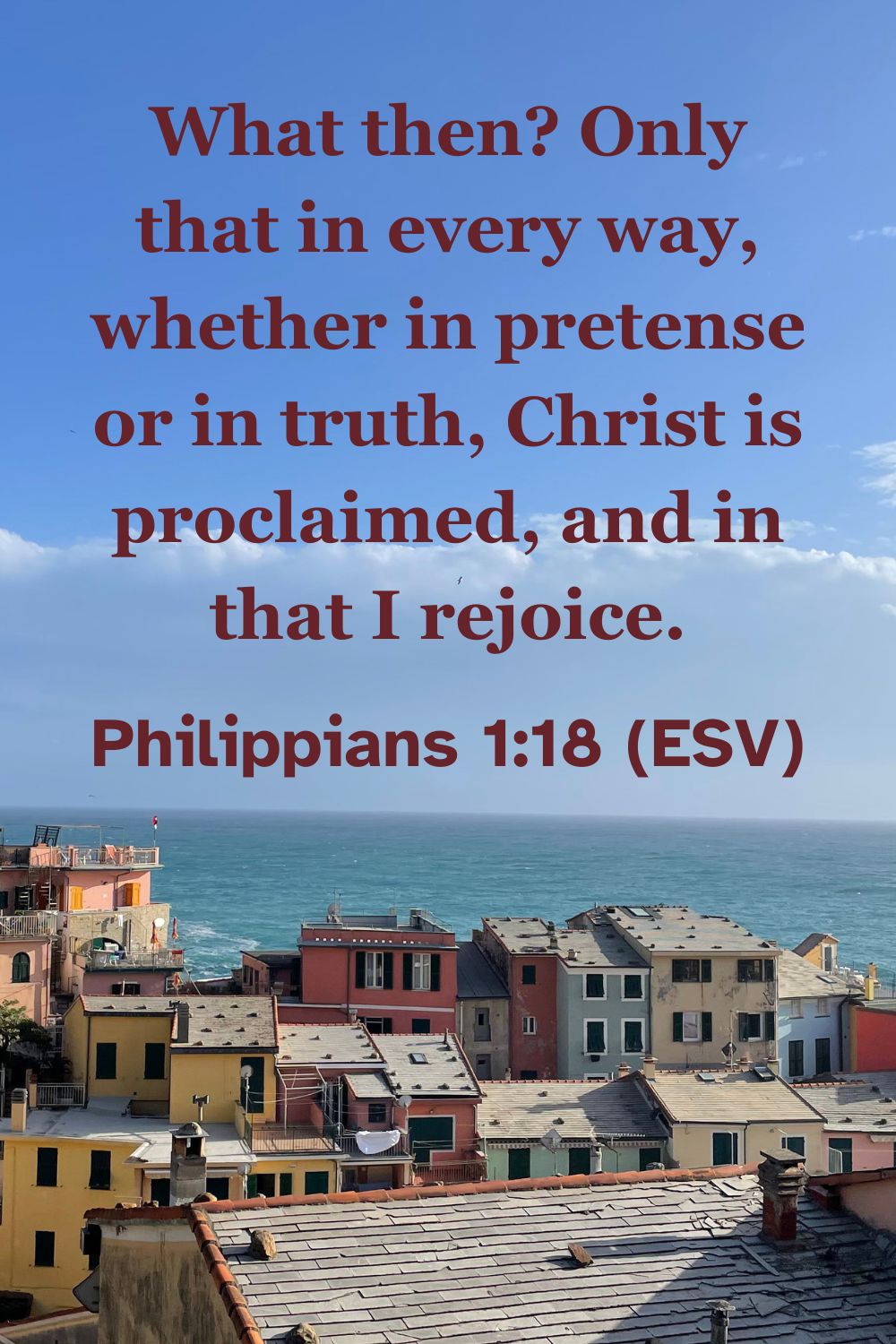
What then? Only that in every way, whether in pretense or in truth, Christ is proclaimed, and in that I rejoice. Yes, and I will rejoice.
Philippians 1:18 (ESV)
Paul’s joy wasn’t tied to his own personal success or reputation but to the spread of the gospel. In the preceding verses, he acknowledges that some of the Philippians were preaching Christ with impure motives—perhaps hoping that Paul would remain in prison and be unable to return and participate in the ministry of the Philippian church. Yet rather than becoming bitter or discouraged, Paul rejoiced because, regardless of the messenger’s motive, the message of Christ was still being proclaimed.
This reveals a profound truth about joy. Paul’s heart was so centered on Christ that he could rejoice even when others sought to harm or discredit him, as long as the good news of salvation was reaching people. It challenges us to examine where our joy is rooted. Is it in our reputation, recognition, or circumstances—or is it in the unchanging gospel of Jesus? When our deepest desire is for Christ to be known, we, like Paul, can find joy in every situation, even those that might seem unjust or difficult.
Reflection question: How can you prioritize the joy of the gospel over personal concerns?
Practical Application: Share a scripture or testimony with someone this week to encourage them in Christ.
Joy in Others’ Growth
Convinced of this, I know that I will remain and continue with you all, for your progress and joy in the faith, so that in me you may have ample cause to glory in Christ Jesus, because of my coming to you again.
Philippians 1:25-26 (ESV)
Paul believed his release from prison would allow him to continue encouraging the Philippians, not only for their benefit but also so that they might overflow with joy as they grew in faith. In the verses before this, Paul wrestles with whether it would be better to depart and be with Christ or remain alive for the church’s sake. Though his personal desire was to be with the Lord, his love for the Philippians made him willing to stay for their “progress and joy in the faith.”
This passage highlights how our joy multiplies when we invest in others’ spiritual growth. Paul’s focus wasn’t only on his own condition, but on the well-being of those he ministered to. It invites us to consider how our own lives can be a source of joy to others, not through superficial cheerfulness but by actively helping others deepen their faith.
Reflection question: Who in your life needs encouragement as they grow in faith?
Practical Application: Offer to pray with or mentor someone seeking to deepen their relationship with God.
Joy in Sacrificial Service
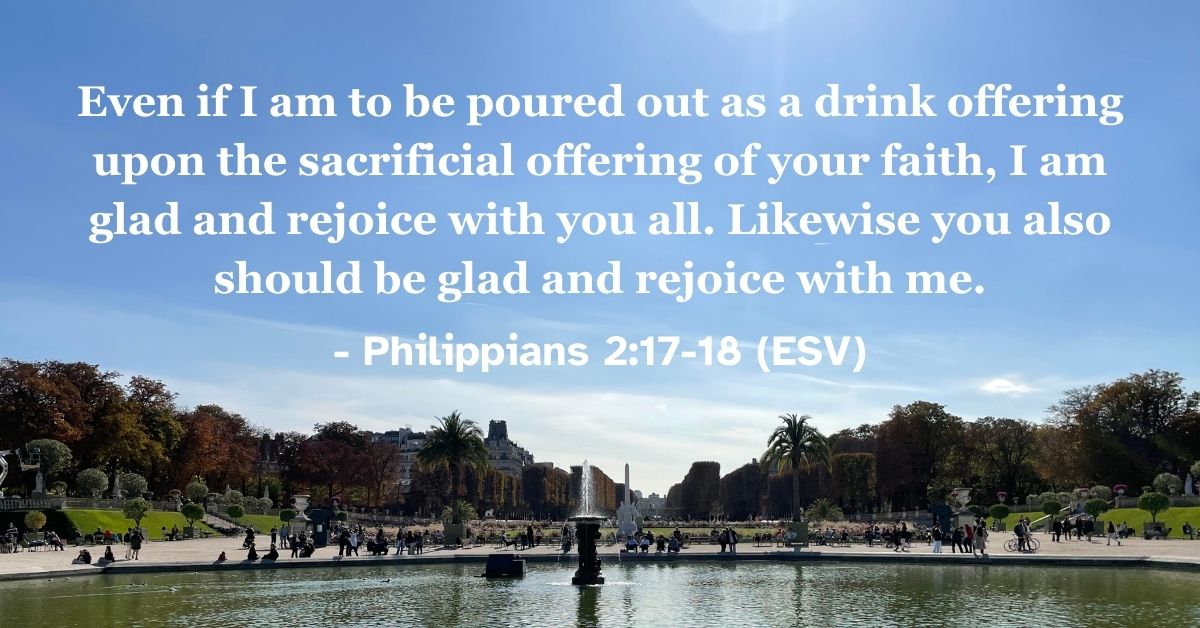
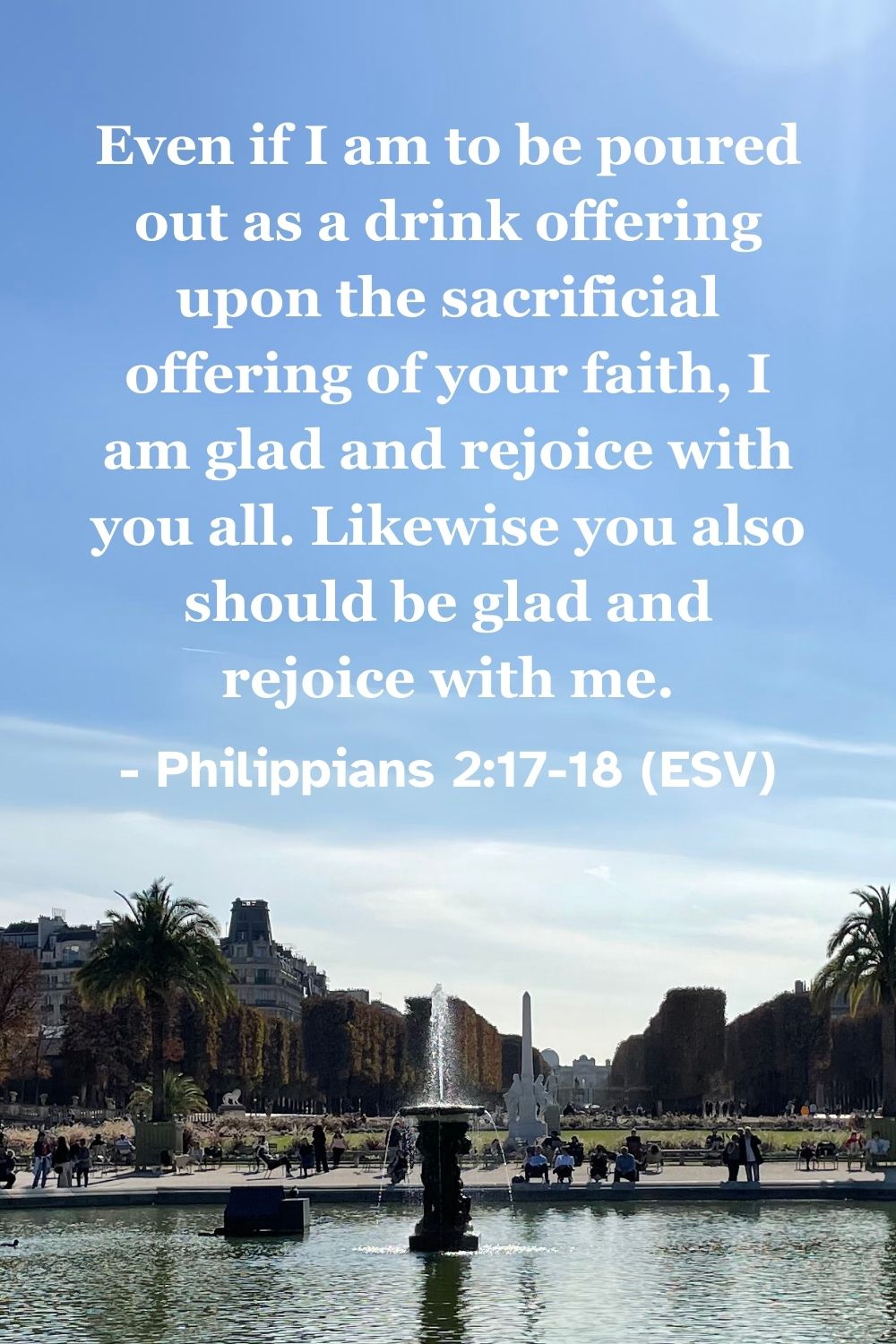
Even if I am to be poured out as a drink offering upon the sacrificial offering of your faith, I am glad and rejoice with you all. Likewise you also should be glad and rejoice with me.
Philippians 2:17-18 (ESV)
Paul uses the imagery of a drink offering, an Old Testament practice of pouring out wine beside a sacrificial altar, to describe his life being poured out for the sake of others. Even if his work for Christ would lead to death, he rejoiced in knowing that the Philippians’ faith was strengthened. In the larger context of Philippians 2, Paul urges believers to imitate Christ’s humility and servant-heartedness. His own life served as a practical example of that teaching.
This passage reveals a kind of joy that flourishes in sacrifice. When our focus shifts from self-preservation to serving others in Christ’s name, we discover joy that isn’t dependent on personal ease. Paul invites the Philippians—and us—to share in this joy, rejoicing not in ease or recognition but in the privilege of offering our lives for the good of others and the glory of God.
Reflection question: How might God be calling you to serve sacrificially with joy?
Practical Application: Look for a practical way to serve others this week, even if it costs you time or comfort.
Joy in Christian Unity
So receive him in the Lord with all joy, and honor such men, for he nearly died for the work of Christ, risking his life to complete what was lacking in your service to me.
Philippians 2:29-30 (ESV)
These verses conclude the story of Epaphroditus, a faithful servant who risked his life to bring aid from the Philippians to Paul during his imprisonment. Paul urges the church to receive him back with joy and to honor him for his sacrificial service. The context in chapter 2 is important—Paul has just encouraged the Philippians to live with humility, unity, and selfless love, pointing to Christ’s example and then to Timothy’s faithful character. Epaphroditus becomes a third model of joyful service and brotherhood in the gospel.
This passage reminds us that joy is cultivated in community when believers honor one another and rejoice together in shared sacrifices for Christ’s work. It also highlights the mutual dependence within the body of Christ: Paul, though an apostle, needed the service and encouragement of fellow believers, and he took joy in recognizing their faithfulness. True Christian joy isn’t solitary—it thrives when we celebrate and honor one another in the Lord.
Reflection question: Who in your life serves faithfully but quietly, and how can you honor them?
Practical Application: Send a message or small note of encouragement to someone whose service often goes unnoticed.
Joy in the Lord’s Presence

Finally, my brothers, rejoice in the Lord. To write the same things to you is no trouble to me and is safe for you.
Philippians 3:1 (ESV)
Paul shifts tone in this verse, moving from personal updates to spiritual warnings. Yet even in warning, he begins with a reminder to rejoice in the Lord. The joy Paul speaks of isn’t rooted in circumstances or religious performance but in a relationship with Christ. This joy is a safeguard for believers, helping them resist the false teachings he is about to address in the following verses.
By commanding joy as a recurring theme, Paul teaches that delight in Christ is essential for spiritual health. Rejoicing in the Lord acts as a spiritual anchor, protecting believers from both discouragement and deception. It invites us to evaluate where we seek our joy—whether in achievements, possessions, or people—or whether we find it in the unchanging presence of God.
Reflection question: What does it look like for you to “rejoice in the Lord” in daily life?
Practical Application: Set aside intentional time for gratitude, reflecting on who God is rather than what is happening around you.
Joy in Gospel Citizenship

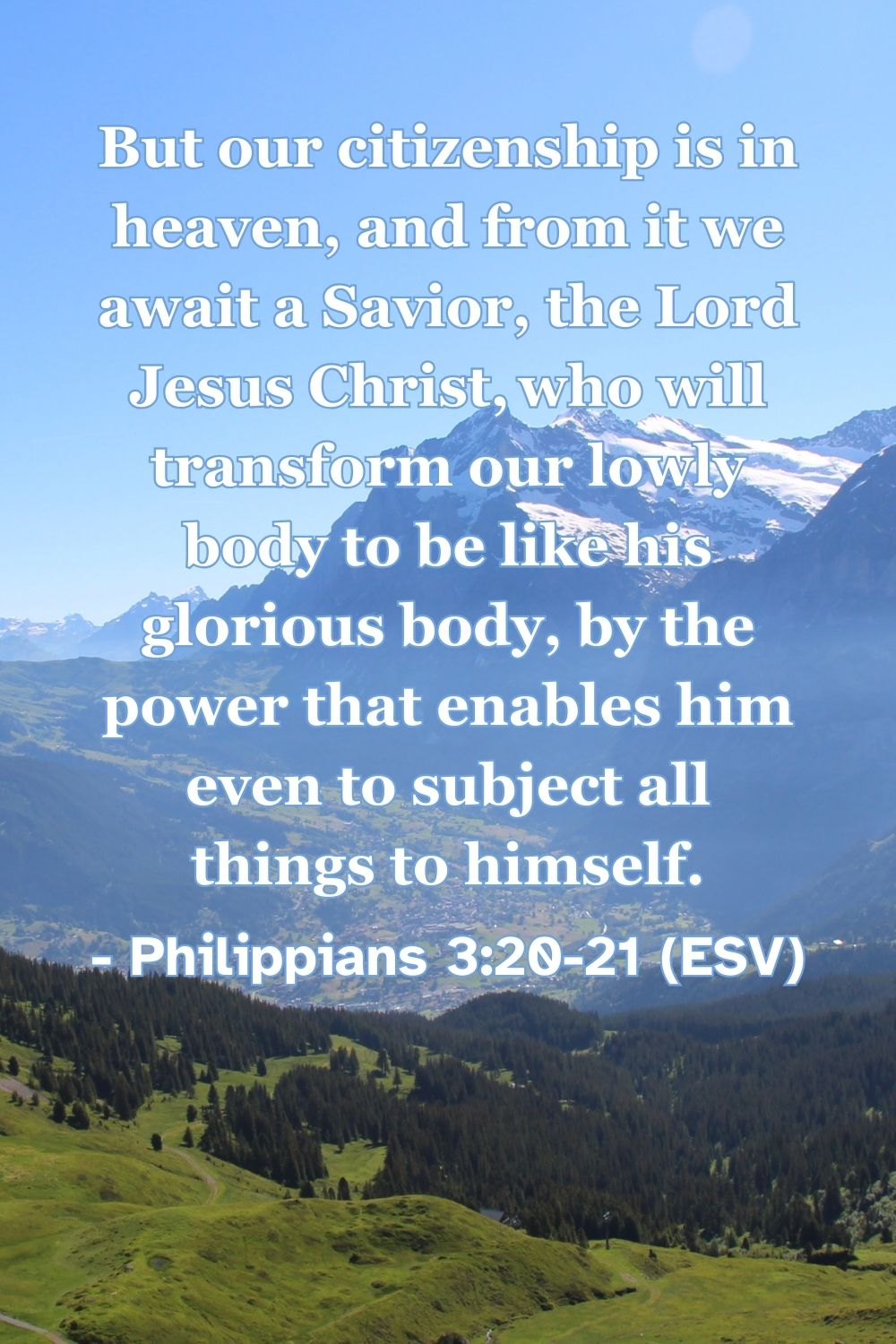
But our citizenship is in heaven, and from it we await a Savior, the Lord Jesus Christ, who will transform our lowly body to be like his glorious body, by the power that enables him even to subject all things to himself.
Philippians 3:20-21 (ESV)
In these verses, Paul lifts the eyes of the Philippians beyond their earthly challenges to their eternal home. As Roman citizens, the Philippians would have deeply valued their social and political status. Yet Paul reminds them—and us—that their ultimate identity is not found in earthly citizenship but in their belonging to heaven. This promise is a source of lasting joy, especially for those facing persecution or hardship.
The verses leading up to this contrast the destiny of those who live for earthly pleasures with the hope of believers who await Christ’s return. Paul’s words are a comfort and a challenge: find joy not in temporary comforts but in the unshakable promise of being united with Christ. When we embrace our identity as citizens of heaven, it reshapes how we view trials, successes, and the priorities we chase after.
Reflection question: How does your identity as a citizen of heaven affect the way you live and find joy?
Practical Application: Meditate on this truth when you face discouragement or the temptation to value earthly things too highly.
Joy in Gentle Confidence
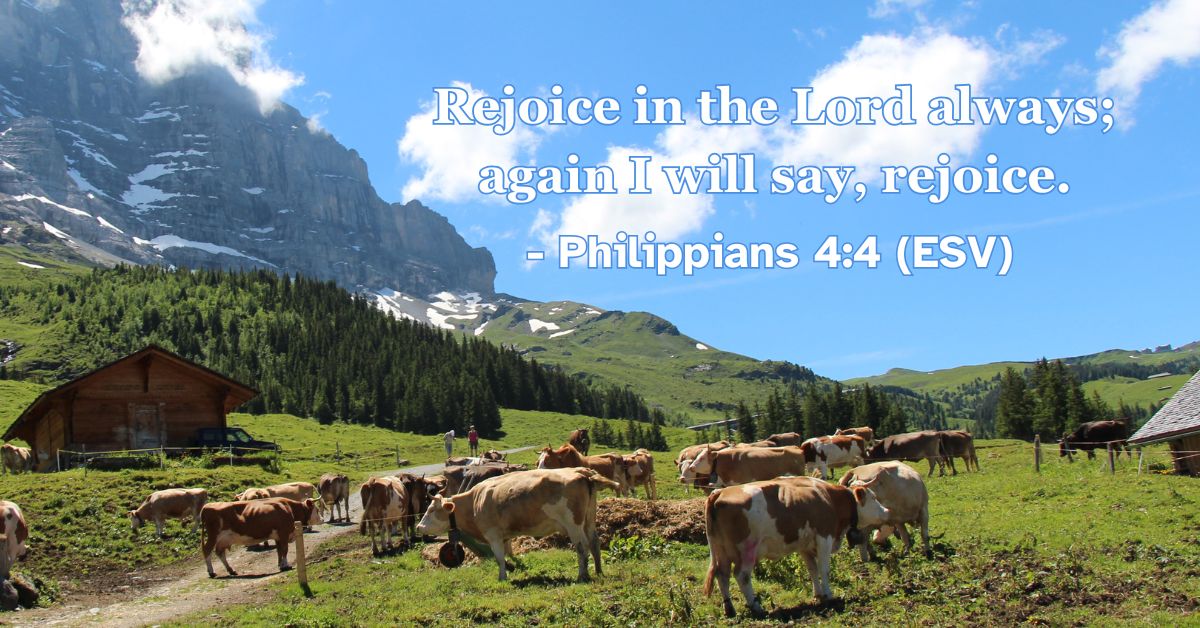
Rejoice in the Lord always; again I will say, rejoice.
Philippians 4:4 (ESV)
This beloved verse captures the heart of the entire letter. Paul commands believers to rejoice—not occasionally, not when circumstances are favorable, but always. Remarkably, Paul writes these words from prison, demonstrating that true joy isn’t tied to external circumstances but flows from a relationship with the Lord.
The following verses reveal how rejoicing anchors a believer’s heart in peace and gentleness. Paul encourages the church to let their reasonableness be known to all, to be free from anxiety, and to pray with gratitude. Joy is the foundation for this calm, steadfast spirit. It quiets fear, tempers harshness, and invites a peace that guards our hearts and minds in Christ.
This verse challenges us to examine the sources of our joy. Are they circumstantial or eternal? It also affirms that rejoicing is a spiritual discipline—one we must choose, rehearse, and lean into, regardless of life’s changing tides.
Reflection question: What circumstances challenge your joy, and how can you intentionally choose to rejoice in the Lord amid them?
Practical Application: Write down three things you’re thankful for each day this week, focusing on who God is rather than what you possess.
Joy in Contentment
I rejoiced in the Lord greatly that now at length you have revived your concern for me. You were indeed concerned for me, but you had no opportunity.
Philippians 4:10 (ESV)
Near the close of his letter, Paul thanks the Philippians for their renewed support. Yet his gratitude isn’t rooted solely in the material help they provided but in their loving concern and faithful partnership in ministry. In the verses that follow, Paul explains that his joy isn’t dependent on circumstances because he has learned the secret of contentment in every situation—whether in need or abundance.
This passage illustrates how joy and contentment are closely linked. True joy isn’t about acquiring what we want or avoiding hardship but about resting in the sufficiency of Christ. Paul models this contentment, rejoicing both in the Philippians’ kindness and in God’s ongoing provision. His words challenge us to examine our own expectations and desires. When we learn to find contentment in God’s presence and promises, we discover a joy that remains steady, whether life is overflowing or scarce.
Reflection question: Where in your life are you tempted to tie joy to circumstances rather than to Christ?
Practical Application: Practice contentment by thanking God for his faithfulness, even in areas where you’re still waiting for answers.
Holding Joy Through Every Season
The letter to the Philippians is a tender and triumphant testimony that joy isn’t the result of an easy life but of a Christ-centered one. Paul’s words remind us that joy can be found in prayer, sacrificial service, gospel partnership, and above all, in the unchanging presence of God. Even from a prison cell, facing uncertainty, Paul’s heart overflowed with joy because his eyes were fixed on eternal hope.
No matter what season you find yourself in—whether thriving or struggling—you are invited into this same resilient joy. As you reflect on these verses, may they strengthen your heart, deepen your faith, and remind you that in Christ, joy is always within reach.
Reflective Prayer
Consider using these verses to pray using the ACTS method: Adoration, Confession, Thankfulness, and Supplication:
- Adoration: Praise God. Do these verses bring any specific characteristics of God to mind?
- Confession: Tell God that you are sorry for specific sins. Do these verses bring any specific sins to mind?
- Thankfulness: Show gratitude towards God. Does anything from these verses inspire gratitude?
- Supplication: Make requests for yourself and for others. Does anything from these verses inspire a prayer?
If helpful, you can use a prayer journal template.



Subscribe
If you enjoyed this post and wish to receive more Christian content, feel free to subscribe to my newsletters!
Related Resources
Visit the Joyful Moments in Christ homepage for all posts, or scroll through other blog posts related to Philippians:









Something went wrong. Please refresh the page and/or try again.
English Standard Version (ESV): Unless otherwise noted, scripture quotations are from the ESV® Bible (The Holy Bible, English Standard Version®), © 2001 by Crossway, a publishing ministry of Good News Publishers. Used by permission. All rights reserved. The ESV text may not be quoted in any publication made available to the public by a Creative Commons license. The ESV may not be translated in whole or in part into any other language.



 Joyful Moments in Christ