
Philippians 1:21
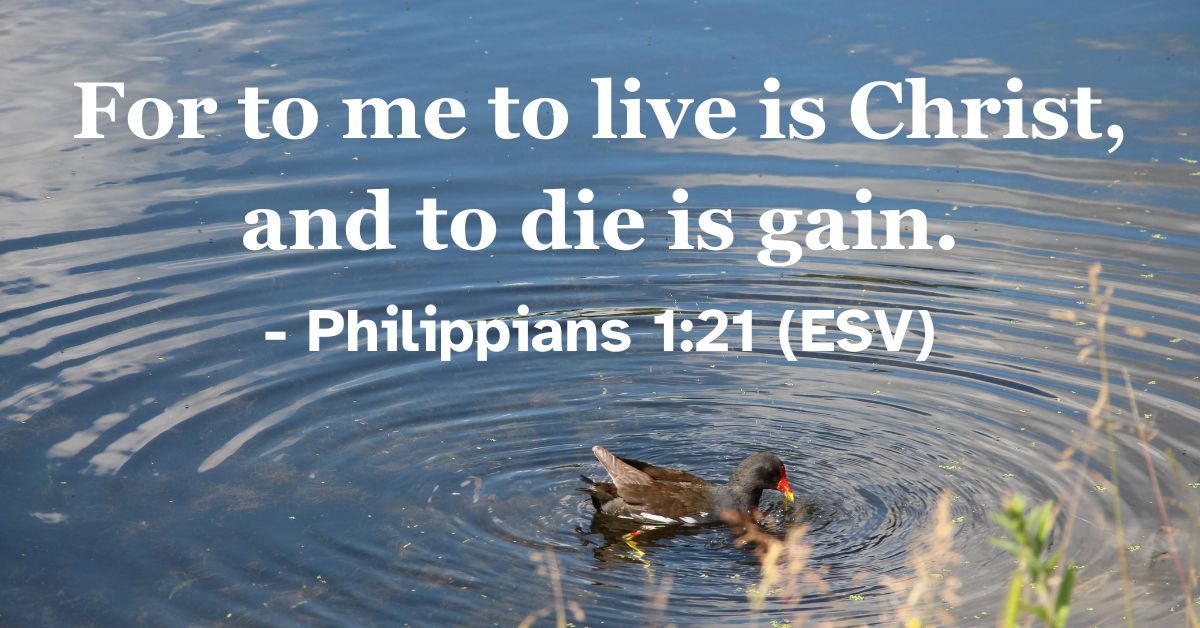
Philippians 1:21 is one of those verses I have heard quoted dozens of times—“For to me to live is Christ, and to die is gain.” It sounds beautiful, even poetic. But when I stop and really think about it, it is actually quite radical. What does it mean to say that living is Christ? Not just living for Christ, but that life itself is Christ?
Christ Will Be Honored—No Matter the Outcome
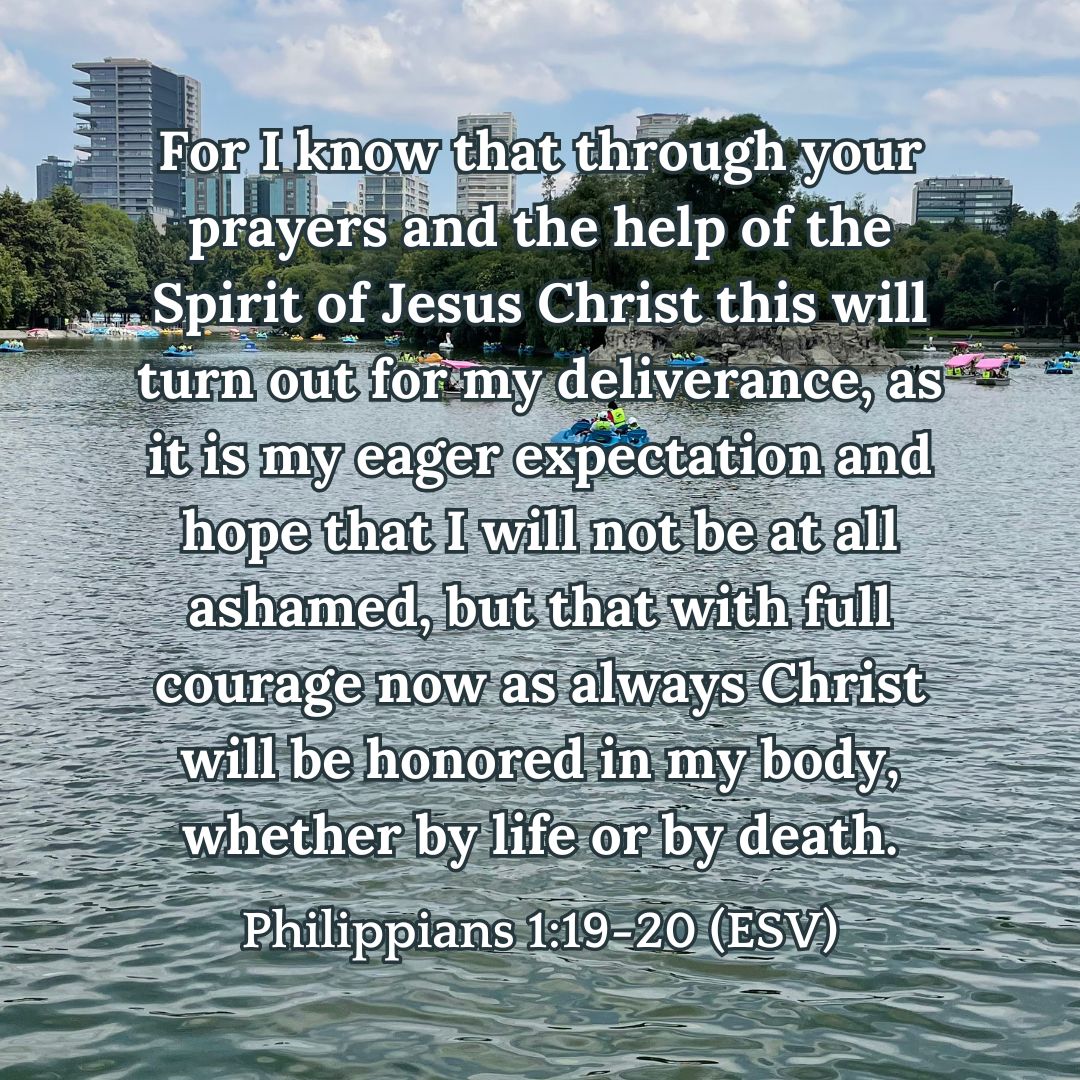
Yes, and I will rejoice, for I know that through your prayers and the help of the Spirit of Jesus Christ this will turn out for my deliverance, as it is my eager expectation and hope that I will not be at all ashamed, but that with full courage now as always Christ will be honored in my body, whether by life or by death.
Philippians 1:18b-20 (ESV)
Paul begins this section by giving us a glimpse into his heart. It should be noted that he isn’t writing from the comfort of his own home, but from prison, not knowing if he will live or die. And yet, he is not afraid. In fact, he is joyful! Whether he is released or executed, his goal is the same: to honor Jesus with whatever time he has left. This is incredibly challenging—and incredibly freeing. Paul is not clinging to comfort, success, or even survival. He is clinging to Christ.
This passage makes me stop and ask: what am I clinging to? What defines my life? If someone looked at my choices, my words, my priorities—would they see that Jesus is the reason I live?
A Life Worth Living and a Death That Is Gain
For to me to live is Christ, and to die is gain. If I am to live in the flesh, that means fruitful labor for me. Yet which I shall choose I cannot tell. I am hard pressed between the two. My desire is to depart and be with Christ, for that is far better.
Philippians 1:21-23 (ESV)
Paul says that if he makes it through his time in prison and lives, it will mean fruitful labor. He sees the value of staying in this world, not for his own sake, but for the sake of the believers he ministers to. He desires to help them grow in faith and joy. That kind of selflessness is quite striking. Even in chains, even facing death, Paul is thinking of others. He is not living for ease or escape—he is living to strengthen the body of Christ.
Then, Paul goes on to say that to die is gain, which is quite hard to say sincerely. Most of us view death as loss—the loss of time, of opportunity, of relationship. Interestingly, Paul sees it as gain because it brings him into the immediate presence of Jesus. No more striving, no more suffering—just perfect union with the one he loves most. That is why Paul is torn. He longs to depart and be with Jesus, but he is also willing to remain if that is what will serve the church.
Remaining for the Sake of Others
But to remain in the flesh is more necessary on your account. Convinced of this, I know that I will remain and continue with you all, for your progress and joy in the faith, so that in me you may have ample cause to glory in Christ Jesus, because of my coming to you again.
Philippians 1:24-26 (ESV)
This perspective turns so many of our normal assumptions upside down. It challenges how we measure the value of life. We often speak of living a “full life” in terms of accomplishments, relationships, experiences. But Paul defines fullness in terms of Christ. Christ is not just part of his life—Christ is his life.
When I really let that sink in, I begin to see how many other things I try to build my life on. Success, comfort, reputation, control—these are the things I tend to cling to. Paul had let go of all of it. He had learned the secret of contentment, not because his circumstances were easy, but because his heart was anchored in Jesus.
A Call to Live Worthy of the Gospel
Only let your manner of life be worthy of the gospel of Christ, so that whether I come and see you or am absent, I may hear of you that you are standing firm in one spirit, with one mind striving side by side for the faith of the gospel, and not frightened in anything by your opponents.
Philippians 1:27-28a (ESV)
Paul ends this passage by encouraging the Philippians to live in a manner worthy of the gospel. Whether he sees them again or not, he wants them to be unified, courageous, and faithful. He reminds them that suffering is not a detour—it is part of their calling. Just as Jesus suffered, so too will his followers. But they do not suffer alone, and they do not suffer in vain. Can we expect any less?
Suffering as a Gift of Grace
This is a clear sign to them of their destruction, but of your salvation, and that from God. For it has been granted to you that for the sake of Christ you should not only believe in him but also suffer for his sake, engaged in the same conflict that you saw I had and now hear that I still have.
Philippians 1:28b-30 (ESV)
“To live is Christ” is not a slogan, it is a daily surrender. It is a call to see every moment—whether in joy or pain—as an opportunity to know Christ more deeply and to make him known more clearly. It is a life shaped by grace, marked by purpose, and filled with hope. And it is a life I want to grow into, one decision at a time.
Reflection Questions
- What does it look like for you to say, “To live is Christ”?
- Are there things you are clinging to more tightly than Jesus—like comfort, control, or approval?
- How would your daily priorities shift if your greatest desire was to honor Jesus, whether by life or by death?
- Can you honestly say that to die would be gain? Why or why not?
- What does “fruitful labor” look like in this season of your life?
- How might your suffering become a witness to others and a means of knowing Jesus more deeply?
Reflective Prayer
Consider using these verses to pray using the ACTS method: Adoration, Confession, Thankfulness, and Supplication:
- Adoration: Praise God. Do these verses bring any specific characteristics of God to mind?
- Confession: Tell God that you are sorry for specific sins. Do these verses bring any specific sins to mind?
- Thankfulness: Show gratitude towards God. Does anything from these verses inspire gratitude?
- Supplication: Make requests for yourself and for others. Does anything from these verses inspire a prayer?
If helpful, you can use a prayer journal template.

Subscribe
If you enjoyed this post and wish to receive more Christian content, feel free to subscribe to my newsletters!
Related Resources
Visit the Joyful Moments in Christ homepage for all posts, or scroll through other blog posts related to Jesus:

Something went wrong. Please refresh the page and/or try again.
English Standard Version (ESV): Unless otherwise noted, scripture quotations are from the ESV® Bible (The Holy Bible, English Standard Version®), © 2001 by Crossway, a publishing ministry of Good News Publishers. Used by permission. All rights reserved. The ESV text may not be quoted in any publication made available to the public by a Creative Commons license. The ESV may not be translated in whole or in part into any other language.

 Joyful Moments in Christ