
The book of Galatians is a passionate letter from the Apostle Paul to a group of early Christians who were struggling to hold onto the true message of the gospel. False teachers had crept in, insisting that salvation required strict adherence to Jewish customs in addition to faith in Christ. In response, Paul boldly reasserts the sufficiency of Jesus’ death and resurrection, reminding the Galatians that freedom, grace, and belonging are found not through human effort, but through faith alone. This letter, though written nearly two thousand years ago, remains remarkably relevant today for believers wrestling with legalism, self-reliance, and the pressure to perform.
What makes Galatians particularly powerful is the steady thread of joy woven through its message of grace. Paul refuses to let discouragement or opposition rob him of the joy he has found in Christ’s finished work. In these ten Bible verses, we are invited to rediscover joy—not the fleeting kind tied to circumstances, but the deep, unshakeable joy that comes from knowing we are loved, rescued, and made new. Each passage offers a glimpse into the freedom and belonging Christ secured for us, offering hope and encouragement for weary hearts in every generation.
Joy in Christ’s Willing Sacrifice

Grace to you and peace from God our Father and the Lord Jesus Christ, who gave himself for our sins to deliver us from the present evil age, according to the will of our God and Father, to whom be the glory forever and ever. Amen.
Galatians 1:3-5 (ESV)
At the start of his letter to the Galatians, Paul lays the foundation of the gospel message. These verses are more than a polite greeting—they are a theological declaration of the grace and peace extended to sinners through Jesus Christ. Paul reminds the Galatians that Christ willingly gave himself to rescue them from sin and this broken world, all according to the will of God. In Paul’s day, many religious systems emphasized human effort and strict adherence to rituals. This was revolutionary news: salvation came through Christ’s sacrificial death, not through human striving. The phrase “present evil age” highlights the fallen world’s condition and underscores the deliverance believers experience by faith in Jesus. Paul points to God’s glory, reminding readers that every good gift, including salvation, originates with him.
Joy springs up when we grasp that Jesus gave himself willingly—not out of obligation, but from love. Too often, we forget that peace and grace aren’t rewards for good behavior, but gifts purchased by Christ’s sacrifice. Knowing he died to rescue us brings deep assurance on days when our hearts feel burdened or anxious. We don’t have to save ourselves or carry guilt alone. Christ stepped into history, bore our sin, and pulled us out of spiritual darkness. That means every believer can breathe easy, confident that grace and peace aren’t temporary or uncertain—they’re ours forever because of Jesus. And if our rescue was his will and pleasure, then no situation we face lies beyond his power or his plan.
Reflection Question: Where in your life do you need to remember Christ’s rescuing grace today?
Practical Application: Take five quiet minutes today to reflect on Christ’s willingness to give himself for you. Thank him specifically for the peace he has provided in your life.
Joy in a New Life through Faith

I have been crucified with Christ. It is no longer I who live, but Christ who lives in me. And the life I now live in the flesh I live by faith in the Son of God, who loved me and gave himself for me.
Galatians 2:20 (ESV)
Paul’s words here are deeply personal and profoundly theological. He’s not just making a doctrinal statement; he is sharing the transformation that has occurred in his own life. By saying he has been crucified with Christ, Paul emphasizes the death of his old self—the self that relied on the law and human effort for righteousness. Now, his identity is entirely wrapped up in Christ. The life he lives is not driven by his own desires or efforts but is a life of faith in Jesus, who loved him and gave himself for him. This verse encapsulates the essence of Christian living: dying to self and living by faith in the one who gave everything for us.
The joy in this verse comes from the realization that our old selves, with all their failures and attempts to earn God’s favor, have been put to death. We now live a new life, empowered by Christ himself. This isn’t about trying harder or doing more; it’s about trusting in the one who lives in us. When we understand that Christ’s love and sacrifice are the foundation of our new life, we can live with confidence and joy, knowing that we are accepted and empowered by him.
Reflection Question: What part of your old self do you find hardest to leave behind?
Practical Application: Write down one habit or attitude you want to surrender to Christ this week, and pray daily for the Spirit’s help to live in the freedom of your new life.
Joy in Belonging to the Family of Faith
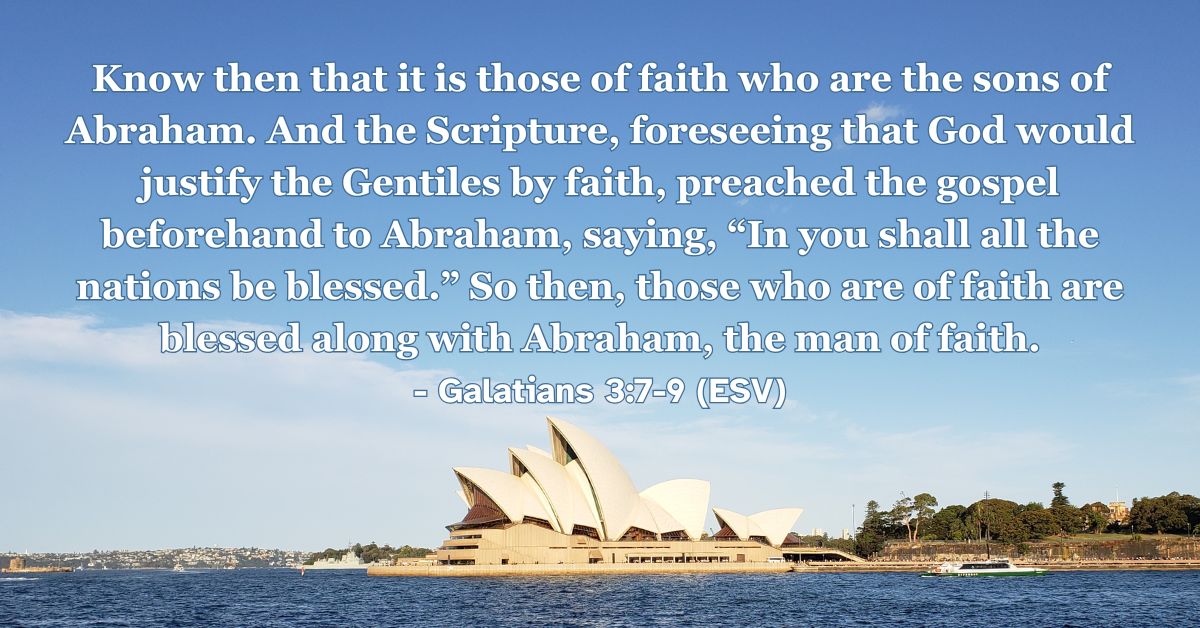
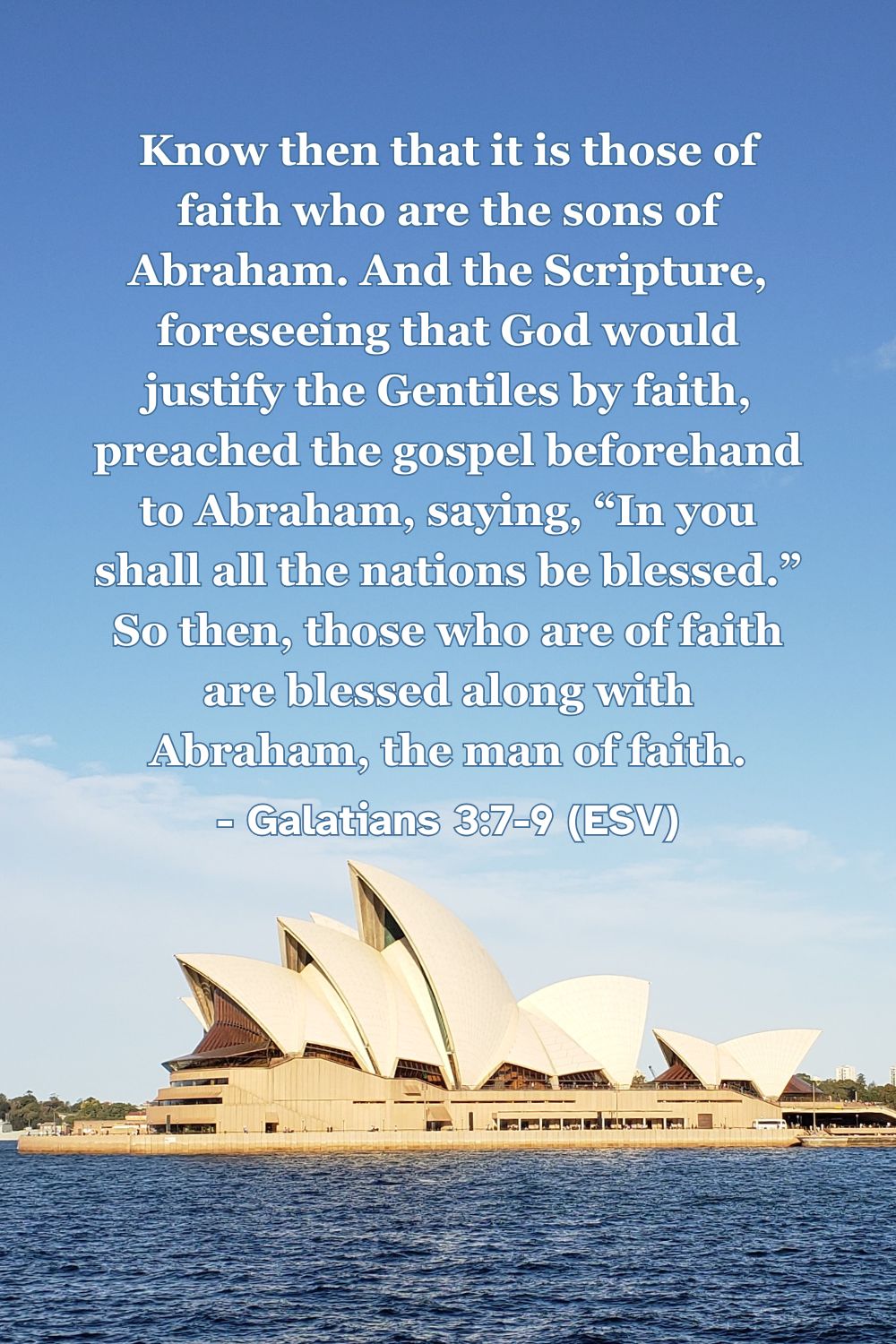
Know then that it is those of faith who are the sons of Abraham. And the Scripture, foreseeing that God would justify the Gentiles by faith, preached the gospel beforehand to Abraham, saying, “In you shall all the nations be blessed.” So then, those who are of faith are blessed along with Abraham, the man of faith.
Galatians 3:7-9 (ESV)
Paul is addressing a critical issue in the Galatian church: the belief that Gentile Christians needed to adopt Jewish customs to be fully part of God’s people. By pointing back to Abraham, Paul demonstrates that faith, not ethnicity or law-keeping, is what makes someone a child of God. Abraham was justified by faith long before the law was given, and God’s promise to bless all nations through him was a foreshadowing of the gospel. This means that anyone who has faith in Christ is part of Abraham’s family and shares in the blessings promised to him.
The joy here is in knowing that we belong. Regardless of our background, culture, or past, faith in Christ brings us into God’s family. We are not outsiders trying to earn our way in; we are beloved children, fully accepted and blessed. This belonging gives us a deep sense of identity and purpose. We are part of a story that began with Abraham and continues through us. And as members of this family, we are recipients of God’s promises and participants in his mission to bless the world.
Reflection Question: How does knowing you belong to God’s family reshape the way you view yourself and others?
Practical Application: Reach out to someone in your church family this week—especially someone you don’t know well—and encourage them with a word of blessing or gratitude.
Joy in Our New Identity in Christ
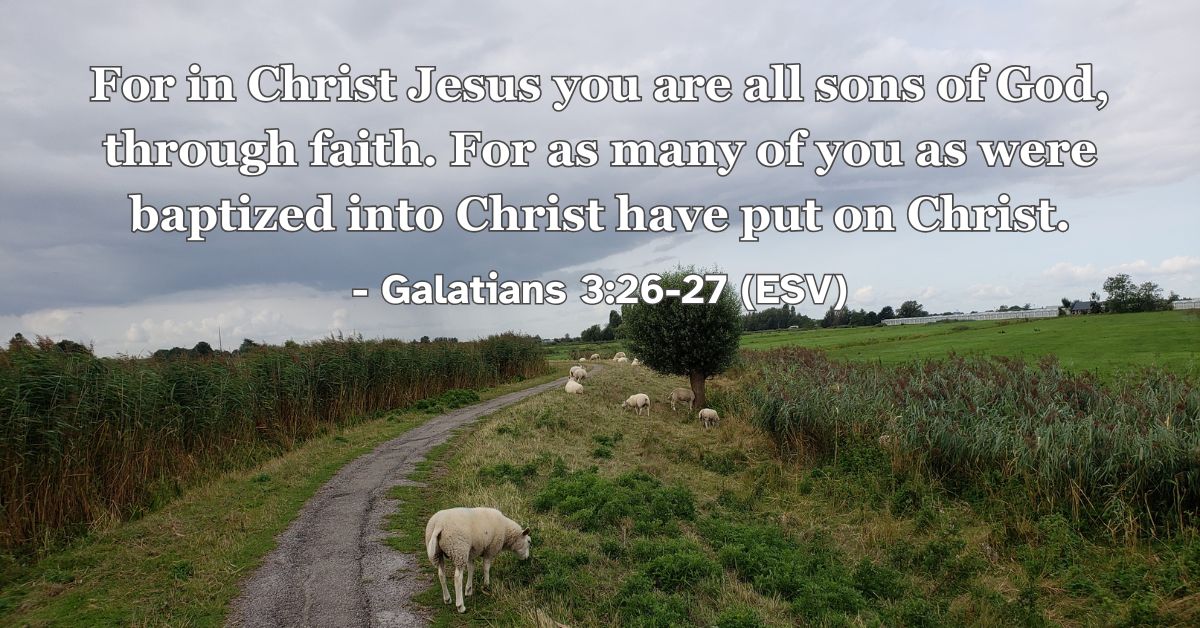
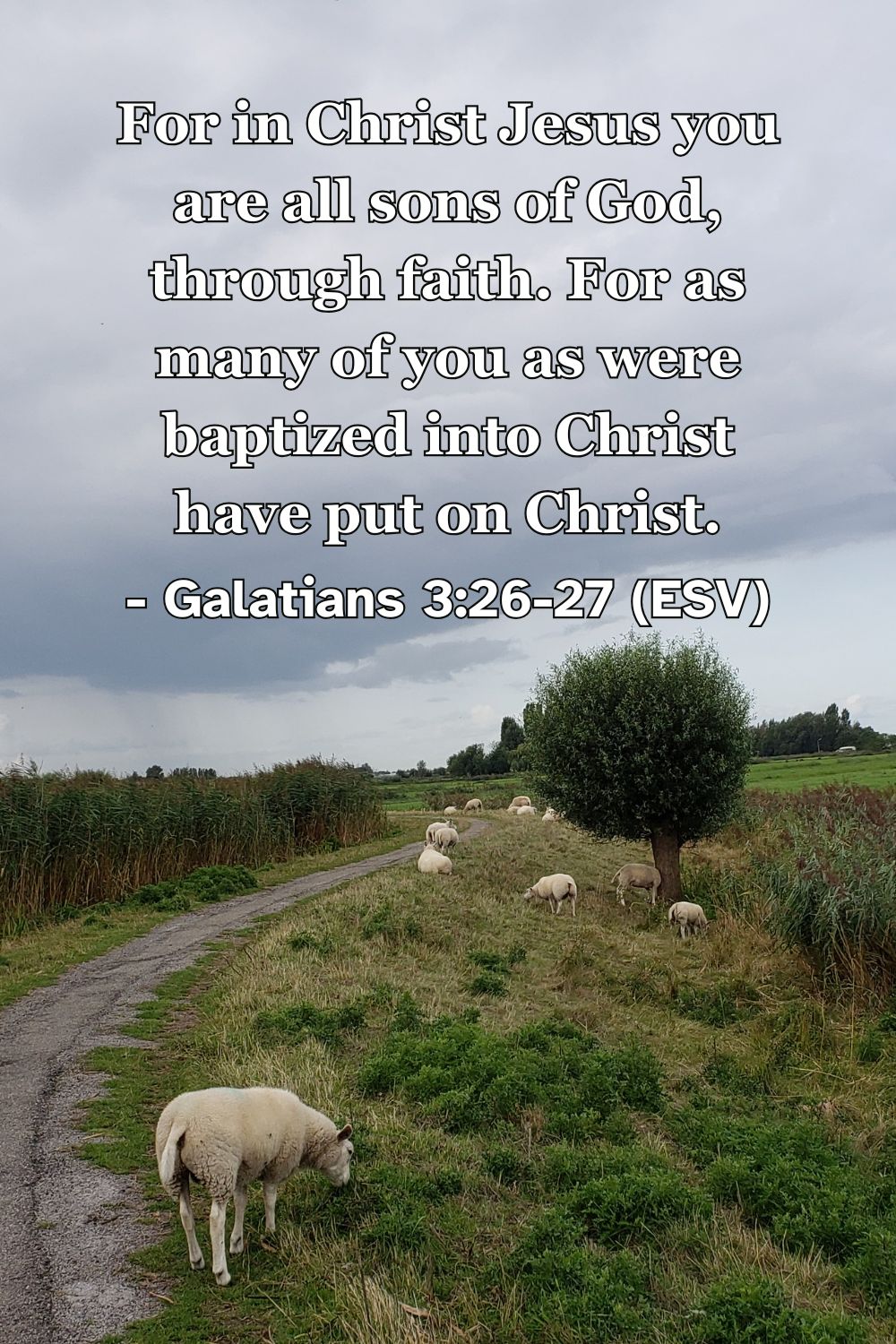
For in Christ Jesus you are all sons of God, through faith. For as many of you as were baptized into Christ have put on Christ.
Galatians 3:26-27 (ESV)
Paul’s words in this passage address a church community wrestling with questions of identity and inclusion. In the Galatian churches, tensions between Jewish and Gentile believers arose over the role of the law, circumcision, and what it meant to truly belong to the people of God. Paul reminds them that their deepest identity isn’t rooted in their ethnic background, social status, or ceremonial observance, but in their union with Christ. Through faith, all believers become sons of God—not because of inherent worth or religious performance, but because of what Christ has done. The mention of baptism points to the outward sign of this inward reality. Baptism symbolized being united with Christ in his death and resurrection, marking the believer as one who has “put on” Christ, like a new garment of righteousness. This wasn’t just an individual experience but a community-shaping reality, drawing believers into a family defined by grace.
There is immeasurable joy in knowing that, through faith, we are no longer outsiders or orphans but sons and daughters of the living God. This identity isn’t fragile, tied to our performance or public reputation, but firmly grounded in Christ’s finished work. When Paul says we have “put on Christ,” it is a beautiful picture of being clothed in his righteousness, meaning when God looks at us, he sees his beloved Son. This truth isn’t meant to stay in our heads but to shape our hearts and relationships. It reminds us that the church isn’t a club for the morally polished but a family of redeemed sinners, each clothed in grace. The joy comes not only in knowing who we are but in realizing we belong to one another through Christ, with all barriers broken down.
Reflection Question: What labels or identities have you been clinging to that Christ has already replaced?
Practical Application: Each morning this week, remind yourself aloud: “In Christ, I am a beloved child of God.” Notice how it shapes your day.
Joy in Being God’s Heirs and Knowing Him Intimately
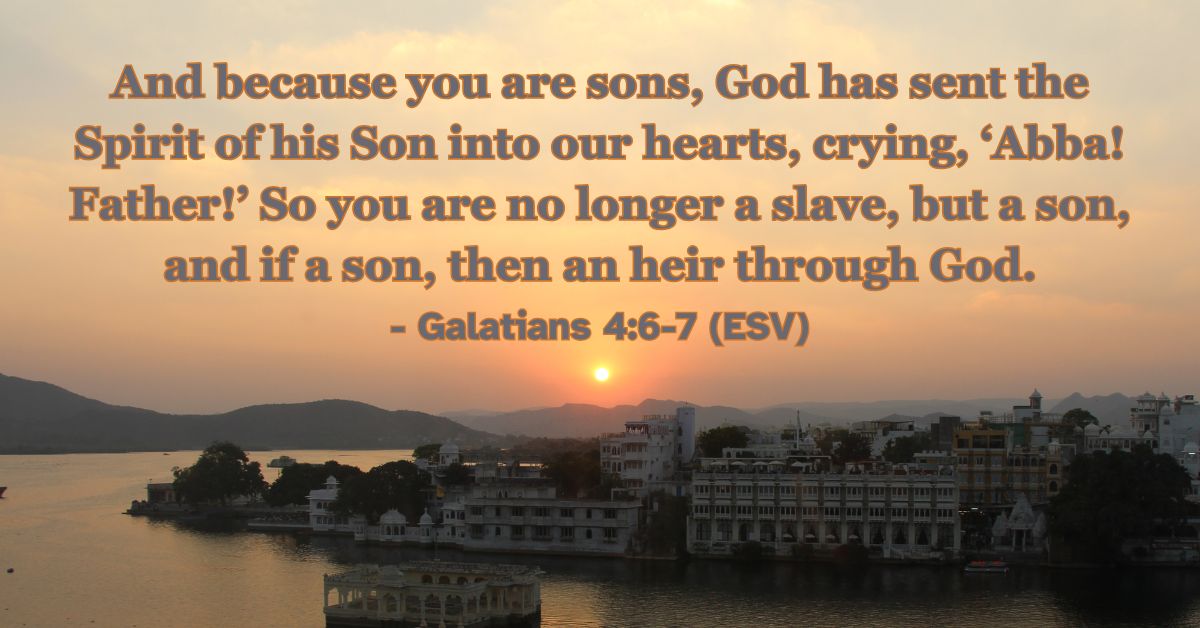
And because you are sons, God has sent the Spirit of his Son into our hearts, crying, ‘Abba! Father!’ So you are no longer a slave, but a son, and if a son, then an heir through God.
Galatians 4:6-7 (ESV)
In this passage, Paul builds on the truth of our adoption by showing how deeply personal and transformative that relationship is. In the ancient world, being an heir meant far more than inheriting wealth; it spoke of belonging, authority, and future security within a household. Through faith in Christ, believers are no longer slaves to sin or the law’s condemnation but beloved sons and heirs of God’s promises. What makes this inheritance even more remarkable is the intimate relationship it establishes. Paul highlights that God sends the Spirit of his Son into our hearts, enabling us to cry out, “Abba! Father!” The term “Abba” was a tender, affectionate word, similar to “Daddy”, that a child would use for a loving father. For the Galatians—many of whom were Gentiles once far from God—this was an astonishing privilege: to know the Creator of the universe not as a distant judge, but as a personal, loving Father.
The joy of this passage rests in the assurance that we are not merely tolerated members of God’s household but cherished children. The Spirit works within us to cultivate this assurance, moving our relationship with God from formal obligation to heartfelt affection. There’s joy in being able to approach God not with fear, but with confidence, knowing he delights to hear our voices. When life feels uncertain, remembering we are heirs of an unshakeable kingdom brings hope. When loneliness creeps in, remembering we have a Father who invites us to call him “Abba” renews our hearts. The world may tell us our worth hinges on status or success, but this passage reminds us our true value is found in being sons and daughters of God, secured by the Spirit and heirs to eternal promises.
Reflection Question: How do you tend to approach God—as a distant master or a loving Father?
Practical Application: Begin your prayers this week by addressing God as “Father,” savoring the closeness that’s yours in Christ.
Joy in the Freedom Christ Gives
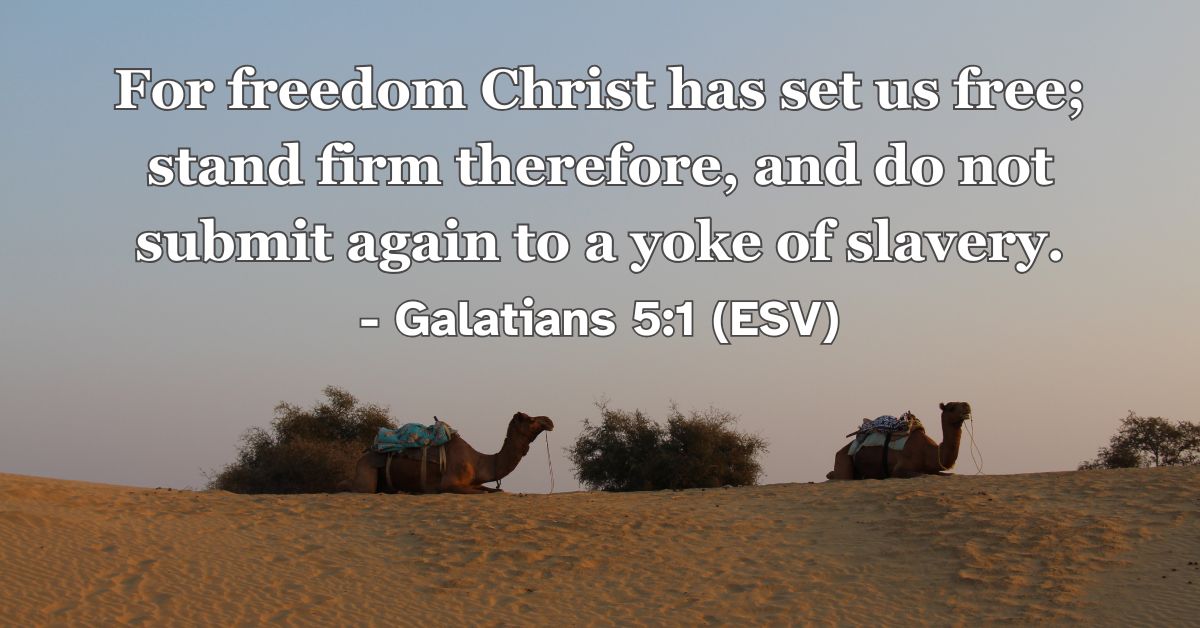
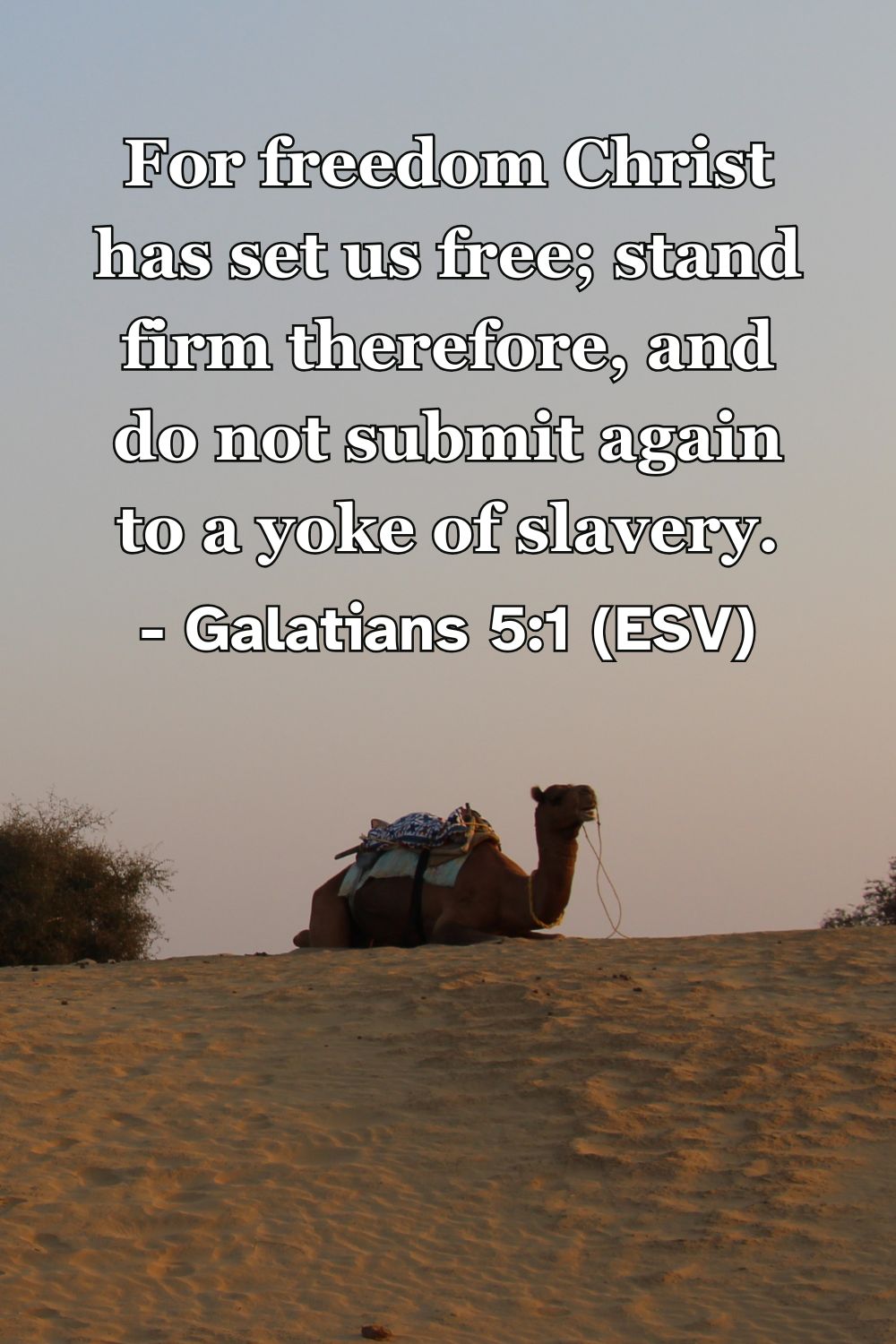
For freedom Christ has set us free; stand firm therefore, and do not submit again to a yoke of slavery.
Galatians 5:1 (ESV)
This verse stands as one of the high points of Paul’s letter to the Galatians, summarizing the gospel’s liberating message. The Galatian believers faced pressure from false teachers insisting they must adopt Jewish ceremonial practices, like circumcision, to be fully accepted by God. Paul fiercely opposes this distortion of the gospel, arguing that adding anything to Christ’s finished work turns grace into bondage. The “yoke of slavery” refers to the crushing burden of trying to earn righteousness through human effort and legal observance. Christ’s death and resurrection freed believers from both the penalty of sin and the exhausting treadmill of self-justification. Paul urges his readers to stand firm in that freedom, resisting any teaching that would draw them back into religious performance as a means of acceptance with God.
There is profound joy in knowing that Christ’s work on the cross has secured our freedom once and for all. This isn’t freedom to sin without consequence but freedom to live as redeemed people, no longer bound by fear or striving to earn God’s approval. Joy comes when we stop chasing the impossible standard of perfection and rest in the sufficiency of Christ. It reshapes how we relate to God—not as anxious servants but as grateful children. It transforms how we approach obedience, moving from obligation to delight. And it guards us against the temptation to define our worth by religious activity. The gospel of grace is not an entry point to a life of works-righteousness; it is the foundation of lasting joy and true liberty.
Reflection Question: Where are you tempted to slip back into a yoke of self-effort or legalism?
Practical Application: Identify one way you can rest in grace today—a choice to stop striving and simply receive Christ’s love.
Joy in Using Freedom to Serve Others
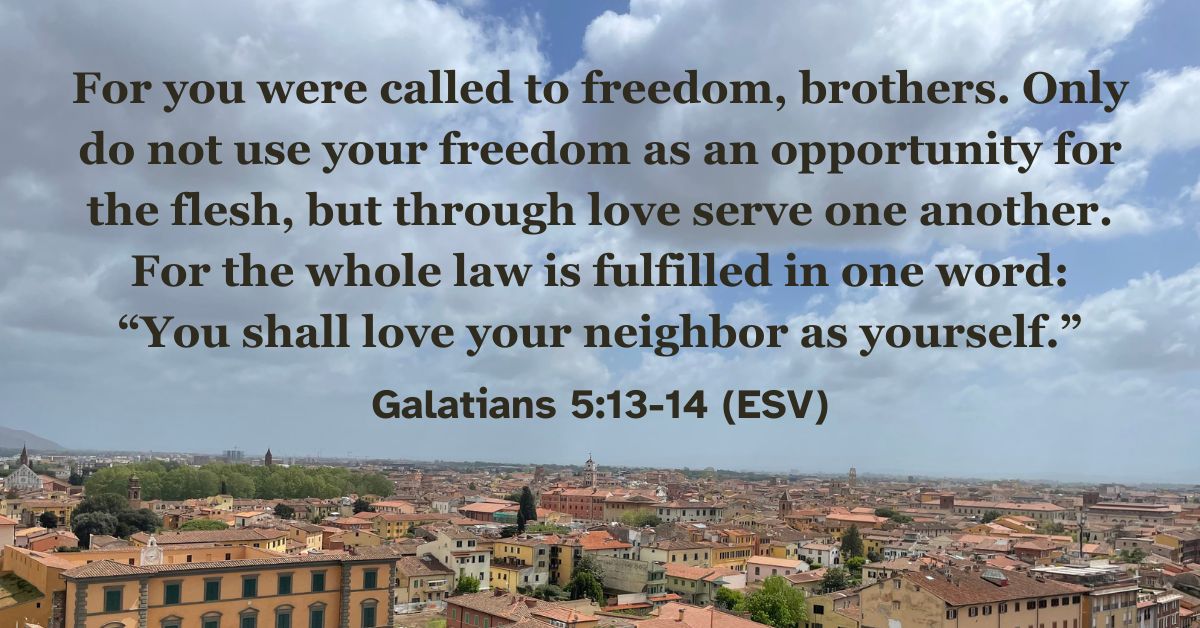
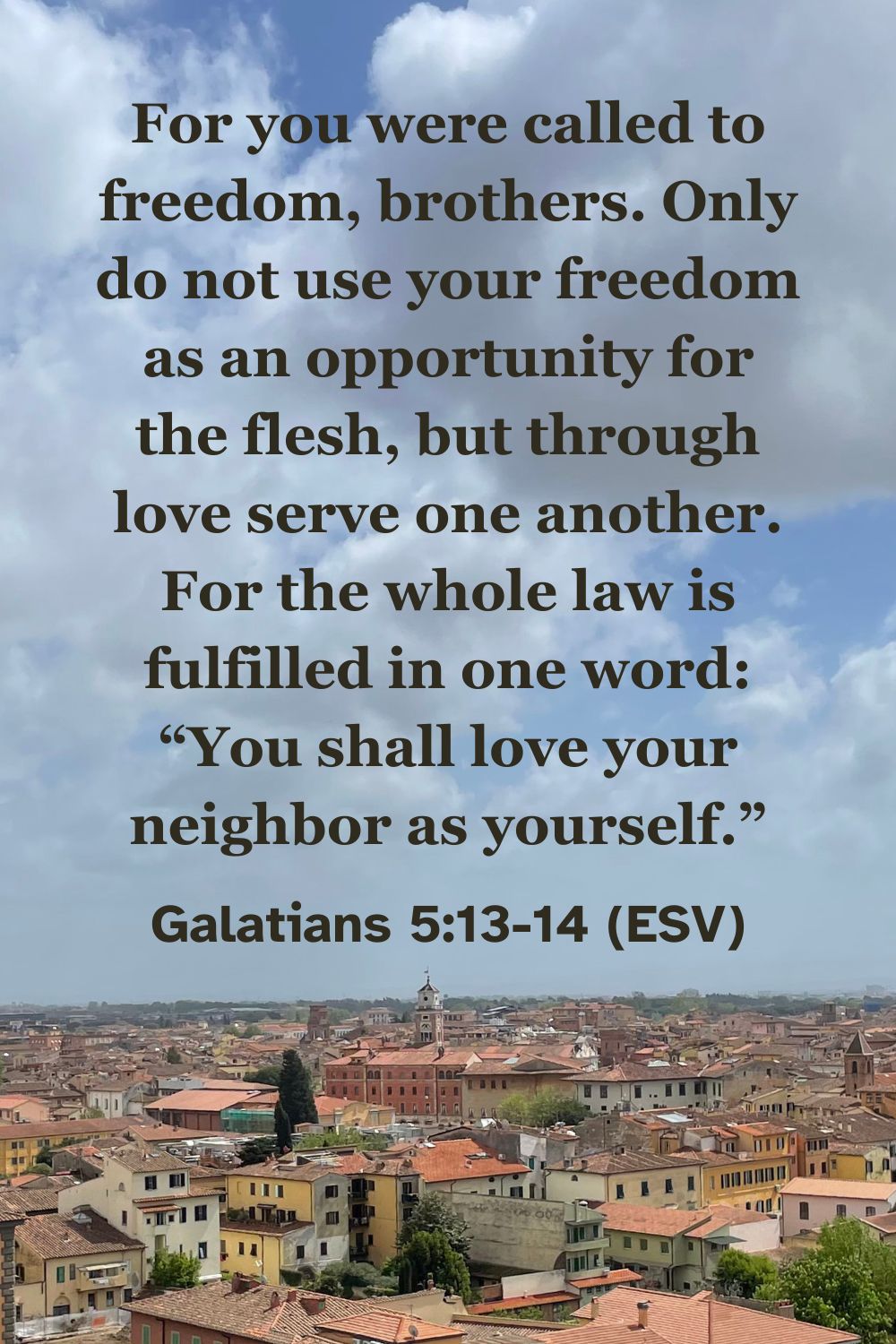
For you were called to freedom, brothers. Only do not use your freedom as an opportunity for the flesh, but through love serve one another. For the whole law is fulfilled in one word: “You shall love your neighbor as yourself.”
Galatians 5:13-14 (ESV)
Paul writes these words to believers tempted to misuse their newfound freedom in Christ. Some in the Galatian church, having rightly rejected legalism, were now leaning toward careless living, assuming grace meant a free pass to indulge their sinful desires. Paul quickly corrects this notion by reminding them of their calling: freedom is not a license for self-centeredness but an opportunity for self-giving love. The gospel frees us from sin’s penalty and power, not from the call to holiness. Paul points back to the heart of God’s moral law, fulfilled in the command to love others as ourselves. This wasn’t new; Jesus had taught the same in Matthew 22. Here, Paul shows that true Christian freedom isn’t self-serving but sacrificial, echoing Christ’s own example of laying down his life for others.
The joy of Christian freedom isn’t found in doing whatever we please but in loving others as God has loved us. When we realize we’ve been set free not to satisfy ourselves but to serve others in humility, it changes our relationships. Joy multiplies when we stop treating people as obstacles or tools and start seeing them as neighbors to be cherished. Paul’s words urge us to consider our freedom as a chance to display Christ’s love in everyday ways: through kind words, acts of service, and patient listening. Real joy grows when we give ourselves away, not out of duty but out of gratitude for the One who first gave himself for us. It’s a daily invitation to trade selfishness for love.
Reflection Question: How might you use your freedom to serve someone in love this week?
Practical Application: Offer a small, intentional act of service today—a phone call, a meal, or an encouraging note—and experience the quiet joy it brings.
Joy in the Fruit of the Spirit
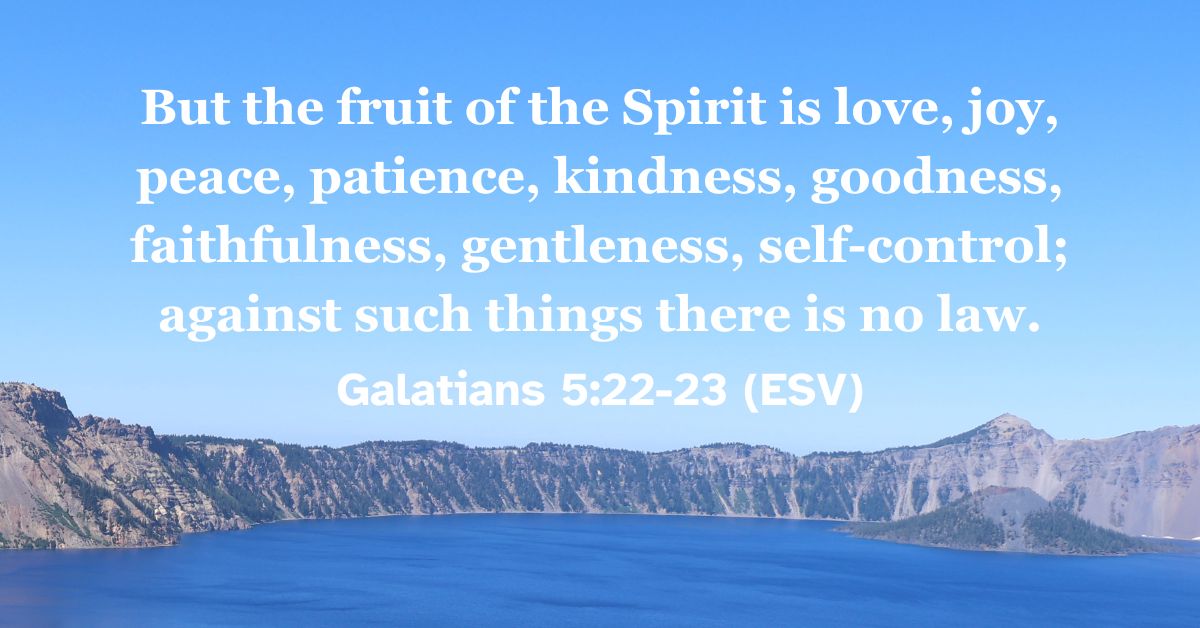
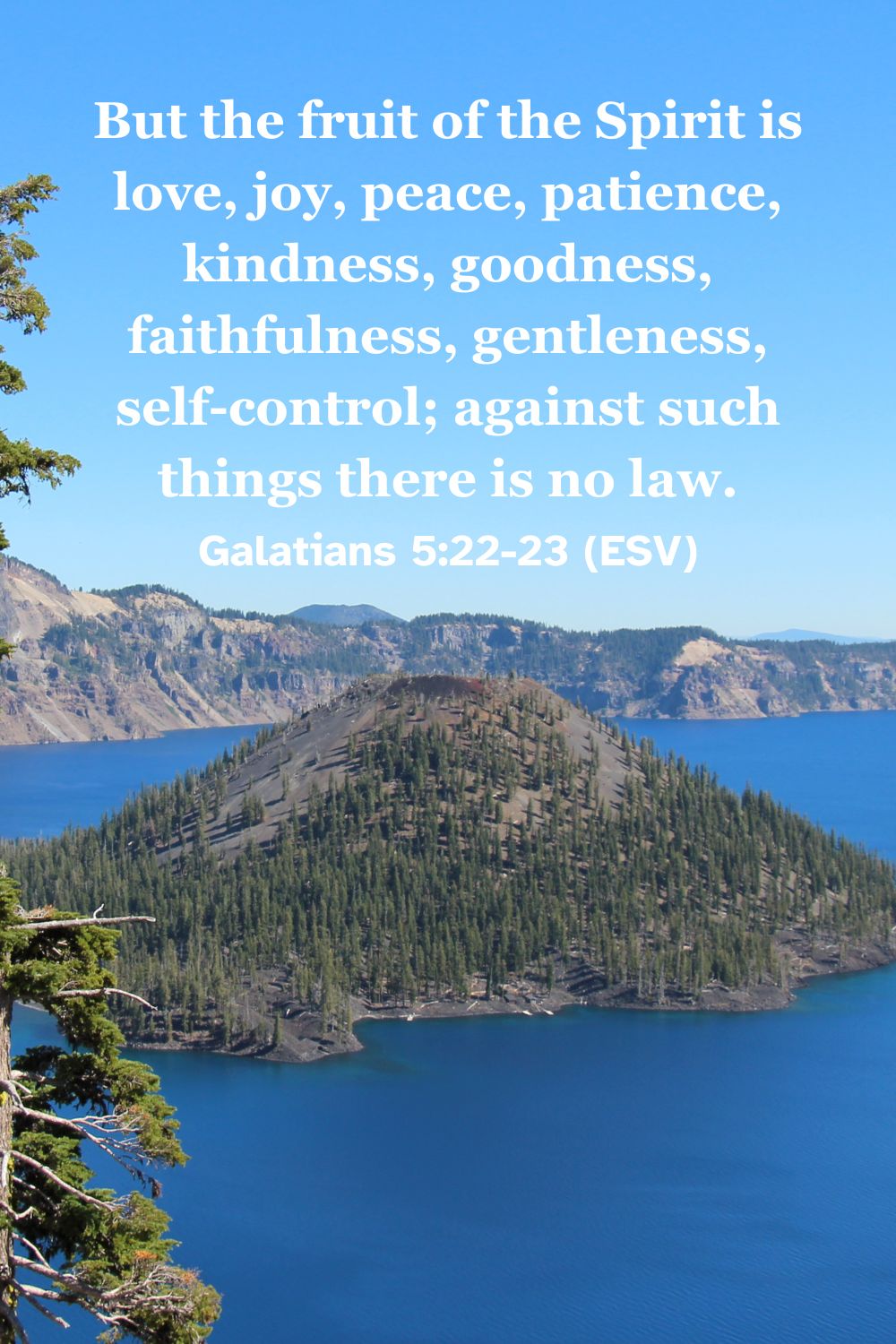
But the fruit of the Spirit is love, joy, peace, patience, kindness, goodness, faithfulness, gentleness, self-control; against such things there is no law.
Galatians 5:22-23 (ESV)
Paul places these well-loved verses near the end of a chapter that contrasts two ways of living: gratifying the desires of the flesh versus walking by the Spirit. Before listing this fruit, Paul describes the “works of the flesh”—a sobering list of destructive behaviors that enslave those outside of Christ and tempt even the believer. But then he turns to the Spirit’s work, describing the beautiful qualities that naturally grow in those who walk with God. Notice, Paul calls these attributes “fruit,” not “fruits,” signaling they’re a unified whole, not individual traits we pick and choose. These qualities flourish together under the Spirit’s influence, much like branches on a vine connected to the life-giving root. The phrase “against such things there is no law” underscores that no command can improve upon the Spirit’s work; this is life as God intended.
Among the Spirit’s fruit, joy stands out as a defining mark of Christian life. True joy isn’t circumstantial happiness or forced cheerfulness but a steady delight rooted in knowing God. As we walk with the Spirit, he cultivates joy within us, even amid trials and ordinary days. This isn’t a trait we muster on our own; it’s a product of God’s presence within us. The more we surrender to the Spirit’s leading, the more our hearts experience joy that endures beyond the temporary highs and lows of life. Joy accompanies love, peace, patience, and the rest—not as a fragile feeling but as a reflection of Christ dwelling within. And in a world often short on gladness, believers marked by this Spirit-given joy shine in surprising, gospel-centered ways.
Reflection Question: Which aspect of the Spirit’s fruit do you long to see grow in your life?
Practical Application: Pray each morning this week, asking the Spirit to cultivate one specific fruit in your heart and actions.
Joy in Persevering in Goodness
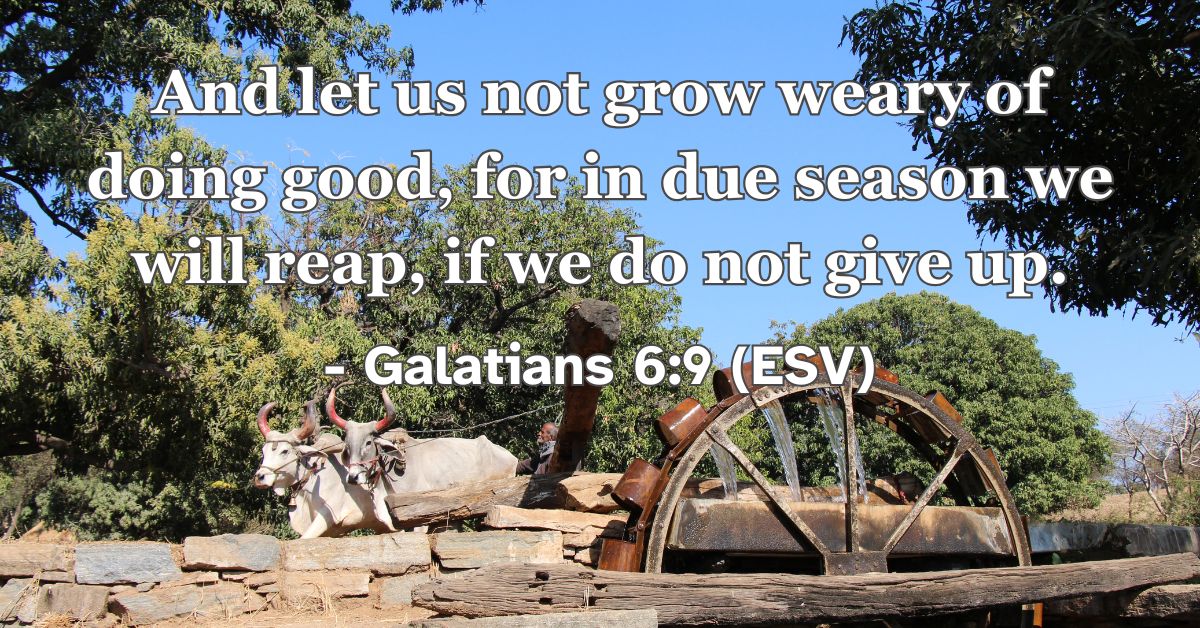
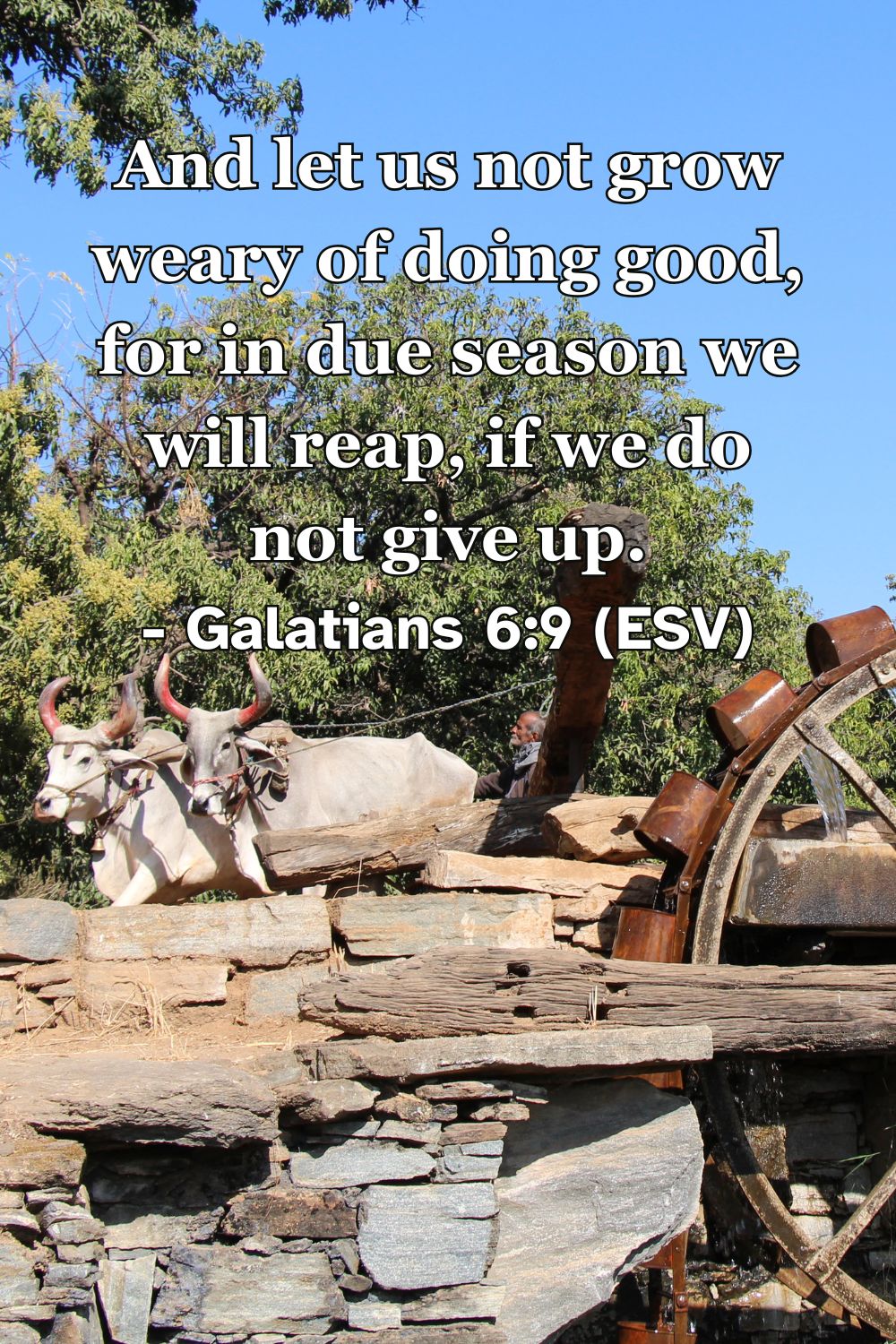
And let us not grow weary of doing good, for in due season we will reap, if we do not give up.
Galatians 6:9 (ESV)
As Paul nears the end of his letter, he encourages the Galatians to keep pressing on in faithful obedience. The church was battling legalism, division, and discouragement, and it would have been tempting to give up on doing good. This verse acknowledges the reality of weariness in the Christian life. Following Christ in a fallen world isn’t effortless—it requires patience, sacrifice, and resolve. Paul reminds them that their labor isn’t in vain. The image of a harvest would have connected with his readers, many of whom lived in agricultural settings where sowing and reaping required time and trust. Not every seed produced immediate fruit, but the harvest always came in its season. Likewise, God promises a spiritual harvest for those who persevere in doing good, even when the results seem slow or unseen.
There is deep joy in knowing that our small, faithful acts matter to God. While the world prizes immediate results and visible success, the kingdom of God often works through quiet persistence. Encouraging a discouraged friend, teaching a Sunday school class, praying for a struggling neighbor—these aren’t wasted efforts. In Christ, no act of goodness is forgotten. God sees, and he promises a harvest, though it may arrive in a different season than we expect. Joy grows when we realize that perseverance itself is evidence of God’s sustaining grace. Every day we refuse to give up, we’re walking in step with his Spirit. That’s a reason to rejoice, even when the path feels long.
Reflection Question: Where are you tempted to give up doing good?
Practical Application: Encourage someone else who is faithfully doing good this week—a simple text or note can renew a weary heart.
Joy in Boasting Only in the Cross

But far be it from me to boast except in the cross of our Lord Jesus Christ, by which the world has been crucified to me, and I to the world.
Galatians 6:14 (ESV)
In Paul’s final words to the Galatians, he makes a bold declaration. Though others might boast in their religious achievements or earthly status, Paul refuses to glory in anything but the cross. This was a radical statement in the first century. The cross wasn’t a beautiful symbol or a piece of jewelry then—it was a shameful instrument of execution. But to Paul, the cross was everything. Through it, his old life died, and a new life in Christ began. Paul’s identity, security, and hope no longer rested in the world’s approval or religious accolades. He was crucified to the world, meaning its values, ambitions, and judgments no longer held power over him. And in turn, the world saw Paul as dead to its system.
There’s surprising joy in letting go of lesser boasts and clinging to the cross. Our culture tempts us to stake our worth in achievements, appearance, or applause. Yet those things can’t rescue us, satisfy us, or last. The cross reminds us that our greatest problem—sin—has been dealt with, and our greatest treasure—Christ—is secure. When we boast in the cross, we’re freed from the exhausting race for approval. We can rest in grace, confident that what matters most has already been accomplished. And as we keep our eyes on Jesus, joy rises—not from what we do, but from what’s been done for us.
Reflection Question: What worldly things tempt you to boast in besides the cross?
Practical Application: When you catch yourself seeking validation from achievements, pause and thank Christ for the cross that defines your worth.
Joy in the Unchanging Reality of Who Christ Is
The joy offered in Galatians isn’t dependent on perfect circumstances or flawless spiritual performance. It is rooted in the unchanging reality of who Christ is and what he has done for us. Through Paul’s words, we are reminded that grace is a gift, freedom is secure, and our identity is firmly anchored in Jesus. As modern believers navigating a world that still whispers lies about self-worth and performance-based acceptance, these ancient truths breathe fresh life into our faith journeys.
Whether you are struggling with weariness, loneliness, or the temptation to earn God’s approval, the message of Galatians offers steady hope. Joy comes not from striving, but from resting in the sufficiency of Christ’s sacrifice and embracing the freedom he gives. As we reflect on these ten Bible verses, may we be stirred to cling to the cross, walk by the Spirit, and persevere in doing good—not to earn favor, but because we are already deeply loved. The joy Paul speaks of is ours to claim, not just in heaven, but here and now.
Reflective Prayer
Consider using these verses to pray using the ACTS method: Adoration, Confession, Thankfulness, and Supplication:
- Adoration: Praise God. Do these verses bring any specific characteristics of God to mind?
- Confession: Tell God that you are sorry for specific sins. Do these verses bring any specific sins to mind?
- Thankfulness: Show gratitude towards God. Does anything from these verses inspire gratitude?
- Supplication: Make requests for yourself and for others. Does anything from these verses inspire a prayer?
If helpful, you can use a prayer journal template.




Subscribe
If you enjoyed this post and wish to receive more Christian content, feel free to subscribe to my newsletters!
Related Resources
Visit the Joyful Moments in Christ homepage for all posts, or scroll through other blog posts related to Galatians:









Something went wrong. Please refresh the page and/or try again.
English Standard Version (ESV): Unless otherwise noted, scripture quotations are from the ESV® Bible (The Holy Bible, English Standard Version®), © 2001 by Crossway, a publishing ministry of Good News Publishers. Used by permission. All rights reserved. The ESV text may not be quoted in any publication made available to the public by a Creative Commons license. The ESV may not be translated in whole or in part into any other language.




 Joyful Moments in Christ