
The story of Apollos in Acts 18:24-28 reminds us that even the most gifted teachers sometimes need gentle and tactful guidance. Apollos arrived in Ephesus full of passion and eloquence, but his knowledge of Jesus was incomplete. Though he boldly taught in the synagogue, he knew only the baptism of John. Priscilla and Aquila saw his potential and chose a wise, compassionate approach—taking him aside to share a fuller understanding of the gospel message, deepening his discipleship journey.
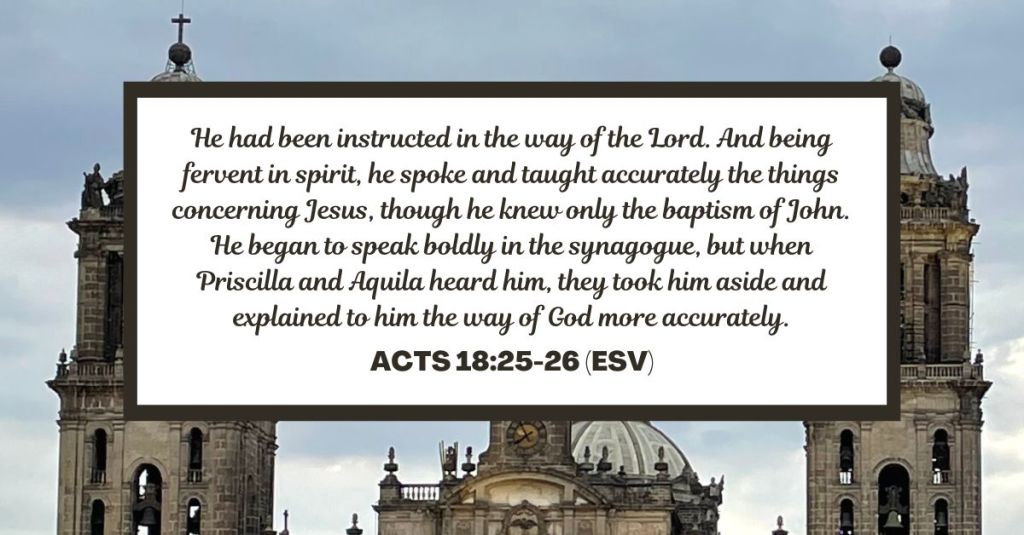
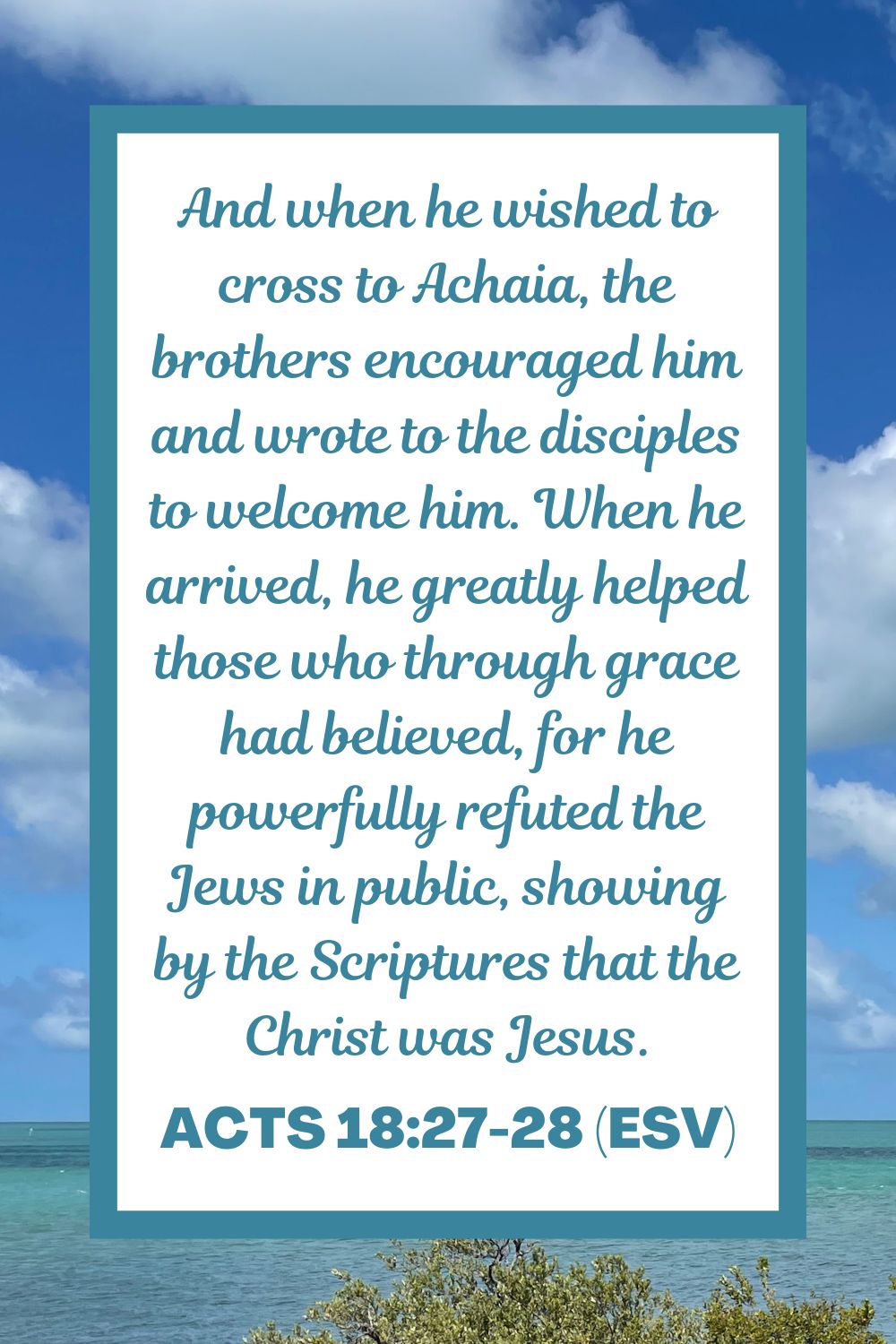
Now a Jew named Apollos, a native of Alexandria, came to Ephesus. He was an eloquent man, competent in the Scriptures. He had been instructed in the way of the Lord. And being fervent in spirit, he spoke and taught accurately the things concerning Jesus, though he knew only the baptism of John. He began to speak boldly in the synagogue, but when Priscilla and Aquila heard him, they took him aside and explained to him the way of God more accurately. And when he wished to cross to Achaia, the brothers encouraged him and wrote to the disciples to welcome him. When he arrived, he greatly helped those who through grace had believed, for he powerfully refuted the Jews in public, showing by the Scriptures that the Christ was Jesus.
Acts 18:24-28 (ESV)
This story presents two important lessons. First, it emphasizes the value of mentorship and wise correction in ministry. Apollos’s initial teachings, though sincere, could have left gaps in the faith of his listeners, missing the transformative message of Christ’s life and resurrection. By taking the time to help Apollos grow in knowledge, Priscilla and Aquila ensured that Ephesus received the full richness of Jesus’ teachings. Their example calls us to engage in thoughtful, loving guidance when clarifying theology to strengthen the church community.
Second, the passage illustrates the importance of a teachable spirit. Apollos, being skilled and passionate, might easily have felt resistant to correction. Yet, his humbleness allowed him to become a powerful advocate for Christ, especially among the Jewish community. His willingness to listen enabled him to present a stronger, clearer witness to Jesus as the Messiah, strengthening the faith of others and building unity among Christians.

Priscilla, Aquila, and Apollos reveal how mentorship, discipleship, and humility can shape believers for a more impactful ministry. By embracing growth—whether through offering or receiving instruction—we strengthen our witness and enrich the faith of others.
Reflection Questions
- How does Priscilla and Aquila’s approach to guiding Apollos illustrate the role of mentorship and discipleship in church communities?
- In what ways might we benefit from a spirit of humility and openness to correction, as Apollos demonstrated?
- Why might it be essential to balance passion for teaching with accuracy in understanding?
- How can thoughtful and private guidance, like that shown by Priscilla and Aquila, foster growth without discouraging others?
- What role does teachability play in helping us share a clearer and stronger witness of Christ with those around us?
- How might we apply the principles of encouragement and correction from this story to strengthen unity within our own community?
- What are some ways to identify and support potential in others who may need further understanding in their spiritual journey?
Reflective Prayer


Use these verses to pray using the ACTS method: Adoration, Confession, Thankfulness, Supplication
- Adoration: Praise God. Do these verses bring any specific characteristics of God to mind?
- Confession: Tell God that you are sorry for specific sins. Do these verses bring any specific sins to mind?
- Thankfulness: Show gratitude towards God. Does anything from these verses inspire gratitude?
- Supplication: Make requests for yourself and for others. Does anything from these verses inspire a prayer?
If helpful, you can use a prayer journal template.
Subscribe
If you enjoyed this post and wish to receive more Christian content, feel free to subscribe to my newsletters!
Related Resources
Visit the Joyful Moments in Christ homepage for all posts, or scroll through other blog posts related to mentorship, discipleship, teaching, humbleness, and humility:



Something went wrong. Please refresh the page and/or try again.
English Standard Version (ESV): Unless otherwise noted, scripture quotations are from the ESV® Bible (The Holy Bible, English Standard Version®), © 2001 by Crossway, a publishing ministry of Good News Publishers. Used by permission. All rights reserved. The ESV text may not be quoted in any publication made available to the public by a Creative Commons license. The ESV may not be translated in whole or in part into any other language.


 Joyful Moments in Christ