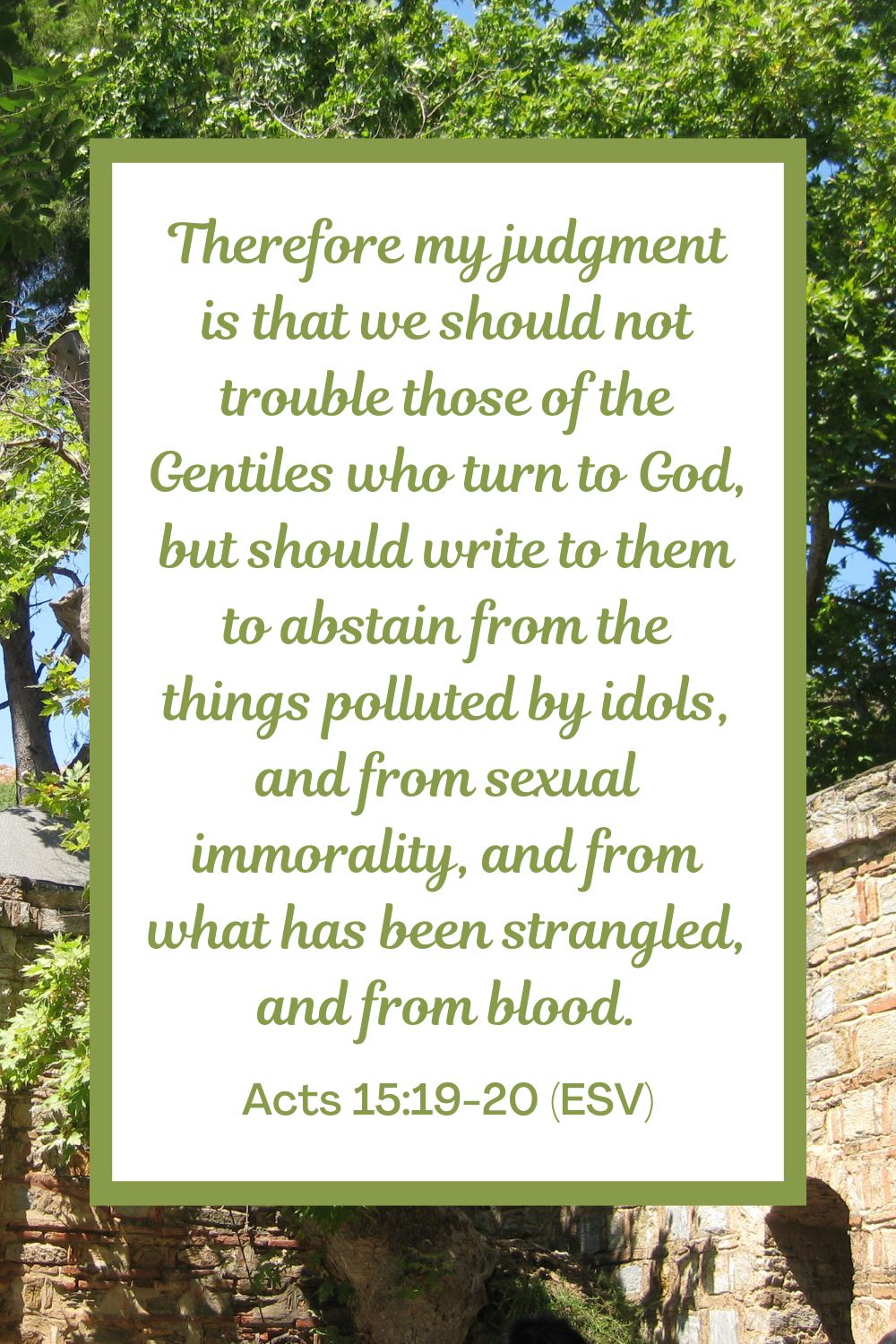
Therefore my judgment is that we should not trouble those of the Gentiles who turn to God, but should write to them to abstain from the things polluted by idols, and from sexual immorality, and from what has been strangled, and from blood. – Acts 15:19-20 (ESV)
During the Jerusalem Council, the early church leaders faced a pivotal question: how should the New Covenant apply to Gentiles? Many of the Old Testament laws were a huge barrier to new converts and the worry was that they would quickly fall away due to the difficulty of following Jewish customs. The apostles discussed which Old Testament laws, particularly those regarding morality and purity, should still be observed by Gentile believers.
It was agreed that ceremonial laws—such as circumcision and dietary restrictions—pointed to the coming of Christ and were thus fulfilled in Him, making them optional for Gentiles. Baptism would replace circumcision, and dietary laws like keeping kosher were no longer binding, though food sacrificed to idols remained prohibited. This decision was not made lightly. Old Testament laws were deeply ingrained in Jewish culture, and the early church sought to balance spiritual purity with freedom in Christ.
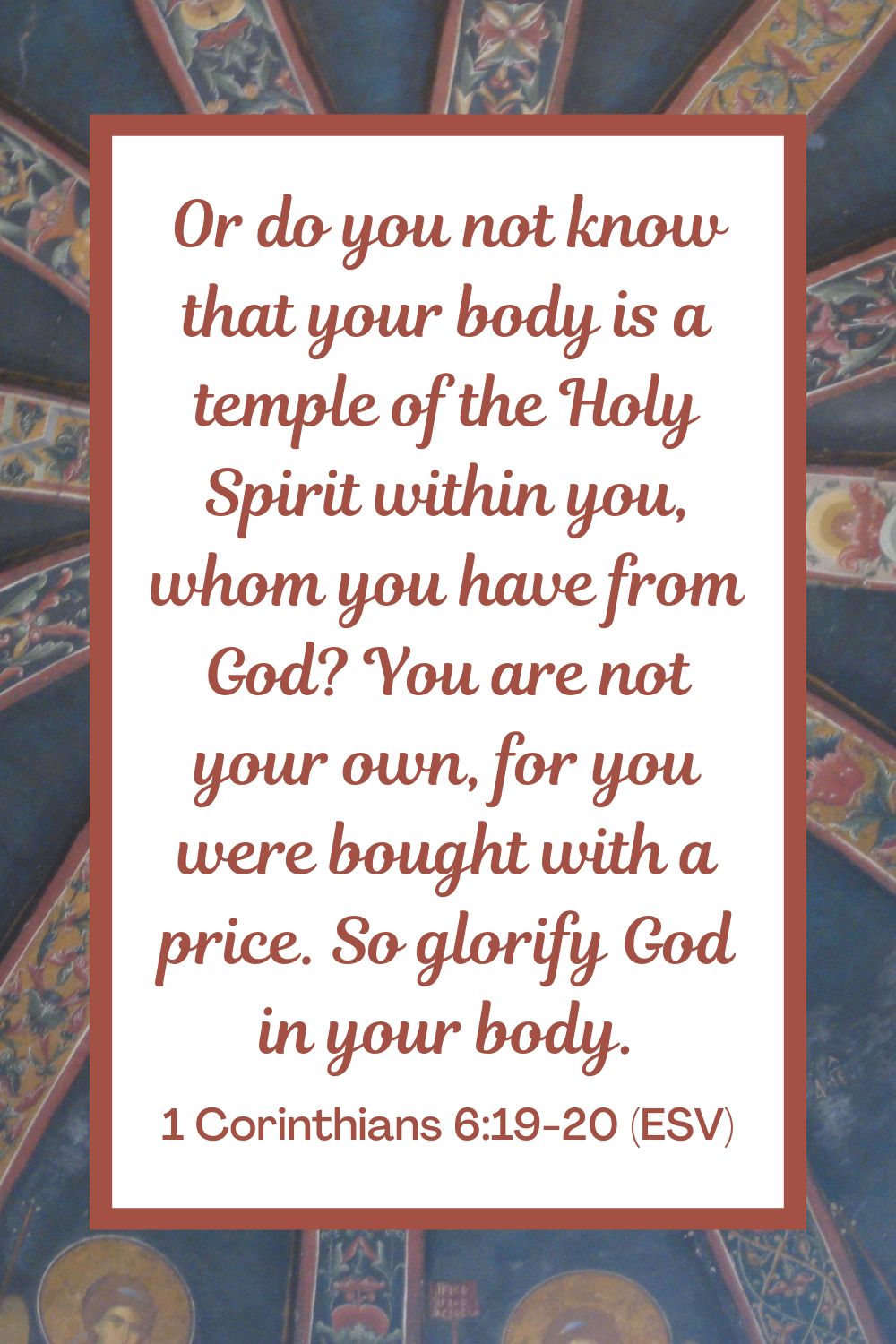
While some practices became optional, the early church maintained a strong stance on moral integrity, particularly regarding sexual purity. For a community that believed the body is a temple of the Holy Spirit, defiling it through sexual immorality was unacceptable. As Paul emphasizes in 1 Corinthians 6:19-20, our bodies are bought at a price and should be treated with honor. The early Christians viewed sexual immorality as a direct violation of the body’s sacred purpose.
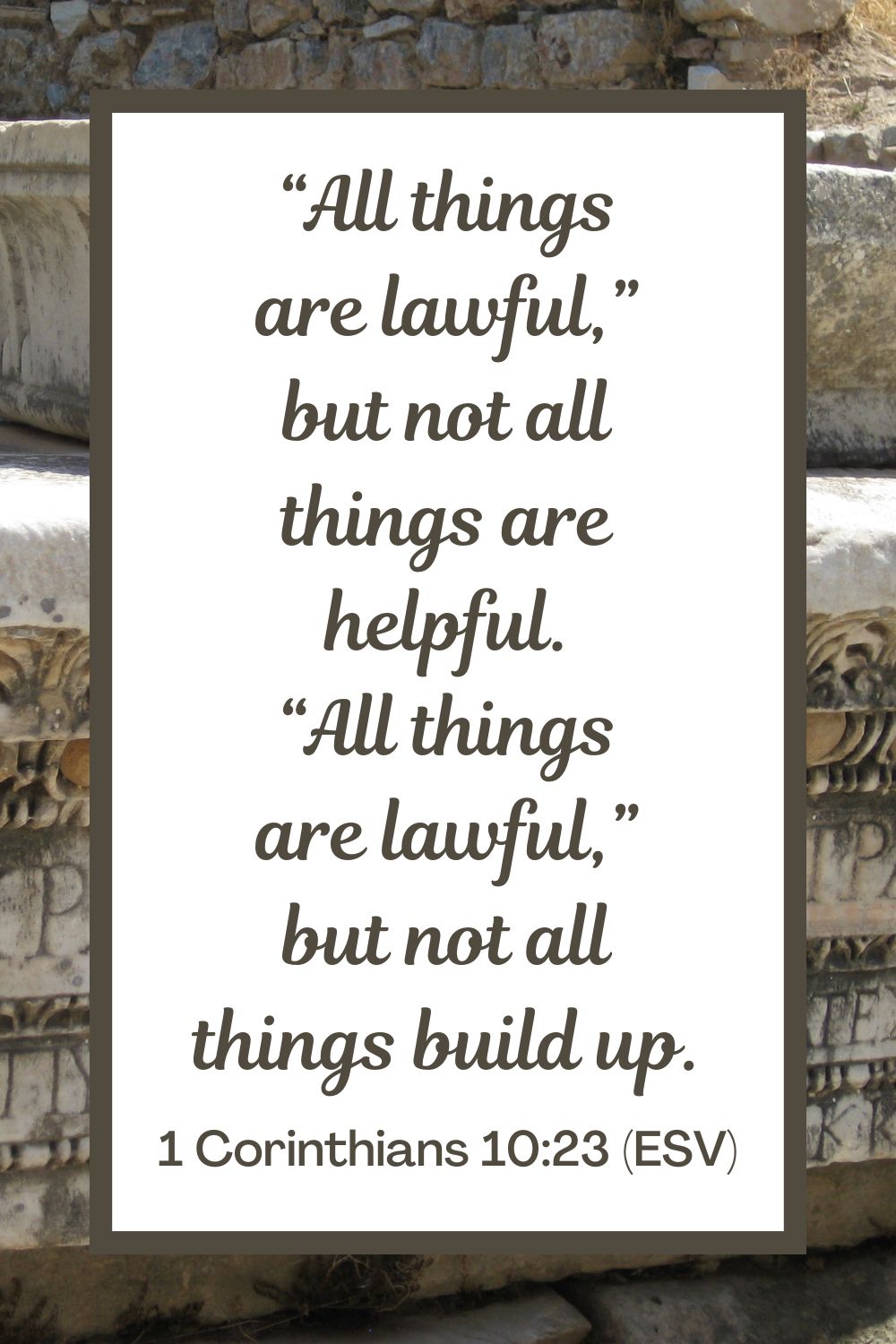
While many of the decision are still agreed on today, certain prohibitions, like the consumption of blood, continue to spark debate today. Despite a few irregularities, these initial guidelines were designed to help Gentile believers to use their own discernment to maintain purity without falling into legalism. Over and over again, Jesus taught that the heart of the law mattered more than strict adherence to its letter. Paul continues the same message that following Christ is not a license for indulgence. 1 Corinthians 10:23 (ESV) tells us: “All things are lawful, but not all things are helpful.”
Additional reading: Law, Grace, and Inclusivity: Lessons from Acts 10:47-48 and Beyond
Honoring the body as a temple goes far beyond abstaining from specific acts of immorality—it invites believers to cultivate a lifestyle that reflects God’s holiness in all areas, including thoughts, actions, and relationships. In a modern culture that promotes self-gratification, this message is more relevant than ever. The early Christians understood that following God wasn’t about mere rule-keeping; it was about embodying God’s love, holiness, and integrity through intentional choices that align with His will.
As believers, we are called not just to abstain from sin, but to actively pursue holiness. By making choices that reflect the values of God’s kingdom—in our relationships, speech, and daily conduct—we honor Him with the bodies He has entrusted to us.
Reflection Questions
- Why was sexual purity emphasized by the early church, even as other laws were relaxed?
- How does focusing on the heart of the law shape our approach to Christian living today?
- How can we responsibly use the freedom we have in Christ while maintaining moral integrity?
- What does honoring the body as a temple of the Holy Spirit look like in daily life?
- In what ways do our everyday decisions reflect God’s holiness and values?
Reflective Prayer
Use these verses to pray using the ACTS method: Adoration, Confession, Thankfulness, Supplication
- Adoration: Praise God. Do these verses bring any specific characteristics of God to mind?
- Confession: Tell God that you are sorry for specific sins. Do these verses bring any specific sins to mind?
- Thankfulness: Show gratitude towards God. Does anything from these verses inspire gratitude?
- Supplication: Make requests for yourself and for others. Does anything from these verses inspire a prayer?
If helpful, you can use a prayer journal template.
Subscribe
If you enjoyed this post and wish to receive more Christian content, feel free to subscribe to my newsletters!
Related Resources
Visit the Joyful Moments in Christ homepage for all posts, or scroll through other blog posts related to freedom and holiness:





Something went wrong. Please refresh the page and/or try again.
English Standard Version (ESV): Unless otherwise noted, scripture quotations are from the ESV® Bible (The Holy Bible, English Standard Version®), © 2001 by Crossway, a publishing ministry of Good News Publishers. Used by permission. All rights reserved. The ESV text may not be quoted in any publication made available to the public by a Creative Commons license. The ESV may not be translated in whole or in part into any other language.

 Joyful Moments in Christ