
Week 4: Exploring Luke 16-20
In the fourth week of our quest to read the New Testament in a year, we will explore Luke 16-20. In chapter 16, Jesus addresses finances, presenting a curious parable about dishonest wealth and sharing the story of a rich man and a beggar named Lazarus. These stories provoke reflection on our attitudes towards money and the eternal consequences of our earthly actions.

One who is faithful in a very little is also faithful in much, and one who is dishonest in a very little is also dishonest in much. – Luke 16:10 (ESV)
In the remaining chapters, Jesus speaks about the coming Kingdom of God, predicts His death, brings salvation to a tax collector named Zacchaeus, performs healings, tells additional parables, and gives warnings. Each of these sections provides valuable lessons on faith, humility, and the transformative power of encountering Jesus.
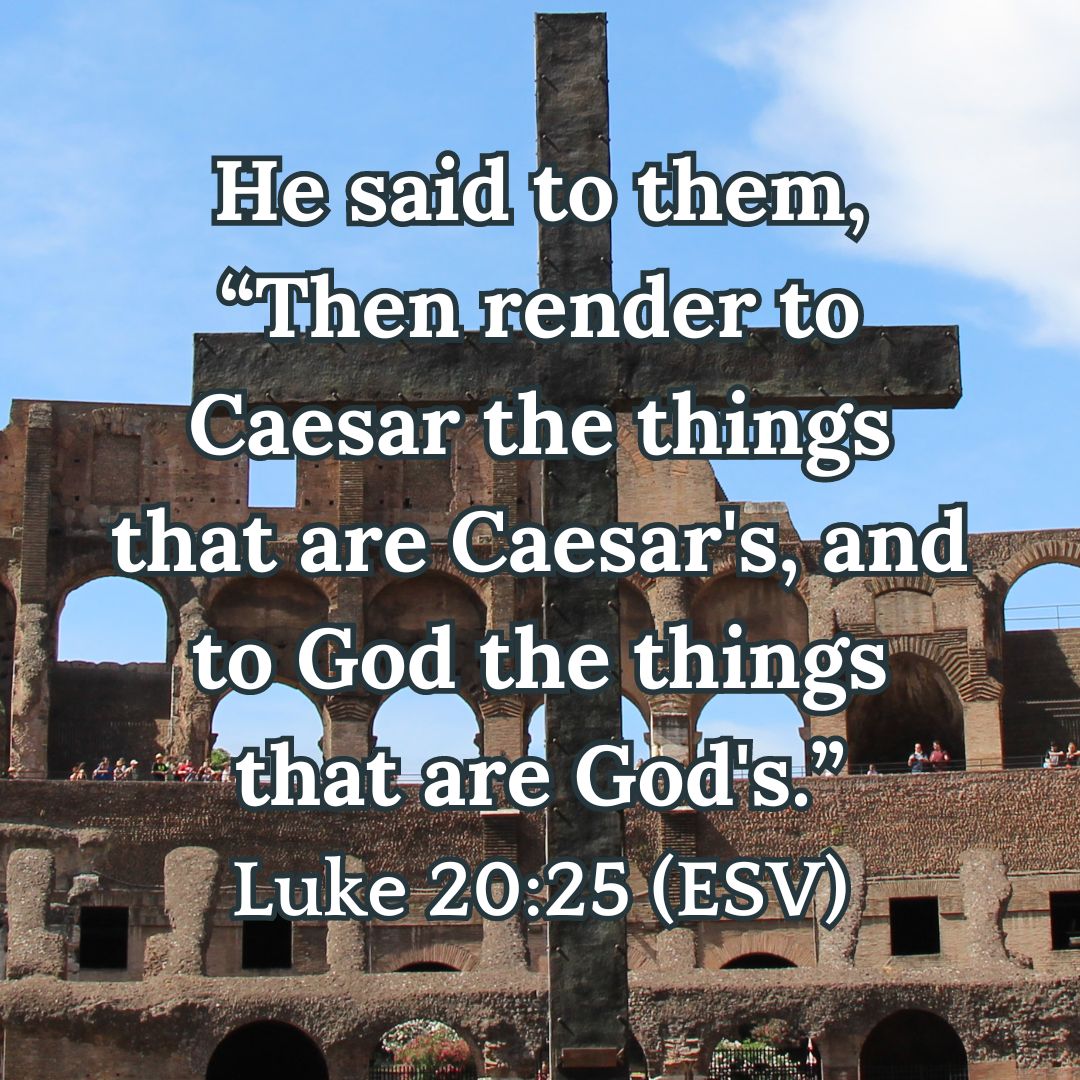
He said to them, “Then render to Caesar the things that are Caesar’s, and to God the things that are God’s.” – Luke 20:25 (ESV)
Moreover, we will witness Jesus’ triumphal entry into Jerusalem, His lament over the city, and His cleansing of the temple. These significant events highlight Jesus’ authority, His heart for the people, and His desire for true worship and justice.

…“Blessed is the King who comes in the name of the Lord! Peace in heaven and glory in the highest!” – Luke 19:38 (ESV)
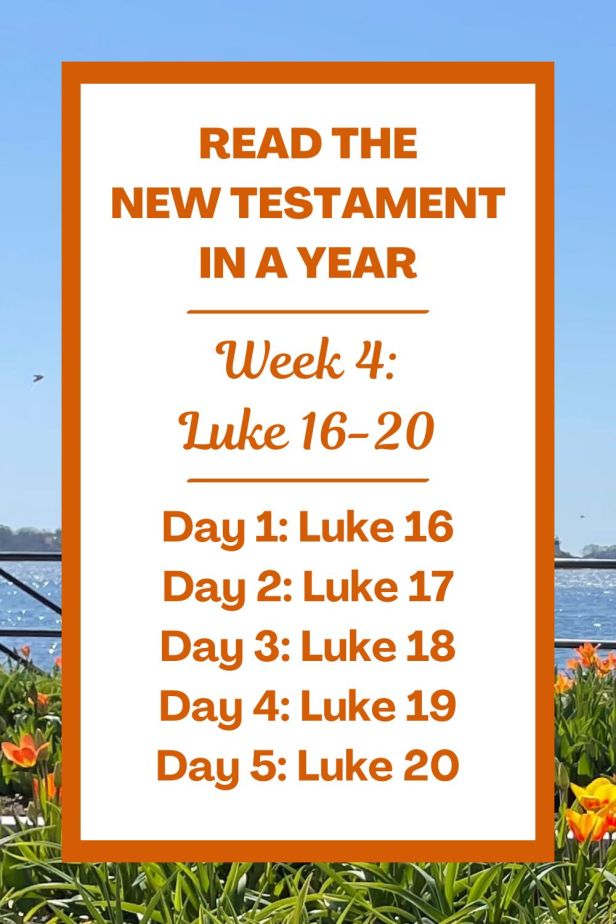
Week 4: New Testament Reading Assignment
Each week, we will read 5 chapters of the New Testament. Some people may prefer to read during the weekdays, while others might enjoy doing most of their reading on the weekends. Choose the method that works best for you!
Printable Resource:
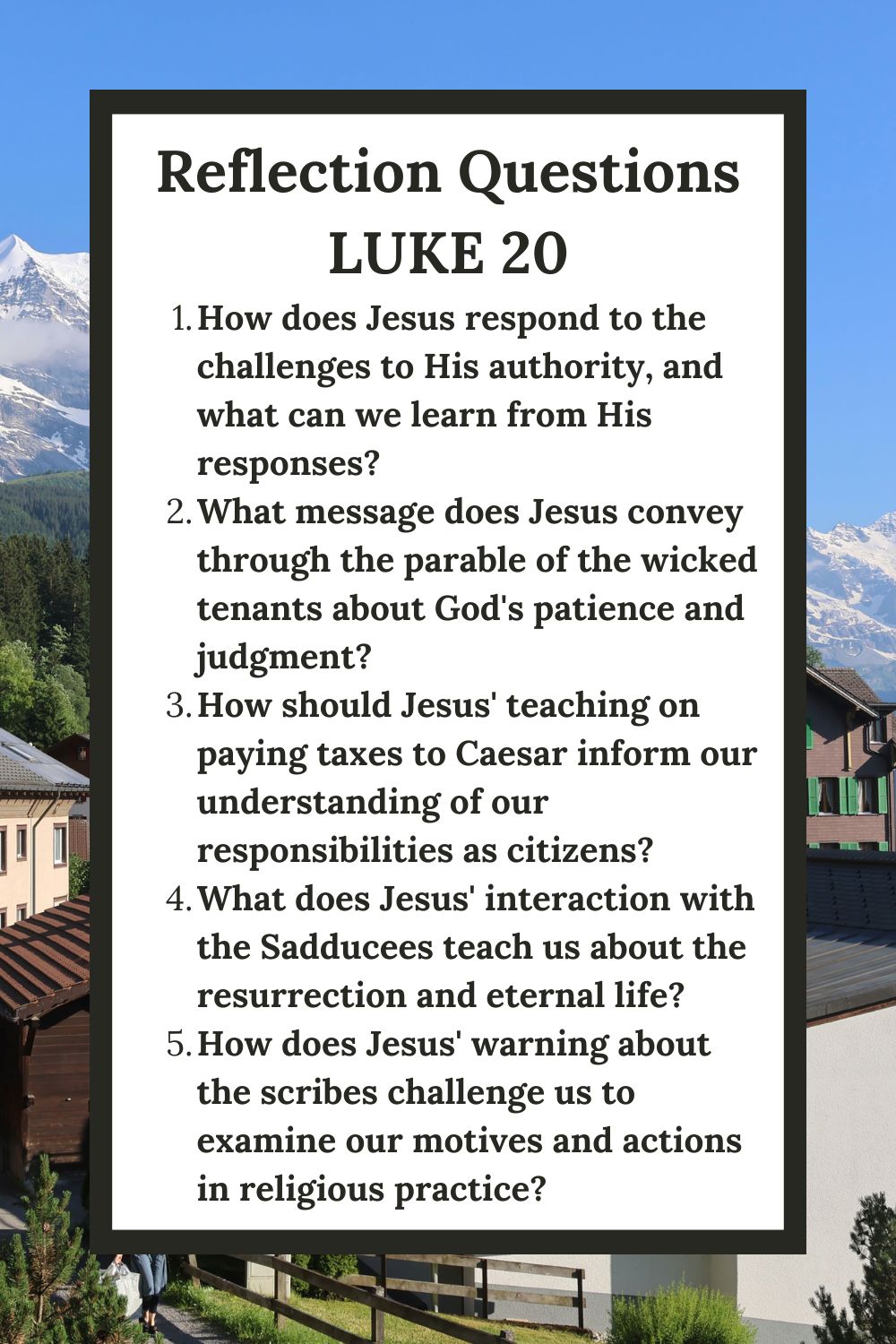
Week 4: Reflection Questions for Luke 16-20
Consider the following reflection questions:
Luke 16: Stewardship and Wealth
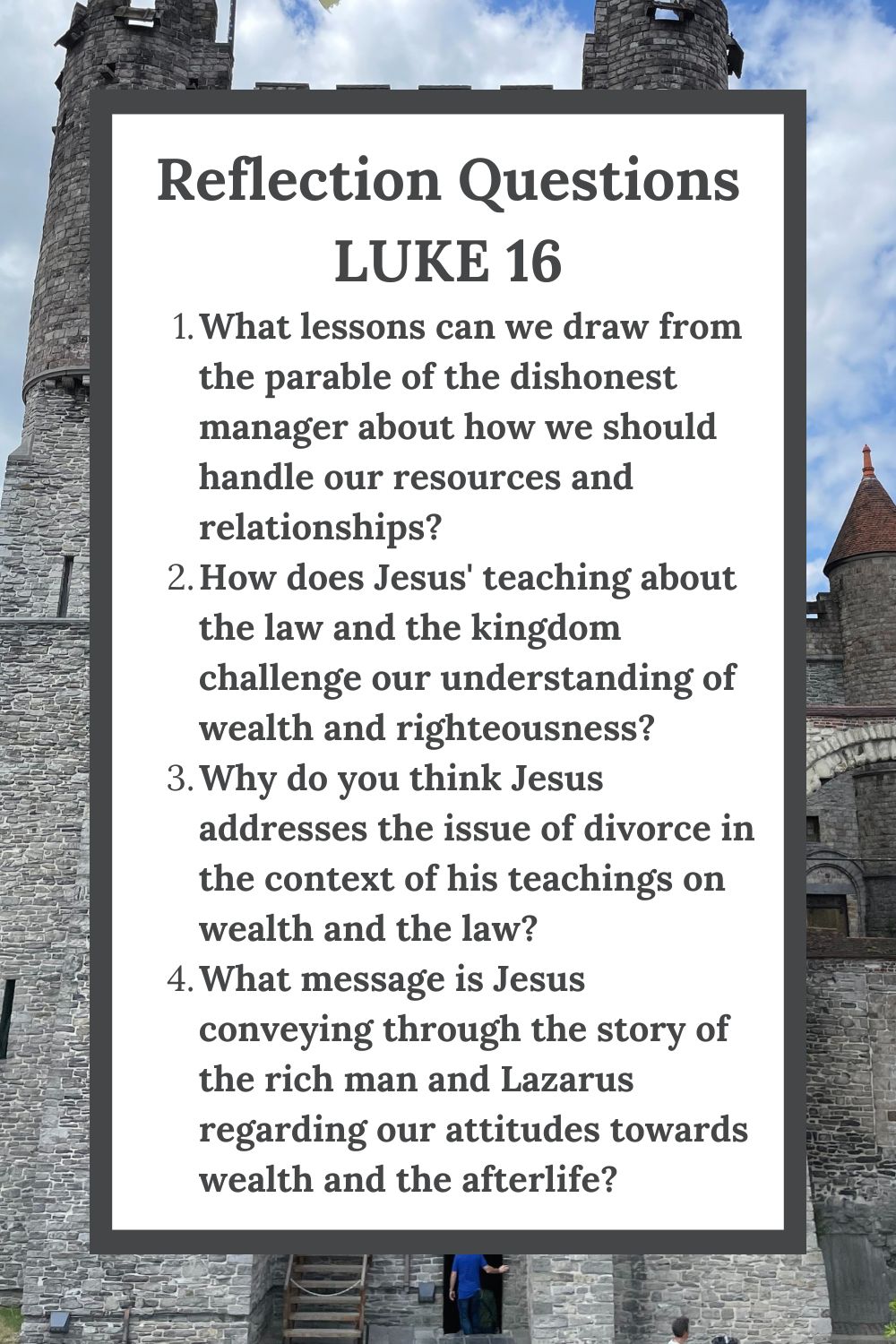
- What lessons can we draw from the parable of the dishonest manager about how we should handle our resources and relationships?
- How does Jesus’ teaching about the law and the kingdom challenge our understanding of wealth and righteousness?
- Why do you think Jesus addresses the issue of divorce in the context of his teachings on wealth and the law?
- What message is Jesus conveying through the story of the rich man and Lazarus regarding our attitudes towards wealth and the afterlife?
Luke 17: Faith and Gratitude
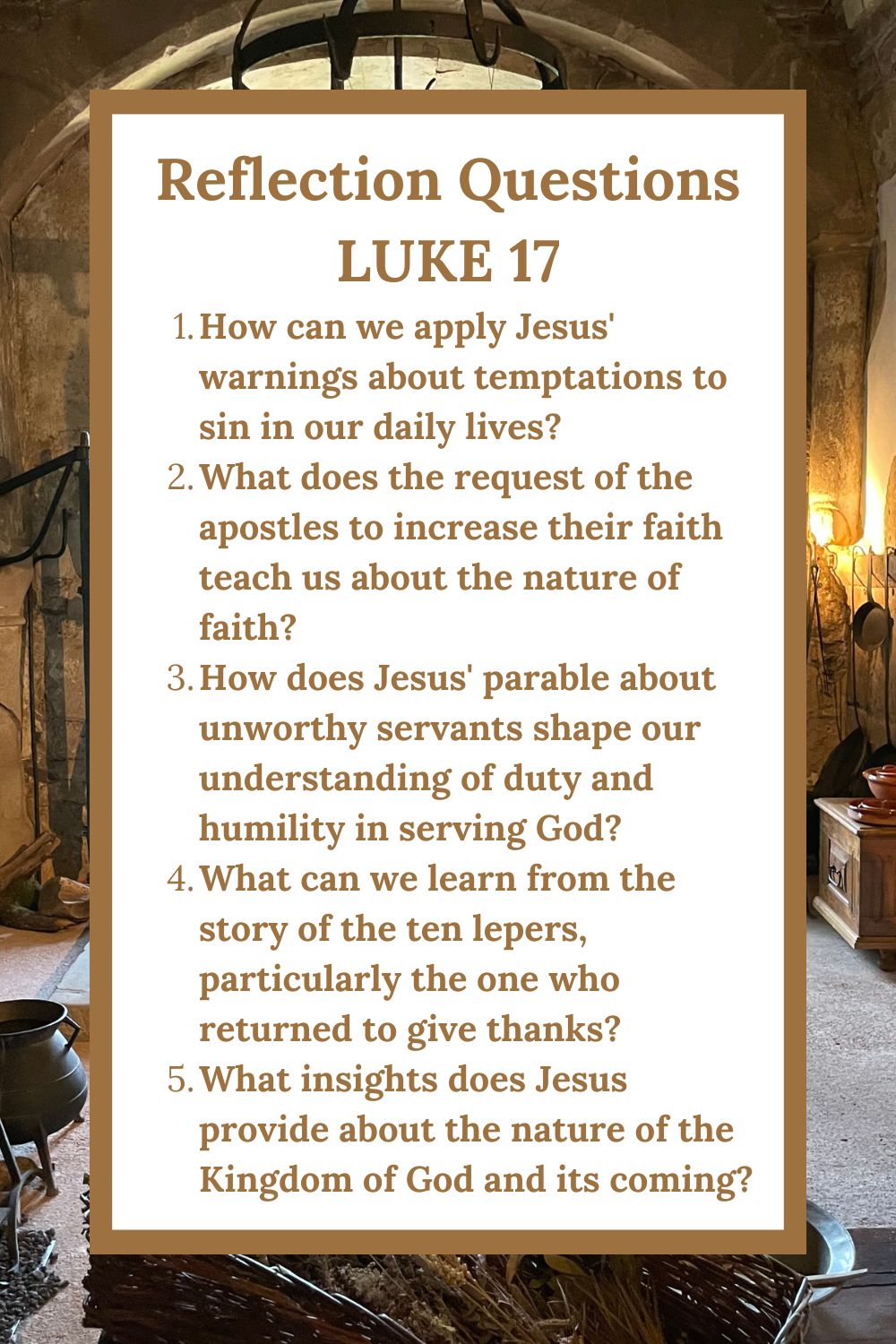
- How can we apply Jesus’ warnings about temptations to sin in our daily lives?
- What does the request of the apostles to increase their faith teach us about the nature of faith?
- How does Jesus’ parable about unworthy servants shape our understanding of duty and humility in serving God?
- What can we learn from the story of the ten lepers, particularly the one who returned to give thanks?
- What insights does Jesus provide about the nature of the Kingdom of God and its coming?
Luke 18: Prayer and Humility
- What does the parable of the persistent widow teach us about prayer and perseverance?
- How does the parable of the Pharisee and the tax collector challenge our attitudes towards self-righteousness and humility?
- What can we learn from Jesus’ attitude towards children in this passage?
- How should Jesus’ conversation with the rich ruler influence our understanding of wealth and discipleship?
- Why is it significant that Jesus repeatedly predicts His death and resurrection?
- What does the healing of the blind beggar reveal about faith and Jesus’ compassion?
Luke 19: Salvation and Judgment
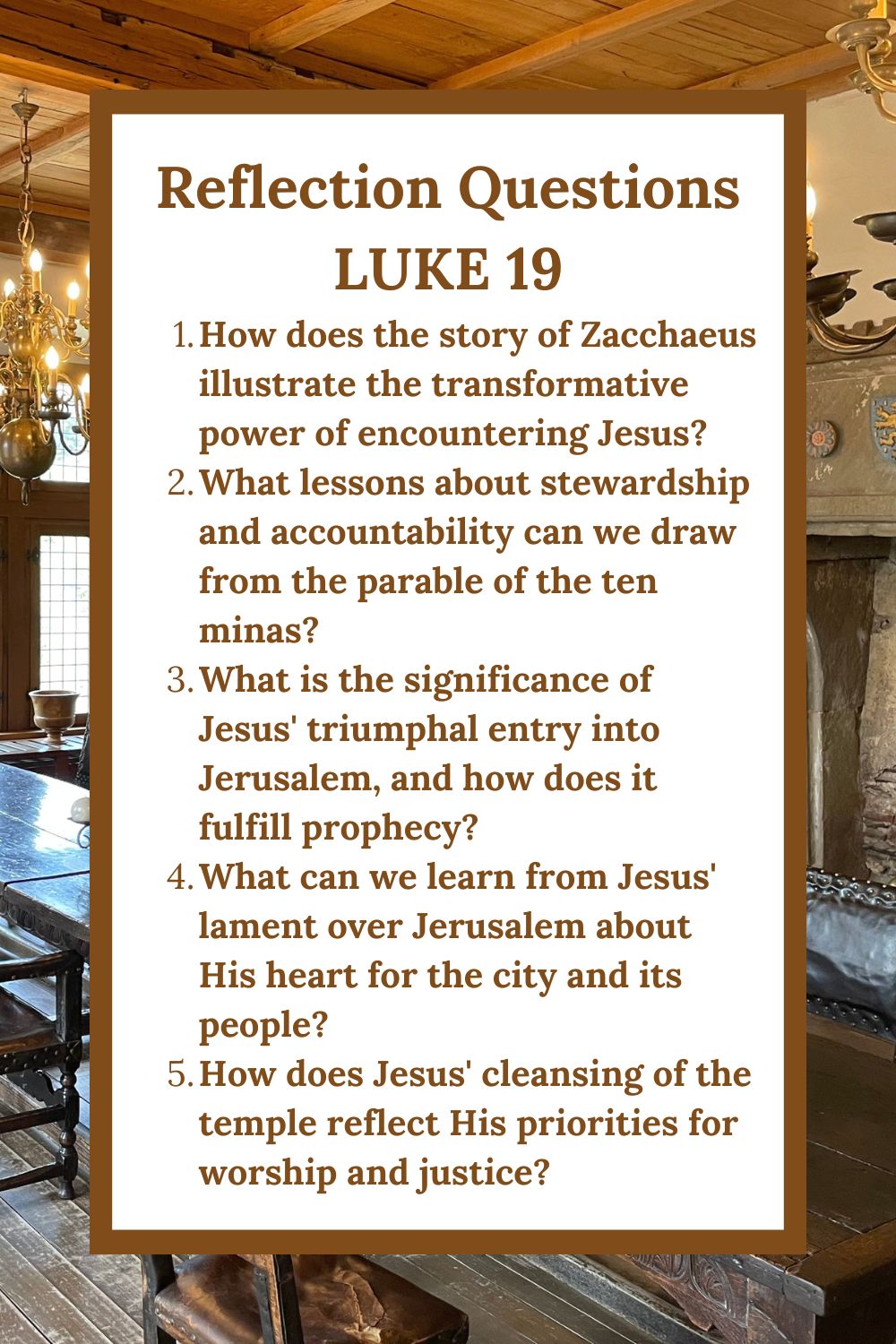
- How does the story of Zacchaeus illustrate the transformative power of encountering Jesus?
- What lessons about stewardship and accountability can we draw from the parable of the ten minas?
- What is the significance of Jesus’ triumphal entry into Jerusalem, and how does it fulfill prophecy?
- What can we learn from Jesus’ lament over Jerusalem about His heart for the city and its people?
- How does Jesus’ cleansing of the temple reflect His priorities for worship and justice?
Luke 20: Authority and Hypocrisy
- How does Jesus respond to the challenges to His authority, and what can we learn from His responses?
- What message does Jesus convey through the parable of the wicked tenants about God’s patience and judgment?
- How should Jesus’ teaching on paying taxes to Caesar inform our understanding of our responsibilities as citizens?
- What does Jesus’ interaction with the Sadducees teach us about the resurrection and eternal life?
- How does Jesus’ warning about the scribes challenge us to examine our motives and actions in religious practice?

Reflective Prayer
Choose a few verses or topics from these chapters and pray over them. Consider using the ACTS method — Adoration, Confession, Thankfulness, Supplication:
- Adoration: Praise God. What specific characteristics of God do these readings bring to mind?
- Confession: Tell God that you are sorry for specific sins. What specific sins do these readings bring to mind?
- Thankfulness: Show gratitude towards God. What in these readings inspires gratitude?
- Supplication: Make requests for yourself and for others. What in these readings inspires a prayer?
If helpful, you can use a prayer journal template.
Other Reading Plans
Online Resources
Subscribe
If you enjoyed this post and wish to receive more Christian content, feel free to subscribe to my newsletters!
Related Resources
Visit the Joyful Moments in Christ homepage for all posts, or scroll through other blog posts related to reading the New Testament in a year:
Something went wrong. Please refresh the page and/or try again.
English Standard Version (ESV): Unless otherwise noted, scripture quotations are from the ESV® Bible (The Holy Bible, English Standard Version®), © 2001 by Crossway, a publishing ministry of Good News Publishers. Used by permission. All rights reserved. The ESV text may not be quoted in any publication made available to the public by a Creative Commons license. The ESV may not be translated in whole or in part into any other language.



 Joyful Moments in Christ