
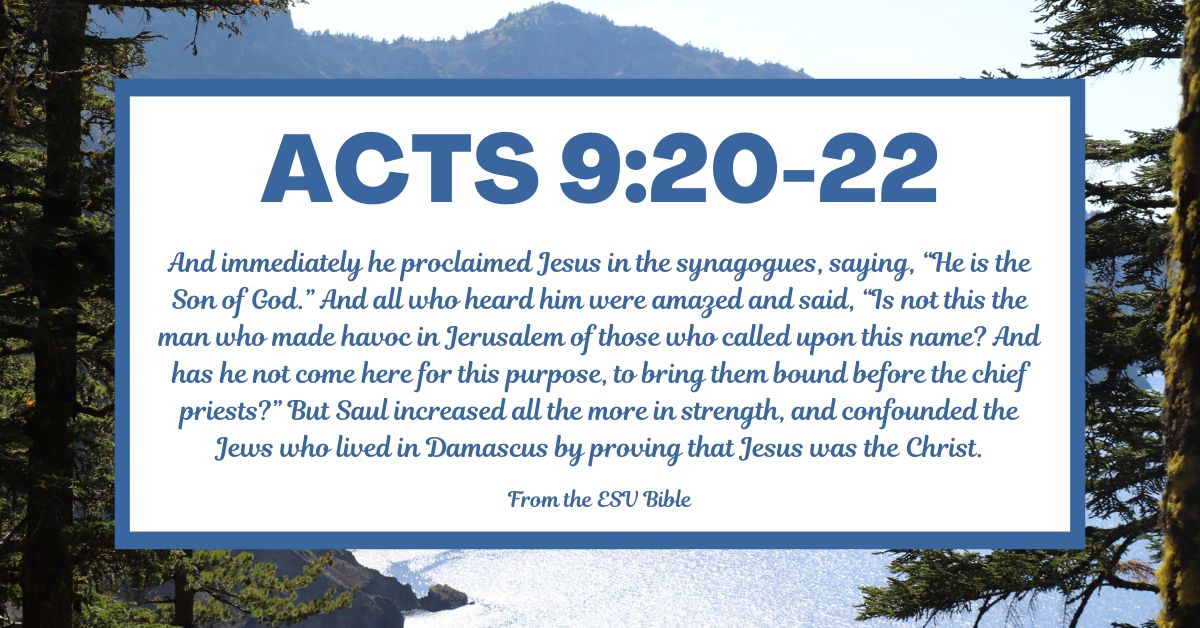
And immediately he proclaimed Jesus in the synagogues, saying, “He is the Son of God.” And all who heard him were amazed and said, “Is not this the man who made havoc in Jerusalem of those who called upon this name? And has he not come here for this purpose, to bring them bound before the chief priests?” But Saul increased all the more in strength, and confounded the Jews who lived in Damascus by proving that Jesus was the Christ. – Acts 9:20-22 (ESV)
Saul’s Profound Transformation
In Acts 9:20-22, we will witness the profound transformation of Saul, who would later be known as Paul. This transformation was one of the most significant events in the New Testament, marking a pivotal moment in the spread of Christianity. Before his conversion, Saul was a devout Jew and a fierce persecutor of Christians, zealously defending Jewish traditions. His life prior to encountering Jesus was defined by relentless and violent efforts to eradicate the followers of “the Way.”
Saul’s shift from a persecutor to a proclaimer of Jesus as the Son of God highlights the radical nature of his conversion. His previous actions, aimed at destroying the early church, were a direct contradiction to his new mission of advocating for the same faith he once sought to obliterate. This dramatic turnaround underscores the transformative power of divine intervention and the profound impact it can have on an individual’s life and mission.
The Road to Damascus
The impressive change in Paul’s life began in Acts 9:3-7 when he encountered Jesus on the road to Damascus. As he approached the city, a sudden light from heaven flashed around him, causing him to fall to the ground. He heard a voice saying, “Saul, Saul, why are you persecuting me?” This divine encounter left him blinded, and his companions had to lead him into the city, setting him on a path that would change both his life and the course of history.
Now as he went on his way, he approached Damascus, and suddenly a light from heaven shone around him. And falling to the ground, he heard a voice saying to him, “Saul, Saul, why are you persecuting me?” And he said, “Who are you, Lord?” And he said, “I am Jesus, whom you are persecuting. But rise and enter the city, and you will be told what you are to do.” The men who were traveling with him stood speechless, hearing the voice but seeing no one.
Acts 9:3-7 (ESV)
This moment on the road to Damascus was a pivotal event, not just for Paul but for the early Christian movement. It marked the beginning of Paul’s transformation from an enemy of Christianity to one of its most fervent advocates. The experience of being struck blind and hearing the voice of Jesus not only changed Paul’s perspective but also set the stage for his future role as a missionary and apostle.
Ananias’ Courageous Obedience
While Paul was in Damascus, a Christian named Ananias was instructed by God to heal him. Despite his fear, Ananias obeyed, demonstrating immense faith and courage. Knowing that Paul’s original intent was to arrest Ananias and cart him off to Jerusalem for trial, what kind of trust in God must Ananias have had?
Ananias’ role in Paul’s story is a testament to the power of obedience and trust in God. By accepting the divine instruction and acting despite his fears, Ananias played a crucial part in Paul’s healing and subsequent acceptance by the Christian community. This act of bravery not only facilitated Paul’s transformation but also illustrates the vital role of individual faithfulness in the broader scope of God’s plans.
Proclaiming Jesus as the Son of God
Paul’s response to his conversion was both immediate and fervent as he began to proclaim in the synagogues that Jesus was the Son of God. This is a remarkable turnaround for someone who once vehemently opposed this belief. Paul spent much of his time proving that Jesus was the Messiah, the one who fulfilled the prophecies of the Old Testament.
His transformation was so complete and his preaching so compelling that he confounded the Jews in Damascus, who were amazed at the change in him. The rapid shift in Paul’s public declaration of faith demonstrates the profound nature of his conversion and the effectiveness of his zeal in spreading the message of Jesus. This newfound fervor highlights the impact of a genuine encounter with Christ and its power to inspire bold and transformative actions.
Lessons from Paul’s Transformation
Paul’s transformation offers a powerful lesson for us all. When confronted with our mistakes, it is easy to retreat in shame, avoiding the truth and hiding from the world. However, Paul’s example demonstrates that Jesus calls us to a different response. Acknowledging our errors and striving to correct them is not only acceptable but encouraged.
This act of humility and courage can lead to positive change with significant personal transformation and growth. Just as Paul turned his past mistakes into a powerful testimony of God’s grace, we too can find redemption and purpose through our own experiences. Embracing our flaws and seeking to correct them can lead to profound transformation and a deeper alignment with our spiritual goals.
Applying Paul’s Example in Modern Life
For modern readers, Paul’s story is a call to action. Just as Paul did not shy away from proclaiming his newfound faith, we too can be bold in sharing our beliefs. For instance, in our workplaces, we can exhibit Christ-like behavior, showing kindness and integrity in all our dealings. In our communities, we can volunteer our time and resources to help those in need, reflecting the love of Christ. Within our families, we can foster an environment of forgiveness and understanding, drawing others to the faith through our actions. By incorporating these practices into our daily lives, we honor Paul’s example and contribute to the spread of faith and positive change.
The Transformative Power of Faith
Paul’s zeal and dedication to spreading the gospel made him one of the most influential Christian missionaries of all time. His unwavering commitment to his mission, despite the dangers and opposition he faced, is a testament to the power of faith and conviction. Paul traveled extensively, wrote numerous letters that form a substantial part of the New Testament, and established many churches. His theological insights and passionate advocacy for the gospel had a profound and lasting impact on Christianity.
Imagine what could be achieved if we approached sharing the gospel with the same passion and commitment. In our everyday lives, we have numerous opportunities to share our faith through our words, actions, and attitudes. Whether it’s in our workplaces, communities, or families, we can be ambassadors of Christ, spreading His love and truth. Like Paul, we can turn our past mistakes into powerful testimonies of God’s grace and redemption.
Moreover, Paul’s story reminds us that no one is beyond the reach of God’s transforming power. If God could use a former persecutor of Christians to become one of the greatest apostles, He can certainly use us, with all our flaws and imperfections, to fulfill His purposes. All it takes is a willing heart, ready to be transformed and used by God. By embracing this mindset, we can make a meaningful impact in our world, just as Paul did in his.
The transformative power of faith is evident in Paul’s life. His story shows that a genuine encounter with Christ can lead to radical changes, turning even the most ardent adversary into a devoted disciple. It is a reminder that our past does not define us, and through faith, we can be renewed and empowered to fulfill God’s will. Let us be inspired by Paul’s journey to embrace our own transformations and become vessels of God’s grace in the world.
Reflection Questions
Personal Transformation
- How have you experienced moments of profound change or transformation in your own life? What were the catalysts for these changes?
- Reflect on a time when you had to confront a significant mistake or error in your life. How did you respond, and what did you learn from the experience?
Faith and Courage
- What does Ananias’ obedience and courage in approaching Paul teach you about trusting God’s guidance, even in fearful situations?
- How can you apply the same kind of faith and courage in your current circumstances, especially when faced with challenges or opposition?
Sharing the Gospel
- In what ways can you share your faith more boldly in your workplace, community, or family?
- Can you think of specific actions or behaviors that reflect Christ-like qualities in your daily interactions? How can you be more intentional about these?
Acknowledging and Correcting Mistakes
- How do you typically respond when you realize you have made a mistake? Do you tend to hide or avoid the issue, or do you face it head-on like Paul?
- What steps can you take to acknowledge and correct your mistakes in a manner that promotes positive change with personal transformation and growth?
Passion and Commitment
- Paul’s zeal and dedication were instrumental in spreading Christianity. What are you passionate about, and how can you channel that passion to positively impact others?
- How can you increase your commitment to your faith and its principles in practical ways in your everyday life?
Impact of Faith
- Reflect on Paul’s transformation from a persecutor to a proclaimer of the gospel. How does his story influence your understanding of redemption and God’s transformative power?
- Do you believe that no one is beyond the reach of God’s transforming power, including yourself? How can this belief shape your interactions with others?
Practical Applications
- Identify some specific opportunities you have in your life right now to act as an ambassador of Christ. How can you make the most of these opportunities?
- What changes can you make in your daily routine to ensure you are living out your faith more authentically and effectively?
Reflective Prayer
Use this memory verse to pray using the ACTS method: Adoration, Confession, Thankfulness, Supplication
- Adoration: Praise God. Does this verse bring any specific characteristics of God to mind?
- Confession: Tell God that you are sorry for specific sins. Does this verse bring any specific sins to mind?
- Thankfulness: Show gratitude towards God. Does anything from this verse inspire gratitude?
- Supplication: Make requests for yourself and for others. Does anything from this verse inspire a prayer?
If helpful, you can use a prayer journal template.
Subscribe
If you enjoyed this post and wish to receive more Christian content, feel free to subscribe to my newsletters!
Related Resources
Visit the Joyful Moments in Christ homepage for all posts, or scroll through other blog posts related to repentance, evangelism, and missionary work:




Something went wrong. Please refresh the page and/or try again.
English Standard Version (ESV): Unless otherwise noted, scripture quotations are from the ESV® Bible (The Holy Bible, English Standard Version®), © 2001 by Crossway, a publishing ministry of Good News Publishers. Used by permission. All rights reserved. The ESV text may not be quoted in any publication made available to the public by a Creative Commons license. The ESV may not be translated in whole or in part into any other language.

 Joyful Moments in Christ