Anger is one of the most significant thieves of joy. It can cloud our judgment, strain relationships, and distance us from the peace God desires for us. To counter this destructive emotion, turning to the wisdom of the Bible can be quite helpful. Scripture offers valuable insights and guidance on managing anger and finding a path to inner peace. Here are some Bible verses that can remind us that, in the midst of life’s challenges, following God’s way brings true peace and fulfillment, encouraging patience, forgiveness, and trust in God’s ultimate justice.
Psalm 37:8 (ESV)
Refrain from anger, and forsake wrath! Fret not yourself; it tends only to evil.
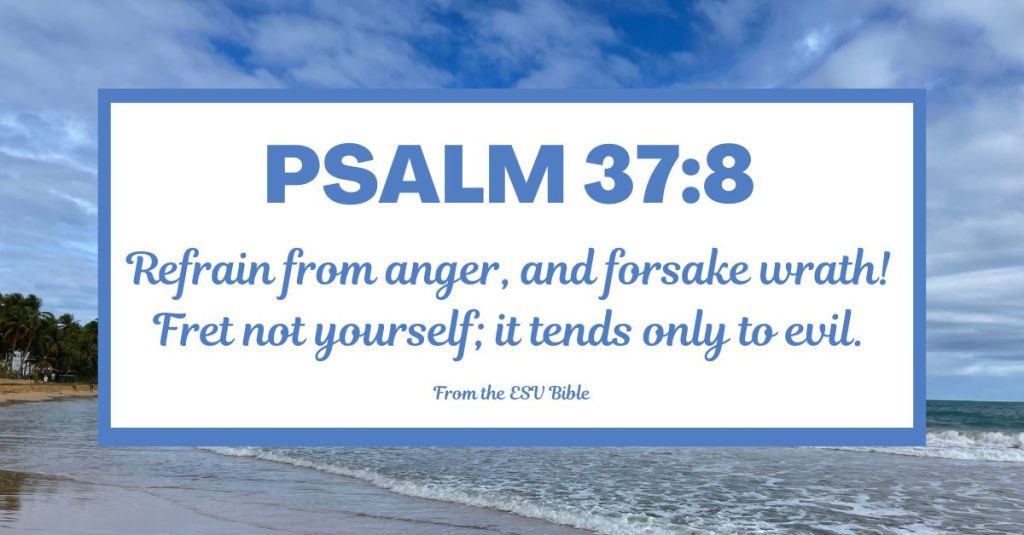
In the Psalms, David often encountered unjust situations and evil people. Instead of succumbing to anger, he consistently turns to God. In Psalm 37, he addresses this struggle, noting that evildoers “will soon fade like the grass and wither like the green herb.” As the Psalm progresses, David offers guidance: trust in God, maintain patience and peace, do not be disturbed by the temporary success of the wicked, and await your reward. Verse 8 specifically warns that giving in to anger only leads to further trouble and wrongdoing!
Proverbs 14:29 (ESV)
Whoever is slow to anger has great understanding, but he who has a hasty temper exalts folly.
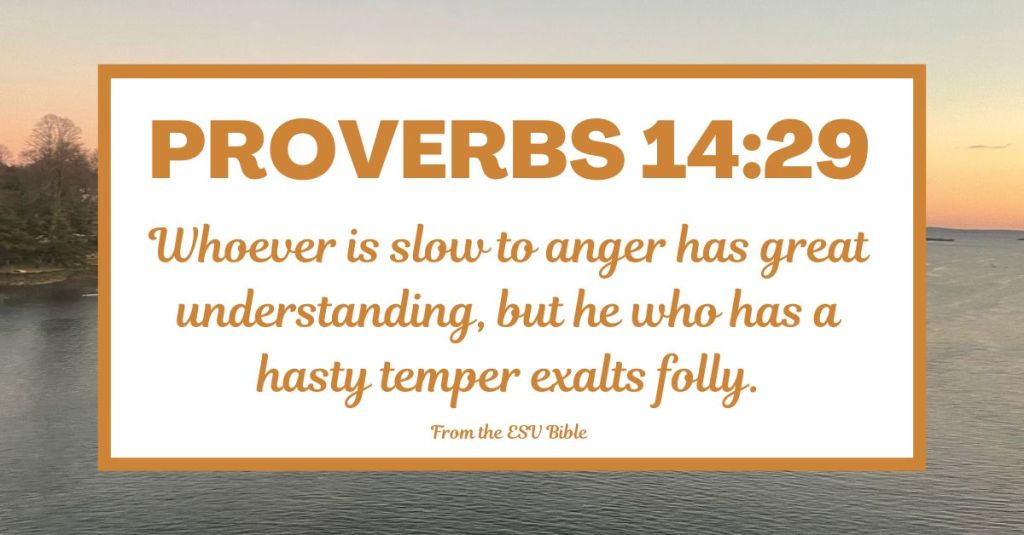
The book of Proverbs is known for Solomon’s wise advice and can serve as a valuable guide when we have questions about our conduct. Proverbs 14 offers many practical insights into everyday situations that we encounter. Verse 29 specifically warns us that hasty anger reflects poor understanding. How often do we rush to judgement, only to later realize our assessment of the situation or the motives of others was flawed?
Proverbs 15:1 (ESV)
A soft answer turns away wrath, but a harsh word stirs up anger.
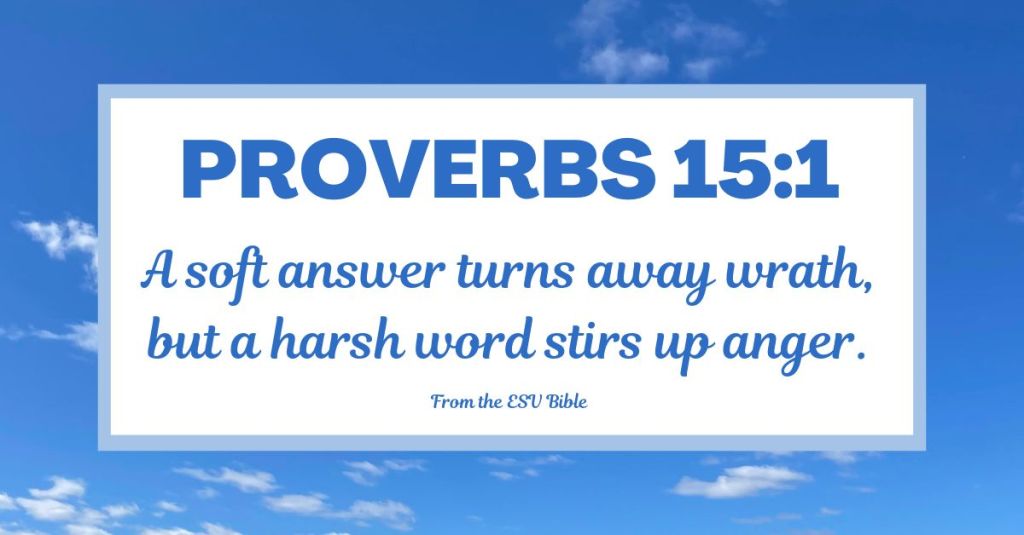
Proverbs 15 offers us a wise alternative to hasty anger: a soft answer. When confronted with an accusation, such as being blamed for stealing someone’s lunch from the fridge, a calm and helpful response can quickly diffuse the situation. This habit of speaking gently in response to anger will serve us well, especially when faced with much more serious conflicts. Often, an angry reaction only escalates the problem, whereas a gentle reply can promote understanding and peace.
Proverbs 19:11 (ESV)
Good sense makes one slow to anger, and it is his glory to overlook an offense.
The preceding verses in Proverbs emphasize the importance of good sense, and Proverbs 19 explicitly highlights this necessity. Possessing good sense and understanding equips us to handle life’s challenges appropriately. We don’t need to react with anger to every offense. As Psalm 37 illustrates, anger only causes us to fret and potentially commit wrongdoing ourselves. God offers a better approach, and Proverbs 19:11 reminds us that it is wise to overlook certain offenses, fostering a more forgiving and gracious attitude.
Ephesians 4:26-27 (ESV)
Be angry and do not sin; do not let the sun go down on your anger, and give no opportunity to the devil.

Of course, not all anger is inherently wrong. For instance, profound injustices, such as a loved one being assaulted, can evoke natural and justified anger. However, Ephesians 4 instructs us to maintain control over our actions and avoid sinning in our anger. By cultivating a habit of being slow to anger and responding with a gentle answer, we equip ourselves to handle anger in a way that honors God. This approach can allow us to channel our emotions into expressions of compassion and care for victims rather than directing anger toward perpetrators.
Romans 12:19-21 (ESV)
Beloved, never avenge yourselves, but leave it to the wrath of God, for it is written, “Vengeance is mine, I will repay, says the Lord.” To the contrary, “if your enemy is hungry, feed him; if he is thirsty, give him something to drink; for by so doing you will heap burning coals on his head.” Do not be overcome by evil, but overcome evil with good.

When dealing with our own anger, especially when we are wronged, it is important to remember that we are not typically called to seek vengeance. As Romans 12 teaches, God is fully capable of administering justice, even if His timing may not align with our preferences. Our responsibility lies in doing what is good. This may involve advocating for laws that protect others or working within the legal system to secure a criminal conviction, but it probably does not justify us to become vigilantes and take matters into our own hands. God’s way, though sometimes challenging, is always righteous and just.
Colossians 3:8 (ESV)
But now you must put them all away: anger, wrath, malice, slander, and obscene talk from your mouth.

When facing intense feelings of anger, Colossians 3 offers valuable guidance. It urges us to shed negative traits that can harm us. For instance, it can be tempting to harbor anger, wrath, malice, and to speak slanderously or vengefully. However, we must actively resist these impulses. They do not align with God’s ways of love and forgiveness. Instead, we should strive to emulate His compassion and seek justice through channels that uphold both righteousness and grace.
Matthew 5:22 (ESV)
But I say to you that everyone who is angry with his brother will be liable to judgment; whoever insults his brother will be liable to the council; and whoever says, ‘You fool!’ will be liable to the hell of fire.
If we neglect to follow this path, Matthew 5 issues a stark warning: we ourselves will be subject to judgment! Shouldn’t it be the wrongdoer facing judgment instead? Yet, by disregarding God’s will, we inadvertently place ourselves in the line of judgment. Let us entrust vengeance to God and concentrate instead on forgiveness, healing, and restoration. This way, we align ourselves with God’s mercy and seek to promote reconciliation rather than retaliation.
Ephesians 4:31-32 (ESV)
Let all bitterness and wrath and anger and clamor and slander be put away from you, along with all malice. Be kind to one another, tenderhearted, forgiving one another, as God in Christ forgave you.

Ephesians 4 further expands on this concept of forgiveness, urging us to discard negativity and instead cultivate kindness, tenderheartedness, and forgiveness. Considering the countless sins Christ has forgiven us, shouldn’t we also extend forgiveness for the fewer offenses others have committed against us? If we truly believe in the depth of Jesus’ forgiveness for all our wrongdoings throughout our lives, it compels us to mirror that forgiveness in our interactions with others.
Philippians 4:5-7 (ESV)
Let your reasonableness be known to everyone. The Lord is at hand; do not be anxious about anything, but in everything by prayer and supplication with thanksgiving let your requests be made known to God. And the peace of God, which surpasses all understanding, will guard your hearts and your minds in Christ Jesus.
In the end, as Philippians 4 advises, our goal should be to let our reasonableness be evident to everyone. How do we want others to perceive us? If we allow anger to control us, we risk being seen as hasty, harsh, and foolish, surrounded by strife, clamor, and obscenity. Instead, we should strive to be known as wise, understanding, and compassionate peacemakers, characterized by forgiveness, gentleness, and kindness. This reflects a heart and mind that truly follows Christ Jesus!
James 1:19-20 (ESV)
Know this, my beloved brothers: let every person be quick to hear, slow to speak, slow to anger; for the anger of man does not produce the righteousness of God.
As James 1 teaches, our goal should be to produce the righteousness of God. This is what we need most in our lives! While we might convince ourselves that we need vengeance, respect, and honor, what we truly need is God’s righteousness and compassion. Anger only obstructs this pursuit.
Colossians 3:12-13 (ESV)
Put on then, as God’s chosen ones, holy and beloved, compassionate hearts, kindness, humility, meekness, and patience, bearing with one another and, if one has a complaint against another, forgiving each other; as the Lord has forgiven you, so you also must forgive.

To achieve this, we must embody the fruits of the Spirit. While the complete list is found in Galatians 5:22-23, Colossians 3 emphasizes the importance of bearing with one another, even when we have grievances. Forgiveness must reign supreme! As the Lord has forgiven us, we too must release our anger and extend forgiveness to those around us.
Reflection Questions
Personal Reflection:
- How does anger typically affect your relationships and your own sense of peace?
- Reflect on a recent situation where anger clouded your judgment. What could you have done differently?
Scripture Application:
- Which Bible verse resonates most with you regarding managing anger? Why?
- Read the entirety of Psalm 37. How can you apply the principles from these verses to avoid giving in to anger in your daily life?
Practical Application:
- Think of a recent conflict. How might applying Proverbs 15:1, using a soft answer, have changed the outcome?
- What steps can you take to cultivate patience and forgiveness in situations that typically provoke anger?
Spiritual Growth:
- According to Ephesians 4:31-32, what negative actions and emotions should Christians put away? How can you practically implement this in your life?
- Reflect on Colossians 3:12-13. How can embodying these positive actions and emotions help you manage anger better?
Community Impact:
- How might your ability to manage anger positively influence your community or family dynamics?
- Reflect on Romans 12:19-21. What does it mean practically to “overcome evil with good” in the context of dealing with anger and conflict?
Reflective Prayer
Use this memory verse to pray using the ACTS method: Adoration, Confession, Thankfulness, Supplication
- Adoration: Praise God. Does this verse bring any specific characteristics of God to mind?
- Confession: Tell God that you are sorry for specific sins. Does this verse bring any specific sins to mind?
- Thankfulness: Show gratitude towards God. Does anything from this verse inspire gratitude?
- Supplication: Make requests for yourself and for others. Does anything from this verse inspire a prayer?
If helpful, you can use a prayer journal template.
Subscribe
If you enjoyed this post and wish to receive more Christian content, feel free to subscribe to my newsletters!
Related Resources
Visit the Joyful Moments in Christ homepage for all posts, or scroll through other blog posts related to anger, peace, and forgiveness:







Something went wrong. Please refresh the page and/or try again.
English Standard Version (ESV): Scripture quotations are from the ESV® Bible (The Holy Bible, English Standard Version®), © 2001 by Crossway, a publishing ministry of Good News Publishers. Used by permission. All rights reserved. The ESV text may not be quoted in any publication made available to the public by a Creative Commons license. The ESV may not be translated in whole or in part into any other language.




 Joyful Moments in Christ