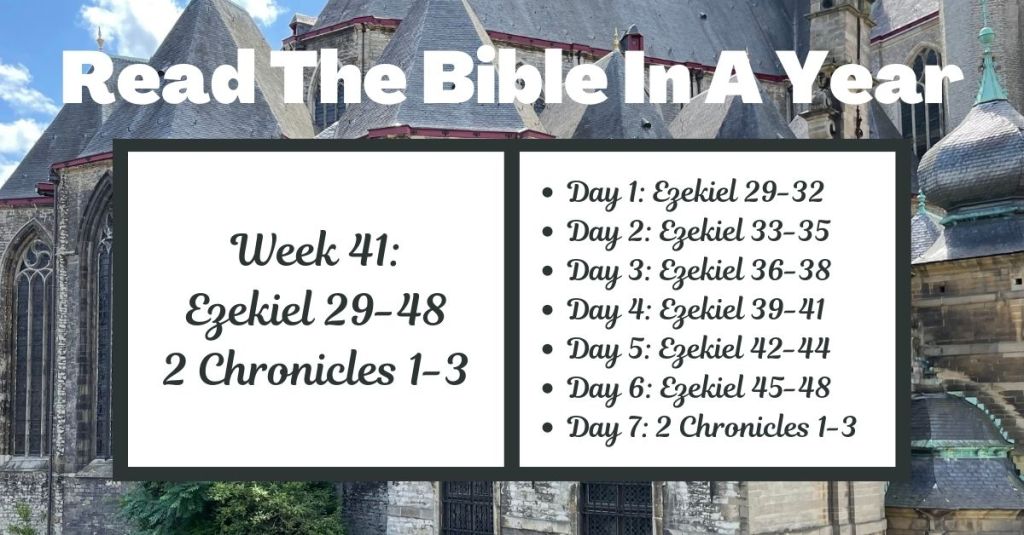
In week 41 of our journey to read the Bible in a year, we will finish the book of Ezekiel and begin the book of 2 Chronicles. Ezekiel will delve into themes of divine judgment, hope, and the new covenant, while the early chapters of 2 Chronicles will go back in time and show a period of Israel’s great faithfulness as they begin to build the original temple.
Ezekiel 29-48
In Ezekiel chapters 29-48, we will see a continuation and expansion of the themes introduced in the earlier sections of the book. These chapters provide a comprehensive vision of hope, restoration, and the establishment of a new covenant. Here is a summary:
- Judgment on Egypt (Chapters 29-32):
- Ezekiel continues delivering oracles against various nations, focusing on Egypt in these chapters. Both this week and last week, God’s sovereignty over all nations and the consequences of their actions are highlighted.
- Hope and Restoration (Chapters 33-39):
- These chapters pivot towards messages of hope and restoration. Ezekiel becomes a watchman, warning the people of impending danger but also delivering the promise of a renewed relationship with God. The famous vision of the valley of dry bones symbolizes the spiritual restoration of Israel.
- New Covenant and the Glory of God (Chapters 36-37, 43):
- The concept of a new covenant is reinforced, highlighting the transformation of the hearts of the people. The glory of God returns to dwell in the temple, signifying a renewed relationship between God and His people.
- Prophecy against Gog and Magog (Chapters 38-39):
- Ezekiel prophesies against Gog and Mogog, highlighting a hostile force that will come against God’s restored people. The narrative underscores God’s protection and ultimate victory.
- Vision of the New Temple (Chapters 40-42):
- Ezekiel receives a detailed vision of a new temple, along with instructions for its construction. The vision includes precise measurements and descriptions, emphasizing the significance of worship and divine presence in the restored community.
- Distribution of the Land (Chapters 43-48):
- Ezekiel continues with visions of the restored temple and describes the distribution of the land among the tribes of Israel. This section emphasizes the just allocation of territory and the central role of the sanctuary in the life of the community.
- Restoration of Worship and Rituals (Chapters 43-46):
- Detailed instructions for the worship and rituals in the new temple are provided. This includes the reinstatement of the priesthood, the offerings, and various regulations for the proper functioning of the sanctuary.
- The River of Life (Chapters 47-48):
- The vision of the river flowing from the temple symbolizes the abundance of life and blessings in the restored land. These chapters convey a message of spiritual and physical flourishing under the reign of God.
2 Chronicles
After finishing Ezekiel, we will go back in time and get our feet wet with the first three chapters of 2 Chronicles. While these chapters will mostly deal with the early days of King Solomon’s reign and his preparations for the original temple, we should prepare ourselves to explore the following topics in coming weeks:
- Faithfulness and Obedience to God: The narrative consistently emphasizes the importance of kings and the people being faithful to God, following his commandments, and maintaining a strong relationship with him. Obedience is linked to blessings, while disobedience leads to consequences.
- The Temple and Worship: The construction, dedication, and proper functioning of the temple in Jerusalem are major themes. The Chronicler highlights the significance of worship, the priesthood, and the centrality of the temple in maintaining a righteous relationship with God.
- Divine Covenant and Promises: The book emphasizes God’s covenant with David and his descendants, promising blessings for obedience and consequences for disobedience. This theme runs throughout the narrative, influencing the fate of the kings and the nation.
- Righteous and Wicked Kings: The Chronicler distinguishes between kings who follow God’s ways and those who turn away. Righteous kings are commended for their faithfulness, while wicked kings face divine judgment and often lead the nation into idolatry.
- Repentance and Restoration: Instances of repentance, especially in the lives of certain kings like Manasseh, are highlighted. Repentance is shown to lead to forgiveness and restoration, emphasizing God’s mercy and willingness to forgive the truly penitent.
- Divine Intervention and Protection: The narrative frequently recounts instances of divine intervention, protection, and guidance. God is portrayed as actively involved in the affairs of the nation, responding to the faithfulness or disobedience of the kings and the people.
- Judgment and Exile: The Chronicler reflects on the consequences of disobedience, with a particular focus on the Babylonian exile. The fall of Jerusalem and the exile of the people are portrayed as the result of the persistent disobedience and idolatry of the kings and the nation.
- Leadership and Influence: The role of kings as leaders and influencers in the spiritual life of the nation is a recurring theme. Righteous leaders have a positive impact, while unfaithful leaders lead the people astray.
- Restoration and Return: The book ends with a note of hope, as it mentions the decree of Cyrus allowing the Israelites to return to their land and rebuild the temple. This sets the stage for the post-exilic period, which is further explored in the books of Ezra and Nehemiah.
Flexible Plan: Reading for Week 41
If you are following the flexible plan for reading the Bible in a year, here is your reading assignment. You can break up the reading however you like throughout the week!
- Passage 1: Ezekiel 29-48
- Passage 2: 2 Chronicles 1-3
Printable Resource: Bible in a Year Reading Plan: Weekly Assignments
7-Day Reading Assignment: Week 41
For those who prefer a more organized approach, the weekly assignment can be broken into seven sections:
- Day 1: Ezekiel 29-32
- Day 2: Ezekiel 33-35
- Day 3: Ezekiel 36-38
- Day 4: Ezekiel 39-41
- Day 5: Ezekiel 42-44
- Day 6: Ezekiel 45-48
- Day 7: 2 Chronicles 1-3
Printable Resource: Bible in a Year Reading Plan: Daily Assignments
5-Day Reading Assignment: Week 41
Or if you know that you are likely to miss a day or two of reading, the weekly assignment can be broken into five sections:
- Day 1: Ezekiel 29-33
- Day 2: Ezekiel 34-38
- Day 3: Ezekiel 39-43
- Day 4: Ezekiel 44-48
- Day 5: 2 Chronicles 1-3
Printable Resource: Bible in a Year Reading Plan: 5 Days/Week Assignments
Reflection Questions
Ezekiel 29-48
- How does the theme of divine judgment manifest in the oracles against various nations in Ezekiel 29-32? What insights does it provide into God’s sovereignty?
- In the chapters emphasizing hope and restoration (33-39), what specific messages are conveyed by Ezekiel as a watchman? How does the vision of the valley of dry bones symbolize spiritual restoration?
- Explore the concept of the new covenant in Ezekiel 36-37, 43. How does this covenant contribute to the transformation of the hearts of the people, and what role does the glory of God play in renewing the relationship with His people?
- In the prophecy against Gog and Magog (38-39), what symbolic elements represent the hostile forces? How is God portrayed in terms of protection and ultimate victory?
- Consider the vision of the new temple in Ezekiel 40-42. What are the significance and symbolism behind the detailed instructions, precise measurements, and descriptions provided for the construction of the temple?
- Reflect on the distribution of the land in Ezekiel 43-48. How does this section emphasize the just allocation of territory, and what is the role of the sanctuary in the life of the community?
- How are worship and rituals restored in Ezekiel 43-46? Explore the detailed instructions for the new temple, including the reinstatement of the priesthood and various regulations for the sanctuary’s proper functioning.
- In the vision of the river of life (47-48), what does the flowing river symbolize, and how does it convey a message of spiritual and physical flourishing under the reign of God?
2 Chronicles 1-3
- Reflect on Solomon’s request for wisdom in Chapter 1. How does Solomon’s prioritization of wisdom over wealth and power set an example for effective leadership? How can the pursuit of wisdom influence decision-making in your own life?
- Consider the meticulous preparations and construction of the temple in Chapters 2 and 3. What symbolic and spiritual significance does the temple hold in the narrative, and how does the attention to detail reflect the importance of honoring God? In your own spiritual journey, what places or practices hold a similar significance?
- Examine the obedience to God’s instructions in the construction of the temple, particularly in Chapter 3. How does the narrative emphasize the importance of following divine guidance and instructions? In what ways can this commitment to obedience be applied in modern contexts, both individually and collectively?
Subscribe
If you enjoyed this post and wish to receive more Christian content, feel free to subscribe to my newsletters!
Related Resources
Visit the Joyful Moments in Christ homepage for all posts, or scroll through other blog posts related to reading the Bible in a year:
Something went wrong. Please refresh the page and/or try again.
English Standard Version (ESV): Unless otherwise noted, scripture quotations are from the ESV® Bible (The Holy Bible, English Standard Version®), © 2001 by Crossway, a publishing ministry of Good News Publishers. Used by permission. All rights reserved. The ESV text may not be quoted in any publication made available to the public by a Creative Commons license. The ESV may not be translated in whole or in part into any other language.
 Joyful Moments in Christ