The arrival of the New Year beckons a time of reflection, spiritual renewal, and the opportunity to set the tone for the months ahead. Let’s delve into 10 impactful Bible verses that can guide us toward a purposeful and faith-filled journey in the coming year.
New Beginings in the New Year
During this time period, our focus naturally shifts towards the prospect of new beginnings. Regardless of the trials and triumphs that marked the preceding year, the New Year invites us to engage in a period of reflection, setting the groundwork for personal spiritual revival where we consciously embrace the positive and turn away from the negative. The key lies in clinging to Jesus, then repenting of our sins, accepting forgiveness, and embarking on a journey to live as new creations.
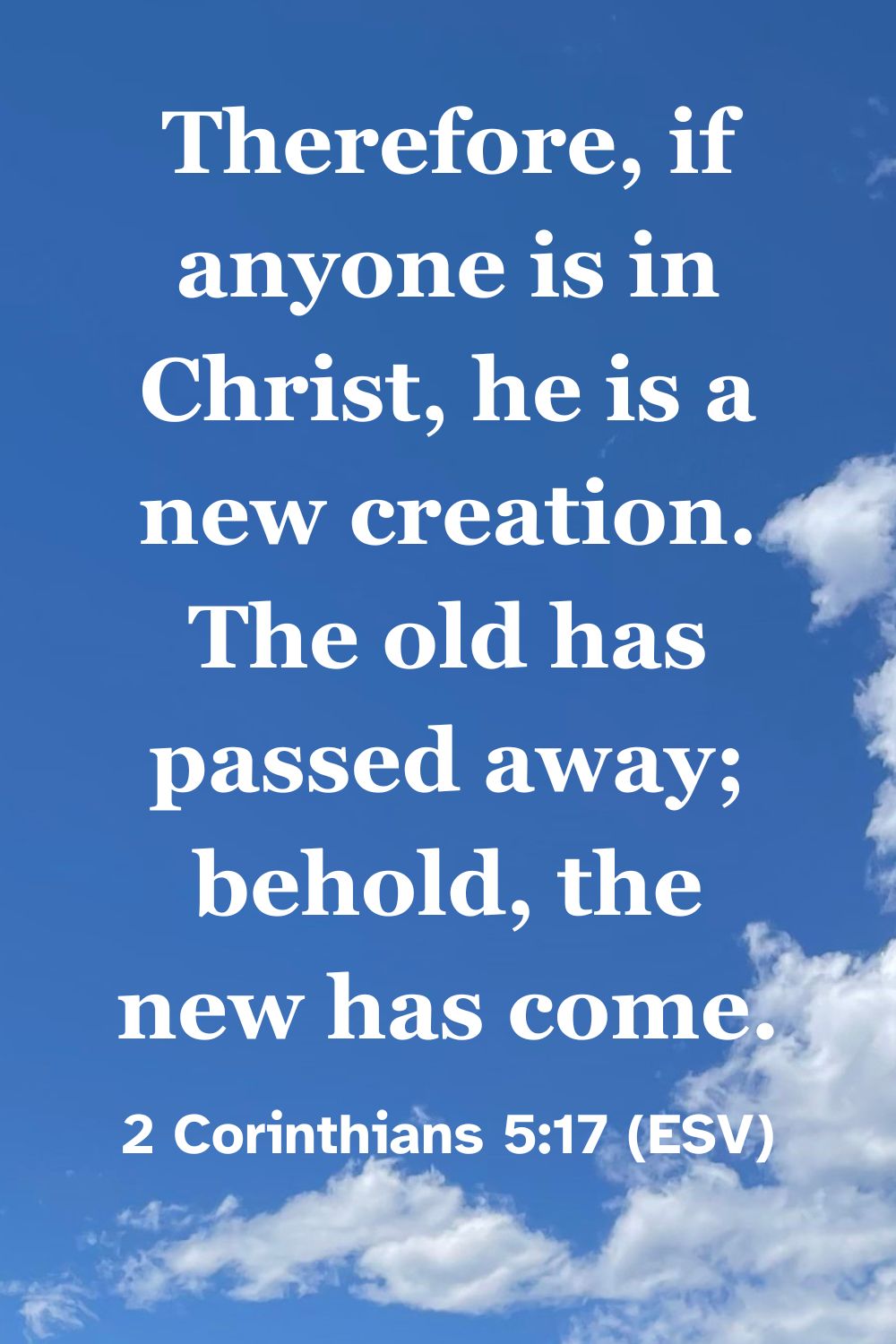
2 Corinthians 5:17 (ESV): “Therefore, if anyone is in Christ, he is a new creation. The old has passed away; behold, the new has come.”
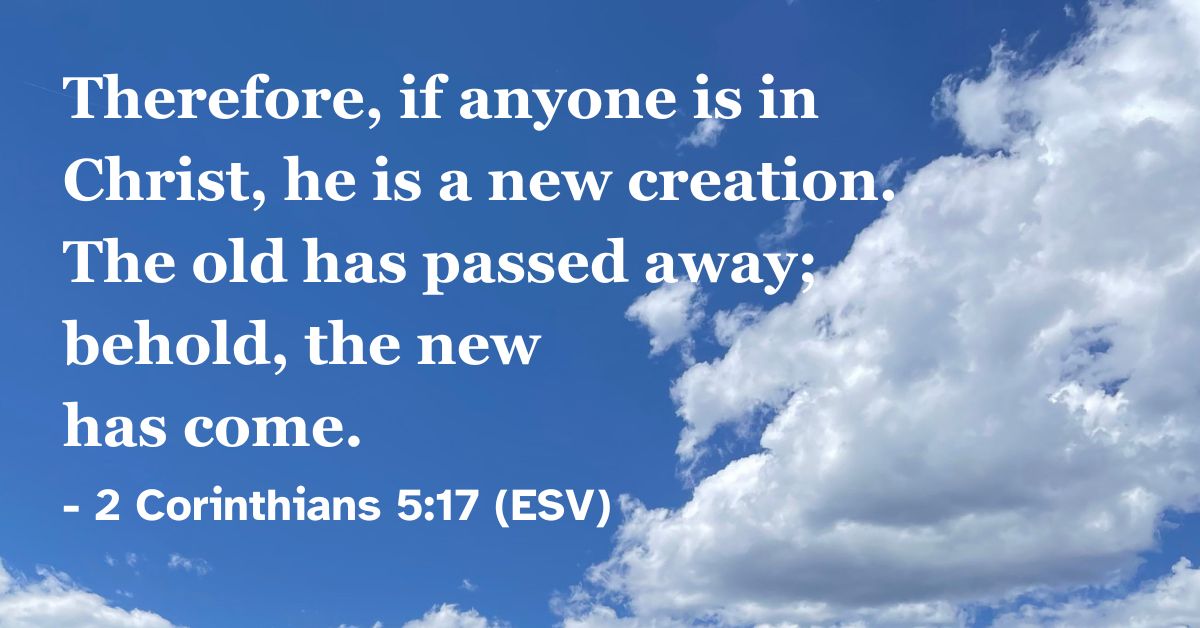
At the heart of this transformation lies 2 Corinthians 5:17, a great verse that shows us the method of new beginnings. When we accept Jesus Christ as our savior, we are justified through faith, marking the passing away of our old selves and initiating a metamorphic process for our new selves.
Even for those who have been steadfast Christians, there are moments when doubt creeps into this process. Whenever there is an opening, Satan will endeavor to convince us that we are still bound to our old selves and encourage us to turn away from Jesus. In the moment where we fail to stay true to Jesus, we must choose repentance, turning back to God, and committing to the ongoing process of change.
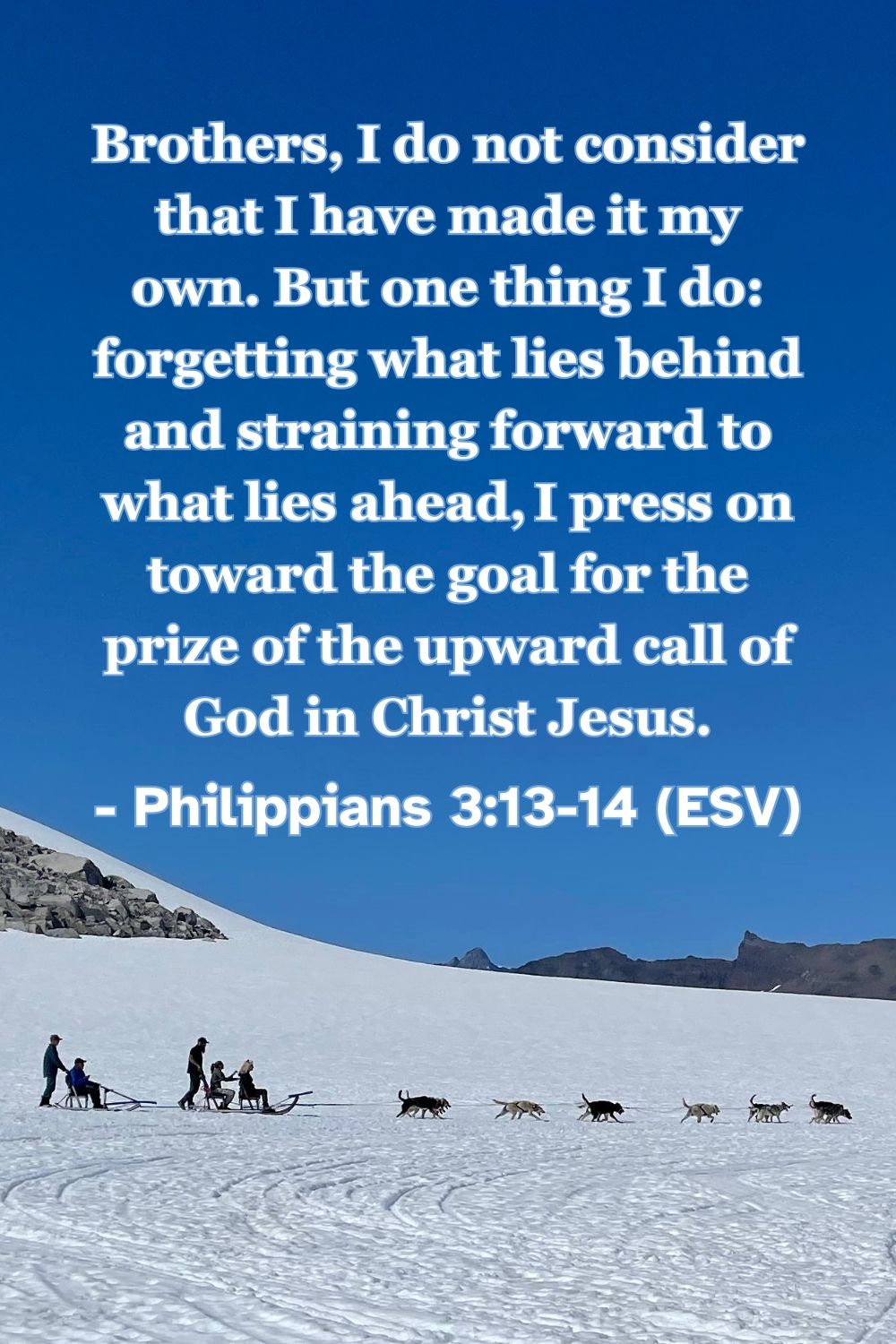
Philippians 3:13-14 (ESV): “Brothers, I do not consider that I have made it my own. But one thing I do: forgetting what lies behind and straining forward to what lies ahead, I press on toward the goal for the prize of the upward call of God in Christ Jesus.”
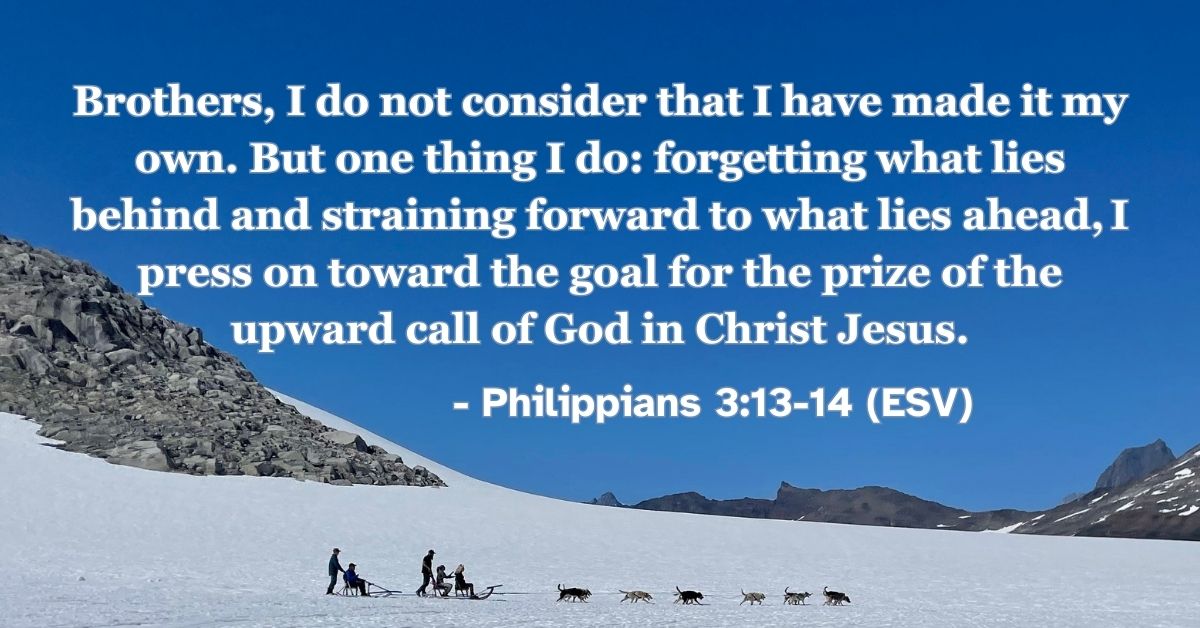
Phillippians 3:13-14 further expands on this concept of metamorphosis and serves as our compass in the journey of new beginnings. Freed from the chains of yesterday by our newfound status as a new creation, we are empowered to strive towards living a better life today.
The ultimate objective is to be more Christ-like, a process known as sanctification. While justification removes the penalty of sin, sanctification unfolds as the transformative journey shaping us into our true selves. The promised reward is a life aligned with Jesus’ calling and, ultimately, a home with him.
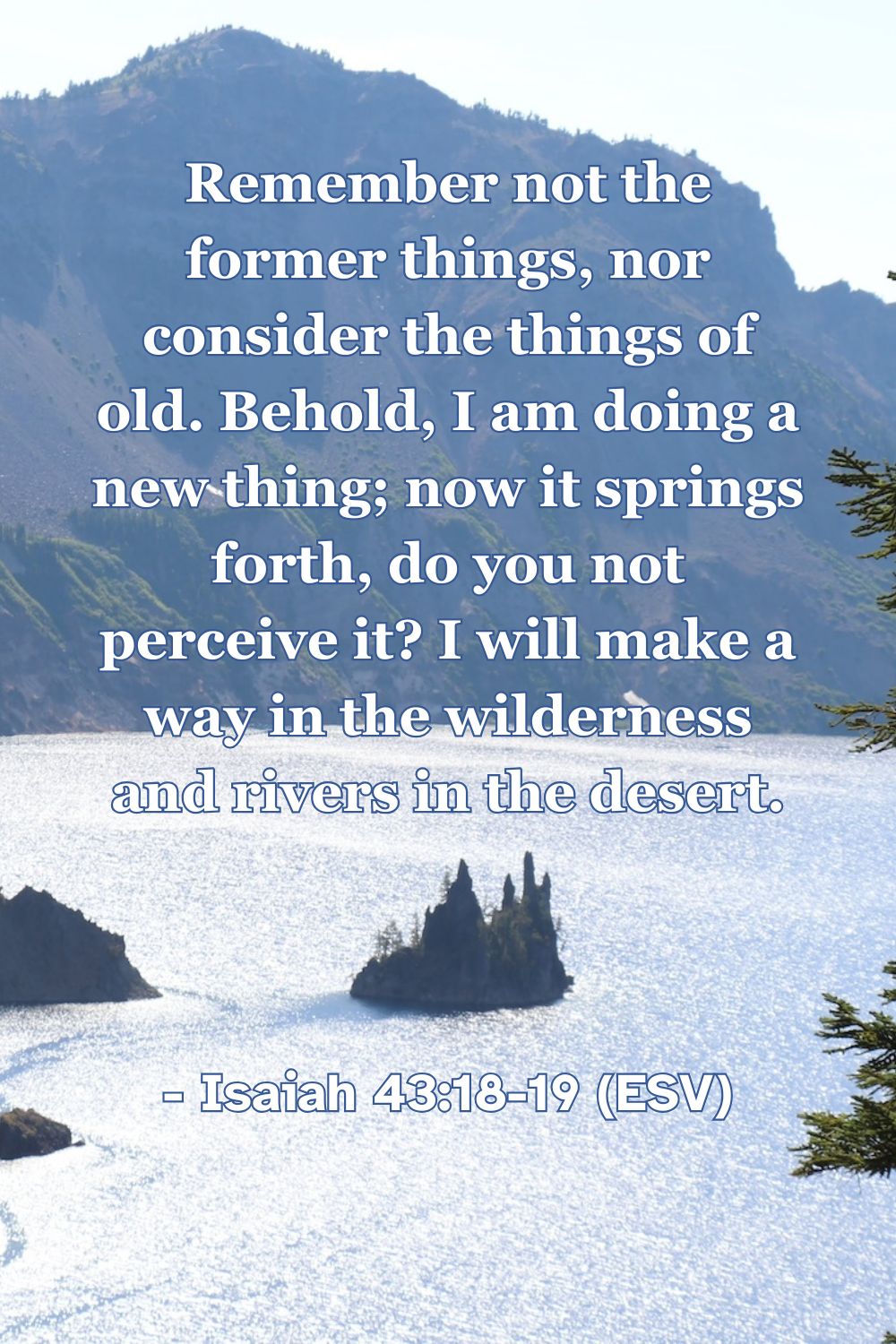
Isaiah 43:18-19 (ESV): “Remember not the former things, nor consider the things of old. Behold, I am doing a new thing; now it springs forth, do you not perceive it? I will make a way in the wilderness and rivers in the desert.”
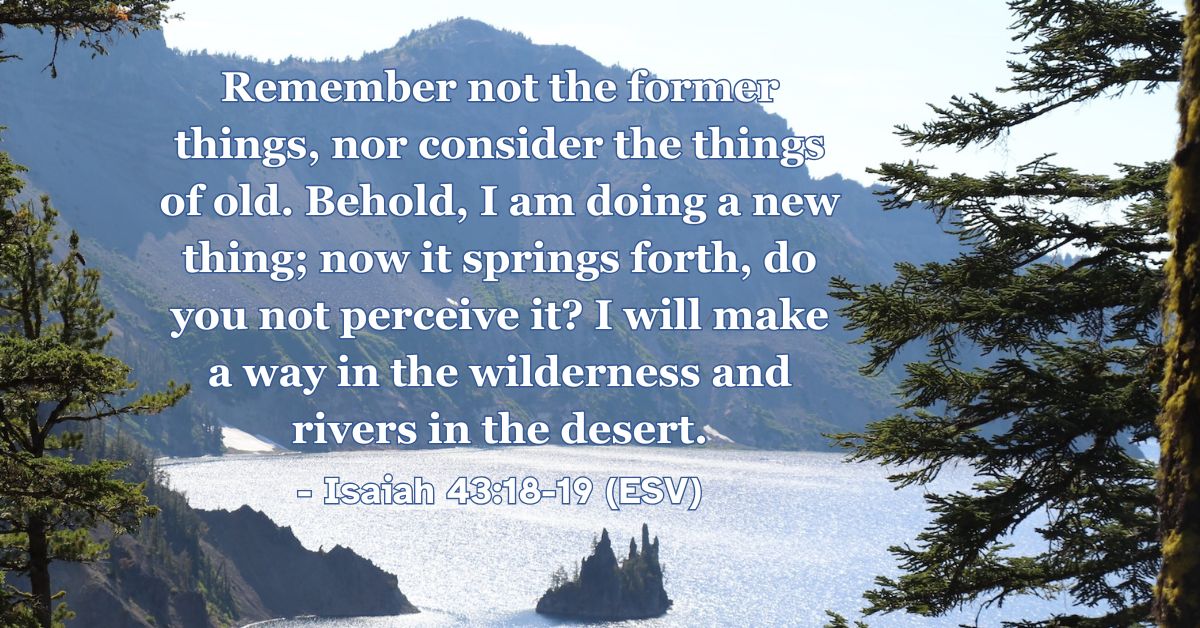
Isaiah 43:18-19 illuminates this concept of new beginnings even further. Through prayer, we invoke a divine response where God, in his faithfulness, sends the Holy Spirit to work within us, initiating the process of becoming more Christ-like.
While the desire for instantaneous transformation is common, the reality often unfolds gradually, almost imperceptibly. These verses offer reassurance that, even when the change feels subtle, God is actively orchestrating a new thing within us.
If you are having trouble seeing the changes that the Holy Spirit is making in you, consider making a New Year’s resolution to begin a prayer journal. On one side, document your prayer requests. On the other, chronicle the answered prayers. You might be pleasantly surprised by the frequency with which your prayers find answers, serving as a tangible testament to God’s faithfulness.
Plans for the New Year
As we step into the New Year, it’s a customary practice to craft resolutions and set ambitious plans for self-improvement. However, the sobering reality often reveals that these aspirations fall by the wayside. In the midst of this common experience, certain biblical verses shed light on the nature of resolutions we should prioritize and offer guidance on avoiding the disillusionment that often accompanies deviation in our plans.
Jeremiah 29:11 (ESV): “For I know the plans I have for you, declares the Lord, plans for welfare and not for evil, to give you a future and a hope.”
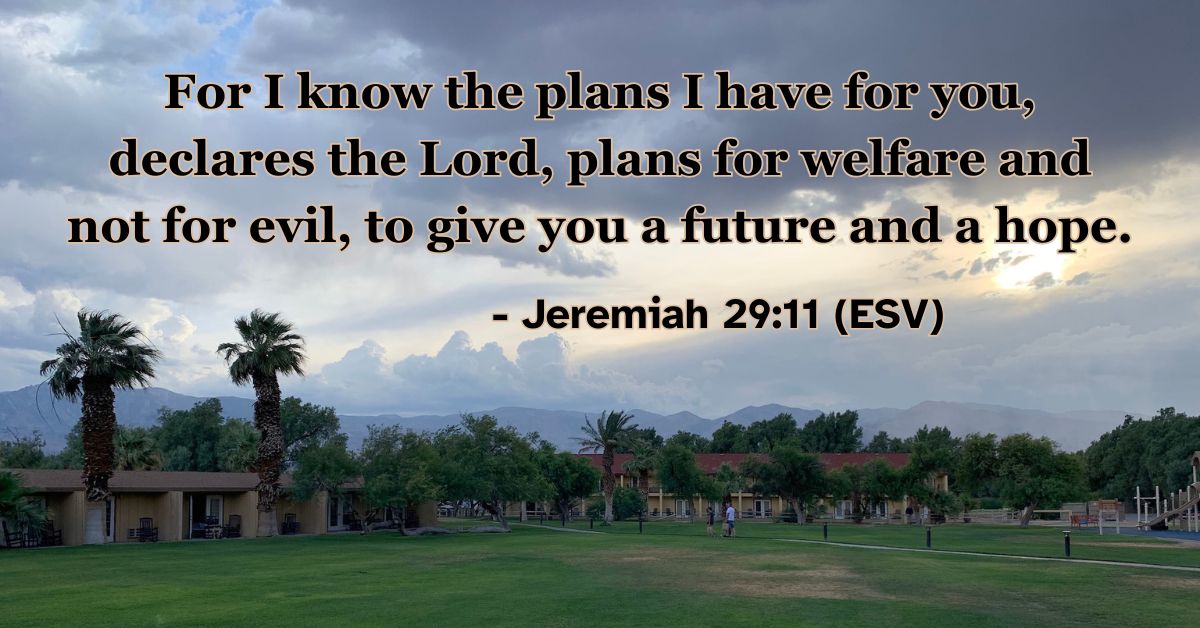
Jeremiah 29:11 stands as a reminder that, while we diligently outline our plans, the ultimate authority and omniscient understanding of our future reside with God. This verse assures us that his meticulously crafted plans are oriented towards our well-being, even when faced with daunting challenges. Embracing this profound truth becomes especially challenging during moments of grappling with the consequences of our own mistakes or the transgressions of others.
Amid these trials, this verse reminds us to anchor our trust in God’s overarching plans for our lives – plans meticulously designed for our eventual welfare rather than our demise. It encourages us to cast aside doubt and surrender our anxieties, finding solace in the assurance that God’s plans, even when veiled, are for our ultimate good. This trust is an anchor that steadies us through the uncertainties, allowing us to navigate the uncharted waters of the coming year with a firm reliance on God’s providence.
Proverbs 16:3 (ESV): “Commit your work to the Lord, and your plans will be established.”
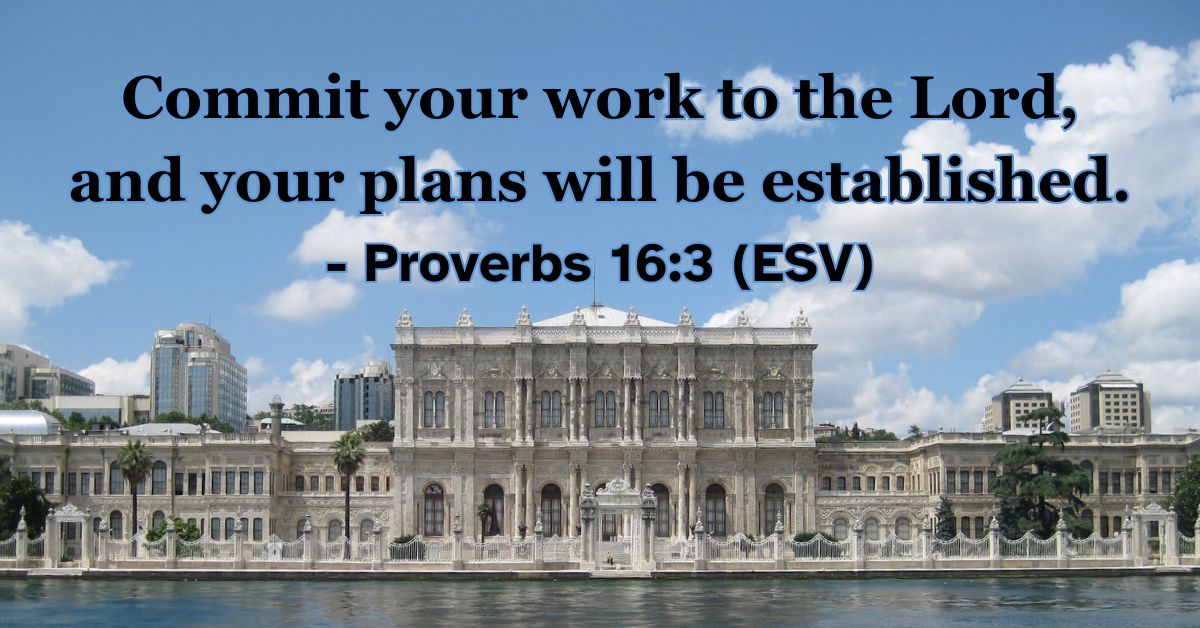
Proverbs 16:3 provides a guiding principle for constructive New Year’s resolutions. This verse advocates for a resolution of a different kind – committing our endeavors to the Lord. By entrusting our work and plans to God, we establish a connection that transcends mere outcomes. While the results may manifest as health and prosperity in some instances, the biblical narrative described in the Acts of the Apostles, attests that this is not a universal guarantee. The challenges faced by individuals like Stephen, who faced death by stoning, or Paul, who endured floggings, underscore the unpredictability of life. Yet, amidst adversity, their ability to practice praise and forgiveness stands as a testament to the transformative power of committing one’s work to the Lord.
For those who doubt their capacity for such resilience, a poignant example can be found in Corrie ten Boom’s narrative in “The Hiding Place.” Her remarkable journey in a Nazi concentration camp unveils a profound ability to find joy in suffering and extend forgiveness to even the most brutal of her captors. This inspiring account challenges us to reevaluate our perspectives and consider the enduring strength that emerges when we align our plans with a commitment to the Lord.
Seeking Wisdom in the New Year
Another commendable New Year’s resolution is to dedicate the upcoming months to the pursuit of wisdom. Drawing inspiration from Solomon, whose plea for wisdom pleased God to the extent that Solomon received so much more, we find a timeless model for seeking understanding. While we may not receive identical outcomes, the pursuit of wisdom remains a noble endeavor, one that aligns with the essence of God’s desires for his children.
Psalm 90:12 (ESV): “So teach us to number our days that we may get a heart of wisdom.”
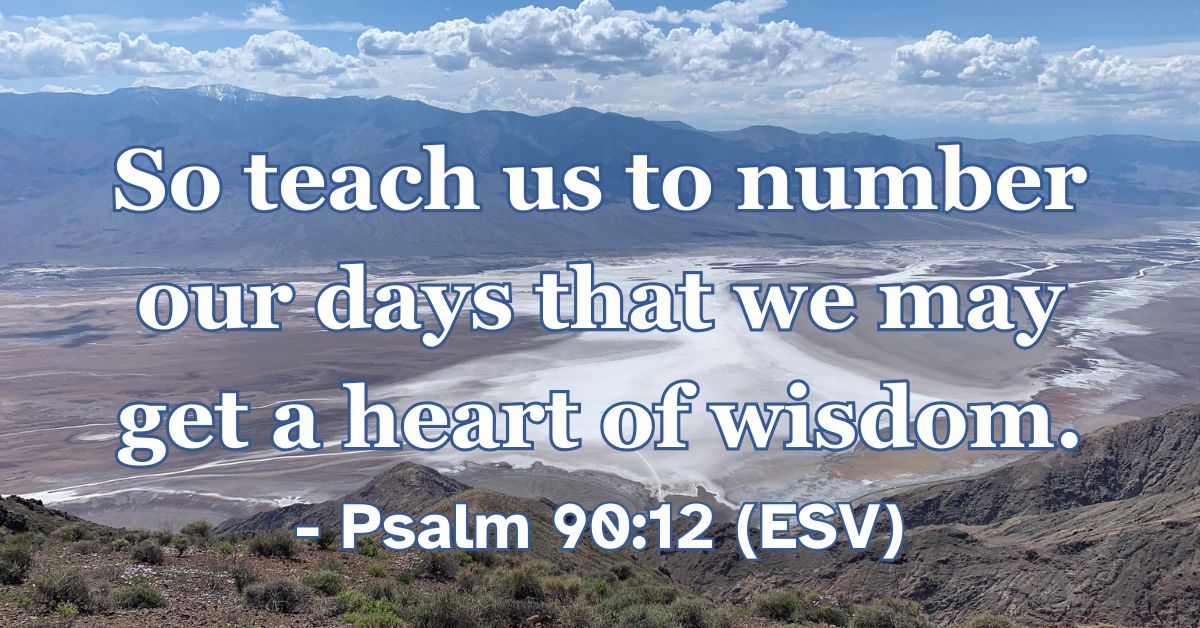
Psalm 90:12 provides some more guidance on this path towards wisdom. It encourages us to approach the acquisition of wisdom with a sense of urgency. In a world where procrastination often threatens to delay our pursuits, this verse serves as a poignant reminder that our days are finite, and true wisdom stems from recognizing their precious nature. When we acknowledge the brevity of life and dedicate ourselves to a purposeful journey—committing our work to the Lord—God looks upon our efforts with favor.
Consider the example of a diligent student who had a year to prepare for exams and approached each day with intentionality. Recognizing the value of time, this student set daily goals, diligently studied, and sought guidance from mentors. In the same way, numbering our days empowers us to structure our lives with purpose, allocating time to seek God’s wisdom through prayer, reflection, and engagement with his Word. Just as the student’s focused effort yielded success, our intentional pursuit of wisdom positions us to navigate the complexities of life with discernment and understanding.
Psalm 119:105 (ESV): “Your word is a lamp to my feet and a light to my path.”
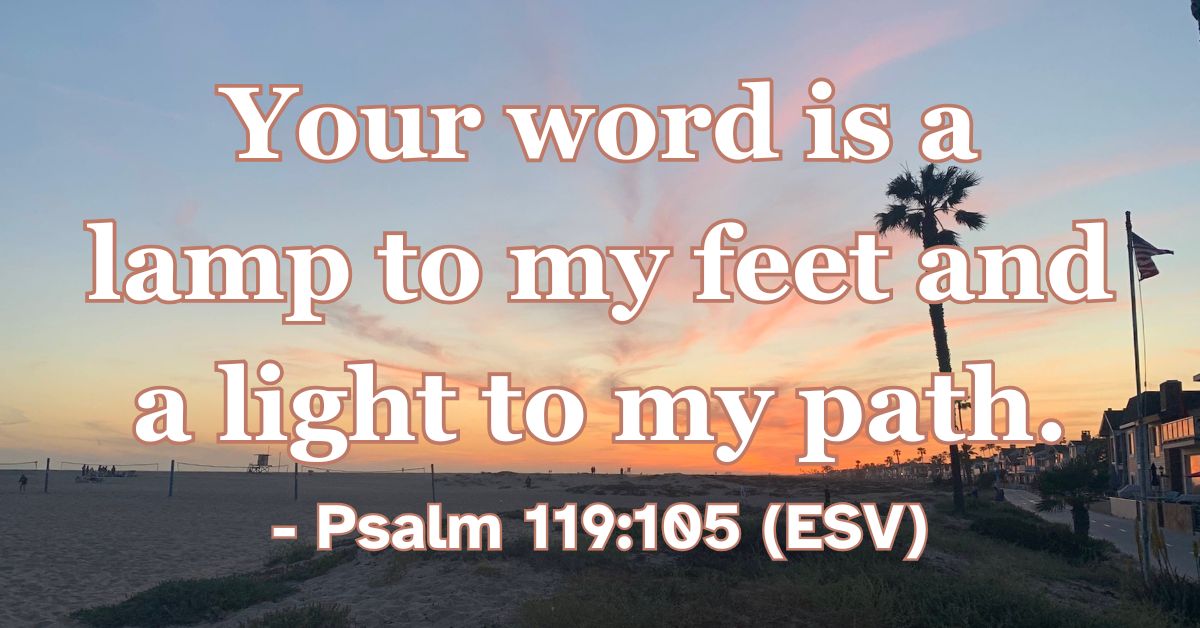
Psalm 119:105 further illuminates this route to wisdom. While many possess Bibles, the challenge lies in transforming the intention to read it into a deliberate and urgent action. Rather than postponing time spent reading God’s Word, adopting a proactive approach becomes crucial. This verse emphasizes that God’s word serves as a guiding light, illuminating our paths and enabling us to discern the promptings of the Holy Spirit.
In the pursuit of wisdom, familiarity with God’s word is paramount. Reading the Bible becomes not just a religious routine but a dynamic interaction with divine wisdom. It equips us to distinguish between the whispers of God and the deceitful tricks of Satan. In the absence of a deep understanding of God’s word, the discernment needed to navigate life’s complexities may elude us. Therefore, committing to a regular and intentional exploration of scripture becomes an integral component of the journey toward acquiring true wisdom in the New Year. Maybe this could be your New Year’s resolution!
Trusting the Lord in the New Year
As we navigate the challenges of the New Year, anchoring our trust in the Lord is of utmost importance. Ignoring this command often leads us to place our trust in something else, and that something else may not always steer us in the right direction.
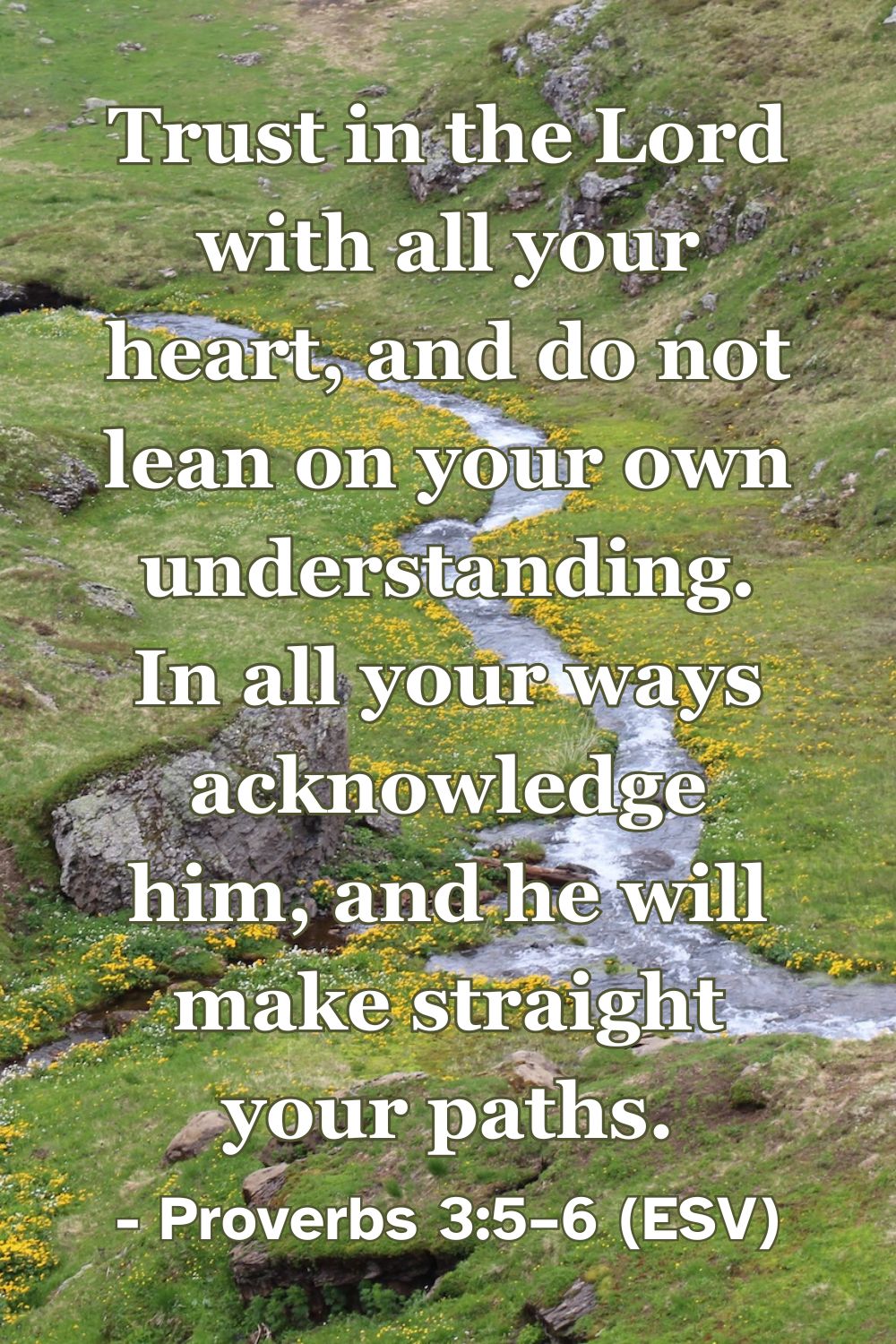
Proverbs 3:5-6 (ESV): “Trust in the Lord with all your heart, and do not lean on your own understanding. In all your ways acknowledge him, and he will make straight your paths.”
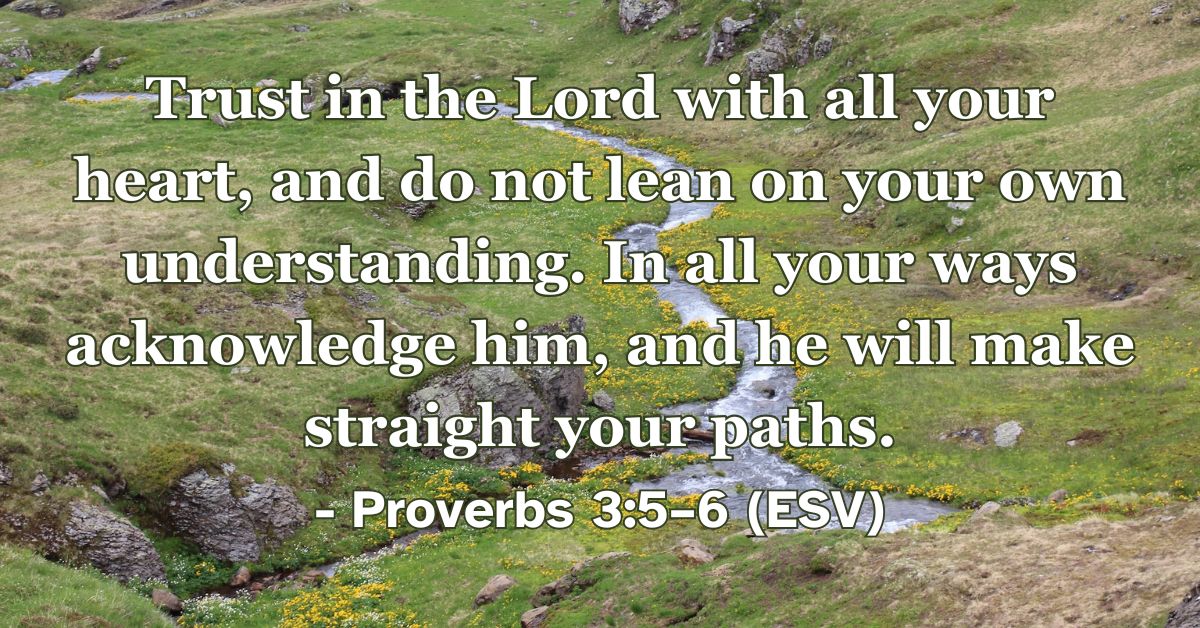
Proverbs 3:5-6 offers us some important wisdom, emphasizing that placing our trust solely in our own understanding can lead us astray. Consider the image of a ship navigating turbulent waters. Relying on its own navigation system, without acknowledging external and conflicting cues, could result in perilous consequences.
Similarly, when we lean solely on our own understanding, we risk steering our lives into troubled waters. The verse urges us to anchor our trust in the Lord—our divine navigator—acknowledging his presence in every aspect of our journey. In doing so, we gain the assurance that, even in life’s unpredictable seas, he will chart a course that leads to fulfillment and purpose. Trusting in the Lord becomes our reliable navigation system, ensuring our paths remain on course amid life’s twists and turns.
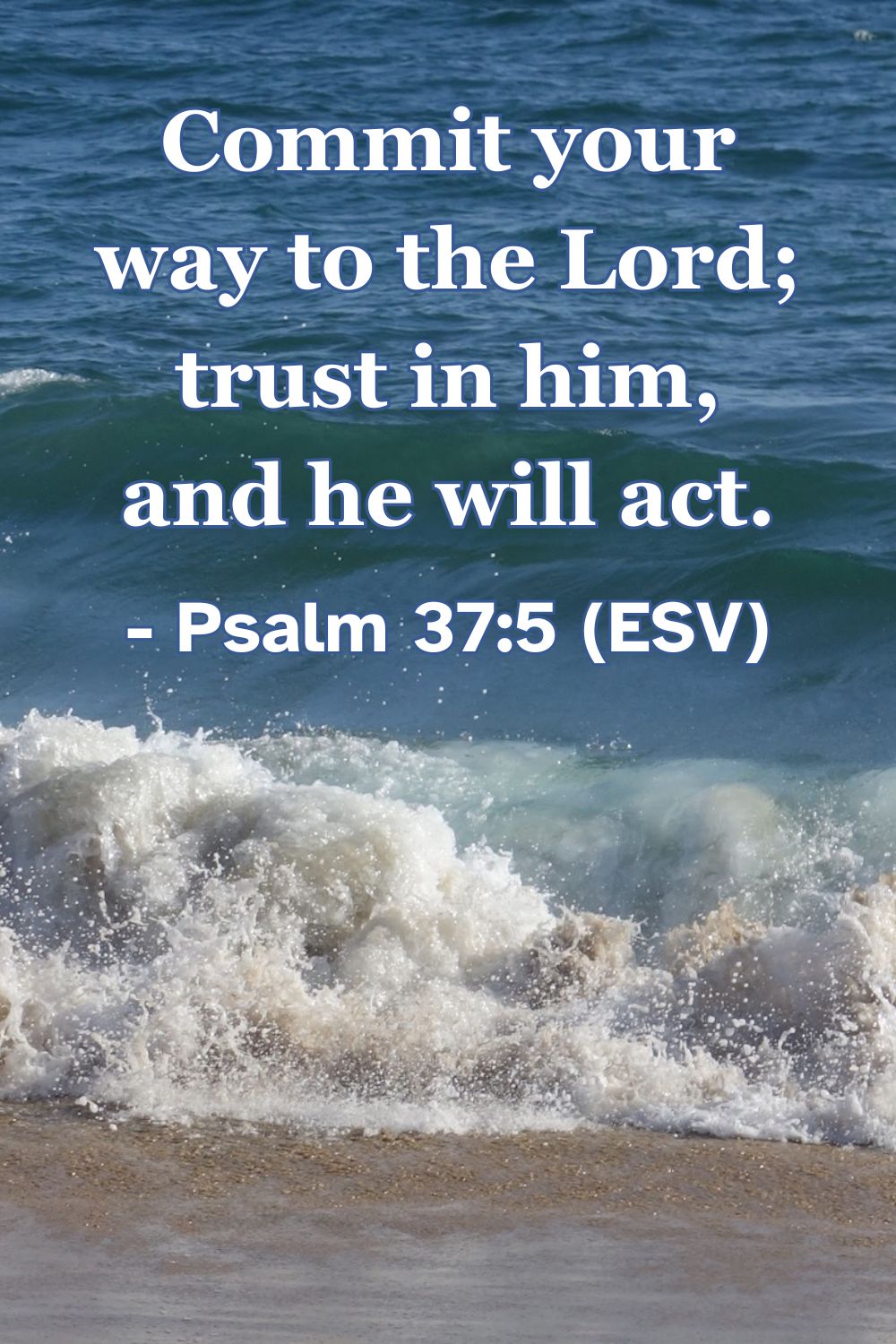
Psalm 37:5 (ESV): “Commit your way to the Lord; trust in him, and he will act.”
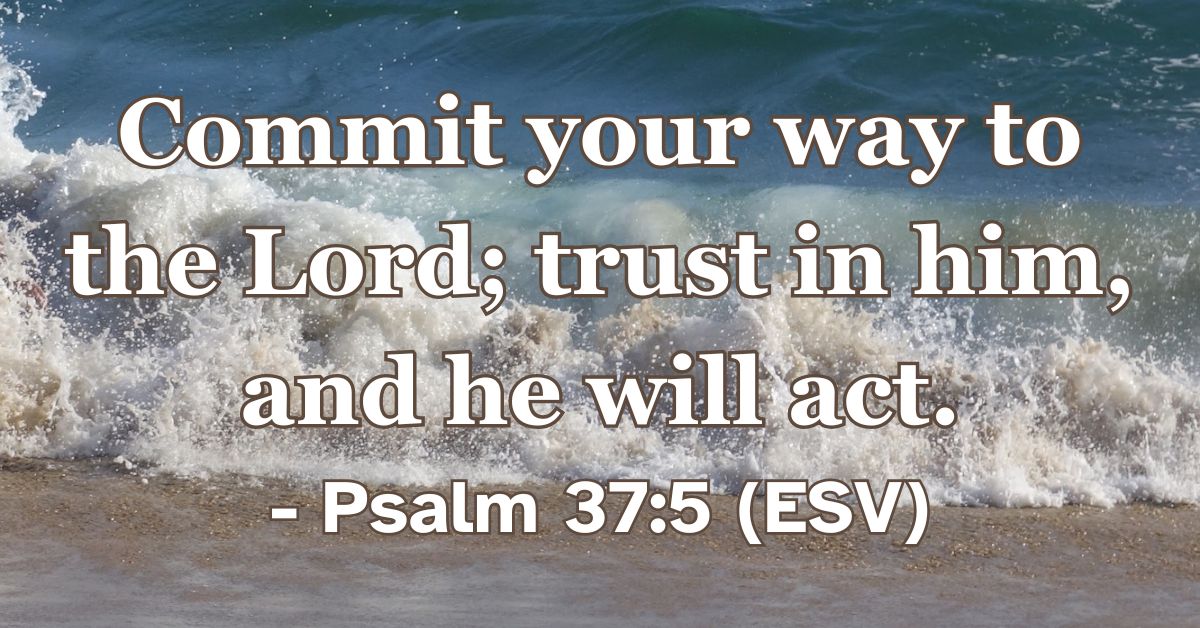
When we follow the first half of Psalm 37:5, the advice allows the Holy Spirit to act in us. As we embrace God, seeking his wisdom and asking for his guidance, the challenge lies in discerning his voice amid the cacophony of our own thoughts. Just like sailors relying on a compass, we must ensure that our spiritual navigation aligns with God’s guidance.
Consider the biblical account of Sarah, where her moment of wavering faith ends in severe consequences. Despite the promise of a child in Abraham’s old age (Genesis 15:4-6), Sarah’s trust in God was tested. Instead of fully relying on God’s timing and power, she devised a plan of her own making that lacked faith. In a moment of impatience and doubt, Sarah suggested that Abraham have a child with her servant, Hagar (Genesis 16:1-4). This decision stemmed from a desire for immediate fulfillment of the promise rather than trusting in God’s ability to bring it to pass. Sarah’s actions reveal the struggle between faith and impatience, highlighting the importance of steadfast trust in God’s plans and timing.
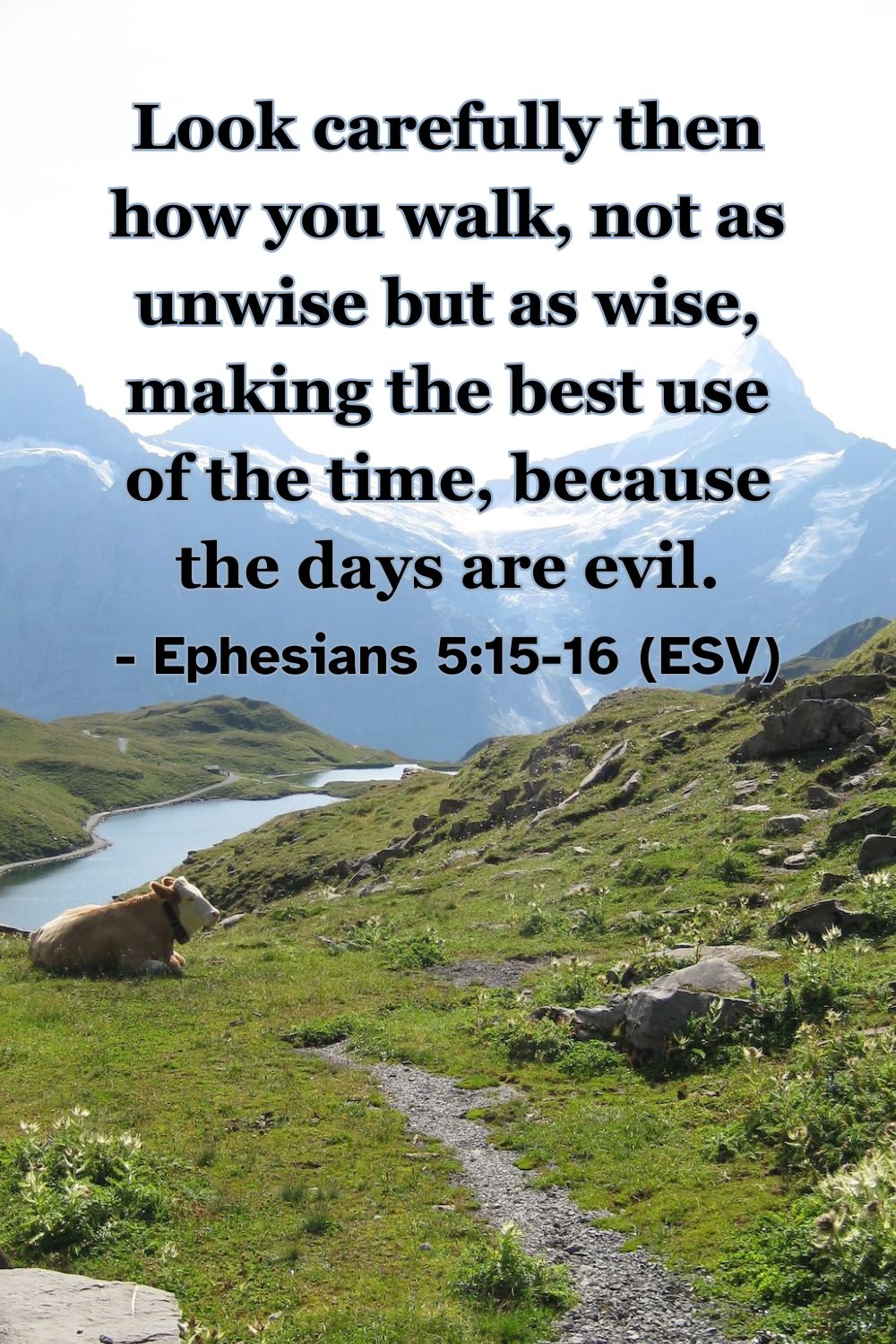
Ephesians 5:15-16 (ESV): “Look carefully then how you walk, not as unwise but as wise, making the best use of the time, because the days are evil.”
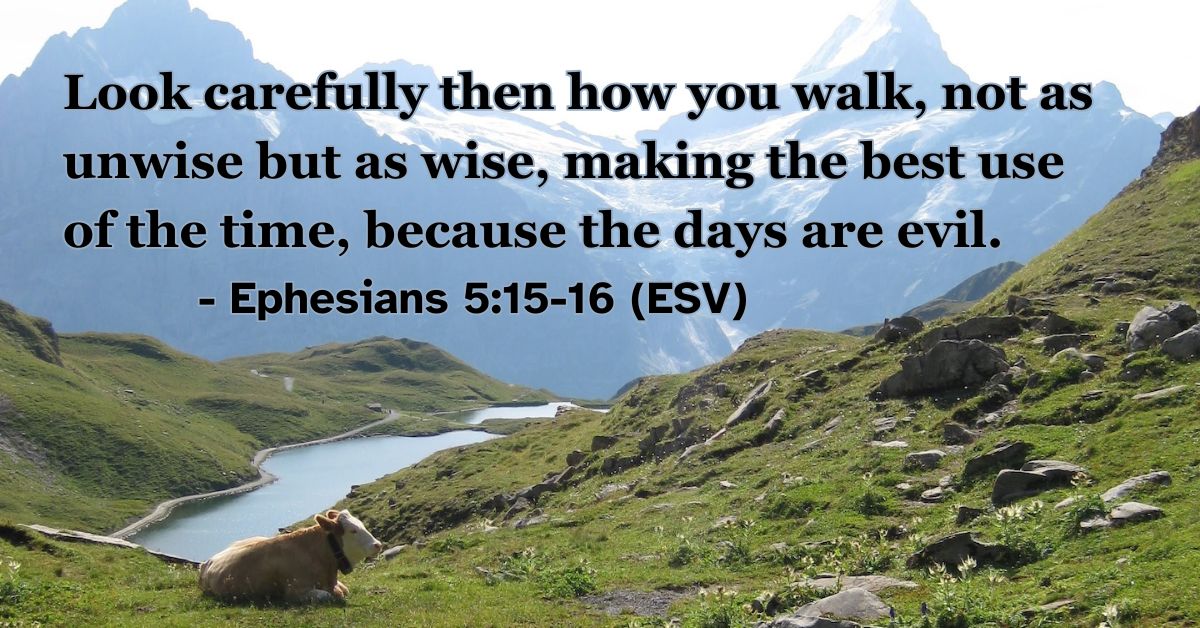
As we consider Ephesians 5:15-16, we should think of the Bible as our life’s user manual. This verse urges us to make wise choices, to walk purposefully. By carefully reading our Bible’s and seeking guidance from the Holy Spirit, we gain a grasp on evaluating our actions. This enables us to make plans that align with God’s will and make the most of the limited time we have. Trusting in the Lord is like having a reliable compass to guide us through the ups and downs of the coming year, ensuring that our steps are guided by God’s wisdom, not just our own instincts.
How are you going to follow God this year?
Reflection Questions
New Beginnings
- How can you actively embrace the concept of being a “new creation” in Christ in the coming year?
- Are there areas of your life where doubt or past habits hinder your journey of transformation? How can you turn back to God in those moments?
Plans for the New Year:
- How does the assurance of God’s plans for your welfare influence the way you approach setting New Year’s resolutions and other plans for the future?
- In what ways can you commit your work to the Lord? Consider the unpredictable nature of life’s challenges.
Seeking Wisdom:
- What steps can you take to pursue wisdom in the upcoming months? How can you align your goals with God’s desires for your life?
- How can you make intentional and regular engagement with God’s word a priority for acquiring wisdom?
Trusting the Lord:
- Reflect on instances in your life where leaning on your own understanding led to challenges. How can you anchor your trust more firmly in the Lord?
- Are there areas in your life where impatience or doubt tempts you to devise your own plans rather than trusting in God’s timing?
Overall Reflection:
- What specific actions can you take in the next week to apply the principles discussed in this blog post to your daily life?
- How will you navigate the uncertainties of the coming year with a firm reliance on God’s providence?
Reflective Prayer
Chose one or two of these verses or reflection questions to pray using the ACTS method: Adoration, Confession, Thankfulness, Supplication
- Adoration: Praise God. Do these verses bring any specific characteristics of God to mind?
- Confession: Tell God that you are sorry for specific sins. Do these verses bring any specific sins to mind?
- Thankfulness: Show gratitude towards God. Does anything from these verses inspire gratitude?
- Supplication: Make requests for yourself and for others. Does anything from these verses inspire a prayer?
If helpful, you can use a prayer journal template.




Respond
Your journey of reflection and spiritual renewal is a personal and unique one. Take a moment to consider how the themes of new beginnings, trust, wisdom, and commitment resonate with your own experiences. Are there specific areas in your life where you feel prompted to make changes or seek God more intentionally?
Subscribe
If you enjoyed this post and wish to receive more Christian content, please subscribe to my newsletters!
Related Resources
Visit the Joyful Moments in Christ homepage for all posts, or scroll through other blog posts related to wisdom, trust, repentance, and forgiveness:


Something went wrong. Please refresh the page and/or try again.
English Standard Version (ESV): Scripture quotations marked (ESV) are taken from the ESV® Bible (The Holy Bible, English Standard Version®), © 2001 by Crossway, a publishing ministry of Good News Publishers. Used by permission. All rights reserved. The ESV text may not be quoted in any publication made available to the public by a Creative Commons license. The ESV may not be translated in whole or in part into any other language.

 Joyful Moments in Christ